A fuel filter’s primary role is to safeguard your engine by meticulously removing harmful contaminants like dirt, rust, and debris from the fuel before it reaches vital components. This critical filtration prevents costly damage to fuel injectors and pumps, ensuring your engine runs smoothly, efficiently, and reliably while maintaining peak performance and longevity.
Hey there, fellow driver! Ever wondered about those unsung heroes working hard under your car’s hood? One that often gets overlooked, but is super important, is your fuel filter. Simply put, a fuel filter acts like your engine’s personal bouncer. It makes sure only clean fuel gets through to power your ride. This little component is crucial for keeping your engine happy and running smoothly, preventing tiny bits of gunk from causing big problems down the road.
Think of it this way: your engine needs pure, clean fuel to perform its best, just like you need clean water to stay healthy. The fuel filter is the guardian that makes sure your engine gets exactly that.
What Does a Fuel Filter Do, and Why is it So Important for My Car’s Health?
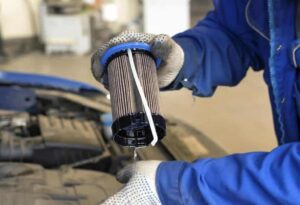
Okay, let’s dive into the nitty-gritty of what a fuel filter actually does for your vehicle. At its core, its job is quite simple yet incredibly vital: it cleans the fuel before it reaches your engine’s delicate parts.
You see, the gasoline or diesel you pump into your tank isn’t always perfectly clean. Fuel can pick up all sorts of tiny contaminants. We’re talking about rust particles from the inside of gas station storage tanks, dirt, dust, and even minuscule bits of debris that might flake off your own fuel tank or lines over time. Without a proper fuel filter, all this crud would travel directly into your engine.
So, how does it work? The fuel filter is typically a small, cylindrical component located somewhere along the fuel line. Inside, it contains a filtering medium, often made of pleated paper or a synthetic material. As fuel flows from your tank towards the engine, it has to pass through this medium. The filter acts like a sieve, trapping these unwanted particles while allowing the clean fuel to flow freely onwards to your fuel injectors and combustion chamber. Pretty neat, right?
Now, let’s talk about why this process is so important. Imagine what happens if all that dirty fuel gets through. Those tiny particles can wreak havoc on expensive engine components. They can clog your fuel injectors, which are precise spray nozzles that deliver fuel into the engine. Clogged injectors mean improper fuel delivery, leading to:
- Reduced engine performance
- Engine misfires or hesitation
- Poor fuel economy
- Difficulty starting your car
- Even permanent damage to the fuel pump or injectors themselves
I remember once, my old car started feeling really sluggish, especially when I tried to accelerate or go uphill. It felt like it was struggling for breath! After a quick check, my mechanic found the fuel filter was completely clogged. It was literally choking the engine of the fuel it needed. Once we replaced it, the difference was night and day! The car ran smoothly, with its power restored. It was a great reminder of how such a small part makes a huge impact.
When should you think about your fuel filter? Most car manufacturers provide recommended service intervals, often every 20,000 to 60,000 miles. However, this can vary based on your driving conditions and the quality of fuel you use. If you start noticing any of the symptoms I mentioned above – like your car feeling less responsive, stalling, or struggling to start – it might be a good time to have your fuel filter checked. Replacing your fuel filter is usually a straightforward job for a mechanic and can save you from much bigger, more expensive repairs down the line.
So, there you have it! The humble fuel filter is a powerhouse protector for your engine. Keeping it clean means your engine gets the pure fuel it craves, performs better, and avoids costly repairs. It’s a small component with a huge job, and giving it the attention it deserves is a smart move for any car owner. Happy driving!