Empower yourself to diagnose engine misfires by learning how to test your spark plug coils at home. This guide provides simple, step-by-step instructions, often using just a multimeter, to check for proper resistance and continuity. Easily pinpoint faulty coils, saving time and money on professional diagnostics, and restore your engine’s smooth performance.
Hey there, fellow car enthusiast, or just someone who’s tired of their car acting up! I know that feeling all too well – the engine sputtering, the check engine light glaring at you, and that annoying loss of power. It’s frustrating, right? You start wondering, “What could it be this time?” Often, the culprit behind those dreaded misfires and rough idling can be something called a spark plug coil, also known as an ignition coil. But here’s the good news: you don’t always need a mechanic to diagnose the issue. With a little guidance and the right tools, you can learn how to test a spark plug coil yourself.
Believe me, I’ve been there, scratching my head, trying to figure out why my engine wasn’t running smoothly. That’s why I’m so excited to share this guide with you. It’s not just about saving a few bucks; it’s about empowering yourself to understand your car better and tackle minor repairs with confidence. Learning how to test a spark plug coil is a fundamental skill for any DIY car owner, and it’s simpler than you might think.
So, grab a cup of coffee, let’s roll up our sleeves virtually, and dive into the simple steps to diagnose this common car problem. By the end of this post, you’ll have a clear understanding of what a spark plug coil does, how to identify its symptoms, and most importantly, precisely how to test a spark plug coil using a multimeter. Let’s get your engine purring smoothly again!
Key Takeaways
- Prioritize Safety: Always disconnect the battery and wear PPE first.
- Inspect Visually: Check for cracks, corrosion, or damage on coils.
- Use Multimeter: Measure primary and secondary coil resistance accurately.
- Confirm Spark: Employ an inline spark tester for direct verification.
- Compare Readings: Cross-reference measurements with manufacturer specifications.
- Isolate Faults: Test each coil individually to pinpoint the issue.
- Replace, Don’t Repair: A faulty coil must be replaced, not fixed.
📑 Table of Contents
Understanding Your Ignition System: The Role of the Spark Plug Coil
Before we jump into the “how-to,” let’s quickly chat about what this magical little component actually does. It’s like understanding the players on a team before you watch the game.
What Exactly Does a Spark Plug Coil Do?
In simple terms, your car’s battery provides a low voltage (typically 12 volts). Your spark plugs, however, need a super high voltage (tens of thousands of volts!) to create the spark that ignites the fuel-air mixture in your engine’s cylinders. That’s where the spark plug coil comes in! It’s essentially a transformer, taking that low battery voltage and stepping it up dramatically, sending a powerful jolt to the spark plug at just the right moment. Without a properly functioning spark plug coil, your engine simply won’t fire correctly, leading to all sorts of performance issues.
Different Types of Ignition Coils
Not all spark plug coils are created equal, though they all perform the same basic function. Knowing the type in your car can slightly influence your approach to how to test a spark plug coil:
- Coil-on-Plug (COP): These are the most common in modern cars. Each spark plug has its own individual coil sitting directly on top of it. This design improves performance and makes diagnosing a specific cylinder’s misfire much easier.
- Coil Pack: Some vehicles use a “coil pack” where multiple coils (often for two or more cylinders) are housed in one unit. Wires then run from the coil pack to the individual spark plugs.
- Distributor-Based: Older vehicles might have a single coil that sends high voltage to a distributor, which then routes it to the correct spark plug wire. While less common now, the principle of testing remains similar.
Regardless of the type, the core principles of how to test a spark plug coil remain consistent: you’re checking its ability to transform and deliver voltage.
Common Symptoms of a Failing Spark Plug Coil
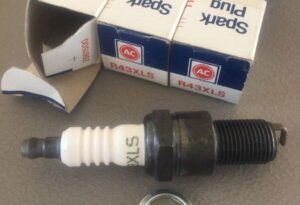
Your car is pretty good at telling you when something’s wrong, even if it’s just through subtle hints. Recognizing these symptoms early can save you a lot of headache and potential repair costs down the road.
What to Look Out For
When a spark plug coil starts to go bad, you’ll typically notice one or more of these signs:
- Engine Misfires: This is probably the most common symptom. You might feel a jerking or hesitation, especially under acceleration. It feels like the engine is skipping a beat.
- Rough Idle: Your engine might feel shaky or vibrate excessively when you’re stopped at a light or idling.
- Reduced Fuel Economy: A failing coil means inefficient combustion, which means your engine has to work harder, burning more fuel.
- Check Engine Light (CEL): Often, a faulty coil will trigger your CEL, usually accompanied by a Diagnostic Trouble Code (DTC) like P0301, P0302, etc. (P030X indicates a misfire in cylinder X). This is a big clue if you’re trying to figure out how to test a spark plug coil effectively, as it points you to the specific cylinder.
- Loss of Power: Your car might feel sluggish and struggle to accelerate or maintain speed.
- Engine Stalling: In severe cases, a bad coil can cause the engine to stall unexpectedly.
- Difficulty Starting: The engine might crank but struggle to fire up, especially when cold.
Why Early Detection Matters
Ignoring these symptoms isn’t just annoying; it can lead to more serious problems. A continuous misfire can damage your catalytic converter (a very expensive repair!), inject unburnt fuel into the exhaust, and even affect other engine components over time. Learning how to test a spark plug coil yourself means you can catch these issues early and address them before they escalate.
Essential Tools for Testing Your Spark Plug Coil
Alright, time to gather our gear! You don’t need a full mechanic’s workshop for this job, but a few key tools will make the process smooth and safe.
Your Go-To Tool: The Multimeter
This is your star player for learning how to test a spark plug coil. A digital multimeter is an electronic measuring instrument that combines several measurement functions in one unit. For our purposes, we’ll be using its resistance (ohms) function. You can pick one up at any auto parts store or electronics shop for a very reasonable price.
- What to look for: Make sure it has an “ohms” (Ω) setting, preferably with different ranges (e.g., 200Ω, 20kΩ).
- How it works: It sends a small electrical current through the coil and measures how much resistance it encounters. This resistance tells us about the coil’s internal health.
Other Handy Items
- Wrench or Socket Set: You’ll need this to unbolt the coil from the engine.
- Screwdriver: Might be needed for specific connectors or covers.
- Dielectric Grease: Good for applying to new coils or connections to protect against moisture.
- Rags or Shop Towels: For cleaning and wiping.
- Owner’s Manual or Repair Guide: This is crucial! It will provide the manufacturer’s specific resistance values (in ohms) for your particular spark plug coil. These specs are vital for correctly understanding how to test a spark plug coil.
- Safety Glasses and Gloves: Always protect your eyes and hands when working on your car.
Step-by-Step Guide: How to Test Spark Plug Coil with a Multimeter
Now for the main event! Follow these steps carefully, and you’ll be able to confidently test your spark plug coil.
Safety First!
Seriously, this is non-negotiable. We’re dealing with electrical components and a hot engine.
- Turn Off the Engine: Make sure your car has been off for a while and the engine is cool to the touch.
- Disconnect the Battery: Locate your car battery and disconnect the negative (-) terminal first. This prevents accidental shorts and ensures no power goes to the ignition system while you’re working.
Locating and Removing the Coil
This part varies slightly depending on your car’s coil type:
- Identify the Misfiring Cylinder (if known): If you pulled a P030X code, you know exactly which cylinder’s coil to target.
- Locate the Coils:
- Coil-on-Plug (COP): These are usually visible on top of the valve cover, directly over each spark plug. They look like small, rectangular or cylindrical plastic units.
- Coil Pack: If you have a coil pack, it will be a larger unit with multiple wire terminals, likely mounted somewhere accessible on the engine.
- Disconnect Electrical Connector: Gently press the tab and pull off the electrical connector from the coil.
- Remove Mounting Bolt(s): Use your wrench or socket to remove any bolts securing the coil to the engine.
- Carefully Remove the Coil: Pull the coil straight up. It might feel a bit stuck due to the rubber boot around the spark plug, but a firm, steady pull should free it.
Performing the Primary Resistance Test
This test checks the primary winding of the coil, which receives the 12-volt current from your battery.
- Set Your Multimeter: Turn your multimeter’s dial to the lowest ohms (Ω) setting, usually around 200Ω.
- Identify Primary Terminals: Look at the electrical connector side of the coil. You’ll usually see two or three pins. Two of these will be for the primary circuit (the 12V power and ground). Consult your repair manual for the exact pin-out for your specific coil.
- Take the Reading: Touch one multimeter probe to the positive (+) primary terminal and the other probe to the negative (-) primary terminal.
- Record the Reading: Note down the value displayed on your multimeter. Typical primary resistance values are very low, often between 0.3 and 1.0 ohms.
Performing the Secondary Resistance Test
This test checks the secondary winding, responsible for generating the high voltage for the spark plug.
- Set Your Multimeter: Adjust your multimeter to a higher ohms (Ω) setting, typically 20kΩ (20,000 ohms) or even 200kΩ, as secondary resistance is much higher.
- Identify Secondary Terminals:
- COP Coil: Place one multimeter probe inside the spark plug boot (the end that connects to the spark plug).
- Coil Pack/Distributor-based Coil: Place one probe on the high-voltage output terminal (where the spark plug wire connects).
- Complete the Circuit: Touch the other multimeter probe to one of the primary terminals (usually the positive primary terminal, but again, your repair manual is your best friend here).
- Record the Reading: Note down the value. Typical secondary resistance values range from 6,000 to 15,000 ohms (6kΩ to 15kΩ), sometimes even higher depending on the coil.
Interpreting Your Readings
This is where your repair manual truly shines. You MUST compare your readings to the manufacturer’s specifications for your exact vehicle. Here’s a general guide:
| Test Type | Expected Range (Example) | Indication of Fault |
|---|---|---|
| Primary Resistance | 0.3 – 1.0 Ohms | Very low (near 0) or infinitely high (OL/”Open Line”) |
| Secondary Resistance | 6,000 – 15,000 Ohms (6-15 kΩ) | Very low or infinitely high (OL/”Open Line”) |
- “OL” or Infinitely High Reading: If your multimeter shows “OL” (Over Limit) or an extremely high resistance, it means there’s an open circuit inside the coil. This coil is definitely bad and needs replacement.
- Extremely Low Reading (near 0): This indicates a short circuit within the coil. Again, the coil is bad and needs replacement.
- Reading Outside Spec: Even if it’s not “OL” or near zero, if your reading is significantly outside the manufacturer’s specified range (e.g., your manual says 10kΩ and you read 4kΩ), the coil is weak and should be replaced.
- Reading Within Spec: Congratulations! If both your primary and secondary resistance readings fall within the manufacturer’s specified range, your spark plug coil is likely good.
Knowing how to test a spark plug coil effectively means understanding these numbers. If a coil tests bad, replace it! Reassemble everything in reverse order, connect the battery, and test your car.
What If Your Coil Tests Good, But Problems Persist?
Sometimes, you do all the right steps to how to test a spark plug coil, and it passes with flying colors, but your engine still has issues. Don’t worry, this just means it’s time to play a little more detective!
Beyond the Coil: Other Potential Culprits
If your spark plug coil tests good, but you’re still experiencing misfires or rough running, here are other common areas to investigate:
- Spark Plugs: Old, worn, or fouled spark plugs are a very common cause of misfires. If you’ve got the coil out, it’s a great time to inspect or even replace the spark plug underneath.
- Spark Plug Wires (if applicable): If your vehicle uses spark plug wires (common with coil packs or older systems), they can degrade, crack, or suffer internal damage, preventing proper voltage delivery.
- Fuel Injectors: A clogged or faulty fuel injector won’t deliver enough fuel to the cylinder, leading to a misfire.
- Compression Issues: Low compression in a cylinder (due to worn piston rings, valves, or head gasket) means the engine can’t effectively ignite the air-fuel mixture. This is a more serious mechanical issue.
- Wiring Harness Issues: Sometimes, the problem isn’t the coil itself but the wiring leading to it. Frayed wires or corroded connectors can disrupt the signal.
- Engine Control Module (ECM/PCM): In rare cases, the car’s computer might be failing to send the correct signal to the coil. This is usually a last resort diagnosis.
Professional Help vs. DIY
While learning how to test a spark plug coil is a fantastic DIY skill, there are times when it’s best to call in the professionals. If you’ve systematically checked the coils, plugs, and perhaps even wires, and the problem persists, it might be time to visit a trusted mechanic. They have specialized diagnostic tools that can delve deeper into fuel system, compression, or ECM issues that are harder to diagnose at home. Don’t be afraid to hand it over; knowing when to seek expert help is also part of being a smart car owner.
Conclusion
See? I told you it wasn’t rocket science! Learning how to test a spark plug coil is a truly empowering step for any car owner. You’ve now gained a valuable skill that can save you time, money, and a whole lot of frustration. The next time your engine starts acting up, you won’t be left guessing; you’ll have the knowledge and confidence to perform a basic diagnostic check yourself.
Remember, safety first, always consult your car’s specific repair manual for exact specifications, and don’t be afraid to take your time. With these simple steps, you’re well on your way to becoming a more self-reliant and knowledgeable car owner. Here’s to many miles of smooth, misfire-free driving!
Frequently Asked Questions
Why is it important to test a spark plug coil, and what are the symptoms of a failing one?
Testing your spark plug coil helps diagnose common engine issues such as misfires, rough idling, poor acceleration, or even engine stalling. A faulty coil cannot deliver the necessary high voltage to the spark plug, leading to incomplete combustion and often triggering your “check engine” light.
What essential tools do I need to test a spark plug coil at home?
To accurately test your spark plug coil, you’ll primarily need a multimeter capable of measuring resistance (ohms). Additionally, a spark plug tester can be very helpful for a quick visual check of spark presence, though the multimeter provides the definitive electrical diagnosis.
How do I test a spark plug coil using a multimeter to check its resistance?
First, ensure the engine is off and cool, then carefully disconnect the coil’s electrical connector and remove it from the engine. Set your multimeter to the ohms (Ω) setting and touch the probes to the primary and secondary terminals of the coil, referring to your vehicle’s service manual for specific locations. Compare these readings to the manufacturer’s specified resistance values.
What kind of resistance readings indicate a good or bad spark plug coil?
A good spark plug coil will show resistance values within a specific range provided by your car manufacturer, typically very low for the primary winding (e.g., 0.5-2 ohms) and much higher for the secondary (e.g., several thousand ohms). Readings significantly outside this range, or an “OL” (open circuit/infinite resistance) reading, indicate a faulty coil that needs replacement.
Can I test a spark plug coil without fully removing it from the engine?
In some cases, you can perform basic tests on a spark plug coil while it’s still mounted, especially with easy-to-access coil-on-plug designs for a quick spark presence check. However, for a thorough and accurate resistance test with a multimeter, it’s generally best to remove the coil to ensure good probe contact with all terminals.
Is testing a spark plug coil a difficult task for a DIY mechanic?
Testing a spark plug coil is generally a straightforward task that most DIY mechanics can handle with basic tools and a little guidance. The most challenging part might be accessing the coils, but the actual electrical testing process with a multimeter is quite simple once you know the correct terminals and expected resistance values for your specific vehicle.