Most cars typically have one spark plug per cylinder, meaning a 4-cylinder engine uses four and a 6-cylinder uses six, a general rule that applies to the vast majority of gasoline vehicles. While some modern engines might feature two plugs per cylinder for enhanced combustion, it’s crucial to remember that diesel engines do not use spark plugs at all, relying instead on compression ignition. Thus, the definitive answer depends on your specific vehicle’s engine configuration and fuel type.
Ever popped the hood of your car and felt a surge of curiosity mixed with a dash of confusion? You’re not alone! For many of us, the engine bay can seem like a mysterious labyrinth of wires, hoses, and metal parts. Among these vital components are spark plugs, small but mighty heroes responsible for getting your engine roaring to life. You might have heard your mechanic mention them, or maybe you’ve seen them in an auto parts store, and a nagging question pops into your head: how many spark plugs do cars have?
It’s a common question, and one that often leads to more questions. Is it the same for every car? Do bigger engines have more? What about electric cars? Understanding the answer isn’t just a fun fact; it helps you grasp a fundamental aspect of how your car works and why proper maintenance is so crucial. Getting a handle on your spark plugs can give you a better idea of what’s happening under the hood and empower you to ask the right questions at the repair shop.
If you’ve ever wondered about the definitive answer to how many spark plugs do cars have, you’ve come to the right place. We’re going to demystify this essential engine component, break down the common scenarios, highlight the exceptions, and explain why this number truly matters for your vehicle’s performance and longevity. Let’s dive in and uncover the truth about these tiny ignition heroes!
Key Takeaways
- Most cars: Have one spark plug per cylinder.
- Engine type dictates: Count ranges from 3 to 16 spark plugs.
- Some engines use two: Specific models may have two plugs per cylinder.
- Diesel engines use glow plugs: They do not have traditional spark plugs.
- Electric vehicles lack spark plugs: They operate without combustion engines.
- Check your owner’s manual: It provides the definitive number for your car.
📑 Table of Contents
- The Core Principle: One Spark Plug Per Cylinder
- Counting Cylinders: The Key to Understanding Spark Plug Count
- The Exceptions and Modern Twists: When It’s Not Just One-to-One
- Why Does the Number Matter? Importance of Maintenance
- Understanding Spark Plug Counts by Engine Type
- Common Misconceptions and Clarifications
- The Definitive Answer Unveiled
The Core Principle: One Spark Plug Per Cylinder
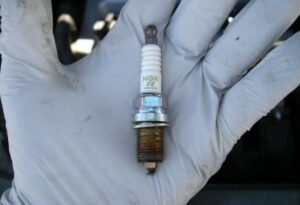
At the heart of nearly every gasoline-powered internal combustion engine lies a simple, elegant rule: each cylinder needs its own spark to ignite the fuel-air mixture. This fundamental design choice dictates the basic answer to how many spark plugs do cars have.
What is a Spark Plug and What Does It Do?
Imagine your car’s engine as a team of tiny, controlled explosions. For each explosion to happen, you need three things: fuel, air, and a spark. The spark plug is the component that delivers that critical spark. It’s an electrical device that sits in the cylinder head of each cylinder. When high voltage electricity from the ignition system travels through the spark plug, it jumps across a small gap at the tip, creating a brief but powerful electrical arc – the spark – which ignites the compressed fuel-air mixture. This ignition creates an explosion that pushes a piston, turning your engine’s crankshaft and ultimately powering your wheels. Without a working spark plug in each cylinder, that cylinder can’t contribute to the engine’s power output.
The Cylinder Connection
Because each cylinder requires an individual spark to initiate combustion, the number of spark plugs a car has is almost always directly related to the number of cylinders in its engine. It’s a pretty straightforward relationship: a 4-cylinder engine will have 4 spark plugs, a 6-cylinder engine will have 6, and an 8-cylinder engine will have 8. This 1:1 ratio is the golden rule for most modern gasoline engines. So, when someone asks how many spark plugs do cars have, the quickest way to answer is by knowing the engine’s cylinder count.
Counting Cylinders: The Key to Understanding Spark Plug Count
If the number of spark plugs hinges on the number of cylinders, then the next logical step is to understand how many cylinders your car has. This information is readily available and will definitively answer how many spark plugs do cars have for your specific vehicle.
Visual guide about how many spark plugs do cars have
Image source: vehiclefreak.com
Common Engine Configurations
Cars come with various engine designs, each with a different number of cylinders arranged in specific ways:
- Inline-4 (I4): Found in most compact and many mid-size cars, these engines have four cylinders arranged in a single row. They typically have 4 spark plugs.
- V6: Common in larger sedans, SUVs, and some trucks, these engines have six cylinders arranged in two banks, forming a “V” shape. They typically have 6 spark plugs.
- V8: Often seen in full-size trucks, muscle cars, and luxury vehicles, these engines feature eight cylinders also in a “V” configuration. They typically have 8 spark plugs.
- Inline-3 (I3): Gaining popularity in smaller, fuel-efficient cars, these have three cylinders in a row, meaning 3 spark plugs.
- V10, V12, Flat-4/6 (Boxer): Less common for the average driver but present in high-performance or specialized vehicles. The rule still applies: a V10 has 10 cylinders, thus 10 spark plugs; a Flat-6 (like in many Porsches) has 6 cylinders, thus 6 spark plugs.
How to Find Your Car’s Cylinder Count
Don’t worry, you don’t need to be a mechanic to find this out! Here are the easiest ways to determine your car’s cylinder count:
- Owner’s Manual: Your car’s owner’s manual is a treasure trove of information. Look under the “Specifications” or “Engine” section.
- Engine Cover: Many modern engines have a plastic cover that might state “V6” or “4 Cyl” directly on it.
- VIN Lookup: Your Vehicle Identification Number (VIN) contains coded information about your car, including its engine type. You can use online VIN decoders to find this out.
- Manufacturer’s Website or Dealership: A quick search on the manufacturer’s website with your specific model and year, or a call to a dealership, will give you the answer.
Once you know your cylinder count, you’ve essentially answered how many spark plugs do cars have for your vehicle, at least for the vast majority of gasoline engines.
The Exceptions and Modern Twists: When It’s Not Just One-to-One
While the “one spark plug per cylinder” rule holds true for most vehicles, there are some notable exceptions and engine types that deviate from this norm. These cases are important to know when considering how many spark plugs do cars have across the entire automotive landscape.
Dual Spark Plug Systems
Some engines, designed for enhanced combustion efficiency, reduced emissions, or improved power, utilize two spark plugs per cylinder. This means an engine that would ordinarily have four spark plugs might actually have eight, and a V6 could have twelve. Why do manufacturers do this?
- More Complete Combustion: Two sparks igniting the fuel-air mixture from different points within the cylinder can lead to a more thorough and rapid burn. This can result in better fuel economy and more power.
- Reduced Emissions: More complete combustion also means fewer unburnt hydrocarbons exiting the exhaust, contributing to lower emissions.
Good examples of vehicles that have used dual spark plug systems include some Honda engines (like the i-DSI engines in older Jazz/Fit models), and notably, Dodge’s HEMI V8 engines. A modern 5.7L HEMI V8, for instance, has 16 spark plugs – two for each of its eight cylinders. So, if you’re asking how many spark plugs do cars have and you own a HEMI, the answer is significantly higher than just the cylinder count!
Rotary Engines
These unique engines, most famously found in Mazda RX series cars (like the RX-7 and RX-8), don’t have traditional cylinders and pistons. Instead, they use a triangular rotor that spins within an oval-shaped housing. Each rotor typically requires two spark plugs per rotor to ensure proper combustion due to the shape of the combustion chamber. So, a two-rotor engine would have four spark plugs, which is different from how we’d count them in a piston engine.
Diesel Engines: The Ultimate Exception
This is perhaps the biggest “twist” to the spark plug question. When considering how many spark plugs do cars have, it’s crucial to remember that diesel engines do not use spark plugs at all!
Diesel engines operate on a principle called “compression ignition.” Instead of a spark igniting the fuel, diesel engines compress the air in the cylinder to such an extreme degree that it heats up significantly. When diesel fuel is injected into this superheated air, it ignites spontaneously. This means a diesel car has zero spark plugs. They do, however, often have “glow plugs” which are used to help preheat the combustion chambers in cold weather, assisting with starting, but these are not for ignition once the engine is running.
Why Does the Number Matter? Importance of Maintenance
Knowing how many spark plugs do cars have is more than just trivia; it’s vital for understanding engine health and why regular maintenance is so important. These small components play a massive role in your car’s overall performance and efficiency.
Impact on Engine Performance
Each spark plug must fire correctly and at the precise moment to ensure your engine runs smoothly. If one or more spark plugs start to fail, you’ll likely notice:
- Engine Misfires: The engine might stumble or feel rough, especially when idling. This happens when a cylinder doesn’t get a spark or gets a weak one, failing to contribute power.
- Reduced Fuel Efficiency: Incomplete combustion due to worn spark plugs means your engine is working harder and burning more fuel to achieve the same power output.
- Loss of Power and Acceleration: Your car might feel sluggish, struggle to accelerate, or lack its usual “oomph” if the spark plugs aren’t delivering strong, consistent sparks.
- Check Engine Light: A failing spark plug can trigger your car’s check engine light, signaling an issue with the ignition system.
Properly functioning spark plugs are essential for getting the most out of your engine, so keeping track of their condition is paramount.
When to Change Spark Plugs
Spark plugs don’t last forever. Over time, the electrodes wear down, and carbon deposits can build up, diminishing their ability to create a strong spark. Most manufacturers recommend spark plug replacement at specific intervals, typically ranging from 30,000 miles for older copper plugs to over 100,000 miles for modern iridium or platinum plugs. Always check your car’s owner’s manual for the exact recommended interval.
Beyond mileage, watch for signs of wear mentioned above, such as rough idling or reduced fuel economy. Replacing them on time ensures your engine continues to run smoothly and efficiently, regardless of how many spark plugs do cars have in your particular vehicle.
DIY vs. Professional Replacement
Replacing spark plugs can be a straightforward DIY task for some engines, while others require specialized tools, more effort, or are simply difficult to access. If you’re comfortable with basic car maintenance, you might be able to tackle it yourself, saving on labor costs. However, if you’re unsure, or if your engine is complex (like a V6 where some plugs are hard to reach), it’s always best to leave it to a professional mechanic. They have the right tools and expertise to ensure the job is done correctly without damaging other components.
Understanding Spark Plug Counts by Engine Type
To give you a clearer picture, here’s a quick overview of typical spark plug counts based on common engine types. This table helps summarize the answer to how many spark plugs do cars have in various scenarios.
| Engine Type/Configuration | Typical Number of Cylinders | Typical Spark Plug Count | Notes/Examples |
|---|---|---|---|
| Inline-3 (I3) | 3 | 3 | Small, fuel-efficient cars (e.g., Ford Fiesta EcoBoost, Mini Cooper) |
| Inline-4 (I4) | 4 | 4 | Most compact/mid-size cars (e.g., Honda Civic, Toyota Camry 4-cyl) |
| V6 | 6 | 6 | Larger sedans, SUVs, minivans (e.g., Toyota Highlander, Honda Odyssey) |
| V6 (Dual Plug System) | 6 | 12 | Less common, specific designs (e.g., older Honda J-series i-DSI) |
| V8 | 8 | 8 | Full-size trucks, muscle cars (e.g., Ford F-150 5.0L, Chevrolet Silverado 5.3L) |
| V8 (Dual Plug System) | 8 | 16 | Dodge/Ram HEMI V8 engines (e.g., Ram 1500 5.7L HEMI) |
| Flat-4 (Boxer) | 4 | 4 | Subaru models (e.g., Forester, Outback) |
| Flat-6 (Boxer) | 6 | 6 | Porsche 911/Boxster/Cayman |
| Rotary Engine | 2 Rotors | 4 | Mazda RX-8 (2 plugs per rotor) |
| Diesel Engine | Varies (e.g., 4, 6, 8) | 0 | No spark plugs; uses compression ignition (e.g., Ford Power Stroke, Ram EcoDiesel) |
| Electric Vehicle (EV) | N/A | 0 | No internal combustion engine (e.g., Tesla Model 3, Nissan Leaf) |
Common Misconceptions and Clarifications
As we’ve explored the question of how many spark plugs do cars have, it’s worth clarifying a few related points that can sometimes cause confusion.
Does the Ignition Coil Count Matter?
While ignition coils are closely related to spark plugs (they provide the high voltage), their number doesn’t directly change the spark plug count. Modern cars often use a “coil-on-plug” system, where each spark plug has its own dedicated ignition coil. In these cases, the number of coils will match the number of spark plugs. However, older systems might have had a single coil for multiple spark plugs, or one coil for each bank of cylinders. So, while coils are essential for spark plug function, knowing how many ignition coils a car has won’t change the answer to how many spark plugs do cars have.
Turbochargers and Spark Plugs
A turbocharger is an engine component designed to force more air into the engine’s cylinders, increasing power. It has absolutely no bearing on the number of spark plugs. A turbocharged 4-cylinder engine still has 4 spark plugs, and a turbocharged V6 still has 6. The turbo might influence the type of spark plug used (often requiring “colder” plugs to prevent pre-ignition), but not the quantity.
Electric Cars: Zero Spark Plugs
This might seem obvious to some, but it’s a crucial clarification. Electric vehicles (EVs) operate entirely on electricity, powered by batteries and electric motors. They do not have an internal combustion engine, and therefore, they do not use any spark plugs. When you think about how many spark plugs do cars have, remember that this question applies only to gasoline (and sometimes natural gas/LPG) powered vehicles.
The Definitive Answer Unveiled
So, there you have it! The definitive answer to how many spark plugs do cars have boils down to a simple principle: most gasoline engines have one spark plug per cylinder. This means a 4-cylinder car has four, a V6 has six, and a V8 has eight. However, as we’ve learned, there are fascinating exceptions like dual spark plug systems that double the count, and the critical distinction that diesel engines and electric vehicles have none at all.
Understanding this fundamental aspect of your car’s engine empowers you with valuable knowledge. It helps you grasp why regular maintenance is so vital for those little components that kickstart your engine’s power. Next time you’re discussing car maintenance or peeking under the hood, you’ll be armed with confidence, knowing exactly how many spark plugs are quietly working to keep your ride smooth and reliable. Keep those spark plugs fresh, and your car will thank you for it with consistent performance and efficiency!
Frequently Asked Questions
How many spark plugs do cars typically have?
Most cars have one spark plug per cylinder. This means that a 4-cylinder engine will have 4 spark plugs, a 6-cylinder engine will have 6, and an 8-cylinder engine will have 8.
Does the number of spark plugs always match the number of cylinders?
In most cases, yes, the number of spark plugs directly corresponds to the number of cylinders in the engine. Each cylinder requires a spark to ignite the air-fuel mixture for combustion.
Why do some cars have more or fewer spark plugs than others?
The primary reason for variation is the engine’s design and cylinder count. A larger engine with more cylinders will naturally require more spark plugs than a smaller engine with fewer cylinders.
Are there any cars that use more than one spark plug per cylinder?
Yes, some car manufacturers, notably Honda and Mercedes-Benz, have historically used dual spark plugs per cylinder in certain engines. This design aims to achieve more complete combustion, leading to improved fuel efficiency and reduced emissions.
How does engine configuration affect the number of spark plugs needed?
Engine configuration, specifically the number of cylinders, is the main determinant of how many spark plugs are needed. Whether it’s an inline, V-type, or flat engine, each cylinder generally requires its own spark plug to initiate the combustion cycle.
What happens if one of the spark plugs in a car isn’t working?
If a spark plug fails, that cylinder will “misfire,” meaning the fuel-air mixture won’t ignite properly. This can lead to noticeable symptoms like rough idling, reduced engine power, poor fuel economy, and the illumination of the check engine light.