Spark plug coils are vital automotive components that transform your car’s low battery voltage into the thousands of volts needed to fire the spark plugs. This high-voltage surge is absolutely essential for igniting the fuel-air mixture in the engine’s cylinders, ensuring efficient combustion and optimal performance. Understanding their function, evolution, and how to identify potential failures is crucial for maintaining a healthy and powerful engine.
Hey there, fellow car enthusiast (or just someone curious about what makes their ride tick)! Have you ever turned the key, heard that familiar growl of the engine, and wondered about the intricate ballet of components that bring your car to life? While we often give credit to the engine itself, the battery, or even the spark plugs, there’s an unsung hero working tirelessly behind the scenes: the spark plug coil.
You might not have heard much about these little marvels, but trust me, they’re absolutely essential. Without them, your engine simply wouldn’t start, let alone run smoothly. Think of them as tiny power plants, transforming your car’s relatively low battery voltage into the incredible burst of electricity needed to create a spark – the very ignition that sets everything in motion. It’s a critical job, and when a spark plug coil decides to take a vacation, your car will definitely let you know.
So, if you’ve ever experienced a rough idle, a flashing check engine light, or just want to understand what keeps your engine humming, you’ve come to the right place. In this post, we’re going to pull back the curtain on spark plug coils. We’ll dive into what they are, how they work, the different types you might encounter, and most importantly, how to spot the signs when they’re not doing their job. Let’s get started and demystify these vital components together!
Key Takeaways
- Spark plug coils: Generate high voltage for engine ignition.
- Coils are vital: Ensure proper fuel combustion and engine power.
- Recognize failure: Look for misfires, rough idle, or check engine light.
- Faulty coils: Directly impact performance and fuel efficiency.
- Regular inspection: Prevents major engine issues and costly repairs.
- Replace defective coils: Restore optimal engine performance promptly.
📑 Table of Contents
What Exactly Are Spark Plug Coils, Anyway?
At its heart, a spark plug coil is a specialized type of induction coil, essentially a transformer, designed to produce a high-voltage electrical pulse. This pulse is then sent to the spark plug, creating the spark that ignites the fuel-air mixture in your engine’s combustion chamber. Without this spark, there’s no explosion, no power, and definitely no forward motion!
The Core Function: Creating the Spark
Imagine your car’s battery puts out a steady 12-volt current. That’s great for your lights and radio, but it’s nowhere near enough to jump the gap of a spark plug and ignite fuel. That’s where the spark plug coil steps in. Its main job is to take that low 12-volt current and “step it up” to tens of thousands of volts – sometimes as high as 50,000 volts or even more! This incredible voltage is what allows the electricity to literally jump across the gap in your spark plug, creating the tiny, intense lightning bolt needed for combustion. Each cylinder in your engine needs its own spark at precisely the right moment, and the spark plug coil ensures it gets it.
A Little Bit of History
The concept of ignition coils has been around for a long time, evolving with automotive technology. In older vehicles, you might remember a single ignition coil that sent high voltage to a distributor. The distributor then mechanically directed this high voltage to the correct spark plug at the right time. As engines became more sophisticated and precise, so did the spark plug coil systems, moving towards individual coils for each plug for better control and efficiency. Understanding this evolution helps appreciate how crucial spark plug coils have become in modern engines.
How Spark Plug Coils Work Their Magic
The operation of a spark plug coil might seem like magic, but it’s really just clever physics at play. It’s all about electromagnetic induction, a principle discovered by Michael Faraday.
The Science Behind the Spark
Inside every spark plug coil, there are two main sets of wire windings: a primary winding and a secondary winding. The primary winding consists of a few hundred turns of relatively thick wire. The secondary winding, on the other hand, has thousands of turns of much finer wire. Both are wrapped around an iron core.
- Step 1: Low Voltage In. When the engine’s computer (ECU) signals the spark plug coil to fire, it sends a low 12-volt current from the battery through the primary winding. This creates a magnetic field around the primary coil.
- Step 2: Magnetic Field Collapse. The ECU then rapidly cuts off the current to the primary winding. This sudden interruption causes the magnetic field to collapse almost instantly.
- Step 3: High Voltage Out. As the magnetic field collapses, it induces a huge voltage in the secondary winding. Because the secondary winding has so many more turns of wire than the primary, this induced voltage is amplified dramatically – from 12 volts to those tens of thousands of volts needed for the spark. This high voltage then travels directly to the spark plug.
This rapid charge and discharge cycle happens thousands of times a minute as your engine runs, creating continuous sparks to keep combustion going.
The Ignition Control Module (ICM) Connection
In modern vehicles, the engine’s ECU (Engine Control Unit) acts as the brain, determining precisely when each spark plug coil needs to fire. It works in conjunction with an Ignition Control Module (ICM) or sometimes directly manages the coils. The ECU constantly monitors engine speed, load, temperature, and other factors to optimize ignition timing. This precise control ensures that the spark occurs at the perfect moment for maximum power and fuel efficiency, minimizing emissions, and keeping your engine running smoothly.
Different Types of Spark Plug Coils
Not all spark plug coils are created equal, and their design has evolved significantly over the years to meet the demands of increasingly sophisticated engines.
Distributor-Based Coils
These are the old-school coils. In vehicles from the 1980s and earlier, you’d typically find a single, large ignition coil. This coil would generate the high voltage, which was then sent to a central component called a distributor. The distributor, with its rotating arm, would then mechanically “distribute” that high voltage to the correct spark plug wire for each cylinder in sequence. While reliable for their time, these systems were less precise and had more moving parts prone to wear.
Coil Packs (Waste Spark System)
Moving into the 1990s and early 2000s, coil packs became popular. Instead of a single coil, a coil pack contains several spark plug coils housed together in one unit. These systems often use a “waste spark” design, meaning one coil fires two spark plugs simultaneously: one in a cylinder that’s on its compression stroke (where the spark is needed), and another in its companion cylinder that’s on its exhaust stroke (where the spark is “wasted” but causes no harm). This eliminated the need for a mechanical distributor, reducing complexity and improving reliability, but still used spark plug wires to deliver current from the coil pack to the plugs.
Coil-on-Plug (COP) or Direct Ignition Coils
This is the most common system found in modern vehicles today. With a Coil-on-Plug (COP) system, each spark plug has its own dedicated spark plug coil mounted directly on top of it. This design completely eliminates spark plug wires, reducing resistance and potential points of failure. COP systems offer superior ignition timing accuracy, more intense sparks, and allow for individual control over each cylinder’s ignition. This translates to better fuel economy, lower emissions, increased engine performance, and a much smoother idle. If your car was built in the last 20 years, it very likely uses COP spark plug coils.
Spotting Trouble: Symptoms of Failing Spark Plug Coils
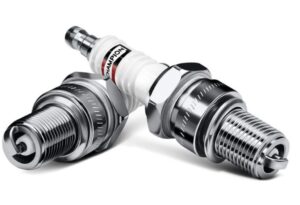
Like any electrical component, spark plug coils can eventually wear out or fail. When they do, your car will usually give you some pretty clear warning signs. Recognizing these symptoms early can save you from bigger headaches down the road.
Misfires and Rough Idling
This is perhaps the most common and noticeable symptom. If one or more spark plug coils aren’t delivering a consistent spark, that cylinder won’t fire correctly, causing a “misfire.” You’ll feel this as a noticeable shake or shudder from the engine, especially when idling or under light acceleration. It might feel like the engine is sputtering or struggling.
Reduced Fuel Economy
When an engine misfires, the fuel in that cylinder doesn’t burn completely. This means your engine is essentially wasting fuel. You’ll notice yourself filling up at the gas station more often than usual, as your car becomes less efficient. Faulty spark plug coils directly impact how efficiently your engine uses fuel.
Check Engine Light (CEL)
A failing spark plug coil will almost always trigger your car’s Check Engine Light (CEL). The engine’s computer detects the misfire and logs a diagnostic trouble code (DTC). These codes typically start with P0300 (for random misfires) or P0301, P0302, etc. (indicating a misfire in a specific cylinder, like Cylinder 1 or Cylinder 2). If your CEL is flashing, that’s often a sign of a severe misfire that needs immediate attention to prevent catalytic converter damage.
Difficulty Starting
If multiple spark plug coils are failing, or if the primary coil (in older systems) isn’t working, your engine might struggle to start, crank excessively, or not start at all. Without enough sparks, the engine simply can’t ignite the fuel to begin its cycle.
Stalling
In severe cases, if enough spark plug coils fail, the engine might lose so much power that it simply stalls, especially at idle or low speeds. This can be dangerous, so it’s crucial to address coil issues promptly.
Diagnosing and Replacing Spark Plug Coils (DIY vs. Pro)
Once you suspect a faulty spark plug coil, the next step is to confirm the diagnosis and decide on a repair strategy.
Basic Diagnostic Steps
- Read OBD-II Codes: The absolute first step is to get your car’s OBD-II codes read. Many auto parts stores offer this service for free. Codes like P0301 (Cylinder 1 Misfire) are a strong indicator of a failing spark plug coil or spark plug in that specific cylinder.
- Visual Inspection: Sometimes, you can spot a problem visually. Look for cracks in the coil body, signs of oil or moisture contamination, or corrosion on the electrical connectors.
- Swap Test (for COP systems): If you have a P030X code, you can try swapping the suspected faulty spark plug coil with a coil from a healthy cylinder. Clear the codes, drive the car, and if the misfire code moves to the new cylinder (e.g., from P0301 to P0303), you’ve likely identified the bad coil.
When to DIY and When to Call a Pro
For Coil-on-Plug (COP) systems, replacing a single spark plug coil is often a straightforward DIY job for someone with basic mechanical skills. It usually involves disconnecting an electrical connector, unbolting one or two small bolts, and pulling the coil straight out. However, if you’re dealing with a coil pack, multiple failing spark plug coils, or if you’re uncomfortable working with electrical components, it’s always best to consult a professional mechanic. They have specialized diagnostic tools and expertise to ensure the job is done correctly.
Tips for Replacement
- Always Use Quality Parts: Don’t skimp on spark plug coils. Cheap aftermarket coils might save money upfront but can lead to premature failure and more headaches. Opt for OEM (Original Equipment Manufacturer) quality or reputable aftermarket brands.
- Replace Spark Plugs Too: It’s highly recommended to replace your spark plugs at the same time as you replace spark plug coils, especially if they’re due for service. Worn spark plugs can put extra strain on coils and accelerate their failure.
- Careful with Connectors: Electrical connectors can become brittle over time. Be gentle when disconnecting and reconnecting them to avoid breaking the plastic clips.
- Check for Other Issues: A failing spark plug coil can sometimes be a symptom of another underlying issue, such as oil leaking into the spark plug well. Address any other problems you find during the replacement.
Common P-Codes Related to Coil Issues
Here’s a quick reference for OBD-II codes that often point to spark plug coil issues:
- P0300: Random/Multiple Cylinder Misfire Detected
- P0301: Cylinder 1 Misfire Detected
- P0302: Cylinder 2 Misfire Detected
- P0303: Cylinder 3 Misfire Detected
- P0304: Cylinder 4 Misfire Detected
- P0305: Cylinder 5 Misfire Detected
- P0306: Cylinder 6 Misfire Detected
- P0307: Cylinder 7 Misfire Detected
- P0308: Cylinder 8 Misfire Detected
These codes tell you which cylinder is experiencing the misfire, helping you narrow down which spark plug coil (or spark plug) to inspect first.
Maintaining Your Spark Plug Coils and System Longevity
While spark plug coils are designed to last, a little proactive maintenance can go a long way in extending their lifespan and ensuring your ignition system remains robust.
Regular Spark Plug Replacement
This is probably the single most important maintenance tip for your spark plug coils. Worn-out spark plugs with a larger gap require more voltage from the spark plug coil to fire. This extra strain can cause the spark plug coil to overheat and fail prematurely. Always follow your vehicle manufacturer’s recommended service intervals for spark plug replacement, whether they are traditional or long-life platinum/iridium plugs.
Keeping it Clean
Preventing contaminants like oil or moisture from reaching your spark plug coils is crucial. Oil leaks from valve covers can seep into spark plug wells, degrading the coil’s insulation and leading to failure. Ensure your engine is free of leaks, and if you ever wash your engine bay, be careful to protect electrical components from direct water spray.
Addressing Other Issues Promptly
Don’t let other engine problems put unnecessary strain on your ignition system. Issues like a failing oxygen sensor, a vacuum leak, or a clogged fuel injector can also cause misfires, making your engine’s computer constantly try to compensate, which can indirectly stress the spark plug coils. Addressing these underlying problems quickly will help maintain the overall health of your engine and its components.
Quality Matters
When it comes time to replace a spark plug coil, invest in quality. As mentioned before, cheap coils can fail quickly, leading to repeat repairs. OEM coils or trusted aftermarket brands might cost a bit more initially, but their reliability and longevity will save you money and frustration in the long run. Think of it as investing in your car’s peace of mind.
And there you have it! What once might have seemed like a mysterious component in your car’s engine is now, hopefully, a bit clearer. Spark plug coils are truly the unsung heroes of your ignition system, diligently converting low voltage into the powerful sparks that ignite your engine and propel you down the road. They are essential for a smooth-running, fuel-efficient, and reliable vehicle.
By understanding what spark plug coils are, how they work, and the common signs of their decline, you’re now better equipped to recognize potential issues before they become major problems. Paying attention to your car’s signals and performing timely maintenance, especially concerning spark plugs, will go a long way in ensuring your spark plug coils (and your entire ignition system) serve you well for many miles to come. So, the next time you turn the key, give a little nod to those hardworking spark plug coils – they deserve it!
Frequently Asked Questions
What are spark plug coils?
Spark plug coils, also known as ignition coils, are essential electrical transformers in a gasoline engine’s ignition system. Their primary role is to convert the low voltage from the car’s battery into the high voltage necessary to create a spark at the spark plug. This high-voltage spark is crucial for igniting the air-fuel mixture in the engine cylinders.
What is the main function of spark plug coils?
The main function of spark plug coils is to amplify the battery’s voltage to generate a powerful electrical spark. This spark then jumps across the gap of the spark plug, initiating combustion within the engine’s cylinders. Without properly functioning coils, the engine would not be able to ignite fuel and run efficiently, if at all.
How do spark plug coils work to ignite fuel?
Spark plug coils operate on the principle of electromagnetic induction, transforming low voltage into high voltage through primary and secondary windings. When the engine’s computer signals the coil, current flows through the primary winding, creating a magnetic field. Interrupting this current causes the magnetic field to collapse, inducing a very high voltage in the secondary winding, which then travels to the spark plug.
What are common symptoms of a failing spark plug coil?
Common symptoms of a failing spark plug coil include engine misfires, rough idling, reduced fuel economy, and a noticeable loss of power or acceleration. You might also experience the “Check Engine” light illuminating on your dashboard, often accompanied by specific diagnostic trouble codes indicating an ignition system problem.
Can I drive my car with a bad spark plug coil?
While it might be possible to drive short distances with a failing spark plug coil, it is strongly not recommended. A malfunctioning coil can lead to engine damage over time, including catalytic converter issues due to unburnt fuel entering the exhaust system. It also significantly reduces engine performance and fuel efficiency, making driving unsafe and inefficient.
How often should spark plug coils be replaced, and what is their typical lifespan?
Spark plug coils do not have a fixed replacement schedule and are generally designed to last for a long time, often exceeding 100,000 miles. Their lifespan can vary depending on vehicle make, driving conditions, and maintenance, but they are typically replaced only when symptoms of failure appear. Regular maintenance and addressing misfires promptly can help prolong their life.