No, diesel engines do not have spark plugs! Unlike gasoline engines that use a spark to ignite fuel, diesel engines rely on extreme compression to heat the air in the cylinder, causing the injected fuel to self-ignite. This fundamental difference defines their unique and powerful operation, utilizing compression ignition rather than spark ignition.
Have you ever stood next to a rumbling diesel truck, or maybe owned a diesel vehicle yourself, and wondered how it all works? It’s a pretty common question, and one that often leads to a bit of a head-scratcher: does diesel have spark plugs? For many of us, the image of an engine firing up instantly brings to mind those little electrical zaps that ignite the fuel. And for good reason – most cars on the road today, the ones that run on gasoline, absolutely rely on spark plugs.
But here’s where the fascinating world of internal combustion engines takes a delightful detour. If you’re thinking about diesel engines, you’re actually looking at a completely different beast under the hood when it comes to ignition. The way diesel fuel ignites is one of the most fundamental differences between diesel and gasoline engines, and it’s a concept that truly sets them apart.
So, let’s cut to the chase and unravel this mystery. The short, simple answer to “does diesel have spark plugs” is a resounding no. Diesel engines use a clever, powerful, and entirely different method to get their combustion going. Ready to dive into the real engine facts and understand why your diesel powerhouse doesn’t need that little spark?
Key Takeaways
- Diesel engines: Do not use spark plugs for ignition.
- Compression ignition: Diesels ignite fuel solely through compressed air heat.
- Glow plugs: Assist diesel cold starts; they are not spark plugs.
- Gasoline engines: Universally rely on spark plugs for fuel ignition.
- Key difference: Understand ignition methods between engine types.
- Engine knowledge: Differentiate diesel and gasoline combustion principles.
📑 Table of Contents
- The Core Difference: Spark Ignition vs. Compression Ignition
- So, If Not Spark Plugs, Then What? The Role of Compression
- The “Spark Plug” of a Diesel Engine: Meet the Glow Plug
- Benefits of Compression Ignition: Why Diesel Does It Differently
- Dispelling Myths and Understanding Diesel Engine Maintenance
- Comparing Ignition Systems: Gasoline vs. Diesel
- Conclusion
The Core Difference: Spark Ignition vs. Compression Ignition
To truly grasp why a diesel engine operates without spark plugs, we first need to understand the two primary types of internal combustion engines that power our vehicles and machinery. It all boils down to how they ignite the fuel-air mixture to create power.
How Gasoline Engines Light Up
Think about a gasoline engine. This is what we call a “spark-ignition” engine. Here’s the simplified process: air and gasoline are mixed together and drawn into the engine cylinder. This mixture is then compressed by a piston. At the precise moment, a spark plug – that little hero with an electrode gap – creates an electrical spark. This spark ignites the fuel-air mixture, causing a tiny explosion that pushes the piston down, generating power. It’s like a perfectly timed mini-lightning strike happening thousands of times a minute. So, does diesel have spark plugs like this? Absolutely not.
The Diesel Engine’s Fiery Secret
Now, let’s pivot to the diesel engine, which operates on the principle of “compression ignition.” This is where the magic happens without any sparks. Instead of mixing air and fuel before compression, a diesel engine first compresses only air. And it compresses it a lot – to extremely high pressures. This intense compression dramatically increases the air’s temperature. Once the air is superheated, diesel fuel is injected directly into this scorching hot air. The heat alone is enough to ignite the fuel spontaneously, without any external spark. This is the fundamental reason why the answer to does diesel have spark plugs is no.
So, If Not Spark Plugs, Then What? The Role of Compression
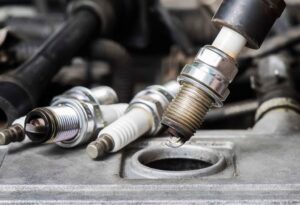
The absence of spark plugs in a diesel engine isn’t just a quirk; it’s central to its design and how it delivers power. The entire system is built around leveraging the incredible power of compression to achieve ignition.
The Power of Pressure
Imagine squeezing a bicycle pump very quickly with your thumb over the end. You’d feel the end of the pump get warm, right? That’s because compressing air generates heat. Diesel engines take this concept to an extreme level. They compress the air inside their cylinders to pressures far higher than those found in gasoline engines. This massive compression ratio can raise the air’s temperature to anywhere from 500 to 700 degrees Celsius (around 900 to 1300 degrees Fahrenheit). That’s hot enough to make anything spontaneously combust!
Direct Fuel Injection: Precision Matters
Once the air is superheated from compression, the next critical step is the injection of fuel. Unlike gasoline engines where fuel and air are often mixed earlier, diesel engines use direct fuel injection. Highly pressurized diesel fuel is sprayed directly into the combustion chamber through precision injectors. When this finely atomized fuel meets the extremely hot, compressed air, it instantly ignites. This spontaneous combustion drives the piston down with immense force, powering the vehicle. This precise timing and the reliance on heat generated by compression answer the question: does diesel have spark plugs? No, it has an ingenious combustion process.
The “Spark Plug” of a Diesel Engine: Meet the Glow Plug
This is often where the confusion arises. If you’ve ever worked on a diesel engine or seen parts for one, you might have come across something called a “glow plug.” And if you’re asking does diesel have spark plugs, it’s easy to mistake these two. However, glow plugs serve a distinctly different purpose.
What Exactly is a Glow Plug?
A glow plug is an electrical heating device, typically found in each cylinder of a diesel engine. It’s essentially a small heating element that protrudes into the combustion chamber. When you turn the key in a cold diesel engine, electricity flows through the glow plugs, causing their tips to heat up to very high temperatures – glowing red hot, hence the name!
Why Glow Plugs are Essential, Especially in Winter
While glow plugs get very hot, they do not ignite the fuel during normal engine operation. Their primary role is to assist with cold starts. When the engine is cold, especially in chilly weather, the air inside the cylinder might not get hot enough from compression alone to ignite the diesel fuel immediately. The glow plugs preheat the combustion chamber, providing that extra boost of heat needed to ensure reliable and quick ignition of the first few fuel charges. Once the engine is running and warmed up, the heat from compression is sufficient, and the glow plugs switch off. So, while they are electrically heated, they are not spark plugs. They merely help to achieve the necessary temperature for the compression-ignition process to begin effectively. This means that even with glow plugs, the answer to does diesel have spark plugs for ignition remains no.
Benefits of Compression Ignition: Why Diesel Does It Differently
The unique compression-ignition method in diesel engines isn’t just a different way of doing things; it brings with it several significant advantages that make diesel engines ideal for certain applications.
Efficiency and Powerhouse Performance
Because diesel engines compress air to much higher ratios, they achieve greater thermal efficiency. This means they convert a higher percentage of the fuel’s energy into useful work. In simpler terms, you get more power from less fuel. This efficiency contributes to better fuel economy compared to gasoline engines of similar size. Additionally, diesel engines are renowned for their high torque output, especially at lower RPMs. This makes them excellent for heavy-duty applications like trucks, buses, and industrial machinery where pulling power is paramount. Understanding that does diesel have spark plugs is irrelevant to its power output helps appreciate its design.
Built to Last
The robust construction required to withstand the immense pressures of compression ignition also contributes to the legendary durability and longevity of diesel engines. Their components are generally beefier and built to endure more stress, often leading to a longer operational life with proper maintenance. This robust design is a direct consequence of not needing spark plugs and relying purely on high compression.
Dispelling Myths and Understanding Diesel Engine Maintenance
With a clear understanding that does diesel have spark plugs is a non-issue for diesel engines, let’s clear up some common misconceptions and look at what maintenance really entails for these robust powerhouses.
No Spark Plug Swaps Here
One of the immediate maintenance differences you’ll notice with a diesel engine is the absence of spark plug changes. This is a regular and often costly part of gasoline engine maintenance. While you won’t be replacing spark plugs, glow plugs do need attention eventually. They can wear out, and a faulty glow plug can lead to hard starting in cold weather. Checking and replacing glow plugs is a specific diesel maintenance task, but it’s distinct from spark plug replacement.
Key Diesel Maintenance Areas
Instead of spark plugs, diesel engine maintenance focuses on other critical components. Fuel injectors are extremely important, as they must precisely deliver highly atomized fuel under immense pressure. Keeping them clean and functioning correctly is vital. Fuel filters are also critical because diesel fuel quality can vary, and contaminants can wreak havoc on the fuel system. Air filters, oil changes, and regular checks of the turbocharger (if equipped) are also standard. Understanding these differences helps solidify why the question of “does diesel have spark plugs” is fundamentally misplaced when discussing diesel engine care.
Comparing Ignition Systems: Gasoline vs. Diesel
To summarize the fundamental differences we’ve discussed, here’s a quick comparison of the ignition systems in gasoline and diesel engines:
| Feature | Gasoline Engine (Spark Ignition) | Diesel Engine (Compression Ignition) |
|---|---|---|
| Primary Ignition Method | Electric Spark from Spark Plugs | Heat from highly compressed air |
| Ignition Component | Spark Plugs | No Spark Plugs (relies on compression heat) |
| Starting Aid (Cold Weather) | None typically needed for ignition | Glow Plugs (preheat combustion chamber) |
| Fuel-Air Mixture | Mixed before compression | Air compressed first, then fuel injected |
| Compression Ratio | Lower (typically 8:1 to 12:1) | Higher (typically 16:1 to 24:1) |
| Fuel Type | Gasoline | Diesel Fuel |
This table clearly illustrates why the question does diesel have spark plugs has a definitive “no” answer. Their operational principles are simply different at their very core.
Conclusion
So, the next time someone asks you, “does diesel have spark plugs?” you’ll be armed with the real engine facts. You can confidently explain that diesel engines, those powerful and efficient workhorses, operate on a principle entirely different from their gasoline counterparts. They don’t rely on a tiny electrical spark to ignite their fuel. Instead, they harness the incredible power of compression, heating the air to such high temperatures that the injected diesel fuel ignites spontaneously.
This fundamental difference is what gives diesel engines their unique characteristics: their remarkable fuel efficiency, robust torque, and legendary durability. And while they do have glow plugs to help them start in cold weather, these are distinct from spark plugs and serve a preheating function, not an ignition one. Understanding this core distinction not only demystifies diesel technology but also highlights the brilliant engineering behind these amazing engines that power so much of our world.
Frequently Asked Questions
Does Diesel Have Spark Plugs?
No, diesel engines do not use spark plugs for their primary combustion. Unlike gasoline engines that require a spark to ignite the air-fuel mixture, diesel engines employ a different ignition method.
Why don’t diesel engines need spark plugs?
Diesel engines operate on a principle called compression ignition. They compress air to extremely high temperatures within the cylinders, which then causes the injected diesel fuel to self-ignite without the need for an external spark.
How does a diesel engine ignite its fuel without spark plugs?
In a diesel engine, only air is drawn into the cylinder and compressed significantly, causing its temperature to rise dramatically. When diesel fuel is then injected into this superheated, high-pressure air, it spontaneously combusts.
What is the main difference in ignition between gasoline and diesel engines?
The main difference lies in the ignition source. Gasoline engines are “spark-ignition” engines, using spark plugs to initiate combustion, while diesel engines are “compression-ignition” engines, relying on the heat generated from compressed air to ignite the fuel.
Do diesel engines use anything similar to spark plugs?
While not spark plugs, diesel engines utilize glow plugs, especially in colder conditions. Glow plugs are heating elements that preheat the combustion chamber to aid in starting the engine by making it easier for the fuel to ignite, but they do not create a spark for continuous operation.
Are spark plugs ever found in a diesel engine system?
No, a true diesel engine fundamentally operates on compression ignition and will never use spark plugs for its combustion process. If a system incorporates spark plugs, it’s not a pure diesel engine and might be a different type of internal combustion engine.