Locating your lawn mower’s spark plug is simpler than you think; it’s almost always found on the front or top of the engine block, easily identifiable by a thick wire leading to a protective rubber boot. Knowing its exact position is crucial for routine maintenance and troubleshooting engine start issues. Quickly find and inspect it to keep your mower running smoothly!
Where is Spark Plug on Lawn Mower? Find it Fast!
Ever had your lawn mower sputter, choke, and refuse to start, leaving you staring at an overgrown lawn with a sense of dread? My friend, you’re not alone! Often, the culprit is a little component called the spark plug. And the first step to getting your trusty machine purring again is knowing where to find it.
So, where is the spark plug on a lawn mower? Good news! It’s usually pretty accessible, typically found on the front or side of the engine block. It’s often hidden by a thick, rubbery boot or cap with a wire attached to it. Think of it like the engine’s belly button – a small, crucial part that’s easy to spot once you know what you’re looking for. Always remember safety first: disconnect that spark plug wire before you do anything else!
So, where exactly is the spark plug on my lawn mower, and how do I get to it?
Finding the spark plug on your lawn mower is a key maintenance skill, and it’s usually simpler than you think. Let me walk you through it, just like I would with a friend who’s looking a bit puzzled in their garage.
First things first, and I can’t stress this enough: safety is paramount! Before you even think about touching anything, make sure your lawn mower is off. For push mowers, the absolute best practice is to always disconnect the spark plug wire from the spark plug. This prevents any accidental starts while you’re working. If it’s a riding mower, take out the key. Trust me, you don’t want a surprise start while your hands are near the blades.
Now, let’s locate that spark plug. On most standard push mowers (like the common Briggs & Stratton or Honda engines), if you stand behind the handle and look at the engine block, the spark plug is usually mounted towards the front or the side of the engine. It’s almost always pointing outwards, either forwards or to one side.
- Look for the rubber boot: The most obvious sign of the spark plug is the thick, dark rubber cap or boot covering it. This boot protects the connection and insulation and has a wire (the spark plug wire) running from it back into the engine’s ignition system. Give it a gentle but firm tug, and it should pop off, revealing the ceramic part of the spark plug underneath.
- Scanning the engine block: On many push mowers, especially those with vertical-shaft engines, it’s often right there, proudly displayed on the cylinder head. On my old Troy-Bilt, it’s front and center, easy as pie to find.
- What if it’s hiding? Some mowers, particularly those with overhead valve (OHV) engines or riding mowers, might have the spark plug tucked away a little more. It could be partially concealed by a shroud, a fuel tank, or another engine component. Don’t panic! Grab a flashlight and carefully scan around the engine. Sometimes, a small plastic or metal cover might need to be unscrewed or unclipped to reveal it. My neighbor’s riding mower had its spark plug tucked neatly under the fuel tank, requiring a bit of reaching and feeling around.
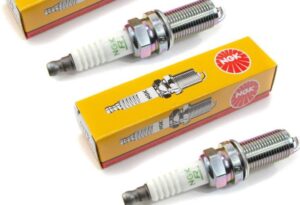
- Confirming your find: Once the rubber boot is off, you’ll see the spark plug itself – a cylindrical component with a porcelain (ceramic) insulator in the middle and metal threads where it screws into the engine block. That’s your target! This little component is vital because it creates the spark that ignites the fuel-air mixture, making your engine run.
From personal experience, sometimes the boot can be a bit stubborn. Don’t be afraid to give it a good, firm twist and pull. Just be gentle not to yank the wire itself. Once you’ve located it, replacing or cleaning your spark plug becomes a straightforward task that can breathe new life into a struggling mower.
So, there you have it! Finding the spark plug on your lawn mower isn’t a mystery, and it’s a fantastic first step in becoming more familiar with your machine’s maintenance. With a little looking and that all-important safety check, you’ll have it pinpointed in no time, ready to get your lawn looking sharp again!