A MAF (Mass Air Flow) sensor can go bad for several reasons, but the most common causes are dirt buildup, oil contamination, moisture, electrical problems, intake air leaks, and normal wear over time. These issues can prevent the sensor from measuring airflow accurately, leading to poor engine performance, reduced fuel economy, and a check engine light.
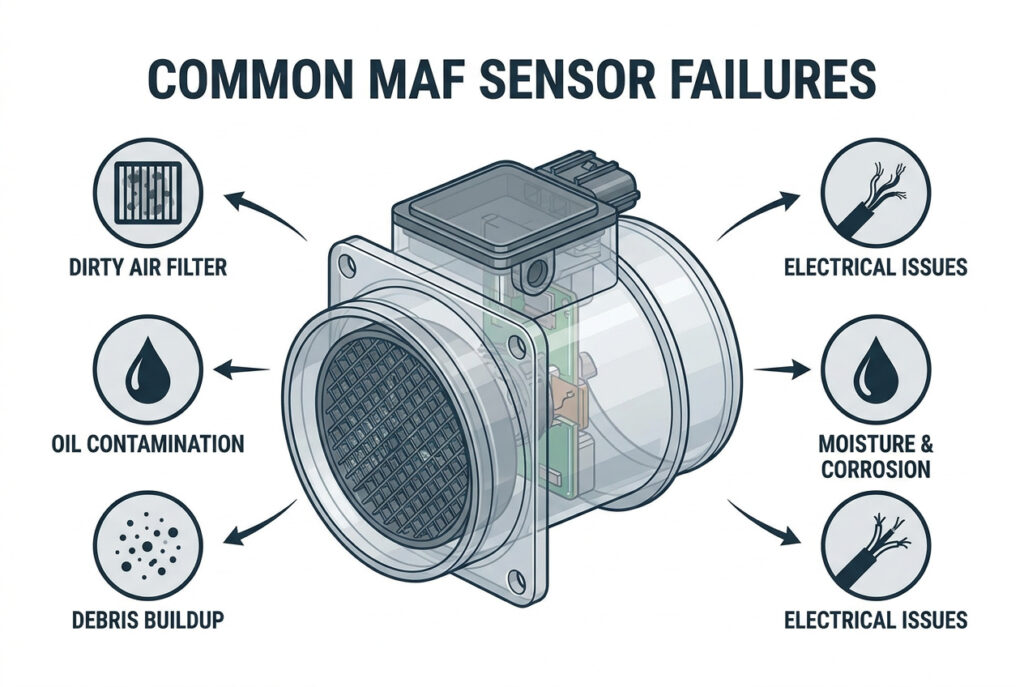
Fortunately, not every failing MAF sensor needs to be replaced. In many cases, cleaning the sensor or fixing the underlying problem can restore normal operation.
The MAF sensor is one of the most important sensors in your vehicle’s air intake system. It measures the amount of air entering the engine and sends that information to the Engine Control Unit (ECU), which then calculates the correct amount of fuel to inject. Because the sensor is exposed to a constant stream of incoming air, it’s also vulnerable to contamination and environmental damage.
If you’re wondering what causes a MAF sensor to go bad, the answer isn’t always as simple as old age. While MAF sensors naturally wear out over time, many failures are actually caused by preventable issues such as a dirty air filter, excessive oil from reusable air filters, moisture, damaged wiring, or air leaks in the intake system.
Read More: What Does a Bad MAF Sensor Look Like?
Understanding these causes is important because the solution depends on the root of the problem. A sensor that’s covered in dirt may only need a careful cleaning, while one with internal electrical damage will usually need to be replaced. Identifying the actual cause can save you money and help you avoid replacing parts unnecessarily.
In this guide, you’ll learn the most common reasons why MAF sensors fail, how each issue affects sensor performance, and what you can do to reduce the risk of premature failure.
Dirt and Dust Contamination
The most common cause of MAF sensor failure is dirt and dust contamination. Although the engine air filter removes most airborne particles before they reach the engine, tiny amounts of dust can still pass through over time and settle on the sensor’s delicate sensing element.
As contamination builds up, the MAF sensor becomes less accurate. Instead of measuring the actual amount of air entering the engine, it begins sending incorrect airflow data to the ECU. This can result in poor acceleration, rough idling, lower fuel economy, and even a check engine light.
Several factors can increase the amount of dirt reaching the sensor, including:
- A dirty or clogged engine air filter
- A damaged or improperly installed air filter
- Driving on dusty or unpaved roads
- Long intervals between air filter replacements
The good news is that dirt contamination doesn’t always mean the sensor is permanently damaged. If the sensing element is only dirty, cleaning it with a dedicated MAF sensor cleaner may restore accurate airflow readings and improve engine performance.
Oil Contamination
Oil contamination is another common reason a MAF sensor can fail, especially if your vehicle uses an oiled reusable air filter. These filters are designed to trap dirt more effectively, but applying too much filter oil can create problems.
When excess oil is drawn into the air intake system, it can coat the MAF sensor’s sensing element. Over time, the sticky oil attracts dust and debris, creating a layer of contamination that interferes with accurate airflow measurements.
A contaminated sensor may cause symptoms such as:
- Rough idle
- Sluggish acceleration
- Reduced fuel economy
- Engine hesitation
- Check engine light
To avoid this problem, always follow the air filter manufacturer’s instructions when applying filter oil. If the filter has been over-oiled, cleaning the MAF sensor and properly servicing the air filter may restore normal operation.
Moisture and Water Damage
Although MAF sensors are designed to operate in a wide range of weather conditions, excessive moisture can still damage them. Water entering the air intake system can contaminate the sensing element, corrode electrical connections, or even damage the sensor’s internal electronics.
Moisture-related problems are more likely to occur if you:
- Drive through deep standing water or flooded roads
- Use a poorly sealed cold air intake
- Have a damaged air intake system
- Experience condensation inside the intake system
If moisture reaches the sensor, you may notice intermittent performance problems before the sensor fails completely.
Electrical Problems
Not every MAF sensor failure is caused by contamination. Sometimes the problem lies in the electrical system rather than the sensor itself.
A MAF sensor relies on a steady power supply and a reliable electrical connection to communicate with the Engine Control Unit (ECU). If that connection is interrupted, the sensor may send incorrect readings or stop working altogether.
Common electrical issues include:
- Loose electrical connectors
- Corroded terminals
- Damaged wiring
- Blown fuses
- Poor ground connections
Because electrical problems often produce the same symptoms as a faulty sensor, it’s important to inspect the wiring and connector before replacing the MAF sensor.
Vacuum Leaks and Intake Air Leaks
A vacuum leak or air intake leak doesn’t actually damage the MAF sensor, but it can create symptoms that make it appear as though the sensor has failed.
The MAF sensor measures all the air passing through the air intake system. If additional air enters the engine through a cracked intake hose, loose clamp, or leaking gasket after the sensor, the ECU receives incorrect airflow information. This “unmetered air” can upset the air-fuel mixture and lead to rough idling, hesitation, poor acceleration, and a check engine light.
Before replacing the MAF sensor, inspect the entire intake system for leaks. In many cases, repairing the leak solves the problem without replacing the sensor.
Heat and Engine Bay Conditions
MAF sensors are built to withstand high temperatures, but years of constant heat can gradually reduce their accuracy. Every time you drive, the sensor is exposed to repeated heating and cooling cycles inside the engine bay.
Over time, excessive heat can:
- Weaken internal electronic components
- Damage the sensing element
- Dry out seals and plastic parts
- Reduce the sensor’s overall lifespan
While heat alone isn’t usually the primary cause of failure, it can accelerate wear, especially on high-mileage vehicles.
Normal Wear and Aging
Like most automotive sensors, a MAF sensor has a limited lifespan. As the vehicle accumulates mileage, the sensing element and internal electronics naturally become less accurate.
Most MAF sensors can last 100,000 miles (160,000 km) or more, but their lifespan depends on driving conditions, maintenance, and the quality of the air entering the intake system.
If your vehicle has high mileage and you’ve ruled out contamination and electrical issues, normal wear may be the reason the sensor is no longer working correctly.
Poor-Quality Replacement Parts
Not all replacement MAF sensors are manufactured to the same standard. Low-quality aftermarket sensors may fit your vehicle, but they don’t always provide accurate airflow readings.
Common problems with inexpensive replacement sensors include:
- Incorrect calibration
- Inconsistent airflow measurements
- Poor build quality
- Shorter service life
If you need to replace your MAF sensor, choosing an OEM or a reputable aftermarket brand is usually the better long-term investment.
Can You Prevent a MAF Sensor from Going Bad?
Although you can’t prevent every failure, you can significantly extend the life of your MAF sensor with proper maintenance.
Here are a few simple tips:
- Replace the engine air filter at the recommended service interval.
- Avoid over-oiling reusable air filters.
- Inspect the air intake system for cracks or loose connections.
- Repair vacuum leaks as soon as they’re discovered.
- Keep the electrical connector clean and secure.
- Clean the MAF sensor only with a dedicated MAF sensor cleaner when necessary.
These maintenance practices help keep contaminants away from the sensing element and reduce the chances of premature failure.
Frequently Asked Questions
What is the most common cause of MAF sensor failure?
The most common cause is dirt and dust contamination. Over time, debris can collect on the sensing element and reduce the sensor’s ability to measure airflow accurately.
Can a dirty air filter damage a MAF sensor?
Yes. A clogged, damaged, or improperly installed air filter can allow more contaminants to reach the MAF sensor, increasing the risk of contamination and inaccurate readings.
Can oil ruin a MAF sensor?
Yes. Excess oil from an over-oiled reusable air filter can coat the sensing element, attract dirt, and interfere with airflow measurements. In many cases, the sensor can be cleaned if the contamination isn’t severe.
How long does a MAF sensor usually last?
A well-maintained MAF sensor often lasts 100,000 miles (160,000 km) or more, although driving conditions and maintenance habits can affect its lifespan.
Can a bad air intake cause MAF sensor problems?
Yes. Cracked intake hoses, loose clamps, or vacuum leaks can allow unmetered air into the engine, creating symptoms that closely resemble a faulty MAF sensor.
Conclusion
If you’ve been wondering what causes a MAF sensor to go bad, the answer is usually a combination of contamination, electrical issues, intake problems, and normal aging. Dirt and oil buildup are the most common causes, but moisture, damaged wiring, vacuum leaks, excessive heat, and low-quality replacement parts can also contribute to premature failure.
The good news is that many MAF sensor problems are preventable. Replacing the air filter on schedule, keeping the intake system sealed, avoiding over-oiled filters, and inspecting the sensor during routine maintenance can help extend its lifespan. And before replacing a MAF sensor, always inspect and test it first—you may find that a simple cleaning or minor repair is all that’s needed to restore proper engine performance.