A dirty MAF sensor can absolutely cause a rough idle. When dirt, dust, or oil builds up on the Mass Air Flow (MAF) sensor, it can no longer measure incoming air accurately. As a result, the Engine Control Unit (ECU) may inject too much or too little fuel, creating an improper air-fuel mixture that causes the engine to idle roughly, vibrate, or even stall.
However, a dirty MAF sensor isn’t the only possible cause of a rough idle. Vacuum leaks, a dirty throttle body, worn spark plugs, clogged fuel injectors, and several other engine problems can produce similar symptoms. That’s why it’s important to diagnose the issue before replacing any parts.
If your engine shakes while idling, the RPM fluctuates unexpectedly, or the vehicle feels unstable when stopped, it’s easy to assume the worst. Fortunately, a dirty MAF sensor is often one of the easier problems to diagnose and, in many cases, one of the least expensive to fix.
The MAF sensor plays a critical role in your vehicle’s air intake system. It continuously measures the amount of air entering the engine and sends that information to the Engine Control Unit (ECU), which uses it to calculate the correct amount of fuel for efficient combustion. Even a small amount of contamination on the sensor can reduce its accuracy, making it difficult for the ECU to maintain the proper air-fuel mixture—especially while the engine is idling.
Read More: What Does a Bad MAF Sensor Look Like?
The good news is that a dirty MAF sensor doesn’t always need to be replaced. If contamination is the only issue, cleaning the sensor with the proper cleaner can often restore normal engine performance.
In this guide, you’ll learn how a dirty MAF sensor causes rough idle, how to recognize the warning signs, how to determine whether the MAF sensor is actually responsible, and whether cleaning it is enough or if replacement is the better solution.
How the MAF Sensor Affects Engine Idle
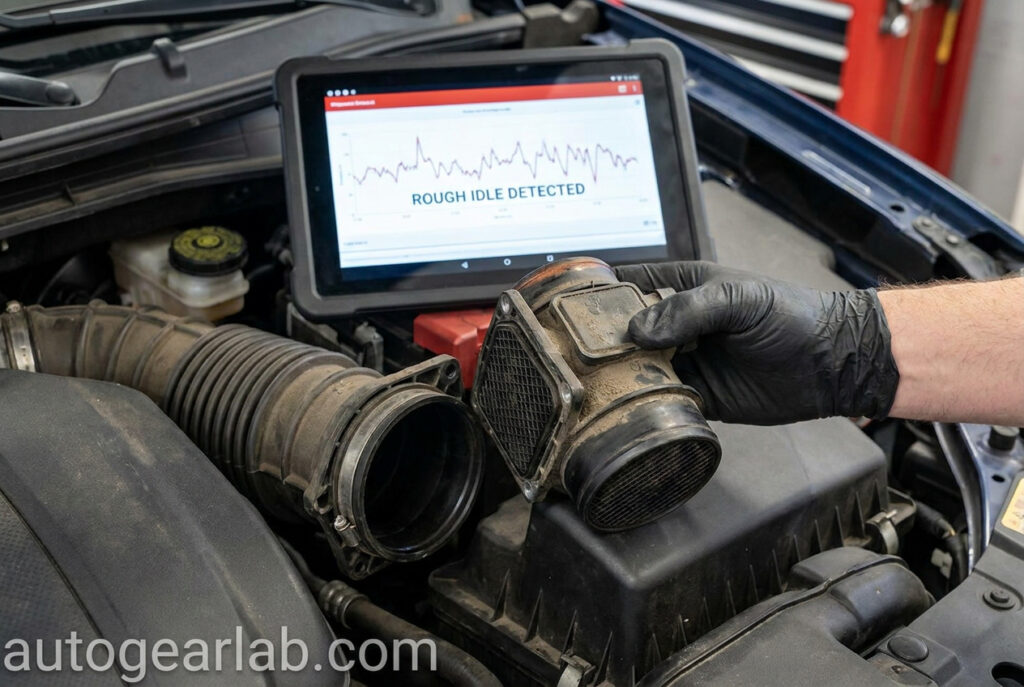
To understand why a dirty MAF sensor can cause rough idle, it helps to know what happens while your engine is idling.
Even when your vehicle is stopped, the engine still needs a precise amount of air and fuel to keep running smoothly. The MAF sensor continuously measures the amount of air entering the engine and sends that information to the ECU. Using this data, the ECU adjusts fuel delivery to maintain the correct air-fuel ratio.
At idle, these adjustments are extremely precise. Small changes in airflow can have a noticeable effect on engine performance. If the MAF sensor sends inaccurate readings because it’s covered in dirt or oil, the ECU may add too much fuel or not enough fuel.
As a result, you may notice:
- Engine shaking or vibration
- Fluctuating idle speed (RPM)
- Rough or unstable idle
- Occasional engine stalling
- Slow throttle response when accelerating from a stop
Because idle operation depends on accurate airflow measurements, even a slightly dirty MAF sensor can make the engine run noticeably rough.
Read More: Can You Drive with a Bad MAF Sensor?
How a Dirty MAF Sensor Causes Rough Idle
A dirty MAF sensor doesn’t stop working overnight. In most cases, dust, dirt, or oil gradually builds up on the sensor’s delicate sensing element, making its airflow readings less accurate over time.
When this happens, the Engine Control Unit (ECU) receives incorrect information about how much air is entering the engine. Since the ECU relies on that data to calculate fuel delivery, even a small error can disrupt the air-fuel mixture—especially while the engine is idling.
Incorrect Airflow Readings
The MAF sensor is designed to measure the exact amount of air flowing into the engine. When the sensing element is coated with contaminants, it may report either less airflow or more airflow than what’s actually entering the engine.
As a result, the ECU makes fuel adjustments based on inaccurate data instead of real airflow.
Rich or Lean Air-Fuel Mixture
Incorrect airflow readings can cause the engine to run either:
- Too rich, meaning too much fuel and not enough air.
- Too lean, meaning too much air and not enough fuel.
Neither condition is ideal. Both can make the engine idle roughly, reduce performance, and increase emissions.
Unstable Engine Idle
At higher engine speeds, the ECU has more airflow data to work with and can often compensate for minor errors. At idle, however, airflow is much lower, so even small inaccuracies from a dirty MAF sensor become more noticeable.
This is why you may experience:
- Idle RPM that rises and falls unexpectedly
- Engine vibration while stopped
- Intermittent stumbling
- Occasional engine stalls
- Rough idle that improves once you start driving
If the contamination continues to build up, the symptoms usually become more frequent and more noticeable over time.
Read More : Can a MAF Sensor Cause Transmission Problems?
Common Symptoms Besides Rough Idle
A rough idle is rarely the only sign of a dirty MAF sensor. Because the sensor affects the engine’s fuel calculations, you may notice several other performance issues at the same time.
Common symptoms include:
- Check engine light illuminated
- Poor acceleration
- Engine hesitation when pressing the gas pedal
- Reduced fuel economy
- Engine misfires
- Loss of power during acceleration
- Hard starting
- Occasional engine stalling
- Black exhaust smoke (if the engine runs rich)
The combination and severity of these symptoms depend on how dirty the MAF sensor is and how inaccurate its airflow readings have become.
If your vehicle has both a rough idle and several of these symptoms, inspecting the MAF sensor is a good place to begin. However, you shouldn’t assume it’s the only possible cause, as several other engine problems can produce similar behavior.
Can Other Problems Cause Rough Idle?
Yes. While a dirty MAF sensor is a common cause of rough idle, it’s far from the only one. Several other engine and air intake problems can create nearly identical symptoms.
Before replacing the MAF sensor, it’s worth checking these common causes.
Vacuum Leaks
A cracked vacuum hose, leaking intake gasket, or loose intake tube can allow unmetered air to enter the engine. This changes the air-fuel mixture and often results in rough or unstable idling.
Dirty Throttle Body
Over time, carbon deposits can build up inside the throttle body, restricting airflow at idle. A dirty throttle body can cause rough idle, hesitation, and inconsistent engine speed.
Worn Spark Plugs
Spark plugs that are worn or fouled may not ignite the air-fuel mixture consistently. This can lead to rough idle, engine misfires, and poor acceleration.
Clogged or Faulty Fuel Injectors
Fuel injectors deliver fuel into the engine. If one becomes clogged or fails, one or more cylinders may not receive enough fuel, causing the engine to idle unevenly.
Faulty Oxygen Sensor
A bad oxygen (O2) sensor can send incorrect exhaust readings to the ECU, causing improper fuel adjustments that may lead to rough idle and poor fuel economy.
PCV Valve Problems
A stuck or clogged Positive Crankcase Ventilation (PCV) valve can create vacuum leaks or disrupt airflow, making the engine idle roughly.
How to Tell If the MAF Sensor Is the Problem
Since several issues can cause rough idle, you should confirm that the MAF sensor is actually at fault before replacing it.
Here are a few simple ways to narrow down the problem:
- Inspect the MAF sensor for dirt, oil, or visible damage.
- Scan the vehicle with an OBD-II scanner for diagnostic trouble codes.
- Check the MAF sensor’s live data if your scan tool supports it.
- Inspect the air intake system for cracks or vacuum leaks.
- Clean the MAF sensor using a dedicated MAF sensor cleaner and see if the idle improves.
If cleaning the sensor restores a smooth idle, contamination was likely the cause. If the rough idle remains unchanged, further testing may be needed to identify the actual problem.
Will Cleaning the MAF Sensor Fix Rough Idle?
In many cases, yes. If dirt or oil contamination is preventing the MAF sensor from measuring airflow accurately, cleaning it can restore proper operation and eliminate the rough idle.
However, cleaning won’t fix every problem. If the sensing element is damaged, the internal electronics have failed, or another engine issue is causing the rough idle, you’ll need additional repairs.
For the best results:
- Use only a dedicated MAF sensor cleaner.
- Never touch the sensing wire or sensing film.
- Allow the sensor to dry completely before reinstalling it.
- Test the vehicle after cleaning to see whether the idle has improved.
If the symptoms persist after cleaning, inspect the intake system, check for diagnostic trouble codes, or test the sensor before replacing it.
How to Prevent MAF Sensor Contamination
Keeping the MAF sensor clean is much easier than dealing with the problems a dirty sensor can cause.
You can reduce the risk of contamination by:
- Replacing the engine air filter at the recommended interval.
- Avoiding excessive oil on reusable air filters.
- Inspecting the air intake system for leaks or loose connections.
- Keeping the engine bay clean.
- Cleaning the MAF sensor only when necessary using the correct cleaner.
These simple maintenance steps can help extend the life of the sensor and keep your engine idling smoothly.
Frequently Asked Questions
Can a dirty MAF sensor cause rough idle without a check engine light?
Yes. A lightly contaminated MAF sensor can cause rough idle before the ECU detects a fault and turns on the check engine light.
Can cleaning a MAF sensor improve idle?
Yes. If contamination is affecting the sensor’s airflow readings, cleaning it can often restore a smooth and stable idle.
How dirty does a MAF sensor have to be to affect idle?
Even a thin layer of dust or oil can reduce the sensor’s accuracy enough to affect idle quality, especially on modern engines.
Can a vacuum leak feel like a bad MAF sensor?
Yes. Vacuum leaks often create symptoms similar to a dirty MAF sensor, including rough idle, hesitation, and poor acceleration.
Should I replace or clean my MAF sensor first?
If the sensor is only dirty, cleaning is usually the best first step. Replace it only if cleaning doesn’t solve the problem or the sensor is physically damaged or electrically faulty.
Conclusion
Yes, a dirty MAF sensor can cause rough idle, but it’s important not to jump to conclusions. Because a rough idle can also be caused by vacuum leaks, ignition problems, a dirty throttle body, or fuel system issues, proper diagnosis is essential.
Start by inspecting the MAF sensor for dirt or oil contamination, check the air intake system for leaks, and scan the vehicle for diagnostic trouble codes. In many cases, a simple cleaning with a dedicated MAF sensor cleaner is enough to restore accurate airflow readings and smooth engine idle.
If cleaning doesn’t resolve the issue, further testing can help determine whether the MAF sensor needs to be replaced or if another component is responsible. Taking the time to diagnose the problem correctly can save money and ensure your engine performs the way it should.