Yes, you can drive with a bad MAF sensor in many cases, but it’s not recommended. A faulty Mass Air Flow (MAF) sensor may not stop your vehicle from running, but it can cause poor engine performance, reduced fuel economy, rough idling, engine misfires, and even damage expensive components like the catalytic converter if the problem is ignored for too long.
If your check engine light suddenly comes on and your vehicle starts hesitating, losing power, or idling roughly, you might wonder whether it’s safe to keep driving.
Many drivers continue using their vehicles because they still run, assuming the problem isn’t serious. Unfortunately, that’s not always the case. What starts as a minor drivability issue can gradually turn into a much more expensive repair if the underlying cause isn’t addressed.
Learn More: What Does a Bad MAF Sensor Look Like?
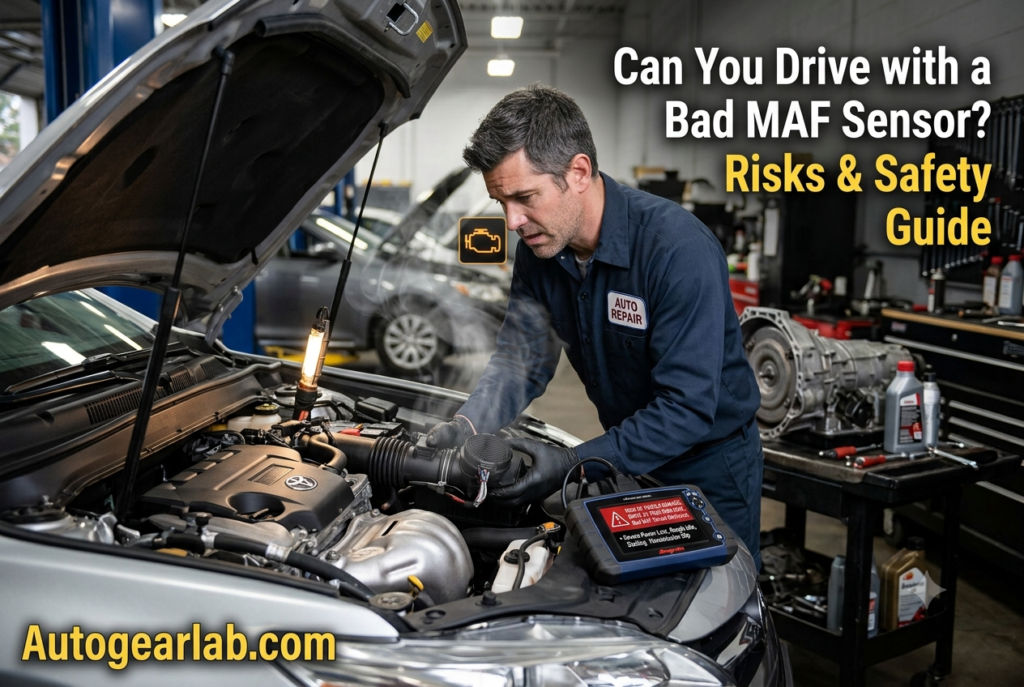
A bad MAF sensor doesn’t usually cause immediate engine failure, but it can prevent the Engine Control Unit (ECU) from calculating the correct air-fuel mixture. Over time, this can increase fuel consumption, reduce engine efficiency, and place additional stress on components such as the spark plugs, oxygen sensors, and catalytic converter.
In this guide, I’ll explain what happens when you drive with a bad MAF sensor, the risks involved, how far you can safely drive, when you should stop driving immediately, and what you should do to fix the problem before it gets worse.
Learn More: What Causes a MAF Sensor to Go Bad?
What Happens When You Drive with a Bad MAF Sensor?
The MAF sensor measures the amount of air entering the engine and sends that information to the Engine Control Unit (ECU). The ECU then uses this data to determine how much fuel should be injected for efficient combustion.
When the MAF sensor starts sending incorrect airflow readings, the ECU has to make fuel calculations based on inaccurate information. As a result, the engine may receive:
- Too much fuel (rich air-fuel mixture)
- Too little fuel (lean air-fuel mixture)
Either condition can affect how the engine performs while you’re driving.
On many modern vehicles, the ECU can recognize abnormal MAF sensor readings and switch to a backup operating strategy using preset airflow values. This allows the engine to continue running, although performance is usually reduced.
Depending on how severe the problem is, you may notice:
- Slower acceleration
- Reduced engine power
- Rough idle
- Engine hesitation
- Poor throttle response
- Increased fuel consumption
- Check engine light
If the sensor continues to provide inaccurate readings, these symptoms typically become more noticeable over time.
Risks of Driving with a Bad MAF Sensor
Although your vehicle may continue running, driving with a bad MAF sensor isn’t without risks. The longer you ignore the problem, the greater the chance of additional drivability issues and expensive repairs.
Reduced Engine Performance
A faulty MAF sensor can make your vehicle feel sluggish because the engine isn’t receiving the correct air-fuel mixture. You may notice slower acceleration and reduced power, especially when climbing hills or merging onto highways.
Poor Fuel Economy
Incorrect airflow readings often cause the ECU to inject more fuel than necessary. Over time, this can significantly reduce your fuel economy and increase operating costs.
Rough Idle and Stalling
An improper air-fuel mixture can make the engine idle roughly or even stall while stopped. Frequent stalling can become a safety concern, particularly in heavy traffic.
Engine Misfires
If the mixture becomes excessively lean or rich, one or more cylinders may misfire. Engine misfires reduce performance, increase emissions, and can eventually damage other engine components.
Catalytic Converter Damage
One of the biggest long-term risks is damage to the catalytic converter. Unburned fuel caused by repeated misfires can overheat the converter, leading to a repair that’s far more expensive than replacing a MAF sensor.
Increased Emissions
A bad MAF sensor often causes incomplete combustion, increasing harmful exhaust emissions and making it more difficult for the vehicle to pass an emissions inspection.
Limp Mode
On some vehicles, the ECU may activate limp mode after detecting severe sensor or engine performance problems. Limp mode limits engine power and may restrict vehicle speed to help prevent further damage.
How Far Can You Drive with a Bad MAF Sensor?
There’s no single answer because it depends on how badly the MAF sensor has failed and how your vehicle responds to the problem.
If the sensor is only slightly contaminated, your vehicle may still drive reasonably well for a short period. You might notice reduced fuel economy, occasional hesitation, or a check engine light, but the engine can often continue operating safely until you reach home or a repair shop.
However, if the MAF sensor is sending severely inaccurate airflow readings, the engine may begin to misfire, stall, lose power, or enter limp mode. In these situations, continuing to drive can increase the risk of damaging the catalytic converter and may even create a safety hazard in traffic.
As a general rule, drive only as far as necessary to diagnose or repair the problem. Avoid long trips or heavy towing until the issue has been fixed.
When You Should Not Drive with a Bad MAF Sensor
Although you can sometimes drive with a bad MAF sensor, there are situations where it’s safer to stop driving and repair the vehicle as soon as possible.
Flashing Check Engine Light
A flashing check engine light usually indicates an active engine misfire. Continuing to drive can quickly overheat and damage the catalytic converter.
Frequent Engine Stalling
If the engine stalls repeatedly, especially at intersections or in traffic, driving becomes unsafe and increases the risk of an accident.
Severe Loss of Power
If your vehicle struggles to accelerate or can’t maintain normal driving speeds, you shouldn’t continue driving until the problem has been diagnosed.
Limp Mode
When the ECU places the vehicle into limp mode, engine power and speed are intentionally limited to protect the drivetrain. Driving long distances in this condition isn’t recommended.
Strong Fuel Smell or Heavy Exhaust Smoke
A rich air-fuel mixture can produce a noticeable fuel smell or excessive exhaust smoke. These signs indicate incomplete combustion and should be addressed immediately.
Read More: How Long Do MAF Sensors Last?
Can Driving with a Bad MAF Sensor Damage the Engine?
Usually not right away. A bad MAF sensor rarely causes immediate engine damage, but ignoring the problem for weeks or months can lead to more serious issues.
Incorrect airflow readings force the ECU to continuously adjust the air-fuel mixture. Over time, this may contribute to:
- Excessive carbon buildup
- Fouled spark plugs
- Oxygen sensor problems
- Catalytic converter damage
- Increased engine wear due to inefficient combustion
The sooner you diagnose and repair the faulty MAF sensor, the lower the risk of these secondary problems.
What Should You Do If You Suspect a Bad MAF Sensor?
If you think your MAF sensor is failing, don’t replace it immediately. A few basic checks can help confirm the problem.
Scan for Trouble Codes
Use an OBD-II scanner to check for airflow-related or fuel mixture diagnostic trouble codes.
Inspect the MAF Sensor
Look for dirt, oil contamination, corrosion, or physical damage on the sensing element.
Check the Air Intake System
Inspect the air filter, intake tube, and vacuum hoses for leaks or damage that could affect airflow measurements.
Clean the Sensor
If the sensor is dirty, clean it using a dedicated MAF sensor cleaner. In many cases, this restores accurate airflow readings.
Replace the Sensor if Necessary
If cleaning doesn’t improve performance or testing confirms an internal failure, replace the MAF sensor with a quality replacement part.
How to Prevent MAF Sensor Problems
Routine maintenance is the best way to reduce the risk of MAF sensor failure.
You can help extend the sensor’s lifespan by:
- Replacing the engine air filter at the recommended interval.
- Avoiding over-oiled reusable air filters.
- Keeping the air intake system properly sealed.
- Repairing intake leaks promptly.
- Cleaning the MAF sensor only when necessary using the correct cleaner.
These simple maintenance steps can help keep your engine running efficiently and reduce the likelihood of future drivability problems.
Frequently Asked Questions
Is it OK to drive with a bad MAF sensor?
Yes, for a short distance in many cases. However, you should repair the problem as soon as possible to avoid reduced performance and potential damage to other components.
Can a bad MAF sensor leave you stranded?
Yes. If the sensor fails completely or causes severe engine performance problems, your vehicle may stall, enter limp mode, or become difficult to drive safely.
Will disconnecting the MAF sensor help?
On some vehicles, disconnecting the MAF sensor allows the ECU to use default airflow values, which may temporarily improve drivability. However, this is only a diagnostic step and not a permanent solution.
Can a bad MAF sensor reduce fuel economy?
Yes. Incorrect airflow readings often cause the ECU to inject more fuel than necessary, leading to increased fuel consumption.
How quickly should I replace a bad MAF sensor?
You should replace or repair a confirmed faulty MAF sensor as soon as practical. Addressing the issue early can help prevent additional engine and exhaust system problems.
Conclusion
Yes, you can drive with a bad MAF sensor, but it isn’t something you should ignore. While many vehicles remain drivable, a faulty MAF sensor can cause poor performance, rough idling, reduced fuel economy, engine misfires, and increased emissions. If left unresolved, it may even damage expensive components such as the catalytic converter.
If your vehicle is still running normally, drive only as far as necessary to diagnose or repair the problem. However, if you notice a flashing check engine light, frequent stalling, severe power loss, or limp mode, it’s best to stop driving and have the issue inspected immediately.
Repairing a bad MAF sensor early is usually much less expensive than dealing with the secondary damage it can cause later.