Resetting a mass air flow (MAF) sensor is often recommended after cleaning or replacing the sensor, clearing diagnostic trouble codes, or performing repairs to the air intake system. While the MAF sensor itself doesn’t store data, the engine control module (ECM) learns airflow values over time. Resetting the system allows the ECM to relearn accurate airflow information from the sensor, which can help restore smooth engine performance and proper fuel delivery.
The good news is that resetting a MAF sensor is a quick and beginner-friendly task. Depending on your vehicle and the reset method you choose, the process typically takes 5 to 30 minutes and can usually be completed at home with little or no specialized equipment. Some vehicles simply require disconnecting the battery, while others can be reset using an OBD-II scanner or by allowing the ECM to complete its relearning process.
In this guide, you’ll learn when a MAF sensor reset is necessary, the different methods you can use, and how to tell whether the reset was successful. We’ll also explain common mistakes to avoid and what to do if resetting the MAF sensor doesn’t solve your engine performance issues.
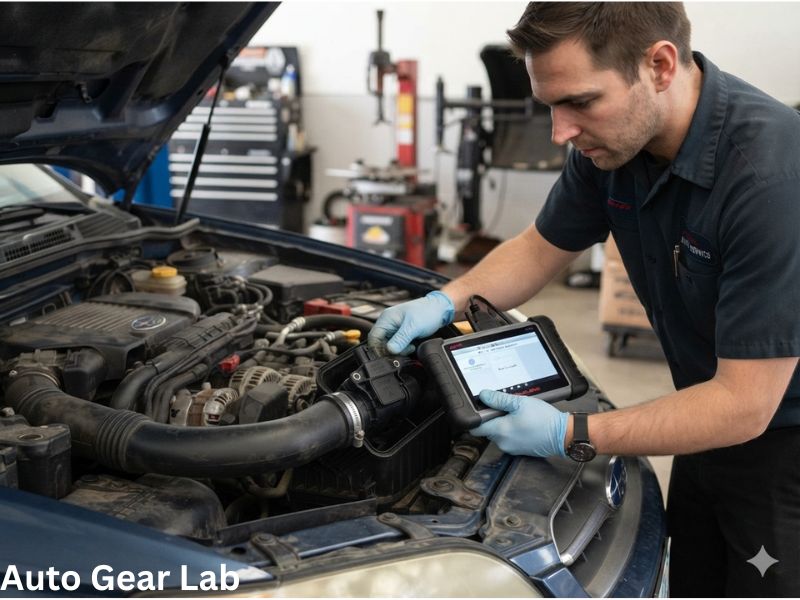
Do You Need to Reset a MAF Sensor?
One of the most common questions after cleaning or replacing a MAF sensor is whether it needs to be reset. The answer depends on your vehicle, the type of repair you performed, and how the engine control module (ECM) manages its adaptive memory.
The important thing to understand is that you’re not actually resetting the MAF sensor itself. Instead, you’re resetting or allowing the ECM to relearn the airflow data it receives from the sensor.
When You Should Reset a MAF Sensor
A reset is recommended in the following situations:
- After installing a new MAF sensor
- After cleaning a dirty MAF sensor
- After repairing the air intake system
- After replacing intake components that affect airflow
- After clearing MAF-related diagnostic trouble codes
- When recommended by the vehicle manufacturer
In these situations, resetting or allowing the ECM to relearn can help it adjust to the updated airflow readings more quickly.
When a Reset Isn’t Necessary
Many modern vehicles automatically relearn airflow values during normal driving.
In these cases, you may not need to perform a manual reset after:
- Removing and reinstalling the same MAF sensor
- Performing routine inspections
- Disconnecting and reconnecting the electrical connector
- Minor maintenance that doesn’t affect airflow
If the engine runs smoothly and no warning lights appear, the ECM may adapt on its own after several drive cycles.
Does Every Vehicle Require a Manual Reset?
No. The reset procedure varies by manufacturer and vehicle model.
Some vehicles:
- Automatically relearn airflow values after a short drive.
- Require the battery to be disconnected.
- Recommend clearing trouble codes with an OBD-II scanner.
- Include a specific idle relearn procedure after battery disconnection.
Always consult your owner’s manual or service manual if your vehicle has a manufacturer-specific reset procedure.
What Happens If You Don’t Reset the System?
In many cases, nothing serious happens. The ECM will gradually adjust to the new airflow readings during normal driving.
However, depending on the vehicle, you may temporarily notice:
- Rough idle
- Slight hesitation during acceleration
- Delayed throttle response
- Stored diagnostic trouble codes
- A Check Engine Light that remains on until codes are cleared
These symptoms often improve once the ECM completes its relearning process or the fault codes are cleared.
The Bottom Line
A MAF sensor reset isn’t always required, but it can speed up the ECM’s relearning process after cleaning, replacement, or intake system repairs. If your vehicle supports automatic relearning, simply driving normally for several trips may be all that’s needed. However, if the Check Engine Light remains on or drivability issues persist, performing a reset using one of the methods below is a good next step.
What Happens When You Reset a MAF Sensor?
Resetting a MAF sensor doesn’t change the sensor itself. Instead, it clears or refreshes the adaptive data stored by the engine control module (ECM), allowing it to relearn airflow information from the MAF sensor. This helps the ECM calculate the correct air-fuel mixture based on current engine conditions.
Depending on your vehicle, the relearning process may happen immediately after the reset or gradually over several drive cycles.
The ECM Relearns Airflow Data
Over time, the ECM adapts to the airflow readings it receives from the MAF sensor. If the sensor was dirty, faulty, or recently replaced, those learned values may no longer be accurate.
After a reset, the ECM begins collecting fresh airflow data to optimize engine operation.
This relearning process helps the engine adjust to:
- A new MAF sensor
- A cleaned MAF sensor
- Changes to the intake system
- Normal engine operating conditions
Fuel Trim Values May Be Relearned
Many vehicles use adaptive fuel trims to fine-tune the air-fuel mixture.
After a reset, the ECM may gradually rebuild:
- Short-Term Fuel Trim (STFT)
- Long-Term Fuel Trim (LTFT)
During this period, the engine may behave slightly differently until the ECM finishes adapting.
Engine Performance May Improve
If the MAF sensor was the source of the problem, resetting the system may help restore:
- Smooth idle
- Better throttle response
- Improved acceleration
- More consistent fuel economy
- Stable engine performance
Keep in mind that these improvements occur only if the underlying issue has been corrected.
The Check Engine Light May Turn Off
If the Check Engine Light was caused by a MAF-related fault and the problem has been fixed, resetting the system or clearing the diagnostic trouble codes may turn the light off.
However:
- Some vehicles require an OBD-II scanner to clear stored codes.
- Others automatically turn the light off after several successful drive cycles.
- If the fault still exists, the Check Engine Light will likely return.
The Engine May Need Time to Adapt
Immediately after a reset, you may notice minor changes while the ECM relearns.
For a short time, the engine may experience:
- Slightly higher or lower idle speed
- Minor throttle hesitation
- Temporary fuel economy changes
These symptoms are usually normal and disappear after the vehicle has completed several drive cycles.
Resetting Doesn’t Fix a Faulty MAF Sensor
It’s important to understand that resetting only clears learned data or diagnostic codes—it doesn’t repair a damaged sensor or solve mechanical problems.
If the MAF sensor is defective or another issue exists, such as a vacuum leak or damaged wiring, resetting the system won’t eliminate the problem. In those cases, the underlying fault must be repaired before the engine will perform normally.
Before You Reset the MAF Sensor
Before performing any reset procedure, take a few minutes to make sure the MAF sensor and intake system are in good condition. Resetting the engine control module (ECM) without fixing the underlying problem usually won’t solve engine performance issues, and the same fault codes may return.
Park the Vehicle Safely
Park the vehicle on a flat, level surface and turn off the engine.
Before beginning:
- Shift into Park (automatic) or Neutral/First Gear (manual).
- Apply the parking brake.
- Remove the ignition key or switch the ignition off.
This ensures the vehicle remains stationary while you’re working.
Verify the MAF Sensor Is Installed Correctly
If you’ve recently cleaned or replaced the MAF sensor, confirm that it’s installed properly.
Check that:
- The airflow arrow points toward the engine.
- The mounting screws are secure.
- The electrical connector is fully locked.
- The O-ring or gasket is seated correctly.
An incorrectly installed sensor can produce inaccurate airflow readings even after a reset.
Inspect the Air Intake System
Air leaks can cause many of the same symptoms as a faulty MAF sensor.
Before resetting the ECM, inspect the intake system for:
- Loose intake hose clamps
- Cracked intake tubes
- Disconnected vacuum hoses
- Damaged seals or O-rings
- Air leaks around the sensor
Repair any leaks before attempting a reset.
Check for Diagnostic Trouble Codes
If the Check Engine Light is on, it’s a good idea to scan the vehicle with an OBD-II scanner before clearing any codes.
Reading the codes first can help identify:
- MAF sensor faults
- Intake air leaks
- Wiring problems
- Other engine management issues
Once the codes are cleared, valuable diagnostic information may be lost.
Gather the Necessary Tools
Depending on the reset method you plan to use, you may need:
- A wrench or socket for the battery terminal
- An OBD-II scanner
- Your vehicle owner’s manual or service manual
- Safety gloves and eye protection (optional)
Not every reset method requires special tools, but having them ready can make the process quicker and easier.
Understand That a Reset Isn’t a Repair
Resetting the ECM only clears learned values or diagnostic codes. It doesn’t repair a dirty, damaged, or failed MAF sensor.
If your vehicle still has symptoms such as:
- Rough idle
- Poor acceleration
- Stalling
- Reduced fuel economy
- A persistent Check Engine Light
you’ll need to diagnose and repair the root cause before a reset can be effective.
Once you’ve completed these checks, you can choose the reset method that’s most appropriate for your vehicle.
Method 1: Reset the MAF Sensor by Disconnecting the Battery
Disconnecting the battery is one of the simplest ways to reset the engine control module (ECM) on many vehicles. This clears the ECM’s adaptive memory, allowing it to relearn airflow data from the MAF sensor after it’s been cleaned or replaced.
Keep in mind that this method doesn’t work on every vehicle. Some modern vehicles retain adaptive memory even after the battery is disconnected or require a manufacturer-specific reset procedure.
Step 1: Turn Off the Engine
Make sure the engine is completely off and remove the key from the ignition (or switch off the ignition if your vehicle uses a push-button start system).
Allow the engine to cool if you’ve recently been driving.
Step 2: Disconnect the Negative Battery Terminal
Locate the battery and identify the negative (-) terminal, which is usually marked with a minus sign and often has a black cable.
Using the appropriate wrench or socket:
- Loosen the negative terminal clamp.
- Lift the cable off the battery post.
- Move the cable away from the terminal so it can’t accidentally reconnect.
For safety, disconnect only the negative terminal unless your vehicle’s service manual specifies otherwise.
Step 3: Wait 10–15 Minutes
Leave the battery disconnected for about 10 to 15 minutes.
This waiting period allows the ECM to clear stored adaptive values on many vehicles.
Some manufacturers may recommend a different waiting time, so consult your owner’s manual if available.
Step 4: Reconnect the Battery
Reconnect the negative battery cable to the battery terminal.
After reconnecting:
- Tighten the terminal securely.
- Make sure the cable doesn’t move on the battery post.
- Verify that the connection is clean and free of corrosion.
A loose battery connection can cause electrical problems unrelated to the MAF sensor.
Step 5: Start the Engine
Start the engine and allow it to idle for several minutes.
During this time:
- Avoid revving the engine.
- Let the ECM begin relearning idle and airflow values.
- Watch for any warning lights on the dashboard.
Some vehicles may idle slightly differently at first while the relearning process begins.
Step 6: Take a Short Drive
After the engine has idled for a few minutes, take the vehicle for a 10–20 minute drive under a variety of conditions.
Include:
- City driving
- Steady cruising
- Gentle acceleration
- Several complete stops
This allows the ECM to collect fresh airflow data and continue adapting to the MAF sensor.
Tip: If the Check Engine Light returns shortly after the reset, or the engine continues to run poorly, the problem is likely caused by an unresolved fault rather than the need for a reset. Inspect the MAF sensor installation, intake system, and stored diagnostic trouble codes before trying another reset method.
Method 2: Reset the MAF Sensor Using an OBD-II Scanner
Using an OBD-II scanner is one of the most effective ways to reset the system after cleaning or replacing a MAF sensor. Instead of disconnecting the battery, this method clears stored diagnostic trouble codes (DTCs) and allows the engine control module (ECM) to begin relearning airflow values without affecting other vehicle settings.
This method is recommended if the Check Engine Light is on or if your vehicle stores MAF-related fault codes.
Step 1: Connect the OBD-II Scanner
Locate the vehicle’s OBD-II diagnostic port, which is usually found underneath the dashboard on the driver’s side.
Then:
- Turn the ignition to the ON position without starting the engine (if required by your scanner).
- Plug the scanner into the OBD-II port.
- Follow the scanner’s instructions to establish a connection with the vehicle.
Step 2: Read the Diagnostic Trouble Codes
Before clearing any codes, scan the vehicle for stored or pending trouble codes.
Look for codes related to the MAF sensor, such as:
- MAF sensor circuit faults
- Airflow performance issues
- Intake air system faults
Recording the codes before clearing them can help with future diagnosis if the problem returns.
Step 3: Clear the Trouble Codes
After confirming the repairs have been completed, use the scanner’s Clear Codes or Erase Codes function.
This will:
- Clear stored MAF-related fault codes.
- Turn off the Check Engine Light (if the fault has been fixed).
- Allow the ECM to begin learning new airflow values.
Do not clear codes before diagnosing the problem, as they may provide valuable information about the underlying issue.
Step 4: Restart the Engine
Disconnect the scanner and start the engine.
Allow it to idle for a few minutes while checking for:
- Smooth idle
- Stable engine speed
- No warning lights
- Normal engine response
If the Check Engine Light comes back immediately, the fault may still be present.
Step 5: Complete a Test Drive
Take the vehicle for a short drive to allow the ECM to relearn operating conditions.
During the drive:
- Accelerate gradually.
- Cruise at a steady speed.
- Make several complete stops.
- Drive for about 10–20 minutes if possible.
After the drive, scan the vehicle again to confirm that no new MAF-related trouble codes have appeared.
Tip: An OBD-II scanner can clear stored fault codes, but it cannot repair a faulty MAF sensor, vacuum leak, or damaged wiring. If the same codes return after being cleared, inspect the intake system and sensor installation before replacing additional parts.
Method 3: Let the ECM Relearn Automatically
On many modern vehicles, you don’t need to perform a manual reset after cleaning or replacing a MAF sensor. The engine control module (ECM) is designed to automatically relearn airflow values during normal operation.
If the MAF sensor has been installed correctly and there are no other engine problems, the ECM can usually adapt on its own over several drive cycles.
Step 1: Start the Engine
Start the engine and allow it to idle for 3 to 5 minutes.
During this time:
- Avoid pressing the accelerator.
- Let the engine reach a stable idle.
- Watch for any warning lights.
- Listen for unusual noises.
A slight variation in idle speed during the first few minutes is normal on some vehicles.
Step 2: Let the Engine Reach Operating Temperature
Allow the engine to warm up completely before driving.
Reaching normal operating temperature helps the ECM begin adjusting:
- Airflow calculations
- Fuel trim values
- Idle control
- Throttle response
Step 3: Drive Under Different Conditions
Take the vehicle for a 15–30 minute drive using a variety of driving conditions.
Include:
- City driving
- Highway cruising
- Light acceleration
- Moderate acceleration
- Several complete stops
This gives the ECM enough operating data to adapt to the MAF sensor.
Step 4: Monitor Engine Performance
As the ECM relearns, pay attention to how the engine behaves.
Look for improvements such as:
- Smooth idle
- Better throttle response
- Consistent acceleration
- Stable engine performance
- No Check Engine Light
These are signs that the relearning process is progressing normally.
Step 5: Allow Several Drive Cycles
Some vehicles complete the relearning process after a single drive, while others may require several drive cycles.
Continue driving the vehicle normally over the next few days while monitoring for:
- Returning warning lights
- Hesitation
- Rough idle
- Reduced power
- Poor fuel economy
If the engine continues to run normally and no new fault codes appear, the ECM has likely completed its adaptation successfully.
Tip: Automatic relearning only works if the underlying problem has been fixed. If the MAF sensor is faulty, the intake system has an air leak, or another engine issue exists, the ECM won’t be able to compensate, and drivability problems will likely remain.
Method 4: Perform an Idle Relearn Procedure (If Required)
Some vehicles require an idle relearn procedure after the battery has been disconnected or the MAF sensor has been replaced. This allows the engine control module (ECM) to relearn the correct idle speed and airflow values under normal operating conditions.
Keep in mind that the exact idle relearn procedure varies by manufacturer. Always check your owner’s manual or service manual if your vehicle has a specific sequence.
Step 1: Start the Engine
Start the engine and let it idle without pressing the accelerator.
Allow the engine to run until it reaches its normal operating temperature.
During this time:
- Keep the transmission in Park (automatic) or Neutral (manual).
- Leave the steering wheel centered.
- Avoid turning on accessories unless the manufacturer instructs otherwise.
Step 2: Let the Engine Idle
Continue letting the engine idle for 5 to 10 minutes.
The ECM uses this time to adjust:
- Idle speed
- Airflow calculations
- Fuel delivery
- Throttle control
It’s normal for the idle speed to fluctuate slightly while the relearning process is taking place.
Step 3: Turn On Vehicle Accessories (If Required)
Some manufacturers recommend turning on electrical accessories one at a time so the ECM can learn how the engine responds under different loads.
These may include:
- Air conditioning
- Headlights
- Rear window defroster
- Cabin blower motor
If your vehicle doesn’t specify this step, you can skip it.
Step 4: Take a Short Test Drive
After the idle relearn is complete, drive the vehicle for 10 to 20 minutes.
Use a combination of:
- City driving
- Highway speeds
- Gentle acceleration
- Normal braking
This allows the ECM to continue refining its airflow and fuel trim calculations.
Step 5: Verify the Results
Once the drive is complete, confirm that:
- The engine idles smoothly.
- Throttle response feels normal.
- The Check Engine Light remains off.
- No new drivability issues appear.
If the idle remains unstable or warning lights return, inspect the MAF sensor installation, intake system, and diagnostic trouble codes before assuming the relearn procedure failed.
Tip: An idle relearn procedure helps the ECM adapt to changes after battery disconnection or sensor replacement, but it won’t correct problems caused by a faulty MAF sensor, intake air leak, or damaged wiring.
Method 5: Follow the Manufacturer’s Reset Procedure (If Applicable)
While many vehicles can reset the engine control module (ECM) by disconnecting the battery, clearing trouble codes, or completing a relearn drive cycle, some manufacturers require a vehicle-specific reset procedure. These procedures are designed to ensure the ECM correctly relearns idle speed, airflow, and fuel trim values.
If your owner’s manual or service manual provides a specific reset process, follow it instead of using a generic method.
When a Manufacturer-Specific Reset Is Needed
A special reset procedure may be recommended after:
- Replacing the MAF sensor
- Cleaning the MAF sensor
- Disconnecting the battery
- Replacing the throttle body
- Repairing the air intake system
- Updating or reprogramming the ECM
Some vehicles complete this process automatically, while others require a scan tool or a specific sequence of ignition and driving steps.
Follow the Recommended Procedure
Depending on the manufacturer, the reset may involve one or more of the following:
- Turning the ignition on and off in a specific sequence
- Allowing the engine to idle for a set amount of time
- Driving at specific speeds or engine loads
- Using a professional diagnostic scan tool
- Performing an idle relearn procedure
Always follow the instructions for your specific vehicle rather than relying on a universal reset method.
Don’t Skip Required Steps
If your vehicle requires a manufacturer-specific procedure, skipping steps can result in:
- Rough or unstable idle
- Delayed throttle response
- Incorrect fuel trim values
- Persistent Check Engine Light
- Longer ECM relearning time
Completing the full procedure helps ensure the ECM receives accurate airflow data from the MAF sensor.
Verify the Reset
After completing the manufacturer’s reset process:
- Start the engine and let it idle.
- Check that the idle is smooth.
- Confirm the Check Engine Light is off.
- Take a short test drive.
- Scan for any remaining diagnostic trouble codes if you have an OBD-II scanner.
If the vehicle operates normally and no fault codes return, the reset was successful.
Tip: If your owner’s manual doesn’t mention a special reset procedure, the battery disconnect method, OBD-II scanner method, or automatic ECM relearn process described earlier in this guide is usually sufficient for most vehicles.
How to Know the Reset Was Successful
After completing a MAF sensor reset, it’s important to verify that the engine control module (ECM) has adapted correctly and that the underlying issue has been resolved. A successful reset should result in smooth engine operation without warning lights or drivability problems.
Here are the signs to look for.
Smooth and Stable Idle
Start the engine and let it idle for several minutes.
A successful reset should produce:
- A steady idle speed
- No stalling
- Minimal engine vibration
- Smooth engine operation
A slightly fluctuating idle immediately after the reset can be normal, especially while the ECM is still relearning.
Improved Throttle Response
Press the accelerator gently while the vehicle is parked or during a test drive.
The engine should respond smoothly without:
- Hesitation
- Delayed acceleration
- Surging
- Engine stumbling
Improved throttle response indicates the ECM is receiving accurate airflow information from the MAF sensor.
Better Overall Engine Performance
Take the vehicle for a short drive under normal conditions.
You should notice:
- Smooth acceleration
- Consistent engine power
- Normal shifting (automatic transmissions)
- Better drivability
If the original problem was caused by the MAF sensor, these symptoms should improve after the reset.
No Check Engine Light
One of the clearest signs of a successful reset is that the Check Engine Light remains off.
If the light returns shortly after driving, the vehicle may still have:
- A faulty MAF sensor
- An intake air leak
- Wiring problems
- Another engine management issue
In that case, further diagnosis is needed.
No New Diagnostic Trouble Codes
If you have an OBD-II scanner, scan the vehicle after the test drive.
A successful reset should show:
- No active MAF-related trouble codes
- No pending airflow-related faults
- No new engine management codes
If the same codes return, resetting alone did not solve the underlying problem.
Stable Fuel Trim Values (Advanced Check)
If your scan tool displays live engine data, you can also monitor the fuel trims.
Healthy fuel trim values generally remain close to zero under normal driving conditions, although the exact range varies by vehicle.
Large positive or negative fuel trim values may indicate:
- An intake air leak
- A faulty MAF sensor
- Fuel delivery problems
- Another engine performance issue
Continue Monitoring the Vehicle
Even if everything appears normal immediately after the reset, continue driving the vehicle over the next few days.
Watch for:
- Returning Check Engine Lights
- Rough idle
- Poor fuel economy
- Hesitation during acceleration
- Unusual engine behavior
If none of these issues return after several drive cycles, the reset was likely successful and the ECM has completed its relearning process.
Common Mistakes to Avoid When Resetting a MAF Sensor
Resetting a MAF sensor or the engine control module (ECM) is a simple procedure, but it’s easy to make mistakes that can delay diagnosis or leave the original problem unresolved. Avoid these common errors to ensure the reset is effective.
Resetting Before Fixing the Actual Problem
A reset only clears adaptive data or diagnostic trouble codes—it doesn’t repair a faulty component.
Before resetting the system, make sure you’ve addressed issues such as:
- A dirty or failed MAF sensor
- Intake air leaks
- Damaged wiring
- Loose electrical connectors
- Other engine-related faults
If the underlying problem remains, the same symptoms and trouble codes will likely return.
Clearing Trouble Codes Without Reading Them
If the Check Engine Light is on, don’t immediately erase the codes.
Reading and recording the diagnostic trouble codes first can help identify the root cause of the problem. Once the codes are cleared, that valuable diagnostic information may be lost.
Disconnecting the Wrong Battery Terminal
If you’re using the battery disconnect method, always disconnect the negative (-) battery terminal first.
Disconnecting the positive terminal unnecessarily increases the risk of accidental short circuits and electrical damage.
Ignoring Intake Air Leaks
A vacuum leak or loose intake hose can produce symptoms similar to a faulty MAF sensor.
Before performing a reset, inspect the intake system for:
- Loose hose clamps
- Cracked intake tubes
- Damaged O-rings
- Disconnected vacuum hoses
Resetting the ECM won’t correct an air leak.
Skipping the Relearn Process
After resetting the ECM, many vehicles require time to relearn airflow and fuel trim values.
Don’t expect immediate results without:
- Letting the engine idle
- Completing a short test drive
- Driving through normal operating conditions
Skipping this relearning period may lead you to believe the reset didn’t work.
Assuming Every Vehicle Uses the Same Reset Method
Different manufacturers use different ECM strategies.
Some vehicles:
- Relearn automatically
- Require a battery disconnect
- Need an OBD-II scanner
- Have a manufacturer-specific idle relearn procedure
Using the correct reset method for your vehicle improves the chances of a successful relearn.
Assuming a Reset Will Fix a Bad MAF Sensor
A reset cannot repair a defective sensor.
If the MAF sensor has failed internally, resetting the ECM won’t restore proper operation. In that case, the sensor must be cleaned (if contamination is the issue) or replaced.
Ignoring a Returning Check Engine Light
If the Check Engine Light comes back shortly after the reset, don’t keep resetting the system repeatedly.
Instead:
- Scan for diagnostic trouble codes.
- Inspect the MAF sensor installation.
- Check the intake system for leaks.
- Diagnose the underlying fault.
Repeatedly clearing the codes without fixing the cause only delays the proper repair and can make troubleshooting more difficult.
What If Resetting the MAF Sensor Doesn’t Work?
If you’ve reset the system and your vehicle still has a rough idle, poor acceleration, or a Check Engine Light, the problem likely isn’t the reset itself. In most cases, resetting the ECM only clears learned data or diagnostic trouble codes—it doesn’t fix the underlying cause.
Here are the most common reasons a MAF sensor reset may not solve the problem.
The MAF Sensor Is Dirty or Faulty
If the sensing element is contaminated or the sensor has failed internally, resetting the ECM won’t restore accurate airflow readings.
Inspect the sensor for:
- Dirt or dust buildup
- Oil contamination
- Physical damage
- Broken sensing wire or film
If cleaning doesn’t help or the sensor is damaged, replacement is usually necessary.
There’s an Intake Air Leak
Unmetered air entering the intake system can produce symptoms similar to a faulty MAF sensor.
Inspect for:
- Loose intake hose clamps
- Cracked intake tubes
- Damaged O-rings
- Disconnected vacuum hoses
- Leaks around the MAF sensor
Repair any leaks before attempting another reset.
The Electrical Connector or Wiring Is Damaged
A loose connector or damaged wiring can interrupt communication between the MAF sensor and the engine control module.
Check for:
- Loose electrical connector
- Bent connector pins
- Corrosion
- Broken or damaged wiring
- Poor terminal contact
Repairing the wiring may resolve the issue without replacing the sensor.
Another Engine Component Is Causing the Problem
Many engine problems produce symptoms that resemble a bad MAF sensor.
Other possible causes include:
- Dirty throttle body
- Clogged air filter
- Faulty intake air temperature (IAT) sensor
- Vacuum leak
- Oxygen (O2) sensor problems
- Fuel delivery issues
A complete diagnosis may be required if replacing or resetting the MAF sensor doesn’t improve engine performance.
The Check Engine Light Returns
If the Check Engine Light comes back after the reset, connect an OBD-II scanner and read the stored diagnostic trouble codes.
The codes can help determine whether the issue involves:
- The MAF sensor
- The intake system
- Engine wiring
- Another engine management component
Avoid repeatedly clearing the codes without identifying the cause.
When to Replace the MAF Sensor
If you’ve:
- Confirmed the installation is correct,
- Eliminated intake air leaks,
- Verified the wiring is in good condition,
- Reset the ECM correctly,
and the same MAF-related symptoms or trouble codes continue to return, the sensor itself may be defective and should be replaced with a quality OEM or reputable aftermarket unit.
Resolving the underlying fault—not simply resetting the system—is the key to restoring proper engine performance and preventing recurring issues.
Frequently Asked Questions
Can you reset a MAF sensor without disconnecting the battery?
Yes. Many vehicles allow you to reset the system without disconnecting the battery. You can use an OBD-II scanner to clear diagnostic trouble codes, or simply let the engine control module (ECM) relearn the new airflow values through normal driving if your vehicle supports automatic adaptation.
How long does it take to reset a MAF sensor?
The reset process typically takes 5 to 30 minutes, depending on the method used. However, the ECM may require several drive cycles to fully relearn airflow and fuel trim values.
Will disconnecting the battery reset the MAF sensor?
Disconnecting the negative battery terminal can reset the ECM’s adaptive memory on many vehicles, allowing it to relearn airflow data from the MAF sensor. However, some newer vehicles retain adaptive memory or require a manufacturer-specific reset procedure.
Do I need an OBD-II scanner to reset a MAF sensor?
Not always. An OBD-II scanner is helpful for clearing diagnostic trouble codes and confirming that the reset was successful, but many vehicles can be reset by disconnecting the battery or allowing the ECM to relearn automatically.
Will resetting fix a bad MAF sensor?
No. Resetting only clears adaptive memory or fault codes. If the MAF sensor is dirty, damaged, or has failed internally, you’ll need to clean or replace it before resetting the system.
Can I drive my car immediately after resetting the MAF sensor?
Yes. In fact, a short test drive is often recommended after a reset. Driving under a variety of conditions helps the ECM relearn airflow values and verify that the repair was successful.
Will the Check Engine Light turn off automatically?
It depends on the vehicle and the cause of the warning light. Some vehicles turn the Check Engine Light off automatically after several successful drive cycles, while others require the fault codes to be cleared with an OBD-II scanner. If the underlying problem hasn’t been fixed, the light will likely return.
How often should I reset a MAF sensor?
A MAF sensor doesn’t require routine resetting as part of normal maintenance. You should only reset the system after cleaning or replacing the sensor, repairing the intake system, clearing MAF-related trouble codes, or when recommended by the vehicle manufacturer.
Conclusion
Resetting a MAF sensor is a simple process that helps the engine control module (ECM) relearn accurate airflow information after the sensor has been cleaned, replaced, or serviced. Depending on your vehicle, you can reset the system by disconnecting the battery, using an OBD-II scanner, following a manufacturer-specific procedure, or simply allowing the ECM to adapt through normal driving.
Remember, a reset is not a repair. If your vehicle continues to experience rough idling, poor acceleration, or a recurring Check Engine Light after the reset, inspect the MAF sensor, intake system, wiring, and related components to identify the root cause. Once the underlying issue has been resolved, a successful reset can help restore smooth engine performance, proper fuel delivery, and reliable drivability.
You have not enough Humanizer words left. Upgrade your Surfer plan.