Yes, you can have tinted soft top windows, but the method depends on whether the windows are flexible plastic or actual glass. Standard automotive tint film can generally be applied to compatible glass windows, while flexible vinyl windows found on many Jeep Wranglers, Ford Broncos, and other soft-top vehicles should not be covered with ordinary adhesive tint film. Factory-tinted replacement windows are usually the better solution.
Soft-top windows are different from conventional automotive glass. Many are made from transparent vinyl that bends, stretches, and sometimes rolls or folds when the roof is removed. Regular window tint film is not designed to withstand that repeated movement.
Applying the wrong film can cause bubbling, wrinkles, adhesive problems, or permanent damage to the transparent material. Even when the tint initially looks acceptable, it may deteriorate as the soft top moves.
Fortunately, several alternatives provide additional privacy and a darker appearance without relying on conventional adhesive tint.
In this article, I explain which soft-top windows can be tinted, why ordinary tint fails on flexible plastic, and how factory-tinted replacement panels work. I also cover installation, visibility, legal considerations, costs, and practical ways to protect soft-top windows.
Can you tint soft top windows? Glass vs. Flexible Vinyl
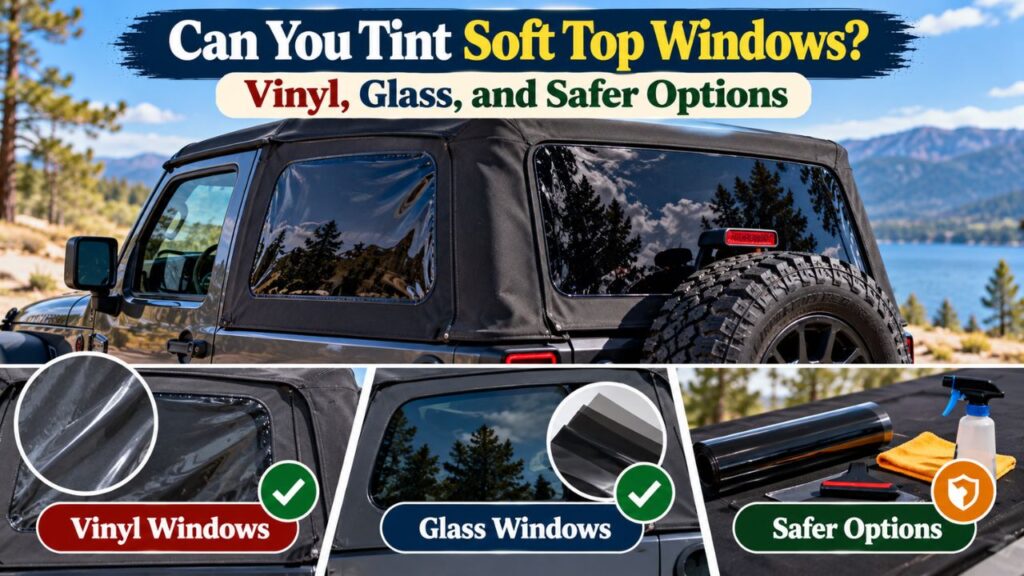
The first step is identifying the window material.
Soft-top vehicles may use flexible plastic panels, rigid glass, or a combination of different window materials.
The appropriate tinting method depends on that construction.
| Soft-Top Window Material | Can You Apply Regular Tint Film? | Better Option |
| Flexible clear vinyl | Generally no | Factory-tinted vinyl replacement |
| Flexible PVC window | Generally no | Compatible tinted replacement panel |
| Rigid glass rear window | Usually yes, with compatible film | Professional automotive tint |
| Acrylic or polycarbonate | Not with ordinary glass tint | Manufacturer-approved specialty solution |
| Factory-tinted flexible vinyl | No additional tint normally needed | Retain or replace with compatible tinted vinyl |
| Unknown transparent plastic | Do not apply film without confirmation | Identify the material and consult the manufacturer |
Flexible Vinyl Soft-Top Windows
Many removable Jeep and off-road vehicle soft tops use flexible clear vinyl for their rear and quarter windows.
This material allows the windows to bend during installation and, where permitted by the manufacturer, roll or fold for storage.
However, the flexibility creates problems for conventional window tint.
Ordinary automotive tint film is engineered primarily for rigid glazing.
When flexible vinyl bends, the applied film may not stretch and recover in the same way.
This difference can damage the bond between the tint and the window.
For these applications, a tinted vinyl replacement panel is generally preferable to adhesive film.
Glass Windows in Convertible Soft Tops
Some convertibles have fabric roofs with rigid glass rear windows.
Although the roof itself is flexible, the rear glazing remains solid.
A compatible automotive window film can often be installed on this glass using conventional professional tinting methods.
However, the installer must consider the rear defroster, glass coatings, and any vehicle-specific requirements.
A convertible with a glass rear window is different from a Jeep-style soft top with flexible vinyl panels.
How to Identify Your Soft-Top Window Material
Check the vehicle owner’s manual or the soft-top manufacturer’s documentation.
You can also look for glazing markings and material information.
Common clues include:
- Flexible vinyl: A soft, bendable panel integrated into fabric or removable window sections
- Rigid glass: A firm, nonflexing pane often containing a rear defroster
- Rigid plastic: A hard transparent panel that resembles glass but may be acrylic or polycarbonate
Do not assume a window is glass because it feels firm.
If the material is uncertain, contact the top manufacturer before applying any film.
Why Regular Window Tint Doesn’t Work Well on Soft-Top Vinyl
Standard automotive tint is usually designed to bond to a stable, rigid surface.
Flexible soft-top windows behave differently because they move and change shape during normal use.
Several problems can develop when conventional adhesive tint is applied to vinyl.
1. Flexing Can Cause Peeling and Wrinkles
Flexible soft-top windows move when the vehicle travels over uneven roads.
They may also change shape as the roof is opened, closed, or removed.
An adhesive film attached to the vinyl must move with it.
If the film has different stretching characteristics, stress can develop between the materials.
Possible results include:
- Wrinkled film
- Lifting edges
- Creases
- Delamination
- Distorted visibility
- Premature adhesive failure
A film that looks smooth during installation may develop defects after repeated soft-top operation.
2. Adhesives May Not Be Compatible With Plastic
Ordinary automotive film adhesives are not necessarily suitable for flexible vinyl or other plastic glazing.
Certain plastics can interact with adhesives in ways that affect bonding, appearance, or removal.
According to Gila Window Film’s official automotive FAQ, its adhesive automotive films should not be applied to plastic, acrylic, or polycarbonate surfaces.
The manufacturer identifies certain adhesive-free static-cling products as an alternative for some plastic applications, subject to the product’s instructions.
However, that does not establish that a particular static-cling film is suitable for flexible Jeep windows that are regularly folded or removed.
Always check compatibility for the exact window material.
3. Heat Shrinking Can Damage Vinyl
Automotive tint installers commonly use heat to shape film for curved glass.
Flexible soft-top vinyl can respond differently to heat.
Excessive heat may cause:
- Surface distortion
- Shrinkage
- Warping
- Damage near seams
- Permanent loss of optical clarity
A heat gun used incorrectly can damage an expensive replacement window.
Do not attempt conventional heat-shrinking procedures on flexible vinyl unless the glazing and film manufacturers specifically approve the process.
4. Removing Tint Can Damage the Window
Removing adhesive film from flexible plastic can be difficult.
Depending on the adhesive and window material, the removal process may leave residue or damage the surface.
Scraping tools that are sometimes used on glass may scratch flexible vinyl.
Chemical adhesive removers can also be incompatible with certain plastics.
If the window is already cloudy, brittle, or scratched, attempting to remove an unsuitable film may worsen its condition.
Best Ways to Tint Flexible Soft-Top Windows
For flexible plastic windows, the best approach is usually to select material that was manufactured with the desired tint rather than applying ordinary glass film.
Several options are available, depending on the vehicle and soft-top design.
Option 1: Install Factory-Tinted Replacement Windows
Factory-tinted replacement panels are generally the most straightforward solution for compatible Jeep-style soft tops.
These windows use tinted flexible glazing material designed for the soft-top assembly.
The tint is part of the manufactured window material rather than a separate conventional adhesive film added afterward.
For example, Bestop’s Jeep soft-top replacement window guidance describes clear and tinted replacement options for compatible Wrangler models.
Its JL replacement windows are available as individual rear or quarter panels, while some earlier Wrangler replacement products are sold as sets.
Bestop identifies certain tinted replacements with approximately 18% visible light transmission, although specifications vary by product.
Advantages include:
- Window material designed for soft-top use
- No ordinary glass tint adhesive
- Compatibility with intended mounting hardware when properly matched
- Factory-style appearance
- Reduced need for custom modification
Best choice: If a compatible factory-tinted replacement is available for your top, it is usually the most dependable way to darken the flexible windows.
Option 2: Purchase a Soft Top With Tinted Windows
Some complete replacement soft tops include tinted rear and side windows.
This option may make sense if the existing roof fabric, stitching, or windows are already worn.
A replacement top may provide:
- New soft-top fabric
- Compatible tinted rear windows
- Tinted quarter windows
- Required zippers or mounting features
- Updated weather seals, depending on the kit
However, replacing an entire roof solely to darken the windows can be more expensive than purchasing individual window panels.
Check whether separate tinted windows are available before replacing a functional soft top.
Option 3: Have Tinted Vinyl Windows Professionally Fabricated
For older or uncommon vehicles, a compatible factory-tinted replacement may not be available.
A qualified automotive upholstery or convertible-top specialist may be able to fabricate a replacement window using appropriate tinted flexible glazing.
This involves replacing the transparent window material rather than attaching normal automotive tint film.
The specialist must account for:
- Glazing material specifications
- Window thickness
- Optical clarity
- Flexibility
- Stitching or heat-sealed seams
- Zipper or track compatibility
- Vehicle glazing requirements
Not every upholstery shop offers this service.
Custom window fabrication should use automotive glazing suitable for the specific vehicle and window location.
Avoid ordinary decorative vinyl sheets that lack appropriate automotive glazing specifications.
Option 4: Consider Approved Adhesive-Free Tint
Certain adhesive-free static-cling films can be applied to some plastic surfaces when their manufacturers permit it.
However, compatibility with a rigid plastic surface does not automatically mean the film will work on flexible soft-top vinyl.
A removable film may still:
- Lift during bending
- Develop wrinkles
- Reduce optical clarity
- Interfere with folding
- Fail to remain attached during normal use
Some static-cling product instructions also exclude plastic automotive glazing despite broader compatibility statements elsewhere.
Before considering this method, obtain clear confirmation from both the film and soft-top manufacturers that the exact materials and application are suitable.
For a soft top that regularly folds or uses removable windows, tinted replacement glazing remains the more dependable option.
How to Replace Clear Soft-Top Windows With Tinted Windows
Replacing clear vinyl panels with manufacturer-compatible tinted panels is often a manageable DIY project.
The exact installation depends on whether the soft top uses zippers, sliding channels, retaining clips, or other attachment hardware.
Follow the instructions for your specific top.
Step 1: Identify the Soft-Top Manufacturer and Model
Start by identifying the vehicle and roof assembly.
Record:
- Vehicle make
- Model and model year
- Two-door or four-door configuration
- Factory or aftermarket soft top
- Soft-top manufacturer
- Top fabric type
- Current window attachment method
Do not assume that windows from different Jeep generations or soft-top models are interchangeable.
Even vehicles from the same model year may use different roof systems.
Step 2: Select Compatible Tinted Window Panels
Choose replacement panels specifically listed for the installed soft top.
Check whether the replacement includes:
- Rear window
- Left quarter window
- Right quarter window
- Required stiffeners or retainers
- Zippers or mounting attachments
- Installation instructions
Some replacement products require transferring hardware from the original windows.
For example, certain Wrangler JL replacement quarter windows require reusing their original corner stiffeners.
Confirm this before discarding the clear panels.
Step 3: Prepare the Vehicle for Window Removal
Park on a level surface in a clean work area.
Follow the manufacturer’s temperature guidance, because flexible vinyl can become stiff in cold weather.
Make sure the soft-top frame is positioned correctly.
Remove any accessories that interfere with the window removal procedure.
Do not force stiff, cold vinyl around tight corners.
Step 4: Remove the Existing Clear Windows
Release the mounting hardware according to the top manufacturer’s directions.
Depending on the design, this may involve:
- Releasing designated retaining tabs or clips.
- Opening the relevant zippers.
- Sliding the window out of its mounting track.
- Removing the rear tailgate bar where required.
- Transferring reusable hardware to the replacement panel.
Support the window while removing it.
Avoid pulling directly on the clear plastic in a way that stresses stitched or welded seams.
Step 5: Install the Tinted Replacement Panels
Position each replacement panel according to the manufacturer’s installation sequence.
Seat the mounting tracks, zippers, and retaining hardware without twisting the window.
Check that the panel is correctly tensioned and aligned.
Do not use a heat gun or force the material to stretch beyond the manufacturer’s instructions.
If the panel does not fit, stop and verify compatibility instead of attempting permanent modification.
Step 6: Inspect the Finished Installation
After installation, check:
- Window alignment
- Seam condition
- Zipper engagement
- Retaining hardware
- Rear visibility
- Weather-seal positioning
- Tailgate operation
- Clearance during roof movement
Make sure the windows remain properly attached when the roof is secured.
If the manufacturer allows the windows to roll or fold, follow the specified storage procedure.
Can You Tint a Convertible Soft Top With a Glass Rear Window?
Yes. A convertible with a rigid glass rear window can generally use a compatible automotive tint film.
This applies to certain fabric-roof convertibles that use a permanently mounted glass window instead of flexible plastic.
However, installation requires care.
Check Whether the Rear Window Is Real Glass
Confirm the glazing material through the vehicle documentation.
Do not rely only on appearance.
Some transparent plastic panels can look similar to glass.
If the rear window is rigid glass, the installer can evaluate suitable automotive films and application methods.
Protect the Rear Defroster
Many convertible glass rear windows have integrated defroster lines.
These conductors can be damaged by aggressive scraping or improper removal of existing tint.
The installer should use procedures appropriate for the window and defroster system.
If old tint must be removed, explain that the glass contains heating elements before work begins.
Choose a Suitable Film and Shade
For glass rear windows, common tint options include dyed, carbon, ceramic, and other automotive solar-control films.
Compare the film’s:
- Visible light transmission
- Total solar energy rejection
- UV rejection
- Optical clarity
- Manufacturer warranty
Choose a shade that provides adequate rear visibility and complies with applicable laws.
The fact that the window is attached to a convertible roof does not remove normal glazing and tint considerations.
Can You Spray Tint on Soft-Top Plastic Windows?
Spray tint products are not a dependable substitute for properly manufactured tinted soft-top glazing.
Products designed for automotive lights, decorative plastics, or other surfaces are not automatically suitable for transparent driving windows.
Flexible vinyl requires a coating that can tolerate movement without damaging optical clarity.
Ordinary spray tint may produce:
- Uneven color
- Haze
- Streaks
- Reduced visibility
- Cracking
- Peeling
- Permanent surface changes
Even if the finish initially looks smooth, repeated bending may affect its appearance.
Some coatings may also contain solvents unsuitable for flexible plastic.
Do not use spray paint, taillight tint spray, or ordinary vinyl dye on windows used for driving visibility.
If a manufacturer does not specifically approve a transparent coating for that automotive glazing application, avoid using it.
Are Tinted Soft-Top Windows Legal in the United States?
Tinted soft-top windows can be legal, but requirements depend on the state, window position, vehicle classification, and glazing material.
United States automotive glazing is subject to federal safety standards, while states can impose additional restrictions on window tint and vehicle operation.
There is no single tint darkness limit that applies to every soft-top window nationwide.
Rear Side Windows
Some states permit darker tint on rear side windows than on front side windows.
However, the applicable rules can depend on vehicle type and glazing specifications.
A removable soft-top quarter window may be treated differently from a fixed glass window under certain requirements.
Do not assume that a tinted replacement window sold for one vehicle is legal in every state.
Rear Windows
Rear-window tint restrictions vary.
Some states allow darker rear glazing when appropriate exterior mirrors are installed.
Other requirements may involve visible light transmission, reflectivity, or glazing approval.
Check the current laws for the state where the vehicle is registered and operated.
Front Side Windows and Windshields
Front side windows and windshields generally face stricter visibility requirements.
A dark-tinted soft-top rear window does not establish that the same shade can legally be installed on a front window.
Use vehicle-compatible, legally permitted materials.
Why DOT-Approved Glazing Matters
Automotive glazing must be suitable for its intended position and application.
Flexible plastic replacement windows should comply with the relevant glazing requirements for the vehicle.
However, a manufacturer describing a window as DOT-approved does not mean every tint darkness is automatically lawful in every state.
Check both the glazing specifications and local tint rules.
Does Tinted Soft-Top Vinyl Reduce Heat and UV Rays?
Tinted vinyl windows can reduce visible sunlight and glare, but actual heat and UV performance depends on the material’s formulation.
A darker appearance does not necessarily mean the window has advanced solar heat-rejection properties.
Visible Light Reduction
Tinted flexible vinyl allows less visible light through than a comparable clear version when its VLT is lower.
This can improve daytime privacy and reduce glare.
However, very dark rear windows may make backing and nighttime driving more difficult.
Choose the darkness based on visibility needs as well as appearance.
Infrared Heat Rejection
A tinted vinyl window is not automatically equivalent to ceramic or infrared-rejecting automotive glass film.
The material may reduce some solar energy, but the amount must be established through manufacturer specifications.
Do not assume that an 18% VLT flexible window rejects 82% of the sun’s total heat.
VLT measures visible light transmission, not complete solar heat rejection.
UV Protection
Some flexible automotive window materials contain UV-resistant additives.
However, the amount of UV radiation blocked varies.
A dark window does not necessarily provide stronger UV protection than a clear window with an effective UV-control formulation.
If UV protection is a priority, check the replacement window’s technical specifications.
Clear vs. Tinted Soft-Top Windows: Which Is Better?
Both clear and tinted flexible windows have advantages.
The best choice depends on the vehicle’s use and the driver’s visibility requirements.
| Feature | Clear Soft-Top Windows | Tinted Soft-Top Windows |
| Daytime visibility | Generally greater light transmission | Reduced visible light |
| Nighttime visibility | Usually better | Can be more limited |
| Privacy | Lower | Generally higher during daylight |
| Glare reduction | Less reduction | Greater reduction at lower VLT |
| Appearance | Factory-clear look | Darker appearance |
| UV protection | Depends on material | Depends on material |
| Heat rejection | Depends on specifications | Depends on specifications |
| Maintenance | Requires vinyl-safe care | Requires vinyl-safe care |
| Replacement compatibility | Model-specific | Model-specific |
When Clear Windows Are Better
Clear windows are useful when maximum rear visibility is important.
They may suit drivers who frequently:
- Drive at night
- Back into tight parking areas
- Travel on poorly lit roads
- Use their vehicles in low-light conditions
Clear windows also make it easier to see through the rear and side panels when the surrounding light is limited.
When Tinted Windows Are Better
Tinted windows can be useful for drivers who want a darker appearance and additional daytime privacy.
They may also reduce noticeable glare through rear and quarter windows.
However, the selected darkness should not interfere with safe operation.
For vehicles already equipped with compatible dark factory windows, additional tint is usually unnecessary.
How Much Does It Cost to Tint Soft-Top Windows?
The cost depends on whether the window is flexible vinyl or actual glass.
For flexible windows, the relevant expense is usually replacement glazing rather than conventional tint installation.
Cost of Tinted Replacement Panels
Pricing varies according to:
- Vehicle make and model
- Soft-top manufacturer
- Window size
- Individual panel or complete set
- Fabric and window specifications
- Attachment hardware
- Product availability
Replacing a single rear window may cost less than purchasing a complete set of rear and side panels.
However, some soft tops require a specific replacement assembly rather than individual window pieces.
Always verify fitment before comparing prices.
Cost of Custom Tinted Vinyl Fabrication
Custom fabrication may involve removing an existing panel, selecting appropriate glazing, and installing the new material into the original soft-top assembly.
Labor costs depend on the complexity of the window seams, hardware, and fabric construction.
For uncommon or discontinued tops, custom fabrication may be more expensive than a standard replacement.
Cost of Tinting a Glass Rear Window
If the soft top has a conventional glass rear window, pricing is generally based on the film type, window dimensions, and installation complexity.
Ceramic or other premium films may cost more than basic dyed tint.
The final estimate may also include removing existing film or working around rear defroster elements.
Request a quote for the specific window rather than assuming the cost will match that of a conventional vehicle rear window.
How to Maintain Tinted Soft-Top Windows
Tinted flexible vinyl needs the same careful handling as clear soft-top vinyl.
Even properly manufactured tinted windows can become scratched, cloudy, or damaged through improper cleaning.
Use a Cleaner Designed for Flexible Vinyl
Choose a product approved by the soft-top manufacturer.
Avoid assuming that ordinary automotive glass cleaner is suitable.
Some cleaners contain chemicals that can damage or discolor flexible plastic.
A vinyl-safe cleaner and soft microfiber cloth are generally more appropriate.
Remove Dirt Before Wiping
Dust and sand can scratch soft-top windows.
Rinse loose debris away before touching the surface with a cloth.
Use gentle cleaning motions and avoid aggressive scrubbing.
Do not wipe heavily contaminated windows while dry.
Avoid Abrasive Materials
Do not use:
- Rough paper towels
- Abrasive pads
- Stiff brushes
- Razor blades
- Household scouring products
- Unapproved chemical solvents
Flexible vinyl generally scratches more easily than automotive glass.
Scratches may remain visible even after cleaning.
Handle Windows Carefully in Cold Weather
Flexible window material becomes less pliable at low temperatures.
Avoid folding or rolling stiff windows against the manufacturer’s recommendations.
Cold-weather handling can damage the plastic, seams, or attachment hardware.
Where removal is required, follow the soft-top manufacturer’s temperature and handling instructions.
Store Removable Windows Properly
If the windows are removable, store them according to their manufacturer’s instructions.
Some products are intended to remain flat, while others may be rolled using a specified method.
Protect the transparent surfaces from rubbing against hard hardware or abrasive fabric.
Avoid placing heavy objects on stored panels.
Common Mistakes When Tinting Soft-Top Windows
Several mistakes can lead to unnecessary expense or permanent window damage.
Applying Standard Glass Tint to Flexible Vinyl
Ordinary adhesive window film should not be assumed compatible with soft-top plastic.
Its adhesive and stretching behavior may not match the flexible window.
Use purpose-built replacement glazing instead.
Using a Heat Gun to Shape Tint on Plastic
Heat-shrinking procedures designed for glass can distort flexible vinyl.
Never apply high heat without an approved process for the exact materials.
Assuming All Static-Cling Films Are Safe
Some adhesive-free films are approved for certain plastic surfaces, but others specifically prohibit plastic applications.
Compatibility with rigid plastic does not guarantee suitability for flexible windows.
Check the instructions for the exact product.
Buying Replacement Windows Without Checking Fitment
Soft-top windows often use model-specific attachment systems.
A replacement may look similar to the original but use different zippers, mounting tracks, or stiffeners.
Confirm the roof manufacturer and model before purchasing.
Choosing Very Dark Tint Without Considering Visibility
Dark rear panels can reduce nighttime visibility.
Factory-tinted options should still be evaluated for your driving conditions and local laws.
Using Ordinary Glass Cleaner on Tinted Vinyl
Household glass cleaners may contain ingredients unsuitable for soft-top window materials.
Use the maintenance products and methods recommended by the window manufacturer.
Conclusion
So, can you tint soft top windows? Yes, but flexible vinyl and rigid glass require different approaches.
If the soft top uses flexible plastic windows, ordinary adhesive automotive tint is generally not recommended. The material bends and moves, creating risks of peeling, wrinkles, distortion, and damage.
For Jeep-style removable vinyl windows, I recommend choosing manufacturer-compatible factory-tinted replacement panels. These provide a darker appearance without relying on conventional glass tint film.
If the vehicle has a rigid glass rear window, a suitable automotive tint can usually be professionally installed, subject to the glass and vehicle requirements.
Before making changes, identify the window material, confirm product compatibility, check applicable tint laws, and consider nighttime visibility.
The safest practical choice is a tinting solution designed for the actual window material rather than trying to make conventional glass film work on flexible vinyl.
FAQs About Can You Tint Soft Top Windows
Can You Tint Jeep Wrangler Soft-Top Windows?
Yes, Jeep Wrangler soft tops can have tinted windows, but regular adhesive window tint should generally not be applied to their flexible vinyl panels.
Compatible factory-tinted replacement windows are usually the better choice.
Availability depends on the Wrangler generation and installed soft-top model.
Can You Put Ceramic Tint on Soft-Top Plastic Windows?
Ordinary ceramic automotive tint film is generally intended for compatible rigid glass, not flexible vinyl soft-top windows.
Although ceramic films can provide strong heat rejection on glass, their construction does not automatically make them suitable for flexible plastic.
Use only a specialty product explicitly approved for the window material.
Can You Tint a Convertible’s Plastic Rear Window?
Conventional adhesive film is generally unsuitable for flexible plastic rear windows.
If the convertible uses a rigid glass rear window, compatible automotive tint may be installed.
For flexible plastic, consider an approved tinted replacement panel or professional glazing replacement.
Can You Use Static-Cling Tint on Jeep Soft-Top Windows?
Some manufacturers offer adhesive-free films suitable for certain plastic surfaces.
However, this does not mean they are approved for flexible Jeep windows that bend, fold, or move.
Confirm compatibility with both the exact film and soft-top manufacturers before installation.
Are Factory-Tinted Jeep Soft-Top Windows Legal?
Factory-tinted replacement windows may be designed to meet applicable automotive glazing standards, but legal tint limits vary by state and window location.
Check the current requirements for your vehicle and location.
Do not assume that every aftermarket tinted panel is legal nationwide.
Can You Remove Factory Tint From Soft-Top Windows?
Factory-tinted flexible vinyl generally has its color incorporated into the window material rather than applied as a separate removable film.
The tint normally cannot be peeled away like aftermarket glass tint.
If you want clear windows, the practical solution is usually to install compatible clear replacement panels.
Can You Tint Soft-Top Windows Without Replacing Them?
For flexible vinyl, there is generally no dependable universal method for adding permanent tint using ordinary automotive film.
Certain specialty products may work only when specifically approved for the material and application.
For a rigid glass window, conventional automotive tint can often be installed without replacing the glass.