Yes, bad spark plugs are a very common and direct cause for your Check Engine Light (CEL) to illuminate! Worn or faulty spark plugs disrupt proper combustion, leading to engine misfires that your vehicle’s computer detects and registers as an error. Addressing this promptly is crucial to prevent diminished performance, reduced fuel economy, and potential further engine damage.
Can Bad Spark Plugs Cause Check Engine Light? Find Out!
Ever been driving along, minding your own business, when suddenly that dreaded “Check Engine” light pops on? It’s like your car is giving you a cryptic message, right? Well, let me tell you from personal experience, that glowing warning can absolutely send a jolt of worry through you. Your mind probably races through all sorts of expensive possibilities. But often, the problem isn’t nearly as bad as you might think. And yes, to answer your main question directly: bad spark plugs can indeed cause your check engine light to turn on.
It’s one of the more common and often less terrifying reasons for that light to appear. I’ve learned that addressing these issues early on can save you a lot of headache and money down the road. So, let’s dive into why this happens and what to look out for.
Q: So, how exactly can bad spark plugs cause your check engine light to turn on, and what else might you notice?
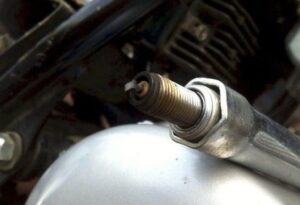
You’re hitting on a super important point here! When spark plugs start to go bad, they can’t do their job effectively. Their main gig is to create a tiny spark, igniting the air-fuel mixture in your engine’s cylinders. Think of it like a mini lightning bolt happening thousands of times a minute. If that spark is weak, inconsistent, or non-existent, your engine misses a beat – literally. This is what mechanics call a “misfire.”
Your car’s onboard computer, known as the Engine Control Unit (ECU), is constantly monitoring everything. When the ECU detects these misfires, especially if they’re happening frequently or in a specific cylinder, it flags it as a problem. Why? Because misfires lead to incomplete combustion, which means your car is burning fuel inefficiently and pumping out more harmful emissions. Since the check engine light (CEL) is primarily an emissions warning system, it’s designed to alert you to anything that could impact your car’s environmental footprint or overall performance. That’s why bad spark plugs cause check engine light to activate.
Beyond the illuminated dashboard light, you’ll likely notice a few other tell-tale signs if your spark plugs are failing. These are things I’ve personally experienced or seen friends deal with:
- Rough Idling: Ever had your car feel like it’s shaking or sputtering when you’re stopped at a red light? My old sedan started doing this, and it felt like it had a fever! That’s a classic sign of an engine struggling to maintain a smooth rotation due to misfires.
- Engine Hesitation or Stalling: Pressing the gas pedal and feeling a lag, or worse, having your engine just die on you mid-turn? Been there, done that. A faulty spark plug can interrupt the engine’s power delivery.
- Poor Fuel Economy: Suddenly needing to fill up way more often? If your spark plugs aren’t igniting fuel properly, your engine has to work harder and use more gas to achieve the same power. My wallet definitely felt this one time!
- Reduced Power and Acceleration: Trying to merge onto the highway or pass another car, and your engine just groans instead of going? Bad plugs can severely limit your car’s ability to generate full power.
- Difficulty Starting: If your engine cranks endlessly but doesn’t catch right away, it could be struggling to get that initial spark needed to fire up.
- Strange Engine Noises: Sometimes you might hear a subtle “pinging” or “knocking” sound, especially under acceleration. This can be pre-ignition or detonation caused by improper combustion.
When the ECU detects a misfire, it stores a specific diagnostic trouble code (DTC) in its memory. These codes usually start with “P030,” followed by a number. For example, a “P0301” means a misfire in cylinder 1, “P0302” for cylinder 2, and so on. A “P0300” indicates a random or multiple cylinder misfire. My mechanic once showed me a P0303 code, which helped pinpoint the exact plug that needed replacing in my SUV.
The good news? Replacing spark plugs is often a relatively inexpensive fix compared to many other CEL causes. It’s considered routine maintenance, and depending on your vehicle and the type of plugs, they usually need to be changed every 30,000 to 100,000 miles. Always check your car’s owner’s manual for the recommended interval. Don’t delay getting a diagnostic scan when that light comes on. Getting it checked out promptly will save you from potential damage to other components, like your catalytic converter, which is a much pricier repair!
So, next time that check engine light appears, don’t panic immediately! Remember that bad spark plugs are a very real, and often fixable, possibility. Getting it checked out promptly will keep your car running smoothly and your wallet happy. Happy driving!