The lifespan of your spark plugs varies significantly based on their type, but modern platinum or iridium plugs can last anywhere from 60,000 to over 100,000 miles, far exceeding older copper varieties. Always consult your vehicle’s owner’s manual for the precise manufacturer-recommended interval, as this is your most reliable guide. Pay attention to symptoms like engine misfires, rough idling, or decreased fuel economy, which signal it’s time for an inspection.
How Often Should You Change Your Spark Plugs Answered
Ever had that unsettling feeling when your car just doesn’t quite feel right? Maybe it’s a little sluggish, or perhaps it hesitates when you press the gas pedal. You might even hear an odd rumble that wasn’t there before. While a myriad of issues could be at play, there’s one small, yet mighty, component that often gets overlooked: the spark plug. These unsung heroes are absolutely crucial for your engine’s health and your car’s overall performance.
You might be wondering, “Do I even need to think about these things?” The answer is a resounding yes! Just like changing your oil or rotating your tires, knowing how often you should change your spark plugs is a vital part of car maintenance. It’s not just about keeping your car running; it’s about optimizing its fuel efficiency, performance, and even preventing more costly repairs down the line. But here’s the tricky part: there isn’t a one-size-fits-all answer. It depends on several factors that we’re going to dive into today.
Think of this as a friendly chat about keeping your beloved vehicle purring like a kitten. We’ll break down what spark plugs do, why they wear out, the tell-tale signs they need replacing, and ultimately, how often you should change your spark plugs to keep your ride running smoothly and reliably. Let’s get started!
Key Takeaways
- Consult your owner’s manual: It specifies the exact replacement interval.
- Intervals vary widely: Expect 30,000 to 100,000+ miles depending on vehicle.
- Modern plugs last longer: Platinum or Iridium plugs offer extended service life.
- Watch for warning signs: Misfires, poor fuel economy, or rough idle indicate issues.
- Don’t ignore severe conditions: Heavy towing or stop-and-go driving shorten plug life.
- Replace proactively: Prevent costly engine damage and maintain performance.
📑 Table of Contents
- What Exactly Do Spark Plugs Do? (The Basics)
- So, How Often Should You Really Change Them? The General Rule
- Factors That Influence Spark Plug Lifespan
- Warning Signs It’s Time to Change Your Spark Plugs
- Can You Change Spark Plugs Yourself? (DIY vs. Professional)
- The Benefits of Timely Spark Plug Replacement
- Conclusion
What Exactly Do Spark Plugs Do? (The Basics)
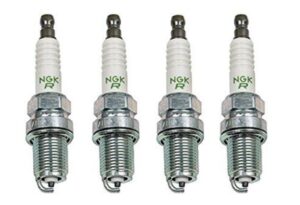
Before we talk about replacement, let’s quickly understand their job. Imagine your car’s engine as a tiny, controlled explosion factory. For these explosions to happen, you need three things: air, fuel, and a spark. That’s where spark plugs come in!
Each spark plug sits at the top of an engine cylinder. When the air and fuel mixture is compressed, the spark plug delivers a precise electrical spark. This tiny spark ignites the mixture, creating the power that drives your pistons and, ultimately, moves your car. Without this spark, your engine simply wouldn’t start or run. It’s a precise, high-voltage operation happening thousands of times a minute, and over time, that constant work takes its toll.
The Different Types of Spark Plugs
- Copper Spark Plugs: These are the traditional workhorses. Copper is an excellent conductor, but it’s softer, meaning these plugs tend to wear out faster. You’ll often find them in older vehicles or some high-performance engines.
- Platinum Spark Plugs: Stepping up in durability, platinum plugs use a platinum disc welded to the center electrode. Platinum is much harder than copper, allowing these plugs to last longer.
- Iridium Spark Plugs: The current champions of longevity and performance. Iridium is even harder than platinum, allowing for a much finer electrode tip and incredibly long life. Most modern vehicles, especially newer ones, come equipped with iridium spark plugs from the factory.
So, How Often Should You Really Change Them? The General Rule
Okay, let’s get to the core question: how often should you change your spark plugs? The simple, most important answer is: check your car’s owner’s manual! Seriously, this book is your best friend when it comes to maintenance schedules. Manufacturers provide specific recommendations tailored to your vehicle’s engine and the type of spark plugs it uses.

Visual guide about how often should i change my spark plugs
Image source: d1hv7ee95zft1i.cloudfront.net
That said, here’s a general guideline based on spark plug type:
- Copper Spark Plugs: Typically need replacing every 30,000 to 50,000 miles.
- Platinum Spark Plugs: Usually last longer, around 60,000 to 80,000 miles.
- Iridium Spark Plugs: These are the longest-lasting, often good for 100,000 miles or even more (up to 120,000 miles in some cases!).
As you can see, there’s a wide range. A newer car with iridium plugs might go for a decade without needing new ones, while an older model with copper plugs will require them much more frequently. This is why just asking “how often” isn’t enough; you need to consider the specifics.
Factors That Influence Spark Plug Lifespan
Beyond the manufacturer’s recommendation and the type of plug, several other elements can impact how often you should change your spark plugs.
Your Vehicle’s Make and Model
Different engines place different demands on their spark plugs. A high-performance engine might run hotter or at higher RPMs, potentially reducing plug life slightly, even with advanced iridium plugs. Turbocharged engines, for instance, can be harder on plugs than naturally aspirated ones.
Your Driving Habits
Are you mostly a city driver, stuck in stop-and-go traffic? Or do you spend most of your time cruising on the highway? Your driving style plays a role:
- Frequent Short Trips: If your car rarely gets up to full operating temperature, carbon deposits can build up on spark plugs faster, leading to premature wear.
- Aggressive Driving: Frequent hard acceleration and high RPMs can also stress spark plugs more than gentle driving.
- Towing or Heavy Loads: Putting your engine under constant heavy load can also contribute to quicker wear.
Engine Condition and Maintenance
A well-maintained engine is a happy engine. Issues like a faulty oxygen sensor, a dirty air filter, or an engine that’s running too rich (too much fuel, not enough air) can cause spark plugs to foul or wear out prematurely. Oil leaks that allow oil to seep into the combustion chamber can also contaminate plugs, reducing their effectiveness and lifespan.
Warning Signs It’s Time to Change Your Spark Plugs
Even if you’re keeping up with your scheduled maintenance, it’s essential to recognize the signs that your spark plugs might be struggling. Ignoring these clues can lead to decreased performance and potentially more serious engine problems down the road. If you notice any of these, it might be time to change your spark plugs:
Engine Misfires or Rough Idling
This is one of the most common signs. If your engine feels like it’s “chugging” or vibrating excessively, especially when idling, it could be a misfire. A misfire happens when a spark plug fails to ignite the air/fuel mixture in a cylinder, leading to a loss of power and an uneven engine rhythm. It feels like your car is struggling to breathe.
Difficulty Starting Your Car
Does your engine crank for an unusually long time before starting, especially when it’s cold? Worn spark plugs might not be able to generate a strong enough spark to ignite the fuel efficiently, making startup a struggle.
Reduced Fuel Economy
Are you finding yourself at the gas station more often than usual? When spark plugs are worn, they don’t burn fuel as efficiently. This means your engine has to work harder and use more fuel to produce the same amount of power, leading to a noticeable drop in your miles per gallon.
Sluggish Acceleration
Pressing the gas pedal should result in a smooth, responsive surge of power. If your car feels hesitant, sluggish, or lacks its usual “oomph” when accelerating, weak spark plugs could be the culprit. They might not be delivering the consistent spark needed for optimal power output.
Check Engine Light
While the check engine light can indicate a vast array of problems, it will often illuminate if your engine is experiencing misfires due to failing spark plugs. If this light comes on, it’s always a good idea to get it checked by a professional to diagnose the specific issue.
Unusual Engine Noises
A “knocking” or “pinging” sound coming from your engine, particularly under acceleration, can sometimes be attributed to spark plugs that aren’t firing correctly. This is often a sign of pre-ignition or detonation, which can be harmful to your engine over time.
Can You Change Spark Plugs Yourself? (DIY vs. Professional)
So, you’ve determined it’s time to change your spark plugs. The next question is: can you do it yourself, or should you call in a pro?
When to Consider DIY
If you’re comfortable with basic car maintenance, have the right tools (a spark plug socket set, torque wrench, and gap tool are essential), and your spark plugs are relatively easy to access (e.g., in a straight-four engine with no covers or components in the way), then changing them yourself can be a satisfying and money-saving project. Always make sure the engine is cool, and disconnect the battery as a safety precaution.
When to Call a Professional
For many modern vehicles, spark plugs can be quite tricky to reach. They might be hidden under intake manifolds, coil packs, or other engine components that require specialized tools and knowledge to remove and reinstall correctly. If you’re unsure, lack experience, or fear stripping threads or breaking a plug in the cylinder head (a very costly mistake!), it’s always best to leave it to a certified mechanic. They have the expertise, the right tools, and can ensure the job is done safely and correctly.
The Benefits of Timely Spark Plug Replacement
Taking the time to change your spark plugs when needed offers a wealth of benefits that make the effort well worth it:
- Improved Fuel Efficiency: Your engine will burn fuel more completely and efficiently, saving you money at the pump.
- Smoother Engine Performance: Say goodbye to rough idling and sluggish acceleration. Your car will feel more responsive and powerful.
- Reduced Emissions: An efficiently running engine produces fewer harmful pollutants, which is better for the environment and often helps you pass emissions tests.
- Easier Starting: Especially in cold weather, a strong spark makes a huge difference in how quickly and reliably your car starts.
- Preventing More Costly Damage: Ignoring worn spark plugs can lead to engine misfires, which can damage catalytic converters and other expensive engine components over time. Timely replacement is a small investment that protects larger ones.
Conclusion
Understanding how often you should change your spark plugs is a fundamental part of responsible car ownership. While the specific interval varies greatly based on your vehicle, the type of plugs it uses, and your driving habits, the general principle remains the same: proactive maintenance saves you headaches and money in the long run.
Your owner’s manual is your ultimate guide, but listening to your car and recognizing the warning signs are equally important. Don’t wait until your engine is seriously struggling. A timely spark plug replacement is a relatively inexpensive service that delivers significant returns in terms of performance, fuel economy, and peace of mind. So, next time you’re thinking about your car’s health, give a little thought to those tiny, hard-working spark plugs!
Frequently Asked Questions
How often should I change my spark plugs generally?
The general recommendation for changing spark plugs varies significantly by vehicle manufacturer and plug type. Most modern vehicles with iridium or platinum plugs suggest replacement every 60,000 to 100,000 miles. Always refer to your car’s owner’s manual for the most accurate service interval.
What are the common signs that my spark plugs need changing?
Key indicators include a rough idling engine, difficulty starting your car, or a noticeable decrease in fuel efficiency. You might also experience engine misfires, a lack of acceleration, or the illumination of your check engine light. Addressing these signs promptly can prevent further engine issues.
Does the type of spark plug affect how often they need changing?
Yes, absolutely. Different spark plug materials have varying lifespans; copper plugs typically last 20,000-40,000 miles, while platinum plugs can go 60,000-80,000 miles. Iridium plugs, being the most durable, often last 100,000 miles or more before needing to be changed.
How many miles can I go before needing to change my spark plugs?
For most modern vehicles equipped with long-life spark plugs (platinum or iridium), you can typically expect them to last between 60,000 to 100,000 miles. However, this range can be shorter for older vehicles or those using traditional copper plugs, which may need changing every 30,000 miles. Always consult your vehicle’s owner’s manual for specific mileage recommendations.
What factors can shorten the lifespan of my spark plugs?
Several factors can reduce the lifespan of your spark plugs, including frequent short trips, excessive idling, and severe driving conditions. Engine issues like incorrect air-fuel mixture, oil leaks into the combustion chamber, or using the wrong fuel type can also lead to premature wear. Regular maintenance helps ensure they last as intended.
What happens if I don’t change my spark plugs when recommended?
Neglecting to change your spark plugs can lead to a range of performance problems, including reduced fuel economy, engine misfires, and a loss of engine power. Over time, severely worn plugs can even cause catalytic converter damage or make your car difficult to start, leading to more expensive repairs.