Regularly inspecting your spark plugs is a crucial DIY step to uncover vital clues about your engine’s health. Their condition—from color to deposits—can reveal underlying issues like fuel mixture imbalances, oil burning, or ignition problems, often before serious damage occurs. This simple diagnostic empowers you to proactively identify and address engine concerns, saving time and money on future repairs.
Hey there, fellow car enthusiast (or just someone trying to keep their ride running smoothly)! Ever had your car sputter, hesitate, or just feel a bit “off” and wished you knew what was going on under the hood? It’s a frustrating feeling, isn’t it? That check engine light can make your heart sink faster than a lead balloon. But what if I told you there’s a simple, often-overlooked component that acts like a tiny, honest messenger, constantly telling you the story of your engine’s health?
I’m talking about the humble spark plug. These little guys are the unsung heroes of your car’s ignition system, sparking life into your engine with every revolution. And the amazing thing? Just by taking a moment to check them, you can uncover a wealth of information about how your engine is really performing, potentially saving yourself a hefty repair bill down the line. Think of it as a DIY engine diagnostic tool right in your driveway.
Learning how to check a spark plug isn’t just about replacing a worn-out part; it’s about becoming a detective for your car. It’s a skill that empowers you, builds confidence, and connects you more intimately with your vehicle. So, grab your tools, and let’s dive into how you can become a spark plug pro and keep your engine purring like a kitten.
Key Takeaways
- Always prioritize safety: Disconnect the battery before starting work.
- Use correct tools: Employ a spark plug socket for proper removal.
- Examine electrode color: Tan or gray indicates a healthy engine.
- Identify common issues: Black soot means rich; white, lean; oily, burning oil.
- Check spark plug gap: Ensure it matches manufacturer specifications precisely.
- Tighten plugs correctly: Avoid over-tightening; use a torque wrench.
- Replace worn plugs promptly: New plugs restore performance and fuel efficiency.
📑 Table of Contents
- Why Checking Your Spark Plugs Matters (Beyond Just Spark)
- Gathering Your Tools: What You’ll Need
- The Step-by-Step Process of Removing a Spark Plug Safely
- Reading Your Spark Plugs: What the Condition Tells You (The Diagnostic Guide)
- Gapping and Reinstalling Your New (or Cleaned) Spark Plugs
- When to Seek Professional Help (and a Word on Frequency)
Why Checking Your Spark Plugs Matters (Beyond Just Spark)
The Heartbeat of Your Engine
At its core, a spark plug is designed to do one crucial job: ignite the air-fuel mixture in your engine’s combustion chamber. This tiny, precisely timed spark is what creates the power that moves your car forward. Without properly functioning spark plugs, your engine simply can’t do its job efficiently. They are quite literally the heartbeat of your engine, delivering that critical spark for combustion.
When a spark plug isn’t firing correctly, it can lead to a host of problems you’ll notice immediately: rough idling, engine misfires, poor acceleration, and even a noticeable drop in your fuel economy. You’re essentially throwing money away at the gas pump if your spark plugs aren’t doing their best work. Regular checks ensure your engine is getting the consistent, powerful spark it needs for optimal performance and efficiency.
Early Warning System
But here’s the really cool part: a spark plug isn’t just a component; it’s a diagnostic window into your engine’s internal workings. Its condition – the color, the deposits, the wear – can tell you a detailed story about what’s happening inside your engine. Is it running too rich or too lean? Is there oil getting where it shouldn’t be? Are there other ignition system problems? A quick visual inspection of your spark plugs can often answer these questions long before a major issue develops or a dashboard warning light comes on. This makes checking your spark plugs a fantastic early warning system for bigger, more expensive problems.
Gathering Your Tools: What You’ll Need
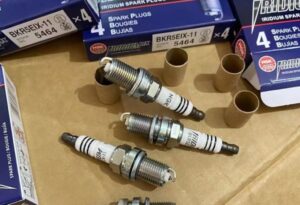
Essential Spark Plug Toolkit
Before you start, make sure you have the right gear. Having the correct tools makes the job much smoother and prevents damage to your engine or the new spark plugs. Here’s what you’ll typically need:
- Spark Plug Socket: This is crucial. It’s a specialized deep socket, usually 5/8″ or 13/16″, with a rubber insert to protect the ceramic insulator of the spark plug and hold it while you remove or install it.
- Ratchet and Extension: To reach those often-recessed spark plugs. An extension around 6-10 inches is usually sufficient.
- Torque Wrench: Absolutely essential for proper installation. Overtightening can strip threads or crack the new spark plug; undertightening can cause it to loosen and overheat.
- Spark Plug Gap Gauge: To ensure the gap between the electrodes is precisely set according to your vehicle’s specifications.
- Dielectric Grease: Applied to the inside of the spark plug boot to prevent moisture and corrosion, and to make future removal easier.
- Anti-Seize Compound: A small dab on the threads of new spark plugs prevents them from seizing in the cylinder head, especially if you have aluminum heads.
- Gloves and Rags: For cleanliness and protection.
- Compressed Air (Optional but Recommended): To blow debris out of the spark plug wells before removal.
The Step-by-Step Process of Removing a Spark Plug Safely
Safety First!
Always prioritize safety. Make sure your engine is cool to the touch. Working on a hot engine can lead to burns and can also damage the threads in the cylinder head if you remove hot spark plugs from a cold engine, or vice-versa, due to thermal expansion differences. It’s also a good idea to disconnect your car’s negative battery terminal to prevent accidental electrical shorts.
Locating and Accessing Your Plugs
Spark plugs are typically found on top or the side of the engine, connected to thick wires or sitting under ignition coils. Modern cars often have individual coil packs directly on top of each spark plug. You’ll usually need to remove an engine cover or air intake components to gain access.
Before you remove anything, take a moment to observe and perhaps even snap a quick photo with your phone. This helps you remember where everything goes, especially if you have several wires or coil packs. If your car has spark plug wires, remove them one at a time, or label them, to avoid mixing up the firing order.
Disconnecting and Removing
Carefully disconnect the spark plug wire or ignition coil from the top of the spark plug. Pull on the boot or coil pack, not the wire itself, to avoid damage. Once the wire or coil is off, use compressed air to blow any dirt or debris from around the base of the spark plug. You definitely don’t want anything falling into the combustion chamber once the plug is out!
Now, with your spark plug socket and ratchet, gently turn the spark plug counter-clockwise to loosen it. If it feels stuck, apply steady, even pressure. Avoid forcing it, as this can damage the cylinder head threads. Once loose, unscrew it completely and carefully lift it out. Now you have your diagnostic tool in hand!
Reading Your Spark Plugs: What the Condition Tells You (The Diagnostic Guide)
This is where the real detective work begins. Each spark plug tells a unique story about its corresponding cylinder. Observe the color, texture, and condition of the electrodes and the ceramic insulator.
The Ideal Spark Plug Look
A healthy spark plug typically has a light tan or grayish-brown color on its insulator tip and electrodes. The electrodes should be sharp and defined, with minimal wear. This “café au lait” color indicates proper engine operation, a good air-fuel mixture, and the correct heat range for your engine.
Signs of Trouble: Common Spark Plug Readings
Let’s look at what various conditions might indicate:
| Spark Plug Condition | Appearance | Likely Engine Issue(s) |
|---|---|---|
| Normal | Light tan to grayish-brown electrodes | Healthy engine, correct heat range, good fuel/air mix. |
| Carbon Fouling | Dry, black soot | Rich fuel mixture, clogged air filter, weak ignition, prolonged idling, wrong heat range. |
| Oil Fouling | Wet, oily, black deposits | Worn piston rings, worn valve guides/seals, PCV system issue. |
| Overheating | White, blistered, melted electrodes, eroded insulator | Lean fuel mixture, incorrect timing, wrong spark plug heat range, vacuum leak. |
| Ash Deposits | Light brown/white powdery coating | Oil additives, fuel additives. Can lead to misfires. |
| Worn Electrodes | Rounded electrodes, large gap | Normal wear and tear, high mileage. Reduces ignition efficiency. |
| Cracked Insulator | Visible crack on ceramic insulator | Thermal shock, improper installation, engine pinging/detonation. |
- Carbon Fouling: If your spark plug is covered in dry, black, sooty deposits, it suggests a “rich” fuel mixture (too much fuel, not enough air) or a weak spark. This could be due to a clogged air filter, a faulty oxygen sensor, or prolonged idling.
- Oil Fouling: Wet, oily, black deposits indicate that oil is entering the combustion chamber. This is a more serious issue, often pointing to worn piston rings, valve guide seals, or a problem with your PCV (Positive Crankcase Ventilation) system.
- Overheating/Pre-ignition: A spark plug that looks white, blistered, or has melted electrodes is suffering from excessive heat. This can be caused by a “lean” fuel mixture (too much air, not enough fuel), incorrect ignition timing, or using a spark plug with the wrong heat range.
- Ash Deposits: Light brown or white powdery deposits can result from oil or fuel additives. While not immediately critical, excessive ash can cause misfires over time.
- Worn Electrodes: Normal wear and tear over high mileage will cause the central electrode and ground electrode to become rounded, increasing the gap. This reduces spark intensity and efficiency, which is why regular replacement of your spark plugs is important.
- Cracked Insulator: A crack in the ceramic insulator usually points to mechanical damage during installation (dropped plug, incorrect torque) or severe engine detonation (pinging). A cracked insulator will definitely cause a misfire.
Gapping and Reinstalling Your New (or Cleaned) Spark Plugs
Checking the Gap
New spark plugs are typically pre-gapped, but it’s always a good idea to double-check and adjust them if necessary. Consult your car’s owner’s manual or a reliable repair manual for the correct gap specification. Use your spark plug gap gauge to measure the distance between the central and ground electrodes. If adjustment is needed, carefully bend the ground electrode only. Never try to bend the central electrode!
Applying Anti-Seize and Dielectric Grease
For spark plugs that thread directly into aluminum cylinder heads (common in many modern engines), apply a tiny amount of anti-seize compound to the threads. This prevents the spark plug from seizing in the head due to dissimilar metals and heat. Be careful not to get it on the electrode or ceramic insulator.
Next, apply a thin layer of dielectric grease to the inside of the spark plug boot (the part that connects to the spark plug). This helps seal out moisture, prevents corrosion, and makes it easier to remove the boot next time.
Proper Torquing is Key
Hand-thread the new spark plug into the cylinder head initially to avoid cross-threading. Once it’s finger-tight, use your torque wrench to tighten it to the manufacturer’s specified torque. This is crucial for performance and longevity. Overtightening can strip threads or crack the ceramic; undertightening can cause the spark plug to vibrate loose and even overheat.
Once the spark plug is properly torqued, reattach the ignition coil or spark plug wire. Ensure it clicks firmly into place. Reconnect your battery and any other components you removed, and you’re ready to start your engine!
When to Seek Professional Help (and a Word on Frequency)
Beyond a Simple Swap
While checking and replacing your spark plug is a satisfying DIY task, sometimes the symptoms you discover are beyond a simple fix. If your spark plugs consistently show signs of oil fouling, extreme overheating, or if you find metallic debris, these are red flags indicating more significant internal engine problems. In such cases, it’s best to consult a qualified mechanic. They have specialized diagnostic tools and expertise to pinpoint and repair complex engine issues.
How Often Should You Check?
The recommended service interval for spark plug replacement varies significantly by vehicle, often ranging from 30,000 miles for older vehicles to 100,000 miles or more for modern cars with long-life iridium or platinum spark plugs. Always refer to your car’s owner’s manual for precise recommendations.
However, even if your car has long-life spark plugs, a quick visual inspection every 15,000 to 30,000 miles (or whenever you notice performance issues) can give you invaluable insights into your engine’s health and help you catch potential problems early. It’s a small investment of your time that can prevent bigger headaches.
There you have it! Checking your spark plug is more than just a maintenance task; it’s a powerful diagnostic ritual that connects you directly to the health of your car’s engine. You’ve learned how to safely remove them, decipher their visual clues, and properly reinstall them. This newfound knowledge not only saves you money but also gives you a deeper understanding and appreciation for your vehicle.
So, the next time your car feels a little off, don’t just guess. Pull out a spark plug and let it tell its story. You might be surprised at what you learn, and you’ll definitely feel a sense of accomplishment knowing you’ve taken a proactive step in keeping your trusty ride running its best. Happy wrenching!
Frequently Asked Questions
Why should I bother checking my spark plugs regularly?
Checking your spark plugs is a crucial DIY maintenance task that helps you monitor your engine’s health. It allows you to spot early signs of problems like misfires, poor fuel economy, or issues with your air-fuel mixture before they escalate into more costly repairs.
What tools do I need to check a spark plug in my car?
To safely check a spark plug, you’ll typically need a spark plug socket and ratchet, a spark plug gapping tool, and a flashlight. Anti-seize lubricant and a torque wrench are also highly recommended for proper reinstallation to prevent future issues.
How do I safely remove a spark plug from my engine for inspection?
First, ensure your engine is cool to prevent stripped threads. Carefully disconnect the spark plug wire or coil pack, pulling on the boot rather than the wire itself. Then, use the correct size spark plug socket with an extension and ratchet to loosen and gently remove the spark plug.
What should a healthy spark plug look like, and what abnormal signs should I look for?
A healthy spark plug typically has a light tan or grayish-brown deposit on the electrode, indicating proper combustion. Look for signs of trouble like black, sooty deposits (rich mixture), white or blistered electrodes (lean mixture/overheating), or oily residue (oil burning).
How often should I check my spark plugs, and what are the signs I need to check them sooner?
Most manufacturers recommend checking or replacing spark plugs every 30,000 to 100,000 miles, depending on the type. However, you should check them sooner if you notice symptoms like a rough idle, engine misfires, reduced fuel efficiency, or difficulty starting your vehicle.
Can I damage my engine if I improperly check or re-install a spark plug?
Yes, improper handling can cause damage. Cross-threading a spark plug during re-installation can damage cylinder head threads, leading to expensive repairs. Overtightening can crack the spark plug insulator or damage the cylinder head, while not tightening enough can allow combustion gases to leak.