Mastering spark plug testing is crucial for peak engine health and efficiency. This guide illuminates how to visually inspect for wear, accurately measure the gap, and check resistance with a multimeter, enabling you to diagnose issues before they impact performance. Proactive spark plug maintenance ensures your vehicle runs smoothly and reliably.
Hey there, fellow car enthusiast or just someone looking to keep their ride running sweet! Have you ever experienced that gut-wrenching feeling when your engine starts to stutter, hesitate, or just doesn’t feel right? That mysterious misfire that sends shivers down your spine and thoughts of hefty repair bills dancing in your head? Trust me, I’ve been there, staring blankly at the engine, wondering where to even begin.
Often, the culprit behind many common engine woes is surprisingly simple: your spark plugs. These small but mighty components are the unsung heroes of your engine’s combustion process, igniting the air-fuel mixture thousands of times per minute. When they start to falter, your entire engine suffers, leading to poor performance, reduced fuel economy, and potentially more serious damage down the line.
But here’s the good news: you don’t always need a professional mechanic to diagnose a spark plug issue. Learning how to test spark plugs is a fantastic skill that empowers you to pinpoint problems early, save money, and gain a deeper understanding of your vehicle. In this quick guide, we’re going to walk through the process together, just like friends tackling a weekend project. By the end, you’ll be confidently testing spark plugs and contributing to optimal engine health!
Key Takeaways
- Visually inspect: Check plugs for wear, deposits, or damage indicators.
- Verify electrode gap: Use a feeler gauge for optimal ignition.
- Perform a spark test: Confirm a strong, consistent spark output.
- Measure plug resistance: Use a multimeter for electrical integrity.
- Address engine symptoms: Test plugs for misfires or power loss.
- Test regularly: Proactively ensure optimal engine health and performance.
- Prioritize safety: Always disconnect power before handling spark plugs.
📑 Table of Contents
- Why Spark Plugs Matter and When to Suspect Them
- Essential Tools You’ll Need to Test Spark Plugs
- Step-by-Step Guide to Removing Your Spark Plugs
- How to Test Spark Plugs for Resistance and Gaps
- The Spark Plug Tester: A Direct Approach
- What Your Spark Plugs Are Telling You (Visual Inspection Deep Dive)
- Conclusion
Why Spark Plugs Matter and When to Suspect Them
The Heart of Ignition
Think of spark plugs as tiny lightning bolts inside your engine. They take the high-voltage electricity sent from your ignition system and create a spark that ignites the compressed air-fuel mixture in each cylinder. This ignition is what generates the power that moves your car. Without a strong, consistent spark, the combustion process is incomplete, leading to a host of performance issues.
Common Symptoms of Failing Spark Plugs
Your engine is pretty good at telling you when something’s wrong. When spark plugs start to wear out or get fouled, you’ll likely notice one or more of these symptoms:
- Engine Misfires: This is often felt as a stumble or hesitation, especially under acceleration. It means one or more cylinders aren’t firing correctly.
- Rough Idling: If your engine feels shaky or vibrates more than usual when stopped, it could be due to inconsistent firing.
- Decreased Fuel Economy: A struggling spark plug won’t burn fuel efficiently, leading to more trips to the gas station.
- Difficulty Starting: Weak sparks can make it harder for your engine to catch and start up, especially in cold weather.
- Loss of Power: You might notice your car feeling sluggish or less responsive than usual.
- Check Engine Light: Many modern vehicles will illuminate the check engine light if a misfire is detected, often accompanied by a diagnostic trouble code (DTC).
If you’re experiencing any of these, knowing how to test spark plugs is your first step towards diagnosis.
Essential Tools You’ll Need to Test Spark Plugs
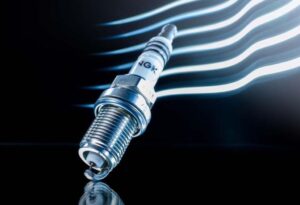
Gathering Your Arsenal
Before you dive in, it’s always smart to have your tools ready. You don’t need a professional workshop, but a few key items will make the job much smoother:
- Socket Wrench Set: Essential for removing and reinstalling spark plugs.
- Spark Plug Socket: These are specialized sockets (usually 5/8″ or 13/16″) with a rubber insert to protect the plug’s ceramic insulator and hold it securely. A universal joint can be helpful for tricky angles.
- Spark Plug Gap Gauge: Crucial for checking and adjusting the distance between the plug’s electrodes. Both wire-type and coin-type gauges work well.
- Multimeter: Used to test spark plug resistance, which can indicate internal wear or damage.
- Spark Plug Tester (Optional, but Recommended): This handy tool lets you visually check for a spark directly from the ignition system. They come in inline and adjustable-gap versions.
- Dielectric Grease: A small amount applied to the spark plug boot can prevent moisture ingress and make future removals easier.
- Gloves and Eye Protection: Safety first, always!
- Compressed Air or Vacuum: To clean around the plugs before removal.
Safety First!
Working on your car’s engine requires a few safety precautions:
- Engine Off and Cool: Never work on a hot engine. Let it cool down completely to avoid burns and to prevent stripping threads in hot aluminum heads.
- Disconnect the Battery: Always disconnect the negative battery terminal before starting any work on electrical components to prevent accidental shocks or short circuits.
- Wear Eye Protection: Debris can fly, and fluids can splash.
Step-by-Step Guide to Removing Your Spark Plugs
Locating and Accessing
First, you need to find your spark plugs. On most modern engines, they are located under individual coil packs or spark plug wires. On older vehicles, you’ll see a distributor cap with wires leading to each plug. Take a moment to note which wire or coil pack goes to which cylinder – numbering them with tape can be a lifesaver for reassembly! Some engines, particularly V-configurations, might have plugs that are harder to reach, requiring intake manifold removal or other disassembly. Consult your car’s service manual if unsure.
The Extraction Process
- Clean Around the Plugs: Before loosening anything, use compressed air or a vacuum to clear any dirt, dust, or debris from around the spark plug wells. You don’t want this falling into your engine cylinders once the plugs are out.
- Disconnect Coil Packs/Wires: Gently disconnect the electrical connector from each coil pack (if applicable) and then remove the coil pack itself, usually by pulling up after unbolting. If you have spark plug wires, twist the boot slightly and pull firmly but gently on the boot itself (NEVER the wire!) to remove it.
- Loosen the Plugs: Fit your spark plug socket onto the plug and attach your ratchet. Turn counter-clockwise to loosen. If a plug feels stuck, apply penetrating oil, let it sit, and try again. Don’t force it, as you could damage the threads in the cylinder head.
- Remove the Plugs: Once loose, you can usually unscrew them by hand or continue with the ratchet. The rubber insert in your spark plug socket will help you lift the plug out safely. Keep the plugs organized by cylinder if you’re pulling multiple to test spark plug condition based on location.
A Quick Visual Inspection Upon Removal
Even before you formally test spark plug resistance or gap, a quick look can tell you a lot. Is the tip black and sooty? Oily? White and blistered? We’ll dive deeper into what these signs mean shortly, but this initial glance can already provide valuable clues about your engine’s health.
How to Test Spark Plugs for Resistance and Gaps
Testing Spark Plug Resistance with a Multimeter
Modern spark plugs often have a resistor built into them to suppress radio frequency interference (RFI) that can affect vehicle electronics. Over time, this resistor can degrade, increasing its resistance or causing it to fail entirely. Here’s how to check it:
- Set Your Multimeter: Turn your multimeter to the ohms (Ω) setting, usually in the 20kΩ range.
- Connect Probes: Touch one multimeter probe to the metal terminal at the top of the spark plug (where the coil pack or wire connects). Touch the other probe to the electrode tip at the bottom of the plug.
- Read the Measurement: A healthy spark plug typically has a resistance between 3,000 to 7,500 ohms (3kΩ to 7.5kΩ), though this can vary slightly by manufacturer. Check your vehicle’s specific service manual for the exact recommended range.
- Interpreting the Reading:
- Too High (e.g., over 10,000 ohms): The internal resistor is likely failing, hindering spark energy.
- No Reading (infinite resistance): The resistor is completely open or broken, meaning no spark can pass.
- Too Low (e.g., under 1,000 ohms): While less common, this could indicate a short circuit within the plug.
If you test spark plug resistance and find it’s outside the specified range, it’s time for a replacement.
Checking and Adjusting the Spark Plug Gap
The gap is the distance between the center electrode and the ground electrode. This tiny space is where the spark jumps. An incorrect gap can lead to misfires, poor fuel economy, and engine damage.
- Find the Correct Gap: ALWAYS refer to your vehicle’s owner’s manual or a reliable service guide for the exact spark plug gap specification for your engine. It’s usually measured in thousandths of an inch (e.g., 0.044 inches) or millimeters.
- Measure the Gap: Using a spark plug gap gauge (either wire-type or coin-type), carefully slide the appropriate wire or edge between the electrodes. It should slide in with a slight drag – not too loose, not too tight.
- Adjusting the Gap (if needed):
- To Increase the Gap: Gently use the adjustment tool on the gap gauge to pry the ground electrode outward slightly.
- To Decrease the Gap: Carefully tap the ground electrode against a hard, flat surface to bend it inward.
Be extremely careful not to damage the center electrode or the ceramic insulator. Once adjusted, re-measure to confirm it’s correct. This step is critical when you test spark plug health.
The Spark Plug Tester: A Direct Approach
What is a Spark Plug Tester?
A spark plug tester is a diagnostic tool that allows you to check if there’s a spark being generated by your ignition system. There are two main types:
- Inline Spark Tester: This simple tool connects between the spark plug wire/coil pack and the spark plug. It has a small window or indicator light that flashes when a spark occurs.
- Adjustable Gap Spark Tester: This more robust tester allows you to set a specific gap (e.g., 25,000-40,000 volts) to simulate engine compression more accurately and check the strength of the spark.
Using an Inline Spark Tester
- Connect: Disconnect the spark plug wire or coil pack from the spark plug you want to test spark plug ignition for.
- Install Tester: Connect the tester to the end of the spark plug wire/coil pack boot. Then, connect the other end of the tester to the top of the spark plug.
- Crank the Engine: Have a helper briefly crank the engine (do NOT start it).
- Observe: Look for a bright, consistent spark within the tester’s window or for the indicator light to flash. A strong, blue spark is ideal.
Advanced Testing with an Adjustable Gap Tester
This method is more thorough as it tests the ignition system’s ability to jump a significant gap, which translates to a stronger spark under engine compression.
- Connect: Remove the spark plug from the cylinder you wish to test. Connect the adjustable gap tester directly to the spark plug wire or coil pack.
- Ground: Ensure the body of the tester is securely grounded to a bare metal part of the engine block using its built-in clip or a jumper cable.
- Set Gap: Set the tester’s gap to the recommended setting (often 25,000-40,000 volts or a specific distance like 7/16″).
- Crank and Observe: Have a helper crank the engine. Watch for a strong, bright blue spark to jump the gap on the tester.
What a Weak or Absent Spark Means
If you don’t see a spark, or it’s very weak, orange, or yellow, it indicates a problem in the ignition system. This could be:
- A faulty spark plug (even if it passed the resistance test, it might be breaking down under load).
- A bad spark plug wire.
- A failing coil pack or ignition coil.
- Issues with the vehicle’s computer (PCM) or wiring to the ignition components.
When you test spark plug ignition and find issues, it helps narrow down your troubleshooting.
What Your Spark Plugs Are Telling You (Visual Inspection Deep Dive)
The Art of Reading Your Plugs
One of the most valuable insights you get when you test spark plug health comes from simply looking at them. The appearance of the firing end (the tip with the electrodes) is like a report card for your engine. Here’s a quick guide:
- Normal (Tan or Grayish-Brown): This is what you want to see! A healthy plug will have a light tan or grayish-brown deposit on the insulator tip and electrodes, indicating good combustion and a properly tuned engine.
- Carbon Fouled (Dry, Sooty Black): Black, dry, fluffy carbon deposits suggest an overly rich air-fuel mixture, a weak spark, or an air filter issue. This means too much fuel and not enough air.
- Oil Fouled (Wet, Oily Black): A wet, oily black appearance means oil is getting into the combustion chamber. This can be due to worn piston rings, valve guides, or seals.
- Overheated/Blistered (White, Blistered Insulator): A white or light-gray insulator that looks blistered or glazed indicates the plug is running too hot. This can be caused by an incorrect heat range spark plug, advanced timing, too lean of a fuel mixture, or cooling system problems.
- Fuel Fouled (Wet, Black, Smelling of Fuel): If the plug is wet and smells strongly of fuel, it means the cylinder isn’t firing at all, often due to a continuous misfire, faulty injector, or ignition system failure.
- Worn Out (Rounded Electrodes): Over time, the electrodes will erode and become rounded. This increases the required voltage to create a spark, leading to misfires and poor performance. If the electrodes are significantly worn, it’s definitely time for replacement.
When to Replace vs. When to Clean
While you can clean slightly fouled spark plugs with a wire brush or specialized cleaner, it’s generally a temporary fix. If a plug is significantly fouled, damaged, or showing signs of internal resistance failure, replacement is almost always the better option. Spark plugs are relatively inexpensive, and new ones will restore optimal performance and fuel efficiency. Always replace all plugs at once, as they tend to wear out similarly.
Conclusion
There you have it! Learning how to test spark plugs might seem daunting at first, but with a few basic tools and a bit of patience, it’s a perfectly manageable task for any DIY enthusiast. By understanding the tell-tale signs of a failing spark plug, knowing how to measure resistance and gap, and interpreting what your plugs are trying to tell you visually, you’re now equipped with the knowledge to perform crucial preventative maintenance.
Keeping your spark plugs in tip-top shape is one of the simplest yet most effective ways to ensure your engine runs smoothly, maintains good fuel economy, and avoids costly repairs down the road. So, next time your engine feels a little off, don’t panic – grab your tools, and confidently test spark plug health. Your engine, and your wallet, will thank you for it!
Frequently Asked Questions
Why is it important to test spark plugs regularly?
Regularly testing your spark plugs helps you proactively identify potential ignition issues before they escalate into major engine problems. This preventative measure ensures optimal engine performance, improves fuel efficiency, and can prevent costly repairs down the road.
How can I tell if a spark plug is failing or bad?
Common signs of a failing spark plug include engine misfires, rough idling, reduced fuel economy, and sluggish acceleration. A visual inspection often reveals tell-tale signs like a burnt or worn electrode, excessive carbon buildup, or oil fouling, all indicating a need for replacement.
What’s the simplest way to test a spark plug at home?
The simplest at-home method to test a spark plug involves a thorough visual inspection for physical damage, wear on the electrode, and abnormal deposits. You can also use a gap gauge to check if the electrode gap is within the manufacturer’s specified range for proper sparking.
What tools do I need to properly test spark plugs?
To properly test spark plugs, you’ll typically need a spark plug socket wrench, a gap tool or feeler gauge, and an inline spark tester. A multimeter can also be useful for checking resistance, while a clean rag and gloves ensure safety and cleanliness during the process.
How do I interpret the results when I test a spark plug for spark?
When you test a spark plug, a healthy plug should produce a strong, consistent blue or bluish-white spark across its gap. A weak, intermittent, or yellow/orange spark indicates a problem with the plug, the ignition coil, or another component in the ignition system, requiring further investigation or replacement.
Can I test a spark plug for spark without specialized equipment?
Yes, you can perform a basic spark test by carefully grounding the spark plug’s metal casing against a clean, unpainted metal part of the engine (away from fuel lines) while someone briefly cranks the engine. Look for a strong, bright spark across the electrode gap, but exercise extreme caution to avoid electrical shock.