Master the simple DIY process of testing spark plugs with a multimeter to quickly diagnose engine performance issues. This essential guide shows you how to accurately measure internal resistance, revealing whether a spark plug is healthy or needs replacement based on manufacturer specifications. Empower yourself to identify faulty components and save on repair costs, ensuring your vehicle runs optimally.
DIY How to Test Spark Plug With Multimeter at Home
Hey there, fellow car enthusiast! Have you ever experienced that annoying stutter, a sudden drop in fuel economy, or felt your engine just wasn’t pulling its weight like it used to? Chances are, your spark plugs might be the silent culprits. These small but mighty components are crucial for igniting the air-fuel mixture in your engine’s cylinders, and when they start to falter, your car’s performance takes a hit. But don’t fret! You don’t always need a mechanic to diagnose the issue. With a simple tool and a little know-how, you can learn how to test spark plug with multimeter right in your own garage.
I remember a time when my old sedan started acting up. It was rough idling, and accelerating felt sluggish. My first thought was, “Oh no, a costly repair!” But after a quick chat with a mechanically-minded friend, they suggested I check the spark plugs. It sounded intimidating at first, but they walked me through it, and honestly, it was much simpler than I imagined. Learning how to test spark plug with multimeter not only saved me money but also gave me a huge sense of accomplishment. It’s empowering to understand a bit more about what’s going on under the hood.
This guide is designed to be your friendly companion through the process. We’ll cover everything from gathering your tools to interpreting your readings, all in simple, straightforward language. By the end of this post, you’ll be confident in your ability to assess your spark plugs and keep your engine running smoothly. So, let’s roll up our sleeves and dive into the world of automotive DIY, starting with how to test spark plug with multimeter.
Key Takeaways
- Prioritize safety: Disconnect power before handling spark plugs.
- Inspect visually first: Look for cracks, wear, or fouling.
- Set multimeter to Ohms: Measure resistance accurately.
- Connect leads correctly: Probe center terminal and metal shell.
- Compare resistance to specs: Ensure reading is within manufacturer range.
- Zero or infinite Ohms: Indicates a faulty or open-circuit plug.
- Replace faulty plugs: Never attempt to repair damaged spark plugs.
📑 Table of Contents
Why Learning How to Test Spark Plug With Multimeter is a Game Changer for Your Car
Understanding how to test spark plug with multimeter is more than just a cool party trick; it’s a vital skill for any car owner looking to save money, improve vehicle performance, and catch potential issues before they become major problems. Spark plugs are essentially tiny electrical components that deliver an arc of electricity to ignite the fuel-air mixture. Over time, they wear out due to constant high voltage, extreme temperatures, and combustion byproducts. This wear can lead to a host of engine problems that are often misdiagnosed as something more severe.
Common Symptoms of Failing Spark Plugs
- Engine Misfires: Your engine might hesitate or stumble, especially during acceleration.
- Rough Idling: The engine vibrates more than usual when the car is stopped.
- Reduced Fuel Economy: Your car uses more fuel to travel the same distance.
- Difficulty Starting: The engine cranks but struggles to turn over.
- Lack of Power: Your vehicle feels sluggish and lacks its usual responsiveness.
By learning how to test spark plug with multimeter, you can quickly identify if your spark plugs are the cause of these symptoms, potentially saving you a trip to the mechanic and the associated labor costs. It’s a proactive step that gives you control over your car’s health.
Gear Up! What You’ll Need and How to Stay Safe
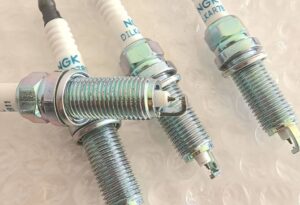
Before you begin the exciting journey of learning how to test spark plug with multimeter, let’s make sure you have all the necessary equipment and, most importantly, understand the safety precautions. Working on your car, even something as seemingly simple as spark plugs, requires a methodical and safe approach.
Essential Tools for the Job
- Digital Multimeter: This is your star player! Make sure it has an “ohms” (Ω) setting.
- Spark Plug Socket Wrench: Typically a 5/8-inch or 13/16-inch, often with a rubber insert to protect the plug.
- Ratchet and Extension: To reach those plugs buried deep in the engine bay.
- Spark Plug Gap Gauge: To check and adjust the gap if necessary (though usually not for testing resistance).
- Gloves: Protect your hands from grease and sharp edges.
- Safety Glasses: Always a good idea when working under the hood.
- Dielectric Grease (optional but recommended): For reinstallation to prevent corrosion.
- Clean Rags: For wiping away dirt and grime.
Safety First, Always!
Your safety is paramount. Follow these simple rules:
- Engine Off and Cool: Never work on a hot engine. Let it cool down completely to avoid burns.
- Disconnect the Battery: Before doing any electrical work, disconnect the negative terminal of your car battery to prevent accidental shocks or short circuits.
- Ventilation: Work in a well-ventilated area, especially if you’re using any cleaning sprays.
- Read Your Car’s Manual: Your vehicle’s specific instructions for spark plug removal can be invaluable.
- Organize: Keep track of where each spark plug and coil pack came from to ensure they go back in the correct order.
Once you’ve got your gear ready and your safety measures in place, you’re ready to proceed with confidence and learn how to test spark plug with multimeter safely.
First Look: Visual Clues from Your Spark Plug
Before you even bring out the multimeter to learn how to test spark plug with multimeter, a simple visual inspection can tell you a lot about your engine’s health and the condition of the spark plug itself. This initial check can sometimes immediately confirm a problem without needing any further testing.
What to Look For During Visual Inspection
- Normal/Healthy Spark Plug: The tip will appear light tan or grayish-brown. This indicates that the engine is running efficiently and the fuel-air mixture is balanced.
- Carbon Fouling: A dry, sooty black deposit on the insulator tip and electrodes. This often suggests a rich fuel mixture, excessive idling, a weak spark, or an incorrect heat range spark plug.
- Oil Fouling: A wet, oily black deposit. This is usually a sign of oil leaking into the combustion chamber, possibly from worn valve guides, piston rings, or PCV system issues.
- Ash Deposits: Light brown or white fluffy deposits. These are typically from fuel additives or oil additives and can sometimes lead to pre-ignition.
- Overheating: A blistered, melted, or chalky white insulator tip. This indicates the plug is running too hot, possibly due to advanced timing, a lean fuel mixture, or an incorrect heat range plug.
- Worn Electrodes: The center or ground electrode might appear eroded or rounded. This is normal wear over time, but excessive wear means it’s definitely time for a replacement.
- Cracked Insulator: Any cracks in the ceramic insulator can cause the spark to leak, leading to misfires. This is a clear sign of a bad plug.
By carefully examining each spark plug after removal, you gain valuable insights. If you see severe wear or obvious damage like a cracked insulator, you might already have your answer without even needing to proceed to how to test spark plug with multimeter.
The Nitty-Gritty: Step-by-Step How to Test Spark Plug With Multimeter for Resistance
Now for the main event! This section will walk you through the precise steps on how to test spark plug with multimeter to check its internal resistance. This test is crucial for determining if the spark plug’s internal resistor is still functioning correctly, which is vital for proper ignition timing and reducing electromagnetic interference.
Step 1: Removing the Spark Plug Safely
Before you even think about the multimeter, you need to get the spark plugs out. Remember to work on a cool engine and disconnect the battery’s negative terminal. Carefully remove the spark plug wires or coil packs (depending on your car’s ignition system). Use your spark plug socket and ratchet to gently loosen and remove each spark plug. Be careful not to drop them!
Step 2: Setting Up Your Multimeter
This is where your trusty multimeter comes into play. Turn the dial on your multimeter to the “ohms” (Ω) setting. You’ll typically want to select a range that can accommodate a few thousand ohms (e.g., 20kΩ). Insert the red lead into the “VΩmA” jack and the black lead into the “COM” jack.
Step 3: Performing the Resistance Test
With your multimeter set up, it’s time to measure the resistance of the spark plug. This is the core of learning how to test spark plug with multimeter.
- Hold the spark plug firmly but gently.
- Place one multimeter probe (it doesn’t matter which one) on the metal terminal at the top of the spark plug (where the spark plug wire or coil pack connects).
- Place the other multimeter probe on the metal electrode tip at the very bottom of the spark plug (the part that sits inside the engine cylinder).
- The multimeter display will show a resistance reading in ohms.
What you’re looking for is a consistent reading within the manufacturer’s specified range. Most modern spark plugs have an internal resistor, and their resistance typically falls between 3,000 to 7,500 ohms (3kΩ to 7.5kΩ). Some plugs might be outside this range, so always check your vehicle’s service manual or the spark plug manufacturer’s specifications for the exact values. If the reading is significantly outside this range, or if you get an “OL” (overload/open circuit) reading, it indicates a problem.
Beyond Resistance: Checking for Insulation and Continuity
While checking internal resistance is the primary method for how to test spark plug with multimeter, there are a couple of other checks you can perform to get a more complete picture of your spark plug’s health. These tests help identify issues that might not be immediately apparent from the resistance reading alone.
Insulation Breakdown Check
Sometimes, the spark plug’s ceramic insulator can develop microscopic cracks or carbon traces that allow the spark to “leak” to the engine block instead of jumping the gap. While a multimeter isn’t perfect for this high-voltage test, you can do a basic check for major insulation breakdown:
- Keep your multimeter on the “ohms” (Ω) setting, preferably on a high range like 200kΩ or even 2MΩ.
- Place one probe on the center electrode (the tip).
- Place the other probe on the metal body (hex nut) of the spark plug.
- Ideally, you should see an “OL” (open circuit) reading or a very, very high resistance reading (megohms). Any low resistance reading (e.g., a few thousand ohms) indicates that the insulator is compromised and the spark is finding a path to ground through the ceramic, meaning the plug is faulty.
This test might not catch every subtle insulation issue, but it’s a good extra step when learning how to test spark plug with multimeter.
Continuity Check for Non-Resistor Plugs (Rare)
While most modern vehicles use resistor-type spark plugs, some older engines or specialty applications might use non-resistor plugs. For these, you’d be looking for continuity. Set your multimeter to the continuity setting (often indicated by a speaker icon, meaning it beeps if there’s continuity).
- Place one probe on the top terminal.
- Place the other probe on the center electrode tip.
- You should hear a beep, indicating a continuous circuit (very low resistance, close to 0 ohms). If there’s no beep or an “OL” reading, the plug has an internal break.
Remember, this is primarily for non-resistor plugs. Do not expect a continuity beep on modern resistor plugs, as they are designed to have resistance.
Understanding the Verdict: What Your Multimeter Readings Mean
You’ve done the work, you’ve performed the tests, and now you have numbers on your multimeter screen. The final step in learning how to test spark plug with multimeter is interpreting those readings. This is where you confirm if your spark plug is a hero or needs to be benched.
Interpreting Resistance Readings
As mentioned, most resistor-type spark plugs will have an internal resistance. Here’s a general guideline, but always consult your vehicle or spark plug manufacturer’s specifications for precise values:
| Multimeter Reading | Interpretation | Action |
|---|---|---|
| 3,000 – 7,500 Ohms (3kΩ – 7.5kΩ) | Good: Within typical range for most resistor-type plugs. | Keep or reinstall (if visually good). |
| Significantly Below 3,000 Ohms | Bad: Resistor too low. May cause misfires or electrical noise. | Replace the spark plug. |
| Significantly Above 7,500 Ohms | Bad: Resistor too high. Hinders spark, leading to misfires. | Replace the spark plug. |
| “OL” (Overload/Open Line) | Bad: Open circuit in the resistor. No spark will be generated. | Definitely replace the spark plug. |
If you’re testing an older, non-resistor type plug, you should see a reading very close to 0 ohms, or hear a continuity beep. An “OL” for these would also indicate a faulty plug.
What if Readings Vary Between Plugs?
It’s a good practice to test all your spark plugs, even if only one is suspected of being bad. You might find that while one plug is clearly faulty, another is on its way out with a borderline reading. Slight variations (a few hundred ohms) between plugs are usually acceptable, but large discrepancies (e.g., one at 4kΩ and another at 9kΩ) suggest a problem with the higher-resistance plug.
Remember, a spark plug might pass the resistance test but still be faulty due to a worn electrode gap or severe fouling. That’s why visual inspection is so important alongside learning how to test spark plug with multimeter.
And there you have it! You’ve successfully learned how to test spark plug with multimeter, interpreted the results, and are now equipped to make an informed decision about your spark plugs. This simple DIY task can make a world of difference in your car’s performance and your wallet.
By taking the time to understand your car’s components and performing these basic diagnostic steps, you’re not just fixing a problem; you’re becoming a more knowledgeable and confident car owner. Keep learning, keep tinkering, and enjoy the smooth ride!
Frequently Asked Questions
What tools do I need to test a spark plug with a multimeter at home?
You’ll primarily need a digital multimeter capable of measuring resistance (ohms). Additionally, have a spark plug socket and ratchet to safely remove the spark plugs, and a clean cloth for any necessary cleaning.
How do I set my multimeter to measure a spark plug’s resistance correctly?
To test a spark plug, set your multimeter to the ohms (Ω) setting, typically in the 20k-ohm range if it’s a manual ranging meter. This setting allows the multimeter to accurately read the internal resistance of the spark plug’s resistor.
What are the steps to actually test a spark plug with a multimeter?
First, ensure the spark plug is clean and cool. Place one multimeter probe on the terminal cap (top) of the spark plug and the other probe on the central electrode inside the porcelain insulator. Avoid touching the metal shell with either probe.
What resistance reading indicates a good spark plug?
A healthy spark plug typically shows a resistance reading between 3,000 to 7,500 ohms (3kΩ to 7.5kΩ). Always check your specific vehicle or spark plug manufacturer’s specifications, as values can vary slightly.
How do I know if a spark plug is bad based on the multimeter’s readings?
A spark plug is likely bad if your multimeter shows an “open circuit” (OL or 1 on the far left of the display), indicating infinite resistance, or a reading significantly outside the manufacturer’s specified range (e.g., below 3kΩ or above 7.5kΩ). These readings suggest an internal fault or degradation within the spark plug.
Why should I bother testing my spark plugs with a multimeter, and how often?
Testing your spark plugs helps diagnose engine misfires, poor fuel economy, or difficult starting issues by verifying their electrical integrity. It’s generally a good practice to test them during routine maintenance or if you suspect performance problems, especially before replacing them.