The truth is, while often separate, the placement of the fuel filter in relation to the fuel pump varies significantly by vehicle make and model. Many vehicles feature a distinct, replaceable fuel filter along the fuel line, but modern designs increasingly integrate a ‘sock’ filter directly within the fuel pump module inside the fuel tank, or place a cartridge filter very close by. This integration means you might not always find a standalone, easily accessible fuel filter.
Is The Fuel Filter In The Fuel Pump? The Truth Revealed!
Hey there, fellow car enthusiast (or just someone trying to understand their vehicle better)! Have you ever found yourself wondering about the nitty-gritty parts of your car, like, “is the fuel filter in the fuel pump?” It’s a really common question, and honestly, it can be a bit confusing because the answer isn’t a simple yes or no.
The truth is, it depends! While the fuel pump and the fuel filter both play crucial roles in getting clean fuel to your engine, their exact relationship varies quite a bit depending on your car’s make, model, and even its age. Sometimes, a component acting like a fuel filter is part of the fuel pump assembly, but often, the main fuel filter is a completely separate unit. Let’s dig a little deeper into this common mystery!
So, really, is the fuel filter in the fuel pump, or where is it typically found?
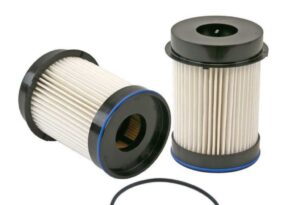
That’s the million-dollar question, isn’t it? As I mentioned, it truly varies. From my own experiences working on different vehicles and chatting with mechanics, I can tell you there are generally two main scenarios:
Scenario 1: The Standalone Fuel Filter (Most Common on Older Vehicles and Many Newer Ones)
In many cars, especially older models, the main fuel filter is a separate unit. You might find it:
- Under the car: Often mounted along the frame rail, between the fuel tank and the engine. It’s usually a cylindrical canister. I remember crawling under my old pickup truck to change it – not the cleanest job, but definitely satisfying!
- In the engine bay: Sometimes, it’s located near the engine, usually in the fuel line itself. This makes it a bit easier to access for maintenance.
This type of fuel filter’s job is to catch all sorts of debris – rust particles, dirt, even tiny flakes from the fuel tank – before they can reach your sensitive fuel injectors and engine. It’s designed to be a consumable part, meaning it needs regular replacement. Think of it like a coffee filter for your car’s fuel system. If it gets clogged, your car can stutter, lose power, or even struggle to start. Knowing where your fuel filter in the fuel pump system isn’t, but rather is its own unit, is key for proper maintenance.
Scenario 2: The Integrated Fuel Filter (Common in Newer Vehicles)
With modern vehicle design, manufacturers are always looking for ways to streamline components. This means that in many newer cars, you might find that the component acting as a fuel filter is integrated into the fuel pump assembly itself. This usually happens in a few ways:
- The “Fuel Sock” or Strainer: Almost all fuel pumps have a pre-filter, often called a “fuel sock” or “strainer,” attached directly to the pump’s intake inside the fuel tank. Its primary job is to protect the fuel pump from large debris. While technically a filter, it’s not the fine-particle filter we usually think of for the entire fuel system. This is a common location for a rudimentary fuel filter in the fuel pump assembly.
- Main Filter within the Fuel Pump Module: In some vehicles, the more substantial, fine-particle fuel filter is actually housed within the fuel pump module, which sits inside the fuel tank. This means if that filter gets clogged, you might need to replace the entire fuel pump module, which can be a more involved and costly repair. My friend had this issue with his sedan – he was surprised to learn his fuel filter in the fuel pump assembly was an all-in-one unit, making a simple filter change impossible.
Why the difference? It often comes down to packaging, efficiency, and reducing the number of external components. While convenient from a design perspective, it can make routine fuel filter maintenance less straightforward for us car owners.
Practical Examples and Tips from My Experience:
- Always Check Your Owner’s Manual: This is your best friend! It will tell you exactly where your vehicle’s fuel filter is located, whether it’s part of the fuel pump, and its recommended service interval.
- Listen to Your Car: If your car sputters, hesitates, or struggles at higher speeds, especially when the fuel tank is low, it could be a sign of a clogged fuel filter, regardless of if it’s external or integrated with the fuel pump.
- Don’t Assume: Just because your last car had an external filter doesn’t mean your new one will. I learned this the hard way, thinking I could easily swap out the fuel filter on a newer car, only to find out it was part of the in-tank fuel pump assembly!
- Consult a Trusted Mechanic: If you’re unsure, ask. A good mechanic can quickly tell you your car’s specific setup regarding the fuel filter in the fuel pump or its standalone location.
So, to wrap it up, while it’s less common for the primary, fine-particle fuel filter to be directly inside the fuel pump as a user-serviceable part, a pre-filter or strainer is almost always an integral part of the fuel pump assembly. Knowing your specific car’s design is key to understanding its maintenance needs. Keep that fuel clean, and your engine will thank you!