Spark plugs are crucial components in gasoline engines, primarily responsible for igniting the air-fuel mixture to power your vehicle. They convert high-voltage electricity into a precise spark, initiating the essential combustion process that drives the pistons. Without them, your engine cannot generate the power needed to move, highlighting their vital role in every internal combustion vehicle.
Ever wondered what truly makes your car’s engine roar to life? Beyond the gas pedal and the fuel tank, there’s a tiny, mighty hero working hard: the spark plug. Think of it as the literal “spark” that gets everything going. Without these crucial components, your engine would simply refuse to start, and your ride would stay put!
Simply put, spark plugs are what ignite the air-fuel mixture inside your car’s engine. This tiny, controlled explosion is what creates the power to move your vehicle. It’s like a continuous series of mini-fireworks happening hundreds of times a minute, all working together to get you where you need to go.
What Exactly Are Spark Plugs Used For in My Car?
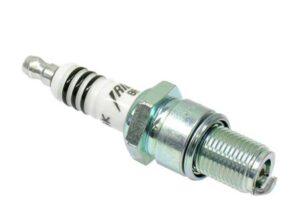
So, you’re asking, “What are spark plugs used for?” In the simplest terms, a spark plug’s job is to create a tiny bolt of lightning right inside your engine’s combustion chamber. Let me break it down for you, like I would explain it to a friend over coffee.
Your car’s engine works by burning a mixture of air and fuel. This burning creates an expansion that pushes a piston, and that motion eventually turns your wheels. But how does that burning start? That’s where the spark plug steps in!
Here’s the magic: When you turn your car’s key, electricity flows to the spark plugs. Each plug has a small gap at its tip. This electricity jumps across that gap, creating a powerful, controlled spark. This spark instantly ignites the air-fuel mixture that has been compressed in the engine cylinder. Boom! That ignition is the mini-explosion that drives your engine’s pistons downward, converting chemical energy into mechanical energy that powers your car.
Imagine trying to start a campfire without a match or a lighter. It just won’t happen, right? The spark plug is that essential match for your engine. If even one spark plug isn’t firing correctly, your engine will definitely let you know.
I remember one time my old sedan started feeling sluggish. It was idling rough, almost like it was shaking, and accelerating felt like pulling a heavy weight. The “check engine” light even flickered on. After a quick trip to my mechanic, we found that one of my spark plugs was fouled and another was worn out. The poor thing just couldn’t get a good spark!
When spark plugs wear out or get dirty, they can’t create that strong, clean spark anymore. This leads to a bunch of problems you might notice:
- Engine Misfires: Your engine might “hiccup” or stutter, especially when accelerating.
- Reduced Fuel Economy: Your car won’t burn fuel efficiently, meaning more trips to the gas station.
- Lack of Power: The engine just won’t have its usual pep, feeling weak.
- Hard Starting: Your car might crank for a long time before finally starting, or not start at all.
- Increased Emissions: An inefficient burn means more harmful stuff coming out of your exhaust.
Replacing worn-out spark plugs made a huge difference for my car. It felt like it had a new lease on life – smoother, more powerful, and even quieter. It was a noticeable improvement, almost like getting new shoes for a run!
Most manufacturers recommend checking or replacing spark plugs every 30,000 to 100,000 miles, depending on the type and your car’s make and model. It’s always a good idea to check your car’s owner’s manual for specifics. Don’t put it off too long, because a tiny part can cause big headaches!
So, next time you’re driving, give a silent nod to those hardworking spark plugs. They’re truly the unsung heroes igniting your journey, making sure your engine has the power it needs, every single time.