The spark plug coil is an indispensable component in your engine’s ignition system, fundamentally transforming low battery voltage into the thousands of volts necessary to fire the spark plugs. This crucial high-voltage burst creates the spark that ignites the fuel-air mixture, directly enabling combustion and powering your engine for optimal performance and efficiency.
Decode What is a Spark Plug Coil for Better Engine Power
Hey there, fellow car enthusiasts and curious drivers! Ever wonder what makes your car purr smoothly, giving you that satisfying push when you hit the gas? There are countless tiny heroes under the hood, and today, we’re shining a spotlight on one of the most crucial: the spark plug coil. It’s a small but mighty component that plays an absolutely vital role in getting your engine to ignite fuel, essentially creating the power that moves your vehicle.
Think of it this way: your car’s engine needs a controlled explosion to generate power. For that explosion to happen, you need a spark – a really powerful one! And that’s exactly where the spark plug coil steps in, acting like a mini power plant to deliver that high-voltage zap. It’s an unsung hero that, when working right, you barely notice, but when it falters, your car definitely lets you know.
What exactly is a spark plug coil, and how does it help my engine run smoothly?
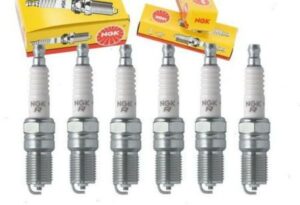
Alright, let’s break down this essential component. At its core, a spark plug coil is an induction coil, essentially a type of electrical transformer. Its main job is to take the low voltage from your car’s battery (usually 12 volts) and dramatically boost it into thousands, sometimes even tens of thousands, of volts. This massive surge of electricity is exactly what your spark plugs need to create a powerful spark.
Here’s how it works in simple terms: inside the coil, there are two sets of wire windings – a primary coil and a secondary coil. When the engine’s computer tells it to, the 12-volt current flows into the primary coil, creating a magnetic field. Then, the current is quickly cut off, causing that magnetic field to collapse almost instantly. This rapid collapse induces a super high voltage in the secondary coil, which has many more windings than the primary. This high-voltage jolt is then sent directly to the spark plug, creating that critical spark that ignites the fuel-air mixture in your engine’s cylinder.
Without this precision-timed, high-voltage spark, the fuel-air mixture wouldn’t ignite, leading to a “misfire.” Imagine trying to light a campfire without a good spark – it’s just not going to happen effectively. The spark plug coil ensures each cylinder gets its necessary spark, making sure your engine combusts fuel efficiently and consistently. This translates directly to smooth acceleration, reliable starting, and overall engine power.
From my own experience, keeping an eye on your spark plug coil health is a game-changer. I once had an older car that started feeling sluggish, especially uphill. It felt like it was struggling for power, almost hesitating. After some troubleshooting, my mechanic found that one of the coils was failing. Replacing it made an immediate difference; the car felt responsive and powerful again, like it had shed a heavy weight! It’s amazing how much difference one small component can make to overall driving feel.
When a spark plug coil starts to go bad, you’ll often notice a few common signs. These can include your check engine light coming on, the engine misfiring (a noticeable jerk or stumble), rough idling (your car shaking or vibrating more than usual when stopped), or even a drop in fuel economy. Sometimes, you might even have trouble starting the car. My mechanic always advises me to address these symptoms quickly. Ignoring a failing coil can put extra stress on other engine components, leading to more expensive repairs down the line. Investing in quality replacement parts, rather than the cheapest option, has always paid off for me in the long run, ensuring lasting performance and peace of smooth driving.
So, the spark plug coil is truly a powerhouse in miniature. It’s what ensures your engine has the “fire” it needs to convert fuel into motion, delivering the power you rely on every time you turn the key. Understanding its role helps you appreciate the incredible engineering packed into your car and empowers you to be more proactive about its maintenance.