Correct installation of your lawn mower’s fuel filter is crucial, as it has a specific direction for optimal performance. Always orient the filter so its arrow points away from the fuel tank and towards the engine, ensuring fuel flows correctly. Installing it backward can severely restrict fuel flow, leading to poor engine performance or a complete failure to start.
Which Way Does Fuel Filter Go On Lawn Mower? Find Out Now.
Ever found yourself staring at a new fuel filter, wondering which end is up? Trust me, you’re not alone! It’s a common moment of confusion for many of us trying to keep our lawn mowers running smoothly. But don’t sweat it; getting your fuel filter facing the right way is simpler than you might think.
The short answer is this: most fuel filters have an arrow on them. That arrow needs to point away from your fuel tank and towards your engine (specifically, the carburetor). Think of it like a one-way street for fuel, ensuring only clean gas reaches your engine. Getting this right is super important for your mower’s health!
Which Way Does Fuel Filter Go On Lawn Mower?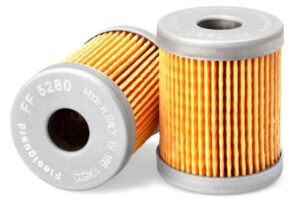
Alright, let’s dive into the nitty-gritty. When you’re replacing your fuel filter, the absolute golden rule is to follow the directional arrow. This arrow literally guides the fuel flow. It should always point in the direction the fuel travels from the tank to the engine. If you put the fuel filter on backward, it won’t be able to properly filter the fuel, or in some cases, it might even restrict fuel flow, causing your mower to sputter or not start at all. I once helped a neighbor troubleshoot his mower for ages, only to find he’d installed his fuel filter backward! A quick flip, and it purred like a kitten.
Most modern fuel filters for lawn mowers will have a clear arrow. But sometimes, you might see “IN” and “OUT” labels instead. “IN” goes towards the fuel tank, and “OUT” goes towards the engine. Easy peasy! If your filter somehow has no markings (which is rare but happens with generic parts), a good rule of thumb is that the side with the coarser screen or the slightly wider opening usually faces the fuel tank, allowing larger particles to be caught first before reaching the finer filter material. But honestly, always try to get one with an arrow; it makes life much easier.
Here’s how I usually tackle this task, step-by-step, making sure my new fuel filter goes on the right way:
- Safety First! Before you touch anything, disconnect the spark plug wire. This prevents the engine from accidentally starting while you’re working. It’s a small step that makes a big difference.
- Observe and Photograph: Before removing the old fuel filter, take a quick picture with your phone. This gives you a perfect visual reference of how the old one was oriented, especially if you get distracted. Seriously, this tip has saved me so much head-scratching!
- Prepare for Spills: Grab a small container or some old rags. Even with clamps, a little fuel might drip out. Place it under the fuel line connections.
- Clamp the Lines: Use fuel line clamps (or even vise grips with some padding) on both sides of the old filter to stop fuel flow from the tank and prevent fuel from draining out of the carburetor side.
- Remove the Old Filter: Loosen the clamps holding the fuel lines to the old filter. Carefully pull off the lines. You might need a little twisting motion. Remember, a little drip is normal.
- Install the New Filter: Now for the crucial part! Take your new fuel filter. Locate the arrow. Connect the fuel line coming from the tank to the “IN” side (the tail of the arrow). Then, connect the fuel line going to the carburetor/engine to the “OUT” side (the head of the arrow). Make sure those connections are snug and secure.
- Secure Everything: Re-attach or replace the fuel line clamps. Give the lines a gentle tug to ensure they’re firmly in place.
- Final Checks: Remove your fuel line clamps. Reconnect the spark plug wire. Look for any signs of fuel leaks around the new filter. I usually let it sit for a minute, then give it a gentle squeeze test on the fuel lines. If all looks good, fire up your mower!
Changing your fuel filter is a small but mighty act of maintenance. It keeps your engine clean, prevents frustrating breakdowns, and ensures your lawn mower starts easily and runs powerfully. It’s definitely a job you can do yourself, saving you time and a trip to the shop!
So, next time you’re replacing your fuel filter, remember: arrow points to the engine. With this little bit of know-how, you’re all set for a season of smooth mowing! Happy lawn care, my friend!