Yes, a bad MAF sensor can cause a misfire. When the Mass Air Flow (MAF) sensor sends inaccurate airflow readings to the Engine Control Unit (ECU), the engine may receive too much or too little fuel. This creates an incorrect air-fuel mixture, which can prevent one or more cylinders from burning fuel properly and result in an engine misfire.
If your engine suddenly starts shaking at idle, hesitates during acceleration, loses power, or triggers the check engine light, don’t ignore it. While many drivers immediately blame spark plugs or ignition coils, the real problem isn’t always part of the ignition system. In some cases, the MAF sensor is the root cause.
A persistent engine misfire can do more than make your vehicle run poorly. It can reduce fuel economy, increase exhaust emissions, and, if left untreated, damage expensive components such as the catalytic converter. That’s why diagnosing the cause early is important.
In this guide, you’ll learn exactly how a bad MAF sensor causes engine misfires, the symptoms to watch for, how to determine whether the MAF sensor is actually responsible, and the most effective ways to fix the problem before it turns into a more costly repair.
Read More: Symptoms of a Bad MAF Sensor
What Is an Engine Misfire?
Before understanding how a bad MAF sensor causes a misfire, it helps to know what an engine misfire actually is.
A gasoline engine works by mixing air and fuel inside each cylinder and igniting that mixture with a spark plug. This combustion process creates the power that moves your vehicle.
An engine misfire occurs when one or more cylinders fail to burn the air-fuel mixture correctly. The combustion may be weak, incomplete, or may not happen at all. Even a single misfiring cylinder can noticeably affect engine performance.
Common signs of an engine misfire include:
- Engine shaking or vibration
- Rough idle
- Hesitation during acceleration
- Loss of engine power
- Flashing or illuminated check engine light
- Reduced fuel economy
Although ignition problems are the most common cause of engine misfires, an incorrect air-fuel mixture can create the same result. That’s where the MAF sensor becomes important.
How Can a Bad MAF Sensor Cause a Misfire?
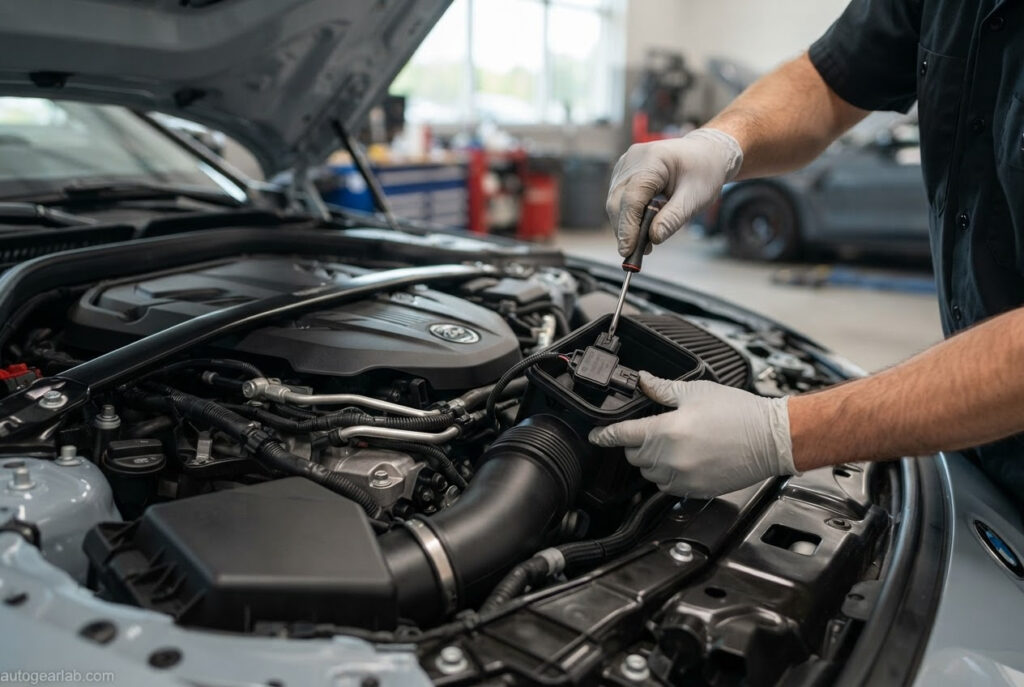
The MAF sensor measures the amount of air entering the engine and sends that information to the Engine Control Unit (ECU). The ECU uses this data to calculate exactly how much fuel each cylinder needs for efficient combustion.
When the MAF sensor starts sending inaccurate airflow readings, the ECU makes fuel calculations based on incorrect information. As a result, the engine may run either too lean (not enough fuel) or too rich (too much fuel).
A lean mixture is especially likely to cause engine misfires because there may not be enough fuel for complete combustion. A rich mixture can also lead to misfires by fouling the spark plugs and reducing combustion efficiency.
The more inaccurate the airflow readings become, the more noticeable the symptoms usually are. That’s why a failing MAF sensor can cause intermittent misfires at first and more frequent misfires as the problem gets worse.
Symptoms That Often Appear with a MAF Sensor Misfire
An engine misfire caused by a bad MAF sensor rarely happens on its own. Because the MAF sensor affects the engine’s air-fuel mixture, you’ll often notice several other performance problems at the same time.
Here are the most common symptoms that may accompany a MAF sensor-related misfire.
Check Engine Light
One of the first warning signs is an illuminated check engine light. The ECU may detect abnormal airflow readings or repeated misfires and store one or more diagnostic trouble codes (DTCs).
Rough Idle
A bad MAF sensor can cause the engine to idle unevenly because the ECU struggles to maintain the correct air-fuel ratio at low engine speeds. You may notice shaking, vibration, or fluctuating RPM while the vehicle is stopped.
Hesitation During Acceleration
When you press the accelerator, the engine may hesitate before responding. Incorrect airflow data can delay fuel delivery, making acceleration feel sluggish or inconsistent.
Loss of Power
If the engine isn’t receiving the correct air-fuel mixture, combustion becomes less efficient. As a result, your vehicle may feel noticeably weaker, especially when climbing hills or accelerating quickly.
Poor Fuel Economy
A failing MAF sensor often causes the ECU to inject more fuel than necessary. Over time, this leads to lower fuel efficiency and more frequent trips to the gas station.
Hard Starting or Stalling
In more severe cases, a faulty MAF sensor can make the engine difficult to start or cause it to stall shortly after starting, particularly if the air-fuel mixture becomes excessively rich or lean.
If you’re experiencing both engine misfires and several of these symptoms, the MAF sensor is worth inspecting. However, these problems can also be caused by other engine faults, so proper diagnosis is always recommended.
Can a Dirty MAF Sensor Cause a Misfire?
Yes. A dirty MAF sensor can cause a misfire for the same reason as a faulty one—it provides inaccurate airflow readings to the ECU.
Over time, dust, dirt, oil residue, and other contaminants can collect on the sensor’s delicate sensing element. As the contamination builds up, the sensor becomes less accurate, causing the ECU to miscalculate the amount of fuel the engine needs.
If the air-fuel mixture becomes too lean or too rich, one or more cylinders may begin to misfire.
The good news is that a dirty MAF sensor doesn’t always need to be replaced. If contamination is the only issue, cleaning the sensor with a dedicated MAF sensor cleaner can often restore accurate airflow readings and eliminate the misfire.
However, if the sensing element is damaged or the sensor has developed an internal electrical fault, cleaning won’t solve the problem. In that case, replacement is usually the best option.
Other Causes of Engine Misfires
Although a bad MAF sensor can certainly cause a misfire, it’s not the most common cause. Before replacing the sensor, you should rule out other common problems that can produce the same symptoms.
Some of the most common causes of engine misfires include:
- Worn or fouled spark plugs
- Faulty ignition coils
- Clogged or failing fuel injectors
- Vacuum or intake air leaks
- Low fuel pressure
- Faulty oxygen (O2) sensor
- Engine compression problems
Because many of these issues create symptoms that closely resemble a MAF sensor failure, replacing the sensor without proper diagnosis may not solve the problem.
How to Tell If the MAF Sensor Is Causing the Misfire
Since several engine problems can cause a misfire, you should confirm that the MAF sensor is actually responsible before replacing it. A systematic diagnosis can save both time and money.
Scan for Diagnostic Trouble Codes
Start by connecting an OBD-II scanner to your vehicle. A bad MAF sensor may trigger airflow-related trouble codes, while the ECU may also store cylinder-specific misfire codes. These codes don’t always confirm a faulty MAF sensor, but they provide a good starting point for diagnosis.
Check Live MAF Sensor Data
If your scan tool supports live data, monitor the MAF sensor readings while the engine is idling and during acceleration. Readings that are unusually high, low, or unstable may indicate the sensor isn’t measuring airflow correctly.
Inspect the MAF Sensor
Remove the sensor and inspect it for dirt, oil contamination, corrosion, or physical damage. A dirty sensing element can often produce inaccurate airflow readings that contribute to engine misfires.
Check the Air Intake System
Inspect the air intake tube, hose clamps, and vacuum lines for cracks or leaks. Unmetered air entering the engine after the MAF sensor can create the same lean condition and misfire symptoms as a faulty sensor.
Compare Engine Performance After Cleaning
If the sensor is dirty, clean it with a dedicated MAF sensor cleaner, reinstall it, and test drive the vehicle. If the misfire disappears or engine performance improves significantly, contamination was likely the root cause.
Can You Drive with a Misfire Caused by a Bad MAF Sensor?
Technically, yes, but it’s not something you should ignore.
Driving with an engine misfire caused by a bad MAF sensor can make your vehicle feel sluggish, reduce fuel economy, and increase exhaust emissions. More importantly, continuous misfires allow unburned fuel to enter the exhaust system, where it can overheat and damage the catalytic converter.
If your vehicle has a flashing check engine light, you should stop driving as soon as it’s safe to do so. A flashing light usually indicates an active misfire that can quickly lead to expensive repairs if ignored.
If the symptoms are mild, you may be able to drive a short distance to a repair shop. However, delaying repairs for days or weeks increases the risk of additional engine and exhaust system damage.
How to Fix a Misfire Caused by a Bad MAF Sensor
The correct repair depends on what’s causing the MAF sensor to provide inaccurate airflow readings.
If the sensor is dirty, cleaning it with a dedicated MAF sensor cleaner is usually the first step. Never use brake cleaner, carburetor cleaner, or throttle body cleaner, as these products can damage the sensing element.
If cleaning doesn’t resolve the problem, inspect the air intake system for leaks, check the electrical connector and wiring, and verify that the engine air filter is clean and properly installed.
If testing confirms that the MAF sensor has failed internally or the sensing element is physically damaged, replacing the sensor is the most reliable solution.
After completing the repair, clear any stored diagnostic trouble codes and take the vehicle for a test drive to confirm that the misfire has been eliminated.
How to Prevent MAF Sensor-Related Misfires
Although not every MAF sensor failure can be prevented, proper maintenance greatly reduces the risk.
Here are a few simple ways to help prevent MAF sensor-related misfires:
- Replace the engine air filter at the recommended interval.
- Avoid over-oiling reusable air filters.
- Inspect the air intake system for cracks and loose connections.
- Repair vacuum leaks promptly.
- Clean the MAF sensor only when necessary using the correct cleaner.
- Address check engine lights before they lead to larger problems.
Keeping the air intake system clean and properly sealed helps the MAF sensor provide accurate airflow readings, reducing the likelihood of engine misfires.
Frequently Asked Questions
Can a bad MAF sensor cause random misfires?
Yes. If the MAF sensor sends inconsistent airflow readings, the ECU may deliver an incorrect air-fuel mixture, resulting in random or intermittent engine misfires.
Can a dirty MAF sensor trigger a misfire code?
Yes. A dirty MAF sensor can contribute to combustion problems that eventually trigger cylinder misfire diagnostic trouble codes.
Will cleaning a MAF sensor stop a misfire?
If dirt or oil contamination is causing inaccurate airflow readings, cleaning the sensor may eliminate the misfire. However, cleaning won’t repair internal electrical failures or physical damage.
What misfire codes are related to a bad MAF sensor?
A bad MAF sensor may contribute to general or cylinder-specific misfire codes, along with airflow or fuel mixture-related codes. A complete diagnosis is necessary to identify the exact cause.
Can a bad MAF sensor damage the catalytic converter?
Yes. If engine misfires continue for an extended period, unburned fuel can overheat the catalytic converter, potentially leading to expensive repairs.
Conclusion
Yes, a bad MAF sensor can cause a misfire, but it’s only one of several possible causes. Because the MAF sensor directly influences the engine’s air-fuel mixture, inaccurate airflow readings can disrupt combustion and cause one or more cylinders to misfire.
Before replacing the sensor, inspect it for contamination, check the air intake system for leaks, and scan the vehicle for diagnostic trouble codes. In many cases, a dirty MAF sensor can be cleaned, while a damaged or electrically faulty sensor will need to be replaced.
By diagnosing the problem early and making the correct repair, you can restore smooth engine performance, improve fuel efficiency, and help prevent costly damage to components such as the catalytic converter.