Yes, a MAF sensor can cause transmission problems—but only indirectly. A faulty Mass Air Flow (MAF) sensor doesn’t damage the transmission itself. However, because it provides airflow data that the Engine Control Unit (ECU) uses to calculate engine load, incorrect readings can affect how the transmission shifts. This may result in delayed shifts, hard shifting, gear hunting, or poor overall drivability.
If your transmission suddenly starts shifting harshly or changing gears at the wrong time, it’s natural to think the transmission is failing. That assumption can lead to expensive repairs or even a transmission replacement that wasn’t actually needed. In reality, many transmission-like symptoms are caused by engine performance issues, and a bad MAF sensor is one of the components that can contribute to them.
Modern vehicles rely on multiple sensors to keep the engine and transmission working together efficiently. When the MAF sensor sends inaccurate airflow information, the ECU may miscalculate engine load and torque. Since many automatic transmissions use this data to determine shift timing and line pressure, incorrect MAF readings can affect transmission behavior—even if the transmission itself is in good condition.
In this guide, I’ll explain how a MAF sensor can cause transmission problems, which symptoms to look for, how to determine whether the MAF sensor is actually responsible, and the best way to fix the issue before spending money on unnecessary transmission repairs.
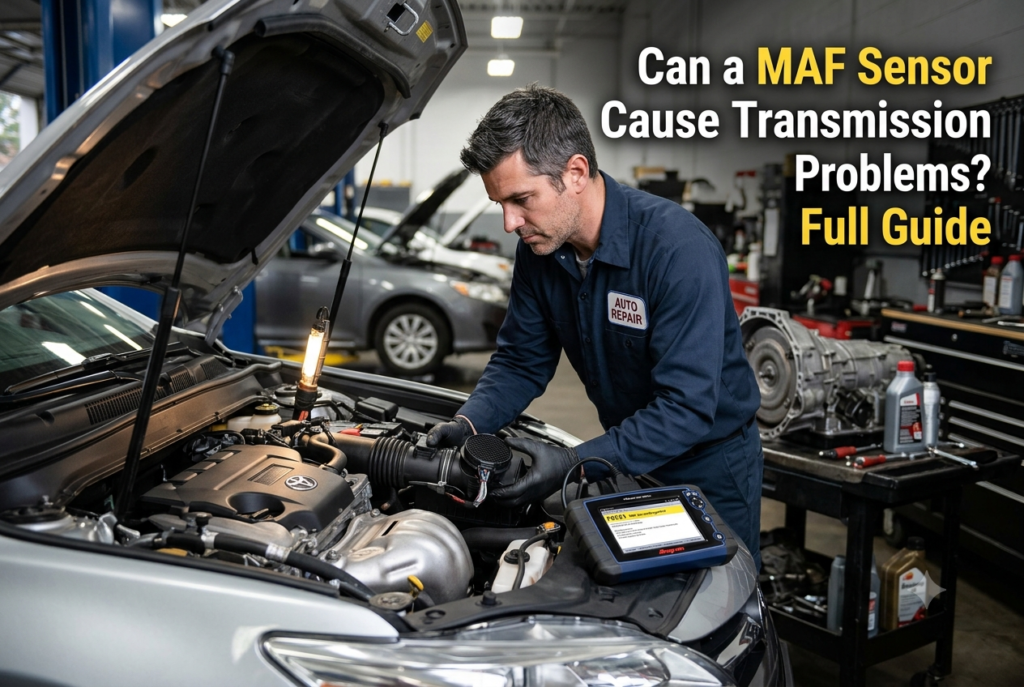
How the MAF Sensor Affects the Transmission
At first glance, the engine and transmission seem like two separate systems. In reality, they work together constantly, and the MAF sensor plays a small but important role in that communication.
The MAF sensor measures the amount of air entering the engine and sends that information to the Engine Control Unit (ECU). Using this data, the ECU calculates engine load and determines how much fuel the engine needs for efficient combustion.
On many modern vehicles, the Transmission Control Module (TCM)—or the ECU itself on vehicles with an integrated control system—uses engine load information to determine:
- When to upshift
- When to downshift
- Shift firmness
- Torque management during gear changes
If the MAF sensor reports incorrect airflow, the calculated engine load may also be inaccurate. As a result, the transmission may shift earlier than normal, hold gears too long, or shift more harshly than expected.
This doesn’t mean the transmission is defective. Instead, it’s reacting to incorrect engine data.
Transmission Problems a Bad MAF Sensor Can Cause
Because the transmission depends on accurate engine information, a faulty MAF sensor can create several drivability problems that feel like transmission failure.
Delayed Shifting
If the ECU underestimates engine load because of incorrect MAF readings, the transmission may hesitate before changing gears. You may notice higher engine RPM before an upshift occurs.
Hard or Harsh Shifting
Incorrect engine load calculations can also affect transmission line pressure. This may cause gear changes to feel unusually firm or abrupt instead of smooth.
Early or Late Upshifts
A bad MAF sensor may cause the transmission to upshift too early, reducing acceleration, or hold lower gears too long, making the engine rev higher than necessary.
Gear Hunting
Some vehicles may continuously shift between two gears because the ECU can’t accurately determine the engine’s operating conditions. This behavior, often called gear hunting, is a common drivability complaint associated with incorrect engine load data.
Limp Mode
In more severe cases, the ECU may detect abnormal sensor readings and place the vehicle into limp mode. This safety feature limits engine power and may restrict the transmission to one or two gears to help protect the drivetrain until the problem is repaired.
Symptoms That Usually Appear Together
If a bad MAF sensor is affecting transmission performance, you’ll usually notice more than just shifting problems. Because the sensor influences engine operation first, transmission symptoms are often accompanied by other drivability issues.
Here are the most common symptoms that may appear together:
Check Engine Light
A faulty MAF sensor often triggers the check engine light. The ECU may store airflow- or fuel mixture-related diagnostic trouble codes that can help point you toward the source of the problem.
Rough Idle
Incorrect airflow readings can cause the engine to idle roughly or fluctuate in RPM. If you’re experiencing rough idle along with unusual shifting, the MAF sensor is worth inspecting.
Poor Acceleration
A bad MAF sensor can reduce engine performance by causing an incorrect air-fuel mixture. As a result, your vehicle may feel sluggish when accelerating, especially from a stop.
Engine Hesitation
If the engine hesitates when you press the accelerator, the transmission may also seem slow to respond. In many cases, the hesitation originates in the engine rather than the transmission.
Reduced Fuel Economy
When the ECU receives inaccurate airflow data, it may inject more fuel than necessary. Over time, this can noticeably reduce fuel efficiency.
Engine Misfires
A severely faulty MAF sensor can contribute to an improper air-fuel mixture, increasing the likelihood of engine misfires. If misfires occur alongside shifting problems, the issue may be engine-related rather than a transmission failure.
If your vehicle shows several of these symptoms together, diagnosing the MAF sensor before assuming the transmission is faulty can save you a significant repair bill.
Can a MAF Sensor Damage the Transmission?
No, a bad MAF sensor doesn’t directly damage the transmission.
The MAF sensor has no mechanical connection to the transmission. Instead, it affects how the transmission behaves by providing incorrect engine load information to the ECU or Transmission Control Module (TCM).
This means a faulty MAF sensor may cause:
- Hard or delayed shifting
- Poor shift timing
- Gear hunting
- Reduced drivability
However, these are control issues, not mechanical transmission failures.
That said, driving with a faulty MAF sensor for an extended period isn’t a good idea. Poor engine performance can place additional stress on the drivetrain, reduce fuel efficiency, and make the vehicle less predictable to drive. While the MAF sensor itself won’t ruin the transmission, ignoring the underlying problem can lead to unnecessary wear on multiple components.
Other Causes of Transmission Problems
Since many transmission symptoms aren’t actually caused by the transmission itself, it’s important to consider other possible causes before replacing the MAF sensor.
Some of the most common include:
Low or Dirty Transmission Fluid
Transmission fluid lubricates internal components and provides hydraulic pressure for gear changes. Low or contaminated fluid is one of the leading causes of harsh or delayed shifting.
Faulty Shift Solenoid
A malfunctioning shift solenoid can prevent the transmission from selecting gears properly, resulting in delayed or erratic shifting.
Transmission Speed Sensor Problems
Modern transmissions rely on input and output speed sensors to determine shift timing. A faulty sensor can create symptoms similar to those of a bad MAF sensor.
Transmission Control Module (TCM) Issues
Some shifting problems are caused by software faults or internal failures within the TCM rather than the engine management system.
Internal Transmission Wear
Worn clutch packs, damaged valve bodies, or other internal transmission components can also cause slipping, harsh shifts, or failure to engage gears.
Because these problems are generally more common than MAF sensor-related transmission issues, a complete diagnosis is always the best approach before replacing any parts.
How to Diagnose Whether the MAF Sensor Is the Cause
Before assuming the MAF sensor is causing your transmission problems, you should confirm the diagnosis. Since several engine and transmission issues can produce similar symptoms, a few simple tests can help identify the real cause.
Scan for Diagnostic Trouble Codes
Connect an OBD-II scanner and check for stored diagnostic trouble codes. Airflow-related codes, fuel mixture codes, or engine performance codes may point to a faulty MAF sensor. You should also check for transmission-specific codes, as they can indicate whether the problem originates in the transmission instead.
Check Live MAF Sensor Data
If your scan tool supports live data, monitor the MAF sensor readings while the engine is idling and during acceleration. Unstable or unrealistic airflow values may indicate that the sensor is no longer measuring airflow accurately.
Inspect the MAF Sensor
Remove the sensor and inspect it for dirt, oil contamination, corrosion, or physical damage. A contaminated sensing element can affect airflow measurements and lead to incorrect engine load calculations.
Inspect the Air Intake System
Check the air intake tube, vacuum hoses, and hose clamps for cracks or leaks. Unmetered air entering the engine can create symptoms that closely resemble a faulty MAF sensor.
Road Test the Vehicle
After cleaning or replacing the MAF sensor, take the vehicle for a road test. If the shifting becomes smoother and engine performance improves, the MAF sensor was likely contributing to the problem.
How to Fix Transmission Problems Caused by a Bad MAF Sensor
If you’ve confirmed that the MAF sensor is affecting transmission performance, the repair is usually straightforward.
Clean the MAF Sensor
If dirt or oil contamination is the issue, clean the sensor using a dedicated MAF sensor cleaner. Allow it to dry completely before reinstalling it.
Repair Air Intake Leaks
Repair any cracked intake hoses, loose clamps, or vacuum leaks. These problems can affect airflow measurements even if the MAF sensor is working properly.
Repair Damaged Wiring
Inspect the wiring harness and electrical connector. Loose connections, corrosion, or damaged wires can interrupt communication between the MAF sensor and the ECU.
Replace the MAF Sensor
If the sensor has failed internally or cleaning doesn’t solve the problem, replace it with a quality OEM or reputable aftermarket unit.
Clear Codes and Verify the Repair
After completing the repair, clear any stored diagnostic trouble codes and test drive the vehicle. Confirm that both engine performance and transmission shifting have returned to normal.
Frequently Asked Questions
Can a bad MAF sensor cause rough shifting?
Yes. A bad MAF sensor can cause rough shifting by sending incorrect airflow data to the ECU, which may affect engine load calculations used for transmission shift timing.
Can a dirty MAF sensor affect transmission shifting?
Yes. A dirty MAF sensor can provide inaccurate airflow readings, leading to delayed, harsh, or inconsistent gear changes on some vehicles.
Will replacing the MAF sensor fix transmission problems?
It can—but only if the MAF sensor is the actual cause. If the problem is related to low transmission fluid, a faulty shift solenoid, or internal transmission wear, replacing the MAF sensor won’t solve it.
Can a MAF sensor put a car into limp mode?
Yes. On some vehicles, severely inaccurate MAF sensor readings can cause the ECU to activate limp mode, limiting engine power and restricting transmission operation.
Can transmission slipping be caused by a MAF sensor?
In some cases, a faulty MAF sensor can create symptoms that feel similar to transmission slipping because of incorrect engine load calculations. However, true transmission slipping is more commonly caused by low fluid, worn clutches, or internal transmission problems.
Conclusion
Yes, a MAF sensor can cause transmission problems, but only indirectly. Because the MAF sensor helps the ECU calculate engine load, inaccurate airflow readings can affect shift timing, shift quality, and overall drivability. The transmission itself usually isn’t damaged—it’s simply reacting to incorrect engine data.
If you’re experiencing hard shifting, delayed gear changes, or gear hunting along with engine symptoms like rough idle, hesitation, or a check engine light, don’t assume the transmission is failing. Start by diagnosing the MAF sensor, checking the air intake system, and scanning for trouble codes.
A proper diagnosis can prevent unnecessary transmission repairs and help you fix the real problem quickly and cost-effectively.