The MAF (Mass Air Flow) sensor is one of the most important components in your engine’s air intake system. It measures the amount of air entering the engine and helps the ECU calculate the correct fuel mixture. When it starts failing, it can cause poor fuel economy, rough idle, hesitation, and even engine stalling.
Not everyone has access to a multimeter or advanced diagnostic tools. The good news is that you can still perform several practical checks to identify a faulty MAF sensor. This guide explains how to test a MAF sensor without a multimeter using simple, real-world methods that are easy to apply in any basic garage setup.
Learn More: How to Test a MAF Sensor with a Multimeter
Common Symptoms of a Bad MAF Sensor
Before testing, it’s important to recognize the warning signs of a failing MAF sensor:
- Rough or unstable idle
- Poor acceleration or sluggish response
- Increased fuel consumption
- Engine hesitation or stalling
- Check Engine Light (often with codes like P0100–P0104)
These symptoms do not confirm failure on their own, but they strongly indicate that further testing is needed.
Method 1: Visual Inspection of MAF Sensor
The easiest and fastest way to start diagnosis is a visual check.
What to do:
- Locate the MAF sensor between the air filter box and throttle body
- Inspect the sensor housing for cracks or damage
- Check electrical connector for looseness or corrosion
- Look inside the intake tube for dirt or oil buildup
- Check for air leaks or loose clamps
What you may find:
- Dirty sensing element
- Oil contamination from over-oiled air filter
- Damaged wiring or connector issues
- Cracked intake hose causing unmetered air
In many cases, simple dirt or intake leaks are the real cause of MAF-related symptoms.
Method 2: Unplug (Bypass) Test
This is one of the most commonly used no-tool diagnostic methods.
How to do it:
- Turn off the engine
- Disconnect the MAF sensor plug
- Start the engine and observe behavior
What happens:
When the MAF is unplugged, the ECU switches to a default fuel map based on preset values.
How to interpret results:
- Engine runs better: MAF may be faulty or sending incorrect data
- Engine runs worse: MAF is likely not the main issue
- No major change: Problem may be elsewhere in the system
⚠️ Note: The engine may idle differently and feel less responsive. This is normal in bypass mode.
Method 3: Idle and Engine Behavior Test
Observing engine behavior at idle can provide important clues.
What to check:
- Stable idle RPM or fluctuation
- Engine vibration or roughness
- Cold start vs warm engine performance
Interpretation:
- Smooth idle → MAF likely OK
- Unstable or bouncing RPM → possible airflow or sensor issue
- Worse performance when warm → sensor may be failing under heat
Method 4: Test Drive Performance Check
A short controlled test drive can reveal airflow problems under load.
What to observe:
- Acceleration response
- Power delivery consistency
- Hesitation during gear changes
- Engine performance at higher RPM
Signs of MAF issues:
- Sluggish acceleration
- Jerking or hesitation
- Loss of power under load
If performance improves after cleaning, contamination is likely the cause.
Method 5: Cleaning and Retesting
Cleaning is often the most effective first step before replacement.
How to do it:
- Remove the MAF sensor carefully
- Use only dedicated MAF sensor cleaner
- Spray gently on sensing element
- Let it air dry completely
- Reinstall and test again
Expected result:
- Improved idle stability
- Better throttle response
- Reduced hesitation
If no improvement is seen, the issue may be electrical or internal.
Method 6: OBD2 Scanner (Optional Advanced Method)
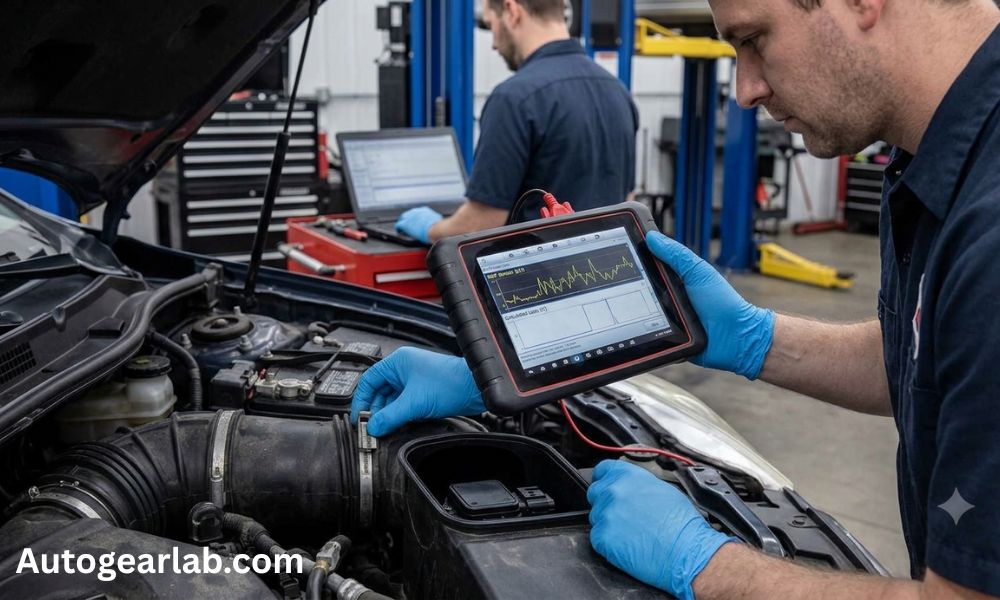
Even without a multimeter, an OBD2 scanner can provide useful insight.
What to check:
- MAF airflow readings (grams per second)
- Short-Term Fuel Trim (STFT)
- Long-Term Fuel Trim (LTFT)
Basic interpretation:
- High positive fuel trim → engine running lean (possible MAF underreporting)
- High negative fuel trim → engine running rich (possible MAF overreporting)
- Stable trims → MAF likely functioning properly
This method gives more accuracy than visual or unplug tests.
Common Mistakes When Testing Without Tools
Avoid these errors to prevent wrong diagnosis:
- Assuming unplug test alone confirms failure
- Ignoring vacuum or intake leaks
- Confusing symptoms with fuel or ignition issues
- Replacing sensor without cleaning or inspection first
- Overlooking dirty air filters or throttle body issues
How to Confirm MAF Sensor Failure
To make a final decision, combine multiple observations:
- Symptoms persist after cleaning
- Unplug test shows clear improvement
- Engine behavior is inconsistent under load
- Fuel consumption remains abnormal
If all signs align, the MAF sensor is likely faulty. Otherwise, the issue may be elsewhere in the intake or fuel system.
Frequently Asked Questions
Can you test a MAF sensor without tools?
Yes, using visual inspection, unplug test, and driving behavior checks.
What happens if I drive with a bad MAF sensor?
It may cause poor fuel economy, rough running, and potential engine damage over time.
Will unplugging the MAF sensor damage the engine?
No, but it is only a temporary diagnostic method and not for long-term driving.
Can cleaning fix all MAF sensor problems?
No, it only helps if the issue is caused by dirt or contamination.
How accurate is the unplug test?
It provides clues but should always be combined with other methods.
Conclusion
Testing a MAF sensor without a multimeter is possible using simple, practical methods like visual inspection, unplug testing, and driving behavior analysis. While these methods are not as precise as electrical testing, they are effective for quick diagnosis.
The best approach is to combine multiple tests before deciding on replacement. This helps avoid unnecessary repairs and ensures the real issue is identified correctly.