Finding the best ignition coil is not as simple as choosing the coil with the highest advertised voltage or the most aggressive performance claims. Ignition coils are highly application-specific components, and the right choice depends on your vehicle’s engine, model year, original part number, connector, mounting arrangement, ignition architecture, and spark-plug configuration.
Modern vehicles commonly use coil-on-plug (COP) ignition, where each spark plug has an individual coil. Some engines use an integrated multi-cylinder coil assembly, while older vehicles may rely on a traditional canister-style coil and distributor. These designs cannot be substituted for one another just because they perform the same basic job.
My primary recommendation is the ENA Set of 8 Curved Boot DG508 Ignition Coils for compatible Ford, Lincoln, and Mercury 4.6L and 5.4L V8 applications. It provides a complete eight-coil replacement and has one of the broadest established application histories among affordable aftermarket coil sets.
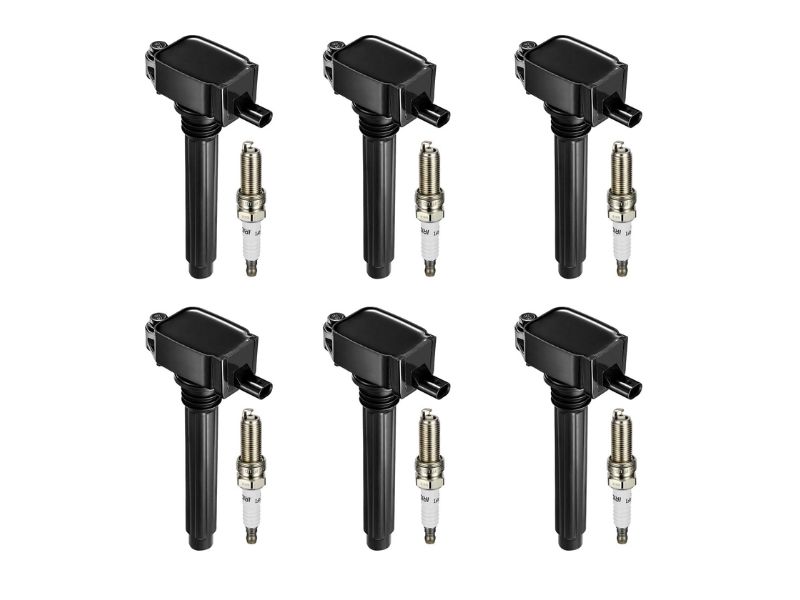
For compatible Chrysler, Dodge, Jeep, and related 3.6L Pentastar applications, I would consider the BDFHYK UF648 Ignition Coil and Iridium Spark Plug Set. Six coils and six plugs make it particularly useful when both components are due for service.
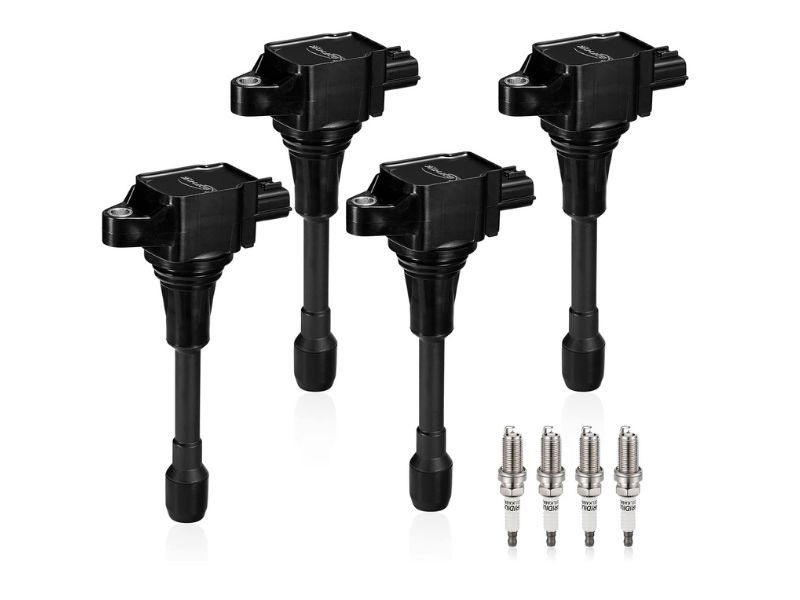
The BDFHYK UF549 Ignition Coil and Iridium Spark Plug Set is another strong alternative for compatible Nissan-family four-cylinder applications because it combines four coils with four plugs.
Whichever option you choose, verify fitment before treating any ignition coil as an upgrade. A correctly matched replacement coil is far more useful than a supposedly higher-output product designed for another ignition system.
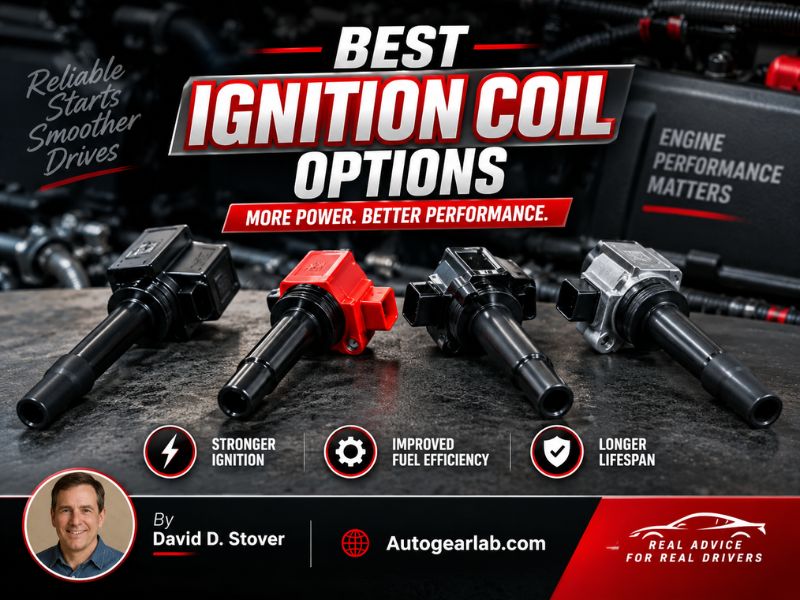
10 Best Ignition Coil Options
| Image | Product Name | Check Price |
|---|---|---|
Best Choice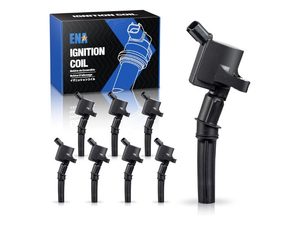 | ENA Set of 8 Curved Boot DG508 Ignition Coils | Check Price |
Second Best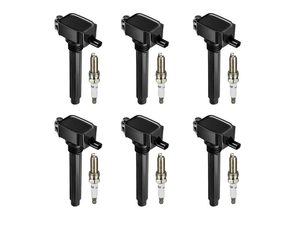 | BDFHYK UF648 Ignition Coil and Iridium Spark Plug Set | Check Price |
Third Choice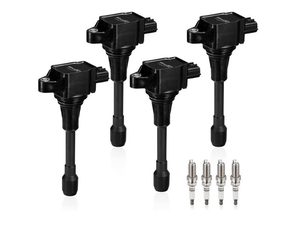 | BDFHYK UF549 Ignition Coil and Iridium Spark Plug Set | Check Price |
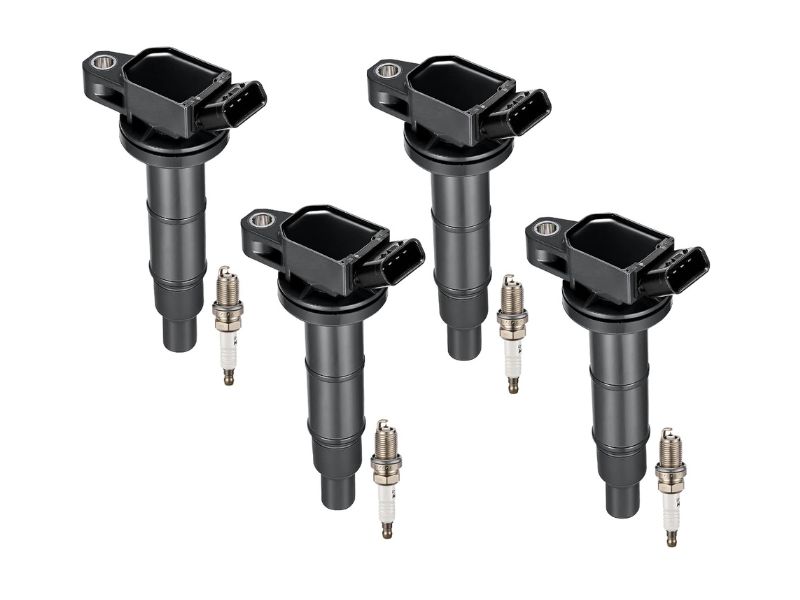
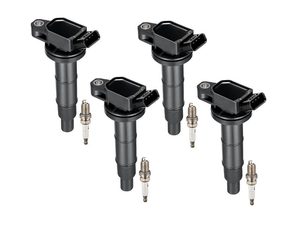 | BDFHYK UF333 Ignition Coil and Iridium Spark Plug Set | Check Price |
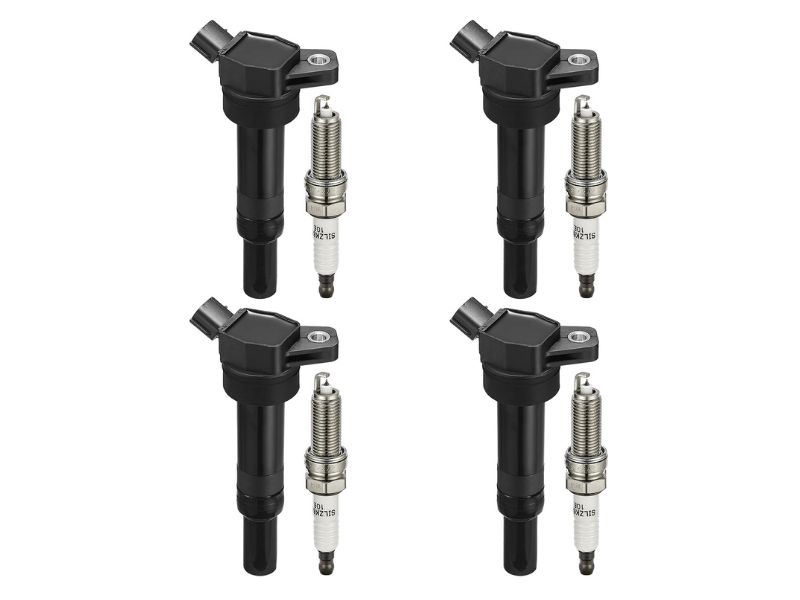
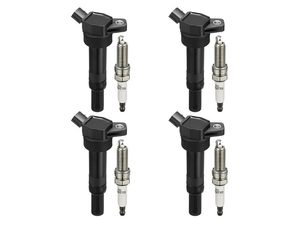 | BDFHYK UF651 Ignition Coil and Iridium Spark Plug Set | Check Price |
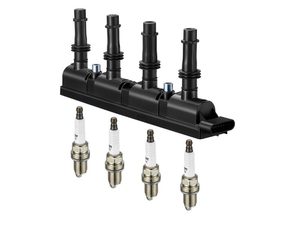 | BDFHYK UF669 Ignition Coil and Iridium Spark Plug Kit | Check Price |
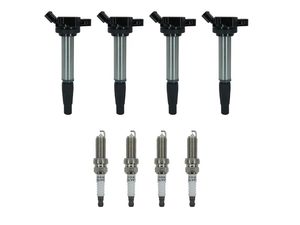 | Marsram UF596 Ignition Coil and Double-Iridium Spark Plug Set | Check Price |
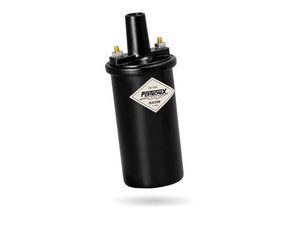 | PerTronix Flame-Thrower 40011 Ignition Coil | Check Price |
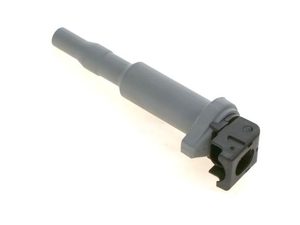 | Bosch 0221504800 Ignition Coil | Check Price |
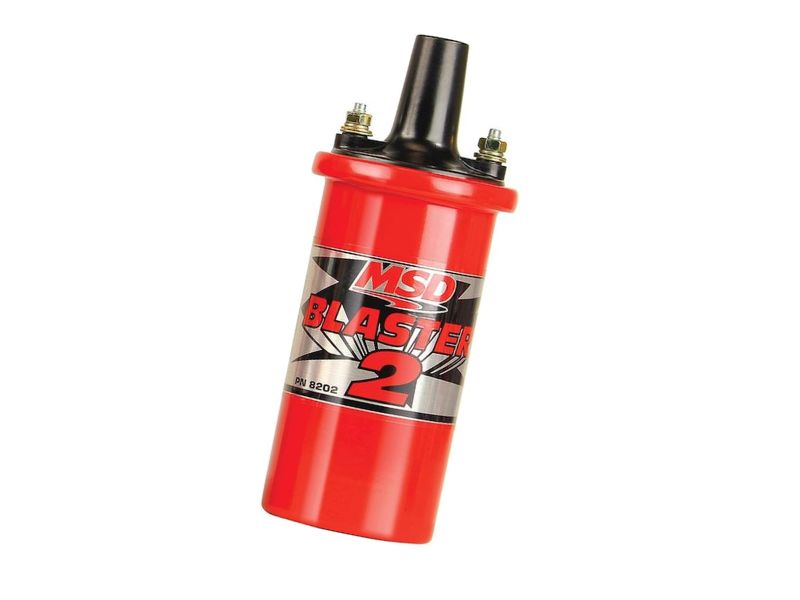
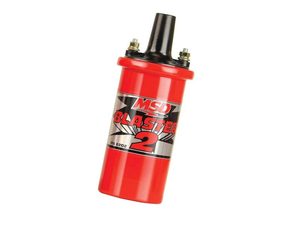 | MSD 8202 Blaster 2 Ignition Coil | Check Price |
1. ENA Set of 8 Curved Boot DG508 Ignition Coils
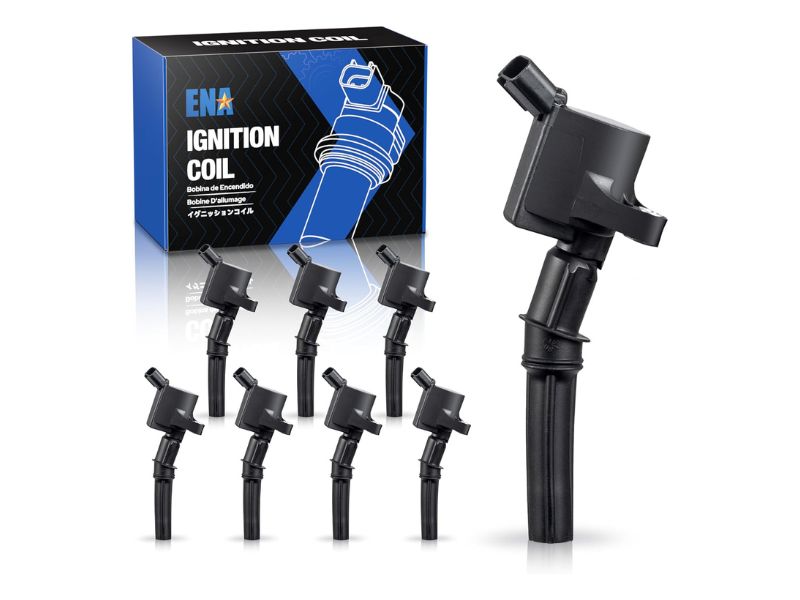
Key Features
- Complete eight-coil set
- Common DG508 coil family
- Curved coil-boot configuration
- Designed for selected Ford, Lincoln, and Mercury applications
- Commonly associated with compatible 4.6L and 5.4L V8 engines
- Coil-on-plug construction
- Bolt-on replacement design
- Cross-reference family includes several DG and FD numbers
Detailed Review
The ENA DG508 set takes the first position because it offers a practical combination of broad application coverage, full-engine replacement, straightforward installation, and strong suitability for older V8 vehicles where replacing several individual coils separately can become expensive.
DG508-style coils are commonly found on numerous Ford modular-engine applications. Depending on model year and engine configuration, compatible vehicles can include F-Series trucks, Expeditions, Crown Victorias, Mustangs, Navigators, Town Cars, Grand Marquis models, and other related vehicles.
However, engine displacement alone should not be used as a fitment test.
Not every Ford 4.6L or 5.4L engine uses an identical ignition coil. Before purchasing, compare the original component’s interchange number, electrical connector, boot angle, mounting point, and overall dimensions.
This is a coil-on-plug system, meaning each cylinder receives a separate ignition coil positioned directly over the spark plug. A V8 therefore requires eight coils.
The architecture provides useful diagnostic flexibility. If a scan indicates a cylinder-specific misfire, a suspected coil can often be moved to another cylinder. If the misfire follows the coil, the coil becomes a much stronger suspect.
A complete eight-pack makes the most sense when several coils have become unreliable, the engine has accumulated substantial mileage, or previous repairs have resulted in an inconsistent mixture of old and aftermarket coils.
It is less compelling when seven high-quality original coils remain healthy and only one has been positively diagnosed as faulty.
Spark-plug condition is also important. A worn plug with an excessive gap requires higher firing voltage. This increases stress on the coil and can expose marginal insulation or winding problems.
Whenever these coils are removed, inspect the spark-plug wells for oil, moisture, carbon tracking, cracked boots, damaged connectors, and corrosion.
Replacing coils without correcting those problems can result in another misfire.
I would consider this set primarily a reliable replacement solution rather than a horsepower modification. Restoring a weak ignition system may bring back power that was lost to misfire, but new coils do not independently increase airflow, compression, or fuel delivery.
What I Like
- Complete set covers all eight cylinders
- Established DG508 application family
- Straightforward coil-on-plug replacement
- Useful for high-mileage V8 ignition refreshes
- Reduces the need to mix several replacement coil brands
What I Do Not Like
- Does not fit every Ford 4.6L or 5.4L engine
- Eight new coils may be unnecessary when only one has failed
- Exact boot and connector configuration still requires checking
Verdict
I recommend the ENA DG508 set when a compatible V8 needs several coils or a complete ignition refresh. It offers the strongest overall balance for its intended application, provided the original coil family matches.
2. BDFHYK UF648 Ignition Coil and Iridium Spark Plug Set
Key Features
- Six UF648-family ignition coils
- Six iridium spark plugs
- Designed around compatible 3.6L Pentastar V6 applications
- Coil-on-plug configuration
- Full six-cylinder ignition-service package
- Plug-in/bolt-on replacement approach
- Compatible with selected Chrysler, Dodge, Jeep, and related vehicles
- Useful when coils and spark plugs need attention together
Detailed Review
The BDFHYK UF648 kit is particularly useful for compatible 3.6L Pentastar engines because it addresses both major components at the spark plug: the ignition coil and the plug itself.
The Pentastar V6 appears in numerous vehicle families, including selected versions of the Wrangler, Grand Cherokee, Charger, Challenger, Grand Caravan, 200, 300, and other related models.
That does not make UF648 universal across every 3.6L vehicle.
Model year, engine version, connector design, and original interchange number should still be checked carefully.
Six individual coil-on-plug units provide ignition for the six cylinders. The included spark plugs make the kit attractive during a scheduled plug change, particularly on engines where gaining access to all cylinders requires removing additional intake components.
Spark plugs should never be installed purely because they were packaged with the coils.
Verify:
- Plug part number
- Thread diameter
- Thread reach
- Seat design
- Heat range
- Electrode construction
- Specified plug gap
A major advantage of servicing plugs and coils together is that worn plugs can place additional demand on ignition components.
As electrodes wear, the gap can increase. More voltage is then required to initiate the spark, especially when cylinder pressure rises under acceleration.
That can make an aging coil misfire under load even though the engine appears reasonably smooth at idle.
Still, replacing all six coils is not automatically necessary whenever plugs are changed. Original coils often remain serviceable through multiple spark-plug replacement intervals.
I would use the full kit when there is evidence that multiple coils are becoming unreliable, when a high-mileage vehicle has inconsistent replacement coils installed, or when a comprehensive ignition refresh is preferable to repeated repairs.
Misfires on the 3.6L engine can also originate from injectors, wiring, compression, vacuum leaks, or valvetrain issues. A cylinder-specific code is therefore a starting point for diagnosis rather than confirmation of coil failure.
What I Like
- Includes six coils and six plugs
- Convenient for a complete V6 ignition service
- UF648 application is relatively easy to cross-reference
- Avoids purchasing plugs and coils separately
- Individual coils remain easy to diagnose cylinder by cylinder
What I Do Not Like
- More expensive and extensive than replacing one failed coil
- Plug specifications must still be verified
- Not every 3.6L application uses the identical component
Verdict
I would choose the BDFHYK UF648 kit for a compatible Pentastar V6 when both the plugs and ignition system need meaningful maintenance. It offers a particularly convenient package for comprehensive service.
3. BDFHYK UF549 Ignition Coil and Iridium Spark Plug Set
Key Features
- Four UF549-family ignition coils
- Four iridium spark plugs
- Intended for selected Nissan-family four-cylinder applications
- Commonly associated with compatible 2.5L engines
- Coil-on-plug design
- Complete four-cylinder ignition kit
- Direct-replacement concept
- Useful OEM-style interchange references
Detailed Review
The UF549 kit is an appealing option for several commonly used Nissan four-cylinder applications.
Depending on year and engine, the UF549 coil family can be associated with selected Altima, Rogue, Sentra, Versa, Cube, NV200, and related applications.
Vehicle badges should not replace fitment verification.
For example, the Altima has been sold with different engines and ignition configurations. The fact that one Altima uses UF549 coils does not mean every Altima does.
Look for an original interchange reference such as UF549 and verify the connector, bolt location, boot length, and engine designation.
Four coils and four spark plugs make this kit convenient for a four-cylinder engine because the entire ignition service can be completed with one matched package.
The coil-on-plug design eliminates traditional spark-plug wires. The long rubber boot extends into the spark-plug well and connects the secondary ignition voltage directly to the spark plug.
That makes plug-well condition important.
Before installing new coils, check for:
- Oil
- Coolant
- Water
- Rust
- Dirt
- Torn boots
- Carbon tracks
Oil around the spark plug can indicate a leaking tube seal or valve-cover-related problem. Installing a new coil without fixing the leak can shorten boot life and produce another misfire.
The included plugs are helpful when the existing plugs are worn or approaching their maintenance interval.
If the plugs have recently been replaced with the correct specification, however, there is little benefit in changing them again merely because new plugs arrived with the coil set.
As with the UF648 kit, I would diagnose a misfire before replacing every component.
A cylinder-specific fault can also originate from an injector, wiring harness, compression problem, vacuum leak, or mechanical issue.
What I Like
- Four coils and four plugs create a complete four-cylinder kit
- Useful UF549 interchange family
- Straightforward COP installation
- Well suited to higher-mileage Nissan-family applications
- No conventional spark-plug wires to replace
What I Do Not Like
- Exact year and engine fitment still matters
- Complete replacement may be excessive for one isolated failure
- Oil leaks must be repaired separately
Verdict
The BDFHYK UF549 kit is a practical choice for a compatible Nissan-family engine when I want to service all four ignition positions and spark plugs together.
4. BDFHYK UF333 Ignition Coil and Iridium Spark Plug Set
Key Features
- Four ignition coils
- UF333 interchange family
- Four iridium spark plugs
- Intended for selected Toyota, Lexus, and Scion applications
- Commonly associated with compatible 2.4L four-cylinder engines
- Plug-in installation concept
- Coil-on-plug configuration
- Multiple OEM-equivalent cross-reference numbers
Detailed Review
The BDFHYK UF333 kit addresses another large group of four-cylinder vehicles, particularly compatible Toyota-family 2.4L applications.
UF333-related coils can be found across selected Camry, RAV4, Highlander, Matrix, Solara, Scion, Lexus, and related applications depending on model year and engine.
One advantage is the availability of several interchange references, including identifiers from the UF333, D511C, and 90919-series families.
Cross-reference numbers are valuable because vehicle descriptions are often too broad.
For example, a Camry nameplate spans many engine generations. Matching the original coil number is much more reliable than choosing a part because the listing simply says “Camry.”
The kit supplies four coil-on-plug units and four plugs.
The integrated approach works well for a four-cylinder engine that needs a full tune-up, but I would still examine the removed plugs before discarding them.
Spark-plug condition can reveal useful information.
A plug may show evidence of:
- Rich mixture
- Oil consumption
- Coolant contamination
- Excessive heat
- Detonation
- Weak ignition
- Normal combustion
Four identical heavily worn plugs suggest a general maintenance issue. One unusually fouled plug may point toward a cylinder-specific mechanical, fuel, or ignition problem.
The ignition coils themselves should install without modification when the correct UF333 application has been identified.
Never force an electrical connector into place. A connector that does not naturally lock onto the replacement coil is a warning that the part may be incorrect.
Boot length also matters because the spring terminal needs solid contact with the spark-plug tip.
What I Like
- Complete four-coil and four-plug package
- Useful UF333 interchange references
- Suitable for several popular 2.4L applications
- Straightforward coil-on-plug architecture
- Practical for scheduled ignition maintenance
What I Do Not Like
- Toyota-family fitment is still engine-specific
- Spark plugs should be verified independently
- Replacing healthy original coils may not be necessary
Verdict
I prefer the UF333 kit when a compatible Toyota-family 2.4L engine requires several coils and new spark plugs. Its clear interchange family makes fitment confirmation easier than relying only on vehicle names.
5. BDFHYK UF651 Ignition Coil and Iridium Spark Plug Set
Key Features
- Four UF651 ignition coils
- Four iridium spark plugs
- Compatible with selected Hyundai and Kia applications
- Common 1.8L and 2.0L four-cylinder use
- Coil-on-plug design
- Full four-cylinder replacement package
- Direct-fit concept for verified applications
- Designed for routine replacement rather than custom conversion
Detailed Review
The UF651 kit provides an affordable full ignition package for selected Hyundai and Kia four-cylinder engines.
Common applications within this coil family can include certain versions of the Elantra, Elantra GT, Tucson, Forte, Soul, and related vehicles.
As always, engine size and year must match.
Hyundai and Kia have used multiple engine families under the same vehicle names, so “fits Elantra” is not enough information for a confident order.
Match UF651, the OEM-style part number, connector configuration, and boot length.
This kit uses four individual coil-on-plug units.
The compact design reduces high-voltage wiring but exposes the coil boots to conditions inside deep spark-plug wells.
Heat is one of the main environmental stresses on these components.
Ignition coils repeatedly heat and cool as the engine operates. Internal windings, epoxy insulation, plastic housings, rubber boots, and terminals all need to tolerate those cycles.
A small internal insulation defect may only show symptoms when the coil becomes hot, which explains why some failing coils work normally when the engine is cold and misfire later.
If your vehicle develops a repeatable hot misfire, a coil can be one possible cause, but do not overlook crankshaft sensors, fuel issues, wiring, injectors, or mechanical problems.
The included spark plugs make this kit useful when plug service is due.
Use the gap and plug type specified for the exact engine. Increasing the gap because you installed “stronger” coils is generally unnecessary on a stock engine and can place more demand on the ignition system.
What I Like
- Complete four-cylinder coil and plug service
- UF651 provides a clear fitment starting point
- Suitable for several common Hyundai/Kia applications
- Individual coils allow cylinder-specific diagnosis
What I Do Not Like
- Similar-looking Hyundai/Kia coils are not automatically interchangeable
- Full-set replacement may not be needed after one failure
- No ignition coil can correct an injector or compression problem
Verdict
I would consider this UF651 kit for a compatible 1.8L or 2.0L engine undergoing a broader ignition refresh rather than a simple one-coil repair.
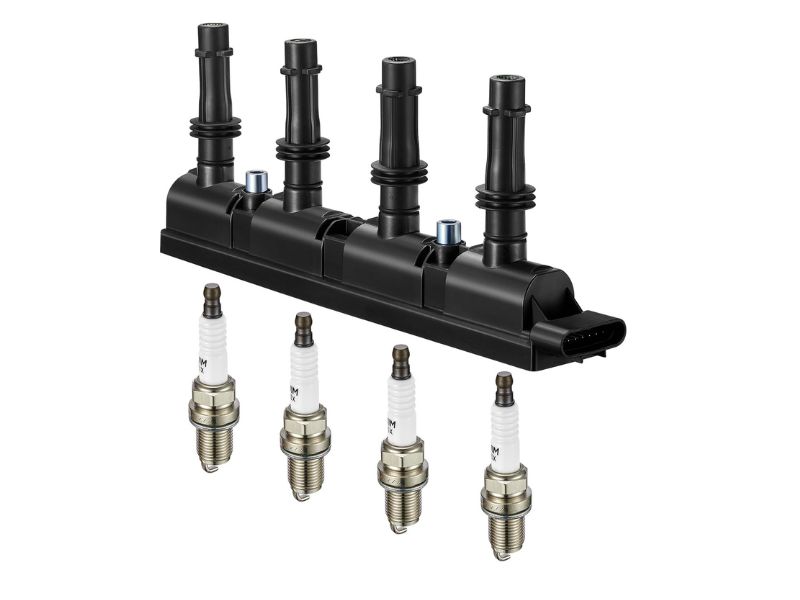
6. BDFHYK UF669 Ignition Coil and Iridium Spark Plug Kit
Key Features
- UF669 / D521C-family ignition coil assembly
- Four iridium spark plugs included
- Designed around selected GM 1.4L turbo applications
- Compatible with selected Cruze, Sonic, Trax, Encore, and related vehicles
- Integrated multi-cylinder coil design
- Bolt-on installation
- Female electrical connector configuration
- Different architecture from four separate COP coils
Detailed Review
The UF669 kit deserves a place on this list because it demonstrates an important point: not every four-cylinder engine uses four separate ignition coils.
Many compatible GM 1.4L turbo applications use an integrated ignition coil assembly positioned across the spark plugs.
Instead of purchasing four individual coil modules, you replace the combined unit.
Common application families include selected Chevrolet Cruze, Sonic, and Trax models, along with Buick Encore and related vehicles.
Useful interchange terminology includes UF669 and D521C.
This architecture makes correct identification particularly important. A buyer searching for “four-cylinder ignition coils” could mistakenly assume that four individual coils are required.
The integrated assembly uses boots extending from a common housing toward the four spark plugs.
During removal, avoid using excessive force or twisting that could damage boots or leave components stuck around the plugs.
The kit includes four iridium spark plugs, allowing the entire plug set to be renewed while the ignition module is removed.
On a turbocharged engine, correct spark-plug specification deserves extra attention.
Boost increases cylinder pressure, which increases the voltage required for the spark to cross the plug gap. An incorrect or excessively wide gap can contribute to misfire under acceleration or boost.
Do not automatically reduce or enlarge the gap without a reliable specification.
Stock engines should generally follow the vehicle’s specified plug configuration. Modified engines may require recommendations from the calibration or engine builder.
A failure in one section of an integrated coil assembly can lead to replacement of the complete unit, which differs from engines where one independent coil can be changed.
What I Like
- Correct integrated architecture for compatible 1.4L applications
- Includes four spark plugs
- UF669/D521C references aid identification
- Convenient when coil assembly and plugs need service together
What I Do Not Like
- Entire assembly may require replacement for one internal fault
- Not interchangeable with four separate COP coils
- Turbocharged applications are sensitive to correct plug specification and gap
Verdict
The UF669 kit is a sensible solution for compatible GM 1.4L engines because it matches their integrated ignition layout while also supplying the associated spark plugs.
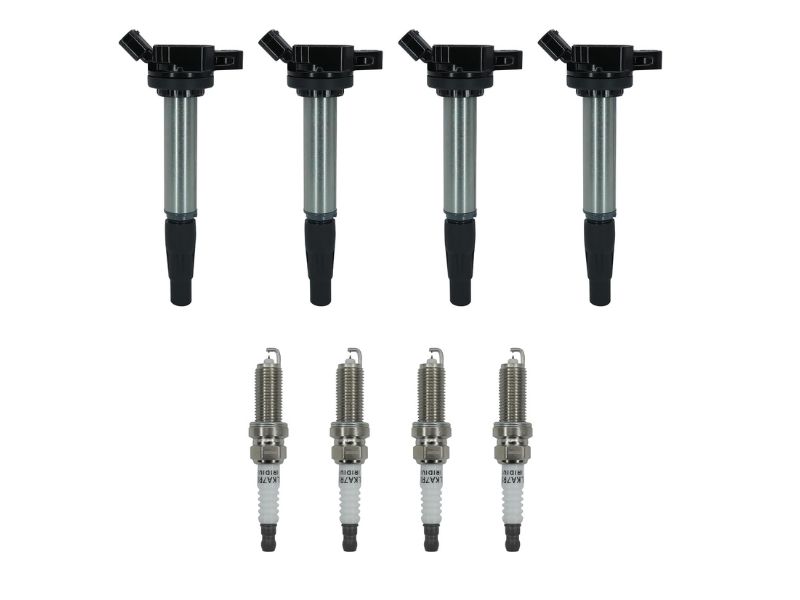
7. Marsram UF596 Ignition Coil and Double-Iridium Spark Plug Set
Key Features
- Four UF596/UF619-family ignition coils
- Four double-iridium spark plugs
- Intended for selected Toyota-family 1.8L engines
- Compatible with selected Corolla, Prius, Matrix, Scion, and related applications
- Coil-on-plug design
- Complete four-cylinder kit
- Direct-replacement approach
- Useful 90919-series interchange references
Detailed Review
The Marsram UF596 kit is aimed at several popular 1.8L Toyota-family applications.
Depending on year and engine, this general coil family appears in selected Corolla, Prius, Matrix, Scion xD, Pontiac Vibe, and related models.
Useful interchange terminology includes UF596, UF619, and selected 90919-series references.
Do not assume that every Corolla or Prius uses this coil. Toyota has used different engines and ignition systems across model generations.
A correct replacement should match the existing connector, retaining-bolt location, boot length, and interchange number.
The kit supplies four coil-on-plug modules and four double-iridium spark plugs.
Iridium electrodes are valued mainly because their hardness allows a small center electrode and long service life. The material does not make a plug compatible with every engine.
Thread size, reach, heat range, seat, resistance, and electrode location remain critical.
The coils should be installed into clean plug wells.
If you find water around the plugs, determine how it entered. Improper washing techniques, damaged seals, or component leakage can expose ignition voltage to an unintended path to ground.
Carbon tracking is another issue.
A thin dark line on the spark-plug insulator or inside the coil boot can indicate that high voltage has repeatedly traveled along the surface rather than jumping the electrode gap.
When significant tracking is present, replacing only one of the two affected components can allow the fault path to remain.
The complete coil-and-plug format makes this kit particularly useful in that situation.
What I Like
- Four coils and four double-iridium plugs
- Useful for common compatible 1.8L applications
- Recognizable UF596/UF619 family
- Good choice for a complete four-cylinder ignition service
What I Do Not Like
- Vehicle badge alone cannot confirm compatibility
- Healthy factory coils may outlast several plug changes
- Included plugs still need specification verification
Verdict
I would choose the Marsram UF596 set for a confirmed compatible 1.8L engine when I want a complete coil-and-plug service rather than replacing parts individually.
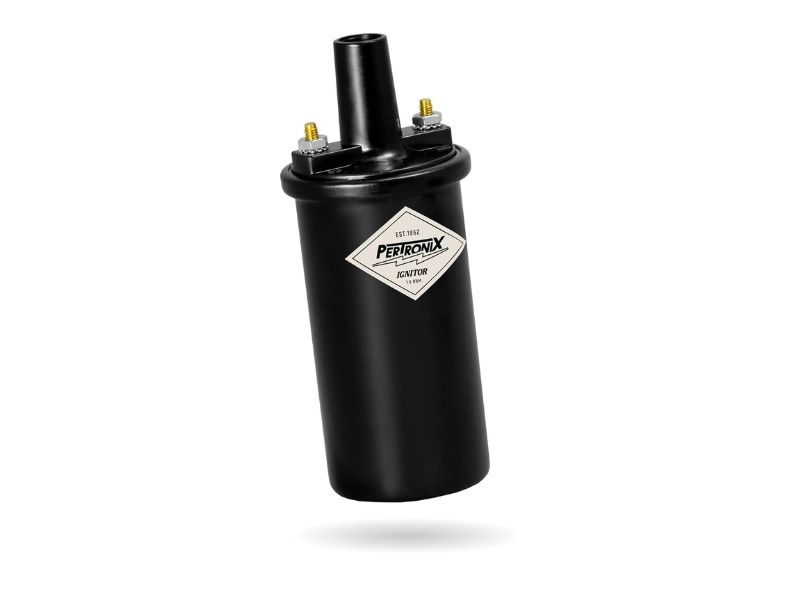
8. PerTronix Flame-Thrower 40011 Ignition Coil
Key Features
- Traditional oil-filled canister coil
- Advertised output up to approximately 40,000 volts
- 1.5-ohm primary-resistance version
- Intended for compatible distributor/electronic ignition systems
- 6V/12V application depends on system configuration
- Single ignition coil
- Classic cylindrical design
- Performance-oriented replacement for suitable older systems
Detailed Review
The PerTronix Flame-Thrower 40011 is completely different from the first seven products.
It is designed for traditional ignition systems where one main coil supplies high voltage to a distributor or similar arrangement rather than providing a separate coil for every cylinder.
The 1.5-ohm primary resistance is one of its most important specifications.
Traditional ignition systems can be extremely sensitive to coil resistance and ballast configuration.
Depending on the ignition design, a vehicle may use:
- A 3-ohm coil
- A 1.5-ohm coil
- An external ballast resistor
- Resistance wiring
- Electronic ignition
- Mechanical breaker points
These combinations should not be mixed randomly.
A coil with excessively low resistance can increase primary current and potentially overheat the coil, damage points, or stress an electronic ignition module.
A resistance value that is too high can limit current and reduce available ignition energy.
The advertised 40,000-volt capability is less important than proper electrical matching.
An ignition coil does not constantly send its maximum rated voltage to the plugs. Voltage rises until the spark can bridge the plug gap under the current operating conditions.
Required voltage depends on:
- Plug gap
- Compression
- Cylinder pressure
- Mixture
- Distributor condition
- Plug wires
- Engine load
The oil-filled construction is traditional and provides cooling and electrical insulation around the internal windings.
Mounting orientation can matter with some oil-filled coil designs, so installation instructions should be followed.
I would consider the Flame-Thrower for a compatible classic vehicle or performance project using a distributor-style ignition. It is not appropriate for a modern engine requiring coil-on-plug modules.
What I Like
- Well-defined 1.5-ohm configuration
- Suitable for many compatible classic ignition systems
- Performance-oriented design
- Simple traditional installation
- Eliminates unnecessary modern electronics for vintage applications
What I Do Not Like
- Wrong choice for modern COP engines
- Primary resistance must match the ignition system
- Maximum voltage should not be used as the sole buying criterion
Verdict
The PerTronix Flame-Thrower 40011 is my preferred specialized option for a compatible classic or distributor-based ignition that specifically calls for its resistance range.
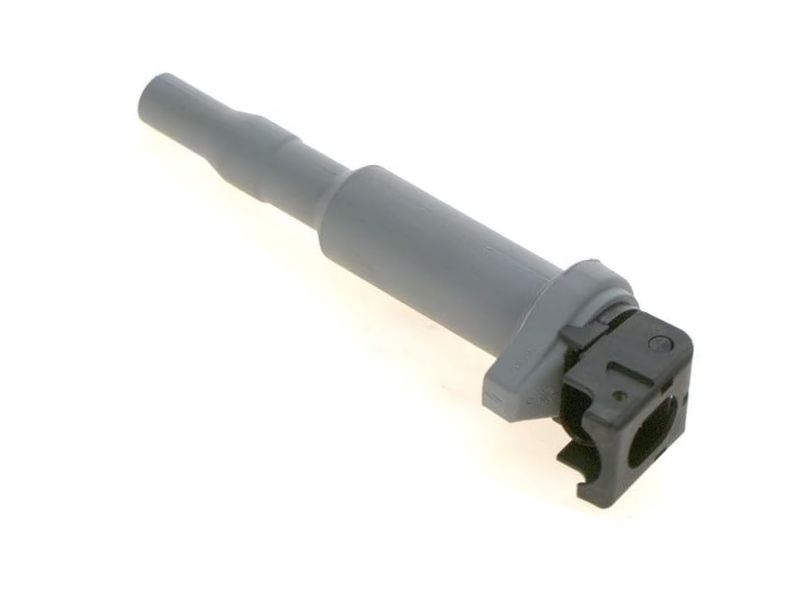
9. Bosch 0221504800 Ignition Coil
Key Features
- Single coil-on-plug ignition coil
- Designed for selected BMW and MINI applications
- OEM-oriented replacement design
- Compact pencil-coil construction
- Compatible with numerous selected turbocharged and naturally aspirated applications
- Direct-fit installation when correctly matched
- Suitable for replacing one diagnosed failed coil
- Established automotive component manufacturer
Detailed Review
The Bosch 0221504800 is different from the inexpensive multi-coil sets above because it focuses on a single quality replacement coil for selected European applications.
It is associated with numerous compatible BMW and MINI engines across different model families, although exact fitment must always be verified.
Modern BMW-family engines frequently use narrow pencil-style coil-on-plug modules.
These fit deep into the cylinder head and connect directly to the spark plug.
The long shape makes boot condition and internal insulation particularly important because the coil operates close to engine heat.
A single-coil package is attractive when one failure has been conclusively identified.
There is little reason to discard several healthy coils purely because one unit developed an internal fault.
A typical diagnosis might involve a cylinder-specific misfire code.
After verifying the spark plug, wiring, injector, and mechanical condition, swapping the suspect coil to another cylinder can help determine whether the fault follows the component.
If it does, replacing that single coil can be a rational repair.
Turbocharged engines place significant demands on ignition components because cylinder pressure can rise substantially under boost.
This makes correct spark-plug gap and coil condition important.
A marginal coil may idle normally but misfire under acceleration.
Still, installing new coils does not replace the need for correctly specified plugs, healthy charging voltage, good engine grounds, and suitable calibration.
The Bosch option is particularly appealing to buyers who prioritize an application-focused individual replacement rather than a complete inexpensive set.
What I Like
- Strong application-specific replacement approach
- Single-coil format reduces unnecessary parts replacement
- Pencil-style design matches compatible factory layouts
- Well suited to maintaining a mixed-age engine one diagnosed failure at a time
What I Do Not Like
- One coil can cost more per cylinder than multi-pack alternatives
- Compatible only with specific applications
- Does not include spark plugs or other ignition components
Verdict
I prefer the Bosch 0221504800 when a compatible vehicle needs one dependable replacement coil rather than an entire inexpensive set. Exact vehicle and engine fitment remains essential.
10. MSD 8202 Blaster 2 Ignition Coil
Key Features
- Traditional high-performance canister ignition coil
- Designed for compatible distributor-style systems
- Performance-oriented Blaster series
- Single coil
- Suitable for selected electronic ignition configurations
- Commonly paired with compatible performance ignition components
- Metal canister housing
- Intended for older or custom performance applications
Detailed Review
The MSD 8202 Blaster 2 rounds out the list because it serves a specific enthusiast use case rather than modern everyday coil-on-plug replacement.
Like the PerTronix option, it uses the traditional cylindrical canister format.
This means the coil is generally intended to feed a distributor or compatible high-voltage distribution system.
It is not a substitute for a DG508, UF648, UF549, UF333, or other modern coil-on-plug component.
The Blaster 2 name is closely associated with aftermarket performance ignition systems.
That makes it interesting for older muscle cars, custom builds, carbureted engines, and compatible distributor-based performance vehicles.
However, ignition-system compatibility matters more than the performance label.
Before installing a canister coil, determine:
- Required primary resistance
- Ballast-resistor requirement
- Ignition-box compatibility
- Supply voltage
- Distributor type
- Mounting requirements
- Coil polarity
- Plug-wire condition
When used with an aftermarket ignition box, follow that system’s specified wiring and coil recommendations.
The most powerful coil available is not necessarily the correct one.
Dwell time, primary current, switching electronics, secondary resistance, spark-plug gap, and cylinder pressure all determine whether the ignition system operates reliably.
A higher-output coil is most useful when the current system is approaching its ignition-energy limit.
Modified engines with elevated compression, forced induction, nitrous, or high-RPM operation may create greater spark demand than a mildly tuned street engine.
For a stock modern commuter vehicle, this product would be inappropriate.
For the right older performance vehicle, however, it offers a much more relevant design than a modern pencil coil.
What I Like
- Performance-oriented traditional design
- Useful for suitable custom and classic applications
- Simple single-coil architecture
- Works naturally within compatible distributor-based systems
What I Do Not Like
- Not designed for modern coil-on-plug vehicles
- Electrical compatibility must be verified carefully
- Performance benefit depends on the rest of the ignition system
Verdict
I would choose the MSD 8202 for a compatible classic or custom performance ignition system, not as a universal replacement for a modern vehicle.
Ignition Coil Comparison Table
| Product | Coil Type | Quantity | Typical Application | Interchange / Style | Spark Plugs Included | Main Strength | Main Limitation |
| ENA DG508 Set | Coil-on-plug | 8 | Selected Ford/Lincoln/Mercury V8s | DG508 | No | Complete V8 replacement | Fitment varies by engine/year |
| BDFHYK UF648 Kit | Coil-on-plug | 6 | Selected 3.6L Pentastar V6s | UF648 | Yes | Full V6 ignition service | Not every 3.6L application matches |
| BDFHYK UF549 Kit | Coil-on-plug | 4 | Selected Nissan-family engines | UF549 | Yes | Complete four-cylinder package | Exact model/engine required |
| BDFHYK UF333 Kit | Coil-on-plug | 4 | Selected Toyota-family 2.4L engines | UF333 | Yes | Strong interchange coverage | Healthy coils may not need replacement |
| BDFHYK UF651 Kit | Coil-on-plug | 4 | Selected Hyundai/Kia engines | UF651 | Yes | Convenient four-cylinder service | Similar coils may not interchange |
| BDFHYK UF669 Kit | Integrated coil assembly | 1 assembly | Selected GM 1.4L turbo engines | UF669 / D521C | Yes | Correct cassette-style architecture | Complete assembly replaced together |
| Marsram UF596 Kit | Coil-on-plug | 4 | Selected Toyota-family 1.8L engines | UF596 / UF619 | Yes | Coils and plugs in one set | Application-specific |
| PerTronix 40011 | Canister | 1 | Compatible classic/distributor systems | 1.5-ohm | No | Performance classic ignition use | Wrong for modern COP systems |
| Bosch 0221504800 | Pencil COP | 1 | Selected BMW/MINI applications | Application-specific | No | Quality individual replacement | Single coil only |
| MSD 8202 Blaster 2 | Canister | 1 | Compatible classic/performance systems | Blaster 2 | No | Performance-oriented traditional design | Requires careful system matching |
The most important distinction is not which coil looks strongest—it is which ignition architecture your engine uses.
The ENA, BDFHYK, Marsram, and Bosch products address specific modern applications. PerTronix and MSD serve older distributor-style systems and should not be substituted for modern coil-on-plug modules.
How to Choose the Best Ignition Coil for Your Vehicle
Start With Exact Fitment
Fitment is the most important buying factor.
Collect the following information:
- Vehicle year
- Make
- Model
- Engine size
- Engine code
- VIN information when relevant
- Original coil part number
- Connector shape
- Number of connector pins
- Coil mounting style
- Boot length
- Number of coils used
An exact interchange-number match is usually more valuable than a broad statement such as “fits 2.0L engines.”
Understand Your Ignition-Coil Type
Coil-on-Plug
Coil-on-plug systems use one ignition coil for each spark plug.
This is common on modern engines.
Advantages include precise cylinder control and elimination of conventional plug wires.
Pencil Coil
A pencil coil is a long, narrow form of coil-on-plug module commonly found on many European and modern engines.
The coil extends into a deep spark-plug well.
Coil-Near-Plug
Some engines place individual coils near the plugs and use short high-voltage wires between them.
This arrangement is common in various truck and performance applications.
Integrated Coil Pack
An integrated pack contains multiple coils in a single housing.
If one part of the assembly fails, the entire unit may require replacement.
Canister Coil
Traditional canister coils generally provide high voltage to a distributor.
These remain common on classic vehicles, tractors, older equipment, and custom ignition systems.
Primary Resistance Explained
Primary resistance is measured across the low-voltage side of an ignition coil.
It is especially important with older canister-style coils.
Resistance affects current flow.
Using a substantially lower-resistance coil than an ignition system expects can increase current and potentially overheat:
- Ignition points
- Coil windings
- Switching transistors
- Ignition modules
Using too much resistance may reduce coil current and available ignition energy.
There is no universal resistance specification.
Always follow the requirements of the ignition system.
Secondary Voltage and Why Bigger Is Not Always Better
Ignition coils are often advertised using figures such as:
- 30,000 volts
- 40,000 volts
- 45,000 volts
- 60,000 volts
These numbers can be misunderstood.
An ignition coil does not continuously force its maximum rated voltage through the spark plug.
Voltage rises until sufficient electrical pressure exists to ionize the plug gap.
Required firing voltage changes according to:
- Spark-plug gap
- Cylinder pressure
- Compression ratio
- Air-fuel mixture
- Engine load
- Boost pressure
- Plug condition
- Secondary resistance
A wider plug gap or higher cylinder pressure typically requires more voltage.
Once the gap ionizes, the voltage behavior changes as current flows through the spark.
Therefore, choose a coil based on system compatibility and sufficient ignition energy, not the largest number printed in a specification.
OEM-Style vs. Performance Ignition Coils
OEM-Style Replacement
A factory-style replacement is usually the best choice for a stock daily-driven vehicle.
The objective is to restore:
- Reliable starting
- Smooth idle
- Proper acceleration
- Correct fuel combustion
- Stable emissions-system operation
Performance Coil
A performance coil becomes more relevant when ignition demand increases.
Examples include:
- Turbocharging
- Supercharging
- Nitrous
- Increased compression
- High RPM
- Racing
- Larger plug gaps when specifically required
Even then, a performance coil must be compatible with the engine-management or ignition-control system.
Does an Ignition Coil Increase Horsepower?
A new ignition coil can restore lost performance if the existing coil is weak.
That does not mean it creates horsepower beyond what the engine can otherwise produce.
Engine power depends on factors including:
- Airflow
- Fuel delivery
- Compression
- Camshaft timing
- Ignition timing
- Exhaust flow
- Boost
- Engine displacement
If the existing coil fires the spark plug reliably under every operating condition, installing another coil with a higher voltage capability may produce little or no measurable additional power.
Signs of a Bad Ignition Coil
Cylinder Misfire
A failing coil can cause a cylinder-specific misfire.
Common diagnostic codes may include P0301, P0302, P0303, and similar P030X codes.
Rough Idle
An intermittently firing cylinder can make the engine shake noticeably.
Hesitation Under Acceleration
A marginal coil may work at idle but fail under load as cylinder pressure increases.
Loss of Power
A misfiring cylinder contributes less useful torque.
Difficult Starting
One or more weak ignition components can increase cranking time.
Poor Fuel Economy
Incomplete combustion may reduce efficiency.
Flashing Check-Engine Light
A severe active misfire can cause the warning light to flash.
Persistent misfire should be addressed promptly because unburned fuel can overheat the catalytic converter.
A Misfire Does Not Automatically Mean the Coil Is Bad
Before ordering new coils, remember that many problems can cause similar symptoms.
Possible causes include:
- Worn spark plug
- Incorrect spark-plug gap
- Damaged coil boot
- Faulty plug wire
- Fuel injector fault
- Vacuum leak
- Low compression
- Burned valve
- Valvetrain problem
- Damaged wiring
- Poor ground
- Connector corrosion
- Engine-control problem
Replacing parts without diagnosis can make a cheap repair unnecessarily expensive.
How to Test a Suspected Ignition Coil
For engines using individual interchangeable coils, a coil-swap test is one of the most practical diagnostic methods.
Suppose a scan tool identifies a cylinder-three misfire.
You can often:
- Mark the suspected coil.
- Move it to another cylinder.
- Move the known coil into cylinder three.
- Reconnect everything correctly.
- Clear or monitor diagnostic codes.
- Run the engine under appropriate conditions.
- Check whether the misfire moved.
If the fault follows the coil, the coil becomes a strong suspect.
If the misfire remains on cylinder three, investigate the spark plug, injector, wiring, compression, and mechanical condition.
Always follow safe service procedures for the specific vehicle.
Should You Replace One Coil or All of Them?
There is no universal rule.
Replace One Coil When:
- One coil is conclusively faulty
- The others operate normally
- The vehicle has relatively low mileage
- Remaining coils are high-quality original components
- Access is easy
Consider Replacing the Set When:
- Multiple coils have already failed
- Mileage is very high
- Several unknown aftermarket coils are installed
- Boots are deteriorated throughout the engine
- Access requires substantial disassembly
- You prefer consistent components across all cylinders
Do not automatically replace high-quality functioning coils merely because a complete inexpensive set is available.
Ignition Coils and Spark Plugs Work Together
A coil creates the high voltage.
The spark plug uses that voltage to initiate combustion.
As a plug wears, electrode erosion can increase the spark gap.
A larger gap generally requires higher firing voltage.
That means badly worn plugs can place unnecessary stress on the coils.
When installing new coils, check:
- Plug service history
- Correct plug number
- Heat range
- Gap
- Electrode condition
- Insulator condition
- Torque requirements
A coil-and-plug kit can be convenient when both parts are genuinely due for service.
What Does Spark-Plug Heat Range Mean?
Heat range describes how quickly a spark plug transfers heat away from its firing tip.
It does not indicate spark intensity.
A plug that is too hot can retain excessive heat and increase pre-ignition risk.
A plug that is too cold may accumulate deposits under certain operating conditions.
Use the correct specification for the engine unless a knowledgeable tuner or engine builder recommends a change for a modified application.
Check the Coil Connector
Electrical connectors are common sources of intermittent faults.
Inspect for:
- Broken locking tabs
- Spread terminals
- Bent pins
- Green corrosion
- Water intrusion
- Oil contamination
- Melted plastic
- Broken wiring near the connector
Replacing a coil will not repair a damaged harness connector.
Inspect Coil Boots
The rubber boot electrically isolates the high-voltage path from surrounding metal.
Look for:
- Cracks
- Hardening
- Oil swelling
- Burn marks
- Carbon tracking
- Torn sealing areas
Boot condition becomes increasingly important as ignition voltage demand rises.
Heat Resistance
Ignition coils often operate on or near the cylinder head.
They experience repeated thermal cycling every time the engine heats and cools.
High temperatures can weaken:
- Plastic housings
- Epoxy insulation
- Internal winding insulation
- Rubber boots
- Electrical terminals
An engine overheating problem should therefore be corrected rather than simply replacing repeatedly failed coils.
Moisture Resistance
Water inside a spark-plug well can provide an easier path for ignition voltage to reach ground.
Possible symptoms include:
- Misfire after washing
- Misfire during rain
- Hard starting in damp weather
- Visible arcing
Dry the area and correct the source of water intrusion.
Common Ignition Coil Buying Mistakes
Buying by Engine Displacement Alone
Two engines with identical displacement can use completely different coil systems.
Ignoring the Interchange Number
UF549, UF648, DG508, UF333, and similar references exist for a reason.
Assuming Similar Appearance Means Compatibility
Small differences in electronics, boot depth, connectors, or mounting can matter.
Choosing Maximum Voltage Instead of Correct Fitment
A powerful incompatible coil is still the wrong coil.
Replacing All Coils Without Diagnosis
You may replace several perfectly healthy components.
Ignoring Spark-Plug Condition
Worn plugs can cause or worsen ignition problems.
Ignoring Oil in Spark-Plug Wells
The leak can quickly contaminate replacement components.
Mixing Distributor and Coil-on-Plug Parts
These ignition architectures work completely differently.
Installing the Wrong Primary Resistance
This is especially dangerous on older canister-style ignition systems.
Expecting Guaranteed Horsepower Gains
Healthy replacement coils primarily restore reliable combustion.
Ignition Coil Installation Tips
Allow the Engine to Cool
Cylinder heads and exhaust components can remain dangerously hot.
Disconnect Electrical Power When Required
Follow the service procedure for your vehicle.
Photograph the Original Layout
Photos are useful when multiple connectors or plug wires must be removed.
Work One Cylinder at a Time
This reduces routing and connector mistakes.
Clean the Plug Well
Do not allow dirt to fall into the cylinder when removing spark plugs.
Inspect the Spark Plug
A replacement coil should not be installed over a badly worn or damaged plug.
Use Correct Fastener Torque
Small ignition-coil bolts can easily be overtightened.
Seat the Connector Fully
The locking tab should engage correctly.
Do Not Use Excessive Force
A connector or coil that does not fit naturally may be the wrong component.
Clear Codes and Verify the Repair
After installation, confirm that the misfire or drivability problem is actually resolved.
Ignition Coil Maintenance
Ignition coils generally do not have a routine cleaning or lubrication schedule.
Good preventive maintenance instead focuses on the surrounding systems.
Maintain Spark Plugs
Worn plugs increase ignition demand.
Fix Oil Leaks
Oil can damage rubber boots and contaminate plug wells.
Maintain Cooling-System Health
Excessive engine heat increases stress on electrical components.
Keep Battery Voltage Healthy
The engine-management system depends on stable electrical supply.
Repair Wiring Damage
Chafed or corroded wiring can imitate coil failure.
Address Misfires Promptly
Continuous severe misfire can cause secondary damage.
Frequently Asked Questions
What is the best ignition coil?
The best ignition coil is the correctly matched, reliable coil designed for your exact engine and ignition system.
For compatible Ford-family DG508 applications, the ENA eight-coil set offers an especially practical combination of full-engine coverage and easy replacement. Other vehicles require completely different coils. Match year, engine, original part number, connector, boot design, and mounting before choosing any product.
Are aftermarket ignition coils as good as original coils?
Some aftermarket coils perform reliably, but construction quality and consistency vary significantly between manufacturers.
A properly engineered aftermarket coil can be a reasonable replacement, especially on an older vehicle where replacing several original components becomes costly. High-quality original-equipment coils may still offer excellent durability, so I would not automatically discard healthy factory coils simply to install a complete inexpensive set.
Should I replace all ignition coils at once?
No, one failed ignition coil can usually be replaced individually when the remaining coils are healthy.
A full set makes more sense when several coils have already failed, mileage is high, access is difficult, or the engine contains a mixture of unknown replacement components. Diagnose the failure first rather than automatically replacing every coil.
Can a bad ignition coil damage an engine?
A failing coil usually causes misfire rather than direct internal engine damage, but prolonged misfire can cause other problems.
Unburned fuel can enter the exhaust and raise catalytic-converter temperature significantly. Severe misfire can also reduce performance, contaminate oil in certain situations, and produce unsafe drivability. A flashing check-engine light should therefore be taken seriously.
Can ignition coils increase horsepower?
New coils generally restore lost power rather than create substantial horsepower on an already healthy stock engine.
If weak coils are causing spark breakdown under acceleration, replacing them can restore normal combustion. Performance coils become more relevant when modifications such as boost, nitrous, higher compression, or extreme RPM increase ignition demand.
How long do ignition coils usually last?
Ignition coils can last many years, but there is no universal replacement interval for every vehicle.
Heat, vibration, moisture, plug condition, engine design, electrical-system health, and manufacturing quality all affect lifespan. Replace coils based on diagnosis and condition unless the vehicle manufacturer specifies a particular service requirement.
Can worn spark plugs damage ignition coils?
Worn plugs can increase firing-voltage demand and place additional stress on ignition coils and insulation.
As electrode wear enlarges the gap, the coil may have to generate more voltage before the spark can occur. Maintaining the correct plug type and gap helps reduce unnecessary ignition stress.
How do I know which ignition coil fits my vehicle?
Use your exact year, make, model, engine, and original coil interchange number to verify compatibility.
Also compare connector pins, boot length, mounting design, and coil architecture. Vehicle name or engine displacement by itself is rarely enough, especially when the same model has been offered with multiple engines.
Can I drive with a bad ignition coil?
Short gentle movement may sometimes be possible, but driving with a severe active misfire is not advisable.
A misfire can reduce power and send unburned fuel into the exhaust. If the check-engine light flashes, avoid continued driving under load because catalytic-converter temperatures can rise rapidly.
Why does a bad ignition coil misfire only under acceleration?
Higher cylinder pressure under load increases the voltage required to fire the spark plug.
A marginal coil may have sufficient capability at idle but fail during acceleration, towing, boost, or high engine load. Worn plugs and damaged boots can create the same pattern, so the complete ignition path should be inspected.
Is a higher-voltage ignition coil better?
Not automatically; sufficient voltage with correct electrical compatibility is more important than the highest advertised output.
The spark only requires enough voltage to ionize the plug gap under the current cylinder conditions. Coil energy, insulation, dwell, resistance, plug gap, and ignition-module compatibility are all important.
What causes ignition coils to fail?
Heat, vibration, insulation breakdown, moisture, worn spark plugs, electrical faults, and age can all contribute to failure.
Coils operate in a demanding environment and experience thousands of heating and cooling cycles. Repair underlying issues such as overheating, oil-filled plug wells, charging-system faults, or damaged wiring to avoid repeated failures.
Can oil in the spark-plug well damage an ignition coil?
Yes, prolonged oil contamination can deteriorate the coil boot and contribute to insulation or connection problems.
Replacing the coil without correcting the leak may only provide a temporary solution. Repair the tube seal, valve-cover gasket, or other source of contamination before installing new ignition components.
How can I test an ignition coil without special equipment?
On many coil-on-plug engines, moving the suspected coil to another cylinder can help confirm the fault.
If the misfire follows the moved coil, the coil is strongly implicated. If the misfire remains on the original cylinder, investigate the plug, injector, wiring, compression, and mechanical condition instead.
Are ignition coil packs and ignition coils the same thing?
The terms overlap, but a coil pack may contain multiple coils while an individual ignition coil serves one cylinder.
Modern coil-on-plug engines often have one removable coil per spark plug. Other engines use one integrated housing containing several coils. Understanding which architecture your engine uses prevents incorrect parts orders.
Do I need new spark plugs with new ignition coils?
Only replace the spark plugs when their condition or maintenance interval indicates that replacement is appropriate.
If plugs are worn, excessively gapped, fouled, or due for scheduled service, replacing them while the coils are removed is efficient. Recently installed correct plugs do not need replacement simply because one coil fails.
Conclusion
Choosing the best ignition coil depends far more on fitment and ignition-system compatibility than advertised voltage or appearance. Modern coil-on-plug modules, integrated coil assemblies, pencil coils, and traditional canister coils perform the same fundamental task but operate in very different systems.
The ENA Set of 8 Curved Boot DG508 Ignition Coils remains my primary recommendation for compatible Ford, Lincoln, and Mercury V8 applications. Its complete eight-coil format is particularly practical when several older DG508 coils need replacement.
For compatible 3.6L Pentastar V6 applications, the BDFHYK UF648 Ignition Coil and Iridium Spark Plug Set is a better match because it supplies six coils and six plugs. The BDFHYK UF549 kit serves selected Nissan-family applications, while the UF333, UF651, UF669, and Marsram UF596 options cover other common engine families.
The Bosch 0221504800 is more appropriate when a compatible European application needs a single quality replacement. For traditional distributor-based systems, the PerTronix Flame-Thrower 40011 and MSD 8202 Blaster 2 address completely different classic and performance requirements.
Before ordering, verify the vehicle year, engine, original part number, ignition-coil architecture, connector, boot length, mounting arrangement, primary resistance when applicable, and spark-plug specification.
That compatibility check is the most reliable way to turn an ignition-coil purchase into a successful repair instead of another diagnostic problem.