The Chevrolet 305 small-block appeared in passenger cars, trucks, vans, and performance-oriented models across several decades. Although many stock 305 cylinder heads use a 14mm short-reach tapered-seat plug, rebuilt engines may now carry Vortec-style, aftermarket aluminum, or earlier gasket-seat heads.
The best spark plugs for a Chevy 305 must therefore match the cylinder heads currently installed. Block displacement alone cannot confirm thread reach, seat style, projected-tip clearance, heat range, hex size, or ignition gap.
My primary recommendation is the ACDelco R45TS Conventional Spark Plug 8-Pack for compatible stock or near-stock 305 engines using the common tapered-seat head specification. Its copper core, conventional electrode, resistor construction, and familiar GM heat range make it a practical maintenance choice.
I would choose the NGK 2771 UR5 V-Power Spark Plug 8-Pack for street engines using compatible tapered-seat heads when a V-groove electrode and a complete eight-plug package are preferred.
The Autolite AP25 Platinum Spark Plug 4-Pack is an alternative for compatible applications where reduced center-electrode wear is useful. It has the relevant 14mm thread, approximately 0.431-inch reach, tapered seat, and 5/8-inch hex, but two packages are required for a V8.
Best Spark Plugs for a Chevy 305
All three plugs share the general short-reach tapered-seat geometry used by many later small-block Chevrolet heads. They should not be installed until the head casting or manufacturer documentation confirms that geometry.
1. ACDelco R45TS Conventional Spark Plug 8-Pack
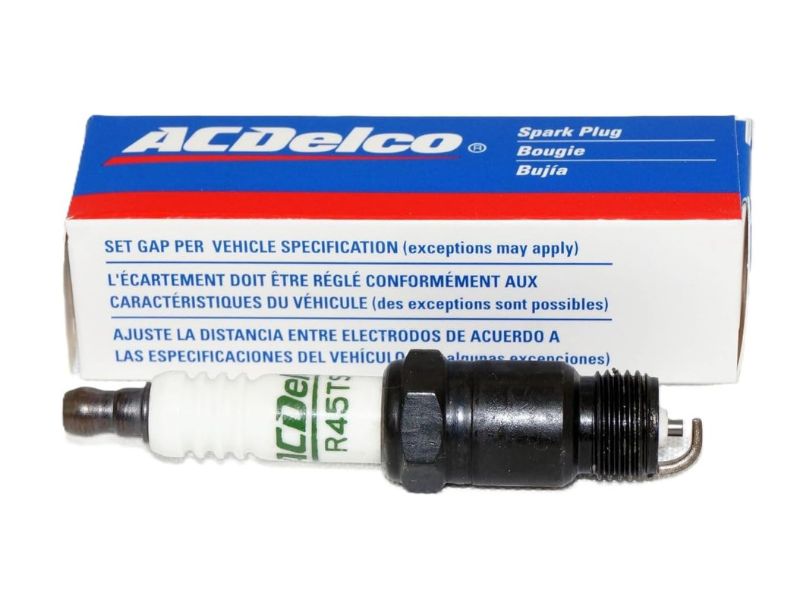
Key Features
- Eight plugs included
- Common stock-style Chevrolet application
- Tapered seat
- Approximately 0.43-inch reach
- 14mm thread diameter
- 5/8-inch hex
- Copper core
- Nickel-alloy firing surfaces
- Resistor construction
- ACDelco heat range 45
- Approximately 0.044-inch supplied gap
The ACDelco R45TS is my primary recommendation for a compatible, mostly stock 305. Its design follows the conventional Chevrolet plug specification used in many engines from the tapered-seat small-block era.
The part code must be read carefully. “R45TS” is not the same as R45S. The “T” identifies the tapered-seat family, while R45S uses a flat gasket seat associated with different cylinder heads. The plugs share similar branding and heat-range language, but their sealing surfaces are not interchangeable.
A copper core transfers heat efficiently from the firing tip toward the shell and cylinder head. The exposed center and ground surfaces use harder nickel-based alloys because pure copper is too soft for durable electrode service.
The plug includes an internal resistor to suppress radio-frequency interference. Resistor construction is suitable for factory electronic ignition, HEI distributors, upgraded audio systems, aftermarket fuel injection, and most street-oriented ignition boxes.
ACDelco lists a gap around 0.044 inch, but the final setting depends on the vehicle year and ignition system. A stock HEI-equipped 305 may use a different gap from a high-compression build with an aftermarket distributor or a worn factory ignition.
The R45TS heat range is appropriate for many standard street applications. A modified engine with higher compression, nitrous, forced induction, sustained high rpm, or substantial timing changes may require a colder plug selected with guidance from the engine builder or tuner.
Conventional nickel electrodes generally wear faster than platinum or iridium. On an older carbureted engine, periodic removal is not necessarily inconvenient because plug appearance can reveal mixture distribution, choke problems, oil consumption, ignition weakness, or detonation.
The linked option includes eight plugs, matching the engine’s cylinder count. Verify that every unit is labeled R45TS before installation; similarly named ACDelco plugs can have different seats or heat ranges.
For a factory-style 305 with confirmed tapered-seat heads, the R45TS provides the most direct and least complicated choice. It earns first place because correct stock geometry and heat characteristics matter more than premium electrode marketing.
2. NGK 2771 UR5 V-Power Spark Plug 8-Pack
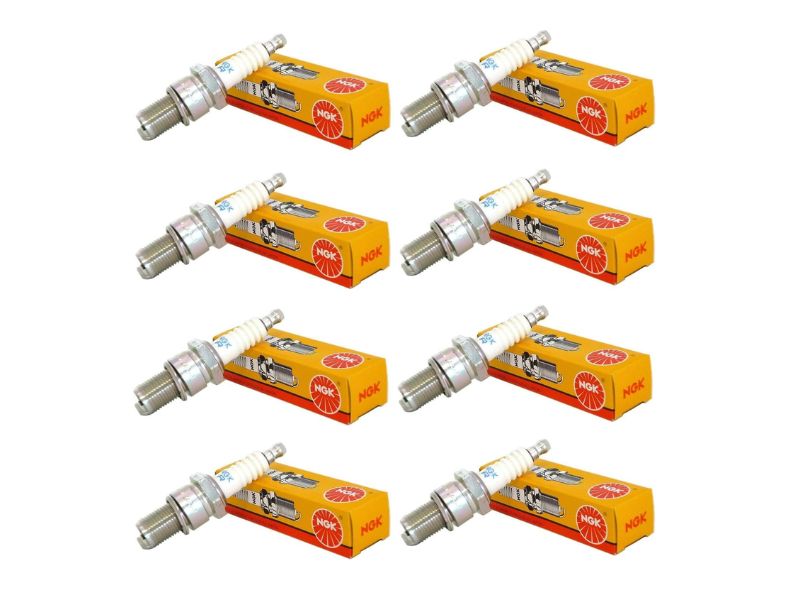
Key Features
- Eight plugs supplied
- NGK stock number 2771
- UR5 V-Power configuration
- Short-reach tapered-seat design
- 14mm threads
- Compact hex for later small-block heads
- Solid copper core
- V-groove nickel electrode
- Resistor construction
- Approximately 0.040-inch supplied gap
- NGK heat range 5
The NGK UR5 is a practical aftermarket choice for compatible tapered-seat Chevrolet heads. Its V-Power electrode contains a groove that encourages the spark to form nearer the edge of the center electrode.
Moving the discharge toward the edge can reduce shielding around the initial flame kernel. This does not create a second spark or guarantee additional horsepower. Its value is consistent ignitability within a plug that otherwise retains conventional copper-core construction.
NGK uses a solid copper core to manage firing-tip temperature and provide a broad operating heat range. The nickel-alloy electrode is less wear resistant than a platinum tip, so the plug benefits from periodic gap checks in a frequently driven street engine.
The UR5 has an approximately 0.040-inch supplied gap. That is a starting measurement, not a universal specification for every 305. Check the service information for the vehicle and the instructions supplied with the ignition system.
A strong HEI distributor may support a larger gap under normal compression, while a high-compression engine can require a smaller gap to avoid misfire under load. Widening the gap increases demand on the coil, cap, rotor, wires, and module.
NGK heat range 5 cannot be compared numerically with ACDelco heat range 45 or Autolite heat range 8. Each manufacturer uses its own system. Cross-reference charts and plug readings are necessary when changing brands.
The shell’s plating provides corrosion protection and is generally intended for installation without anti-seize unless NGK or the cylinder-head manufacturer specifies otherwise. Applying thread lubricant changes the relationship between torque and clamping force.
This product includes eight matching plugs, avoiding the need to combine multiple packages. I would select the NGK for a mild street-performance build, restomod, or driver where the head specifications support UR5 geometry and the owner wants an economical V-groove design.
3. Autolite AP25 Platinum Spark Plug 4-Pack
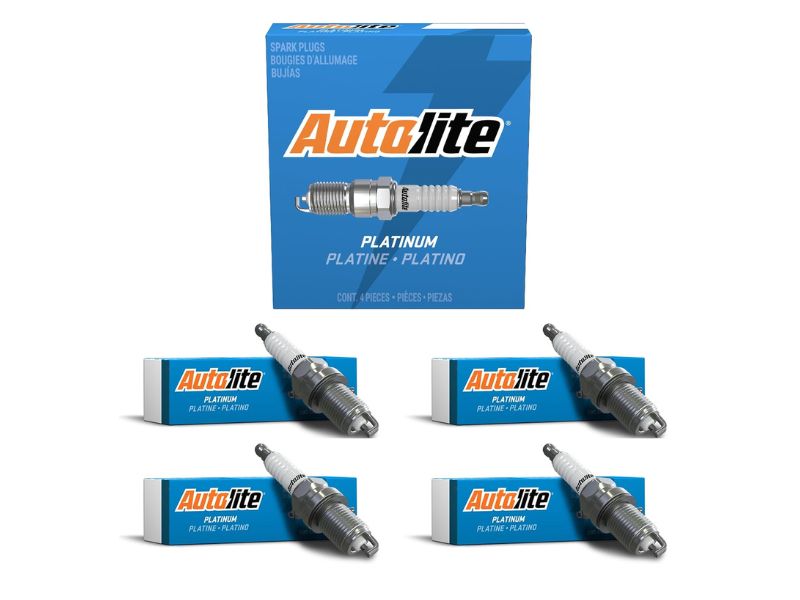
Key Features
- Four plugs per package
- Platinum center-electrode firing tip
- Copper center-electrode core
- Mid-projected design
- 0.431-inch reach
- Tapered seat
- 14mm thread diameter
- 5/8-inch hex
- Resistor construction
- Approximately 0.044-inch supplied gap
- Nickel-plated shell
The Autolite AP25 uses a platinum firing tip to reduce center-electrode erosion. Maintaining a defined firing edge helps slow gap growth over time, which can be useful in a regularly driven vehicle where longer maintenance intervals are preferred.
Its published geometry includes a 14mm thread, approximately 0.431-inch reach, tapered seat, and 5/8-inch hex. These measurements align with the general plug style used in many later Chevrolet small-block heads, but an application lookup remains necessary.
The AP25 has a mid-projected firing end. Projection places the spark farther into the chamber than a non-projected design, potentially improving exposure to the mixture in an engine designed for it.
Projection must not be treated as a performance upgrade independent of compatibility. Domed pistons, milled heads, large valves, and modified chamber geometry can reduce electrode clearance. A projected plug should only be used when the head and engine combination permits it.
Autolite supplies the plug near 0.044 inch. As with the ACDelco, the final gap must reflect the ignition system and cylinder pressure.
The nickel-plated shell provides corrosion resistance. Autolite’s application instructions should determine whether the threads are installed dry. Adding anti-seize without compensating for reduced friction can lead to over-tightening.
This product is sold in a four-pack, so a 305 V8 requires two packages. Check all eight plugs for the same AP25 marking, electrode condition, and gap.
The AP25 ranks third because platinum durability is not essential for every classic 305, and the four-pack creates an extra ordering step. It is a sensible choice when its fitment is confirmed and the owner prioritizes reduced center-electrode wear.
Spark Plug Comparison
| Product | Electrode Type | Seat | Approximate Reach | Supplied Gap | Package Quantity | Primary Use | Important Limitation |
| ACDelco R45TS | Copper-core conventional | Tapered | 0.43 in | 0.044 in | 8 | Stock or near-stock GM applications | Not for gasket-seat heads |
| NGK 2771 UR5 | Copper-core V-groove nickel | Tapered | Short reach | 0.040 in | 8 | Mild street and restomod engines | Conventional electrodes need periodic inspection |
| Autolite AP25 | Platinum center firing tip | Tapered | 0.431 in | 0.044 in | 4 | Street use with reduced gap erosion | Two packages are required |
The ACDelco is the simplest factory-oriented replacement. The NGK changes the firing-tip geometry while retaining a serviceable conventional electrode. The Autolite adds platinum to reduce wear but must be purchased as two four-packs.
Which Chevy 305 Engines Use These Plugs?
The 305 small-block was installed in numerous Chevrolet and GM vehicles. Common applications included:
- Chevrolet Camaro
- Chevrolet Caprice
- Chevrolet Impala
- Chevrolet Monte Carlo
- Chevrolet Malibu
- Chevrolet El Camino
- Chevrolet C/K trucks
- Chevrolet G-series vans
- Pontiac and Oldsmobile vehicles using Chevrolet-built engines
- Marine and replacement-engine applications
The same displacement does not guarantee the same spark plug. Model year, cylinder-head casting, emissions package, ignition system, and engine code can change the factory recommendation.
Some 305 variants include:
- Two-barrel carbureted engines
- Four-barrel carbureted engines
- Computer-controlled carbureted versions
- Tuned-port-injection engines
- Throttle-body-injected truck engines
- High-output Camaro and Monte Carlo configurations
- Marine versions
- Rebuilt or crate-engine combinations
Use the head and complete engine configuration—not the “305” label alone—to confirm fitment.
Identify the Cylinder Heads Before Ordering
Find the Casting Number
Factory cylinder heads have cast identification numbers. Their location varies, and removing a valve cover may be necessary.
A casting-number reference can identify the head family, chamber size, valve configuration, and general spark-plug style. Use more than one reliable reference when possible because old casting charts sometimes contain errors.
Look for Aftermarket Branding
Aluminum or performance cast-iron heads usually carry a manufacturer name, logo, or part number. Consult that manufacturer’s documentation directly.
Aftermarket heads may require:
- 0.750-inch-reach gasket plugs
- 0.750-inch-reach tapered plugs
- Angle-seat configurations
- Specific projected tips
- Specific heat ranges
- 5/8-inch or 13/16-inch hexes
Do not assume that a modern head uses R45TS geometry simply because it fits a Chevrolet small-block block.
Inspect the Seat
A tapered-seat plug seals against a conical surface and does not use a crush washer. A gasket-seat plug seals against a flat surface using a washer.
The ACDelco R45TS, NGK UR5, and Autolite AP25 use tapered seats. They should not be installed into early flat-seat heads.
Measure Reach
Reach is the distance from the seat to the end of the threaded shell. The reviewed plugs use the short reach common to many later factory heads.
A long-reach plug installed in a short-reach head can extend into the chamber. A short plug installed in a long-reach head leaves unused threads exposed and recesses the spark.
R45TS Versus R45S
These two ACDelco codes are easily confused.
R45TS uses a tapered seat and is associated with many later Chevrolet cylinder heads.
R45S uses a flat gasket seat and is associated with earlier head designs.
The difference cannot be corrected by adding or removing a washer. The head is machined for one sealing system, and the correct plug must match it.
A 305 was introduced during the later small-block period, so tapered-seat plugs are common. However, an engine may have received early 283, 327, or 350 heads during a rebuild. Confirm the installed hardware instead of relying on the block’s original model year.
Choosing the Correct Heat Range
A spark plug does not actively create more heat because it carries a higher heat-range number. Heat range describes how rapidly the firing end transfers combustion heat into the head.
Hotter Plugs
A hotter plug retains firing-tip heat longer. This helps burn away deposits in an engine that sees short trips, extended idle, or light load.
An excessively hot plug can contribute to pre-ignition, electrode erosion, and insulator damage.
Colder Plugs
A colder plug removes heat more rapidly. It may be appropriate for high compression, nitrous, forced induction, sustained high rpm, or heavy-load operation.
A plug that is too cold for a street engine can foul with fuel or carbon.
Stock and Mild Engines
Start with the factory-equivalent heat range for a stock or mildly modified 305. Change heat range only when engine configuration and plug-reading evidence support the decision.
Brand Number Differences
Do not assume NGK 5, ACDelco 45, and Autolite 8 form a direct numerical progression. Heat-range systems differ among manufacturers.
Use application cross-references and examine plug condition after controlled operation.
Setting the Correct Spark Plug Gap
Gap determines how much voltage is needed for the spark to cross from the center electrode to the ground strap.
Stock HEI Systems
Many 305 engines use GM’s High Energy Ignition distributor. A healthy HEI can support a wider gap than older breaker-point systems.
Factory gap specifications varied across years and calibrations. Some applications may call for approximately 0.045 inch, while others can differ. Use the vehicle’s emissions label, service manual, or ignition specification.
Aftermarket Ignition Systems
Performance distributors, high-output coils, capacitive-discharge boxes, and multi-spark systems may specify a different gap.
The ignition manufacturer’s recommendation should be considered alongside compression ratio and operating conditions.
High Cylinder Pressure
Higher compression, boost, or nitrous makes a wide gap harder to fire. A narrower setting can reduce misfire under load.
Weak Ignition Components
A large gap may reveal marginal plug wires, a worn distributor cap, rotor erosion, poor grounds, low charging voltage, or a failing coil.
Do not close the gap simply to hide an ignition-system defect in an otherwise stock engine.
Check Every Plug
The ACDelco and Autolite are commonly supplied near 0.044 inch, while the NGK arrives near 0.040 inch. Measure all eight with a wire gauge and set them consistently for the engine.
Move only the ground strap when adjusting the gap. Do not pry against the center electrode.
Copper-Core Versus Platinum Plugs
Copper-Core Conventional Plugs
The ACDelco and NGK use copper inside the center electrode for heat transfer. Their exposed firing surfaces are nickel alloy.
These plugs are affordable, easy to inspect, and effective in traditional ignition systems. They generally require more frequent maintenance than platinum designs.
Platinum Firing Tips
The Autolite adds platinum to the center firing surface. Platinum resists erosion, helping the gap remain stable longer.
Longer wear life is valuable, but it does not create a stronger spark by itself. Ignition voltage is determined by the coil, gap, cylinder pressure, mixture, and electrical condition.
Why Conventional Plugs Remain Useful
A carbureted or older fuel-injected 305 may benefit from periodic plug reading. Frequent inspection can reveal mixture or oil-control problems before a long-life plug reaches its theoretical service interval.
For a seasonal classic, conventional plugs may age from deposits or storage conditions long before electrode wear becomes the main concern.
Resistor Plugs and Classic Ignition Systems
All three reviewed products use resistor construction.
The resistor reduces electromagnetic interference produced by the ignition discharge. This protects:
- Radios
- Electronic control modules
- HEI modules
- Aftermarket fuel-injection controllers
- Audio amplifiers
- Digital gauges
- Communication equipment
A resistor plug does not normally weaken a healthy street ignition in a meaningful way. Non-resistor racing plugs should only be used when the ignition manufacturer and vehicle electronics support them.
Matching Plugs to Common 305 Builds
Stock Carbureted Daily Driver
I would begin with the ACDelco R45TS when the factory head and application data support it. Set the gap to the vehicle specification and inspect the choke, carburetor mixture, distributor advance, and wires at the same time.
Mild Street Performance Engine
The NGK UR5 is a practical option for headers, intake upgrades, a mild camshaft, and a healthy HEI system, provided the head geometry matches.
A camshaft and intake do not automatically require a colder plug. Evaluate compression, timing, load, and plug readings.
TPI Camaro or Firebird Application
Use the VIN, engine code, head casting, and current catalog. Electronic fuel injection does not eliminate the need for correct plug geometry and heat range.
Inspect the distributor cap, rotor, coil, wires, and engine grounds because ignition problems can imitate plug failure.
TBI Truck Engine
A stock truck application may use the ACDelco family, but model-year specifications must be followed. Towing and heavy loads increase combustion temperature, making proper heat range important.
High-Compression or Nitrous Build
Do not select any of these plugs solely from the generic 305 recommendation. Consult the engine builder or nitrous-system guidance for heat range, projection, and gap.
A non-projected or colder plug may be necessary depending on piston clearance and cylinder pressure.
Installation Procedure
Verify the Firing Order
The traditional Chevrolet small-block firing order is:
1-8-4-3-6-5-7-2
Cylinder locations are:
- Driver side: 1-3-5-7
- Passenger side: 2-4-6-8
Replace one plug at a time to reduce the risk of crossing wires.
Work With the Engine Cold
Allow cast-iron heads, aluminum heads, manifolds, and headers to cool completely. Cold installation reduces burn risk and improves torque consistency.
Clean Around the Plugs
Remove dirt and loose rust before taking out a plug. Use a brush, vacuum, or carefully directed compressed air.
Wear eye protection and prevent debris from being blown into connectors or the carburetor.
Inspect the Plug Wires
Check every wire for:
- Cracked insulation
- Burned boots
- Loose terminals
- Corrosion
- Excessive resistance
- Evidence of arcing
- Contact with exhaust components
A new plug will not correct voltage leakage through a damaged wire.
Remove the Old Plugs Gently
Use a 5/8-inch spark plug socket for the common reviewed designs. Keep it aligned to avoid breaking the ceramic.
If a plug is unusually tight, do not apply uncontrolled force. Corrosion, carbon, damaged threads, or previous over-tightening may require additional care.
Organize the Removed Plugs
Number the plugs by cylinder. Comparing them can reveal:
- Carburetor distribution problems
- Intake leaks
- Weak wires
- Oil fouling
- Cooling differences
- Individual-cylinder mechanical faults
Compare Old and New Geometry
Before installing, compare the new plug’s reach, seat, projection, and hex with the confirmed head specification.
Do not assume that matching overall length proves compatibility.
Set the Gap
Use a wire-style gauge and move only the ground electrode. Set all eight to the same verified specification unless the engine builder has a specific cylinder-indexing procedure.
Thread by Hand
Place the plug in the socket and rotate the extension by hand for several turns. A length of rubber hose can also help start the plug safely.
If it binds early, remove it and inspect the threads. Never force a plug into an aluminum or cast-iron head.
Apply Correct Torque
Use the plug or cylinder-head manufacturer’s torque specification. Tapered-seat plugs use a different sealing method from gasket-seat plugs.
Torque also changes with head material. Aluminum threads generally require particular care.
Avoid Automatic Anti-Seize Use
Modern plated shells are often intended for dry installation. Anti-seize changes friction and can cause excessive tightening at the published dry torque.
Follow the plug manufacturer’s directions. If anti-seize is explicitly required, use the corrected torque.
Reconnect the Wires Securely
Seat every boot firmly on the terminal. Keep wires away from headers and use separators to prevent contact or inductive crossfire.
Pay particular attention to cylinders 5 and 7. They fire consecutively and their wires run near each other on the driver side. Proper separation can reduce the chance of crossfire.
Reading the Old Spark Plugs
Normal Deposits
A dry, light gray or tan firing end generally suggests acceptable combustion, though modern fuel additives can alter color.
Black Soot
Dry black deposits can indicate:
- Rich carburetor mixture
- Choke that remains closed too long
- Weak ignition
- Excessive idling
- Plug heat range that is too cold
- Low engine temperature
Fuel-Wet Plug
A wet gasoline smell suggests that the cylinder receives fuel but does not ignite it consistently. Check the wire, cap, rotor, compression, and distributor terminal.
Oil Fouling
Wet oily deposits may indicate worn rings, valve guides, valve seals, or an intake-sealing problem.
Replacing the plug may temporarily improve firing, but fouling will return if the mechanical problem remains.
White or Blistered Insulator
This may indicate excessive heat, lean mixture, vacuum leak, over-advanced timing, detonation, or an incorrectly hot plug.
Metallic Specks
Small metallic deposits can be evidence of detonation or internal damage. Check timing, fuel octane, cooling, mixture, and compression before continued hard operation.
Common Buying and Installation Mistakes
Buying by Displacement Alone
The cylinder heads determine plug geometry. A 305 block may have 350, Vortec, or aftermarket heads.
Confusing R45TS With R45S
R45TS is tapered-seat; R45S is gasket-seat. They are not interchangeable.
Using Long-Reach Plugs in Stock Short-Reach Heads
Excessive reach can expose threads inside the chamber and create mechanical or thermal problems.
Ordering Only Four Plugs
The 305 is a V8 and requires eight. Two Autolite four-packs are needed.
Using the Supplied Gap Without Verification
Package gaps are starting points. Check the vehicle and ignition specification.
Widening the Gap Because the Engine Has HEI
A healthy HEI can support a wider gap, but excessive width increases electrical stress and may cause load misfires.
Selecting a Colder Plug for Minor Bolt-On Modifications
Headers and an intake do not automatically require a colder heat range. Use operating evidence and builder guidance.
Applying Anti-Seize Automatically
Unapproved lubricant can produce excessive clamping force and damaged threads.
Installing With a Power Tool
Start every plug by hand. Power tools make cross-threading and over-tightening much easier.
Ignoring Wires, Cap, and Rotor
Spark plugs are only one part of the ignition system. Complete tune-up inspection prevents repeat misfires.
Frequently Asked Questions
What are the best spark plugs for a stock Chevy 305?
ACDelco R45TS plugs are my primary choice for compatible stock tapered-seat heads. They follow a familiar Chevrolet conventional-plug specification and are available as an eight-pack. Confirm the head casting, vehicle year, and factory heat range before ordering.
How many spark plugs does a Chevy 305 need?
A Chevrolet 305 is a V8 and requires eight spark plugs. The ACDelco and NGK options reviewed here contain eight. The Autolite AP25 package contains four, so two packages are required.
What is the correct spark plug gap for a Chevy 305?
The correct gap depends on the vehicle year, ignition system, and engine build. Many applications fall near 0.040–0.045 inch, but some differ. Use the emissions label, service manual, or ignition manufacturer’s instructions rather than one universal setting.
Does a Chevy 305 use tapered-seat spark plugs?
Many factory 305 heads use short-reach tapered-seat plugs. Swapped early heads or aftermarket heads may require gasket seats or longer reach. Inspect the installed cylinder heads before choosing a plug.
What is the difference between R45TS and R45S?
R45TS has a tapered seat, while R45S seals with a flat gasket. A 305 commonly uses the tapered version in stock later-era heads, but an engine with swapped heads may differ. Never substitute one seat type for the other.
Will NGK UR5 plugs fit every 305?
No, they fit only applications requiring the UR5’s particular tapered-seat geometry and heat range. Confirm the cylinder-head and vehicle application. Displacement alone does not establish compatibility.
Are platinum plugs better for a 305?
Platinum can reduce electrode wear, but it does not automatically improve engine output. Autolite AP25 is useful when its fitment is correct and longer gap stability is desired. Conventional copper-core plugs remain effective for many classic street engines.
Are copper spark plugs really made from copper?
They normally use a copper core beneath a harder nickel-alloy firing surface. Copper transfers heat efficiently, but pure copper is too soft to serve as a durable exposed electrode. The ACDelco and NGK use this conventional arrangement.
Should I use a colder plug with headers?
Headers alone do not normally require a colder spark plug. Heat range concerns combustion-chamber tip temperature, not external exhaust proximity. Protect plug wires from header heat through clearance, routing, boot selection, and sleeves.
Does an HEI distributor need special spark plugs?
HEI does not require exotic electrodes, but it affects the appropriate gap. A healthy HEI can fire a wider opening than many points systems. Use resistor plugs and follow the vehicle or ignition manufacturer’s gap recommendation.
Can a wide gap damage the HEI system?
An excessive gap increases voltage demand and stresses the coil, cap, rotor, wires, and module. The engine may misfire under load even if it idles correctly. Use the verified setting rather than maximizing gap width.
Should anti-seize be used on the plug threads?
Use it only when the plug or head manufacturer specifically recommends it. Plated shells are often installed dry. Anti-seize changes thread friction and can cause over-tightening when the standard dry torque is applied.
What torque should be used for 305 spark plugs?
Use the specification for the installed cylinder heads and plug seat. Cast-iron and aluminum heads may have different requirements. Apply torque to a cold engine with a calibrated wrench and follow dry-thread instructions unless told otherwise.
What is the Chevy small-block firing order?
The traditional Chevrolet small-block firing order is 1-8-4-3-6-5-7-2. Driver-side cylinders are 1-3-5-7, and passenger-side cylinders are 2-4-6-8. Change one plug at a time to preserve wire routing.
Why are my 305 spark plugs black?
Dry black deposits commonly indicate rich mixture, weak ignition, excess idling, or a cold plug. Check choke operation, carburetor or fuel-injection data, engine temperature, cap, rotor, wires, and compression before assuming the plugs alone are faulty.
Conclusion
Choosing the best spark plugs for a Chevy 305 requires identifying the cylinder heads and ignition system currently on the engine. Many original 305 heads use a short-reach tapered-seat plug, but decades of repairs and modifications make assumptions risky.
The ACDelco R45TS eight-pack is my primary recommendation for a compatible stock or near-stock 305. Its conventional copper-core construction, resistor design, and GM-oriented heat range make it straightforward to service and diagnose.
The NGK 2771 UR5 eight-pack is appropriate when a compatible V-Power plug is preferred. The Autolite AP25 adds a platinum center firing tip for reduced gap erosion, although two four-packs are needed.
Before ordering, verify the head casting or manufacturer part number, plug reach, seat type, heat range, projection, and required gap. Inspect the distributor cap, rotor, wires, and coil during the same service.
For a factory-style street 305 with confirmed tapered-seat heads, I would begin with the ACDelco R45TS and set all eight plugs to the verified vehicle or ignition-system gap.