Window tint can make a car more appealing to some buyers, but it does not guarantee an increase in resale or trade-in value. Clean, legal, professionally installed film may be viewed as a useful feature; excessively dark, peeling, or poorly installed tint can instead make the car harder to sell.
The money spent on tinting also does not become an automatic addition to a vehicle’s appraisal. Dealers generally value the car’s condition, mileage, history, and market demand rather than reimbursing every aftermarket upgrade. Private buyers may appreciate the added privacy and heat reduction, but not all will pay extra.
Film type matters, too. Quality ceramic tint can reduce incoming solar heat, while products offering strong UV protection may help limit fading of some interior materials. Neither benefit proves that the car will sell for a higher price, especially if the original glass already provides useful protection.
In this article, I explain how window tint can affect private-party prices and dealership trade-ins, what legal and cosmetic problems may lower value, and whether ceramic tint is worth the investment. You’ll also learn how to estimate possible returns and prepare tinted windows before selling your car.
Does Window Tint Increase Car Value? What Resale Guides Show
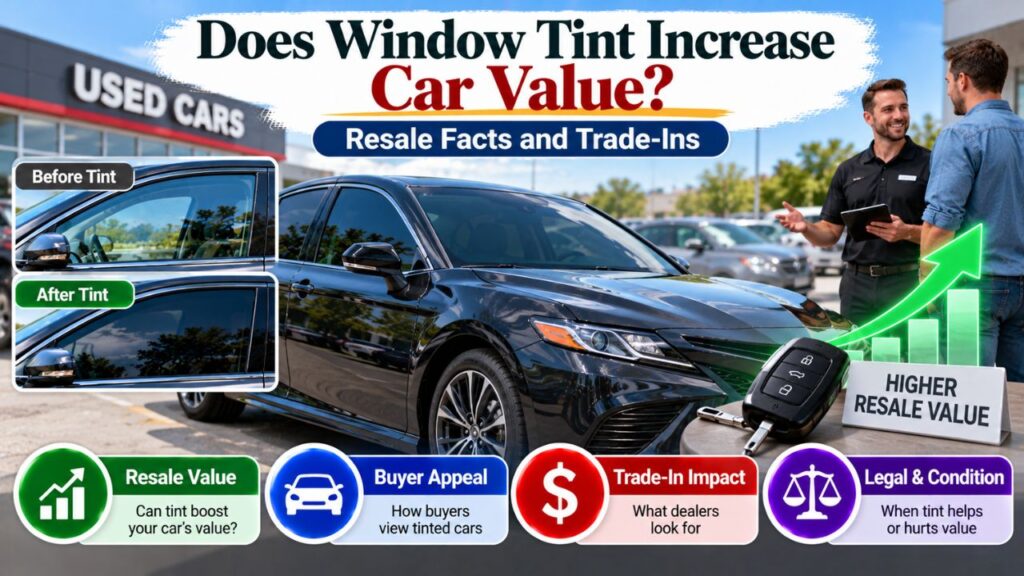
Window tint may affect how a buyer perceives a vehicle, but there is no standard dollar amount added to a used car’s market value simply because it has aftermarket tint.
The impact depends on the buyer, local market, film condition, and applicable tint regulations.
How Vehicle Appraisals Treat Aftermarket Window Tint
Vehicle appraisal services generally emphasize factors that can be measured and compared across similar vehicles.
These commonly include:
- Vehicle make and model.
- Production year.
- Mileage.
- Mechanical condition.
- Accident and title history.
- Factory equipment and options.
- Interior and exterior condition.
- Local market demand.
Aftermarket window tint is not typically assigned a separate, standardized resale premium.
According to Edmunds’ guidance on aftermarket modifications and vehicle values, its True Market Value system does not assign reliable pricing to vehicles modified with aftermarket parts because their original cost, quality, and resale contribution vary considerably.
Edmunds also explains that customizations may reduce trade-in value when a dealer expects to return a vehicle to its original condition.
This doesn’t mean every tinted car receives a lower appraisal.
It means you should not assume that a $500 tint installation automatically adds $500 to the vehicle’s market value.
Why Buyer Preferences Matter
Not everyone wants the same appearance or features.
Some buyers prefer dark windows because they provide additional privacy and reduce visible glare.
Others prefer lighter factory glass because they value nighttime visibility or want to avoid questions about tint legality.
A professional ceramic film installation may appeal to someone who drives frequently in a hot climate.
However, another buyer may consider the same film unnecessary.
The tint’s resale effect is therefore partly subjective.
Window Tint and Car Value at a Glance
| Tint condition | Possible effect on resale |
| Professionally installed, legal tint | May improve buyer appeal |
| High-quality ceramic tint | May attract buyers seeking heat control |
| Clean factory privacy glass | Usually viewed as normal factory equipment |
| Very dark aftermarket tint | May limit the pool of interested buyers |
| Peeling or bubbling tint | Can reduce perceived condition and value |
| Illegal tint | May create removal costs or sale complications |
| Tint with transferable warranty | May provide buyer reassurance |
Key Takeaway: Window tint is more likely to influence buyer interest and perceived vehicle condition than to produce a predictable increase in appraisal value.
How Window Tint Can Help a Car’s Resale Appeal
Although tint doesn’t guarantee a higher selling price, it can provide features that certain buyers appreciate.
These benefits are strongest when the film is professionally installed, legally compliant, and in good condition.
Improved Exterior Appearance
Window tint can create a more consistent appearance across the vehicle’s glass.
It may complement the car’s paint color, body design, and factory privacy glass.
For example, a sedan with neatly installed medium-dark tint may appeal to someone seeking a clean, understated appearance.
However, appearance remains subjective.
A buyer who prefers completely clear windows may view the tint differently.
Choose a neutral appearance rather than an unusual reflective or colored finish if broad resale appeal is a priority.
Reduced Solar Heat
Quality automotive tint can reduce a portion of the solar energy entering the cabin.
This may improve comfort during sunny weather.
Ceramic films can be particularly attractive because many provide substantial infrared heat rejection without requiring very dark glass.
The International Window Film Association’s automotive guidance identifies solar heat control, glare reduction, UV protection, and improved comfort as benefits of automotive window film.
However, heat rejection depends on the exact product.
A dark appearance does not automatically mean strong solar heat control.
Protection Against Some Interior Fading
Sunlight can contribute to fading and deterioration of vehicle interior materials.
Certain window films reduce ultraviolet radiation entering through treated glass.
This may help limit fading of materials such as:
- Seat fabrics.
- Dashboard surfaces.
- Interior trim.
- Certain upholstery materials.
- Other sun-exposed components.
However, interior deterioration also depends on heat, visible light, material quality, and environmental conditions.
Window film cannot eliminate every cause of fading.
It may help preserve interior condition, which is useful when selling the vehicle later, but this indirect benefit should not be confused with a guaranteed resale premium.
Additional Daytime Privacy
Dark window film can make it more difficult for people outside the car to see inside during daylight.
Some buyers consider this a desirable feature, particularly for family vehicles and SUVs.
However, tint doesn’t provide complete privacy under all lighting conditions.
At night, occupants and objects may remain visible if the vehicle’s interior is brightly illuminated.
Privacy also needs to be balanced against driver visibility and legal requirements.
Does Window Tint Increase Trade-In Value at a Dealership?
Usually, dealerships do not offer a predictable additional amount simply because a vehicle has aftermarket tint.
Dealers often assess the vehicle based on its expected wholesale or resale value.
They may also consider whether the tint will need removal before the vehicle is offered for sale.
Why Dealerships May Not Pay Extra for Tint
A dealer generally needs to resell the vehicle to another customer.
Aftermarket modifications can complicate this process when the next buyer has different preferences.
For example, the dealer may not know:
- Which film was installed.
- Whether the film meets local laws.
- How old the film is.
- Whether the installation has a warranty.
- Whether a buyer will prefer that darkness level.
Because of this uncertainty, the dealership may treat ordinary window tint as an existing vehicle feature rather than a paid upgrade.
Can Tint Reduce a Trade-In Offer?
Yes, particularly when the film is damaged or noncompliant.
A dealer may consider removing tint if it has:
- Excessive darkness.
- Visible bubbling.
- Purple discoloration.
- Peeling edges.
- Poor installation quality.
- Inconsistent shades.
- Unusual reflective coloring.
The anticipated removal or replacement cost may influence an offer.
However, a clean, legal tint installation isn’t automatically a negative modification.
The result depends on the vehicle and the dealer’s appraisal standards.
Does Dealer-Installed Tint Add More Trade-In Value?
Not necessarily.
A tint package purchased through a dealership doesn’t automatically qualify as a factory-installed option.
A vehicle owner might pay a premium for dealer tint when buying a new car, but that original purchase price does not establish its later resale value.
The film’s actual condition, performance, and legal compliance matter more than where it was purchased.
Does Window Tint Add More Value in a Private Sale?
A private sale may offer a better opportunity to communicate the benefits of quality window tint.
Unlike a dealership, an individual buyer can decide how much they personally value a specific upgrade.
Why Private Buyers May Appreciate Tint
Certain buyers may prefer a vehicle that already has professionally installed film.
For example, someone living in a hot region may value the reduced solar heat and additional comfort.
Another buyer may appreciate not having to arrange a tint installation after purchasing the car.
These preferences can improve the vehicle’s appeal.
However, buyer interest is not the same as guaranteed additional selling price.
Can Tint Help a Car Sell Faster?
Possibly, if the tint matches the preferences of people shopping for that type of vehicle.
A clean, attractive appearance can make a used-car listing more appealing.
However, there is no reliable universal evidence that tint alone reduces the number of days a vehicle takes to sell.
Price, mileage, mechanical condition, photographs, maintenance records, and market demand remain important.
A well-priced car with good documentation may sell quickly regardless of whether the windows are tinted.
How to Advertise Window Tint in a Used-Car Listing
When selling privately, describe the actual tint rather than making unsupported claims.
Useful details include:
- Film manufacturer.
- Product series.
- Installation date.
- Visible light transmission.
- UV or heat-rejection specifications, when documented.
- Whether the installation was professional.
- Warranty information.
For example:
“Professionally installed ceramic window tint with documented manufacturer specifications and installation receipt.”
This gives buyers useful information without implying that the tint adds a guaranteed amount to the vehicle’s value.
Can Window Tint Actually Lower Car Value?
Yes. Window tint can make a vehicle less appealing when it is illegal, damaged, or unsuitable for normal driving conditions.
Poor-quality tint may be more noticeable to buyers than a properly installed premium film.
Illegal Window Tint
Window tint laws vary by state in the United States.
Restrictions may cover:
- Front side-window darkness.
- Rear-window darkness.
- Windshield tint.
- Reflective film.
- Vehicle classification.
- Medical exemptions.
A tint shade permitted in one state may be prohibited in another.
If a vehicle has noncompliant tint, the buyer may face removal expenses, inspection problems, or other legal consequences.
This can reduce buyer interest.
If you’re preparing to sell a vehicle, confirm that its tint complies with the applicable laws.
Bubbling and Peeling Tint
Bubbling and peeling can make a vehicle look poorly maintained.
Buyers may worry that the tint requires removal or replacement.
Older film may also develop adhesive failure around the edges.
These defects can create additional work for the next owner.
Correcting obvious film defects before listing the vehicle may be worthwhile, depending on the repair cost and the likely effect on buyer interest.
Purple or Discolored Tint
Some lower-quality or aging window films can undergo visible color changes.
A purple or uneven appearance may make the vehicle look older or less carefully maintained.
The best solution may be professional removal and replacement, but that expense isn’t always justified immediately before a sale.
Compare the costs before making the decision.
Extremely Dark Tint
Very dark tint can reduce visibility during nighttime driving.
It may also create legal concerns depending on the window location and state.
Although some buyers like extremely dark glass, others may avoid vehicles with it.
A moderate, legal shade generally appeals to a wider range of drivers.
Poor DIY Installation
A poorly installed film may contain:
- Permanent creases.
- Dust or debris beneath the film.
- Uneven edges.
- Visible distortion.
- Lifting corners.
- Inconsistent appearance.
These problems may suggest that the vehicle needs additional cosmetic work.
If the tint is visibly defective, repairing or removing it may be more useful than advertising it as an upgrade.
Does Ceramic Window Tint Increase Car Value More Than Regular Tint?
Ceramic window tint can offer better heat-control performance than some basic dyed films, but that doesn’t mean it automatically adds more resale value.
The resale effect depends on whether the buyer values those benefits.
Ceramic vs. Dyed Tint for Resale
| Feature | Basic dyed tint | Ceramic tint |
| Main appeal | Dark appearance and glare reduction | Heat control, appearance, and glare reduction |
| Heat rejection | Depends on product; often lower | Can be substantially higher |
| UV protection | Varies by product | Often high in quality products |
| Typical installation cost | Generally lower | Generally higher |
| Buyer recognition | Common | May appeal to informed buyers |
| Guaranteed resale premium | None | None |
A buyer unfamiliar with ceramic film may see only darkened windows.
Another buyer may specifically appreciate the performance of a reputable ceramic product.
This is why expensive film doesn’t always produce a higher sale price.
Does Nano Ceramic Tint Add More Value?
Not automatically.
Nano ceramic is a marketing and technical description used for certain ceramic-based films.
There is no universal resale valuation system assigning additional value to nano ceramic over ordinary ceramic tint.
Compare specific film specifications rather than relying on product labels.
Is Premium Tint Worth Installing Before Resale?
Usually not if the only goal is earning more money from the sale.
Premium tint can cost substantially more than basic film.
Even if it improves the vehicle’s appeal, the buyer may not pay enough extra to recover the installation cost.
Installing premium tint makes more sense when you plan to use and enjoy the car for an extended period.
How Much Value Can Window Tint Add to a Car?
There is no reliable standard amount or percentage that window tint adds to a car’s resale price.
An appraisal tool may not assign any additional value to aftermarket tint.
In a private sale, a buyer may appreciate the film but still negotiate based on the vehicle’s overall condition and comparable market prices.
Example: Calculating Window Tint Resale Return
Suppose you pay $500 for professional window tint installation.
The following table shows hypothetical outcomes if you later sell the vehicle.
| Additional amount received because of tint | Installation cost | Amount recovered | Net financial result |
| $0 | $500 | 0% | −$500 |
| $100 | $500 | 20% | −$400 |
| $250 | $500 | 50% | −$250 |
| $500 | $500 | 100% | $0 |
These numbers are illustrative calculations, not documented average resale premiums.
The example also excludes maintenance, removal, and financing costs.
In practice, it can be difficult to determine exactly how much of a selling price is attributable to the tint.
How to Calculate the Recovery Percentage
Use this formula:
Cost Recovery = (Additional Sale Proceeds Attributable to Tint ÷ Original Tint Cost) × 100
For example:
Original tint cost: $400
Additional amount a buyer pays specifically because of the tint: $100
Calculation:
100 ÷ 400 × 100 = 25%
The tint recovered 25% of its original installation cost.
However, if the buyer pays the same amount they would have paid for a vehicle without tint, the direct resale recovery is zero.
What About Interior Protection Savings?
A high-quality film may help reduce sun-related deterioration during ownership.
That can have practical value even if the film doesn’t produce a separate line-item increase in the resale price.
However, there is no universal dollar amount that can be assigned to this benefit.
A vehicle’s interior condition also depends on maintenance, storage, climate, and material quality.
The strongest reason to buy window tint is usually its usefulness during ownership rather than a guaranteed resale return.
Does Tint Darkness Affect a Car’s Resale Value?
Tint darkness can influence buyer preferences, but no particular VLT percentage guarantees the highest resale value.
Visible Light Transmission (VLT) describes how much visible light passes through the glass-and-film combination.
A lower VLT means darker glass.
Common Window Tint Darkness Levels
| VLT | Appearance | Potential resale consideration |
| 70% | Very light | Minimal visual change |
| 50% | Light | Subtle appearance |
| 35% | Medium | Noticeable tint without an extremely dark look |
| 20% | Dark | Stronger privacy but reduced low-light visibility |
| 5% | Very dark | Greater visibility and legal concerns |
These descriptions are general.
They do not establish which shades are legal for particular windows or jurisdictions.
Is 35% Tint Better for Resale Than 5%?
A moderate shade may appeal to a broader range of buyers than extremely dark tint.
However, local preferences and regulations matter.
A legal 35% tint could be attractive to one buyer, while another may prefer lighter glass.
A 5% tint may limit buyer interest because it significantly reduces visible light transmission.
The best resale-oriented approach is to choose a legal, practical shade rather than maximizing darkness.
Does Clear Ceramic Tint Help Resale?
A nearly transparent ceramic film may appeal to drivers interested in heat reduction without a dark appearance.
This can be useful when visibility and a factory-like look are priorities.
However, the clear film still needs to meet applicable laws and glass compatibility requirements.
Its performance should be evaluated using verified solar heat-rejection specifications.
Factory Window Tint vs. Aftermarket Tint for Resale Value
Factory-colored privacy glass is different from aftermarket window film.
The distinction matters when evaluating original vehicle equipment.
Factory Privacy Glass
Factory privacy glass has its coloring incorporated into the glass construction.
It is commonly found on rear windows of SUVs, trucks, and minivans.
Because it is part of the vehicle’s original configuration, buyers generally view it differently from an aftermarket modification.
However, its presence doesn’t automatically mean a used vehicle will sell for more than an otherwise comparable model.
The value of factory equipment depends on the market and vehicle configuration.
Aftermarket Window Tint
Aftermarket tint is applied as a separate film after the glass is manufactured.
Its condition and performance vary according to the product and installation.
Buyers may appreciate high-quality film, but the modification isn’t automatically assigned the same value as a factory option.
Dealer-Installed Tint
Dealer-installed film is typically an added accessory rather than factory-colored glass.
The dealership may have charged a premium for the service when the car was new.
That original price doesn’t determine its used-car value.
Ask for the actual product name and installation documentation rather than assuming dealer tint has a higher resale premium.
Should You Remove Window Tint Before Selling Your Car?
Not necessarily.
If the film is legal, professionally installed, and in good condition, there may be no reason to remove it.
However, removing damaged or noncompliant tint may improve the vehicle’s saleability.
Keep the Tint When
Leaving the tint in place is generally reasonable when:
- The film complies with applicable laws.
- The appearance is clean and consistent.
- It has no significant peeling or bubbling.
- The shade provides practical visibility.
- The installation is compatible with the vehicle’s glass.
- Buyers in your market commonly accept tinted windows.
If you have a transferable warranty, include the relevant paperwork.
Consider Removal When
Removal may be worthwhile when:
- Tint darkness exceeds legal limits.
- The film is peeling or bubbling badly.
- The color has changed significantly.
- Visibility is impaired.
- The installer damaged the film.
- A prospective buyer specifically requests removal.
- A dealer identifies removal as a condition of its offer.
Do not automatically spend money on tint removal without comparing the likely benefit.
Is Window Tint Removal Expensive?
Removal costs vary based on the film, adhesive, number of windows, and vehicle design.
Rear windows with defroster elements can require additional care.
Improper scraping or pulling may damage the defroster.
Ask a qualified installer for a written quote before attempting removal.
Then compare the cost with any dealer discount or buyer objection caused by the existing tint.
How to Maintain Window Tint to Protect Resale Appeal
Well-maintained tint is less likely to create problems during a vehicle inspection.
Proper care can help preserve the film’s appearance.
Use Suitable Cleaning Products
Follow the film manufacturer’s cleaning instructions.
Use a soft microfiber cloth and a cleaner approved for the installed film.
Avoid abrasive pads and harsh scraping tools.
Some films have special requirements concerning ammonia-based cleaning products.
Check the product instructions rather than assuming every film can be cleaned identically.
Protect the Film From Scratches
Dust and sand trapped in window seals can scratch film as the glass moves.
Keep the window channels clean where practical.
Avoid dragging sharp objects across tinted surfaces.
If the film develops significant damage, have it inspected before deciding whether replacement is necessary.
Keep Installation and Warranty Records
Save the following information:
- Installation receipt.
- Film manufacturer.
- Product series.
- Installation date.
- Warranty certificate.
- Installer contact details.
- Documentation of legal VLT.
These records can help reassure a prospective buyer that the tint is a known product rather than an unidentified modification.
Check whether the warranty transfers to a new owner.
Not all lifetime warranties are transferable.
How to Sell a Car With Tinted Windows for the Best Price
The best approach is to present the tint as a documented feature while emphasizing the vehicle’s overall condition.
Step 1: Confirm That the Tint Is Legal
Verify the applicable state requirements.
Check front side windows, rear windows, windshield restrictions, and any reflectivity rules.
Remember that the legal light transmission may depend on the finished glass-and-film combination rather than the film rating alone.
If uncertain, ask a professional installer to measure the windows.
Step 2: Inspect the Film Condition
Check the windows under good lighting.
Look for bubbles, discoloration, scratches, and peeling edges.
Allow any recently installed film to finish curing according to the manufacturer’s instructions.
Address obvious problems that could create buyer objections.
Step 3: Gather Tint Documentation
Prepare receipts and warranty paperwork.
If the film is ceramic, identify the exact product series.
A generic claim such as “expensive premium tint” is less useful than specific, verifiable information.
Step 4: Present Clear Photos
Photograph the vehicle’s exterior and interior in natural lighting.
Show how the windows look from outside.
Include interior photographs that demonstrate visibility and the condition of the seats and dashboard.
Avoid relying on heavily edited photographs that make the tint appear darker or more reflective than it really is.
Step 5: Compare Real Vehicle Offers
Obtain a realistic market valuation based on the vehicle’s year, mileage, condition, and equipment.
Compare the car with similar vehicles in your area.
If possible, request both trade-in and private-sale estimates.
Do not automatically add the full original tint cost to the asking price.
Step 6: Mention Tint as a Feature, Not a Guaranteed Premium
Include the tint in the vehicle description, particularly if it is high quality and properly documented.
Focus on the practical benefits:
- Reduced solar heat.
- Improved daytime privacy.
- Reduced glare.
- UV protection.
- Professional installation.
Avoid promising a buyer that the tint creates a specific resale advantage or saves a guaranteed amount of fuel.
Key Takeaway: Legal compliance, clean film condition, and documentation are more useful for resale than simply advertising an expensive tint package.
Is It Worth Tinting a Car Right Before Selling It?
Usually, installing new tint solely to increase the selling price is not a reliable investment.
A buyer may not pay enough extra to recover the cost.
In some situations, new tint could even create questions about legality, warranty coverage, or the reason for the modification.
When New Tint May Make Sense
Installing tint shortly before selling may be reasonable if:
- The existing glass treatment is damaged and replacement is already necessary.
- You have identified a buyer who specifically wants the film.
- The installation cost is unusually favorable.
- The film makes the vehicle more suitable for a known local market.
- You plan to keep using the car if it doesn’t sell immediately.
However, these situations do not guarantee a positive financial return.
When You Should Skip New Tint
Avoid installing tint solely for resale when:
- The car already has attractive factory glass.
- The vehicle will be traded in soon.
- You cannot confirm what local buyers prefer.
- The installation would be expensive.
- The proposed shade could create legal problems.
- Other vehicle maintenance needs are more important.
For example, correcting a safety-related mechanical problem or addressing significant existing damage is generally more important than adding a cosmetic accessory.
What Usually Matters More Than Window Tint?
Several factors often have a stronger relationship with used-car value:
- Mechanical condition.
- Mileage.
- Accident and title history.
- Regular maintenance.
- Tire and brake condition.
- Interior cleanliness.
- Paint and body condition.
- Market demand for the specific model.
Focus on the vehicle’s overall condition before spending money on optional upgrades.
Conclusion
Does window tint increase car value? It can improve buyer appeal, but there is no standard resale premium, and it rarely makes sense to expect full repayment of the installation cost.
Professionally installed, legal window film may make a vehicle more comfortable and attractive to certain buyers. Quality ceramic tint can offer useful heat rejection, while UV-protective films may help limit some interior fading.
However, dealerships often place little or no separate value on aftermarket modifications.
Illegal, excessively dark, bubbling, or damaged tint can even reduce buyer interest or create additional expenses.
My recommendation is to install window tint for comfort, privacy, and protection during ownership—not solely as a resale investment.
When selling a tinted car, make sure the film is legal, in good condition, and properly documented. Those steps are more likely to help preserve the vehicle’s appeal than installing an expensive tint package shortly before the sale.
FAQs About Does Window Tint Increase Car Value
How Much Does Window Tint Add to a Car’s Resale Value?
There is no standard dollar amount. Some private buyers may appreciate professionally installed tint, while others may not pay anything extra. Vehicle valuation services generally do not assign a reliable separate resale value to aftermarket window film.
Does Ceramic Window Tint Increase Trade-In Value?
Not necessarily. Ceramic tint can provide useful heat rejection, but dealerships may not offer additional trade-in money for it. The vehicle’s condition, mileage, history, and overall market value usually matter more than the original tint installation cost.
Can Dark Window Tint Lower a Car’s Resale Value?
Yes. Extremely dark or illegal tint can limit buyer interest and may require removal. Tint that reduces nighttime visibility or creates inspection problems can also make the vehicle less attractive to prospective buyers.
Is Factory Window Tint Worth More Than Aftermarket Tint?
Factory privacy glass is part of a vehicle’s original equipment, while aftermarket tint is an added film. Factory equipment may be considered in a vehicle’s overall configuration, but neither type guarantees a specific increase in used-car value.
Should I Remove Window Tint Before Trading In My Car?
Keep legal, clean, well-installed tint unless the dealership identifies a problem with it. Consider removal when the film is illegal, peeling, bubbling, or significantly discolored. Compare removal costs with the potential effect on the trade-in offer.
Does Window Tint Help Preserve a Car’s Interior?
Quality window film can reduce UV exposure and some solar heat entering the cabin, which may help limit fading of certain interior materials. However, it cannot prevent every form of sun damage, and there is no guaranteed dollar amount of resale value preserved.
Is Installing Window Tint Before Selling a Car Worth It?
Usually not when the only goal is increasing the sale price. The additional amount a buyer is willing to pay may be less than the installation cost. Tint generally offers better value when installed early enough for the owner to enjoy its comfort and privacy benefits.