A 1000 amp jump starter sits in a useful middle ground for many everyday vehicles. It can provide substantial emergency starting power without the bulk of larger commercial jump boxes, making it practical for cars, crossovers, SUVs, motorcycles, boats, and some light trucks.
The best 1000 amp jump starter should not be judged by peak current alone. Engine-displacement limits, clamp protection, cable design, battery chemistry, low-voltage starting, charge retention, and portability all matter when the vehicle battery is deeply discharged.
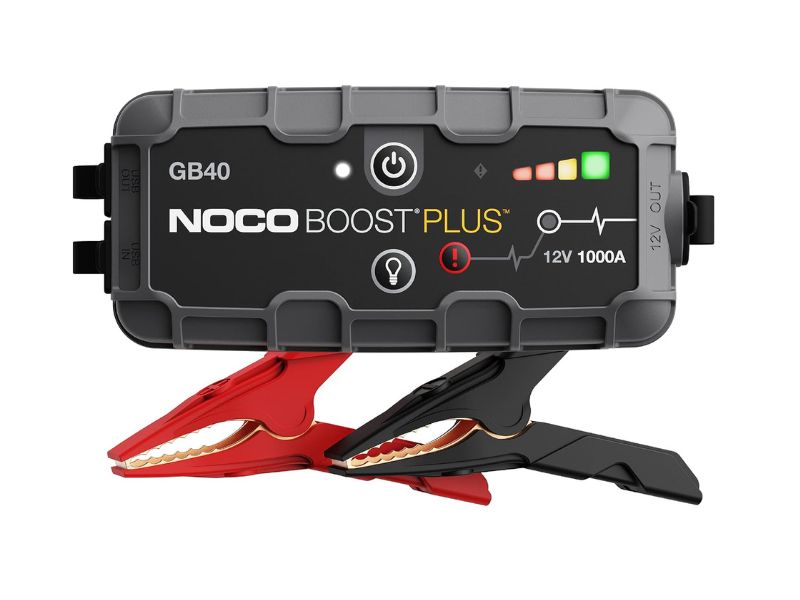
My primary recommendation is the NOCO Boost GB40 1000A UltraSafe Lithium Jump Starter. I would choose it for most drivers because it combines 1000A peak output, 6.0L gasoline/3.0L diesel coverage, reverse-polarity protection, spark-resistant connection, USB charging, and an IP65-rated enclosure with the ports closed. NOCO’s current U.S. Amazon listing shows 128,561 customer ratings.
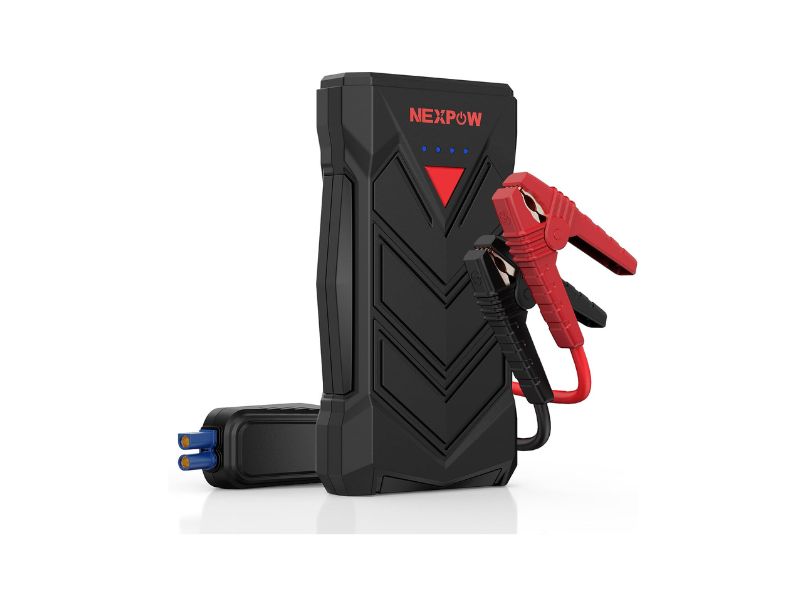
I would choose the NEXPOW 1000A Portable Car Battery Jump Starter when broader advertised engine coverage and stronger value are priorities. Its current Amazon listing specifies 1000A peak current, up to 7.0L gasoline and 5.5L diesel support, USB Quick Charge, and a three-mode emergency light.
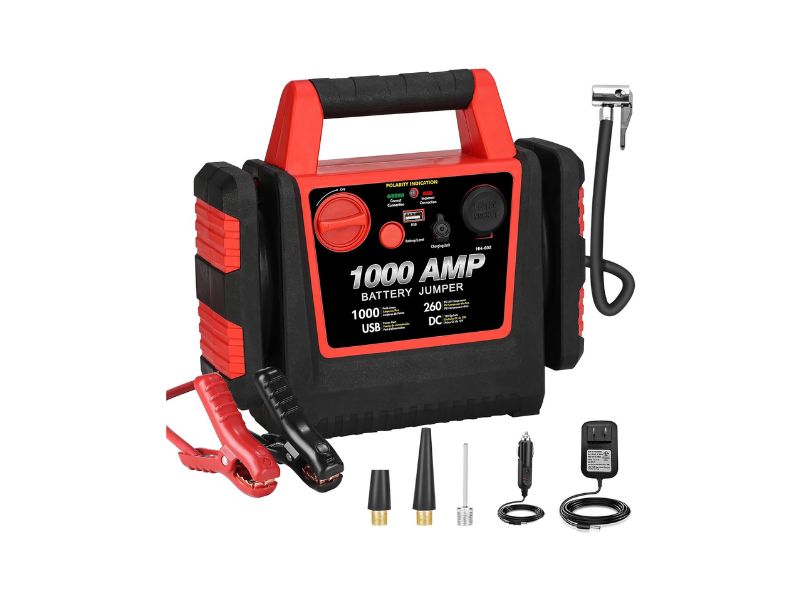
The Acetek 1000A Jump Starter with Air Compressor is the multi-function alternative. It combines 1000A peak jump-starting, a built-in 260 PSI compressor, a 10,000mAh portable power station, and up to 5.0L gas or diesel compatibility in one larger roadside unit.
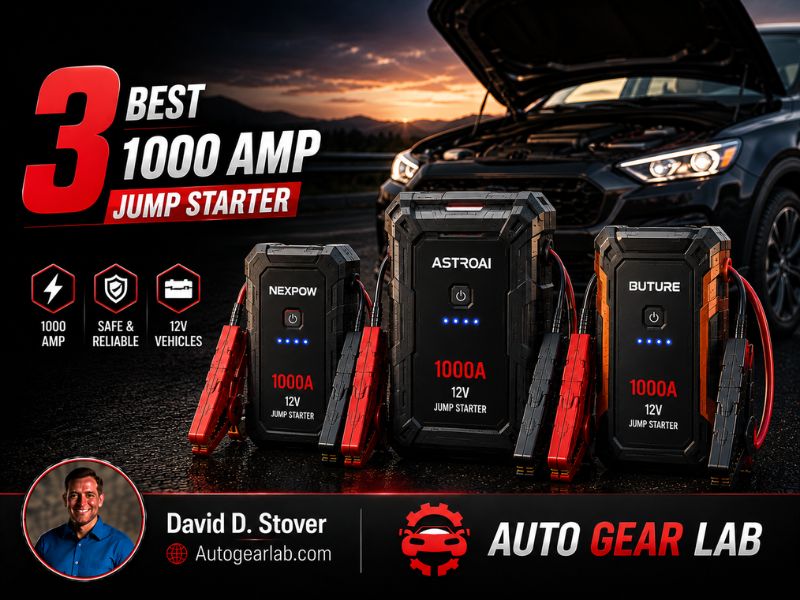
3 Best 1000 Amp Jump Starters Reviewed
| Image | Product Name | Check Price |
|---|---|---|
Best Choice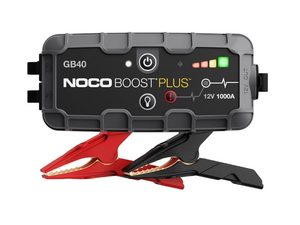 | NOCO Boost GB40 1000A UltraSafe Lithium Jump Starter | Check Price |
Second Best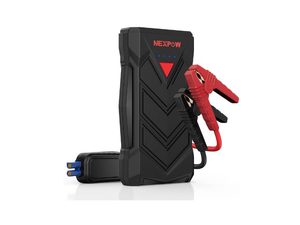 | NEXPOW 1000A Portable Car Battery Jump Starter | Check Price |
Third Choice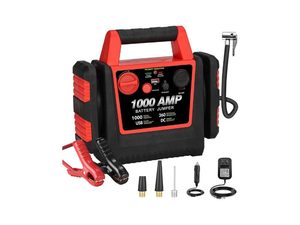 | Acetek 1000A Jump Starter with Air Compressor | Check Price |
1. NOCO Boost GB40 1000A UltraSafe Lithium Jump Starter
Key Features
- 1000A peak lithium power
- Designed for 12V automotive batteries
- Gasoline engines up to 6.0L
- Diesel engines up to 3.0L
- Reverse-polarity protection
- Spark-resistant connection
- USB power-bank function
- 100-lumen LED flashlight
- IP65 enclosure with ports closed
- Compact lithium construction
The NOCO GB40 is my primary recommendation because it provides a particularly strong balance of starting capability, safety, portability, and established ownership history.
NOCO rates the GB40 at 1000 peak amps for gasoline engines up to 6.0 liters and diesel engines up to 3.0 liters. That makes it a strong fit for a large percentage of passenger vehicles, including four-cylinder cars, V6 sedans, crossovers, many SUVs, and moderate gasoline pickups.
Its biggest advantage is not simply the 1000A specification.
The GB40 uses NOCO’s UltraSafe connection system, which provides reverse-polarity protection and spark-resistant normal operation. That is particularly useful for occasional users who may only handle jumper clamps once every few years.
Reverse polarity occurs when positive and negative are connected incorrectly.
The protection system helps prevent normal operation when the clamps are reversed, while spark-resistant circuitry reduces the chance of visible arcing during connection.
Those features do not eliminate the need to verify the terminals yourself.
Always follow the vehicle manufacturer’s designated positive jump terminal and approved negative or chassis-ground location.
Portability is another major strength.
The GB40 weighs roughly 2.5 pounds and uses a compact lithium battery rather than a large sealed lead-acid battery. That makes it easy to keep in a trunk organizer, toolbox, or vehicle emergency bag.
For a jump starter, portability matters because the device only helps when it is actually with the vehicle.
A much larger booster sitting in the garage is useless when the battery fails at work or in a parking lot.
The GB40 also functions as a USB power bank.
That can keep a phone or other compatible small electronic device charged during an emergency. The built-in 100-lumen flashlight adds seven lighting modes, including emergency strobe and SOS.
NOCO also gives the enclosure an IP65 rating with the ports closed, providing resistance to dust and water jets. It should still not be treated as submersible equipment.
The main limitation is diesel displacement.
A 3.0L diesel ceiling makes the GB40 inappropriate for many full-size diesel pickups.
If you own a larger diesel engine, a higher-rated model is the better choice.
What I Like
- Excellent balance of size and starting capability
- Reverse-polarity protection
- Spark-resistant normal connection
- Strong 6.0L gasoline coverage
- IP65 enclosure with ports closed
- Huge current Amazon rating history
What I Do Not Like
- Limited to 3.0L diesel
- Smaller reserve than higher-output NOCO models
- Basic USB charging rather than high-wattage USB-C
The GB40 is the 1000 amp jump starter I would choose for most everyday vehicles. It does not chase extreme amp claims; instead, it combines adequate engine compatibility with a compact design and well-developed connection safeguards.
2. NEXPOW 1000A Portable Car Battery Jump Starter
Key Features
- 1000A peak output
- 12V vehicle applications
- Up to 7.0L gasoline
- Up to 5.5L diesel
- QDSP starting technology
- USB Quick Charge
- Three-mode LED light
- Portable power-bank function
- Compact lithium design
The NEXPOW is the alternative I would consider when advertised engine compatibility and value matter more than premium enclosure construction.
Its current Amazon listing specifies 1000A peak current with support for gasoline engines up to 7.0L and diesel engines up to 5.5L. The same current listing shows 8,181 customer ratings.
That engine rating is unusually broad for a 1000A-class product.
On paper, it provides more displacement headroom than the NOCO GB40, particularly for diesel applications.
However, I would not treat those engine limits as proof that NEXPOW will necessarily outperform NOCO in every starting condition.
Peak-current and engine-displacement claims are not necessarily measured using identical cross-brand test standards.
Real-world starting also depends on:
- Battery temperature
- Vehicle battery condition
- Cable resistance
- Clamp contact
- Starter-motor health
- Jump-starter state of charge
- Cranking duration
The NEXPOW’s current listing describes its QDSP technology as part of the starting system and positions the unit for cars, SUVs, trucks, motorcycles, ATVs, and boats.
USB Quick Charge is another practical advantage.
If your phone is nearly empty during a roadside emergency, the NEXPOW can function as a power bank without needing the vehicle’s electrical system.
The integrated light offers three modes:
- Normal flashlight
- Strobe
- SOS
These modes are useful for both engine-bay illumination and roadside visibility.
One concern is that the current Amazon page has no featured offer available at the time of the latest crawl. That does not necessarily mean the product is unavailable from all sellers, but purchase availability can fluctuate.
For that reason, I would verify current availability before relying on it as the first choice.
What I Like
- Broad advertised gasoline-engine coverage
- Stronger published diesel limit than the GB40
- USB Quick Charge
- Three-mode emergency flashlight
- Large established rating history
- Compact portable format
What I Do Not Like
- Cross-brand engine claims should be interpreted cautiously
- Current Amazon featured-offer status can vary
- Less clearly documented environmental protection than NOCO
The NEXPOW is a compelling alternative when you want 1000A starting with broader advertised engine compatibility. I still prefer the NOCO overall because of its safety system and clearer technical documentation, but the NEXPOW offers strong value on paper.
3. Acetek 1000A Jump Starter with Air Compressor
Key Features
- 1000A peak output
- 12V jump-starting
- Up to 5.0L gasoline or diesel
- 260 PSI air compressor
- 10,000mAh portable power station
- USB device charging
- Traditional all-in-one roadside design
- Built-in compressor functionality
The Acetek takes a different approach from the two compact lithium jump packs.
Instead of focusing almost entirely on starting and portability, it combines a 1000A jump starter with a 260 PSI compressor and portable power-bank functionality. Its current Amazon listing specifies compatibility with vehicles up to 5.0L gas or diesel.
This can make sense for drivers who want one emergency unit to address both a weak battery and a low tire.
The built-in compressor means you do not need to keep a separate inflator in the trunk.
That can be useful for:
- Slow tire leaks
- Seasonal pressure loss
- Low spare tires
- Bicycle tires
- Certain recreational inflatables
The 260 PSI maximum pressure sounds impressive, but maximum PSI should not be confused with inflation speed.
For ordinary passenger tires, the compressor will normally operate at a fraction of its maximum pressure.
Airflow, compressor duty cycle, hose length, and heat management are more important for normal tire use.
The 10,000mAh internal battery also turns the unit into a portable power source for compatible electronics.
One important tradeoff is shared energy.
The compressor, USB ports, and jump-start circuit all depend on the same stored battery energy.
If the vehicle battery is completely dead, I would jump-start the vehicle before spending significant reserve on tire inflation or phone charging.
The Acetek’s current Amazon listing shows 176 ratings, a much smaller ownership history than the first two products.
That does not automatically indicate poor quality, but it gives buyers less long-term marketplace feedback to evaluate.
The unit is also larger than a simple lithium jump pack because of the compressor hardware.
What I Like
- Jump starter and compressor in one unit
- 1000A peak output
- Up to 5.0L gas or diesel coverage
- 10,000mAh portable-power function
- Useful all-in-one roadside format
What I Do Not Like
- Larger than a basic lithium jump starter
- Much smaller rating history
- Maximum compressor PSI does not indicate fill speed
- Compressor use reduces remaining jump-start reserve
The Acetek is the model I would choose if tire inflation is almost as important as battery starting. For pure jump-starting, I prefer the smaller NOCO and NEXPOW designs.
1000 Amp Jump Starter Comparison
| Product | Peak Output | Gas Engine Limit | Diesel Limit | Extra Function | Main Strength |
| NOCO GB40 | 1000A | 6.0L | 3.0L | USB + flashlight | Best overall balance |
| NEXPOW | 1000A | 7.0L | 5.5L | Quick Charge + flashlight | Broad advertised engine coverage |
| Acetek | 1000A | 5.0L | 5.0L | 260 PSI compressor | Best multi-function option |
The NOCO GB40 has the clearest emphasis on protected connection and rugged portability.
The NEXPOW publishes broader engine limits despite carrying the same 1000A headline rating, showing why peak amps should never be used as the only comparison metric.
The Acetek sacrifices compactness to add an integrated compressor and portable-power functionality.
How to Choose the Best 1000 Amp Jump Starter
Check Engine Displacement Before Peak Amps
A jump starter rated at 1000A is not automatically appropriate for every engine.
Manufacturers normally publish separate gasoline and diesel limits.
For these models:
- NOCO GB40: 6.0L gas / 3.0L diesel
- NEXPOW: 7.0L gas / 5.5L diesel
- Acetek: 5.0L gas / 5.0L diesel
Those limits are more useful than simply seeing “1000A” on the case.
Is 1000 Amps Enough for a Car?
For many passenger gasoline vehicles, yes.
A typical four-cylinder, V6, or moderate V8 gasoline vehicle can fall comfortably inside a quality 1000A jump starter’s published engine range.
The GB40, for example, is manufacturer-rated for gasoline engines up to 6.0L.
That provides plenty of displacement headroom for many sedans, crossovers, minivans, and SUVs.
Diesel Needs More Starting Margin
Diesel engines normally demand more starting effort than gasoline engines of similar displacement.
That is why diesel limits are separately listed.
If you own a diesel vehicle, do not use the gasoline specification.
The GB40 stops at 3.0L diesel, while NEXPOW advertises up to 5.5L diesel.
For larger diesel pickups, I would usually step above the 1000A class rather than operate right at the edge of a manufacturer’s specification.
1000A vs 1500A Jump Starter
A 1500A unit can provide more potential starting reserve, but that does not automatically make it the better purchase.
For a normal gasoline sedan, 1000A from a reputable manufacturer may already provide all the engine coverage you need.
Extra output is more valuable for:
- Larger engines
- Diesels
- Very cold winters
- Repeated start attempts
- Multi-vehicle households
If none of those apply, a smaller 1000A unit can be easier to carry and store.
Peak Amps Are Not Cranking Amps
This distinction matters.
Peak amps describe a short maximum current output.
Cranking amps describe sustained starting current under defined conditions.
Portable lithium jump starters are commonly marketed by peak current, but the number does not mean the device delivers 1000 amps continuously while the starter motor turns.
That is one reason cross-brand peak figures should be treated as approximate comparison points rather than exact performance rankings.
Look for Reverse-Polarity Protection
Incorrect clamp connection can create risk for both the vehicle and jump starter.
The NOCO GB40 specifically provides reverse-polarity protection and spark-resistant normal operation.
Those features are especially useful when the unit is intended for family members who are not accustomed to working around vehicle batteries.
Still verify red-to-positive and black-to-approved-ground manually.
Consider Weather Resistance
Jump starters live in difficult environments.
They may encounter:
- Dust
- Rain
- Snow
- Road grime
- Spilled liquids
- Trunk vibration
NOCO specifies an IP65 enclosure with ports closed for the GB40.
That gives it a clearer environmental-protection specification than many budget competitors.
IP65 does not mean the device should be submerged.
A Compressor Can Be Useful, but Adds Bulk
The Acetek integrates a compressor directly into the jump starter.
This reduces the number of separate emergency tools you need to carry.
The tradeoff is a larger package and shared battery reserve.
If you already own a good tire inflator, I would generally prefer the smaller pure jump starter.
If you want one box for both emergencies, an integrated design is convenient.
Keep the Jump Starter Charged
The most powerful jump starter is useless when its own internal battery is nearly empty.
Check the charge:
- Before winter
- Before road trips
- Before extended parking
- After every jump
- After substantial USB use
Recharge before returning it to storage.
Cold Weather Requires Additional Reserve
Cold weather makes starting harder in two ways.
Vehicle batteries provide less effective output, while cold engine oil increases resistance.
A 1000A starter that comfortably handles your engine in mild weather can have less margin at very low temperatures.
For harsh winter climates, I would avoid choosing a product whose engine limit barely matches your vehicle.
How to Use a 1000 Amp Jump Starter Safely
1. Confirm System Voltage
These products are designed around compatible 12V vehicle systems.
Do not connect a 12V booster across a true 24V electrical system.
2. Inspect the Battery
Do not attempt a jump if the vehicle battery is:
- Frozen
- Cracked
- Swollen
- Leaking
- Smoking
- Unusually hot
3. Turn Off Accessories
Switch off unnecessary lights, HVAC, audio equipment, and electronic accessories.
4. Locate the Correct Jump Points
Some vehicles use remote jump terminals rather than direct battery access.
Follow the vehicle manual.
5. Connect Positive
Attach the red clamp securely to the approved positive terminal.
6. Connect Negative
Attach the black clamp to the recommended negative or chassis-ground point.
7. Check for Connection Warnings
Do not continue if the jump starter identifies reversed polarity or another fault.
8. Use Protected Normal Mode First
If the jump starter has manual override, do not activate it automatically.
9. Crank Briefly
Follow the product and vehicle manufacturer’s maximum cranking interval.
10. Allow Cooling Between Attempts
Repeated long cranking can overheat the starter motor, cables, clamps, and jump pack.
11. Stop After Repeated Failure
A discharged battery may not be the only problem.
12. Recharge the Jump Starter
Restore the internal battery before returning it to storage.
Common 1000 Amp Jump Starter Buying Mistakes
Buying Only by the 1000A Label
Engine compatibility and safety features matter more.
Assuming Every 1000A Unit Performs Identically
Peak-current measurement can vary between manufacturers.
Ignoring Diesel Engine Size
Use the manufacturer’s diesel limit, not the gasoline rating.
Buying a Compressor Model When You Do Not Need One
Integrated compressors add weight and size.
Forgetting Cable Access
Make sure the clamps can reach the designated jump terminals.
Using Manual Override Immediately
Protected normal mode should be the first attempt.
Leaving the Pack Discharged
Check it periodically rather than discovering an empty booster during an emergency.
Frequently Asked Questions
What is the best 1000 amp jump starter?
The NOCO GB40 is my primary recommendation for most everyday passenger vehicles.
It delivers 1000A peak power with 6.0L gasoline/3.0L diesel engine compatibility, reverse-polarity protection, spark-resistant normal connection, USB charging, and a compact lithium design.
Is 1000 amps enough to jump-start a car?
Yes, a quality 1000A jump starter is sufficient for many passenger gasoline vehicles.
The NOCO GB40 is rated for gasoline engines up to 6.0L, covering a wide range of cars, crossovers, SUVs, and light trucks.
Can a 1000 amp jump starter start a V6?
Yes, most gasoline V6 engines fall comfortably within a 6.0L-class jump starter rating.
Always verify your engine displacement and the jump starter manufacturer’s stated limit.
Can 1000 amps start a V8?
It can start many gasoline V8 engines when displacement remains within the published limit.
The GB40 supports up to 6.0L gasoline, while NEXPOW advertises support up to 7.0L gasoline.
Is a 1000 amp jump starter enough for an SUV?
Yes for many gasoline SUVs, provided the engine falls within the product’s rating.
A 3.5L V6 SUV, for example, sits comfortably below the 6.0L gasoline limit of the GB40.
Can a 1000A jump starter start a truck?
It can start many gasoline light trucks, but large diesels may require more capacity.
Check fuel type and exact displacement rather than relying on the word “truck.”
Is 1000 amps enough for diesel?
It depends heavily on diesel displacement and the manufacturer’s published engine limit.
The GB40 is rated only to 3.0L diesel, while NEXPOW advertises up to 5.5L diesel.
Is 1000A better than 800A?
It provides more potential peak output, but engine compatibility and product design still matter.
A well-designed 800A unit can outperform a poorly designed product carrying a larger marketing number.
Should I buy 1000A or 2000A?
Choose 2000A when you need larger-engine, diesel, winter, or repeated-start reserve.
For many normal gasoline cars, a reputable 1000A model is simpler and easier to store.
Can a 1000 amp jump starter start a completely dead battery?
Sometimes, depending on battery condition and whether the booster supports very-low-voltage operation.
A physically damaged, frozen, or failed battery should not be repeatedly forced to start.
Does 1000 amps damage a small car battery?
A compatible jump starter does not simply force its full peak rating continuously into the battery.
The vehicle starter draws the current it requires. Correct system voltage and polarity remain essential.
Is reverse-polarity protection important?
Yes, it helps protect against accidentally connecting the jumper clamps backward.
The NOCO GB40 includes reverse-polarity protection and spark-resistant normal operation.
Can I leave a 1000A jump starter in my car?
Yes within the manufacturer’s permitted storage-temperature range.
Avoid prolonged extreme heat and periodically check the battery state and physical condition.
How often should I recharge a jump starter?
Recharge it after use and check the charge level every few months.
Inspect it more frequently before winter and long road trips.
Can a jump starter charge my car battery?
A jump starter primarily supplies brief starting power rather than slowly recharging the battery.
Use a proper automotive battery charger when the goal is to restore the battery’s state of charge.
Can I charge my phone with a jump starter?
Yes, many modern 1000A jump starters also function as USB power banks.
Both the NOCO and NEXPOW provide portable-device charging functions.
Is a jump starter with an air compressor worth it?
Yes if you want one emergency tool for both battery failure and low tire pressure.
The Acetek combines a 1000A jump starter with an integrated compressor, although it is bulkier than a simple lithium booster.
Why does my car still not start with a jump starter?
The problem may involve the starter, battery condition, wiring, fuel, or another mechanical fault.
Repeated jump attempts should not replace diagnosis when a correctly connected charged booster cannot start the vehicle.
Conclusion
The best 1000 amp jump starter should provide enough engine compatibility for your vehicle while remaining easy to store, simple to connect, and dependable when the battery is deeply discharged. Peak amperage matters, but engine displacement, fuel type, clamp protection, portability, and battery condition are equally important.
The NOCO GB40 remains my primary recommendation. Its 1000A peak output, 6.0L gasoline/3.0L diesel rating, reverse-polarity protection, spark-resistant connection, IP65 enclosure with closed ports, and compact lithium design make it a particularly strong fit for everyday cars, crossovers, SUVs, and light trucks.
The NEXPOW is the alternative I would consider when broader advertised engine compatibility matters. Its current Amazon listing combines 1000A with 7.0L gasoline/5.5L diesel coverage, USB Quick Charge, and emergency lighting.
The Acetek is the more specialized option when you want a 1000A jump starter and tire compressor in one roadside unit. Its integrated 260 PSI compressor and 10,000mAh power function add useful versatility at the expense of compactness.
For most drivers looking specifically for a dependable 1000 amp jump starter, I would choose the NOCO GB40.