Choosing spark plugs for a classic 327 Chevrolet is not as simple as searching by engine displacement. Chevrolet produced the 327 small-block from the early through late 1960s, but many surviving engines have been rebuilt with later factory heads, aftermarket aluminum heads, electronic ignition, higher compression, different camshafts, or tubular headers.
The best spark plugs for 327 Chevy engines must match the cylinder heads currently installed, not merely the block casting or vehicle model. Original-style heads commonly use a short-reach, gasket-seat plug with a 13/16-inch hex. Later and aftermarket heads may use tapered seats, smaller hexes, or much longer thread reach.
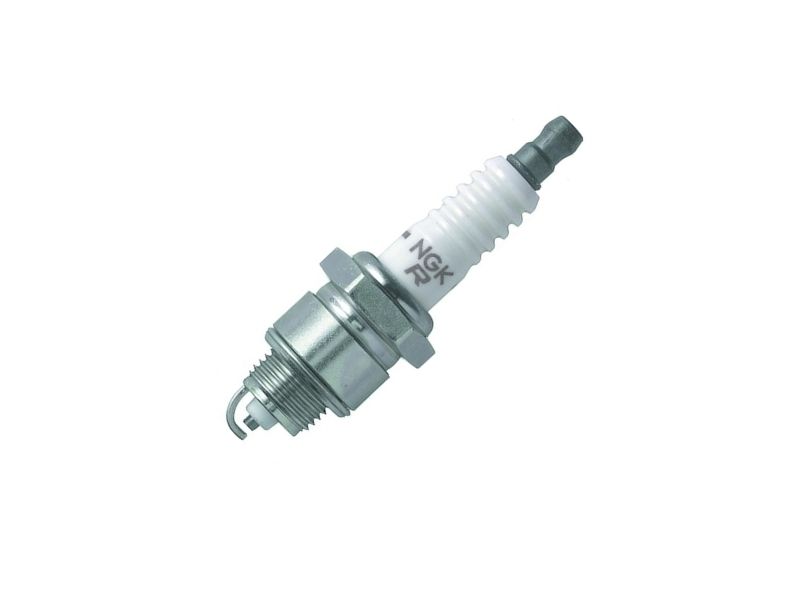
My primary recommendation is the NGK 3332 XR5 V-Power Spark Plug 8-Pack for a compatible street-driven 327 using traditional short-reach, gasket-seat small-block heads. Its 3/8-inch reach, flat gasket seat, copper core, resistor construction, and complete eight-plug package suit many classic applications when head compatibility is confirmed.
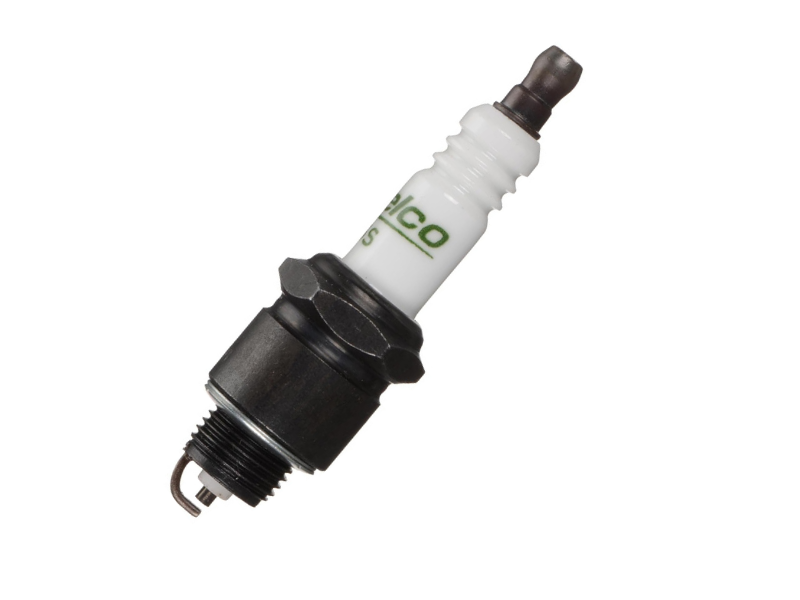
I would choose the ACDelco Gold R45S Conventional Spark Plug for owners who want a traditional ACDelco replacement in compatible original-style heads. It is especially appropriate for a stock or near-stock restoration, but buyers must order eight units and verify the R45S—not R45TS—seat configuration.
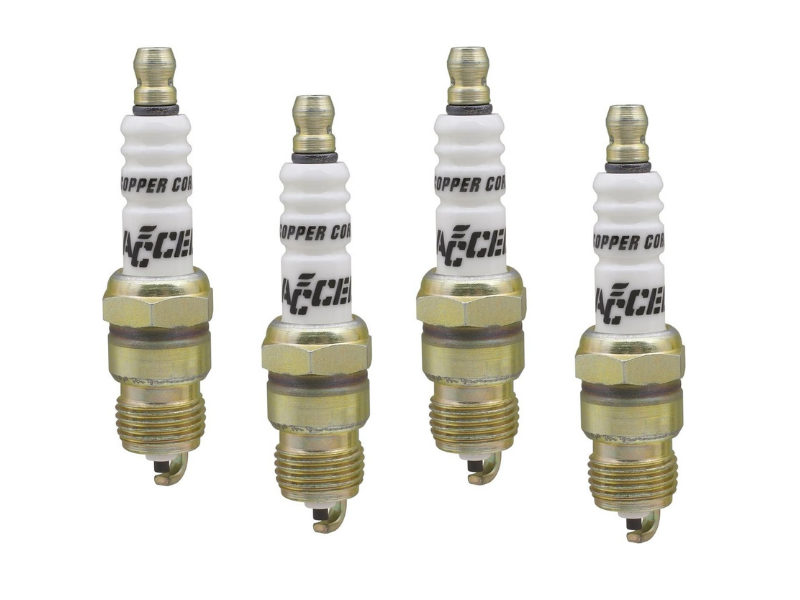
The ACCEL 0416S-4 Shorty Copper-Core Spark Plug is a specialized alternative for aftermarket heads that explicitly require a 14mm, 0.750-inch-reach, gasket-seat plug. Its shortened external body improves header clearance, but its long thread reach makes it unsuitable for original short-reach 327 heads.
Best Spark Plugs for 327 Chevy Engines Reviewed
The three products are not direct substitutes. The NGK and ACDelco address compatible traditional short-reach heads, while the ACCEL is for specific long-reach aftermarket-head and header combinations. Confirming the head is the first step in choosing between them.
1. NGK 3332 XR5 V-Power Spark Plug 8-Pack
Key Features
- Eight plugs included
- NGK stock number 3332
- XR5 V-Power design
- 3/8-inch thread reach
- Flat gasket seat
- 14mm thread diameter
- 13/16-inch hex
- Copper-core, nickel-alloy electrode
- Resistor construction
- Approximately 0.040-inch supplied gap
- NGK heat range 5
The NGK XR5 is my primary recommendation for a street-operated 327 using cylinder heads that call for a 14mm, short-reach gasket-seat plug. That description covers many traditional small-block Chevrolet head configurations, but it should be verified through the head casting or manufacturer documentation.
Its V-Power center electrode contains a V-shaped groove. The groove shifts the spark toward the electrode’s edge rather than allowing it to form directly within the center recess. This can reduce the shielding effect around the initial flame kernel while retaining a conventional nickel-alloy firing surface.
A solid copper core transfers heat effectively from the firing end toward the shell. “Copper plug” normally refers to this internal core; the exposed firing surface is still a nickel-based alloy. Copper conducts heat well but is too soft to function as an exposed long-life center electrode by itself.
The XR5 uses a resistor of approximately 5,000 ohms. Resistor plugs help suppress radio-frequency interference that can affect audio equipment and electronic ignition systems. They remain appropriate even when a classic engine has been upgraded from breaker points to an HEI-style distributor or aftermarket ignition module.
NGK supplies the plug with an approximately 0.040-inch gap, but that should not be treated as universal. A stock points ignition may need a narrower gap than a strong HEI or capacitive-discharge system. Compression ratio, coil output, distributor condition, plug-wire resistance, and fuel mixture also influence what the ignition can fire consistently.
The 13/16-inch hex matches the larger spark plug socket commonly associated with early small-block heads. The flat seat uses a crush gasket to seal against a machined surface on the head.
The NGK is supplied as an eight-pack, matching the 327’s cylinder count. Inspect every part number and gasket before installation. Even a complete package should be checked for shipping damage or mixed components.
Its conventional electrode will generally require more frequent inspection than a long-life iridium plug. That is not necessarily a disadvantage on a carbureted classic engine. Spark-plug appearance provides useful information about jetting, choke operation, oil control, ignition timing, and cylinder-to-cylinder consistency.
I recommend the NGK XR5 when the installed heads require its 3/8-inch reach and gasket seat. It combines correct classic-style geometry, a practical heat range for many street engines, and a complete eight-plug quantity.
2. ACDelco Gold R45S Conventional Spark Plug
Key Features
- Traditional ACDelco conventional design
- Short-reach configuration for compatible early heads
- Gasket-seat construction
- Copper core
- Nickel-alloy firing surfaces
- Resistor plug
- ACDelco heat range 45
- Appropriate for stock-oriented street applications
- Sold individually
The ACDelco R45S is the traditional choice for compatible early Chevrolet heads. Its part code matters: the “S” version uses a gasket seat suited to the relevant original-style head, while an R45TS uses a tapered seat and should not be substituted without confirming that the head was designed for it.
ACDelco’s heat-range system differs from NGK’s. The “45” designation cannot be compared directly with NGK heat range 5. Manufacturer cross-reference information and actual engine operation should determine whether one is equivalent for the build.
The R45S uses a conventional firing electrode supported by a copper core. This arrangement provides effective heat transfer and dependable street performance without introducing an exotic material that the original ignition system did not require.
A period-correct appearance may also matter in a restoration. Although plug branding is a small visual detail, an ACDelco design feels at home alongside a stock distributor, cast-iron manifolds, original valve covers, and factory-style plug wires.
The R45S is generally sold individually. A 327 requires eight, and all eight should carry the same exact code. Do not mix R45S with R44S, R43S, R45TS, or similarly named variants. Those codes can represent meaningful changes in heat range, seat style, or projection.
The plug gap must be set for the actual ignition system. A 1960s points distributor does not necessarily use the same gap as a later HEI conversion. Excessive gap can cause misfire when coil voltage, points condition, or plug-wire insulation cannot support the added demand.
The ACDelco is most suitable for a stock or mildly modified street engine where traditional service characteristics are desirable. A high-compression, sustained-rpm, forced-induction, nitrous, or racing combination may require a different heat range and gap selected through tuning data.
This product ranks second because the NGK eight-pack is easier to order correctly and provides fully published dimensions. The ACDelco remains an excellent choice when the cylinder head’s plug specification and the engine builder’s heat-range recommendation specifically support R45S.
3. ACCEL 0416S-4 Shorty Copper-Core Spark Plug
Key Features
- Short external body for header clearance
- 0.750-inch thread reach
- 14mm threads
- Flat gasket seat
- 5/8-inch hex
- Projected firing tip
- Copper-core construction
- Resistor plug
- Approximately 0.035-inch supplied gap
- ACCEL heat range 6
- Four plugs per package
The ACCEL 0416S-4 solves a problem that can appear when a 327 is fitted with modern long-tube headers and aftermarket cylinder heads. A full-length plug may position its ceramic body or wire boot too close to a header tube, causing installation difficulty or repeated heat damage to the boot.
ACCEL shortens the external portion of this plug to increase clearance between the wire connection and the exhaust header. The shorter body can also create enough room to fit a socket where a conventional plug would be obstructed.
This advantage applies only when the internal plug dimensions match the head. The 0416S-4 has a 0.750-inch reach, which is twice the thread length of the 3/8-inch NGK XR5. It must never be installed in an original short-reach head.
A long-reach plug in a short-reach head can protrude into the combustion chamber. Exposed threads may collect carbon, and the electrodes can come dangerously close to a piston or valve. The protruding shell can also become a hot spot that promotes pre-ignition.
The ACCEL uses a gasket seat and a projected tip. Therefore, even an aftermarket head that accepts a 0.750-inch plug must also be designed for that seat and projection. Many modern heads use 0.750-inch reach, but some use a tapered seat or specify a different projected configuration.
Its 5/8-inch hex reduces the external space needed for a socket. ACCEL supplies the plugs in four-packs, so a V8 needs two identical packages.
The manufacturer identifies a 0.035-inch supplied gap. This is only a starting point. The correct gap depends on the ignition system, compression, cylinder pressure, and engine builder’s recommendation.
ACCEL notes that these plugs are not compatible with 90-degree ceramic plug-wire boots. Header routing, wire angle, boot material, and heat shielding must all be considered as one system.
I recommend the 0416S-4 only when the installed cylinder-head documentation explicitly calls for a 14mm, 0.750-inch-reach, gasket-seat plug and header clearance is limited. It is not a universal “327 shorty plug.”
Spark Plug Comparison
| Product | Required Head Style | Thread Reach | Seat | Hex | Supplied Gap | Package Quantity | Primary Use |
| NGK 3332 XR5 | Traditional short-reach head | 0.375 in | Flat gasket | 13/16 in | About 0.040 in | 8 | Street-driven stock-style heads |
| ACDelco R45S | Compatible early Chevrolet head | Short reach | Flat gasket | Traditional large hex | Application-set | 1 | Stock-oriented or period-style replacement |
| ACCEL 0416S-4 | Aftermarket long-reach head | 0.750 in | Flat gasket | 5/8 in | About 0.035 in | 4 | Tight header clearance |
The NGK XR5 is the broadest recommendation for a traditional short-reach setup because its geometry is clearly specified and eight plugs are included. The ACDelco R45S appeals to owners retaining a conventional Chevrolet specification. The ACCEL is a specialized clearance solution for compatible aftermarket heads.
Why the Cylinder Heads Determine Spark Plug Fitment
The 327 block does not hold the spark plugs. They thread into the cylinder heads, so the head controls the required geometry.
A 327 block may now carry:
- Original 1960s cast-iron heads
- Later small-block Chevrolet factory heads
- Vortec-style heads
- Aftermarket aluminum heads
- Aftermarket cast-iron performance heads
- Racing heads with angle plugs
- Replacement heads with long-reach plugs
Each configuration can use a different seat, reach, projection, hex, and heat range.
Find the Casting Number
Factory Chevrolet cylinder heads carry casting numbers, usually located beneath the valve cover or in another cast area depending on the design. The number can help identify the head family and original plug style.
A casting number identifies the head design but does not prove that it remains unmodified. Machine work, thread repair inserts, chamber changes, and aftermarket replacements can alter requirements.
Check Aftermarket Manufacturer Documentation
If the heads have a visible brand or model number, consult the manufacturer’s current spark-plug recommendation. It should state:
- Thread diameter
- Reach
- Gasket or tapered seat
- Recommended plug families
- Starting heat range
- Torque
- Whether a projected tip is appropriate
Use that information before any engine-displacement lookup.
Remove and Measure an Existing Plug Carefully
An existing plug can provide clues, but it may already be wrong. Compare its reach, seat, and part number with the head specification.
Do not simply reorder it because the engine previously ran. A short plug installed in a long-reach head can allow deposits to accumulate in exposed head threads while still producing combustion.
Short-Reach Versus Long-Reach Plugs
3/8-Inch Reach
Many traditional early small-block Chevrolet heads use a 3/8-inch reach plug with a flat gasket seat. The NGK XR5 fits this basic geometry.
The plug’s threaded shell should end in the intended position relative to the combustion chamber. Too little or too much reach alters that relationship.
0.750-Inch Reach
Many aftermarket performance heads use a 0.750-inch reach plug. The additional thread engagement can improve heat transfer and thread strength in designs engineered around it.
A long-reach plug is not an upgrade for a short-reach head. It is a fundamentally different fitment.
Why Thread Exposure Is Dangerous
When a plug extends too far, its exposed threads accumulate hard carbon. Removal can then drag carbon through the head threads and damage them.
The protruding metal may also become hot enough to encourage pre-ignition. In severe cases, the plug can interfere mechanically with an internal component.
When a plug is too short, unused cylinder-head threads collect combustion deposits. The spark is recessed, and flame-kernel development can be affected.
Gasket Seats Versus Tapered Seats
Gasket-Seat Plugs
A gasket-seat plug seals against a flat machined surface using a crush washer. NGK XR5, ACDelco R45S, and ACCEL 0416S-4 use this general seat type.
The gasket compresses during installation. Tightening procedure varies depending on whether the gasket is new or previously crushed.
Tapered-Seat Plugs
A tapered-seat plug seals through a conical metal surface without a gasket. ACDelco R45TS is an example of a tapered-seat design.
Later small-block heads commonly use tapered-seat plugs, but they must not be installed into a flat-seat head simply because the thread diameter matches.
A tapered plug in a gasket-seat head may not seal or position correctly. A gasket plug in a tapered-seat head has the same fundamental incompatibility.
Why R45S and R45TS Are Not Interchangeable
Their similar names create a common purchasing mistake. The “T” identifies a tapered-seat family, while R45S is associated with the gasket-seat configuration relevant to many early heads.
Always inspect the head’s machined seat and verify the documentation.
Choosing the Correct Heat Range
Heat range describes the plug’s ability to remove heat from the firing tip.
A plug with a long insulator path retains more heat and is considered hotter. A shorter heat path transfers heat faster and is considered colder.
Stock Street Engines
A stock or mildly modified engine generally performs well with the factory-equivalent heat range. The firing tip remains hot enough to burn away deposits without exceeding a safe operating temperature.
High Compression and Sustained Load
Higher compression, advanced timing, lean mixtures, forced induction, nitrous, and prolonged high-rpm operation increase combustion heat. A colder plug may be appropriate, but the decision should follow tuning data and plug inspection.
Excessively Cold Plugs
A plug that runs too cold can accumulate carbon or fuel deposits, especially during short trips, long idling, or rich carburetor operation.
Excessively Hot Plugs
A plug that runs too hot can blister the insulator, erode electrodes, or become a source of pre-ignition. Pre-ignition is different from detonation and can cause rapid engine damage.
Brand Numbers Are Not Comparable
NGK heat range 5 and ACDelco heat range 45 are not numerically equivalent by simple arithmetic. Some brands assign higher numbers to colder plugs, while others follow a different convention.
Use a reliable cross-reference and verify the engine builder’s recommendation.
Selecting a Gap for the Ignition System
A restored 327 may use breaker points, while another engine may have GM HEI, an aftermarket electronic distributor, a capacitive-discharge box, or a high-output coil.
The correct gap depends substantially on that ignition system.
Breaker-Point Ignition
A traditional points ignition generally has less available secondary voltage than a modern electronic system. A moderate gap reduces the voltage required to fire under compression.
The exact factory gap varies by year and application. Use the vehicle service manual or distributor-system specification rather than selecting one universal 327 number.
HEI Conversion
A healthy HEI system can often fire a wider gap, but “wider” is not automatically better. Excessive gap increases stress on the cap, rotor, coil, module, and plug wires.
Use the ignition manufacturer’s recommendation while considering compression ratio and plug condition.
Capacitive-Discharge Ignition
An aftermarket ignition box can provide strong spark energy, particularly at higher rpm. The manufacturer may recommend a specific gap range based on compression and intended use.
High Compression or Boost
Higher cylinder pressure makes the gap harder to ionize. A narrower setting may prevent misfire under load even with a strong ignition.
Start With the System Recommendation
The NGK’s 0.040-inch and ACCEL’s 0.035-inch supplied gaps are packaging specifications, not universal final settings. Measure and set all eight plugs consistently for the actual build.
Projected Versus Non-Projected Tips
A projected-tip plug extends the firing end farther into the combustion chamber. This can expose the spark more directly to the mixture and keep the insulator cleaner in compatible chambers.
Projection also places the electrode closer to the piston and valves. High-compression pistons, domes, large valves, and tight chambers can reduce clearance.
The ACCEL 0416S-4 uses a projected tip. Its use must therefore be supported by cylinder-head and piston-clearance information.
For a modified engine, rotate the engine by hand and verify mechanical clearance during assembly rather than assuming that a cataloged plug clears every piston design.
Header Clearance and Plug-Wire Protection
Long-tube headers often pass close to the spark plugs. Heat and restricted access can damage boots or make routine service frustrating.
When Shorty Plugs Help
A shorter external insulator increases the air gap between the boot and header tube. It can also make room for a socket and ratchet.
Shorty plugs do not change the internal reach when they are correctly designed. The ACCEL’s external body is shortened while retaining its specified 0.750-inch threaded reach.
Boot Angle Matters
Straight, 45-degree, and 90-degree boots fit different header layouts. The shortest plug may not solve the problem if the boot points directly into a tube.
ACCEL specifically warns that the reviewed 0416S-4 is not compatible with 90-degree ceramic boots.
Use Heat Protection Strategically
High-temperature plug-wire boots, sleeves, separators, and careful routing can protect the wires. Heat sleeves should not become an excuse to leave the wire resting against the header.
Maintain physical clearance wherever possible. Secure the wires so vibration cannot move them onto a hot tube.
Do Not Dimple Headers Before Checking Alternatives
Dimpling a tube may create clearance but can damage coatings and reduce cross-sectional area if performed excessively. Correct plug geometry, boot angle, wire routing, and a suitable shorty plug should be evaluated first.
Installation Guide for a Chevy 327
Confirm the Firing Order
The traditional small-block Chevrolet firing order is:
1-8-4-3-6-5-7-2
Cylinder numbering is:
- Driver side: 1-3-5-7
- Passenger side: 2-4-6-8
Mark wires before removal. Changing plugs one cylinder at a time minimizes the risk of crossing plug wires.
Work on a Cool Engine
Cast-iron heads are durable, but a cool engine remains easier and safer to service. Aluminum aftermarket heads especially benefit from careful cold installation.
Allow headers and manifolds to cool completely. Header tubes can remain hot long after a brief drive.
Clean Around Each Plug
Dirt, rust flakes, and loose debris can fall into the cylinder after the plug is removed. Clean the area first using a brush, vacuum, or carefully directed compressed air.
Wear eye protection when using compressed air.
Inspect the Plug Wires
Check for:
- Burned boots
- Cracked insulation
- Loose terminals
- Corrosion
- Oil contamination
- Excessive resistance
- Evidence of arcing
A strong plug cannot compensate for a wire that leaks voltage to a header or valve cover.
Remove Plugs With the Correct Socket
Traditional heads often require a 13/16-inch plug socket, while the ACCEL uses a 5/8-inch hex.
Keep the socket aligned. Angle-plug heads and tight headers may require a swivel, specialized socket, or box wrench.
Compare the Removed Plugs by Cylinder
Arrange the plugs according to cylinder number. Differences between cylinders can reveal carburetor distribution, intake leaks, oil-control problems, ignition-wire faults, or mechanical issues.
Verify New-Plug Geometry
Before installing all eight, compare the new plug’s thread reach and seat against a known correct plug and the cylinder-head specification.
Do not compare only overall length. A shorty plug can have a long internal reach despite its reduced external body.
Set All Eight Gaps Consistently
Use a wire gauge and move only the ground electrode. Avoid striking the plug or using the center electrode as a lever point.
Measure again after adjustment.
Start Every Plug by Hand
Thread the plug several turns using the socket and extension without the ratchet. A short length of rubber hose can also help because it slips before enough force is applied to cross-thread.
If resistance develops early, back the plug out and inspect the threads.
Apply the Correct Torque
Torque depends on head material, plug thread size, seat style, and whether the gasket is new.
Use the cylinder-head or plug manufacturer’s specification. A value suitable for cast iron may not be correct for aluminum.
Use Anti-Seize Only When Appropriate
Some plug manufacturers use shell plating intended to prevent seizure without lubricant. Anti-seize changes thread friction and can lead to excessive tightening.
Follow the plug and head manufacturer’s guidance. If lubricant is explicitly required, use the corrected torque rather than the dry specification.
Reinstall Wires Securely
Push the terminal onto the plug until it seats positively. Route the wires away from headers and sharp brackets.
Use separators to prevent inductive crossfire, particularly between cylinders whose wires run parallel. Keep the wires for cylinders 5 and 7 separated and routed carefully because they fire consecutively in the small-block Chevy firing order.
Reading Spark Plugs on a Carbureted 327
Light Tan or Gray
A clean light-colored firing end can indicate normal combustion, though modern fuel chemistry makes exact color interpretation less reliable than it once was.
Dry Black Soot
Dry carbon can indicate a rich mixture, excessive choke operation, weak ignition, too-cold heat range, long idling, or insufficient operating temperature.
Wet Fuel
A fuel-wet plug suggests that the cylinder is receiving mixture without firing consistently. Check the wire, distributor cap, rotor, terminal, compression, and plug gap.
Oily Deposits
Oil fouling may indicate worn valve guides, valve seals, piston rings, or an intake-gasket problem depending on the engine configuration.
White or Blistered Insulator
A very hot appearance can indicate excessive timing, lean mixture, vacuum leak, incorrect heat range, insufficient fuel delivery, or cooling problems.
Speckled Porcelain
Small metallic specks can indicate detonation. Verify ignition timing, fuel octane, compression, mixture, and engine temperature.
Mechanical Damage
A bent ground electrode or cracked insulator may indicate piston contact, foreign debris, detonation, or incorrect plug projection. Investigate before installing another set.
Common Mistakes When Buying 327 Chevy Spark Plugs
Ordering by Block Displacement Alone
The cylinder heads determine plug fitment. Identify them before ordering.
Installing R45TS in an R45S Head
The tapered and gasket seats are different. Matching thread diameter does not make them interchangeable.
Installing 0.750-Inch Plugs in Short-Reach Heads
A long-reach plug can protrude into the chamber and cause severe problems.
Buying Only Four Plugs
The 327 is a V8 and requires eight. The ACCEL package contains four, so two packages are necessary.
Copying Another Owner’s Gap
Different distributors, coils, compression ratios, and fuels require different settings.
Choosing a Colder Plug Without Evidence
An unnecessarily cold plug can foul during street driving.
Assuming Iridium Is Always Better
Classic carbureted engines often work very well with conventional copper-core plugs. Correct heat range and geometry matter more than electrode marketing.
Ignoring Header and Boot Clearance
A correct plug can still create a burned-wire problem if the boot touches the header.
Mixing Plug Types
Install eight identical plugs with the same part number, heat range, and gap.
Frequently Asked Questions
What are the best spark plugs for a stock 327 Chevy?
NGK XR5 plugs are a practical choice for compatible short-reach gasket-seat heads. ACDelco R45S plugs are another traditional option. Confirm the cylinder-head casting and required reach because a rebuilt 327 may no longer have its original heads.
How many spark plugs does a Chevy 327 need?
A Chevrolet 327 is a V8 and requires eight spark plugs. The NGK product reviewed here includes eight. ACDelco R45S is commonly sold individually, while ACCEL 0416S-4 comes in a four-pack and requires two packages.
What spark plug gap should a 327 Chevy use?
The correct gap depends on the ignition system and engine combination. A stock points distributor may use a narrower gap than an HEI or aftermarket capacitive-discharge ignition. Follow the relevant service manual or ignition manufacturer’s recommendation.
Does a 327 use gasket-seat or tapered-seat plugs?
Original-style 1960s heads commonly use short-reach gasket-seat plugs. Later replacement or aftermarket heads may use tapered seats or long-reach gasket plugs. Inspect the installed heads rather than assuming the block’s age determines fitment.
What is the difference between ACDelco R45S and R45TS?
R45S is a gasket-seat design, while R45TS uses a tapered seat. They should not be interchanged unless the cylinder-head specification supports the replacement. Their similar names do not indicate universal compatibility.
Will NGK XR5 plugs fit every 327?
No, XR5 fits only heads requiring its 3/8-inch reach and flat gasket seat. It has 14mm threads and a 13/16-inch hex. Later or aftermarket heads may require a different seat, reach, and projection.
Can ACCEL shorty plugs be used with original 327 heads?
Not the reviewed 0416S-4 unless the heads require a 0.750-inch reach. Original short-reach heads commonly use approximately 0.375-inch threads. Installing the ACCEL in those heads could project excessive threads into the combustion chamber.
Are copper-core plugs good for a classic Chevy engine?
Yes, conventional copper-core plugs work well in correctly matched classic engines. Copper transfers heat efficiently, while the exposed electrode uses a harder nickel alloy. These plugs may need more frequent inspection than precious-metal designs, which is useful for monitoring a carbureted engine.
Should I use hotter or colder plugs in a modified 327?
Use the engine builder’s recommendation and confirm it through plug readings. Higher compression, sustained load, nitrous, boost, and advanced timing may justify a colder plug. Street idling and short trips can make an excessively cold plug foul.
Do HEI distributors require a wider plug gap?
HEI systems can often support a wider gap, but the maximum is not always optimal. Compression, coil condition, cap quality, wires, and operating rpm affect the reliable gap. Follow the ignition-system guidance instead of widening plugs automatically.
Can a wrong plug reach damage the engine?
Yes, excessive reach can create hot spots, carbon buildup, or mechanical interference. Insufficient reach recesses the spark and exposes cylinder-head threads. Always verify reach through the cylinder-head documentation.
Are resistor spark plugs suitable for a 327?
Yes, resistor plugs are appropriate for most street-driven 327 engines. They reduce radio-frequency interference and work well with electronic ignition, radios, and modern accessories. Use non-resistor plugs only when a specific racing ignition setup requires them.
Should anti-seize be applied to the threads?
Follow the plug and cylinder-head manufacturer’s instructions rather than applying it automatically. Plated shells may be intended for dry installation. Anti-seize changes friction and can cause over-tightening, especially in aluminum heads.
How tight should 327 spark plugs be?
Torque depends on head material, thread size, and seat design. A gasket-seat plug in cast iron does not necessarily use the same value as a tapered plug in aluminum. Use the applicable head or plug manufacturer specification and a calibrated torque wrench.
Why do spark plug wires burn near headers?
Insufficient clearance allows radiant and direct header heat to damage the boots. Correct boot angle, wire routing, separators, heat sleeves, and compatible shorty plugs can help. The wire should not rest against the header even when a protective sleeve is installed.
What is the firing order of a Chevy 327?
The traditional small-block Chevrolet firing order is 1-8-4-3-6-5-7-2. Driver-side cylinders are 1-3-5-7, while passenger-side cylinders are 2-4-6-8. Replace plugs one at a time to avoid crossing wires.
Conclusion
Selecting the best spark plugs for 327 Chevy engines begins with identifying the cylinder heads. A block casting confirms displacement and production history, but it does not reveal whether a previous rebuild added later factory or aftermarket heads.
The NGK 3332 XR5 eight-pack is my primary recommendation for compatible traditional heads requiring a 14mm, 3/8-inch-reach, flat gasket-seat plug. It provides a practical copper-core resistor design and the correct quantity for the V8.
The ACDelco R45S is the natural alternative for a stock-oriented or period-style engine using the corresponding short-reach gasket-seat specification. Do not confuse it with the tapered-seat R45TS.
The ACCEL 0416S-4 is appropriate only for heads requiring a 0.750-inch-reach gasket plug. Its short external body can improve header clearance, but its long threaded section makes it dangerous in original short-reach heads.
Before ordering, confirm the head casting or manufacturer part number, required reach, seat design, projection, heat range, and ignition-system gap. For a traditional street 327 with compatible original-style heads, I would start with the NGK XR5 set and adjust the gap to the verified ignition specification.