Finding the best tpms relearn tool is less about choosing the most expensive scanner and more about matching the device to your vehicle, sensor type, and level of TPMS service. A simple GM-only trigger may be all you need, while a multi-brand tool can make more sense if you replace, program, and diagnose sensors regularly.
My first choice is VXDAS TPMS Relearn Tool. Its one-button operation can activate sensors in about one to two minutes, making it a practical option for Chevy, Buick, GMC, Opel, and Cadillac owners who use original sensors.
My second choice is Autel Maxitpms TS408 TPMS Programming and Relearn Tool. It supports stationary and automatic relearn procedures, provides lifetime software updates, and offers considerably more diagnostic information than a basic vehicle-specific trigger.
My third choice is Autel Maxitpms TS408S TPMS Relearn and Diagnostic Scanner. Autel Maxitpms TS408S earns my third-choice recommendation because it adds OBD2 connectivity, broader diagnostic functions, and support for more than 150 vehicle makes. Its combination of sensor activation, MX-Sensor programming, relearn options, and lifetime updates is appealing, although its broader capability may be unnecessary for someone who only needs a simple reset.
This guide compares five TPMS tools by compatibility, sensor support, programming ability, relearn methods, diagnostic usefulness, and ownership considerations. You will also find practical advice on checking compatibility, setting up a tool, avoiding common mistakes, and choosing between a simple trigger and a full TPMS programmer.
Best Tpms Relearn Tool
I selected these products for their direct relevance to TPMS activation, relearning, programming, or diagnosis, while also considering the amount of useful product detail and available customer-feedback evidence. The group includes a GM-specific device, two Autel scanners, a broad XTOOL option, and a GEARWRENCH tool so buyers can compare different levels of coverage rather than seeing five nearly identical products.
| # | Image | Product | Price on Amazon |
|---|---|---|---|
| 1 | 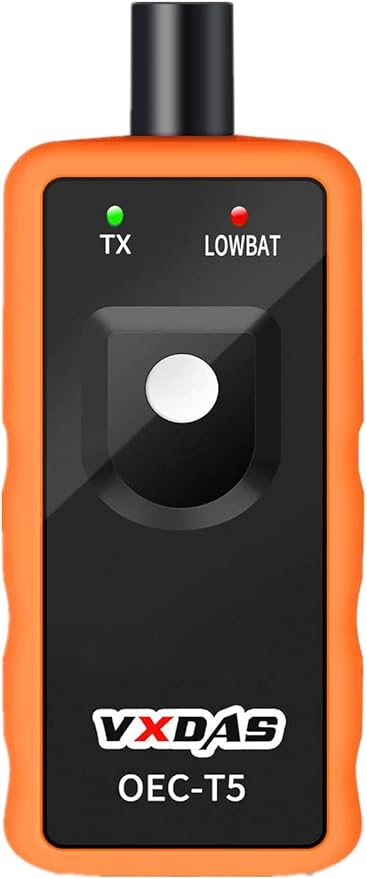 |
VXDAS TPMS Relearn Tool | Check Price |
| 2 |  |
Autel Maxitpms TS408 TPMS Programming and Relearn Tool | Check Price |
| 3 |  |
Autel Maxitpms TS408S TPMS Relearn and Diagnostic Scanner | Check Price |
| 4 |  |
XTOOL TP150 Universal TPMS Programming Tool | Check Price |
| 5 |  |
Apex Tool Group Apex Tool Group GEARWRENCH Universal TPMS Programming | Check Price |
VXDAS TPMS Relearn Tool
The VXDAS TPMS Relearn Tool is the most focused option in this group. It is made for many GM vehicles, including Chevrolet, Buick, GMC, Opel, and Cadillac models from roughly 2006–2023, with 315/433 MHz original sensors. That narrow focus is a strength when your vehicle is covered because the tool avoids the menus, programming functions, and extra complexity found on professional scanners.
Operation is simple: place the vehicle into TPMS Learn Mode, hold the tool near the tire sidewall by the valve stem, and press the Learn button. The supplied information indicates that sensor activation typically takes about one to two minutes. That can save a trip to a tire shop after a tire rotation, sensor replacement, or persistent TPMS warning.
Its sensitive sensor chip and immersion-gold circuit-board process are intended to support quick, stable operation. Still, this is not a universal solution. It is not suitable for heavy trucks with more than four tires or vehicles using an external TPMS system, and it is intended for original OEM sensors rather than every aftermarket sensor. Confirming the vehicle year, sensor frequency, and relearn procedure before purchase is essential.
Pros
- Simple one-button operation for many GM vehicles.
- Supports 315/433 MHz original sensors.
- Useful for tire changes, sensor replacement, and warning resets.
- Compact approach without unnecessary diagnostic functions.
Cons
- Limited primarily to compatible GM applications.
- Not intended for heavy trucks with more than four tires.
- Does not provide the broad programming and diagnostic coverage of a scanner.
My Opinion
This is the best value here for a GM owner who wants a focused relearn trigger and has compatible OEM sensors. It ranks first because its operation is uncomplicated and its vehicle coverage is clearly defined, but buyers with multiple vehicle brands should choose a broader tool.
Autel Maxitpms TS408 TPMS Programming and Relearn Tool
The Autel MaxiTPMS TS408 moves beyond basic sensor triggering. It can activate OE and universal TPMS sensors and display information such as sensor ID, pressure, temperature, battery status, position, frequency, and OE part number. That information helps a buyer determine whether a warning is caused by a low tire, a weak sensor battery, an incorrect sensor, or a communication problem.
For programming, the TS408 supports Autel MX-Sensors only and offers Copy by Activation, Manual Create, and Auto Create methods. It can program up to 16 Autel MX-Sensors at one time, which is useful for a small garage or tire service operation. However, the limitation matters: the supplied information states that it does not support OBD programming, so it is not the right choice if that function is essential for your vehicles.
Built-in stationary and automatic relearn procedures provide on-screen assistance for thousands of supported vehicles. Coverage still varies by make, model, and year, so buyers should check the vehicle database before ordering. Lifetime free software updates help keep the tool current without subscription fees, while the listed support includes help with compatibility, startup, registration, and updates.
Pros
- Reads pressure, temperature, sensor ID, battery status, and frequency.
- Programs Autel MX-Sensors through three methods.
- Includes stationary and automatic relearn guidance.
- Lifetime free software updates are included.
Cons
- Supports Autel MX-Sensors only for programming.
- Does not support OBD programming.
- Vehicle functions vary by make, model, and year.
My Opinion
The TS408 is a well-balanced choice for owners or small shops that want more than a reset button without paying for the broadest possible diagnostic platform. Its sensor-data display and MX-Sensor programming are meaningful upgrades, provided its lack of OBD programming fits your workflow.
Autel Maxitpms TS408S TPMS Relearn and Diagnostic Scanner
The Autel MaxiTPMS TS408S is the more feature-rich Autel option in this lineup. It includes OBD2 cables, sensor activation, TPMS reset, health diagnosis, sensor-data viewing, and tire type or pressure selection. It also supports OE and aftermarket sensor relearn through stationary, automatic, and other on-tool procedures, giving the user more ways to handle different vehicle requirements.
For owners who use Autel MX-Sensors, the TS408S adds programming through options such as copy via OBD, auto create, and manual creation. The OBD2 connection can provide direct ECU access for sensor ID work and TPMS trouble-code retrieval or clearing. That makes this tool more useful when the warning light does not disappear after a basic relearn.
The listed coverage reaches more than 150 car makes worldwide and model years from 1996–2026, with 19 languages and lifetime free updates. Those figures suggest strong breadth, but they should not be interpreted as universal support for every function on every vehicle. The TS408S is more capable than a basic trigger, which also means a buyer should be prepared to update it and learn the correct vehicle-specific procedure.
Pros
- Includes OBD2 connectivity and broader TPMS diagnosis.
- Supports sensor activation, relearn, reset, and MX-Sensor programming.
- Offers three on-tool relearn methods.
- Supports more than 150 makes and lifetime free updates.
Cons
- More capability than a single-brand owner may need.
- Programming is centered on Autel MX-Sensors.
- Actual functions depend on the selected vehicle and software coverage.
My Opinion
The TS408S is my preferred Autel choice for buyers who want a tool that can grow from basic activation into deeper TPMS service. It ranks behind the simpler VXDAS for a narrow GM use case, but its OBD2 connection and broad coverage make it a strong third-place option overall.
XTOOL TP150 Universal TPMS Programming Tool
The XTOOL TP150 is aimed at buyers who want a universal TPMS tool with both service and diagnostic functions. It works with OEM and universal sensors, supports dual 315/433 MHz frequencies, and is described as covering 99% of vehicle makes and models in the US domestic, Asian, and European categories. That broad positioning makes it more suitable than the VXDAS for a household with several vehicle brands or for a technician handling varied vehicles.
Its four relearn modes are automatic, OBD, stationary, and copy-sensor relearn. Having several methods matters because vehicles do not all learn sensors in the same way. The TP150 can also activate compatible pre-programmed sensors and show sensor ID, pressure, temperature, battery status, and frequency. Those readings help narrow down whether a problem is related to the tire, sensor, battery, or vehicle learning process.
The scanner also reads and clears TPMS trouble codes and resets the warning light. XTOOL TS100 Sensors can be programmed with the device, but buyers should pay attention to the supplied limitation that programming support is tied to compatible sensors. Before buying, verify the exact vehicle database and confirm whether the sensor brand you plan to use is supported.
Pros
- Supports automatic, OBD, stationary, and copy-sensor relearn.
- Works with OEM and universal TPMS sensors.
- Reads sensor pressure, temperature, battery, ID, and frequency.
- Combines programming, diagnosis, activation, and reset functions.
Cons
- Sensor programming compatibility should be confirmed before purchase.
- Broad coverage does not guarantee every function on every vehicle.
- May be more tool than a single-car owner needs.
My Opinion
The TP150 is a strong middle ground for DIY owners with multiple vehicles and independent technicians who want several relearn paths. It is especially attractive when code reading and sensor data matter, but buyers should verify TS100 or other supported-sensor requirements first.
Apex Tool Group Apex Tool Group GEARWRENCH Universal TPMS Programming
The GEARWRENCH GWTPMS is a universal programming and diagnostic option with support for both 315 MHz and 433 MHz sensors. It can clear TPMS warning lights, read sensor IDs and positions, and display pressure, temperature, and battery status. Those functions give the user more information than a basic activation tool and can help identify a sensor that is no longer reporting correctly.
A useful distinction is its focus on GEARWRENCH-branded TPMS sensors. The tool can program those sensors and program up to eight at once, which may suit a repair bay or owner preparing several replacement sensors. Batch programming can reduce repetitive work, although the eight-sensor capacity is lower than the TS408’s stated ability to program up to 16 Autel MX-Sensors.
The available data presents the GWTPMS as a broad vehicle tool, but it does not provide the same level of detailed coverage information or update policy shown for the Autel and XTOOL products. That makes compatibility checking particularly important. It may be a sensible selection for someone already committed to GEARWRENCH sensors, while a buyer seeking the clearest update and coverage information may prefer another model.
Pros
- Supports 315 MHz and 433 MHz sensors.
- Reads sensor ID, position, pressure, temperature, and battery status.
- Programs GEARWRENCH sensors.
- Can program up to eight sensors at once.
Cons
- Programming is centered on GEARWRENCH-branded sensors.
- Fewer supplied details about vehicle coverage and updates.
- Batch capacity is lower than the TS408’s stated 16-sensor capacity.
My Opinion
The GWTPMS is most compelling for buyers who already use GEARWRENCH sensors and want basic diagnostic visibility alongside programming. It ranks fifth because the supplied information leaves more compatibility and update questions unanswered than the higher-ranked alternatives.
How I Selected These TPMS Tools
The selection begins with the actual job a TPMS device must perform: activate a sensor, guide the vehicle through relearn, program a compatible replacement sensor, diagnose a warning, or complete several of those tasks together. I gave higher consideration to products that explain their supported frequencies, sensor families, relearn methods, vehicle coverage, and update policy clearly.
Customer-feedback volume and rating information also helped provide context, but those figures do not replace compatibility research. A tool can be highly rated and still be wrong for a vehicle that requires a specific sensor brand, OBD procedure, or frequency. Brand diversity was useful because the comparison includes different ownership approaches instead of treating every TPMS device as interchangeable.
The most important selection factor is vehicle compatibility. A simple GM-specific tool can be a better purchase than a universal scanner when it exactly matches the vehicle and sensor type.
Programming and relearning are different tasks. A device may activate a sensor without programming a replacement sensor, or it may program only sensors from its own brand family.
How to Choose the Best Tpms Relearn Tool
The right best tpms relearn tool depends on how often you service TPMS systems and whether you need activation only or full sensor programming and diagnosis. Start with the vehicle’s make, model, year, sensor frequency, and required relearn method before comparing extra features.
- Match the tool to the exact vehicle and model year.
- Confirm whether your sensors are OEM, universal, or tool-brand specific.
- Decide whether you need OBD programming or only wireless activation.
- Check whether the tool reads battery, pressure, temperature, and fault data.
- Look for update terms and support if you plan to keep the tool for years.
Vehicle and sensor compatibility
Compatibility is more than matching 315 or 433 MHz. The vehicle may require a stationary, automatic, or OBD relearn procedure, and the replacement sensor may use a proprietary programming ecosystem. Read the tool’s supported-vehicle information and compare it with the vehicle identification details in the owner’s manual or service information.
Activation versus programming
Activation tells the sensor to transmit so the tool or vehicle can detect it. Programming creates or copies sensor information before the sensor is installed. If you are only rotating tires on a compatible vehicle, activation may be enough. If you are installing blank replacement sensors, choose a device that supports the specific sensor brand you intend to use.
OBD capability
OBD functionality can connect the tool to the vehicle’s control module for relearn, sensor ID work, and trouble-code tasks. It is not automatically necessary for every vehicle, but its absence can limit the procedures available on some models. The TS408 does not support OBD programming, while the TS408S and TP150 include OBD-related functionality in the supplied data.
Simple trigger or full scanner?
A compact trigger is easier to understand and often costs less, but it cannot provide the same diagnostic detail as a scanner. Choose a basic tool for one compatible vehicle and occasional relearning. Choose a scanner when you own multiple brands, install sensors, need fault information, or want one device for repeated TPMS work.
Check Compatibility Before Ordering
Before purchasing, write down the vehicle make, model, year, tire size if relevant, and whether the sensors are original or aftermarket. Then identify the sensor frequency and whether the vehicle uses an internal valve-stem sensor or an external system. This short checklist can prevent buying a capable tool that does not communicate with your particular setup.
For a GM vehicle, the VXDAS may be sufficient if the application matches its stated coverage. For mixed domestic, Asian, and European vehicles, the XTOOL TP150 or an Autel scanner may offer a more appropriate starting point. Even broad coverage claims should be confirmed because functions can vary within the same model line.
How to Set Up a TPMS Relearn Tool
- Park safely, switch off unnecessary electrical accessories, and check that the tires are inflated to the vehicle’s recommended pressures.
- Turn on the tool and install any required software updates before beginning service.
- Select the correct make, model, and year rather than choosing a similar vehicle.
- Place the vehicle in its specified TPMS Learn Mode if the procedure requires it.
- Hold the tool near each valve stem in the order shown by the vehicle or device instructions.
- Wait for each sensor response before moving to the next tire.
- Complete the vehicle’s confirmation procedure and verify that the warning light clears.
Keep the tool close to the valve stem but do not assume every sensor responds from the same distance. If the first attempt fails, repeat the process carefully and check the selected vehicle profile before assuming the sensor is defective.
How to Use the Tool More Effectively
Use sensor data as a diagnostic aid rather than relying only on the dashboard light. Pressure, temperature, battery status, frequency, and sensor ID can reveal why a warning remains active. Record the sensor position and ID when replacing or rotating tires so future service is easier to trace.
When programming sensors, prepare all of the compatible sensors first and use the tool’s supported copy, manual, or automatic method. Batch functions can save time, but they also make correct vehicle and sensor selection more important. A wrong profile can create confusing results across several sensors.
TPMS Maintenance and Storage Tips
- Keep the scanner charged or powered according to its instructions before starting a job.
- Install software updates when available, especially before servicing newer vehicles.
- Wipe the housing and screen with a soft, lightly damp cloth rather than spraying cleaner directly on the device.
- Store the tool in a dry case away from excessive heat, moisture, and loose metal objects.
- Protect OBD cables and sensor-trigger areas from sharp bends or crushing.
- Keep notes about sensor brands and vehicle procedures used in your garage.
Software updates are particularly important for multi-brand tools because vehicle coverage and known procedures can change. Lifetime free updates are listed for the Autel TS408, Autel TS408S, and XTOOL TP150, but the exact update process should still be followed through the device or manufacturer support channel.
Common TPMS Relearn Mistakes
Most failed relearn attempts come from choosing the wrong vehicle profile, using an unsupported sensor, skipping the vehicle’s Learn Mode, or expecting a trigger to program a blank sensor. The warning light may also remain on when the underlying issue is a damaged sensor, dead battery, incorrect pressure, or stored fault code.
- Do not assume every 315 MHz or 433 MHz sensor works with every vehicle.
- Do not confuse sensor activation with sensor programming.
- Do not start until all tires are set to the recommended pressure.
- Do not use a GM-only tool on an unrelated vehicle brand.
- Do not ignore a tool’s stated limitation regarding heavy trucks or external TPMS systems.
- Do not clear codes repeatedly without investigating why they returned.
When a sensor will not respond, first confirm the sensor type, frequency, battery condition, vehicle selection, and tool compatibility before replacing parts.
What to Do When Relearning Fails
Begin by checking the simplest causes: correct tire pressure, adequate tool power, proper valve-stem positioning, and the correct order of tires. Then verify whether the vehicle requires a stationary, automatic, or OBD procedure. Some vehicles will not accept a relearn until the TPMS system has been placed into the correct mode.
If the tool reads no data from one sensor, compare it with the other three. A single missing response may point to a dead sensor battery, damaged sensor, incorrect frequency, or incompatible replacement. If all sensors fail, the problem is more likely to involve the vehicle profile, tool coverage, procedure, or vehicle-side TPMS fault.
Which Tool Fits Different Buyers?
For one compatible GM vehicle
The VXDAS is the clearest fit when the vehicle falls within its GM coverage and uses compatible original sensors. It avoids paying for features that may never be used.
For Autel MX-Sensor programming
The TS408 is a sensible choice when activation, sensor readings, and MX-Sensor programming matter but OBD programming does not. The TS408S is better when OBD access and broader diagnosis are priorities.
For mixed-brand vehicle service
The XTOOL TP150 offers four relearn approaches and broad domestic, Asian, and European coverage in the supplied information. It is a practical candidate for a multi-vehicle household or general repair work.
For GEARWRENCH sensor users
The GWTPMS makes the most sense when programming GEARWRENCH sensors and checking basic TPMS data are central to the purchase. Confirm vehicle coverage before relying on it for a particular model.
FAQS About Best Tpms Relearn Tool
What is the best tpms relearn tool for a GM vehicle?
The VXDAS TPMS Relearn Tool is the most focused choice among these products for many GM vehicles from 2006–2023 using compatible 315/433 MHz original sensors. Confirm the exact vehicle and sensor setup first.
Can a TPMS relearn tool program new sensors?
Some can, but not all. The Autel TS408 and TS408S program Autel MX-Sensors, the XTOOL TP150 programs supported sensors such as XTOOL TS100 units, and the GEARWRENCH tool programs GEARWRENCH sensors. A basic trigger may only activate existing sensors.
Do all TPMS relearn tools support OBD programming?
No. The Autel TS408 does not support OBD programming, while the TS408S and XTOOL TP150 include OBD-related capabilities in the supplied information. Check the exact function required by your vehicle.
Is 315/433 MHz compatibility enough to guarantee a match?
No. Frequency is only one part of compatibility. Vehicle make, model year, sensor design, programming system, and relearn method also affect whether the tool will work.
Should I buy a universal TPMS scanner for one vehicle?
Not necessarily. If you own one compatible GM vehicle and only need occasional relearning, the VXDAS may be simpler. A universal scanner is more useful when you service multiple brands or need programming and diagnostic data.
Final Thoughts
The best tpms relearn tool depends on the job: choose the VXDAS TPMS Relearn Tool for a compatible GM vehicle, the Autel MaxiTPMS TS408 for practical MX-Sensor programming and sensor data, or the Autel MaxiTPMS TS408S for broader diagnosis and OBD2 capability. The XTOOL TP150 and GEARWRENCH GWTPMS remain useful alternatives when their sensor ecosystems and vehicle coverage match your needs.