A mass air flow (MAF) sensor is a small but important component of your vehicle’s engine management system. It measures the amount of air entering the engine and sends this information to the engine control module (ECM), which uses the data to calculate the correct fuel delivery. Because the MAF sensor plays a direct role in maintaining the air-fuel mixture, its condition can have a major impact on engine performance, fuel economy, and drivability.
So, how long do MAF sensors last? In most vehicles, a quality MAF sensor can last anywhere from 70,000 to 150,000 miles, and some can continue working for the entire life of the vehicle. However, the actual lifespan depends on several factors, including driving conditions, air filter maintenance, sensor quality, and exposure to dirt or contamination.
Unlike some vehicle parts that have a fixed replacement schedule, MAF sensors are usually replaced only when they begin showing signs of failure. A sensor that receives clean airflow and proper maintenance may last many years, while one exposed to dust, oil contamination, or intake problems may fail much sooner.
In this guide, you’ll learn how long MAF sensors typically last, what factors affect their lifespan, the common signs of a failing sensor, what causes premature failure, and how to extend the life of your MAF sensor. Understanding these factors can help you avoid unnecessary replacements and keep your engine running efficiently.
How Long Does a MAF Sensor Last?
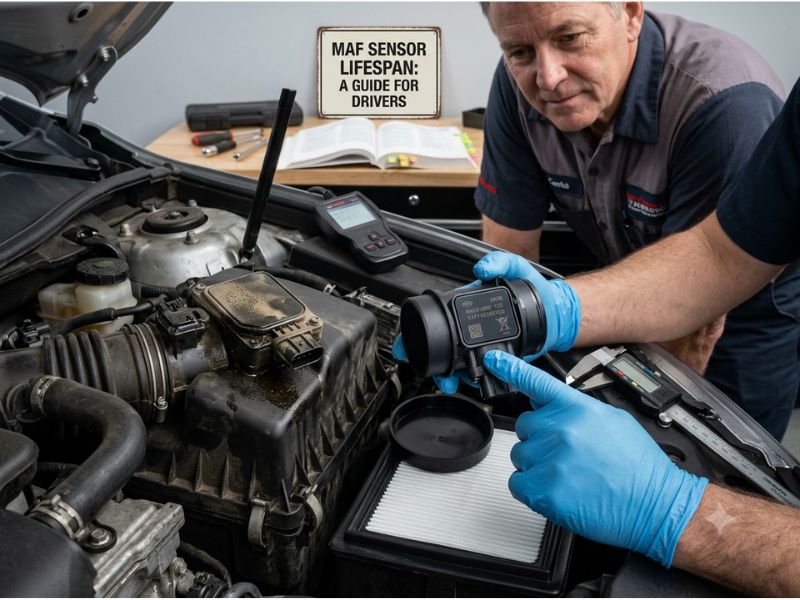
A MAF sensor does not have a specific replacement interval like engine oil, spark plugs, or air filters. Instead, its lifespan depends on the vehicle design, driving environment, maintenance habits, and the quality of the sensor itself.
On average, most MAF sensors last around 70,000 to 150,000 miles. Many factory-installed OEM sensors can continue working beyond this range if they are protected from contamination and the vehicle’s intake system is properly maintained.
Some drivers may never replace the original MAF sensor during the entire ownership period of their vehicle, while others may experience failure much earlier. The difference usually comes down to operating conditions and how well the sensor is maintained.
OEM MAF Sensors Usually Last Longer
Original equipment manufacturer (OEM) MAF sensors are generally designed to meet the vehicle manufacturer’s specifications and are often more reliable than low-cost aftermarket alternatives.
OEM sensors typically offer:
- Better calibration accuracy
- Higher-quality internal components
- Improved durability
- Better compatibility with the ECM
A cheaper replacement sensor may physically fit the vehicle but may not provide the same accuracy or lifespan.
Driving Conditions Affect Lifespan
The environment where you drive plays a major role in MAF sensor longevity.
Vehicles driven in conditions such as:
- Dusty roads
- Construction areas
- Off-road environments
- Heavy traffic with frequent idling
- Extreme weather conditions
may experience faster MAF sensor contamination compared to vehicles driven mostly on clean, paved roads.
Maintenance Plays an Important Role
Regular maintenance can significantly extend the life of a MAF sensor.
Important maintenance tasks include:
- Replacing the air filter when needed
- Keeping the intake system properly sealed
- Inspecting intake hoses for damage
- Avoiding contamination from aftermarket air filters
A clean and properly sealed intake system allows the MAF sensor to measure airflow accurately without unnecessary exposure to dirt and debris.
There Is No Recommended Replacement Mileage
Most manufacturers do not provide a scheduled replacement interval for MAF sensors. You generally do not replace a MAF sensor simply because the vehicle reaches a certain mileage.
Instead, replacement is usually recommended when:
- The sensor fails testing
- The Check Engine Light indicates a MAF-related fault
- Engine performance symptoms appear
- Cleaning does not resolve contamination issues
Testing the sensor before replacement can help avoid spending money on a part that may not be the actual cause of the problem.
Factors That Affect MAF Sensor Lifespan
Several factors can influence how long a MAF sensor continues working properly. While the sensor itself is designed to handle normal engine conditions, certain problems can shorten its lifespan.
1. Air Filter Condition
The air filter is the first line of protection for the MAF sensor. Its job is to prevent dirt, dust, and debris from entering the engine.
A dirty or damaged air filter can allow contaminants to reach the sensor.
Over time, contamination can cause:
- Incorrect airflow readings
- Poor fuel calculations
- Reduced engine performance
- Sensor failure
Replacing the air filter at the recommended interval helps protect the MAF sensor and maintain accurate airflow measurements.
2. Type of Air Filter Used
The type of air filter installed in the vehicle can also affect MAF sensor life.
Standard dry air filters generally provide reliable protection. However, some aftermarket high-performance filters use oil coatings to trap dirt.
If an oiled filter is over-applied or improperly maintained, excess oil can enter the intake system and coat the MAF sensor’s sensitive measuring element.
Oil contamination may lead to:
- Incorrect airflow readings
- Engine hesitation
- Check Engine Light
- Premature sensor failure
3. Driving Environment
Where and how you drive can have a major impact on MAF sensor durability.
Vehicles regularly exposed to:
- Dusty environments
- Unpaved roads
- Sand or dirt
- Heavy pollution
may require more frequent air filter inspections and intake system checks.
More contaminants entering the intake system increase the chance of sensor contamination.
4. Quality of Replacement Parts
The quality of the MAF sensor itself is another important factor.
A high-quality replacement sensor is more likely to provide:
- Accurate airflow measurements
- Reliable performance
- Longer service life
Low-quality aftermarket sensors may fail early or provide incorrect readings even when they are newly installed.
5. Intake System Condition
The MAF sensor depends on a properly sealed intake system to work correctly.
Problems such as:
- Cracked intake tubes
- Loose hose clamps
- Damaged seals
- Vacuum leaks
can affect sensor readings and create additional stress on the engine management system.
Maintaining a healthy intake system helps the MAF sensor operate correctly and reduces unnecessary failures.
Signs Your MAF Sensor May Be Failing
A failing MAF sensor can affect how your engine calculates the correct air-fuel mixture. Because the ECM depends on accurate airflow information, a faulty sensor can create noticeable performance problems.
The symptoms of a bad MAF sensor can sometimes appear similar to other engine issues, so proper diagnosis is important before replacing the part.
Check Engine Light
One of the most common signs of a MAF sensor problem is an illuminated Check Engine Light.
When the ECM detects incorrect airflow readings or a problem with the sensor circuit, it may store diagnostic trouble codes (DTCs).
Common MAF-related codes include:
- MAF circuit malfunction
- Airflow range or performance problems
- Sensor signal issues
If the Check Engine Light appears, use an OBD-II scanner to identify the exact cause before replacing the sensor.
Rough or Unstable Idle
A failing MAF sensor can cause the engine to receive incorrect airflow information, especially when operating at idle.
You may notice:
- Engine shaking while stopped
- Fluctuating RPM
- Stalling
- Uneven engine operation
Because the ECM relies on MAF readings to control fuel delivery, inaccurate data can make it difficult to maintain a stable idle.
Poor Acceleration
A faulty MAF sensor may prevent the engine from receiving the correct amount of fuel during acceleration.
Common symptoms include:
- Slow acceleration
- Hesitation when pressing the gas pedal
- Lack of engine power
- Delayed throttle response
If the engine does not receive accurate airflow measurements, the ECM may deliver too much or too little fuel.
Reduced Fuel Economy
When the MAF sensor provides incorrect readings, the engine may run with an improper air-fuel mixture.
This can cause:
- Excessive fuel consumption
- Poor combustion efficiency
- More frequent trips to the gas station
A sudden drop in fuel economy can be a warning sign that the MAF sensor or another engine management component needs inspection.
Engine Hesitation or Surging
A damaged or contaminated MAF sensor may cause inconsistent airflow readings.
During driving, you may experience:
- Hesitation during acceleration
- Surging at steady speeds
- Inconsistent engine response
These symptoms often occur because the ECM is constantly adjusting fuel delivery based on inaccurate airflow information.
Black Exhaust Smoke
A failing MAF sensor can sometimes cause the engine to run too rich, meaning it receives more fuel than necessary.
Signs of a rich fuel mixture may include:
- Black smoke from the exhaust
- Strong fuel smell
- Poor fuel economy
- Carbon buildup
This happens because incorrect airflow readings can cause the ECM to inject excess fuel.
Difficulty Starting the Engine
In some cases, a faulty MAF sensor can make starting the engine more difficult.
You may notice:
- Longer cranking time
- Engine starts and then stalls
- Unstable operation immediately after startup
If the ECM receives incorrect airflow data during startup, it may not provide the ideal fuel mixture.
Can a MAF Sensor Last the Lifetime of a Vehicle?
Yes, a MAF sensor can last the lifetime of a vehicle, especially when it is properly maintained and operates in clean conditions. However, this is not guaranteed because several factors influence sensor durability.
Some vehicles still have their original MAF sensor working correctly after 150,000–200,000 miles, while others may require replacement much earlier due to contamination, damage, or electrical problems.
Why Some MAF Sensors Last Longer
MAF sensors that last for the life of the vehicle usually benefit from:
- Regular air filter replacement
- A properly sealed intake system
- Clean driving environments
- Quality OEM components
- Proper maintenance practices
When clean air consistently passes through the intake system, the sensitive measuring elements inside the MAF sensor experience less contamination and wear.
Why Some MAF Sensors Fail Early
Early failure is often caused by external factors rather than normal wear.
Common causes include:
- Dirt and dust contamination
- Oil from aftermarket air filters
- Water or moisture entering the intake
- Damaged wiring
- Poor-quality replacement parts
- Incorrect cleaning methods
A MAF sensor does not typically wear out like mechanical engine parts. Instead, it usually fails because the sensing components become contaminated or damaged.
Modern MAF Sensors Are More Durable
Newer vehicles often use improved sensor designs with better protection against contamination and environmental conditions.
However, even modern MAF sensors can fail if:
- The air filter is neglected.
- The intake system has leaks.
- The sensor is damaged during maintenance.
- Incorrect cleaning products are used.
Proper care remains the biggest factor in maximizing sensor lifespan.
Should You Replace a MAF Sensor Preventively?
Generally, no. Unlike spark plugs or timing belts, MAF sensors are not normally replaced as preventive maintenance.
Replacing a working MAF sensor simply because the vehicle has reached a certain mileage is usually unnecessary.
Instead, replace it when:
- Testing confirms failure.
- Cleaning does not resolve the issue.
- MAF-related trouble codes return.
- Engine performance symptoms match a faulty sensor.
A properly maintained MAF sensor can provide reliable service for many years without needing replacement.
What Causes a MAF Sensor to Fail Early?
Although MAF sensors are designed to last for many years, certain conditions can significantly reduce their lifespan. Most early failures are not caused by normal wear but by contamination, improper maintenance, electrical problems, or damage during repairs.
Understanding these causes can help you prevent premature MAF sensor failure and avoid unnecessary replacement costs.
Dirt and Contamination
The most common cause of early MAF sensor failure is contamination of the sensing element.
The MAF sensor measures airflow using a delicate sensing wire or film. When dirt, dust, or debris builds up on this component, it can affect the sensor’s ability to measure air accurately.
Contamination can lead to:
- Incorrect airflow readings
- Poor fuel calculations
- Rough engine operation
- Check Engine Light
A dirty air filter or damaged intake system increases the chance of contaminants reaching the sensor.
Over-Oiled Aftermarket Air Filters
Some high-performance air filters use oil coatings to capture dirt particles. While these filters can improve airflow, excessive oil application can create problems for the MAF sensor.
If excess oil enters the intake system, it may coat the sensing element and interfere with accurate measurements.
Symptoms of oil contamination may include:
- Engine hesitation
- Poor acceleration
- Reduced fuel economy
- MAF-related trouble codes
If you use an oiled air filter, follow the manufacturer’s maintenance instructions carefully and avoid applying too much oil.
Improper Cleaning Methods
A MAF sensor can sometimes be cleaned if contamination is the issue, but using the wrong cleaning method can damage the sensor.
Common mistakes include:
- Touching the sensing element
- Using brake cleaner or throttle body cleaner
- Scrubbing the sensor
- Using compressed air at high pressure
The sensing components are extremely delicate and can be permanently damaged by improper handling.
Only use a dedicated MAF sensor cleaner when cleaning is recommended.
Water or Moisture Damage
The MAF sensor is designed to operate in normal engine conditions, but excessive moisture entering the intake system can cause problems.
Possible sources include:
- Damaged air intake components
- Poorly sealed intake systems
- Water entering through aftermarket modifications
Moisture can affect electrical connections and damage sensitive sensor components.
Intake Air Leaks
Although an intake leak does not always damage the MAF sensor directly, it can create conditions that cause incorrect airflow measurements.
Leaks after the MAF sensor allow unmeasured air to enter the engine, causing the ECM to receive inaccurate information.
Common leak points include:
- Cracked intake hoses
- Loose clamps
- Damaged seals
- Vacuum hose problems
Fixing intake leaks helps ensure the MAF sensor operates correctly.
Electrical Problems
MAF sensors depend on electrical power and communication with the ECM. Problems with the wiring system can make a good sensor appear faulty.
Possible electrical issues include:
- Damaged wiring harness
- Corroded connector pins
- Loose electrical connections
- Poor grounding
Before replacing a MAF sensor, always inspect the connector and wiring.
Low-Quality Replacement Sensors
A poor-quality aftermarket MAF sensor may fail much sooner than an OEM or high-quality replacement.
Cheap sensors may have:
- Incorrect calibration
- Lower-quality internal components
- Poor manufacturing consistency
They may also cause performance problems immediately after installation.
Choosing a reliable replacement part can significantly improve long-term durability.
Physical Damage During Maintenance
MAF sensors can be damaged during installation, removal, or nearby repairs.
Common causes include:
- Dropping the sensor
- Hitting the sensing element
- Installing it incorrectly
- Using excessive force
Always handle the sensor carefully and avoid touching the internal measuring components.
How to Extend the Life of a MAF Sensor
With proper maintenance and careful handling, you can significantly increase the lifespan of your MAF sensor. Most preventive measures focus on keeping the intake system clean and protecting the sensor from contamination.
Replace the Air Filter Regularly
The air filter is the MAF sensor’s primary protection against dirt and debris.
A clogged or damaged air filter can allow contaminants into the intake system and reduce sensor accuracy.
Follow your vehicle manufacturer’s recommended replacement interval, and inspect the filter more frequently if you drive in:
- Dusty areas
- Heavy traffic conditions
- Construction zones
- Rural roads
A clean air filter helps maintain proper airflow while protecting the MAF sensor.
Keep the Intake System Sealed
The entire intake system should remain properly sealed to ensure accurate airflow measurements.
Regularly inspect:
- Intake tubes
- Hose clamps
- Air filter housing
- Vacuum hoses
Repair cracks, loose connections, or damaged seals as soon as they are discovered.
Avoid Over-Oiled Air Filters
If your vehicle uses an aftermarket oiled air filter, apply only the recommended amount of oil.
Excess oil can travel into the intake system and contaminate the MAF sensor.
A properly maintained filter should improve airflow without creating sensor problems.
Use Quality Replacement Parts
When replacement is necessary, choose a quality MAF sensor from a trusted manufacturer.
A reliable sensor provides:
- Accurate readings
- Better compatibility
- Longer service life
- More consistent engine performance
Saving money on a cheap sensor can lead to repeated replacements and additional troubleshooting.
Clean the MAF Sensor Only When Necessary
Cleaning can help restore performance if the sensor is contaminated, but it should not be treated as routine maintenance.
Clean the sensor only when:
- Symptoms indicate contamination
- Testing suggests inaccurate readings
- The sensor manufacturer recommends it
Always use proper MAF sensor cleaner and follow safe cleaning procedures.
Inspect Electrical Connections
The electrical connector plays an important role in sensor reliability.
During regular maintenance, check for:
- Corrosion
- Loose connections
- Damaged wires
- Signs of moisture
A clean and secure connection helps ensure accurate communication between the MAF sensor and ECM.
Avoid Unnecessary Handling
Because MAF sensors contain delicate components, avoid removing or touching them unless necessary.
Careful handling during repairs and maintenance can prevent accidental damage and help the sensor last longer.
Should You Clean or Replace a MAF Sensor?
When a MAF sensor starts showing signs of problems, many vehicle owners wonder whether cleaning the sensor can restore performance or if replacement is the better option. The correct choice depends on the condition of the sensor and the actual cause of the problem.
In some cases, contamination is the issue and cleaning can help. In other cases, the sensor may have an internal failure and must be replaced.
When Cleaning a MAF Sensor May Help
Cleaning may restore proper operation when the sensor is dirty but still functioning correctly.
Common situations where cleaning may help include:
- Dust or dirt buildup on the sensing element
- Light contamination from normal use
- Minor airflow reading issues
- Symptoms that appeared gradually over time
A contaminated sensor may produce inaccurate airflow measurements because dirt changes how the sensing element detects incoming air.
After proper cleaning, you may notice improvements such as:
- Smoother idle
- Better throttle response
- Improved acceleration
However, cleaning only helps if contamination is the actual cause of the problem.
When Cleaning Will Not Fix the Problem
Cleaning a MAF sensor will not repair internal damage or electrical failures.
Replacement is usually required if:
- The sensing element is damaged
- The sensor has an internal circuit failure
- The same fault codes return after cleaning
- The sensor provides incorrect readings during testing
- The vehicle continues experiencing performance issues
A failed sensor cannot be restored through cleaning.
Signs You May Need to Replace the MAF Sensor
A MAF sensor replacement may be necessary when you notice:
- Persistent Check Engine Light
- MAF-related trouble codes
- Poor acceleration
- Rough idle
- Reduced fuel economy
- Engine hesitation
- Failed sensor testing
Before replacing the part, confirm that the issue is actually caused by the MAF sensor and not another component.
Always Diagnose Before Replacing
Many problems that appear to be caused by a MAF sensor can actually come from other issues, including:
- Intake air leaks
- Dirty throttle body
- Faulty oxygen sensor
- Vacuum leaks
- Wiring problems
Testing the sensor and inspecting related components can prevent unnecessary replacement.
Avoid Replacing a Sensor That Only Needs Cleaning
MAF sensors can be expensive, and replacing one that only has minor contamination is often unnecessary.
If the sensor is physically intact and testing shows it is still working, proper cleaning may be enough to restore normal operation.
How Often Should You Replace a MAF Sensor?
Unlike engine oil, air filters, or spark plugs, MAF sensors do not have a fixed replacement schedule. Most manufacturers do not recommend replacing them at a specific mileage because their lifespan depends heavily on operating conditions and maintenance.
Instead, a MAF sensor should be replaced when it fails testing or begins causing performance problems.
There Is No Standard Replacement Interval
A MAF sensor may last:
- 70,000 miles
- 100,000+ miles
- 150,000 miles or more
Some original sensors continue working for the entire life of the vehicle.
Because failure depends on factors like contamination, driving environment, and sensor quality, mileage alone is not a reliable indicator for replacement.
Replace Based on Symptoms and Diagnosis
You should consider replacing the MAF sensor when:
- Cleaning does not improve performance
- Testing confirms sensor failure
- MAF-related trouble codes return
- The sensor has visible damage
- Engine performance problems continue after other causes are ruled out
A proper diagnosis is more important than replacing the sensor based only on vehicle age.
Preventive Replacement Is Usually Not Necessary
Replacing a working MAF sensor as preventive maintenance is generally unnecessary.
Unlike parts that wear out predictably, a MAF sensor can continue functioning correctly for many years without replacement.
Replacing it too early can result in:
- Unnecessary repair costs
- Installation issues
- Potential problems from low-quality replacement parts
Consider Replacement During Major Intake Repairs
Although not required, some owners may choose to inspect or replace the MAF sensor during certain major repairs, especially if:
- The sensor is heavily contaminated
- The intake system has been damaged
- The vehicle has very high mileage
- The sensor has a history of problems
However, replacement should still be based on condition and testing results.
Quality Matters When Replacing
If replacement is necessary, choosing the correct sensor is important.
A quality MAF sensor should have:
- Proper calibration for your vehicle
- Reliable internal components
- Correct electrical specifications
- Good compatibility with the ECM
A low-quality replacement may create the same symptoms as a failing sensor and may not last as long.
Regular maintenance, proper diagnosis, and choosing the right replacement part are the best ways to maximize MAF sensor performance and avoid unnecessary replacements.
You have not enough Humanizer words left. Upgrade your Surfer plan.
Frequently Asked Questions
How many miles does a MAF sensor last?
A MAF sensor typically lasts between 70,000 and 150,000 miles, but the actual lifespan depends on driving conditions, maintenance, and sensor quality.
Some OEM MAF sensors can last the entire life of a vehicle, while others may fail earlier due to contamination, electrical problems, or intake system issues.
Regular air filter replacement and keeping the intake system clean can help extend sensor life.
How often should a MAF sensor be replaced?
There is no specific replacement interval for a MAF sensor. Unlike maintenance items such as oil filters or spark plugs, MAF sensors are replaced only when they fail or show signs of inaccurate readings.
You should replace a MAF sensor when:
- Testing confirms it is faulty.
- Cleaning does not resolve the issue.
- MAF-related trouble codes return.
- Engine performance problems continue.
Replacing a working sensor based only on mileage is usually unnecessary.
Can a MAF sensor last 200,000 miles?
Yes, a MAF sensor can last 200,000 miles in some vehicles if it is properly maintained and operates in clean conditions.
Long-lasting MAF sensors usually benefit from:
- Regular air filter changes
- A properly sealed intake system
- Quality OEM components
- Limited exposure to dust and contamination
However, there is no guarantee that every sensor will reach this mileage.
Does cleaning a MAF sensor extend its life?
Cleaning a MAF sensor can help restore performance if contamination is the cause of the problem, but it does not necessarily extend the sensor’s lifespan.
Proper cleaning may remove:
- Dust
- Dirt buildup
- Light contamination
However, cleaning cannot repair:
- Internal sensor damage
- Electrical failures
- Broken components
Only clean a MAF sensor when needed and always use the correct cleaning method.
Why do MAF sensors fail?
MAF sensors usually fail because of contamination, damage, or electrical problems rather than normal wear.
Common causes include:
- Dirty air filters
- Over-oiled aftermarket filters
- Dust entering the intake system
- Incorrect cleaning methods
- Damaged wiring
- Poor-quality replacement sensors
Maintaining the air intake system is one of the best ways to prevent premature failure.
Can a bad air filter damage a MAF sensor?
Yes. A damaged, dirty, or improperly installed air filter can allow dirt and debris to reach the MAF sensor.
Contamination can affect the sensor’s ability to measure airflow accurately and may eventually lead to performance problems.
Replacing the air filter regularly helps protect the MAF sensor and maintain proper engine operation.
Should I replace my MAF sensor proactively?
In most cases, no. MAF sensors do not require preventive replacement unless there are signs of failure.
Replacing a sensor that is still working properly may waste money and may introduce problems if the replacement part is low quality or incorrectly calibrated.
It is better to test the sensor and replace it only when necessary.
Conclusion
A MAF sensor can last anywhere from 70,000 to 150,000 miles, and many high-quality sensors continue working well beyond that range. However, lifespan depends on several factors, including air filter maintenance, driving conditions, sensor quality, and how well the intake system is maintained.
Most MAF sensor failures are caused by contamination, electrical issues, or damage rather than normal wear. Keeping the air intake system clean, replacing air filters regularly, and avoiding unnecessary sensor handling can significantly improve reliability.
If your vehicle begins showing symptoms such as rough idle, poor acceleration, reduced fuel economy, or a Check Engine Light, diagnose the problem before replacing the sensor. A proper inspection can help determine whether the MAF sensor needs cleaning, repair, or complete replacement.
By following good maintenance practices and addressing problems early, you can maximize the lifespan of your MAF sensor and keep your engine running efficiently.