Professional car window tinting typically costs 50–150 for a single side window in the United States, depending on the film type, window size, and installer. Rear windshields and full front windshields generally cost more because they require larger pieces of film and more installation work.
If you only need to tint one window, the price can be quite different from the cost per window in a complete vehicle package. Basic dyed film is usually the least expensive option, while carbon and ceramic films cost more because of their additional solar-control properties.
Vehicle design also matters. A large curved rear windshield can take more time to tint than a flat side window. Removing damaged old tint, handling defroster lines, and working around unusual glass shapes can increase the final bill.
Before booking an appointment, it’s worth understanding exactly what the shop includes in its quote.
In this article, I cover typical tint prices for individual car windows, the cost differences between dyed, carbon, and ceramic films, and the extra charges that may apply. You’ll also learn whether tinting one window or purchasing a package offers better value and how to compare professional installation quotes.
How Much Does Tint Cost Per Window in the US?
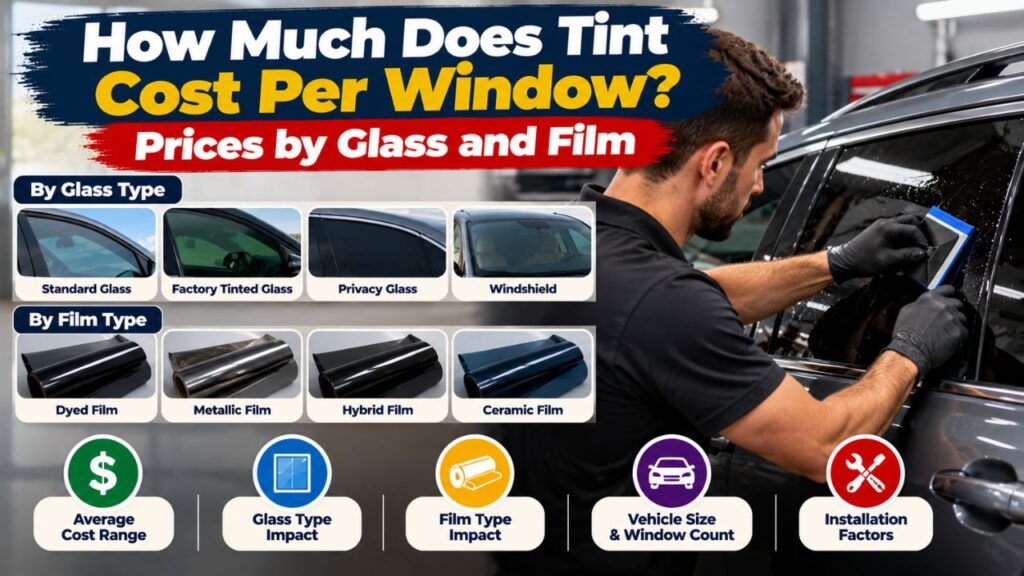
The cost depends mainly on which window is being tinted and the type of film selected.
According to AutoZone’s automotive window tint cost guide, professional tinting of a single car window may cost approximately 50–150. Larger windows and premium films can cost considerably more.
Window Tint Cost by Window Type
| Window or Service | Example Installed Price |
| Single side door window | 50–150 typical planning range |
| Two front side windows | 140–200 |
| Rear windshield or back glass | 150–250 |
| Full front windshield | 200–300 |
| Windshield sun strip | 60–80 |
| Standard sunroof | From $150 |
| Panoramic glass roof | From $300 |
| Small quarter window | Depends on size and package |
The single-window range comes from AutoZone’s U.S. pricing guidance. The other numerical examples reflect published starting prices from a professional tint shop, rather than national averages.
Actual prices can be lower or higher depending on the market, vehicle, and film.
How Much Does It Cost to Tint One Side Window?
A single side window generally costs 50–150 for professional installation.
This typically refers to one driver-side or passenger-side door window.
The price depends on whether you select basic dyed film, carbon film, or ceramic tint.
A small, relatively flat door window is generally easier to tint than a large or unusually curved piece of glass.
However, some shops charge a minimum service fee for one-window jobs. This can make an individual window more expensive per piece than a complete vehicle package.
How Much Does It Cost to Tint Two Front Windows?
Tinting the two front door windows is a popular service for SUVs and pickup trucks with darker factory rear glass.
The cost depends largely on the film selected.
As one real-world example, SunBlock Tinting lists these starting prices for cars and sedans:
- Two front windows with carbon film: $140.
- Two front windows with ceramic film: $180.
For midsize trucks and SUVs, the same shop lists $160 for carbon and $200 for ceramic.
These figures come from SunBlock Tinting’s published automotive installation prices, which also provides separate prices for rear glass, windshields, and larger vehicles.
This shows why the vehicle category matters even when the number of windows remains the same.
How Much Does It Cost to Tint a Rear Windshield?
A rear windshield generally costs more than a single door window.
In the published SunBlock pricing example, rear glass starts at:
- $150 for carbon film on cars and sedans.
- $200 for ceramic film on cars and sedans.
- 175–250 for selected larger vehicle categories and film options.
Rear windshields are often large, curved, and equipped with defroster lines.
An installer may need to heat-form the film carefully to match the glass curvature.
This requires more preparation and fitting than many ordinary side windows.
Hatchback glass and large SUV rear windows can also vary substantially in size and complexity.
How Much Does It Cost to Tint a Front Windshield?
Full front windshield tinting is usually priced separately from side and rear window packages.
SunBlock’s published prices range from $200 for its carbon windshield option on a sedan to $300 for its ceramic windshield option on a full-size vehicle.
Actual pricing depends on the film and windshield size.
Full-windshield installations require particular attention to visibility, optical quality, vehicle sensors, and legal requirements.
Important: Not every aftermarket windshield film installation is legal. The permitted visible light transmission and installation area depend on applicable federal requirements and state regulations.
Check those rules before purchasing full-windshield tint.
Window Tint Cost Per Window by Film Type
The film technology can affect the price more than the darkness of the tint.
Three common automotive options are dyed, carbon, and ceramic window film.
Dyed Window Tint Cost
Dyed tint is generally the least expensive professional film category.
It uses coloring agents to reduce visible light, darken the glass, and provide some glare reduction.
Dyed film is a practical choice when appearance and privacy are the main priorities.
However, basic dyed products often provide less infrared heat rejection than higher-performance carbon or ceramic films.
Lower-quality dyed products may also experience fading or discoloration over time.
If you’re tinting one window to match an existing basic tint installation, using an appropriate dyed film may be sufficient.
Carbon Window Tint Cost
Carbon tint generally costs more than basic dyed film but less than premium ceramic products.
It is commonly selected for its appearance, color stability, and solar-control performance.
For a concrete pricing example, SunBlock lists:
| Carbon Tint Service | Published Starting Price |
| One sedan side window | $80 |
| Two sedan front windows | $140 |
| Sedan rear windshield | $150 |
| Full sedan windshield | $200 |
These prices are specific to that installer and its listed film products.
They should be treated as examples rather than guaranteed prices in every U.S. market.
Carbon tint can be a reasonable middle-ground choice for drivers who want more than basic privacy but do not need the highest available heat rejection.
Ceramic Window Tint Cost
Ceramic tint is generally one of the more expensive automotive window film options.
It uses specialized infrared-control materials to reduce solar heat transmission.
High-performance ceramic film can provide substantial heat rejection without requiring very dark glass.
At SunBlock, the published ceramic prices for a sedan include:
| Ceramic Tint Service | Published Starting Price |
| One side door window | $100 |
| Two front windows | $180 |
| Rear windshield | $200 |
| Full windshield | $250 |
Compared with the shop’s carbon pricing, ceramic costs $20 more for one sedan side window and $50 more for the rear windshield.
These differences are not universal. Premium ceramic film lines from other manufacturers or installers may cost considerably more.
Is Ceramic Tint Worth the Extra Cost Per Window?
Ceramic tint can be worth the additional cost when reducing solar heat is a major priority.
For example, a driver who regularly commutes in strong summer sunlight may benefit from improved infrared heat rejection through the front side windows.
However, paying more for ceramic film is not necessary for every vehicle.
If you’re primarily interested in privacy or matching the appearance of existing windows, a quality dyed or carbon film may be sufficient.
Compare the product’s Total Solar Energy Rejection (TSER) rating rather than choosing based only on its name or advertised darkness.
Why Does Tint Cost More for Some Car Windows?
Two windows on the same vehicle can have different installation prices.
The difference usually comes from glass size, shape, preparation, and installation difficulty.
Window Size and Film Consumption
Larger windows require more material.
A compact sedan’s rear door window may need significantly less film than the rear glass of a large SUV.
Film waste also matters.
Some windows have unusual shapes that require installers to use larger sections of film and discard more unused material during cutting.
This can increase the total material cost.
Curved Rear Glass
Some rear windshields have substantial curvature.
Film must be shaped to fit the glass without creating permanent wrinkles or creases.
Installers commonly use heat-forming techniques to prepare film for curved automotive glass.
These procedures require appropriate tools, careful temperature control, and experience.
A complicated rear window may therefore cost more than several small, relatively flat windows.
Defroster Lines and Antennas
Rear windows often contain heating elements or antenna components.
These require careful handling during cleaning, tint installation, and film removal.
Damaging defroster lines can create an additional repair problem.
If the rear window already has deteriorated tint, removing that film may require extra labor.
Small Quarter Windows
Quarter windows are the smaller fixed windows found on some cars, SUVs, and vans.
They may use relatively little film, but their shape and placement can make them difficult to access.
Some installers include quarter windows in a complete side-window package.
Others charge separately.
Ask whether fixed quarter glass is included before comparing quotes.
How Much Does It Cost to Remove Old Window Tint?
Removing existing tint can add to the cost of installing new film.
The charge depends on how easily the old film and adhesive can be removed.
Old Tint Removal Prices
As an actual installer example, SunBlock lists the following removal charges:
| Tint Removal Service | Published Price |
| One side door window | $25 |
| Rear windshield | $100 |
| Front windshield | $100 |
| Entire vehicle | $200 |
These are one shop’s listed charges. They are not fixed nationwide removal rates.
Some installers may charge more for severely deteriorated film, difficult adhesive removal, or unusual window designs.
Why Old Tint Removal Can Be Expensive
Tint that has been exposed to sunlight for several years may become brittle, bubble, peel, or separate from its adhesive.
A damaged film may come away in small sections instead of one piece.
The remaining adhesive must be removed without scratching or damaging the glass.
Rear windshield removal requires additional care because the glass may contain delicate defroster lines.
Do not assume that removing old film is automatically included in a new tint installation quote.
Should You Remove Old Tint Yourself?
DIY removal may be possible on some windows, but it carries risks.
Using inappropriate scrapers or chemicals can damage glass, interior trim, electrical components, or defroster lines.
For an ordinary side window, careful removal may be manageable with suitable tools and instructions.
For a rear windshield with embedded heating lines, professional removal is generally the more cautious option.
Is It Cheaper to Tint One Window or the Whole Car?
Tinting one window costs less overall, but a complete vehicle package may offer a lower average price per window.
Shops commonly provide package pricing because several windows can be installed during one appointment.
Example: Individual Windows vs. a Package
Consider SunBlock’s published starting prices for carbon film on a sedan:
- One side door window: $80.
- Two front side windows: $140.
- Full vehicle package: $350.
Buying the two front windows as a package costs $140 instead of $160 when priced as two individual $80 jobs.
That represents a $20 difference in this specific example.
A full vehicle package may provide additional savings, but its value depends on the included windows.
What Does a Full Window Tint Package Include?
A full vehicle tint package commonly includes:
- Front side door windows.
- Rear side door windows, where applicable.
- Rear quarter or cargo windows, depending on the package.
- Rear windshield.
However, a full tint package does not necessarily include the front windshield, sunroof, or panoramic roof.
Some installers also exclude old film removal or charge separately for specialty glass.
Always ask for the complete list of included windows before accepting the quoted price.
When Is Single-Window Tinting Better?
Tinting only one window makes sense when:
- The film on one window is damaged.
- A side window has been replaced.
- The existing tint is otherwise in good condition.
- You want to tint only the front two windows.
- You need to match an existing film installation.
If replacing damaged tint, ask whether the installer can match the original film’s appearance and visible light transmission.
An exact visual match may be difficult if the existing film has faded or the original product is no longer available.
What Other Charges Can Increase Window Tint Cost?
The advertised film price may not represent the entire amount paid.
Several additional services can affect the quote.
Vehicle Size
Larger vehicles often have more glass or bigger individual windows.
SUVs, minivans, and full-size trucks may therefore cost more than compact cars.
However, a small vehicle with unusually complicated curved glass can also require substantial labor.
Vehicle size is an important factor, but not the only one.
Luxury and Specialty Vehicles
Some luxury cars and electric vehicles have unusual window designs, tight trim clearances, or extensive glass roofs.
These may require additional preparation or specialized cutting patterns.
The cost depends on the specific model rather than the vehicle’s price alone.
Mobile Tint Installation
Some installers offer mobile service at a home or workplace.
This may involve an additional travel or service charge.
In the published SunBlock example, mobile service starts at $25, depending on distance.
However, mobile tint installation also requires suitable working conditions.
Excessive wind, dust, or poor weather can make a clean installation more difficult.
Premium Warranties
Some professional films include manufacturer warranties covering specific defects.
Possible coverage may include:
- Bubbling.
- Peeling.
- Adhesive failure.
- Excessive discoloration.
- Certain manufacturing defects.
Warranty terms differ.
Check whether replacement labor is included and whether an authorized installer must perform the work.
A higher installed price may be reasonable when it includes a better-supported product and meaningful warranty coverage.
Local Labor Rates
Labor costs vary across the United States.
A tint shop in a high-cost metropolitan area may charge more than one in a smaller city.
Shop overhead, equipment, installer experience, and demand can also affect prices.
This is why local written quotes are more reliable than a single national estimate.
How Much Does DIY Window Tint Cost Per Window?
DIY tinting can cost less than professional installation because you do not pay a shop for labor.
AutoZone’s pricing guidance indicates that basic DIY tint materials can start around $30, with individual products available at different prices.
However, the cost per window depends on how much usable film comes in the package and whether you already own the required tools.
Tools Needed to Tint One Window
A typical DIY tinting job may require:
- Automotive window tint film.
- Spray solution appropriate for the film.
- Squeegee.
- Film application tools.
- Suitable cutting blade.
- Clean microfiber towels.
- Glass-cleaning materials.
- A heat gun when required for film forming.
The exact tools depend on the film and window.
Why DIY Tinting Can Cost More Than Expected
A beginner may waste film while cutting, aligning, or applying it.
Dust, trapped debris, folds, and creases can also affect the finished appearance.
If an entire sheet becomes unusable, another piece may need to be purchased.
The difficulty increases with curved rear glass and expensive ceramic film.
For one simple door window, DIY installation may be manageable for someone comfortable with careful film application.
For complex windows or high-cost film, professional installation can offer better value despite the higher initial expense.
Does DIY Tint Come With a Warranty?
Some aftermarket film products provide material warranties, but coverage varies.
Installation-related defects caused by DIY application may not be covered.
Professional installations may include additional workmanship protection.
Review the specific warranty terms before deciding whether the lower DIY price is worthwhile.
Does Window Tint Darkness Affect Installation Cost?
In many cases, different shades from the same film series have similar installation prices.
For example, one shop may charge the same amount for 35% and 20% VLT film when both belong to the same product line.
However, there can be exceptions.
What Is VLT?
Visible Light Transmission (VLT) measures how much visible light passes through the film or completed glass system.
Common film shades include:
| Nominal Tint Shade | Visible Light Transmitted |
| 70% | 70% |
| 50% | 50% |
| 35% | 35% |
| 20% | 20% |
| 5% | 5% |
Lower percentages indicate darker film.
However, darker tint does not automatically provide greater infrared heat rejection.
The actual film technology matters.
Is 5% Tint More Expensive Than 20%?
Not necessarily.
If both shades are from the same product series, their installed prices may be identical.
However, selecting a premium ceramic film instead of basic dyed tint can substantially increase the price even when the darkness remains the same.
Choose film based on its performance and legal suitability, not simply the lowest VLT.
How Factory Glass Affects the Final Tint
Factory automotive glass may already reduce visible light transmission.
Adding aftermarket film generally lowers the completed window’s VLT.
For example, applying a nominal 35% film to glass transmitting 80% of visible light produces an approximate combined VLT of:
0.35 × 0.80 = 0.28
That equals approximately 28% combined VLT.
Actual results depend on the film and glass.
Because tint laws apply to the completed glazing system, confirm the legal limit and have the window measured when necessary.
How to Get the Best Price for One Window Tint Job
The goal is not simply to find the cheapest installer.
A good quote should identify the exact film, included services, and warranty.
Compare the Same Film Type
Ask each shop for the same type of installation.
For example, compare carbon film with carbon film or ceramic film with ceramic film.
A $70 basic dyed tint quote and a $120 premium ceramic quote are not equivalent services.
Ask for the manufacturer and exact film series.
Request a Written Price Breakdown
A useful quote should explain:
- Which window will be tinted.
- The film brand and series.
- The selected VLT.
- The installation price.
- Whether old tint removal is included.
- Any additional labor charges.
- Applicable taxes.
- Warranty terms.
A written quote makes it easier to identify unexpected charges.
Ask About a Two-Window Package
If you plan to tint both front side windows, ask whether the shop offers a package price.
Buying two windows together may cost less than booking separate appointments.
However, the discount varies by installer.
Check the Installer’s Previous Work
Window tint installation quality can affect both appearance and durability.
Look for examples of completed work and check whether customers report recurring problems with bubbles, peeling edges, or poor workmanship.
A reputable shop should be able to explain its product options and expected curing process.
Confirm Tint Legality Before Installation
State tint laws differ by window position and vehicle type.
A tint shade permitted on rear passenger glass may not be permitted on front side windows.
Ask the installer to confirm the expected final VLT, but also check the current regulations issued by the relevant state authority.
The cost of removing and replacing noncompliant tint can eliminate any savings from a cheap installation.
Is Paying More for Professional Window Tint Worth It?
Professional installation is generally worthwhile when you want predictable results, complex glass coverage, or premium film performance.
However, the additional cost should reflect meaningful benefits.
When Basic Tint Is Enough
Basic dyed film may be suitable when your main goals are:
- Darkening the windows.
- Reducing glare.
- Increasing daytime privacy.
- Improving appearance.
- Keeping the initial cost low.
A quality product installed correctly may provide the desired result without a ceramic upgrade.
When Ceramic Tint Is Worth Considering
Ceramic tint is generally more attractive when you want:
- Strong infrared heat rejection.
- Better comfort during sunny driving.
- A lighter tint with meaningful solar heat control.
- Premium film performance.
- Long-term ownership value.
The most useful comparison is between actual products at similar VLT levels.
Ask for TSER, UV rejection, and warranty details rather than relying only on marketing descriptions.
When a Higher Installation Quote Is Reasonable
Paying more may be justified if the shop offers a reputable film, careful installation, strong warranty coverage, and experience with your vehicle.
However, a high price alone doesn’t guarantee better workmanship.
Compare the complete service rather than judging only by the final amount.
Conclusion
So, how much does tint cost per window? For a typical professionally tinted automotive side window in the United States, a useful planning range is 50–150.
Rear windshields, full front windshields, and specialty glass usually cost more. Published installer examples show that ceramic film also costs more than carbon film for comparable windows.
The final price depends on the film series, vehicle design, installer, location, and whether old tint must be removed.
For a single damaged or replaced window, paying for an individual tint installation is usually practical. If you want both front windows or most of the vehicle tinted, comparing package prices may reveal better value.
Before booking, request a written quote that identifies the film, covered glass, removal charges, warranty, and legal tint percentage.
FAQs About How Much Does Tint Cost Per Window
How Much Does It Cost to Tint One Car Window Professionally?
Professional tinting of a single automotive side window generally costs about 50–150 in the United States.
The actual price depends on the film, vehicle, installer, and location.
Larger or specialty windows usually cost more.
How Much Does Ceramic Tint Cost for One Window?
One published professional installer lists ceramic tint starting at $100 for a sedan side door window and $110 for a full-size vehicle’s side window.
Other installers may charge different amounts depending on the film brand, warranty, and local labor costs.
Premium ceramic products can cost more.
How Much Does It Cost to Tint Two Front Car Windows?
One professional shop’s published starting prices range from $140 for carbon film on a sedan to $200 for ceramic film on selected larger vehicles.
Prices elsewhere may be lower or higher.
A two-window package can sometimes cost less than purchasing two individual installations.
Is the Back Window More Expensive to Tint?
Yes, the rear windshield is often more expensive than an individual side window.
It may require more film and additional labor to fit the glass curvature.
Defroster lines and the removal of old tint can also make the job more complicated.
How Much Does It Cost to Retint One Window?
Retinting one window usually involves paying for both removal of the old film and installation of the new film, unless removal is included.
For example, a shop listing a $25 side-window removal charge and an $80 carbon installation would have a combined starting price of $105 for those services.
The actual cost depends on film condition and shop pricing.
Is It Cheaper to Tint All Car Windows at Once?
It can be cheaper per window because many installers offer complete-vehicle packages.
However, the total cost is higher than tinting one or two windows.
Compare the package’s included glass, film quality, and warranty before deciding.
How Much Does a 5% Tint Cost Compared With 20% Tint?
If both shades belong to the same film series, they may cost the same to install.
Pricing generally depends more on film technology, glass size, and labor than on darkness alone.
However, either shade may be restricted depending on the window and state.
Does Insurance Cover Window Tint Replacement?
Insurance may cover replacement tint in some situations involving covered glass damage, depending on the policy, claim circumstances, and whether aftermarket modifications are included.
Coverage is not automatic.
Check the policy terms and ask the insurer whether replacement film is included before scheduling the work.