Your car starts normally, but something doesn’t feel right. The engine hesitates when you accelerate, the idle becomes rough, fuel economy suddenly drops, or the check engine light appears on the dashboard. At first, these symptoms may seem unrelated, but they often point to one small component—the Mass Air Flow (MAF) sensor.
A failing MAF sensor can affect how your engine measures incoming air, making it difficult for the Engine Control Unit (ECU) to deliver the correct amount of fuel. As a result, you may experience a wide range of drivability problems that are often mistaken for issues with the spark plugs, fuel injectors, oxygen sensors, or even the fuel pump.
The challenge is that the symptoms of a bad MAF sensor don’t always mean the sensor itself has failed. Sometimes it’s simply dirty, contaminated with oil, affected by an air leak, or suffering from an electrical problem. That’s why understanding both the visible condition of the sensor and the symptoms it causes is essential before replacing it.
Read More: What Causes a MAF Sensor to Go Bad?
In this guide, I’ll explain the most common symptoms of a bad MAF sensor, show you what a bad MAF sensor looks like, discuss what causes it to fail, and help you determine whether the sensor needs to be cleaned, tested, or replaced. By the end, you’ll have a much better idea of what’s happening under the hood and what your next step should be.
Read More: Best MAF Sensor for Better Performance
What Does a Bad MAF Sensor Look Like? (Quick Answer)
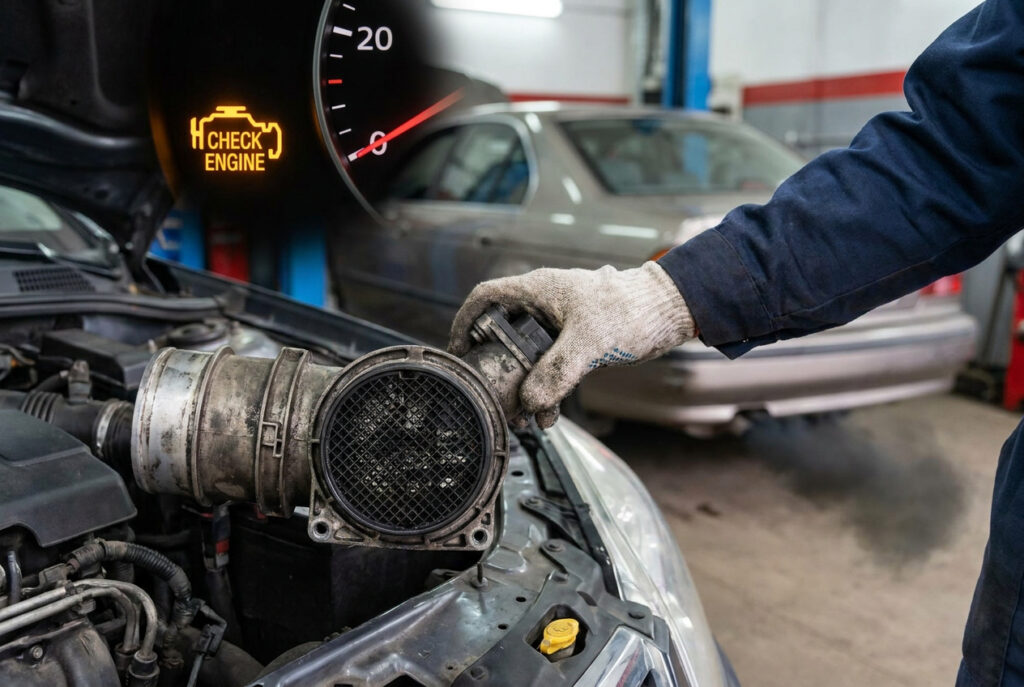
A bad MAF sensor doesn’t always have obvious signs of damage. In many cases, it looks perfectly normal from the outside, even though it’s sending inaccurate airflow readings to the Engine Control Unit (ECU).
However, if you remove the sensor and inspect it closely, you may notice one or more of the following:
- Dirt or dust covering the sensing element
- Oil residue from an over-oiled reusable air filter
- Carbon or grime buildup
- Corrosion on the electrical terminals
- A broken or damaged sensing wire (on hot-wire MAF sensors)
- Cracks in the plastic housing or a damaged connector
Keep in mind that what a bad MAF sensor looks like doesn’t always tell the whole story. Some failed sensors show no visible damage at all and can only be identified through testing or diagnostic trouble codes.
If your vehicle is showing performance issues such as rough idling, poor acceleration, or a check engine light, don’t rely on appearance alone. The symptoms your vehicle is experiencing are often a much better indicator of a failing MAF sensor than its physical condition.
In the following sections, I’ll explain how to visually inspect a MAF sensor, what damage to look for, and the most common symptoms that indicate it’s no longer working properly.
Can You Tell If a MAF Sensor Is Bad Just by Looking at It?
The short answer is not always.
When you inspect a MAF sensor, start by looking for obvious signs of contamination or physical damage. Sometimes the problem is immediately visible, but many faulty sensors look perfectly clean and still fail to measure airflow accurately.
Here are a few things you should check during a visual inspection:
- Dirt or dust on the sensing element
- Oil residue from an aftermarket reusable air filter
- Corrosion on the electrical terminals
- A cracked or melted plastic housing
- Broken connector tabs or damaged wiring
- A bent or broken sensing wire (on hot-wire MAF sensors)
If you notice any of these issues, the sensor may need to be cleaned or replaced. However, don’t assume a clean-looking sensor is in good working condition.
Many MAF sensors fail internally due to worn electronics or electrical faults that can’t be seen with the naked eye. In these cases, the sensor may look almost new but still cause rough idling, poor acceleration, reduced fuel economy, or a check engine light.
That’s why you shouldn’t rely on appearance alone. A visual inspection is an excellent first step, but if your vehicle is showing symptoms of a bad MAF sensor, you’ll usually need to perform additional tests to confirm whether the sensor is actually faulty.
What Does a Dirty MAF Sensor Look Like?
A dirty MAF sensor is one of the most common causes of inaccurate airflow readings. Over time, dust, oil, moisture, and other contaminants can build up on the sensor’s delicate sensing element, affecting its ability to measure incoming air correctly.
When you inspect the sensor, here are the most common signs of contamination to look for:
Dust and Dirt Buildup
Fine dust and debris can collect on the sensing wire or sensing film, especially if the engine air filter is old, damaged, or improperly installed. Even a thin layer of dirt can reduce the sensor’s accuracy.
Oil Residue
If your vehicle uses an oiled reusable air filter, excess filter oil can coat the MAF sensor. This sticky residue attracts more dirt over time and may cause incorrect airflow readings.
Carbon or Grime Deposits
Some sensors develop a dark film or carbon-like residue after years of normal operation. This buildup can interfere with the sensor’s ability to detect airflow precisely.
Moisture or Water Spots
Although less common, moisture can reach the sensor if water enters the air intake system. Water spots, stains, or corrosion may indicate that the sensor has been exposed to excessive moisture.
Light Corrosion
Check the electrical connector and terminals for signs of corrosion. Green, white, or bluish deposits can create poor electrical connections and lead to intermittent sensor problems.
A dirty MAF sensor doesn’t always need to be replaced. In many cases, carefully cleaning it with a dedicated MAF sensor cleaner can restore accurate airflow readings. However, if cleaning doesn’t resolve the issue or the sensor shows physical damage, replacement is usually the better option.
What Does a Damaged MAF Sensor Look Like?
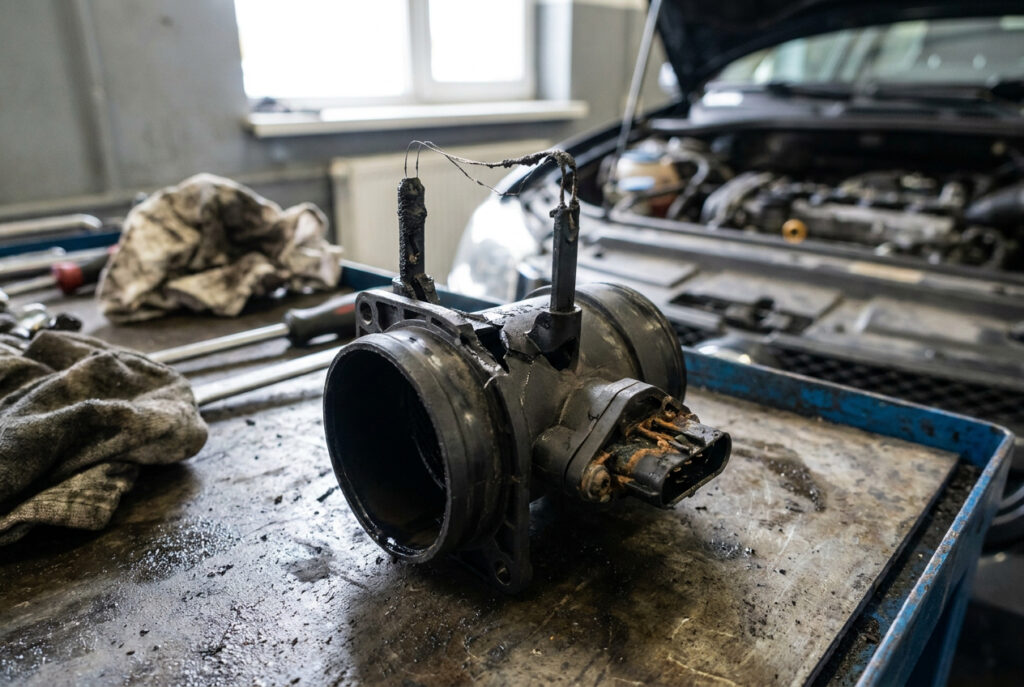
Unlike a dirty sensor, a damaged MAF sensor often has physical defects that can’t be fixed by cleaning. Once the sensing element or internal electronics are damaged, replacing the sensor is usually the only reliable solution.
Here are the most common signs of physical damage you should look for:
Broken Hot Wire or Sensing Element
On hot-wire MAF sensors, the thin sensing wire can become bent, broken, or completely missing. Since this wire measures the amount of air entering the engine, any damage will prevent the sensor from working correctly.
Cracked Plastic Housing
Inspect the sensor housing for cracks or impact damage. A cracked housing can allow unfiltered air or moisture to enter the sensor, leading to inaccurate airflow readings.
Burn Marks or Heat Damage
Dark discoloration, melted plastic, or burn marks may indicate that the sensor has been exposed to excessive heat or an electrical problem. In most cases, a heat-damaged sensor should be replaced.
Damaged Electrical Connector
Look closely at the connector and wiring. Broken locking tabs, bent pins, loose terminals, or damaged wires can interrupt communication between the MAF sensor and the Engine Control Unit (ECU).
Corroded Sensor Pins
Heavy corrosion on the connector pins can prevent the sensor from sending accurate signals. If cleaning the terminals doesn’t restore a solid connection, the sensor or connector may need to be replaced.
Even if you don’t see any visible damage, the sensor can still fail internally. That’s why a visual inspection should always be followed by proper testing if your vehicle continues to show symptoms of a bad MAF sensor.
Symptoms of a Bad MAF Sensor
A failing MAF sensor can affect almost every aspect of your engine’s performance because the Engine Control Unit (ECU) depends on accurate airflow data to calculate the correct air-fuel mixture. When the sensor sends incorrect information, you may notice one or several drivability problems.
Here are the most common symptoms of a bad MAF sensor you should watch for.
Check Engine Light
One of the earliest warning signs is an illuminated check engine light. When the ECU detects abnormal airflow readings or an electrical problem with the MAF sensor, it stores a diagnostic trouble code (DTC) and turns on the warning light.
Rough Idle
If the MAF sensor reports incorrect airflow at idle, the engine may struggle to maintain a steady RPM. You might notice the engine shaking, vibrating, or idling unevenly while the vehicle is stopped.
Poor Acceleration
A bad MAF sensor can cause delayed throttle response or sluggish acceleration. Since the ECU doesn’t know exactly how much air is entering the engine, it may deliver too much or too little fuel when you press the accelerator.
Engine Hesitation
Your vehicle may hesitate or stumble during acceleration, especially when merging onto a highway or climbing a hill. This usually happens because the air-fuel mixture isn’t balanced.
Loss of Power
Many drivers notice that the vehicle feels less responsive than usual. Even with the accelerator pressed further, the engine may struggle to produce normal power.
Reduced Fuel Economy
Incorrect airflow readings often cause the ECU to inject more fuel than necessary. As a result, you may find yourself visiting the gas station more often than usual.
Hard Starting
A faulty MAF sensor can make the engine difficult to start, particularly when it’s cold. In some cases, the engine may crank longer than normal before finally starting.
Engine Stalling
If the airflow readings become extremely inaccurate, the engine may stall shortly after starting or while idling at a stoplight.
Engine Misfires
An incorrect air-fuel mixture can prevent proper combustion inside one or more cylinders, leading to engine misfires, hesitation, or noticeable vibrations.
Black Exhaust Smoke
If the engine is running excessively rich because of faulty airflow data, you may see black smoke coming from the exhaust. This is a sign that too much fuel is being burned.
Rich or Lean Fuel Mixture
A failing MAF sensor can cause the engine to run either too rich (too much fuel) or too lean (too little fuel). Both conditions can reduce performance, increase emissions, and eventually damage other engine components.
Failed Emissions Test
Since the MAF sensor directly affects fuel delivery and combustion efficiency, a faulty sensor can increase exhaust emissions and cause your vehicle to fail an emissions inspection.
Limp Mode
Some modern vehicles enter limp mode when the ECU detects severe sensor problems. In this mode, engine power is intentionally reduced to help protect the engine until the issue is repaired.
Although these symptoms often point to a faulty MAF sensor, they can also be caused by vacuum leaks, ignition problems, clogged fuel injectors, or other engine issues. That’s why it’s important to confirm the diagnosis before replacing the sensor.
Read More: Can a MAF Sensor Cause Transmission Problems?
Why Does a Bad MAF Sensor Cause These Symptoms?
To understand why a bad MAF sensor creates so many different problems, it helps to know how the engine uses the information it provides.
The MAF sensor measures the amount of air entering the engine and sends that data to the Engine Control Unit (ECU). The ECU then calculates how much fuel should be injected to maintain the correct air-fuel ratio.
When the sensor provides inaccurate readings, the ECU makes fuel delivery decisions based on incorrect information. As a result, the engine may run either too rich (too much fuel) or too lean (too little fuel).
If the engine runs too rich, you may notice:
- Poor fuel economy
- Black exhaust smoke
- Rough idle
- Fouled spark plugs
- Higher emissions
If the engine runs too lean, you may experience:
- Hesitation during acceleration
- Loss of power
- Engine misfires
- Hard starting
- Engine stalling
Modern ECUs can compensate for small errors by adjusting fuel trims, but there’s a limit to how much correction they can make. Once the airflow readings become too inaccurate, the ECU can no longer maintain the proper air-fuel mixture, and noticeable drivability problems begin to appear.
This is why a single faulty MAF sensor can cause a wide range of symptoms that seem unrelated. Fortunately, identifying the underlying cause is often easier once you understand how the sensor influences the engine’s fuel delivery system.
What Causes a MAF Sensor to Go Bad?
Like any electronic component, a MAF sensor doesn’t last forever. Over time, contamination, normal wear, and electrical issues can reduce its accuracy or cause it to fail completely.
Here are the most common reasons a MAF sensor goes bad.
Dirt and Dust
The most common cause is dirt buildup on the sensing element. Even though the engine air filter removes most contaminants, fine dust can still reach the sensor over time and affect its ability to measure airflow accurately.
Oil Contamination
If you use an oiled reusable air filter, applying too much filter oil can coat the MAF sensor. This sticky residue attracts dirt and often leads to inaccurate airflow readings.
Moisture Exposure
Water entering the air intake system can damage the sensor or cause corrosion on the electrical terminals. This is more likely to happen if the vehicle has driven through deep water or has an improperly sealed air intake.
A Clogged or Damaged Air Filter
A dirty, damaged, or poorly installed air filter allows more contaminants to reach the MAF sensor. Replacing the air filter at the recommended intervals helps protect the sensor and extend its lifespan.
Electrical Problems
Loose connectors, damaged wiring, corroded terminals, or poor electrical connections can interrupt communication between the MAF sensor and the Engine Control Unit (ECU), resulting in incorrect readings or intermittent failures.
Vacuum or Intake Air Leaks
Leaks in the air intake system can allow unmetered air to enter the engine after the MAF sensor. Although the sensor itself may still be working properly, the extra air can produce symptoms that closely resemble those of a bad MAF sensor.
Normal Wear and Age
Over thousands of miles, the sensing element and internal electronics naturally wear out. Eventually, the sensor may become less accurate or fail altogether, especially on high-mileage vehicles.
The good news is that not every faulty MAF sensor needs to be replaced. If contamination is the only problem, a proper cleaning may restore normal operation.
How to Inspect a MAF Sensor
Before replacing a MAF sensor, it’s a good idea to inspect it carefully. A simple visual inspection can sometimes reveal the problem and save you from replacing a sensor that only needs cleaning.
Inspect the Sensor Housing
Start by examining the outside of the MAF sensor. Look for cracks, melted plastic, or any signs of physical damage. A damaged housing can allow moisture or unfiltered air to affect the sensor’s performance.
Check the Electrical Connector
Next, inspect the electrical connector. Make sure it’s fully seated and look for broken locking tabs, bent pins, corrosion, or damaged wires. A loose or faulty connection can cause many of the same symptoms as a bad MAF sensor.
Look at the Sensing Element
If you remove the sensor, inspect the sensing element without touching it. You’re looking for dust, oil residue, carbon deposits, or other contaminants that could interfere with accurate airflow measurements.
Important: Never touch the sensing wire or sensing film with your fingers or tools. These components are extremely delicate and can be damaged easily.
Inspect the Air Intake System
While you’re checking the sensor, inspect the surrounding air intake system as well. Look for loose hose clamps, cracked intake tubes, damaged air ducts, or vacuum leaks that could allow unmetered air to enter the engine.
Check the Engine Air Filter
Finally, inspect the engine air filter. If it’s dirty, damaged, or improperly installed, it may have allowed contaminants to reach the MAF sensor in the first place. Replacing the air filter can help prevent future problems.
If everything looks normal but your vehicle is still showing symptoms of a bad MAF sensor, the next step is to clean or test the sensor before deciding whether it needs to be replaced.
Can You Clean a Dirty MAF Sensor?
Yes—if the sensor is dirty, cleaning it can often restore accurate airflow readings and improve engine performance. However, cleaning only helps when contamination is the problem. It won’t fix a sensor with internal electrical damage or a broken sensing element.
Before you begin, make sure you use a dedicated MAF sensor cleaner. Other products, such as brake cleaner, carburetor cleaner, or throttle body cleaner, can damage the delicate sensing wire or leave behind residue.
To clean the sensor safely:
- Turn off the engine and disconnect the negative battery terminal if recommended by your vehicle’s manufacturer.
- Remove the MAF sensor carefully from the air intake system.
- Spray the sensing element with MAF sensor cleaner from the recommended distance.
- Do not touch or wipe the sensing wire or sensing film.
- Allow the sensor to air dry completely before reinstalling it.
After reinstalling the sensor, start the engine and check whether the symptoms have improved. If your vehicle still has rough idling, poor acceleration, or a check engine light, the sensor may require further testing or replacement.
Cleaning is an inexpensive first step, but it isn’t a guaranteed fix. If the MAF sensor has failed internally or suffered physical damage, replacing it is usually the only long-term solution.
How to Confirm the MAF Sensor Is Bad
A visual inspection and cleaning can reveal a lot, but they don’t always confirm whether the sensor is actually faulty. Before replacing the MAF sensor, it’s worth performing a few diagnostic checks to avoid unnecessary repairs.
Scan for Diagnostic Trouble Codes (DTCs)
The easiest place to start is with an OBD-II scanner. A failing MAF sensor often triggers diagnostic trouble codes, such as those related to airflow or fuel mixture. While a fault code doesn’t automatically mean the sensor is bad, it provides a valuable starting point for diagnosis.
Check Live Data
If your scan tool supports live data, monitor the MAF sensor readings while the engine is idling and during acceleration. Readings that are unusually high, low, or inconsistent may indicate a faulty sensor.
Test the Sensor with a Multimeter
Some MAF sensors can be tested with a multimeter by checking the power supply, ground, and signal voltage. Comparing the readings with your vehicle manufacturer’s specifications can help determine whether the sensor is operating correctly.
Inspect for Intake Leaks
A vacuum leak or cracked intake hose can produce many of the same symptoms as a bad MAF sensor. Before replacing the sensor, inspect the air intake system for leaks that could allow unmetered air to enter the engine.
Compare Symptoms After Cleaning
If the sensor was dirty, drive the vehicle after cleaning it. If the rough idle, hesitation, poor fuel economy, or check engine light disappears, contamination was likely the cause. If the symptoms remain unchanged, further testing or replacement may be necessary.
The goal is to confirm the root cause rather than replacing parts based on symptoms alone. A few minutes of proper diagnosis can save both time and money while ensuring the actual problem is fixed.
Can You Drive with a Bad MAF Sensor?
Yes, you can drive with a bad MAF sensor in some situations, but it’s not recommended. While many vehicles will continue to run, a faulty sensor can negatively affect engine performance, fuel economy, and overall drivability.
If the MAF sensor sends incorrect airflow data to the Engine Control Unit (ECU), your engine may receive too much or too little fuel. This can lead to several problems, including:
- Reduced engine power
- Poor acceleration
- Rough idle
- Engine hesitation
- Increased fuel consumption
- A check engine light
On some vehicles, the ECU may switch to a backup operating mode using preset values instead of live airflow data. This allows the engine to keep running, but performance is usually reduced. In more severe cases, the vehicle may enter limp mode, limiting engine power to help prevent further damage.
Driving a short distance to get home or to a repair shop is often possible. However, continuing to drive with a faulty MAF sensor for an extended period isn’t a good idea. An incorrect air-fuel mixture can increase emissions, reduce fuel efficiency, and put additional stress on components such as the spark plugs, catalytic converter, and oxygen sensors.
If your vehicle is showing multiple symptoms of a bad MAF sensor, it’s best to diagnose and repair the problem as soon as possible rather than continuing to drive with a known fault.
Read the Full Guide : Can You Drive with a Bad MAF Sensor?
Should You Clean or Replace the MAF Sensor?
If you’ve confirmed that the MAF sensor is causing your engine problems, the next question is whether you should clean it or replace it. The answer depends on what’s actually wrong with the sensor.
In many cases, a dirty MAF sensor can be cleaned and returned to normal operation. However, if the sensor is physically damaged or has an internal electrical fault, replacement is the only reliable solution.
| Condition | Recommended Action |
| Light dust or dirt buildup | Clean the sensor |
| Oil contamination | Clean the sensor |
| Carbon deposits | Clean the sensor |
| Corroded electrical terminals | Clean the terminals and inspect the connector |
| Broken sensing wire | Replace the sensor |
| Cracked or melted housing | Replace the sensor |
| Internal electrical failure | Replace the sensor |
| Cleaning didn’t solve the problem | Replace the sensor |
Cleaning is usually the best first step because it’s inexpensive and only takes a few minutes. Just be sure to use a dedicated MAF sensor cleaner and never touch the sensing element with your fingers or tools.
If the sensor continues to cause rough idling, poor acceleration, engine hesitation, or a check engine light after cleaning and testing, replacing it is the better long-term solution. Installing a quality replacement sensor helps restore accurate airflow readings and ensures the Engine Control Unit (ECU) can properly manage the engine’s air-fuel mixture.
When possible, choose a high-quality OEM or reputable aftermarket MAF sensor. Cheap, low-quality sensors may produce inaccurate readings and create the same drivability problems you’re trying to fix.
Frequently Asked Questions
What are the first symptoms of a bad MAF sensor?
The first signs often include a check engine light, rough idle, poor acceleration, reduced fuel economy, or engine hesitation. In some vehicles, you may notice only one symptom at first, while others develop multiple drivability issues over time.
What does a bad MAF sensor look like?
A bad MAF sensor may show visible signs such as dirt, oil residue, corrosion, a cracked housing, or a broken sensing wire. However, many faulty sensors look completely normal from the outside, so appearance alone isn’t enough to confirm a failure.
Can a bad MAF sensor cause a misfire?
Yes. A faulty MAF sensor can send incorrect airflow data to the Engine Control Unit (ECU), resulting in an improper air-fuel mixture. This can lead to engine misfires, rough idling, and hesitation.
Can a bad MAF sensor cause a no-start condition?
It’s possible, although it’s less common. A severely faulty MAF sensor can make starting difficult or even prevent the engine from starting on some vehicles. However, many no-start problems are caused by other issues, such as a weak battery, fuel delivery problems, or ignition system failures.
Will cleaning a MAF sensor fix the problem?
If dirt or oil contamination is affecting the sensor, cleaning it with a dedicated MAF sensor cleaner may restore normal operation. If the sensor has internal electrical damage or physical defects, cleaning won’t solve the problem.
How long does a MAF sensor typically last?
There’s no fixed replacement interval, but many MAF sensors last 100,000 miles (160,000 km) or more under normal driving conditions. Their lifespan depends on driving habits, air filter maintenance, and environmental conditions.
Can a bad MAF sensor damage the engine?
A bad MAF sensor usually won’t damage the engine immediately, but driving with one for an extended period can cause an incorrect air-fuel mixture. Over time, this may increase emissions, reduce fuel economy, and place additional stress on components such as the catalytic converter and spark plugs.
Should I clean or replace my MAF sensor first?
If the sensor is dirty but otherwise undamaged, cleaning is usually the best first step. If cleaning doesn’t improve the symptoms or the sensor has visible damage or electrical faults, replacing it is the more reliable solution.
Conclusion
A faulty MAF sensor can cause a surprising number of engine problems, from rough idling and poor acceleration to reduced fuel economy and an illuminated check engine light. While these issues can be frustrating, they don’t always mean the sensor needs to be replaced. In many cases, a dirty MAF sensor can be cleaned and returned to normal operation.
As you’ve learned throughout this guide, the symptoms of a bad MAF sensor often overlap with those of other engine problems. That’s why it’s important to inspect the sensor, check for contamination or physical damage, and perform the proper diagnostic tests before replacing any parts.
If your MAF sensor is clean and functioning correctly, the problem may lie elsewhere in the air intake system, such as a vacuum leak, damaged wiring, or another faulty sensor. Taking the time to diagnose the issue accurately can save you money and prevent unnecessary repairs.
Whether you’re troubleshooting a check engine light or simply trying to understand what a bad MAF sensor looks like, knowing the warning signs puts you in a much better position to keep your engine running smoothly. Addressing the problem early can help restore performance, improve fuel efficiency, and prevent more expensive repairs down the road.