A dirty MAF (Mass Air Flow) sensor can cause a variety of engine performance problems, from rough idle and poor acceleration to reduced fuel economy and an illuminated Check Engine Light. Because the MAF sensor measures the amount of air entering the engine, even a small layer of dirt, dust, or oil on its sensing element can lead to inaccurate airflow readings and an improper air-fuel mixture.
The good news is that a contaminated MAF sensor doesn’t always need to be replaced. In many cases, a proper cleaning can restore accurate readings and improve engine performance. However, because the sensing element is extremely delicate, using the wrong cleaning method—or the wrong product—can permanently damage the sensor.
Read More: Best MAF Sensor Cleaner Sprays for Better Performance
In this guide, you’ll learn how to clean a MAF sensor safely, including the tools you’ll need, the correct cleaning procedure, common mistakes to avoid, and how to tell whether the cleaning was successful. I’ll also briefly answer related questions, such as what to clean a MAF sensor with, whether a MAF sensor can be cleaned, and when cleaning isn’t enough, with links to more detailed guides where appropriate.
When Should You Clean a MAF Sensor?
A MAF sensor doesn’t require frequent maintenance, but it can become contaminated over time by dust, dirt, oil vapor, and debris passing through the air intake system. As these contaminants accumulate on the sensing element, the sensor may begin reporting inaccurate airflow data to the engine control unit (ECU), leading to various drivability issues.
Cleaning the MAF sensor is often a good first step if you notice one or more of the following symptoms:
- Rough or unstable idle
- Hesitation during acceleration
- Reduced engine power
- Poor fuel economy
- Engine stalling after starting
- Check Engine Light with MAF-related trouble codes
- Black exhaust smoke caused by an incorrect air-fuel mixture
It’s also worth inspecting the MAF sensor if you’ve recently discovered a dirty air filter, an intake air leak, or excessive oil contamination from an over-oiled aftermarket air filter.
Read Full Guide : Does Cleaning a MAF Sensor Work?
How Often Should You Clean a MAF Sensor?
There is no universal replacement or cleaning interval because it depends on driving conditions, air filter quality, and the environment. However, many technicians recommend inspecting or cleaning the MAF sensor approximately every 20,000 to 30,000 miles (32,000 to 48,000 km), or whenever airflow-related symptoms begin to appear.
If your vehicle is driven regularly on dusty roads or uses a reusable oiled air filter, the sensor may require more frequent inspection.
Tip: Cleaning is a maintenance procedure—not a guaranteed repair. If the MAF sensor has an internal electrical fault or physical damage, cleaning alone won’t restore proper operation.
What You’ll Need Before Cleaning
Preparing the right tools before you begin makes the cleaning process safer and reduces the risk of damaging the MAF sensor. Fortunately, you don’t need many supplies, but using the correct ones is essential.
Here’s what you’ll need:
- MAF sensor cleaner (specifically designed for Mass Air Flow sensors)
- Basic hand tools (such as a screwdriver or socket set, depending on your vehicle)
- Clean microfiber cloth (for cleaning around the sensor housing only)
- Safety gloves and safety glasses (recommended)
- Vehicle owner’s manual or service manual (optional, for sensor location and removal instructions)
Before starting, park the vehicle on a level surface, turn off the engine, and allow it to cool completely. Working on a hot engine increases the risk of burns and can make handling plastic intake components more difficult.
Having everything ready beforehand allows you to clean the sensor quickly without exposing it to unnecessary handling or contamination.
What to Clean a MAF Sensor With
Using the right cleaning product is the most important part of cleaning a MAF sensor. Because the sensing element is extremely delicate, not every automotive cleaner is safe to use.
The best option is a dedicated MAF sensor cleaner. These cleaners are specially formulated to dissolve dirt, dust, oil residue, and other contaminants while evaporating quickly without leaving behind any residue. They are also designed to be safe for the thin sensing wire or film found inside modern MAF sensors.
When choosing a cleaner, look for products that are specifically labeled for Mass Air Flow Sensors. Avoid using general-purpose solvents or cleaners that aren’t intended for electronic sensors.
Read More Details : Can You Clean a MAF Sensor Without Cleaner?
Cleaners You Should Avoid
Never use the following products on a MAF sensor:
- Brake cleaner
- Throttle body cleaner
- Carburetor cleaner
- Electrical contact cleaner (unless the manufacturer specifically states it’s safe for MAF sensors)
- WD-40 or other lubricants
- Soap and water
These products can leave residue, damage protective coatings, or permanently harm the sensitive sensing element.
If you don’t have a dedicated MAF cleaner, it’s tempting to use an alternative product. However, some substitutes can do more harm than good.
Want to know which products are safe? Check out our detailed guides on Can You Use Throttle Body Cleaner on a MAF Sensor? and Can You Use Brake Cleaner on a MAF Sensor? before trying any alternative cleaning method.
How to Clean a MAF Sensor (Step-by-Step)
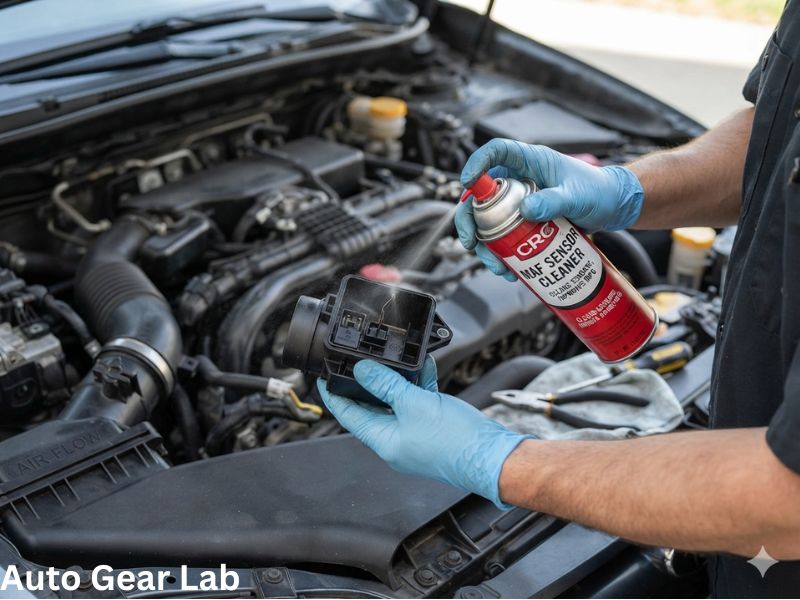
Cleaning a MAF sensor is a straightforward process, but it must be done carefully. The sensing wire or film inside the sensor is extremely fragile, and improper handling can permanently damage it.
Follow these steps to clean the sensor safely.
Step 1: Turn Off the Engine
Park the vehicle on a level surface, switch off the engine, and remove the ignition key. Allow the engine to cool completely before working around the intake system.
For added safety, many technicians recommend disconnecting the negative battery terminal, although this isn’t mandatory for every vehicle.
Step 2: Locate the MAF Sensor
Find the MAF sensor in the air intake system. It’s typically mounted between the air filter housing and the throttle body.
Most sensors are secured with two screws and have an electrical connector attached to the top or side.
Step 3: Disconnect the Electrical Connector
Press the locking tab and gently unplug the electrical connector.
Never pull on the wiring harness itself. If the connector is difficult to remove, inspect it for dirt or debris rather than forcing it.
Step 4: Remove the MAF Sensor
Using the appropriate screwdriver or socket, remove the mounting screws and carefully lift the sensor from the intake tube.
Hold the sensor by its plastic housing. Avoid touching the sensing wire or sensing film inside the sensor.
Step 5: Inspect the Sensor
Before cleaning, examine the sensor for:
- Dirt or dust buildup
- Oil contamination
- Damaged sensing wire
- Cracked plastic housing
- Corroded electrical terminals
If the sensing element is physically broken or the housing is damaged, cleaning won’t solve the problem and replacement may be necessary.
Step 6: Spray the MAF Cleaner
Shake the MAF cleaner if required by the manufacturer.
Hold the can several inches away and spray the sensing element with short, even bursts until dirt and residue are removed.
Spray both the sensing wire (or sensing film) and the sensor opening without making physical contact.
Important:
- Never scrub the sensor.
- Never use a brush, cotton swab, or cloth.
- Never use compressed air to speed up cleaning.
Let the cleaner do the work.
Step 7: Allow the Sensor to Air Dry
Place the sensor on a clean surface and allow it to air dry completely.
Most MAF cleaners evaporate within 10–20 minutes, but always follow the drying time recommended by the cleaner manufacturer.
Do not reinstall the sensor while it’s still wet.
Step 8: Reinstall the Sensor
Once the sensor is completely dry:
- Reinstall it in the same orientation.
- Tighten the mounting screws securely, but avoid overtightening.
- Reconnect the electrical connector until it clicks into place.
Finally, reconnect the battery if you disconnected it earlier.
Step 9: Start the Engine and Test Drive
Start the engine and let it idle for a few minutes.
Pay attention to:
- Idle quality
- Engine smoothness
- Throttle response
- Check Engine Light status
If possible, take the vehicle for a short test drive. Improved acceleration, smoother idle, and better throttle response often indicate that the cleaning was successful.
Mistakes to Avoid When Cleaning a MAF Sensor
Cleaning a MAF sensor is simple, but a few common mistakes can damage the sensor or make the cleaning ineffective.
Touching the Sensing Wire
The sensing wire or sensing film is extremely delicate. Even light contact with your fingers, a cloth, or a brush can damage it or affect its calibration.
Using the Wrong Cleaner
Brake cleaner, carburetor cleaner, throttle body cleaner, and other harsh solvents are not designed for MAF sensors. They can damage protective coatings or leave harmful residue behind.
Always use a cleaner specifically labeled for Mass Air Flow sensors.
Wiping the Sensor
After spraying the cleaner, resist the urge to wipe away dirt with a cloth or cotton swab.
The cleaner is designed to dissolve contamination and evaporate on its own.
Using Compressed Air
Blowing compressed air directly onto the sensing element can bend or break the wire.
Allow the sensor to air dry naturally instead.
Reinstalling Before It’s Dry
Installing a wet sensor may affect readings or allow cleaner residue to enter the electrical connector.
Always wait until the sensor has completely dried before reinstalling it.
Forgetting to Inspect the Intake System
A dirty MAF sensor is often the result of another issue, such as:
- A clogged air filter
- A cracked intake hose
- Loose intake clamps
- An over-oiled reusable air filter
If these problems aren’t corrected, the sensor may become contaminated again shortly after cleaning.
Can You Clean a MAF Sensor?
Yes, you can clean a MAF sensor, and in many cases, it’s the first troubleshooting step recommended before replacing it. If the sensor is contaminated with dust, dirt, or oil residue, proper cleaning can restore accurate airflow readings and improve engine performance.
However, cleaning only works when contamination is the root cause. If the MAF sensor has an internal electrical fault, a damaged sensing element, or a cracked housing, no amount of cleaning will fix it. That’s why it’s important to inspect the sensor carefully and evaluate engine performance after cleaning.
Want to know when cleaning actually solves the problem? Read our detailed guide on Does Cleaning a MAF Sensor Work?, where we explain when cleaning is effective, when it isn’t, and how to tell the difference.
MAF Sensor Cleaner Explained
A MAF sensor cleaner is a specialized aerosol cleaner designed to remove dirt, dust, oil, and other contaminants from the sensitive sensing element without causing damage.
Unlike general-purpose automotive cleaners, MAF cleaners are formulated to evaporate quickly and leave no residue behind. This is important because even a thin film of residue can interfere with the sensor’s ability to measure airflow accurately.
Most MAF sensor cleaners are safe for both hot-wire and hot-film MAF sensors, making them suitable for the majority of modern vehicles. When used correctly, they can help restore accurate airflow measurements and improve drivability without the need for sensor replacement.
Always follow the instructions provided by the cleaner manufacturer, and allow the sensor to air dry completely before reinstalling it.
Related Cleaning Questions
Can You Clean a MAF Sensor Without Cleaner?
While it’s technically possible to remove loose dust from a MAF sensor without a dedicated cleaner, it’s generally not recommended. Household solvents, water, compressed air, or improvised cleaning methods can damage the delicate sensing element or leave behind residue that affects sensor accuracy. A proper MAF cleaner is specifically designed to clean the sensor safely.
Learn more: Read our complete guide on Can You Clean a MAF Sensor Without Cleaner? to understand the risks, possible alternatives, and the safest approach.
Can You Use Throttle Body Cleaner on a MAF Sensor?
Although throttle body cleaner is designed to remove carbon deposits from throttle plates, it is not formulated for MAF sensors. It may contain stronger solvents that can damage the sensor’s protective coating or leave residue on the sensing element. Using the wrong cleaner could turn a simple maintenance job into an expensive replacement.
Read our detailed comparison: Can You Use Throttle Body Cleaner on a MAF Sensor? to learn why these products are different and whether there are any exceptions.
Can You Use Brake Cleaner on a MAF Sensor?
No. Brake cleaner should never be used on a MAF sensor. It’s a powerful solvent intended for metal brake components—not delicate electronic sensors. Brake cleaner can strip protective coatings, damage the sensing wire, and leave the sensor permanently unusable.
See the full explanation: Our guide on Can You Use Brake Cleaner on a MAF Sensor? covers the risks, common misconceptions, and safer alternatives.
How to Know If Cleaning Worked
After reinstalling the MAF sensor, don’t assume the job is complete. The best way to determine whether the cleaning was successful is to observe how the engine performs during idle, acceleration, and normal driving.
Start the engine and let it idle for a few minutes. If the MAF sensor was dirty and contamination was causing inaccurate airflow readings, you may notice immediate improvements.
Look for the following signs:
- Smoother and more stable idle
- Quicker throttle response
- Improved acceleration
- Better fuel economy over the next few drives
- Reduced hesitation or stumbling during acceleration
- Check Engine Light remains off (or does not return after clearing the code)
If you have access to an OBD2 scanner, it’s also a good idea to monitor live MAF readings and fuel trims. Stable airflow values and fuel trims closer to normal indicate that the sensor is reporting more accurate data.
Keep in mind that improvements may not always be immediate. Some vehicles require a short drive cycle before the ECU fully adapts to the cleaned sensor.
If the symptoms remain unchanged after cleaning, the problem may not be contamination. In that case, further diagnosis is needed to determine whether the MAF sensor has failed electrically or another engine component is causing the issue.
When Cleaning Isn’t Enough
Cleaning can restore a contaminated MAF sensor, but it isn’t a solution for every problem. If the sensor has internal damage or the issue lies elsewhere in the engine, replacing the sensor—or diagnosing another component—may be necessary.
Cleaning is unlikely to help in the following situations:
The Sensing Element Is Damaged
If the hot wire or hot film inside the sensor is broken, bent, or burned, the sensor cannot accurately measure airflow. Physical damage requires replacement.
The Sensor Has an Internal Electrical Failure
A MAF sensor can fail electronically even if it looks perfectly clean. If testing shows incorrect voltage, no signal output, or erratic live data after cleaning, the sensor is likely defective.
The Housing or Connector Is Damaged
Cracked housings, broken mounting points, or corroded electrical terminals can affect sensor performance and reliability. These problems usually cannot be fixed by cleaning.
Fault Codes Return After Cleaning
If you clear MAF-related diagnostic trouble codes and they return shortly after driving, further diagnosis is required. Persistent codes may indicate:
- A failed MAF sensor
- Intake air leaks
- Wiring problems
- Fuel system issues
- Other engine management faults
Engine Performance Doesn’t Improve
If the vehicle continues to experience rough idle, hesitation, poor fuel economy, or stalling after cleaning, it’s important to inspect other possible causes before replacing the sensor. Vacuum leaks, clogged air filters, ignition problems, and fuel delivery issues can produce symptoms that closely resemble a faulty MAF sensor.
Tip: Always diagnose the complete intake and fuel system before purchasing a new MAF sensor. Replacing the sensor without confirming the root cause can lead to unnecessary expense and leave the original problem unresolved.
Frequently Asked Questions
How often should you clean a MAF sensor?
There isn’t a fixed service interval for every vehicle, but inspecting or cleaning the MAF sensor every 20,000–30,000 miles (32,000–48,000 km) is a common preventive maintenance practice. Vehicles driven in dusty environments or equipped with reusable oiled air filters may require more frequent cleaning.
How long should you let a MAF sensor dry?
Most MAF sensor cleaners evaporate quickly, and the sensor is usually dry within 10–20 minutes. Always allow it to air dry completely before reinstalling it, and follow the drying time recommended by the cleaner manufacturer.
Do you need to disconnect the battery before cleaning a MAF sensor?
It’s not always required, but disconnecting the negative battery terminal is a good safety practice. It reduces the risk of accidental electrical shorts while removing and reinstalling the sensor.
Can cleaning damage a MAF sensor?
Cleaning itself won’t damage the sensor if it’s done correctly using a dedicated MAF sensor cleaner. Damage usually occurs when the sensing element is touched, scrubbed, or cleaned with products that aren’t designed for MAF sensors.
Should you reset the ECU after cleaning the MAF sensor?
In many vehicles, resetting the ECU isn’t necessary because it will gradually adapt to the cleaned sensor during normal driving. However, if the Check Engine Light was on or diagnostic trouble codes were stored, clearing the codes with an OBD2 scanner can help the ECU begin learning with fresh sensor data.
Conclusion
Cleaning a MAF sensor is one of the simplest and most cost-effective maintenance procedures you can perform when your engine begins showing signs of inaccurate airflow measurement. Using the correct cleaner and following the proper cleaning procedure can often restore smoother idle, better throttle response, and improved fuel efficiency without replacing the sensor.
However, cleaning is only effective when contamination is the root cause. If symptoms persist after cleaning, further testing is necessary to determine whether the sensor has an electrical fault, physical damage, or if another engine problem is responsible.
Before replacing a MAF sensor, always inspect the intake system, verify the diagnosis, and rule out related issues. A systematic approach can save both time and money while ensuring the real problem is fixed correctly.