A dead battery in a semi truck is more than a minor inconvenience. Large diesel engines need substantially more starting power than passenger cars, and weak clamps, undersized cables, or an incorrectly matched voltage can make an ordinary portable jump pack useless when a truck refuses to crank.
For this guide, I focused on commercial-grade starting power, 12V/24V capability, cable quality, durability, portability, and established buyer feedback rather than simply choosing products with the biggest advertised amp numbers.
My primary recommendation is the Clore Automotive Truck PAC ES1224 3000/1500 Peak Amp 12/24V Jump Starter. Its dual-voltage design, long #2 AWG cables, industrial clamps, and proven lead-acid starting system make it especially practical for truck shops, fleet operators, owner-operators, and mixed commercial equipment.
For another established 12V/24V option, I would consider the Schumacher Electric DSR ProSeries DSR166 4400A Jump Starter. It combines heavy-duty cables with a digital display and portable-power features while remaining specifically designed for large commercial vehicles.
If you want maximum portability for a typical 12V Class 8 application, the NOCO Boost Max GB250 5250A Lithium Jump Starter stands out. It weighs far less than traditional commercial lead-acid boxes and is rated for gasoline and diesel engines up to 16 liters, making it particularly attractive to drivers who need serious starting capability without carrying a 40-plus-pound jump box.
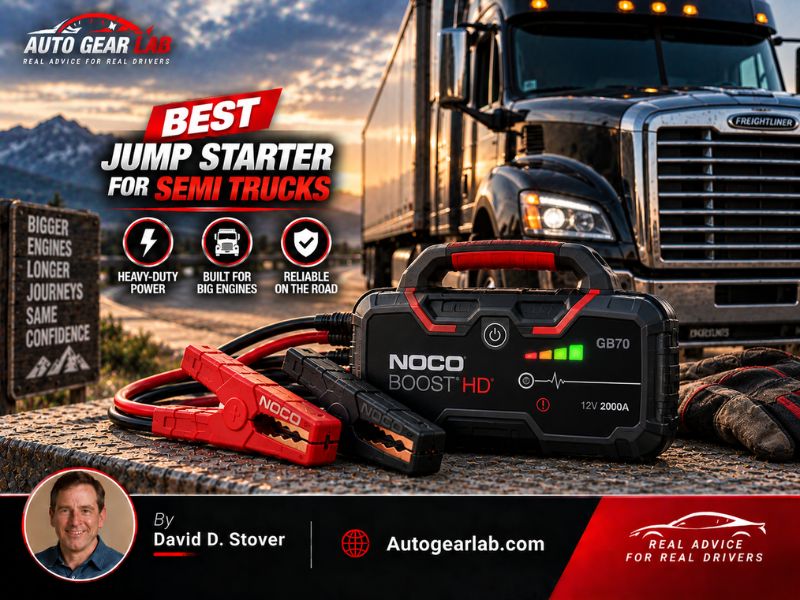
Best Jump Starter for Semi Trucks
| Image | Product Name | Check Price |
|---|---|---|
Best Choice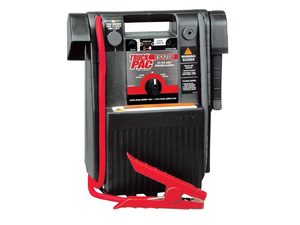 | Clore Automotive 3000/1500 Peak Amp 12/24V Jump Starter | Check Price |
Second Best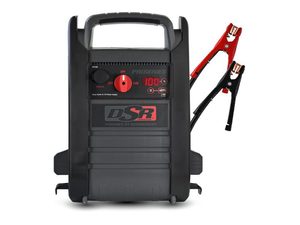 | Schumacher Electric 4400A Jump Starter | Check Price |
Third Choice | Clore Automotive 3400/1700 Peak Amp Jump Starter | Check Price |
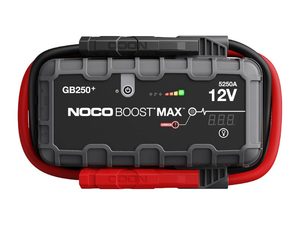 | NOCO Boost Max Lithium Jump Starter | Check Price |
 | NOCO Boost Max 12V/24V Jump Starter | Check Price |
1. Clore Automotive 3000/1500 Peak Amp 12/24V Jump Starter – Best Overall

The Truck PAC ES1224 takes my top position because it combines true commercial construction with one of the strongest buyer histories in this category.
It provides 3000 peak amps in 12V mode and 1500 peak amps in 24V mode, allowing one jump box to serve different trucks, buses, agricultural equipment, delivery vehicles, and heavy machinery.
More importantly, Clore does not rely entirely on a large peak-amp marketing figure. The unit is rated for 750 cranking amps at 12V and 370 cranking amps at 24V, which gives buyers a more useful indication of sustained starting capability.
Key Features
- 12V and 24V operation
- 3000 peak amps at 12V
- 1500 peak amps at 24V
- 750 cranking amps at 12V
- 370 cranking amps at 24V
- Dual ES Series internal batteries
- 60-inch #2 AWG cables
- Industrial Hot Jaw clamps
- Automatic recharging system
- Advanced Warning System
- 12V DC accessory outlet
The 60-inch #2 AWG cables are a major benefit on commercial trucks. Battery banks can be more awkward to access than a normal passenger-car battery, and long heavy-gauge cables make positioning the jump box considerably easier.
The industrial Hot Jaw clamps are another reason I prefer the ES1224 to many inexpensive high-amp lithium units. Strong clamps and thick cables help transfer available current efficiently instead of creating excessive resistance between the booster and battery.
The biggest disadvantage is weight. At roughly 45 pounds, this is not something you casually carry around like a pocket-size lithium booster.
For a truck shop, service vehicle, fleet yard, farm, or owner-operator who prioritizes dependable cranking over minimum weight, however, that tradeoff can be worthwhile.
What I Like
- Genuine 12V/24V versatility
- Excellent history of buyer feedback
- Commercial-grade construction
- Long 60-inch cables
- Heavy #2 AWG cable gauge
- Industrial clamps
- Strong sustained cranking capability
- Can remain connected to its automatic charger
- Designed specifically for frequent jump-starting applications
What I Do Not Like
- Heavy at roughly 45 pounds
- Much bulkier than lithium jump packs
- Lacks modern USB-C charging
- Requires more storage space inside a truck
Verdict
The Truck PAC ES1224 is my first choice for semi trucks, particularly when dependable 12V/24V operation and commercial durability matter more than lightweight portability.
2. Schumacher Electric 4400A Jump Starter – Best Professional Alternative

The Schumacher DSR166 is another purpose-built option for heavy commercial vehicles and earns second place because of its strong combination of output, cable construction, voltage flexibility, and substantial buyer history.
It supports 12V and 24V systems and carries a 4400-peak-amp rating.
Heavy-duty 2-gauge, approximately 5-foot booster cables help move current from the internal battery to large diesel starting systems while providing enough length to reach battery locations that would frustrate smaller consumer jump packs.
Key Features
- 12V/24V capability
- 4400 peak amps
- Heavy-duty 2-gauge booster cables
- Approximately 5-foot cable reach
- Digital battery-status display
- Reverse-polarity warning
- USB charging port
- 12V DC power outlet
- Heavy-duty commercial casing
- Can operate in vertical or horizontal positions
The digital display is useful in a working truck because it provides a clearer indication of charge status than a simple row of LEDs.
Schumacher also includes an audible reverse-polarity warning. That does not replace correct connection procedures, but it provides an additional safety layer when working around powerful commercial battery systems.
Like the Truck PAC, this is a large lead-acid jump box. It weighs around 40 pounds, so the DSR166 makes more sense in a sleeper compartment, service vehicle, truck shop, or fleet garage than in applications where minimum weight is important.
What I Like
- Designed for heavy-duty 12V/24V vehicles
- Strong Amazon feedback history
- Heavy 2-gauge cables
- Long cable reach
- Digital status information
- Reverse-polarity warning
- 12V accessory power
- Proven conventional jump-box design
What I Do Not Like
- Heavy and bulky
- Slower to recharge than many lithium models
- More difficult to carry long distances
- Not as convenient for compact cab storage
Verdict
The Schumacher DSR166 is my preferred alternative to the ES1224 when you want another established commercial 12V/24V jump box with heavy cables and straightforward professional operation.
3. Clore Automotive 3400/1700 Peak Amp Jump Starter – Best Heavy-Duty Clamps

The JNC1224 uses the same basic philosophy that has made traditional Jump-N-Carry units popular with mechanics: provide a large internal energy reserve, thick cables, substantial clamps, and uncomplicated controls.
It delivers 3400 peak amps in 12V mode and 1700 peak amps at 24V, providing useful flexibility for mixed commercial fleets.
Key Features
- 12V and 24V operation
- 3400 peak amps at 12V
- 1700 peak amps at 24V
- 46-inch #2 AWG welding cables
- Industrial-grade Hot Jaw clamps
- Built-in automatic charger
- AGM lead-acid battery system
- Rugged commercial housing
- Approximately 40-pound weight
The #2 AWG welding-style cables are one of the strongest reasons to consider this unit.
When starting large diesels, the complete electrical path matters. An impressive jump-box specification means little if thin cables create excessive voltage drop under load.
The industrial clamps also provide a strong grip on large battery terminals. This is particularly useful on work vehicles where terminals may not be as clean or accessible as those in a well-maintained passenger car.
The JNC1224 is not a lightweight solution. It belongs in the same general category as the Truck PAC and Schumacher: traditional commercial equipment built around sustained starting performance rather than portability.
What I Like
- Strong 3400/1700 peak-amp rating
- True dual-voltage capability
- Heavy #2 AWG cables
- Industrial clamps
- Substantial buyer-feedback history
- Automatic charging system
- Built for shop and commercial use
- Excellent for mixed equipment fleets
What I Do Not Like
- Around 40 pounds
- Large storage footprint
- Lead-acid construction requires proper maintenance
- Fewer modern convenience features than lithium alternatives
Verdict
The JNC1224 makes sense for technicians, trucking companies, and owner-operators who trust traditional commercial jump boxes and want thick cables with strong industrial clamps.
4. NOCO Boost Max Lithium Jump Starter – Best Portable Semi-Truck Pick

The NOCO GB250 changes the equation for drivers who want genuine commercial starting capability without carrying a 40- to 45-pound lead-acid jump box.
It produces up to 5250 amps and is designed for 12V gasoline and diesel engines up to 16 liters.
That engine range is important because many highway tractors use diesel engines in the 12- to 15-liter range.
Key Features
- 5250A peak output
- 12V operation
- Up to 16L gasoline engines
- Up to 16L diesel engines
- 242Wh lithium-ion battery
- Spark-proof connection technology
- Reverse-polarity protection
- 600-lumen LED work light
- Dual USB outputs
- IP65-rated housing with ports closed
- Approximately 14.7-pound weight
At approximately 14.7 pounds, the GB250 is dramatically easier to move than traditional commercial jump boxes.
That matters for an owner-operator. A jump starter that stays buried in a shop because it is too heavy is not useful when the truck battery fails hundreds of miles away.
NOCO’s UltraSafe system also provides spark protection and reverse-polarity safeguards during normal operation.
There is one major limitation: the GB250 is a 12V jump starter.
Do not assume that a semi needs 24V merely because it has multiple batteries. Likewise, never assume every commercial truck is 12V. Verify the truck’s actual starting-system voltage before connecting any booster.
What I Like
- Designed specifically for engines up to 16L
- Class 8-capable 12V design
- Far lighter than traditional commercial jump boxes
- Strong lithium starting output
- Spark-proof protection
- Reverse-polarity protection
- IP65 environmental protection
- Bright work light
- Compact enough for regular truck storage
What I Do Not Like
- 12V only
- Much more expensive than conventional lead-acid boxes
- Not appropriate for a true 24V starting system
- Requires attention to lithium storage temperatures
Verdict
For a 12V semi truck, the NOCO GB250 is the model I would choose when portability matters more than keeping the purchase price low.
5. NOCO Boost Max 12V/24V Jump Starter – Best Premium Pick

The NOCO GB500 is the most extreme jump starter in this group.
It combines lithium portability with 12V and 24V compatibility and a 6250A-rated commercial starting system designed for engines up to 45 liters.
That puts it far beyond normal pickup-truck jump starters.
Key Features
- 6250A commercial lithium starting power
- 12V and 24V compatibility
- Supports gas and diesel engines up to 45L
- Designed for Class 8 trucks
- Suitable for buses and coaches
- Suitable for construction and agricultural equipment
- Reverse-polarity protection
- Spark-proof technology
- Digital voltmeter
- LED work light
- USB/device charging capability
The GB500 is particularly attractive for a mobile heavy-duty technician or mixed fleet where the jump starter may need to handle semi trucks one day and construction equipment or buses the next.
Its lithium design delivers an enormous amount of starting capability without reaching the size of some commercial wheeled booster systems.
The problem is cost. This is professional equipment, and its pricing reflects that.
An owner-operator with one ordinary 12V tractor will generally get better value from the GB250 or ES1224.
A fleet technician who needs maximum 12V/24V flexibility, however, can justify the additional capability much more easily.
What I Like
- Extremely powerful commercial design
- 12V and 24V operation
- Up to 45L engine support
- Specifically suitable for Class 8 trucks
- Lithium construction
- Useful for mixed heavy-equipment fleets
- Strong safety electronics
- Significantly easier to transport than huge commercial booster carts
What I Do Not Like
- Very expensive
- Overkill for many owner-operators
- Lower buyer-review volume than older commercial jump boxes
- More sophisticated than necessary for occasional use
Verdict
The NOCO GB500 is my premium choice for fleets and technicians who need one portable lithium jump starter capable of handling demanding 12V and 24V commercial applications.
Best Jump Starter for Semi Trucks Comparison
| Product | Voltage | Peak Output | Cable Type | Battery Type | Main Advantage | Best For |
| Truck PAC ES1224 | 12V / 24V | 3000A / 1500A | 60-in #2 AWG | Lead-acid | Proven commercial reliability | Best overall |
| Schumacher DSR166 | 12V / 24V | 4400A | Heavy 2-gauge | AGM lead-acid | Long cables and digital display | Shops and fleets |
| Jump-N-Carry JNC1224 | 12V / 24V | 3400A / 1700A | 46-in #2 AWG | AGM lead-acid | Industrial clamps | Heavy-duty daily use |
| NOCO GB250 | 12V | 5250A | Heavy-duty lithium clamps | Lithium-ion | Low weight for 16L engines | Owner-operators |
| NOCO GB500 | 12V / 24V | 6250A | Commercial clamps | Lithium-ion | Up to 45L applications | Professional fleets |
Quick Comparison
The Truck PAC ES1224 remains my first choice for most buyers who genuinely need a semi-truck jump starter. Its combination of 12V/24V operation, sustained cranking capacity, #2 AWG cables, industrial clamps, and long-established design is difficult to beat.
The Schumacher DSR166 is another strong traditional commercial option, while the JNC1224 is particularly appealing to mechanics who value thick welding-style cables and substantial clamps.
For drivers who know their tractor uses a 12V starting system, the NOCO GB250 provides a major portability advantage.
The NOCO GB500 is the premium option when one unit must support both 12V and 24V commercial equipment.
How to Choose a Jump Starter for a Semi Truck
Verify 12V or 24V Before Anything Else
Voltage compatibility is the most important specification in this category.
A semi truck may contain multiple batteries, but the number of batteries alone does not tell you whether the starting system is 12V or 24V.
Check the truck manual, battery wiring, voltage labels, or manufacturer specifications.
Never connect a 24V output to a 12V electrical system.
Do Not Buy Based Only on Peak Amps
Peak amps are useful, but manufacturers do not necessarily measure and market them identically.
For a heavy-duty diesel, also consider:
Cranking output: Sustained current matters while turning a large engine.
Battery energy: The jump box needs enough stored energy for more than a momentary burst.
Cable gauge: Thin cables create electrical resistance.
Cable length: Commercial battery banks may be difficult to access.
Clamp construction: Strong contact reduces voltage loss.
Engine rating: A manufacturer specifically rating a starter for 12L, 16L, or Class 8 engines is more useful than an unexplained giant amp number.
Why Cable Gauge Matters
A semi-truck starter motor can demand substantial current.
All that energy has to travel through the booster cables.
Thicker conductors have less electrical resistance, which is why professional jump boxes commonly use #2 AWG or similarly heavy cable.
This is one reason the ES1224 and JNC1224 remain attractive even though inexpensive lithium packs may advertise much larger headline amp figures.
Longer Cables Can Be Worth the Extra Weight
Battery placement varies across tractors and commercial equipment.
A short consumer jump-pack cable may force you to position the unit awkwardly or make a secure connection difficult.
The ES1224’s approximately 60-inch leads provide considerably more flexibility.
Lead-Acid vs Lithium
Neither technology automatically wins.
Lead-Acid Jump Boxes
Traditional commercial boosters such as the Truck PAC and Jump-N-Carry provide substantial stored energy and sustained cranking ability.
They are proven and relatively affordable.
Their disadvantage is weight. Carrying a 40- to 45-pound jump box around a truck stop or job site is inconvenient.
Lithium Jump Starters
Lithium dramatically reduces weight.
The NOCO GB250, for example, provides commercial 12V starting capability in a package weighing far less than traditional jump boxes.
The tradeoff is cost, and lithium batteries also need appropriate temperature and charging management.
How Much Power Does a Semi-Truck Jump Starter Need?
There is no single amp requirement for every tractor.
Starting difficulty changes according to:
- Engine displacement
- Engine compression
- Outside temperature
- Oil viscosity
- Battery condition
- Number of batteries
- Battery state of charge
- Cable resistance
- Starter condition
A warm engine with partially discharged batteries may start easily.
A large diesel sitting overnight in severe winter conditions with deeply discharged batteries presents a much more demanding challenge.
Buying some power reserve is therefore sensible for commercial vehicles.
Why Cold Weather Matters
Diesel engines become significantly harder to crank as temperature falls.
Engine oil becomes thicker, battery output decreases, and the starter must work harder.
This means a jump starter that seems adequate in mild weather can struggle during winter.
Drivers operating in northern climates should be especially conservative when sizing a booster.
Keeping a jump starter properly charged becomes equally important.
Portable Jump Starter vs Service-Truck Jump Box
Portable Lithium Pack
Choose lithium if:
- You are an owner-operator
- Cab storage space matters
- You frequently carry the unit
- Your truck voltage is known
- You want minimum weight
Commercial Lead-Acid Jump Box
Choose a traditional jump box if:
- You operate a repair shop
- You maintain a fleet
- The starter is used frequently
- Maximum portability is unimportant
- You value sustained cranking capability
- Equipment varies between 12V and 24V
Large Commercial Booster System
Fleet yards and heavy-equipment shops that routinely deal with completely depleted battery banks may need equipment beyond a portable jump starter.
The most powerful portable unit should not automatically be viewed as a replacement for dedicated shop charging and starting equipment.
Semi-Truck Jump Starter Safety Tips
Confirm System Voltage
Never guess between 12V and 24V.
Incorrect voltage selection can damage electrical components and create serious hazards.
Identify Positive and Negative Correctly
Confirm terminal markings before connecting clamps.
Connect according to both the jump-starter instructions and truck manufacturer’s procedure.
Inspect for Battery Damage
Do not attempt a normal jump start on a battery that is visibly swollen, cracked, leaking, frozen, or otherwise severely damaged.
Turn Off Electrical Loads
Lights, HVAC blowers, accessories, and unnecessary electronics should generally be switched off before attempting a start.
Make Secure Clamp Connections
Large starting currents require clean, solid electrical contact.
Loose clamps increase resistance and can generate excessive heat.
Use Manual Override Carefully
Some lithium jump starters offer an override mode for extremely discharged batteries.
This mode may bypass portions of the automatic protection system.
Use it only after confirming correct polarity and following the manufacturer’s instructions.
Maintaining a Semi-Truck Jump Starter
Keep It Charged
A powerful jump starter with an empty internal battery is useless.
Check charge level regularly, especially before winter trips.
Recharge After Heavy Use
Large diesel starting attempts can consume significant stored energy.
Recharge the unit after use instead of assuming enough capacity remains for the next emergency.
Inspect Cables and Clamps
Look for:
- Damaged insulation
- Loose connections
- Burn marks
- Corrosion
- Weak clamp springs
- Cracked housings
Commercial jump starters operate at currents high enough that damaged cables should not be ignored.
Follow Temperature Limits
Lithium batteries in particular have defined charging and storage temperature ranges.
Do not charge a pack outside the manufacturer’s permitted temperature range.
Maintain Lead-Acid Units Properly
Traditional commercial jump boxes benefit from regular charging.
Models with automatic maintainers can often remain connected according to manufacturer instructions, keeping them ready for emergency use.
Common Buying Mistakes
Buying a Car Jump Starter for a 15L Diesel
A starter rated for 6L gasoline and 3L diesel engines may be excellent for passenger cars but unsuitable for a highway tractor.
Always match the booster to the actual diesel displacement and application.
Assuming Every Semi Is 24V
Many commercial trucks use 12V starting systems despite having several batteries.
Other equipment does use 24V.
Verify rather than assume.
Choosing Only by Advertised Amperage
Extremely high marketing numbers do not guarantee better real-world performance.
A commercial unit with thick cables and sustained current delivery can outperform a poorly engineered pack carrying a much larger amp label.
Ignoring Cable Length
A powerful booster with cables that cannot conveniently reach the battery terminals can become frustrating very quickly.
Forgetting About Weight
A 45-pound commercial box may be acceptable in a shop but inconvenient for an owner-operator climbing in and out of a tractor.
Choose the format that fits how the equipment will actually be used.
Frequently Asked Questions
What is the best jump starter for semi trucks?
The Truck PAC ES1224 is my preferred overall semi-truck jump starter.
It supports both 12V and 24V electrical systems and combines heavy #2 AWG cables with industrial clamps and strong sustained cranking output. Its traditional lead-acid construction makes it heavy, but the design is particularly well suited to commercial fleets and heavy-duty starting applications.
How many amps should a semi-truck jump starter have?
There is no universal amp requirement because diesel size, temperature, battery condition, and cable construction all affect starting demand.
Instead of relying only on peak amps, choose a commercial booster explicitly designed for large diesel engines or Class 8 trucks. Cranking performance, cable gauge, stored battery energy, and correct voltage support are equally important.
Is a semi truck 12V or 24V?
Semi trucks and heavy equipment can use different starting-system configurations, so voltage must be verified before connecting a jump starter.
Multiple batteries do not automatically mean 24V because batteries can be wired differently. Check the manufacturer’s electrical specifications or confirm system voltage with appropriate testing equipment.
Can NOCO GB250 jump-start a semi truck?
Yes, the GB250 is specifically designed for 12V gas and diesel engines up to 16 liters.
That makes it suitable for many Class 8 applications using a compatible 12V starting system. It should not be connected as a 24V booster because the GB250 itself is a 12V model.
Is the NOCO GB500 suitable for Class 8 trucks?
Yes, the GB500 is specifically designed for demanding commercial equipment including Class 8 trucks.
It supports both 12V and 24V operation and is rated for gasoline and diesel engines up to 45 liters, making it the highest-capability option in this comparison.
Which is better for a semi truck, lithium or lead-acid?
Lithium wins on portability, while traditional commercial lead-acid units often provide excellent value and sustained starting capability.
An owner-operator may appreciate a lighter lithium pack such as the GB250. A repair shop that uses the jump starter repeatedly may prefer a rugged commercial unit such as the Truck PAC ES1224.
Can a small 2000A car jump starter start a semi?
Some may start certain trucks under favorable conditions, but they should not automatically be considered suitable for large diesel engines.
Engine displacement, ambient temperature, battery condition, cable quality, and actual sustained output can drastically change performance. A product specifically designed for commercial diesel or Class 8 starting is the safer purchase.
Why does my jump starter click but not crank the semi?
Common causes include insufficient charge, poor clamp contact, an undersized booster, extremely discharged batteries, or a mechanical/electrical problem with the truck.
Verify connections and system voltage first. If batteries are damaged or the starter circuit has another fault, repeatedly attempting to crank with a jump box may not solve the underlying issue.
Do semi-truck jump starters need long cables?
Long cables are extremely useful because commercial battery banks can be difficult to access.
The cable must also be heavy enough to carry substantial starting current. Long, thin cables can create excessive voltage drop, so both length and conductor gauge matter.
How often should I charge a semi-truck jump starter?
Check charge level regularly and recharge after significant use.
The exact maintenance interval depends on battery chemistry and manufacturer recommendations. An owner-operator should also check the pack before long trips and before periods of extreme cold.
Can I leave a jump starter inside a semi truck?
Yes, provided the storage temperature remains within the manufacturer’s specified range.
This is particularly important for lithium units because truck interiors can become extremely hot during summer or very cold during winter. Inspect the pack periodically for damage or swelling.
Conclusion
Finding the best jump starter for semi trucks requires more than choosing the product with the largest number printed on the case. Large diesel engines demand strong current delivery, appropriate voltage, substantial cables, reliable clamps, and enough stored energy to keep cranking when conditions are difficult.
My primary recommendation remains the Clore Automotive Truck PAC ES1224. Its 12V/24V capability, industrial #2 AWG cables, 60-inch reach, heavy-duty clamps, and established commercial design give it the strongest overall balance for fleet and semi-truck use.
The Schumacher DSR166 is another excellent 12V/24V commercial option, while the Jump-N-Carry JNC1224 is particularly attractive for buyers who want thick welding-style cables and an established traditional jump-box platform.
For an owner-operator with a compatible 12V tractor, the NOCO GB250 provides much easier portability while still being designed for diesel engines up to 16 liters.
The NOCO GB500 is the premium choice when one portable lithium unit needs to cover demanding 12V and 24V commercial equipment.
Before buying any model, confirm your truck’s actual starting-system voltage and engine displacement. For most buyers who want a proven 12V/24V commercial workhorse rather than the lightest possible pack, I would start with the Truck PAC ES1224.