If I wanted the best small car jump starter for everyday glove-box or trunk storage, my first choice would be the NOCO Boost Plus GB40 1000A Jump Starter. It combines compact dimensions, straightforward safety features, a proven design, and enough starting capability for gasoline engines up to 6.0 liters and diesels up to 3.0 liters.
For maximum portability at a lower weight, I also like the AstroAI S8 1500A Car Battery Jump Starter. It is especially appealing for compact cars, sedans, motorcycles, and drivers who want an emergency starter that takes very little space.
My third recommendation is the NEXPOW Q10S Portable Car Jump Starter. Its slim body, strong output, USB charging capability, and broad engine compatibility make it a practical balance between size and reserve power.
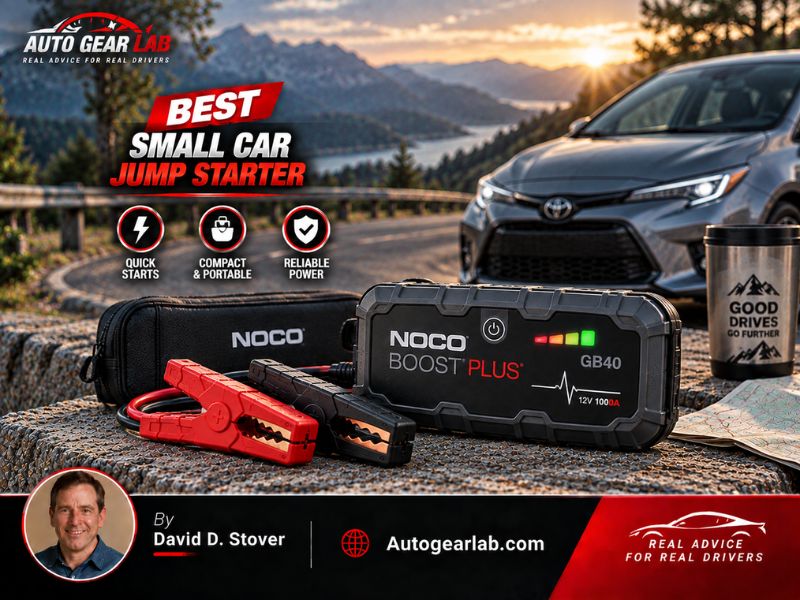
Best Small Car Jump Starter
| Image | Product Name | Check Price |
|---|---|---|
Best Choice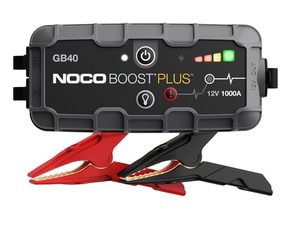 | NOCO Boost Plus GB40 1000A Jump Starter | Check Price |
Second Best | AstroAI S8 1500A Car Battery Jump Starter | Check Price |
Third Choice | NEXPOW Q10S Portable Car Jump Starter | Check Price |
 | Powrun P-ONE 2000A Jump Starter | Check Price |
 | S ZEVZO ET03 4000A Car Jump Starter | Check Price |
 | Schumacher Electric SL1639 1000A Jump Starter | Check Price |
 | BuTure VAC BR800 2000A Jump Starter | Check Price |
 | VTOMAN V6 Pro 2000A Jump Starter | Check Price |
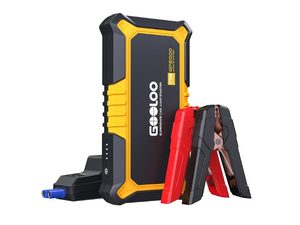 | GOOLOO GP2000 2000A Jump Starter | Check Price |
 | HULKMAN Alpha85S 2000A Jump Starter | Check Price |
1. NOCO Boost Plus GB40 1000A Jump Starter – Best Overall

The NOCO Boost Plus GB40 is my first recommendation because it offers exactly what most small-car owners need: reliable starting capability without an oversized battery pack.
Its 1000-amp rating supports gasoline engines up to 6.0 liters and diesel engines up to 3.0 liters, giving it considerably more capacity than a typical compact sedan requires. That extra headroom is useful during cold weather or when a battery is deeply discharged.
The GB40 also uses spark-proof technology and reverse-polarity protection to reduce the risk of common connection mistakes. Its rugged housing is IP65-rated when the ports are closed.
Another advantage is simplicity. There is no complicated interface to learn before an emergency. Connect the clamps correctly, power the unit on, and start the vehicle.
The built-in flashlight and USB power-bank function add emergency versatility without making the unit excessively bulky.
Key Features
- 1000A peak output
- Up to 6.0L gas / 3.0L diesel
- Compact lithium-ion design
- Reverse-polarity protection
- Spark-proof connection system
- IP65-rated housing with ports closed
- Built-in emergency flashlight
- USB device charging
What I Like
The combination of proven performance, compact size, strong safety design, and straightforward controls makes this particularly easy to recommend.
What I Do Not Like
The supplied cables are relatively short, and newer competitors offer faster USB-C charging systems.
Verdict: The NOCO GB40 is the best small car jump starter for most drivers who want a compact, dependable emergency pack rather than maximum advertised amperage.
2. AstroAI S8 1500A Car Battery Jump Starter – Best Lightweight Pick

The AstroAI S8 is one of the most appealing options when minimum size and weight are major priorities.
It provides up to 1500 amps of peak output and is designed for gasoline engines up to 6.0 liters and diesels up to 3.0 liters. That is more than adequate for most four-cylinder and six-cylinder passenger cars.
Despite that capability, the S8 remains exceptionally compact. It can fit easily into a small trunk organizer, emergency kit, or other limited storage area without taking the space associated with traditional lead-acid jump boxes.
AstroAI also incorporates several protections into its smart clamp system, including safeguards against reverse polarity, short circuits, and other connection problems.
A three-mode flashlight gives it additional value during nighttime roadside emergencies.
Key Features
- 1500A peak output
- Up to 6.0L gas / 3.0L diesel
- Very lightweight construction
- Smart jumper cables
- Reverse-polarity protection
- Three-mode flashlight
- Compact storage footprint
- USB charging capability
What I Like
It provides plenty of starting capability for ordinary cars while remaining extremely portable.
What I Do Not Like
The smaller battery capacity provides less reserve energy than some physically larger units.
Verdict: Choose the AstroAI S8 when your primary goal is keeping an effective starter in the car without sacrificing valuable storage space.
3. NEXPOW Q10S Portable Car Jump Starter – Best Glove-Box Pick

The NEXPOW Q10S is another compact option designed specifically around easy vehicle storage.
Its slim shape measures only a little larger than many substantial power banks, making it practical for glove compartments and small emergency bags.
The Q10S is rated for a broad selection of 12-volt vehicles and has enough output for far larger engines than the typical compact car. That means a four-cylinder sedan should be comfortably within its intended workload.
NEXPOW also gives the unit two USB outputs, allowing it to function as a backup charger for smartphones and other electronics.
Its LED light includes flashlight, strobe, and SOS modes for roadside visibility.
Key Features
- High-output lithium battery
- Compact 6.3-inch-class body
- Suitable for passenger cars and larger vehicles
- Dual USB outputs
- Quick Charge support
- Flashlight, SOS, and strobe modes
- Smart-clamp protections
- DC accessory support
What I Like
The slim form factor is excellent for permanent in-car storage, while the USB ports make the battery useful outside of jump-start emergencies.
What I Do Not Like
There are several versions of the Q10S on the market, so specifications can differ slightly between generations.
Verdict: The NEXPOW Q10S is an excellent choice when glove-box-friendly dimensions matter as much as starting power.
4. Powrun P-ONE 2000A Jump Starter – Best Compact 2000A Pick

The Powrun P-ONE steps up to 2000 amps of advertised peak output while maintaining a compact, relatively slim body.
It is rated for gasoline engines up to 8.0 liters and diesel engines up to 6.5 liters, which is far beyond what most small cars need.
That extra reserve makes it attractive for a household with several vehicles. You might keep it in a compact sedan while still having enough capability to assist an SUV or pickup when necessary.
The P-ONE also incorporates an LCD display that makes checking remaining battery capacity simpler than reading a row of basic LEDs.
Its IP65 protection is useful for roadside emergencies involving rain, dust, or dirty engine compartments.
Key Features
- 2000A peak output
- Up to 8.0L gas / 6.5L diesel
- LCD battery display
- USB charging outputs
- Built-in emergency light
- IP65-rated construction
- Smart protection system
- Compact carrying case
What I Like
It combines a manageable size with substantially more reserve starting capability than most small cars require.
What I Do Not Like
Drivers who own only a small four-cylinder car may never need its additional engine capacity.
Verdict: The Powrun P-ONE is a good middle ground between ultracompact jump starters and larger high-output emergency packs.
5. S ZEVZO ET03 4000A Car Jump Starter – Best High-Power Compact Pick

The S ZEVZO ET03 stands out because it packages a very high advertised output into a body weighing roughly 1.4 pounds.
It is rated up to 4000 peak amps and supports gasoline engines up to 8.0 liters and diesel engines up to 7.0 liters.
For a small car, that capacity is clearly more than necessary under normal conditions. The advantage is reserve power, particularly when dealing with an extremely weak battery or assisting another vehicle.
An LCD display provides an easy way to monitor remaining charge, while dual USB outputs allow the ET03 to work as an emergency electronics power bank.
It also comes with a storage case, which helps keep the clamps and charging cable organized.
Key Features
- 4000A advertised peak output
- Up to 8.0L gas / 7.0L diesel
- Approximately 1.4-lb unit weight
- LCD battery display
- Dual USB outputs
- LED flashlight
- Smart safety protections
- Storage case included
What I Like
The power-to-size ratio is impressive, particularly for drivers who want extra reserve capacity without carrying a large jump box.
What I Do Not Like
Small-car owners do not genuinely require a 4000A-class advertised rating, so some of its capability is unnecessary for this use case.
Verdict: The S ZEVZO ET03 suits buyers who want a small package with substantial starting reserve.
6. Schumacher Electric SL1639 1000A Jump Starter – Best Simple Compact Starter
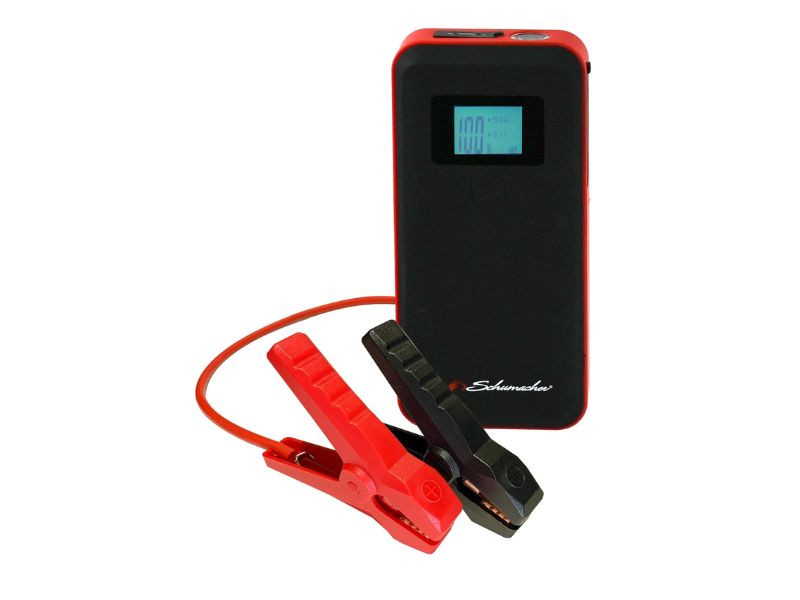
The Schumacher SL1639 is a good fit for people who would rather buy a straightforward portable jump starter from a long-established automotive electrical brand.
Its 1000-amp peak rating makes sense for passenger cars without chasing unnecessarily large specifications.
The unit weighs approximately 1.6 pounds and has a narrow profile, making it relatively easy to keep permanently in a trunk emergency kit.
A large LCD display gives clear information about the battery pack, and smart clamps provide protection against common connection mistakes.
The SL1639 also has USB charging ports and a built-in three-mode emergency light.
Key Features
- 1000A peak output
- Approximately 1.6 lb
- Lithium-ion battery
- Large LCD display
- Smart safety clamps
- USB charging
- Three-mode LED light
- Carrying bag included
What I Like
The specification is sensible for regular passenger cars, and the controls are simple enough for occasional emergency use.
What I Do Not Like
It lacks the dramatically high peak-amp claims that attract buyers comparing specifications alone.
Verdict: The Schumacher SL1639 is a practical small-car choice for drivers who value straightforward operation over oversized power claims.
7. BuTure VAC BR800 2000A Jump Starter – Best for Extended Clamps

The BuTure VAC BR800 is built around a 2000A peak rating and compact 12,800mAh battery pack.
It supports gasoline engines up to approximately 6.5 liters and diesel engines up to 5.5 liters, making it suitable for virtually any conventional small passenger car.
One useful feature is the extended smart jumper-cable design. Battery terminals can be awkwardly positioned in modern engine compartments, and a little extra cable flexibility can make connections easier.
The unit weighs roughly 1.5 pounds and remains compact enough for everyday vehicle storage.
USB charging and emergency lighting increase its usefulness during roadside situations.
Key Features
- 2000A peak output
- 12,800mAh battery
- Up to 6.5L gas / 5.5L diesel
- Approximately 1.5 lb
- Extended smart clamps
- USB fast charging
- Emergency lighting
- Multiple safety protections
What I Like
It is lightweight while providing better-than-basic starting capability and convenient clamp reach.
What I Do Not Like
The brand has a shorter track record than NOCO or Schumacher.
Verdict: The BuTure BR800 is worth considering when compact dimensions and practical clamp design are priorities.
8. VTOMAN V6 Pro 2000A Jump Starter – Best Ultra-Compact 2000A Starter

The VTOMAN V6 Pro offers 2000 amps of peak output in a remarkably compact package.
It is rated for gasoline engines up to 7.0 liters and diesels up to 5.0 liters, so there is ample capacity for four-cylinder and six-cylinder small cars.
The V6 Pro includes intelligent safety protection along with a boost feature for batteries that have discharged too far for normal automatic detection.
USB power-bank functions and a built-in LED light add practical emergency value.
Its small dimensions are the main attraction. If you dislike the idea of keeping a large hard case in your trunk, the V6 Pro is considerably easier to accommodate.
Key Features
- 2000A peak output
- Up to 7.0L gas / 5.0L diesel
- Compact lithium battery
- Smart boost capability
- Multiple safety protections
- USB device charging
- LED emergency light
- Built-in compass
What I Like
The power-to-size balance is excellent for small vehicles with limited storage.
What I Do Not Like
The brand is less established in automotive starting equipment than some older competitors.
Verdict: The VTOMAN V6 Pro is a strong alternative for drivers specifically seeking a small 2000A-class jump starter.
9. GOOLOO GP2000 2000A Jump Starter – Best Multipurpose Pick
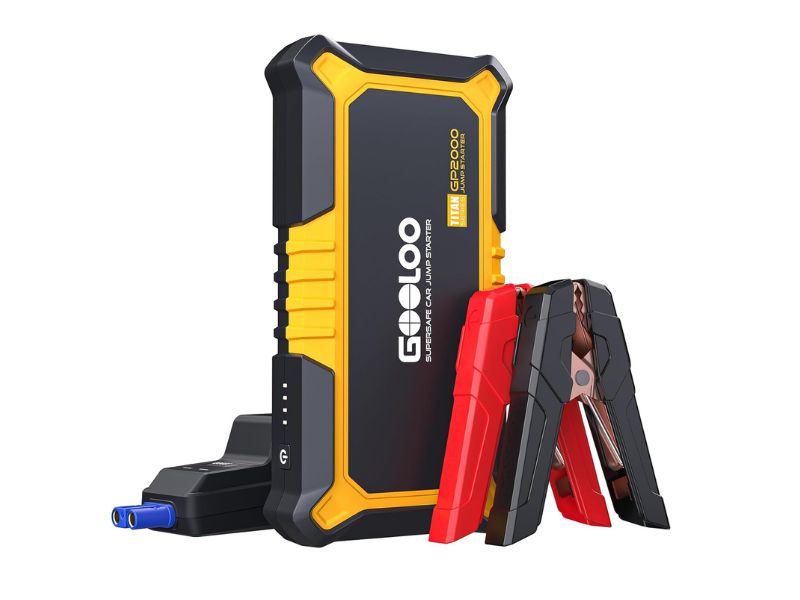
The GOOLOO GP2000 provides a useful combination of jump starting, device charging, lighting, and 12-volt accessory power.
Its 2000A output supports gasoline engines up to 8.0 liters and diesels up to 6.0 liters.
The jump starter itself weighs roughly 1.4 pounds according to current manufacturer specifications, so it remains appropriate for compact-car storage despite its strong engine rating.
The GP2000 has multiple USB outputs, including quick-charge functionality, and can also provide power for compatible 12-volt equipment with the appropriate adapter.
A bright emergency light completes the roadside feature set.
Key Features
- 2000A peak output
- Up to 8.0L gas / 6.0L diesel
- Approximately 1.4 lb
- USB Quick Charge
- Multiple USB outputs
- 12V accessory capability
- LED flashlight
- Smart clamp protections
What I Like
It does more than simply start a battery and still remains reasonably compact.
What I Do Not Like
Drivers who want the smallest possible emergency starter may prefer AstroAI or NEXPOW.
Verdict: The GOOLOO GP2000 is a versatile choice if you want your jump starter to double as a useful portable power source.
10. HULKMAN Alpha85S 2000A Jump Starter – Best for Cold Weather
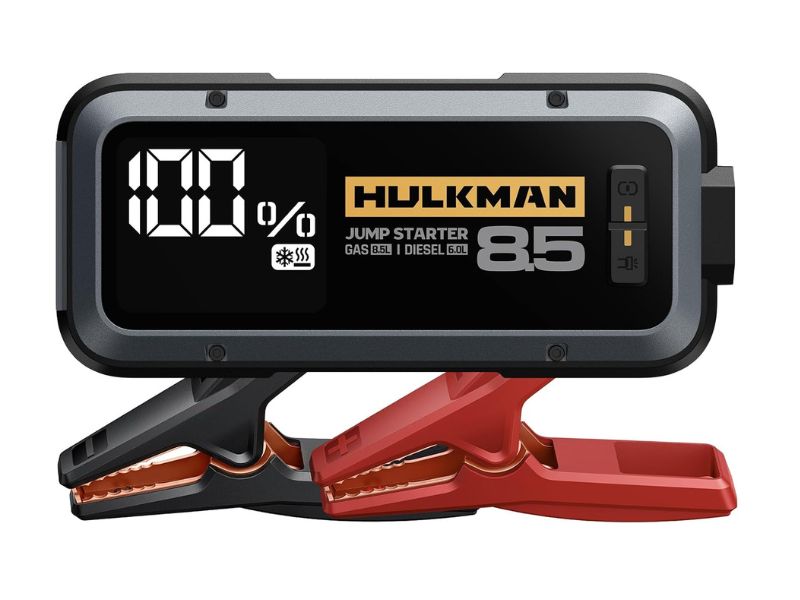
The HULKMAN Alpha85S deserves consideration for drivers who regularly experience extremely cold winter weather.
Its headline feature is a low-temperature preheating system designed to improve starting performance in severe cold.
The Alpha85S provides 2000 amps of peak output and is rated for gasoline engines up to 8.5 liters and diesels up to 6.0 liters.
That is far beyond the requirements of an ordinary small car, but cold temperatures can significantly reduce battery performance, making extra reserve capability useful.
The Alpha85S also incorporates a large digital display and fast charging, giving it a more premium interface than many basic portable starters.
Key Features
- 2000A peak output
- Up to 8.5L gas / 6.0L diesel
- Cold-weather preheat technology
- Digital battery display
- USB-C fast charging
- USB power-bank capability
- Intelligent clamps
- Emergency flashlight
What I Like
The cold-weather design makes it especially useful for northern climates where lithium battery performance can otherwise suffer.
What I Do Not Like
It costs more and is larger than basic small-car jump starters.
Verdict: The HULKMAN Alpha85S is best suited to drivers who value winter capability more than achieving the absolute smallest dimensions.
Small Car Jump Starter Comparison Table
| Product | Peak Output | Gas Engine Rating | Diesel Rating | Size Profile | Power Bank | Standout Feature | Best For |
| NOCO Boost Plus GB40 | 1000A | 6.0L | 3.0L | Compact | Yes | Proven safety design | Best overall |
| AstroAI S8 | 1500A | 6.0L | 3.0L | Very compact | Yes | Extremely lightweight | Small cars |
| NEXPOW Q10S | High-output | 7.0L class | 5.5L class | Very compact | Yes | Glove-box-friendly body | Limited storage |
| Powrun P-ONE | 2000A | 8.0L | 6.5L | Compact | Yes | LCD + IP65 | Extra reserve |
| S ZEVZO ET03 | 4000A | 8.0L | 7.0L | Compact | Yes | High power-to-size ratio | Maximum reserve |
| Schumacher SL1639 | 1000A | Passenger cars | Passenger diesels | Compact | Yes | Simple operation | Everyday drivers |
| BuTure BR800 | 2000A | 6.5L | 5.5L | Very compact | Yes | Extended clamps | Easy connections |
| VTOMAN V6 Pro | 2000A | 7.0L | 5.0L | Very compact | Yes | Compact boost mode | Portable storage |
| GOOLOO GP2000 | 2000A | 8.0L | 6.0L | Compact | Yes | Strong accessory support | Multipurpose use |
| HULKMAN Alpha85S | 2000A | 8.5L | 6.0L | Medium | Yes | Cold-weather preheat | Winter driving |
Which Small Car Jump Starter Should You Choose?
For most drivers, I would choose the NOCO Boost Plus GB40. Its specifications are realistic for passenger cars, its physical size is manageable, and its safety system is straightforward.
The AstroAI S8 is my choice when minimum weight is the priority.
Choose NEXPOW Q10S when glove-box storage matters most, Powrun P-ONE when you want additional reserve output, or HULKMAN Alpha85S when severe winter temperatures are a regular concern.
What Size Jump Starter Does a Small Car Need?
A small gasoline car generally does not need an enormous jump starter.
For most compact sedans and hatchbacks with 1.0L to 3.0L gasoline engines, a quality lithium jump starter in roughly the 800A–1500A class can be sufficient.
More power can provide additional starting reserve, particularly when:
- Temperatures are very low
- The battery is deeply discharged
- The engine is larger
- The jump starter is not fully charged
- You want to use the same pack on several vehicles
However, peak amperage should not be the only specification you consider.
Battery quality, clamp design, starting current, temperature performance, cable resistance, and internal battery capacity all affect real-world results.
How I Chose These Small Car Jump Starters
Compact Dimensions
The main advantage of a lithium jump starter is portability.
A small-car emergency pack should fit comfortably inside a trunk organizer, under a seat where safe and appropriate, or in another protected storage location.
Appropriate Starting Power
I did not automatically prioritize the largest amperage number.
A good 1000A starter can be more appropriate for a compact passenger car than a bulky 6000A unit intended for diesel trucks.
Strong Safety Protections
Useful protections include:
- Reverse-polarity detection
- Short-circuit protection
- Over-temperature protection
- Over-current protection
- Over-voltage protection
- Spark prevention or controlled clamp electronics
These features are especially important for drivers who use a jump starter only occasionally.
Smart Clamp Quality
Cheap clamps can make a powerful battery pack frustrating to use.
I prefer substantial clamps with enough spring tension to stay securely connected to battery terminals or approved jump points.
Charge Indicator
Knowing whether your emergency starter is actually ready is critical.
Digital percentage displays provide the clearest information, although four-stage LED indicators are adequate when checked regularly.
Emergency Lighting
A built-in LED flashlight can make connecting the battery considerably easier at night.
SOS and strobe modes may also improve visibility during a roadside emergency.
USB Charging
Most modern lithium jump starters double as power banks.
This feature is useful when a dead vehicle battery occurs alongside a discharged phone.
Peak Amps vs Starting Amps
This is one of the most misunderstood jump-starter specifications.
Peak amps represent a short maximum output figure. Manufacturers often emphasize this because larger numbers are easy to market.
Actual starting capability depends on more than the peak number.
The battery cells, internal resistance, cables, clamps, temperature, state of charge, and vehicle all influence how effectively that current reaches the starter motor.
This explains why an established 1000A jump starter can sometimes perform more consistently than an inexpensive unit advertising several thousand peak amps.
For a small passenger car, I would prioritize build quality and reliability before extreme peak-amperage claims.
1000A vs 2000A Jump Starter for a Small Car
Choose Around 1000A When:
You drive a typical four-cylinder gasoline car and want the smallest practical emergency starter.
A quality 1000A-class pack can provide an excellent combination of:
- Low weight
- Small dimensions
- Adequate starting capability
- Lower cost
- Easy storage
The NOCO GB40 and Schumacher SL1639 illustrate this approach.
Choose Around 1500A–2000A When:
Additional reserve power is desirable.
This may make sense if you:
- Drive in cold climates
- Own multiple vehicles
- Have a six-cylinder engine
- Occasionally assist SUVs
- Want more starting headroom
AstroAI, Powrun, BuTure, VTOMAN, and GOOLOO all provide options in this general range.
Do You Need 3000A or 4000A?
Usually not for a genuinely small car.
High advertised output can still be useful, but it should not be treated as essential.
A 1.5-liter four-cylinder engine does not suddenly require a giant jump pack because a 4000A model exists.
Lithium vs Lead-Acid Jump Starter
For small cars, lithium jump starters usually provide the better portable solution.
Lithium Advantages
Lithium packs are generally:
- Smaller
- Lighter
- Easier to store
- Easier to carry
- Capable of USB charging
- Better suited to personal emergency kits
Lead-Acid Advantages
Traditional lead-acid jump boxes can still provide excellent starting capability and are common in professional garages.
However, they are considerably larger and heavier.
For something that stays inside a compact passenger car, lithium is normally much more convenient.
Important Safety Features to Look For
Reverse-Polarity Protection
This helps detect when positive and negative clamps have accidentally been connected incorrectly.
You should still carefully identify the terminals before connecting anything.
Short-Circuit Protection
Smart clamp electronics can shut down or limit output when a dangerous connection condition is detected.
Temperature Protection
Lithium batteries should not be charged or discharged beyond their specified temperature range.
Quality units monitor temperature and limit operation when necessary.
Manual Override
Some jump starters cannot automatically detect an extremely discharged vehicle battery.
A manual override or boost mode can force output in these situations.
This feature should be used only according to the manufacturer’s instructions, because certain automatic protections may be disabled.
How to Use a Portable Jump Starter Safely
Always follow the instructions for your specific vehicle and jump starter.
A typical sequence is:
- Turn the vehicle and electrical accessories off.
- Identify the correct positive and negative jump points.
- Connect the positive clamp to the approved positive terminal.
- Connect the negative clamp according to the vehicle manufacturer’s instructions.
- Activate the jump starter.
- Attempt to start the vehicle.
- Disconnect the pack after the engine starts, following the recommended order.
Do not assume every vehicle uses the exact same jump points.
Many modern cars place the battery in the trunk or under interior panels and provide dedicated terminals under the hood.
Your owner’s manual should take priority.
What About Hybrids and Electric Cars?
Be careful here.
A conventional portable jump starter is intended for a 12-volt electrical system, not a high-voltage EV traction battery.
Many hybrids, plug-in hybrids, and battery-electric vehicles still use a conventional low-voltage battery for computers, relays, locks, and vehicle startup procedures.
That low-voltage system may sometimes be jump-started, but procedures vary substantially by vehicle.
Never attach an ordinary jump starter to high-voltage EV battery components.
Always check the vehicle owner’s manual before attempting to assist a hybrid or EV.
Where Should You Store a Jump Starter?
Keep the starter somewhere that is:
- Dry
- Secure
- Protected from physical damage
- Within its recommended storage temperature
- Easy to reach during an emergency
A supplied hard or soft case is useful because it prevents the clamps from moving around the trunk and keeps charging cables together.
Avoid storing lithium batteries where they are exposed to extreme heat for prolonged periods whenever possible.
How Often Should You Recharge It?
Do not buy a jump starter, put it in your trunk, and forget about it for several years.
Check the battery periodically.
A practical routine is to inspect the charge every one to three months, depending on the manufacturer’s recommendation.
Recharge it before:
- Long road trips
- Winter
- Extended vehicle storage
- Hurricane or storm season
- Remote travel
Also recharge the unit after using it to jump a vehicle.
Why Cold Weather Matters
Cold weather affects both batteries involved in the process.
Your vehicle battery produces less available starting power, while the cold engine can require additional effort to crank.
The lithium battery inside the jump starter can also perform differently at very low temperatures.
This is why buying with some reserve capability makes sense in colder regions.
HULKMAN’s Alpha85S specifically emphasizes cold-weather preheating, but every jump starter should still be stored and operated within its manufacturer-specified temperature range.
Common Mistakes to Avoid
Buying Based Only on Peak Amps
A giant number printed on the box does not guarantee superior starting performance.
Letting the Jump Starter Discharge in Storage
An empty emergency battery is useless.
Check it regularly.
Connecting Without Reading the Vehicle Manual
Modern vehicles may have dedicated remote jump terminals.
Using Manual Override Immediately
Override modes can bypass important protections.
Use them only when necessary and exactly as instructed.
Repeatedly Cranking the Engine
If the engine does not start, do not continuously crank it until the jump starter overheats.
Follow the recommended attempt and rest intervals.
Assuming a Jump Fixes the Battery
A successful jump does not mean the underlying battery problem is solved.
A battery that repeatedly goes dead may require:
- Charging-system testing
- Battery replacement
- Parasitic-draw diagnosis
- Alternator testing
- Terminal cleaning or repair
Frequently Asked Questions
What is the best small car jump starter?
The NOCO Boost Plus GB40 is my top choice for most small passenger cars.
Its 1000A output is enough for gasoline engines up to 6.0 liters and diesels up to 3.0 liters, giving ordinary compact cars substantial headroom. More importantly, it combines that capability with compact dimensions, reverse-polarity protection, spark-proof technology, USB charging, and a rugged enclosure.
Is a 1000A jump starter enough for a small car?
Yes, a quality 1000A jump starter is generally enough for most small gasoline cars.
Four-cylinder engines typically require far less starting capacity than large V8s or diesel trucks. Cold temperatures, battery condition, jump-starter charge level, and engine design can all affect performance, so some reserve capacity remains valuable.
Is 2000A too much for a small car?
No, a 2000A-rated jump starter will not normally force 2000 amps into the vehicle unnecessarily.
The electrical system draws the current required for starting. A higher-capacity jump starter can simply provide greater reserve capability. The main disadvantages are usually additional size, weight, and cost rather than excessive power being forced into the starter.
What is the smallest good car jump starter?
AstroAI S8 and NEXPOW Q10S are particularly attractive when compact storage is the priority.
Both provide enough starting capacity for ordinary passenger cars while maintaining dimensions that work well in small emergency kits. The NOCO GB40 is slightly more substantial but remains one of my preferred compact options because of its established design and safety features.
Can I keep a jump starter in my glove box?
You can if the unit fits and the storage conditions comply with its temperature limits.
A glove box can become extremely hot in summer, particularly in direct sunlight. Lithium batteries should not be exposed to temperatures outside the manufacturer’s recommended storage range. A protected location elsewhere in the vehicle may sometimes be preferable.
How long does a portable jump starter hold a charge?
Many quality lithium packs can retain useful charge for months, but they should still be checked regularly.
Self-discharge, temperature, battery age, and internal electronics affect storage life. I recommend checking your emergency pack every one to three months instead of assuming it will remain ready indefinitely.
Can a jump starter damage my car?
Properly used quality jump starters are designed to provide controlled 12V starting assistance.
Problems can occur through incorrect connections, unsuitable equipment, damaged batteries, or failure to follow vehicle-specific instructions. Smart protections reduce risk, but they do not replace careful operation.
Can I use a small jump starter on a completely dead battery?
Sometimes, but an extremely discharged battery may require a manual boost or override mode.
Automatic jump starters need to detect enough voltage to recognize the battery and enable output. When voltage is extremely low, some models provide an override function. Because override modes may disable important protection features, follow the manufacturer’s instructions carefully.
Should I disconnect the car battery before using a jump starter?
No, normal jump-start procedures usually involve leaving the vehicle battery connected.
Attach the jump starter to the approved battery terminals or remote jump points according to the vehicle manufacturer. Do not disconnect battery cables unless a specific repair procedure requires it.
Can I use a portable jump starter as a power bank?
Yes, most modern lithium jump starters include USB outputs for charging electronics.
This can be valuable during roadside emergencies because your phone may be just as important as the jump starter itself. Some models offer faster USB charging or 12V accessory outputs as well.
Is NOCO GB40 good for a four-cylinder car?
Yes, the GB40 has substantially more starting capability than most four-cylinder gasoline engines require.
Its rating covers gasoline engines up to 6.0 liters. For a typical 1.5L, 2.0L, or 2.5L gasoline passenger car, it provides plenty of application headroom while remaining compact enough for routine emergency storage.
What jump starter is best for winter?
A quality unit with adequate reserve output and good low-temperature performance is the better choice for winter.
The HULKMAN Alpha85S is especially interesting because it incorporates preheating technology. However, proper storage and keeping any jump starter adequately charged are equally important in cold climates.
Conclusion
The best small car jump starter should be compact enough to remain in your vehicle without becoming clutter, powerful enough to start your engine reliably, and simple enough to operate during a stressful roadside situation.
For most drivers, my first choice remains the NOCO Boost Plus GB40. A typical compact or midsize gasoline car does not need an enormous jump box, and the GB40 delivers a sensible balance of power, portability, safety features, and proven real-world usability.
The AstroAI S8 is an excellent alternative if minimum weight is your priority, while the NEXPOW Q10S is particularly attractive for glove-box-friendly storage.
For more reserve power, the Powrun P-ONE, S ZEVZO ET03, BuTure BR800, VTOMAN V6 Pro, and GOOLOO GP2000 offer compact lithium designs with higher output ratings. The Schumacher SL1639 is a straightforward option from an established automotive electrical brand, while the HULKMAN Alpha85S makes the most sense for drivers regularly dealing with severe winter conditions.
For an ordinary small gasoline car, I would start with the NOCO Boost Plus GB40 rather than buying the largest jump starter available. It provides the capability most drivers genuinely need without giving up the portability that makes a small lithium starter worth carrying.