Choosing the best leveling kit for F150 is not simply a matter of buying the tallest front spacer you can find. Ford has produced several F-150 suspension generations, and a kit that works well on one truck may be wrong for another because of model year, drivetrain, factory suspension package, electronic damping, wheel offset, tire size, or how the truck is used.
A leveling kit normally raises the front of an F-150 to reduce the factory rake—the intentional difference in height between the rear and front of the truck. For many owners, the goal is a more even stance and additional front tire clearance without committing to a full suspension lift. For others, retaining some rake for trailer tongue weight or bed cargo is more important than achieving a perfectly level appearance.
My primary recommendation is the Rough Country 52200 2-Inch Leveling Kit for compatible F-150s because its moderate 2-inch front lift strikes a practical balance between appearance, tire clearance, suspension geometry, and everyday drivability. I generally prefer this height for a daily-driven truck because it reduces much of the factory nose-down stance without pushing the front suspension as far as many 2.5- or 3-inch spacer systems.
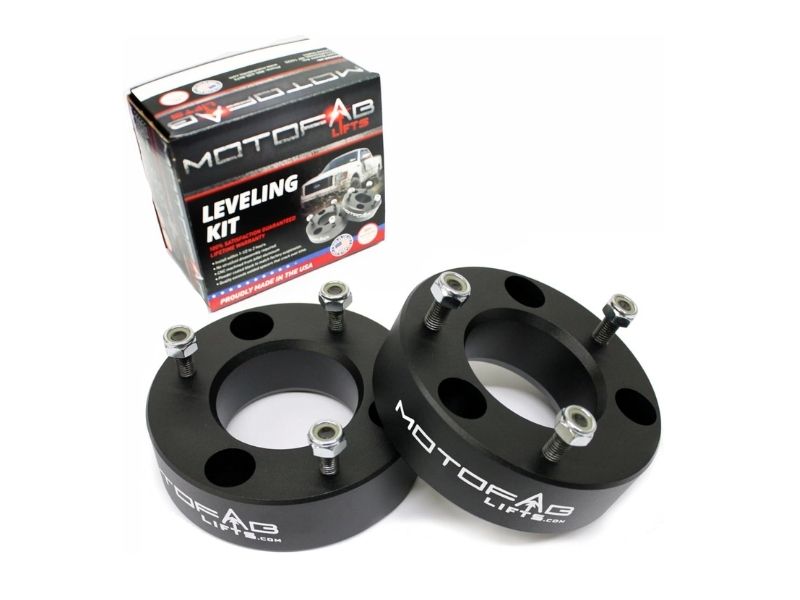
The MotoFab F150-2 2-Inch Front Leveling Kit is another option I would consider when a broad year range, billet-aluminum construction, and a straightforward strut-spacer design are priorities.
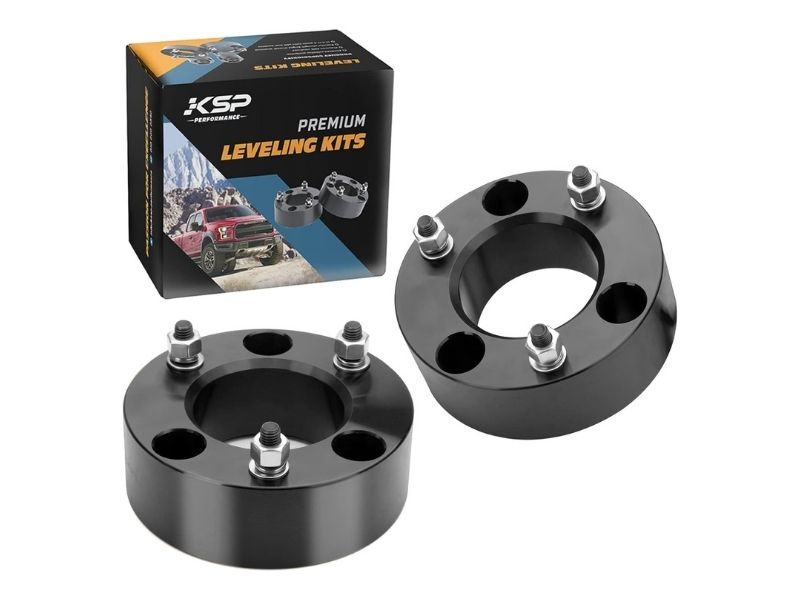
For owners specifically seeking a more aggressive front lift, the KSP 3-Inch Front Leveling Kit offers substantially more height, but I would choose a 3-inch spacer only after considering upper-control-arm angle, ball-joint position, CV axle angle, alignment range, and actual truck configuration. More lift is not automatically better.
This guide covers 10 popular F-150 leveling kits, but product selection is only half of the decision. I will also explain 2-inch versus 2.5-inch versus 3-inch leveling, wheel and tire fitment, alignment, towing, suspension geometry, upper control arms, 2WD versus 4WD considerations, installation, maintenance, and the model-year differences that frequently cause buyers to order the wrong kit.
10 Best Leveling Kit for F150
| Image | Product Name | Check Price |
|---|---|---|
Best Choice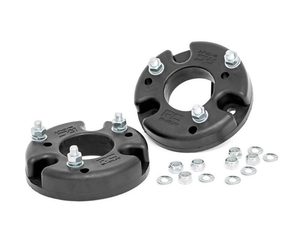 | Rough Country 2-Inch Leveling Kit | Check Price |
Second Best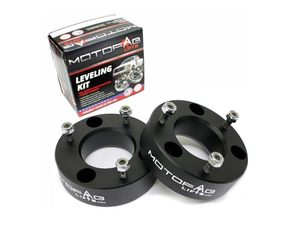 | MotoFab F150-2 2-Inch Front Leveling Kit | Check Price |
Third Choice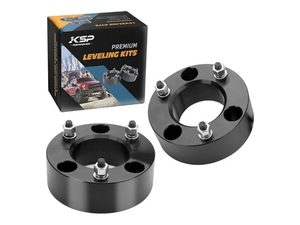 | KSP 3-Inch Front Leveling Kit | Check Price |
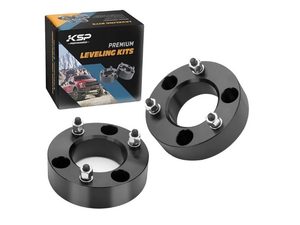 | KSP 2.5-Inch Front Leveling Kit | Check Price |
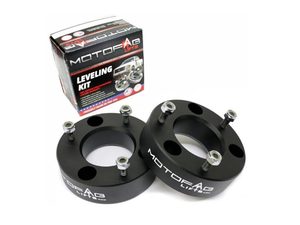 | MotoFab F150-2.5 2.5-Inch Front Leveling Kit | Check Price |
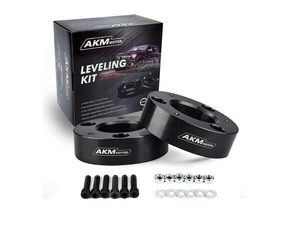 | AKM 2.5-Inch Front Leveling Kit | Check Price |
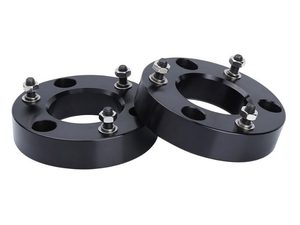 | Dynofit 2-Inch Front Leveling Kit | Check Price |
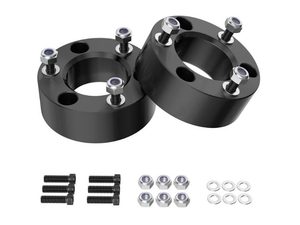 | Richeer 3-Inch Front Leveling Kit | Check Price |
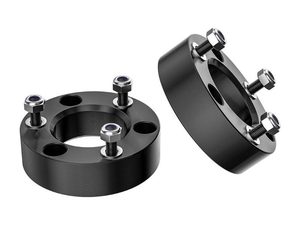 | FLYCLE 2.5-Inch Front Leveling Kit | Check Price |
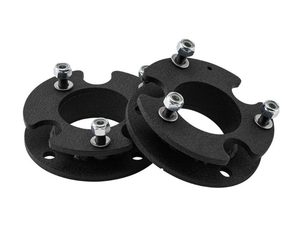 | Supreme Suspensions 2.5-Inch Front Leveling Kit | Check Price |
10 Best Leveling Kit for F150 Options
1. Rough Country 2-Inch Leveling Kit – Best for Ford F-150 (2009-2026), Ford Raptor (2017-2018)
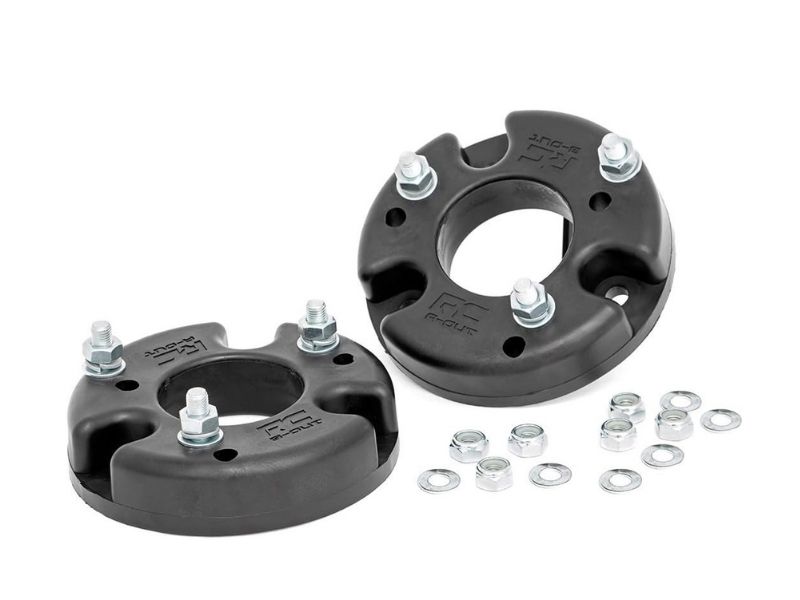
Key Features
- Approximately 2 inches of front leveling
- Strut-spacer-style design
- Intended for compatible 2009-and-newer F-150 applications
- Supports compatible 2WD and 4WD configurations
- Designed for bolt-on installation
- Does not require disassembling the factory strut assembly for typical installation
- Moderate lift height suitable for daily-driven trucks
- Package and suspension-system exclusions apply
The Rough Country 52200 takes the first position because a 2-inch front level is one of the most practical configurations for a broadly used F-150. It changes the stance noticeably without going as far as a 2.5- or 3-inch spacer, which becomes increasingly important when suspension geometry and loaded rear ride height matter.
Most stock F-150s sit higher at the rear than at the front. Ford uses this rake intentionally so the truck does not immediately look nose-high when weight is placed in the bed or a trailer applies tongue weight to the hitch. Raising the front approximately 2 inches reduces that visual rake while usually leaving at least some margin for real truck use.
The 52200 uses a spacer approach at the front suspension. One benefit is that the factory spring and damper remain in the truck rather than being replaced with an unfamiliar spring-rate combination. A spacer changes where the strut assembly positions the suspension, so it can raise ride height without automatically creating the same ride-character change that may occur with a different coil spring.
That does not mean suspension behavior remains completely unchanged. Raising the front alters control-arm, ball-joint, tie-rod, and—on 4WD trucks—CV axle operating angles. A moderate 2-inch level simply tends to be easier to manage than an aggressive 3-inch spacer on many stock configurations.
Another advantage is installation simplicity relative to kits that require compressing the coil spring and rebuilding the strut. Keeping the assembled strut intact reduces the amount of spring-related work. The complete strut assembly still needs to be removed or repositioned during installation, so this is not the same as saying the job requires no suspension disassembly.
Fitment deserves close attention. F-150 suspension packages have become increasingly complex, particularly on newer trucks. Raptor, Tremor, Heavy Duty Payload, electronically controlled damping, and other specialized configurations may use different components or geometry. A kit should always be matched to the exact year, trim, drivetrain, and suspension package.
For wheel and tire upgrades, a 2-inch level can help create additional front clearance and improve the stance with larger tires. However, a level cannot guarantee that a specific 33-, 34-, or 35-inch tire will fit. Actual clearance depends on wheel width, offset, backspacing, tire section width, tread design, alignment settings, crash bars, liner shape, and the truck’s generation.
For a daily driver that sees highways, construction sites, gravel roads, snow, and occasional towing, this is the lift height I would generally start with.
What I Like
- Moderate 2-inch height is appropriate for a wide range of everyday F-150 uses.
- Reduces the factory rake without automatically creating an extreme suspension angle.
- Keeps the factory strut and spring combination.
- Installation avoids disassembling the coil spring from the strut in typical applications.
What I Do Not Like
- It is not compatible with every F-150 trim or suspension package.
- Larger tires can still rub depending on wheel specifications.
- An alignment is still necessary after installation.
Verdict
The Rough Country 52200 is my primary recommendation for an owner who wants a noticeable level without immediately moving into the geometry compromises of a taller spacer. I would choose it first for a compatible daily-driven F-150, especially when maintaining predictable road manners, usable towing stance, and manageable front-end angles matters.
2. MotoFab F150-2 2-Inch Front Leveling Kit – Best for 2 in Front Leveling Lift Kit
Key Features
- 2-inch front lift
- Billet-aluminum spacer construction
- Black protective finish
- Broad compatible F-150 year coverage
- Designed for compatible 2WD and 4WD trucks
- No coil-spring compression required for typical installation
- Retains factory struts and springs
- Specialized F-150 models require separate fitment verification
The MotoFab F150-2 is another 2-inch system that fits the needs of owners who want to reduce front-to-rear rake without creating an overly nose-high appearance.
I like 2-inch kits for F-150s used as actual trucks. If you regularly place tools, camping equipment, landscaping materials, or other cargo in the bed, a truck that is perfectly level while empty can become rear-low when loaded. The same issue appears when towing because tongue weight compresses the rear suspension.
A 2-inch front increase commonly leaves more usable rake than a taller front-only kit.
MotoFab’s spacer is machined from billet aluminum rather than using a replacement spring. Aluminum is useful here because it combines stiffness with corrosion resistance. That is relevant whether the truck spends winters on salted roads in the Midwest and Northeast or operates around coastal humidity.
A protective coating adds another barrier against surface exposure, although no suspension component should be considered maintenance-free simply because it is aluminum.
The F150-2 works by positioning the factory strut assembly to increase front ride height. Spacer thickness itself does not necessarily equal the amount the truck rises at the wheel. F-150 suspension geometry creates a motion ratio, so a spacer can produce a larger change in vehicle ride height than its own physical thickness.
That is an important point when comparing kits. Measuring only the spacer and deciding that the advertised lift must be inaccurate ignores the suspension leverage involved.
For tire fitment, a 2-inch MotoFab installation can make an F-150 look much better with factory wheels, modestly larger tires, or aftermarket wheel-and-tire packages. It can also improve front bumper and lower-air-dam clearance.
Still, the leveling kit is only one component of tire clearance.
A wheel with aggressive negative offset moves the tire outward and changes the arc it follows as the steering turns. A wider tire can contact the liner or crash-bar area even when its overall diameter appears reasonable. Conversely, a narrower tire on a wheel with a conservative offset may clear more easily.
Installation normally requires raising and supporting the front safely, removing front suspension components needed to release the strut, installing the spacers, and reassembling everything to proper specifications. A professional alignment should follow.
I rank the MotoFab F150-2 very closely behind the Rough Country option. Both occupy the useful 2-inch category, and the correct choice can come down to exact year compatibility and material preference.
What I Like
- Billet-aluminum construction is strong and corrosion resistant.
- Two-inch lift suits daily driving and moderate truck use.
- Keeps the original strut and coil spring.
- Broad application range makes it useful across multiple F-150 generations.
What I Do Not Like
- Raptor, Tremor, Lightning, and other special configurations require particular care with fitment.
- Does not guarantee clearance for 35-inch tires.
- Installation still changes suspension geometry and requires an alignment.
Verdict
I would choose the MotoFab F150-2 when I want a simple billet-aluminum 2-inch spacer for a compatible standard F-150. It is especially appealing to owners who want a leveled stance but still care about preserving some factory rake for cargo and towing.
3. KSP 3-Inch Front Leveling Kit – Best for Expedition 03-18,Mark LT 2005-2008
Key Features
- Approximately 3 inches of front lift
- Designed for compatible F-150 applications
- CNC-machined 6061-T6 aluminum construction
- High-strength mounting hardware
- Front strut-spacer configuration
- Compatible with selected 2WD and 4WD trucks
- Significant stance change
- Requires careful suspension-package and geometry verification
The KSP 3-inch kit is the first product in this guide that I consider an aggressive leveling setup rather than a moderate one.
Three inches of front lift can dramatically change how an F-150 looks. On a truck with substantial factory rake, the result can approach level. It can also create more visual room around larger tires and make the front end appear less nose-down.
The construction is appropriate for the application. 6061-T6 aluminum is widely used for machined automotive components because it offers useful strength, low weight, and corrosion resistance. CNC machining can provide consistent dimensions when manufacturing quality is controlled.
The bigger consideration is not spacer strength. It is what 3 inches of front height does to the surrounding suspension.
The front wheel does not simply move downward in a perfectly vertical line. As the suspension changes position, the upper control arm and lower control arm move through arcs. Ball joints operate at different angles. Steering tie rods change angle. On 4WD trucks, CV axles operate at steeper angles.
This can reduce available droop travel and place ball joints closer to their angular limits on some configurations.
That does not mean every 3-inch F-150 level immediately causes a mechanical problem. It means buyers should evaluate a 3-inch spacer more carefully than a mild level.
An aftermarket upper control arm (UCA) designed for lifted geometry can sometimes improve ball-joint position, alignment range, and droop clearance. Whether it is required depends on the generation, existing suspension, intended use, actual measured ride height, and control-arm design.
This is particularly important if the truck will be used off-road. Suspension components cycle through much more travel on rough trails than they do during ordinary paved-road driving.
Newer F-150s add another complication: electronic suspension systems. Trucks equipped with Continuous Controlled Damping (CCD) or specialized factory suspension packages cannot be treated like a basic conventional-strut F-150.
I would also be cautious about towing. If a 3-inch front level removes nearly all unloaded rake, attaching a heavy trailer may compress the rear enough to create a visibly nose-high truck. That can affect headlight aim and overall stance even when axle and vehicle ratings remain unchanged.
For an appearance-focused truck, the KSP 3-inch kit can provide the aggressive result the buyer wants. For a daily-driven tow vehicle, I generally prefer less front lift.
What I Like
- Provides a substantial stance change.
- 6061-T6 aluminum is a suitable spacer material.
- Can help create visual clearance for larger wheel-and-tire combinations.
- Useful for owners specifically seeking a taller front stance.
What I Do Not Like
- Three inches can push factory suspension geometry significantly farther than a 2-inch kit.
- Some trucks may benefit from upgraded upper control arms or additional geometry corrections.
- Less suitable for owners who need to preserve substantial rear-to-front rake for towing.
Verdict
The KSP 3-inch kit is for the owner who intentionally wants an aggressive level and understands the geometry tradeoffs. I would not choose 3 inches simply because it sounds better than 2 inches; I would choose it only after confirming the exact truck, suspension package, alignment capability, and intended use.
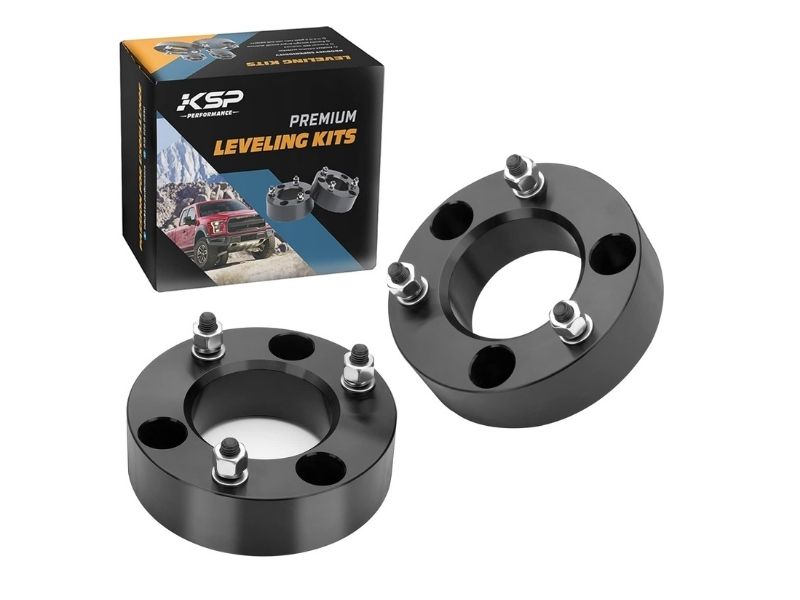
4. KSP 2.5-Inch Front Leveling Kit
Key Features
- Approximately 2.5 inches of front lift
- Forged or machined 6061-T6 aluminum construction
- Front strut-spacer system
- Compatible with many standard F-150 2WD and 4WD applications
- Designed to reduce most factory rake
- Keeps the factory strut and coil spring
- Raptor and certain electronic-damping applications excluded
- Alignment required after installation
Detailed Review
The KSP 2.5-inch kit occupies the middle ground between the conservative 2-inch systems and the more aggressive 3-inch option.
For many F-150 owners, 2.5 inches is visually attractive because it can remove more of the front rake than a 2-inch kit. With the right truck, wheel, and tire combination, it creates the stance many people picture when they say they want their F-150 “leveled.”
The tradeoff is that an additional half inch at the front is not meaningless.
Suspension geometry changes progressively as ride height increases. At 2.5 inches, I pay closer attention to ball-joint angle, UCA clearance, alignment range, and CV axle position than I do with a mild 1.5- to 2-inch level.
The KSP spacer uses aluminum construction suited to exposure underneath the truck. If you live in a region that uses road salt, corrosion resistance is useful, although the steel studs, nuts, factory suspension hardware, and surrounding components still need inspection.
A 2.5-inch level can also be a useful foundation for a more aggressive wheel-and-tire stance. However, tire diameter cannot be evaluated in isolation.
A nominal 35-inch tire may measure shorter or taller depending on brand, size, wheel width, inflation, and tread. A 12.5-inch-wide tire on an aftermarket wheel may rub where a narrower tire of similar diameter does not. Wheel offset can be just as important as the leveling kit.
For towing, 2.5 inches deserves some thought. Measure your truck before buying the kit. Park on a level surface and measure from the center of the wheel hub vertically to the fender lip at the front and rear.
Using hub-to-fender measurements removes tire diameter from the comparison.
If the rear is only around 2 inches higher than the front before modification, a true 2.5-inch front increase could leave the truck visually nose-high. Trucks vary due to equipment, springs, payload packages, accessories, and prior modifications.
That is why I prefer measuring rather than assuming every stock F-150 has the same rake.
What I Like
- Strong choice for owners who want more leveling than a 2-inch kit provides.
- Aluminum construction is appropriate for long-term underbody use.
- Retains factory springs and struts.
- Creates a noticeably more aggressive stance without reaching a full suspension-lift height.
What I Do Not Like
- More geometry-sensitive than a 2-inch level.
- Can remove too much rake on trucks used regularly for heavy towing or bed loads.
- Exact trim and suspension package must be checked carefully.
Verdict
The KSP 2.5-inch kit is a sensible option when measurements show that your truck has enough factory rake to use the extra half inch. I prefer it for appearance-oriented street trucks and light-duty use rather than choosing it automatically for every F-150.
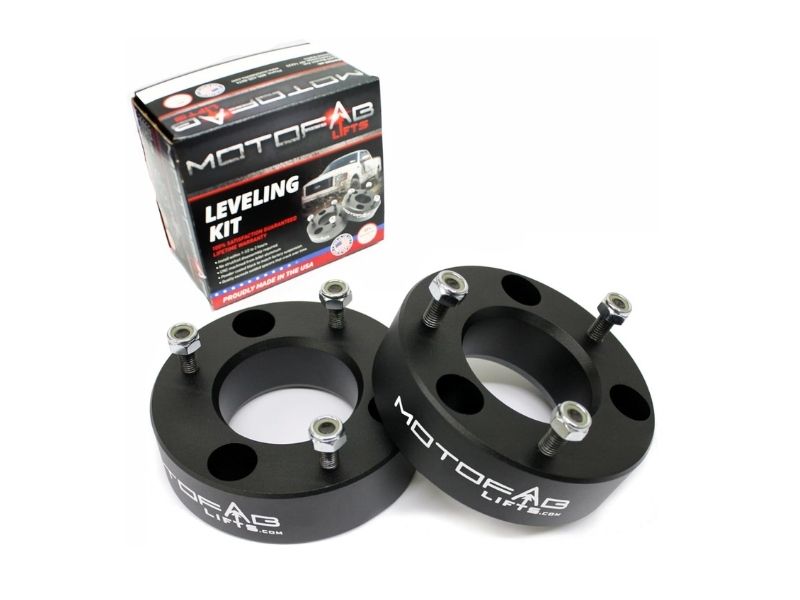
5. MotoFab F150-2.5 2.5-Inch Front Leveling Kit
Key Features
- Approximately 2.5 inches of front lift
- Billet-aluminum construction
- Protective black finish
- Designed for broad standard F-150 compatibility
- Fits selected 2WD and 4WD applications
- Retains factory strut and spring
- No coil-spring compressor normally required
- Special-model exclusions apply
Detailed Review
The MotoFab F150-2.5 is the taller counterpart to the 2-inch MotoFab kit.
The same general construction advantages apply: the spacer is made from billet aluminum and designed to work with the existing front strut assembly. The major difference is simply the final front ride-height target.
An extra half inch can be surprisingly noticeable on an F-150. It reduces more factory rake, increases the visual separation between the tire and upper fender opening, and can make aftermarket wheels appear better proportioned.
I would choose this over the MotoFab 2-inch kit only when the truck’s measurements and use justify the extra height.
Before ordering, measure front and rear hub-to-fender height. If the rear sits 2.75 to 3 inches higher than the front and you want a nearly level empty stance, a 2.5-inch system may make sense. If you only have 1.75 inches of measured rake, 2.5 inches may be too much.
Accessories matter too.
A heavy front bumper, winch, or other equipment may compress the front suspension and increase measured rake. In that case, a taller level can compensate visually. Conversely, a rear bed rack, constant cargo, camper shell, or trailer can compress the rear, reducing the amount of leveling you should add at the front.
Ride quality with a spacer depends heavily on the condition of the factory strut and the amount of travel remaining. The spacer itself does not stiffen the coil spring in the same way a higher-rate replacement spring would, but repositioning the suspension affects available droop and operating angles.
If the factory shocks or struts are already worn, a leveling kit will not restore damping. That is a separate maintenance issue.
For an older truck where the struts need replacement anyway, it may be worth comparing a spacer kit with height-adjustable replacement struts or complete coilovers. Those approaches can combine maintenance and ride-height changes rather than stacking a spacer onto worn components.
What I Like
- Billet-aluminum construction.
- Provides a more complete visual level than a 2-inch kit on trucks with substantial rake.
- Uses factory struts and springs.
- Broadly applicable to standard F-150 configurations.
What I Do Not Like
- Can be too tall for trucks with limited factory rake.
- Geometry becomes more important at 2.5 inches.
- Does not correct worn factory struts.
Verdict
The MotoFab F150-2.5 is a strong choice for an owner who has measured the truck and knows that a 2.5-inch front increase fits the desired stance. I would choose the 2-inch version for more conservative daily and towing use, while this model better suits trucks where appearance and additional front height are the priorities.
6. AKM 2.5-Inch Front Leveling Kit
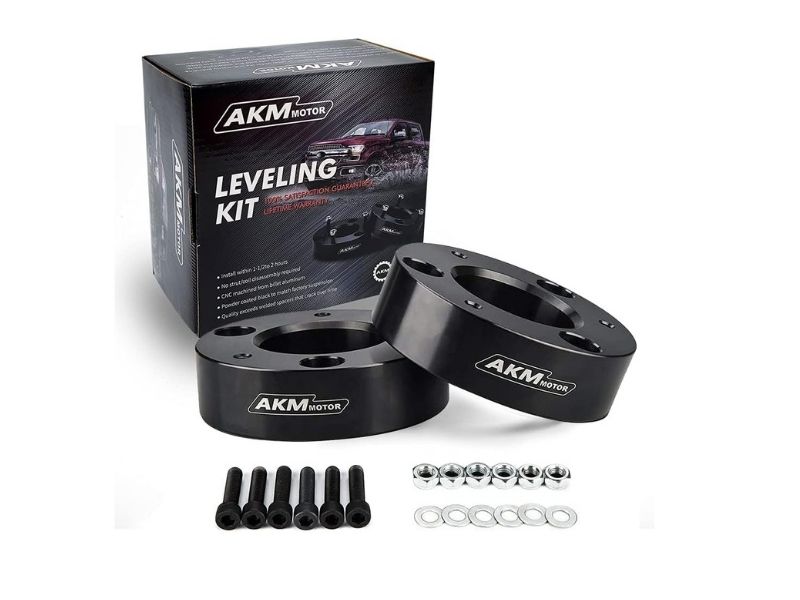
Key Features
- Approximately 2.5-inch front level
- Designed for a broad range of earlier and mid-generation F-150 models
- Aluminum spacer construction
- High-strength mounting hardware
- Front strut-spacer design
- Compatible with selected 2WD and 4WD applications
- 2004 Heritage-style trucks require separate attention
- Intended to retain original strut assemblies
Detailed Review
The AKM 2.5-inch kit is another option for owners who want to remove most of the F-150’s stock rake without stepping up to a 3-inch spacer.
Its strongest practical appeal is straightforward: a simple front spacer can transform the stance of a stock truck without replacing rear suspension components or installing a full lift system.
For an older F-150, however, I would inspect the truck before spending money on any level.
Check the front struts for leakage. Inspect upper and lower ball joints, control-arm bushings, tie-rod ends, wheel bearings, sway-bar links, CV boots on 4WD trucks, and tire wear.
A leveling kit should not be used to disguise worn suspension.
If the existing components have play or damaged boots, raising the front can place additional angular demand on parts that already need service.
Older model-year fitment also has its own traps. The 2004 F-150 Heritage is based on the previous-generation truck rather than the redesigned 2004 body and suspension architecture. A product listed for a regular 2004 F-150 should not automatically be assumed to fit the Heritage model.
This illustrates an important rule for the entire article: vehicle year alone is not always enough. Generation, trim, and suspension package matter.
The 2.5-inch height gives the AKM kit a more aggressive stance than the two-inch systems at the top of the list. It can work well with aftermarket wheel packages when offset and tire size are chosen intelligently.
Do not use a leveling kit as an excuse to ignore wheel geometry.
Changing from a high-positive-offset factory wheel to a lower- or negative-offset aftermarket wheel increases scrub radius and often moves the tire closer to liners, bumper edges, or crash structures as the steering is turned.
A level creates vertical room, but it cannot eliminate every horizontal interference point.
For an older street-driven F-150 where the suspension is healthy and the owner specifically wants about 2.5 inches of front height, the AKM kit is a reasonable option.
What I Like
- Useful 2.5-inch stance for trucks with substantial factory rake.
- Aluminum spacer construction.
- Keeps the original strut and spring setup.
- Suitable for owners upgrading an older F-150 without a full lift.
What I Do Not Like
- 2004 model-year buyers need to distinguish the redesigned F-150 from the Heritage truck.
- Taller spacer height increases geometry considerations.
- It does not compensate for worn struts or ball joints.
Verdict
The AKM 2.5-inch kit is most appropriate when the truck’s suspension is already in good mechanical condition and measurements confirm that 2.5 inches is suitable. I would verify exact model-year fitment carefully, particularly around generation-transition trucks.
7. Dynofit 2-Inch Front Leveling Kit
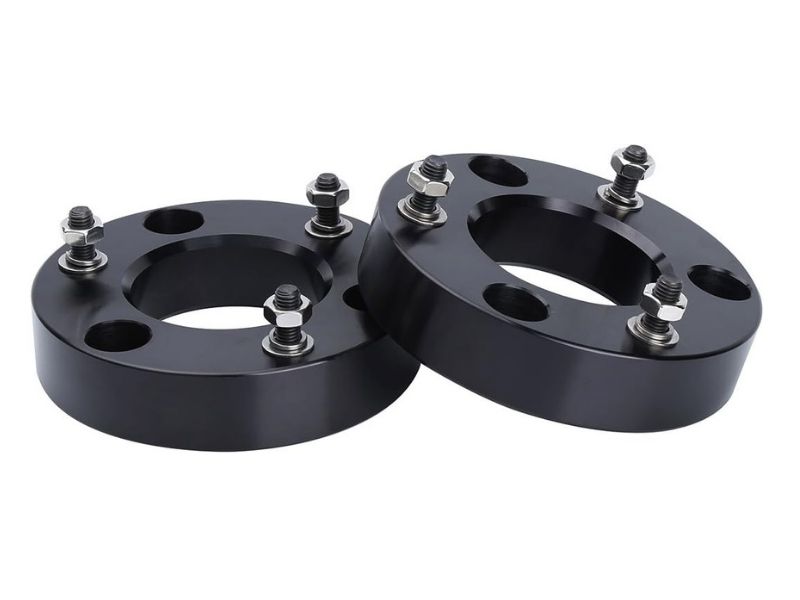
Key Features
- Approximately 2 inches of front lift
- Aluminum spacer construction
- Designed for compatible F-150 applications
- Suitable for selected 2WD and 4WD trucks
- Front strut-spacer format
- Maintains the factory strut and coil spring
- Moderate stance change
- Application verification required for special suspension packages
Detailed Review
The Dynofit 2-inch kit returns to the height range I prefer for many daily-driven F-150s.
Two inches usually delivers enough visual change to make the truck look less nose-down while remaining conservative enough for owners who still tow, haul, commute, and drive in poor weather.
A moderate level also helps preserve some rear rake.
That matters more than appearance alone. A pickup’s rear suspension is intended to carry load. If you raise the front until the unloaded truck is perfectly level, any significant rear suspension compression makes the truck look rear-low.
For someone towing a fishing boat on weekends, carrying landscaping equipment, or pulling a travel trailer, preserving some unloaded rake is often the more functional setup.
The Dynofit spacer design lets the original front spring rate remain in place. This is helpful if you already like the basic ride character of the truck.
However, do not confuse spring rate with suspension travel.
A spacer modifies static position, which changes how much downward travel remains and alters control-arm and CV geometry. Even a 2-inch kit should be installed with awareness of these changes.
After installation, I strongly recommend a professional four-wheel alignment or at minimum a proper front alignment performed with the rear thrust line considered.
The key settings are camber, caster, and toe.
Toe is particularly important for tire life. A truck can look visually straight while still having enough toe error to wear expensive all-terrain tires rapidly.
Caster influences straight-line stability and steering return, while camber affects how evenly the tread sits on the road.
If larger tires are planned, complete the leveling installation and wheel/tire change before the final alignment when practical. That lets the alignment shop evaluate the actual finished configuration.
What I Like
- Two-inch height suits multipurpose F-150s.
- Aluminum construction keeps the spacer straightforward and corrosion resistant.
- Preserves the factory spring and strut.
- Less aggressive geometry change than a 3-inch spacer.
What I Do Not Like
- Does not guarantee a perfectly level stance on every truck.
- Exact wheel and tire fit still requires measurement.
- An alignment adds cost after installation.
Verdict
The Dynofit 2-inch kit is a sensible option for a truck that needs a moderate stance change rather than the tallest possible level. I would particularly consider it for a daily-driven or lightly towing F-150 where retaining functional rake is valuable.
8. Richeer 3-Inch Front Leveling Kit
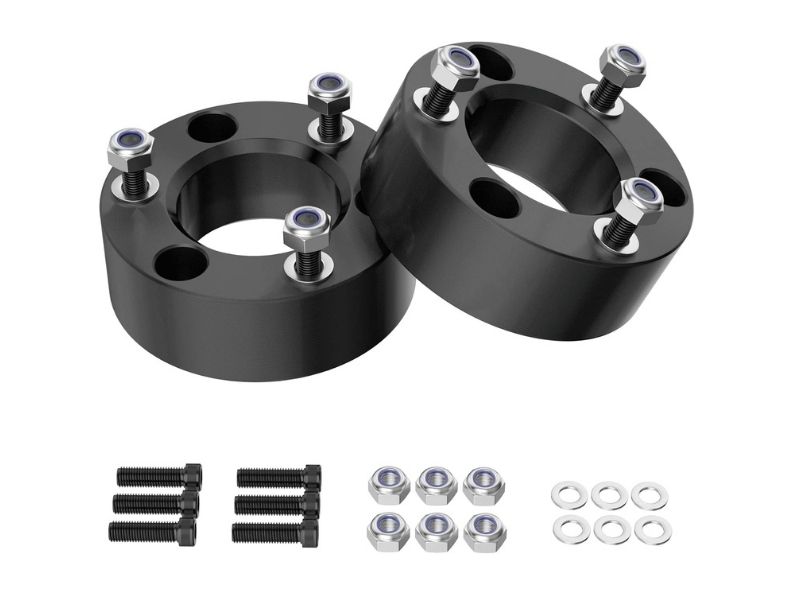
Key Features
- Approximately 3 inches of front lift
- Designed for compatible F-150 models
- Aluminum leveling spacers
- High-strength hardware
- Front-only suspension leveling approach
- Selected 2WD and 4WD compatibility
- Aggressive stance
- Exact trim and suspension configuration should be confirmed
Detailed Review
The Richeer 3-inch kit appeals to the same buyer as the KSP 3-inch system: someone who wants a noticeably taller front end and is comfortable with the additional geometry considerations.
A 3-inch level can make a stock-height F-150 look significantly more aggressive, especially when combined with larger all-terrain tires. For appearance-focused builds, that is the attraction.
From a mechanical perspective, though, this is where I stop treating a leveling spacer as a purely cosmetic part.
At three inches, check upper-control-arm position at full droop. Look at ball-joint angle. On 4WD trucks, inspect CV axle boots and operating angle. Confirm that brake hoses, ABS wiring, and other components have adequate slack throughout steering and suspension movement.
Steering should be checked from full lock to full lock after the installation, preferably with the truck’s final wheel and tire package installed.
An aggressive level can also expose tire-clearance issues in ways that surprise owners. Raising the front vertically does not prevent a wide tire on a low-offset wheel from contacting the inner fender during steering compression.
If the goal is genuinely to run a large tire with full suspension travel and minimal rubbing, a full suspension lift engineered around that tire size may be a better solution than forcing a leveling spacer to do the job of a lift kit.
This distinction is especially relevant for trucks used on trails.
A pavement-oriented truck may rarely use full suspension articulation. An off-road F-150 can experience simultaneous steering angle, suspension compression, and articulation, making clearance requirements much more demanding.
I also recommend measuring the truck’s rake before selecting 3 inches. Some F-150s simply do not have 3 inches of rear-over-front height difference in stock condition.
If measured rake is only 2 inches, a 3-inch front increase can produce a reverse rake.
What I Like
- Strong visual stance change.
- Can provide additional front fender clearance.
- Simple spacer approach retains factory spring hardware.
- Appropriate for buyers intentionally planning an aggressive front level.
What I Do Not Like
- Three inches is not my preferred height for a general-purpose F-150.
- Suspension geometry and UCA position need closer attention.
- Can create reverse rake when the truck does not have enough factory height difference.
Verdict
The Richeer 3-inch kit makes sense for a measured, appearance-focused build rather than a one-size-fits-all recommendation. I would confirm geometry, trim compatibility, actual rake, wheel offset, and alignment capability before selecting this height.
9. FLYCLE 2.5-Inch Front Leveling Kit
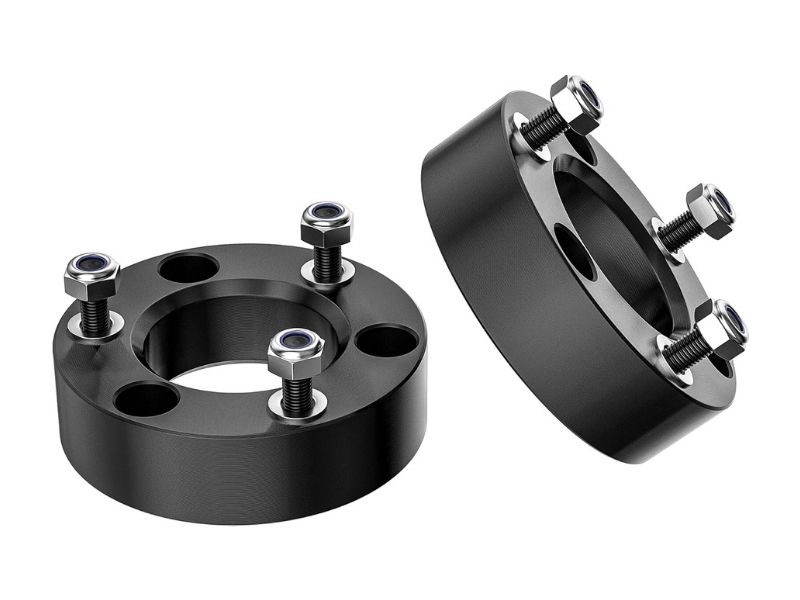
Key Features
- Approximately 2.5 inches of front leveling
- Compatible with selected F-150 model years
- Aluminum spacer construction
- Front strut-spacer design
- Designed for compatible 2WD and 4WD trucks
- Retains stock front struts
- Moderate-to-aggressive stance
- Exact year and special-package fitment must be confirmed
The FLYCLE 2.5-inch kit is aimed at buyers who find a 2-inch level too conservative but do not want to step to a full 3 inches.
That makes it a useful compromise for trucks with a measurable 2.5- to 3-inch factory rake.
As with every 2.5-inch product here, I would measure first.
Place the truck on flat ground with normal fuel level and typical permanent equipment installed. Make sure tire pressures are even. Measure vertically from the wheel hub center to the fender lip.
Do not measure from the ground to the fender if front and rear tire diameters differ, because tire size then becomes part of the measurement.
Suppose the front hub-to-fender height is 22 inches and the rear is 24.75 inches. That is approximately 2.75 inches of rake. A nominal 2.5-inch front level would theoretically leave around 0.25 inch of rake before accounting for suspension tolerances and measurement variation.
That may be suitable for a street truck.
If you tow regularly, I would generally leave more difference.
The spacer retains the stock coil spring, so the original front spring rate remains. If ride quality is already poor because the factory struts are worn, installing a level alone will not solve the problem.
This is also a good point to consider total ownership cost.
A less expensive spacer may be attractive, but installation, alignment, potential tire changes, and any geometry-related parts can cost more than the spacer itself. Plan the entire modification rather than treating the kit price as the full cost.
For snow-belt trucks, inspect fasteners during routine service because road salt attacks surrounding steel hardware even when the spacer itself is aluminum. For trucks used in dry, dusty regions, keep an eye on ball-joint and CV boots because cracked rubber allows contamination into components.
What I Like
- 2.5-inch height works well on trucks with enough measured factory rake.
- Retains the original strut and spring.
- Aluminum construction suits exposed suspension use.
- Provides a more aggressive stance than a 2-inch level.
What I Do Not Like
- Fitment should be confirmed carefully on newer and specialized F-150 configurations.
- Can reduce towing rake substantially.
- Worn factory struts remain worn after installation.
Verdict
The FLYCLE 2.5-inch kit is best for an owner who has already measured the truck and knows that 2.5 inches matches the desired stance. I would not choose it purely from appearance photos because factory rake varies between trucks.
10. Supreme Suspensions 2.5-Inch Front Leveling Kit
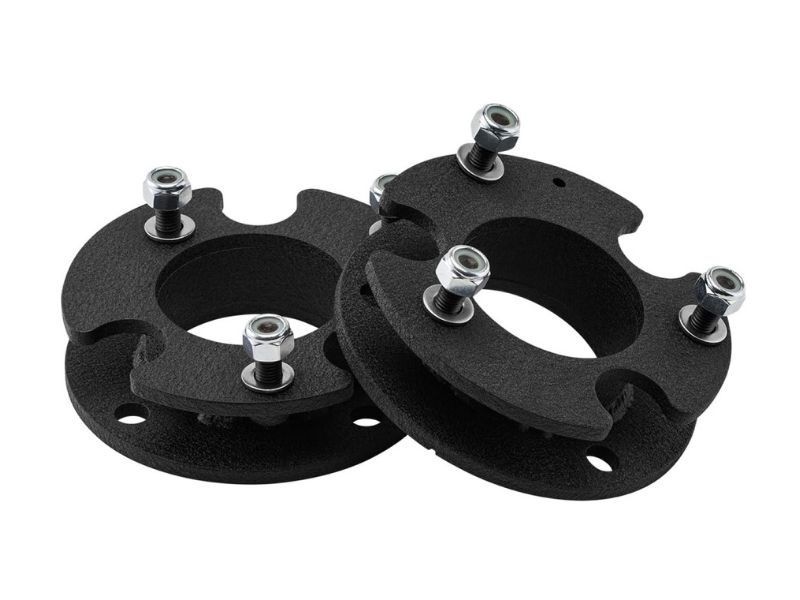
Key Features
- Approximately 2.5 inches of front lift
- Strut-spacer leveling design
- High-strength spacer construction
- Broad F-150 application coverage depending on configuration
- Retains factory front struts
- Designed to reduce front rake
- Suitable for selected 2WD and 4WD applications
- Exact model-year compatibility should be verified before purchase
Detailed Review
The Supreme Suspensions 2.5-inch kit rounds out this list with another approach to the popular 2.5-inch front level.
At this point, the most important question is not whether 2.5 inches can make an F-150 look good. It can. The question is whether 2.5 inches is correct for your exact truck.
F-150 ride height can vary because of engine, cab and bed configuration, drivetrain, factory suspension package, accessories, previous modifications, spring condition, and permanent load.
Even two trucks from the same model year may not measure identically.
This is why I consider actual hub-to-fender measurement one of the most useful steps in buying a leveling kit.
The Supreme system retains the existing strut arrangement rather than turning the truck into a full lift build. For many owners, that simplicity is desirable.
The spacer itself is only one part of the finished installation, however.
A 2.5-inch ride-height change should be followed by alignment, tire-clearance checks, steering-lock checks, and inspection of suspension and brake-line routing.
If you plan to use aftermarket wheels, install the intended wheel and tire combination before deciding that no rubbing exists. Clearance with the wheels pointed straight ahead is not enough.
Turn steering fully left and right while checking liner, bumper, crash-bar, sway-bar, and suspension clearances. Remember that suspension compression while driving can reduce clearances further.
I also recommend rechecking headlight aim after leveling. Raising the front changes the angle at which headlights point relative to the road. Even if the mechanical suspension work is perfect, poorly aimed lights can glare into oncoming traffic.
Trucks with driver-assistance sensors or unusual suspension electronics can require additional service procedures. Always account for the systems actually installed on the vehicle.
What I Like
- Popular 2.5-inch height creates a strong visual improvement.
- Retains the stock strut and coil spring.
- Straightforward spacer concept.
- Can work well for trucks with substantial factory rake.
What I Do Not Like
- Published fitment ranges can vary by configuration, so exact application verification is important.
- 2.5 inches may be excessive for frequent heavy towing.
- Tire clearance still depends heavily on wheel offset and tire width.
Verdict
The Supreme Suspensions 2.5-inch kit is a practical final option for owners who want a taller front level and have confirmed exact compatibility. Its success depends less on the headline lift number and more on whether the truck’s measured rake, suspension package, wheel setup, and intended use match that height.
F150 Leveling Kit Comparison
| Product | Front Lift | Kit Type | Primary Material | Typical F-150 Scope | 2WD/4WD | Factory Strut Retained | Best Use | Main Limitation |
| Rough Country 52200 | 2 in | Front strut spacer | Molded/composite-style spacer system | Compatible 2009+ standard applications | Selected 2WD/4WD | Yes | Daily driving and balanced stance | Package exclusions apply |
| MotoFab F150-2 | 2 in | Front strut spacer | Billet aluminum | Broad standard F-150 range | Selected 2WD/4WD | Yes | Moderate level with billet construction | Not universal across special models |
| KSP 3-Inch | 3 in | Front strut spacer | 6061-T6 aluminum | Broad compatible F-150 range | Selected 2WD/4WD | Yes | Aggressive front stance | Greater geometry change |
| KSP 2.5-Inch | 2.5 in | Front strut spacer | 6061-T6 aluminum | Broad compatible F-150 range | Selected 2WD/4WD | Yes | Near-level street stance | Reduces towing rake |
| MotoFab F150-2.5 | 2.5 in | Front strut spacer | Billet aluminum | Broad standard F-150 range | Selected 2WD/4WD | Yes | Strong visual leveling | Special-model exclusions |
| AKM 2.5-Inch | 2.5 in | Front strut spacer | Aluminum | Compatible older/mid-generation applications | Selected 2WD/4WD | Yes | Older trucks needing a complete visual level | Generation-transition fitment matters |
| Dynofit 2-Inch | 2 in | Front strut spacer | Aluminum | Broad compatible F-150 range | Selected 2WD/4WD | Yes | Daily driving and light towing | Exact final stance varies |
| Richeer 3-Inch | 3 in | Front strut spacer | Aluminum | Broad compatible F-150 range | Selected 2WD/4WD | Yes | Aggressive appearance | Suspension-angle concerns |
| FLYCLE 2.5-Inch | 2.5 in | Front strut spacer | Aluminum | Selected F-150 applications | Selected 2WD/4WD | Yes | Street trucks with substantial rake | Exact package fitment required |
| Supreme Suspensions 2.5-Inch | 2.5 in | Front strut spacer | High-strength spacer construction | Broad model-year coverage by application | Selected 2WD/4WD | Yes | Near-level stance | Verify exact year and suspension |
For the broadest daily-driver use, I favor the 2-inch products because they improve stance without trying to remove every fraction of factory rake. A 2.5-inch level makes more sense when measurements confirm that the truck starts with substantial front-to-rear height difference. I reserve the 3-inch options for owners deliberately pursuing a more aggressive build and willing to evaluate the accompanying suspension geometry.
How I Compare F-150 Leveling Kits
I start with fitment, not lift height.
The exact model year, 2WD or 4WD drivetrain, factory suspension package, electronic damping, Raptor/Tremor/Lightning status, and existing modifications determine whether a kit is mechanically appropriate.
Next comes lift height. I prefer the smallest amount of front lift that accomplishes the owner’s actual goal.
Then I look at construction, how the kit interfaces with the original strut, alignment requirements, suspension angles, and how much factory rake will remain.
Wheel-and-tire goals matter, but I do not consider a leveling kit a guaranteed tire-fitment solution. Tire diameter, width, wheel offset, backspacing, liner shape, crash bars, and steering movement all matter.
Finally, I consider how the truck is used. A show-oriented street truck, an interstate tow vehicle, a farm truck, and an off-road F-150 do not benefit from exactly the same setup.
What Does a Leveling Kit Do on an F150?
A front leveling kit increases the F-150’s front ride height to reduce the difference between the front and rear fender positions.
Most pickups leave the factory with the rear higher than the front. This is known as factory rake.
Ford does this for functional reasons. When weight is placed in the bed or a trailer applies tongue weight, the rear suspension compresses. Starting with the rear slightly higher helps the loaded truck settle toward level rather than immediately becoming rear-low.
A front leveling kit changes appearance first, but it can also provide additional front clearance for larger tires and improve approach clearance around the lower bumper or air dam.
It does not:
- Increase the truck’s legal payload rating
- Increase the axle weight rating
- Increase the gross vehicle weight rating
- Increase the maximum trailer rating
- Automatically make 35-inch tires fit
- Replace worn shocks, struts, ball joints, or bushings
- Convert the truck into a full suspension-lift setup
Understanding those limits prevents many disappointing modifications.
2-Inch vs 2.5-Inch vs 3-Inch F150 Leveling Kit
2-Inch Level
For most daily-driven F-150s, 2 inches is my preferred starting point.
It provides a clear visual change while usually preserving at least some factory rake. Suspension geometry remains changed, but the amount is less aggressive than taller spacer setups.
A 2-inch kit is particularly appropriate for:
- Daily commuting
- Highway driving
- Light trails
- Occasional towing
- Bed cargo
- Owners who want larger tires without an extreme stance
- Trucks where long-term suspension friendliness is a priority
2.5-Inch Level
A 2.5-inch level is popular because it can make many F-150s appear very close to level.
I would choose this height after measuring actual rake.
It suits:
- Street-oriented trucks
- Trucks with approximately 2.5 to 3 inches of measured rake
- Owners prioritizing a more aggressive wheel-and-tire stance
- Trucks that do not spend most of their time carrying heavy tongue or bed weight
At this height, alignment and control-arm angles deserve greater attention.
3-Inch Level
A 3-inch level is aggressive for a front-only strut spacer.
It may work on an appropriate configuration, but I would not treat it as the normal answer for every F-150.
Three inches may require more consideration of:
- Upper control arms
- Ball-joint articulation
- Droop travel
- CV axle angle
- Tie-rod angle
- Alignment range
- Reverse rake
- Wheel and tire interference
- Off-road suspension cycling
If you genuinely need several inches of additional clearance rather than simply reducing rake, a properly engineered suspension lift may be the better solution.
How to Measure F150 Rake Before Buying a Leveling Kit
Measuring first is one of the easiest ways to avoid buying the wrong height.
Park the truck on a flat surface.
Set normal tire pressures and remove unusual temporary cargo.
Measure from the center of the wheel hub vertically to the bottom edge of the fender opening.
Record the front measurement and the rear measurement on the same side.
Example:
- Front hub to fender: 21.75 inches
- Rear hub to fender: 24.25 inches
- Difference: 2.5 inches
That truck has approximately 2.5 inches of measured rake at that moment.
If you install a nominal 2-inch level, you would expect some rake to remain.
A nominal 2.5-inch level would aim much closer to an unloaded level stance.
Actual results can differ because of suspension geometry, manufacturing tolerances, spring condition, accessory weight, and measurement variation.
Measure both sides as well. Trucks can sit slightly unevenly because of fuel load, spring tolerances, or permanent equipment.
Why Spacer Thickness Is Not the Same as Lift Height
A common misconception is that a 2-inch leveling kit must physically contain a spacer that is exactly 2 inches thick.
That is not necessarily true.
The F-150’s front suspension operates through a motion ratio. The strut mounting point and wheel do not travel one-to-one in all parts of their arcs.
A relatively thin strut spacer can therefore create a larger change in measured wheel opening height.
For this reason, evaluate a kit by the intended vehicle lift amount rather than comparing spacer thickness with a ruler and assuming the manufacturer made a mistake.
F150 Generation and Model-Year Fitment
“F-150 leveling kit” describes a category, not one universal suspension part.
2004–2008 F-150
This generation introduced a suspension architecture that many spacer kits specifically target.
Pay close attention to the 2004 model year because the F-150 Heritage continued the older body/chassis design. A kit for a redesigned 2004 F-150 should not automatically be assumed to fit a Heritage truck.
Age matters here as much as fitment.
Before leveling a 2004–2008 truck, inspect:
- Ball joints
- Tie-rod ends
- Struts
- Control-arm bushings
- Wheel bearings
- Sway-bar links
- CV boots on 4WD models
- Frame and suspension corrosion
2009–2014 F-150
This generation is covered by many popular two- and 2.5-inch leveling systems.
However, SVT Raptor suspension is substantially different from a standard F-150. Never assume that a standard truck spacer is appropriate for a Raptor.
Heavy-duty payload configurations can also differ.
2015–2020 F-150
The aluminum-body F-150 generation remains one of the most common targets for leveling kits.
Standard truck fitment is widely supported, but Raptor applications again require special components.
When installing larger wheels and tires, pay careful attention to crash-bar and liner clearance.
2021–2026 F-150
Newer F-150s require even more fitment care because trim and suspension technology have expanded.
Some trucks use Continuous Controlled Damping (CCD). The Tremor has specialized off-road suspension. The Raptor is a separate high-performance off-road configuration. The F-150 Lightning uses an entirely different electric-platform suspension architecture.
A listing that broadly says “F-150” is not enough.
Verify:
- Exact year
- Trim
- 2WD or 4WD
- Tremor status
- Raptor status
- Lightning status
- CCD/electronic damping
- Heavy-duty payload or specialty packages
- Existing lift or leveling components
Can the Same Leveling Kit Fit 2WD and 4WD F150s?
Some kits are designed for both, but 2WD and 4WD compatibility must be verified for the exact product.
On many modern F-150s, the general front suspension architecture is similar enough that a spacer can cover both configurations.
The major mechanical difference for leveling considerations is the front drivetrain.
A 4WD F-150 has front CV axles running from the differential to the wheel hubs. Raising the front changes their operating angle.
A 2WD truck does not have those front drive axles, so CV-angle concerns do not apply.
That does not mean a 2WD truck can be lifted without considering geometry. Ball joints, tie rods, alignment, control arms, and suspension travel still matter.
How Leveling Affects CV Axle Angles
On a 4WD F-150, the front CV axles operate at an angle even at stock ride height.
Raising the front increases that angle because the wheel hub moves farther from the differential’s static position.
A moderate increase is commonly accommodated by the original design, but increasingly aggressive lift can:
- Increase CV joint operating angle
- Place boots in a more stressed position
- Reduce available droop
- Increase wear in unfavorable conditions
Inspect CV boots regularly after leveling. A torn boot allows grease to escape and dirt or water to enter the joint.
If the truck develops clicking, vibration, grease leakage, or unusual driveline behavior after modification, do not assume it is normal simply because the truck has a lift.
Upper Control Arms and Ball Joint Angle
The upper control arm connects the upper part of the steering knuckle to the chassis.
When ride height changes, the control arm’s resting position changes as well.
A taller level can place the upper ball joint at a steeper angle and reduce available downward suspension travel before the joint or arm reaches its geometric limit.
Aftermarket UCAs designed for lifted trucks can offer:
- Revised ball-joint angle
- Additional droop clearance
- Improved alignment range
- Stronger joints for off-road use
- Better tire clearance in some configurations
Do you automatically need aftermarket UCAs with every leveling kit?
No.
A mild 2-inch street setup on a compatible truck may align and operate acceptably with the factory arms.
At 2.5 to 3 inches, particularly with off-road use, I would evaluate UCA geometry more closely.
Does an F150 Need an Alignment After a Leveling Kit?
Yes. An alignment should be considered part of the leveling-kit installation.
Changing front ride height changes suspension geometry.
The primary alignment measurements are:
Camber
Camber is the inward or outward tilt of the tire when viewed from the front.
Incorrect camber can contribute to uneven inner- or outer-edge tire wear.
Caster
Caster is the forward or backward inclination of the steering axis.
It affects straight-line stability, steering feel, and how strongly the steering returns toward center.
Toe
Toe describes whether the fronts of the tires point slightly inward or outward relative to each other.
Incorrect toe can destroy expensive tires surprisingly quickly.
Do not judge alignment by whether the steering wheel looks straight.
A truck can drive reasonably straight while still having tire-damaging alignment settings.
Can a Leveling Kit Fit 33-Inch Tires on an F150?
Many F-150 configurations can accommodate roughly 33-inch tires with a modest level, but exact fitment varies.
Some trucks can run a 33-inch-class tire even at stock height depending on width and wheel specifications.
A level can improve vertical and turning clearance, but you must still consider:
- Model year
- Tire’s actual measured diameter
- Section width
- Wheel width
- Wheel offset
- Backspacing
- Crash bars
- Inner liners
- Front bumper clearance
- Alignment
- Suspension compression
A narrow 33-inch tire on a conservative-offset wheel is usually easier to fit than a very wide 33-inch tire on a wheel that pushes far outward.
Will 35-Inch Tires Fit an F150 With a Leveling Kit?
Sometimes, but a leveling kit alone does not guarantee rub-free 35-inch tire clearance.
This is one of the most common oversimplifications in F-150 modification advice.
“35-inch tire” describes nominal diameter, but tire width and wheel position can make an enormous difference.
A common 35×12.50 tire is wide. Paired with a wheel that has aggressive offset, it may contact:
- Crash bars
- Fender liners
- Bumper edges
- Sway bar
- Suspension components
Some owners trim or modify surrounding components. Others choose narrower tires or different offsets.
If zero rubbing at full steering lock and suspension compression is required, verify the exact wheel and tire combination for your generation rather than relying only on leveling height.
Wheel Offset and Backspacing Explained
Wheel offset describes how the wheel’s mounting surface is positioned relative to its centerline.
Positive offset moves the wheel farther inward.
Lower positive, zero, or negative offset generally moves it farther outward.
Backspacing measures from the wheel’s mounting surface to the inner edge of the wheel.
These measurements influence where the tire sits relative to the suspension, fender, liner, and crash structures.
A wheel pushed outward may give the truck a wider stance, but it also changes the path the tire follows when steering.
This is why two F-150s with the same leveling kit and same advertised tire diameter can have completely different rubbing results.
Does a Leveling Kit Affect Ride Quality?
A spacer level can preserve much of the factory spring feel because it does not necessarily replace the coil spring.
However, saying that a leveling kit has “zero effect” on ride is too simplistic.
Raising static suspension position changes:
- Droop travel
- Control-arm position
- Ball-joint angle
- CV angle on 4WD trucks
- Shock/strut operating position
- Alignment
A mild kit installed on healthy suspension can retain comfortable daily-driver behavior.
An aggressive spacer combined with worn struts, oversized heavy tires, low-pressure E-load tires, or extreme wheel offset may feel very different from stock.
Remember that larger wheels and tires often change ride quality more noticeably than the spacer itself.
Leveling Kit vs Adjustable Struts
A top strut spacer is not the only way to raise an F-150’s front end.
Height-adjustable struts can use spring-perch positions or internal design changes to increase ride height.
Advantages can include:
- Replacing worn dampers at the same time
- Cleaner integration when struts already need service
- Multiple height settings on some designs
- No separate top spacer
Disadvantages can include:
- More expense
- Spring compression during assembly on some products
- Potentially different damping behavior
- Same basic suspension-geometry concerns at equivalent final ride height
If your factory struts are still healthy, a spacer can be economical.
If they are already worn out, I would compare the total cost of spacer installation plus future strut replacement against installing upgraded struts now.
Leveling Kit vs Coilovers
Coilovers replace the spring-and-damper assembly with a performance-oriented adjustable unit.
They can provide better damping control, ride-height adjustment, and off-road capability when properly designed.
They are also considerably more expensive than simple spacers.
A spacer is appropriate when the main goal is appearance and modest clearance.
Coilovers make more sense when suspension performance itself is a priority.
Leveling Kit vs Full Lift Kit
A leveling kit mainly raises the front.
A full suspension lift can raise both front and rear and may include:
- Crossmembers
- Knuckles
- Differential relocation
- Control-arm changes
- Rear blocks or springs
- Longer shocks
- Brake-line brackets
- Additional geometry corrections
If your goal is simply to reduce factory rake and run a modestly larger tire, a leveling kit is usually simpler.
If your goal is several inches of overall vehicle lift, significantly larger tires, and preserved suspension geometry at that height, a properly engineered full lift is the more appropriate system.
Does a Leveling Kit Affect Towing?
A leveling kit does not increase towing capacity and can reduce the visual rake available for trailer load.
This is particularly important for F-150 owners because many trucks tow boats, utility trailers, campers, and equipment.
A front-only level raises the front but does not increase rear spring capacity.
When trailer tongue weight is applied, the rear suspension still compresses.
If the truck begins perfectly level when empty, that compression can make it sit rear-low.
For frequent towing, I prefer a moderate level that preserves some unloaded rake.
Weight-distribution equipment, helper springs, or air springs can address particular load-management needs when correctly selected, but they do not legally increase the truck’s rated payload or tow capacity either.
Always operate within the ratings on the truck’s labels and documentation.
Does a Leveling Kit Increase Payload?
No.
A front leveling spacer does not increase the F-150’s payload rating.
Payload is governed by the truck’s certified configuration, including chassis, axles, springs, tires, wheels, brakes, and other components.
Changing ride height does not rewrite those ratings.
The same applies to:
- GVWR
- GAWR
- GCWR
- Maximum trailer weight
- Tire load capacity
Never use a leveling kit as justification for carrying more weight.
What Material Is Best for an F150 Leveling Spacer?
Common materials include aluminum, steel, and engineered composites.
6061-T6 Aluminum
6061-T6 is common in machined suspension spacers.
Advantages include:
- Good strength-to-weight ratio
- Corrosion resistance
- Easy precision machining
- Long service life when properly designed
Steel
Steel is extremely strong but needs appropriate corrosion protection.
For trucks driven on salted winter roads, inspect coated steel components periodically for chipped coating and corrosion.
Engineered Composite or Molded Spacer Materials
Properly engineered non-metallic materials can also work in suspension spacer applications.
Material alone does not determine quality.
Geometry, load path, manufacturing accuracy, hardware, installation, and application engineering are equally important.
Leveling Kits and Snow-Belt Corrosion
Owners in northern U.S. states should think beyond the spacer material.
Road salt and brine attack:
- Strut bolts
- Control-arm hardware
- Tie-rod threads
- Sway-bar hardware
- Brake-line brackets
- Wheel hubs
- Frames and crossmembers
A corrosion-resistant aluminum spacer does not protect the rest of the suspension.
Wash accumulated salt from the underbody and inspect hardware during routine maintenance.
A heavily corroded truck can also turn a straightforward leveling-kit installation into a much harder job.
Leveling Kits for Hot and Off-Road Climates
In hot, dusty regions, heat and contamination can accelerate deterioration of rubber components.
Inspect:
- CV boots
- Ball-joint boots
- Control-arm bushings
- Shock seals
- Sway-bar links
Off-road trucks should be checked more frequently because suspension travel and contamination exposure are greater.
How to Install an F150 Leveling Kit
Exact procedures vary by model year and product, so the kit’s instructions and the correct service information take priority.
A typical strut-spacer installation generally involves:
- Park the truck on a hard, level surface.
- Secure the rear wheels.
- Loosen front wheel fasteners as appropriate.
- Raise the front using the correct lifting points.
- Support the truck securely with appropriately rated stands.
- Remove the front wheels.
- Disconnect or reposition suspension components required to free the strut.
- Protect brake hoses and ABS wiring from tension.
- Remove or reposition the complete strut assembly.
- Install the leveling spacer in the correct orientation.
- Reinstall the assembly.
- Torque all fasteners to the appropriate specifications.
- Repeat on the opposite side.
- Reinstall wheels and torque fasteners properly.
- Lower the truck.
- Settle the suspension.
- Inspect steering and suspension clearances.
- Have the truck professionally aligned.
Never work under a truck supported only by a hydraulic jack.
Do not use an impact wrench blindly on suspension fasteners where controlled torque is required.
Do You Need a Spring Compressor?
Many top-spacer leveling kits are designed so the original strut assembly stays together, meaning you do not need to remove the coil spring from the strut.
That is different from saying the entire job is easy.
The strut assembly still has to be released from the suspension, and doing so safely may require substantial mechanical work.
If a product requires disassembling a loaded strut, a proper spring compressor and correct procedure are essential. Compressed coil springs store substantial energy and can cause severe injury if mishandled.
What to Check Immediately After Installation
After the truck is back on the ground, inspect:
- Brake hoses
- ABS wires
- Sway-bar links
- Ball-joint boots
- CV boots
- Strut mounting
- Control-arm clearance
- Tire clearance
- Steering clearance
- Fastener position
Turn the steering from lock to lock.
Listen for contact or unusual noises during a slow test drive.
Then complete the alignment.
Re-Torque and Maintenance
Follow the specific kit manufacturer’s reinspection and torque instructions.
After the suspension has gone through initial driving cycles, inspect all modified mounting points again.
Continue checking:
- Fastener security
- Tire wear
- Ball-joint condition
- CV boots
- Strut leakage
- Wheel bearings
- Alignment symptoms
Uneven tire wear, a crooked steering wheel, pulling, new vibration, clunking, or changes in steering effort deserve investigation.
Re-Aim Headlights After Leveling
Raising the front changes the truck’s body angle.
That can cause headlights to aim higher than intended, particularly if most factory rake has been removed.
Check and adjust headlight aim using the proper procedure after the final ride height is established.
This improves nighttime visibility while reducing glare for other drivers.
Driver-Assistance and Sensor Considerations
Modern F-150s may use cameras, radar, steering-angle information, and other driver-assistance sensors.
A modest ride-height change does not automatically mean every truck requires sensor recalibration, but newer vehicles are more system-dependent than older pickups.
If the truck displays driver-assistance warnings after suspension modification, or if service information specifies calibration after ride-height/alignment changes, have the relevant systems checked correctly.
Common F150 Leveling Kit Mistakes
Buying Before Measuring Factory Rake
A 2.5-inch kit cannot produce the perfect result if the truck only has 1.5 inches of rake.
Measure first.
Assuming the Tallest Kit Is Best
More lift creates more suspension-angle change.
Select the smallest height that achieves your actual goal.
Ignoring Trim-Level Exclusions
Raptor, Tremor, Lightning, CCD, Heavy Duty Payload, and other special configurations can use different suspension components.
Skipping Alignment
This is one of the fastest ways to ruin expensive tires.
Assuming 35s Automatically Fit
Wheel width, offset, backspacing, tire width, and truck generation all affect clearance.
Leveling a Truck With Worn Suspension
Replace worn ball joints, bushings, tie rods, shocks, or struts before modifying ride height.
Forgetting About Towing Rake
A perfectly level empty truck may become visibly rear-low with trailer tongue weight.
Stacking Leveling Components
Combining spacers with other lift components without understanding the total geometry can create excessive lift and unsafe component angles.
Ignoring 4WD CV Axles
Inspect axle angles and boots after changing ride height.
Assuming the Modification Adds Capacity
A leveling kit changes stance. It does not increase payload or towing ratings.
Frequently Asked Questions
What size leveling kit is best for an F150?
A 2-inch front level is the most balanced starting point for many F-150 owners.
It provides a noticeable stance improvement while generally preserving more suspension travel and unloaded rake than taller spacer systems. A 2.5-inch kit works well when the truck has enough measured factory rake, while a 3-inch front-only level deserves closer inspection of control-arm, ball-joint, CV axle, alignment, and towing considerations. Measure your truck before choosing a height.
What is the best leveling kit for F150 daily driving?
A quality 2-inch kit is usually the most practical choice for daily driving.
For a compatible standard truck, I prefer a moderate system such as the Rough Country 52200 or MotoFab F150-2 because two inches provides a clear visual improvement without attempting to eliminate every bit of factory rake. The correct kit still depends on model year, drivetrain, trim, suspension package, and existing modifications.
Is a 2-inch or 2.5-inch leveling kit better for an F150?
Two inches favors function and retained rake; 2.5 inches favors a more completely leveled appearance.
If you tow, carry bed cargo, or simply want conservative suspension geometry, I would generally start with two inches. If your measured rear-to-front height difference is closer to 2.5 or 3 inches and appearance is the priority, a 2.5-inch kit may produce the stance you want. Always measure hub to fender before deciding.
Is a 3-inch leveling kit too much for an F150?
Three inches can be aggressive for a front-only spacer and requires careful geometry evaluation.
A 3-inch system can increase upper-control-arm and ball-joint angle, reduce droop, and steepen CV axle angles on 4WD trucks. Some configurations may benefit from aftermarket upper control arms or a different lift approach. If you need 3 inches primarily for large-tire clearance, compare a properly engineered suspension lift before committing to a spacer-only setup.
Does a leveling kit hurt F150 ride quality?
A moderate spacer level can retain much of the stock ride, but suspension geometry still changes.
Because a spacer normally retains the factory coil spring, it does not automatically increase spring rate. However, ride height affects droop travel, control-arm position, shock operating point, alignment, and CV angles. Tire changes can also alter ride substantially. Heavy all-terrain tires and large wheels may have a bigger effect on comfort than the leveling spacer itself.
Does an F150 need an alignment after a leveling kit?
Yes, a professional alignment should be part of the installation process.
Raising the front changes the relationship between the control arms, steering knuckle, and tie rods. Camber, caster, and toe can move away from their preferred settings. Incorrect toe can wear tires rapidly even if the truck seems to drive straight. Complete the suspension and wheel/tire changes first, then align the truck in its final configuration.
Will a 2-inch leveling kit fit 33-inch tires?
Many F-150 setups can fit 33-inch-class tires with a 2-inch level, but there is no universal guarantee.
Clearance depends on the truck’s generation, tire width, true measured diameter, wheel width, offset, backspacing, crash bars, liners, and alignment. A narrower 33-inch tire on a conservative wheel typically fits more easily than a wide tire on an aggressively offset wheel. Check full steering lock and suspension clearance before assuming fitment.
Can I fit 35-inch tires on an F150 with a leveling kit?
Some F-150s can run 35-inch tires with a level, but wheel specifications and trimming often determine success.
A 35×12.50 tire is both tall and wide. Its width and the wheel’s offset can create contact even when vertical fender space looks adequate. Different F-150 generations have different liners and crash-bar clearances. For guaranteed full-articulation clearance, a larger suspension lift or more conservative wheel-and-tire combination may be more appropriate.
Do I need upper control arms with a leveling kit?
Not every F-150 needs aftermarket upper control arms for a mild level.
A compatible 2-inch street setup may retain acceptable ball-joint angles and alignment range with factory arms. As front lift approaches 2.5 to 3 inches, or when the truck sees substantial off-road articulation, upgraded UCAs become more worth considering. Evaluate actual ball-joint angle, droop clearance, alignment capability, and the specific suspension generation rather than following a universal rule.
Does a leveling kit damage CV axles?
A leveling kit increases CV axle angle on 4WD trucks, but moderate lifts are commonly used successfully.
The important factor is how much the operating angle changes and whether the axles retain adequate articulation through suspension travel. Aggressive front lift can increase joint and boot stress. Inspect CV boots periodically, especially after off-road use, and investigate clicking, vibration, or grease leakage rather than assuming those symptoms are normal.
Can the same leveling kit fit 2WD and 4WD F150 models?
Some kits cover both drivetrains, but product-specific fitment must be verified.
Many F-150 spacer systems are marketed for selected 2WD and 4WD trucks within the same generation. However, the 4WD truck adds CV axles and associated angle considerations. Special suspension packages can also alter fitment. Confirm the exact year, drivetrain, trim, and suspension equipment instead of relying on a general F-150 description.
Does a leveling kit affect F150 towing?
It does not increase towing capacity and may reduce the amount of visible rake available under load.
A front level does not strengthen the rear springs. Trailer tongue weight still compresses the rear suspension. If the empty truck is perfectly level, attaching a trailer can make it appear rear-low. Owners who tow regularly should consider a moderate level that retains some factory rake and should always remain within the truck’s certified weight ratings.
Can I tow normally after leveling my F150?
Yes, when the kit is correctly installed and the truck remains within all factory weight ratings.
Pay attention to rear squat, headlight aim, steering feel, alignment, and trailer setup. A leveling kit does not increase payload or tongue-weight capacity. If the rear drops excessively with the trailer connected, address load distribution and suspension support appropriately rather than using the leveling kit as a substitute for correct towing setup.
Will a leveling kit void my F150 warranty?
A modification does not automatically erase every vehicle warranty, but related coverage can become more complicated.
If a suspension modification contributes to a component failure, warranty coverage for that failure may be disputed or denied depending on the circumstances and applicable warranty terms. Keep installation documentation, use correctly specified parts, and check current warranty conditions before modifying a newer truck. Do not assume either that all warranty coverage disappears or that every modified component remains covered.
Can I install an F150 leveling kit myself?
Experienced DIY mechanics can install many spacer kits, but safe lifting and suspension work are essential.
The job commonly requires lifting and supporting the truck, removing wheels, disconnecting suspension components, and releasing the strut assembly. Fastener torque, brake-line protection, ABS wiring, and safe support points matter. If coil-spring disassembly is required or you are not comfortable working around loaded suspension, professional installation is the safer choice. An alignment is still needed afterward.
How long does an F150 leveling-kit installation take?
Installation commonly takes a few hours, but corrosion, tools, experience, and model year can change that substantially.
A clean, newer truck with the right tools may be relatively straightforward. A high-mileage snow-belt truck with corroded suspension hardware can take much longer. Newer trucks with additional suspension electronics or specialized packages may also require more care. Do not rush safety-critical suspension work simply to meet a specific time estimate.
Is a leveling kit the same as a lift kit?
No, a leveling kit primarily raises the front, while a full lift changes overall vehicle height and geometry more extensively.
A leveling kit is ideal for reducing factory rake and creating modest additional front tire clearance. A full suspension lift is better suited to significantly larger tires, several inches of total vehicle lift, and applications requiring dedicated geometry corrections. If your real goal is major off-road clearance, a complete lift can be more appropriate than an extreme front spacer.
Conclusion
Choosing the best leveling kit for F150 starts with deciding how the truck is actually used, then measuring its factory rake and verifying exact suspension fitment before selecting a lift height.
The Rough Country 52200 2-Inch Leveling Kit remains my primary recommendation for a compatible standard F-150 because a 2-inch increase provides a strong balance of appearance, everyday drivability, useful tire clearance, and manageable suspension geometry.
The MotoFab F150-2 2-Inch Front Leveling Kit is the alternative I would consider when billet-aluminum construction and broad standard-truck compatibility are priorities. If measurements show that your F-150 has enough rake for more front height, the KSP 2.5-Inch Front Leveling Kit or MotoFab 2.5-inch system can produce a more completely leveled street stance. I would reserve the 3-inch options for intentionally aggressive builds where control-arm, ball-joint, CV axle, alignment, and towing effects have been evaluated.
Do not choose a kit solely because it promises the most lift or because another truck appears to clear a certain tire size. Verify year, drivetrain, suspension package, wheel offset, tire width, and actual rake.
For a multipurpose F-150 that still tows, hauls, commutes, and sees occasional rough roads, I would start with a correctly fitted 2-inch front level, perform a professional alignment, verify tire clearance, and preserve some functional rear rake.