A dependable best lithium ion battery jump starter can get a dead 12V battery running without another vehicle or traditional jumper cables. My primary recommendation is the NOCO Boost Plus GB40 1000A Lithium Jump Starter, especially for everyday passenger cars, crossovers, motorcycles, and moderate-size trucks.
For buyers wanting considerably more peak starting power, I also like the DBPOWER Peak 3000A Portable Car Jump Starter. Its 18,000mAh battery, LCD display, and larger-engine capability make it a strong choice for SUVs and pickups.
My third recommendation is the HULKMAN Alpha85 2000A Smart Jump Starter. Its large display, fast USB-C charging, rugged construction, and straightforward operating guidance make it particularly attractive for drivers who want a more premium emergency battery pack.
7 Best Lithium Ion Battery Jump Starter
| Image | Product Name | Check Price |
|---|---|---|
Best Choice | NOCO Boost Plus GB40 1000A Lithium Jump Starter | Check Price |
Second Best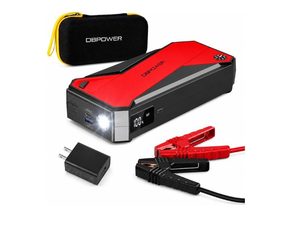 | DBPOWER Peak 3000A Portable Car Jump Starter | Check Price |
Third Choice | HULKMAN Alpha85 2000A Smart Jump Starter | Check Price |
 | NEXPOW Q10S 3000A Car Jump Starter | Check Price |
 | GOOLOO GP4000 4000A Jump Starter | Check Price |
 | WOLFBOX MegaVolt24 4000A Jump Starter | Check Price |
 | AstroAI S8 Air 3000A Jump Starter with Air Compressor | Check Price |
The best portable jump starter is not necessarily the model with the biggest advertised peak-amp number. Battery quality, clamp design, safety electronics, engine compatibility, cold-weather performance, charge retention, and ease of use matter just as much.
I prioritized established models with substantial buyer feedback while also keeping the seven selections relevant to modern 12V lithium jump-starting applications.
1. NOCO Boost Plus GB40 1000A Lithium Jump Starter – Best Overall

The NOCO GB40 remains my first choice because it combines excellent portability, a long-established track record, and beginner-friendly safety features without becoming unnecessarily bulky.
Key Features
- 1000A peak current
- Supports up to 6.0L gasoline and 3.0L diesel engines
- Spark-proof connection
- Reverse-polarity protection
- Built-in LED flashlight
- USB power-bank capability
- Compact lithium battery design
- IP65-rated housing
The GB40 is designed primarily for normal passenger vehicles rather than the largest diesel pickups. For the average driver, that is actually an advantage. You get a compact jump pack that can remain in an emergency kit without occupying much cargo space.
NOCO’s UltraSafe electronics are particularly valuable for occasional users. Connecting jumper cables during a roadside emergency can be stressful, and reverse-polarity protection helps reduce the consequences of accidentally placing the clamps on the wrong terminals.
The GB40 also includes a manual-override function for batteries that are too deeply discharged for automatic voltage detection. That feature should be used carefully and according to the instructions, but it gives experienced users an additional recovery option for severely depleted batteries.
Its built-in light and USB output further increase its value as an emergency tool.
What I Like
- Exceptionally large amount of long-term buyer feedback.
- Compact enough for most glove boxes or emergency kits.
- Excellent protection against common connection mistakes.
- Rugged housing feels more substantial than many budget units.
- Suitable for motorcycles through moderate-size trucks.
- Simple status indicators make roadside operation easy.
What I Do Not Like
- 1000A output is lower than newer large-engine jump packs.
- Not my first choice for large diesel pickups.
- Charging is slower than newer high-wattage USB-C designs.
- Clamp leads are relatively short.
Verdict: For most passenger-car owners, the NOCO GB40 remains the most balanced lithium-ion jump starter in this group. Its safety system, portability, reputation, and enormous user history outweigh its lower peak-amp specification.
2. DBPOWER Peak 3000A Portable Car Jump Starter – Best High-Capacity Value

The DBPOWER jump starter is a stronger choice for buyers who want more battery capacity and starting headroom without moving into a particularly large jump box.
Key Features
- 3000A peak output
- 18,000mAh battery capacity
- Supports up to approximately 8.0L gas and 6.0L diesel engines
- LCD battery-level display
- USB charging output
- Built-in LED emergency light
- Smart jumper clamps
- Compact carrying format
DBPOWER’s 18,000mAh capacity gives it more utility as an emergency power bank than many smaller entry-level jump starters.
The display is another practical improvement over simple four-light battery indicators. Knowing approximately how much charge remains makes it easier to decide whether the unit needs recharging before a trip.
Its engine coverage also makes it more versatile than the GB40 for owners of larger SUVs, trucks, vans, and diesel-powered vehicles.
A compass is integrated into the housing as an additional emergency feature, although I view the jump-starting system, display, and power-bank capability as considerably more important.
Despite its larger specifications, the unit remains portable enough to keep in a vehicle rather than functioning like an old-style lead-acid jump box.
What I Like
- Strong peak-current specification.
- Large 18,000mAh battery.
- Suitable for larger engines than many compact packs.
- LCD display gives clearer battery information.
- Established product with extensive buyer history.
- Doubles as a USB power bank.
What I Do Not Like
- Larger than an ultra-compact unit such as the NOCO GB40.
- Peak-amp numbers should not be treated as directly comparable across every manufacturer.
- Interface feels less refined than the HULKMAN display.
Verdict: DBPOWER is an excellent balance of capacity, engine coverage, and value for drivers who want more reserve power than a compact 1000A jump starter.
3. HULKMAN Alpha85 2000A Smart Jump Starter – Best Premium Pick
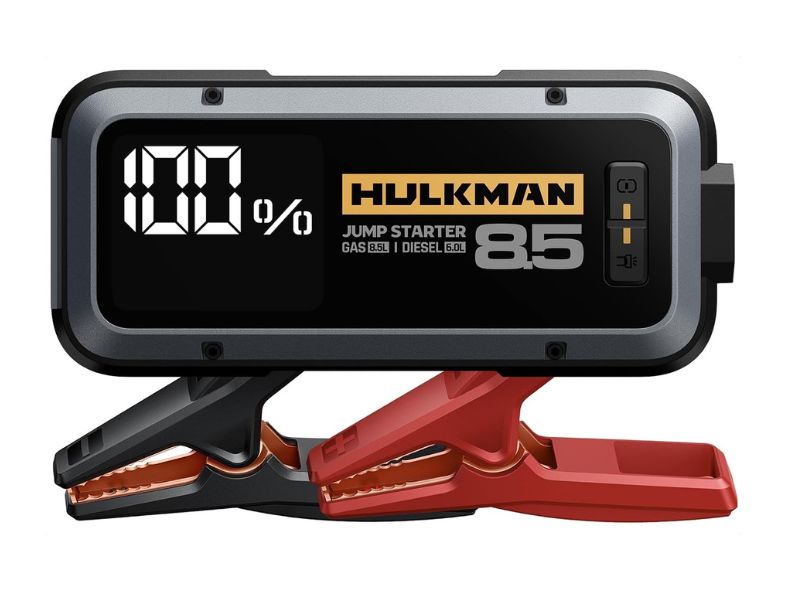
The HULKMAN Alpha85 focuses on usability as much as raw starting power.
Key Features
- 2000A peak starting current
- 20,000mAh battery
- Up to 8.5L gasoline and 6.0L diesel engines
- Large 3.3-inch display
- 65W USB-C fast charging
- USB-A and USB-C outputs
- IP65-rated protection
- Multiple built-in safety systems
The large display is one of the Alpha85’s most useful features. Rather than requiring you to interpret several tiny LEDs, the screen communicates battery status, operating condition, and potential connection errors more clearly.
Its 65W USB-C charging capability is another meaningful advantage. A jump starter that takes an extremely long time to recharge may eventually remain discharged because users postpone plugging it in. Faster charging makes routine maintenance much less inconvenient.
HULKMAN also provides a forced-start function for severely discharged batteries and multiple protection systems for incorrect connection, overheating, and related electrical problems.
The 20,000mAh battery means the Alpha85 also works well as a portable electronics charger during travel or power outages.
What I Like
- Excellent 3.3-inch status display.
- Strong 2000A output.
- Large 20,000mAh capacity.
- 65W fast USB-C charging.
- Good gasoline and diesel engine coverage.
- Rugged IP65 construction.
- Clear operating feedback suits occasional users.
What I Do Not Like
- Larger and heavier than the NOCO GB40.
- More expensive than many basic jump packs.
- Extra features may be unnecessary for someone who only owns a small sedan.
Verdict: The HULKMAN Alpha85 is one of the strongest choices for drivers willing to pay more for a large display, fast charging, excellent battery capacity, and a particularly polished operating experience.
4. NEXPOW Q10S 3000A Car Jump Starter – Best Compact High-Power Pick

The NEXPOW Q10S combines a compact design with a surprisingly strong advertised peak-current rating.
Key Features
- 3000A peak current
- Approximately 12,800mAh capacity
- Up to 9.0L gasoline and 7.0L diesel engine support
- 12V vehicle compatibility
- USB Quick Charge output
- LED emergency lighting
- Intelligent jumper clamps
- Portable compact housing
For an owner who drives both a normal passenger car and a larger truck or SUV, the broad engine compatibility is one of the main reasons to consider the NEXPOW.
The Q10S also maintains the familiar rectangular power-bank format, so it stores more easily than large jump boxes with permanently attached heavy cables.
USB Quick Charge support provides another layer of roadside usefulness. You can recharge a phone or other USB device if your vehicle electrical system is unavailable.
Its smart clamps incorporate standard protections intended to detect problematic connections before substantial current is delivered.
What I Like
- High 3000A advertised peak output.
- Compact relative to its engine capability.
- Suitable for both gasoline and diesel applications.
- USB fast charging adds emergency usefulness.
- Straightforward clamp system.
- Large volume of buyer feedback for the category.
What I Do Not Like
- Battery capacity is smaller than some 20,000mAh competitors.
- Display system is less sophisticated than HULKMAN’s.
- Advertised peak amperage alone should not determine your purchase.
Verdict: The NEXPOW Q10S is a practical choice when you want substantial starting capability in a relatively compact emergency pack.
5. GOOLOO GP4000 4000A Jump Starter – Best for Large Engines

The GOOLOO GP4000 targets buyers with larger vehicles and higher starting demands.
Key Features
- 4000A peak starting current
- 24,000mAh lithium battery
- Suitable for gasoline engines and diesel engines up to approximately 10.0L
- USB fast-charging outputs
- USB-C connection
- Intelligent safety clamps
- Built-in emergency light
- Storage case included
The combination of 4000A advertised peak output and 24,000mAh battery capacity gives the GP4000 substantially more reserve energy than many small emergency packs.
That makes it appealing for full-size pickups, large SUVs, boats, RV applications, lawn equipment, and households that need one jump starter to cover multiple vehicles.
The larger battery also makes it useful as an emergency power bank.
GOOLOO includes multiple safety protections in the clamp assembly, helping detect reverse connection and other electrical problems.
While the GP4000 has a high peak number, I still recommend matching the manufacturer’s engine-displacement guidance to your specific vehicle instead of assuming more amps automatically means better performance.
What I Like
- Powerful 4000A rating.
- Large 24,000mAh capacity.
- Particularly useful for large engines.
- Works as an emergency USB power source.
- Good accessory package.
- Established model with substantial customer feedback.
What I Do Not Like
- Larger than basic passenger-car jump starters.
- More power than many small-car owners need.
- Large battery packs require disciplined periodic charging.
Verdict: The GOOLOO GP4000 makes the most sense for buyers who want generous battery reserves and wider large-engine compatibility in one portable unit.
6. WOLFBOX MegaVolt24 4000A Jump Starter – Best Fast-Charging Heavy-Duty Pick

The WOLFBOX MegaVolt24 is a newer high-output design that has developed a substantial buyer base and performed well in independent jump-start testing.
Key Features
- 4000A peak output
- 12V vehicle operation
- Large gas and diesel engine support
- 65W USB-C fast charging
- Digital battery/status display
- Built-in LED lighting
- Heavy-duty smart clamps
- Protective carrying case
The most appealing feature for everyday ownership is the 65W charging system.
Lithium jump starters are only useful when they are charged, and faster USB-C charging makes topping off the pack considerably easier before a road trip or after an emergency use.
Its digital display also provides clearer charge information than traditional LED indicators.
The 4000A peak rating places it in the high-power category, making it appropriate for truck and SUV owners who want substantially more starting margin than an entry-level unit.
Its relatively slim format also helps keep the package manageable despite the high output.
What I Like
- Strong 4000A rating.
- 65W USB-C charging is genuinely useful.
- Digital display.
- Good option for larger vehicles.
- Strong clamp design.
- Protective storage case included.
- More compact than many old-style heavy-duty jump boxes.
What I Do Not Like
- Heavier than small car-focused jump packs.
- Less long-term review history than the NOCO GB40.
- Larger-engine capability may be unnecessary for compact-car owners.
Verdict: WOLFBOX is especially attractive for drivers who want high starting output combined with modern USB-C fast charging and a digital interface.
7. AstroAI S8 Air 3000A Jump Starter with Air Compressor – Best Jump Starter and Tire Inflator Combo

The AstroAI S8 Air takes a different approach by combining a lithium jump starter and cordless tire inflator in one emergency tool.
Key Features
- 3000A peak starting current
- Approximately 10,000mAh battery
- Up to 9.0L gasoline and 6.5L diesel compatibility
- Built-in 150 PSI tire inflator
- Automatic inflation shutoff
- Digital pressure display
- Emergency LED lighting
- USB charging capability
Combining jump starting and tire inflation makes practical sense because dead batteries and low tires are two of the most common roadside problems.
The built-in compressor lets you set a target pressure and inflate automotive tires without carrying a separate cordless inflator.
For drivers with limited trunk space, consolidating these functions into one device can be more convenient than maintaining multiple emergency tools.
The compromise is size and complexity. A dedicated jump starter can usually be smaller, while a dedicated premium tire inflator may be faster during repeated inflation jobs.
Still, the S8 Air provides an appealing all-in-one solution for normal roadside emergencies.
What I Like
- Combines two major roadside tools.
- 3000A starting specification.
- 150 PSI cordless inflator.
- Automatic tire-pressure shutoff.
- Digital display.
- Useful for cars, SUVs, vans, and light trucks.
- Reduces the number of separate emergency devices you need to carry.
What I Do Not Like
- Bulkier than a jump-only battery pack.
- Air compressor creates heat during extended operation.
- 10,000mAh capacity is smaller than several competitors here.
- Dedicated tools may outperform it at either individual job.
Verdict: The AstroAI S8 Air is the most practical option in this list for drivers who want a jump starter and portable tire inflator in one compact roadside package.
Lithium Ion Battery Jump Starter Comparison
| Product | Peak Output | Battery Capacity | Gas Engine Support | Diesel Support | Display | Fast Charging | Extra Feature | Best For |
| NOCO Boost Plus GB40 | 1000A | 24Wh | Up to 6.0L | Up to 3.0L | LED indicators | Standard USB | IP65 + flashlight | Most drivers |
| DBPOWER Peak 3000A | 3000A | 18,000mAh | Up to 8.0L | Up to 6.0L | LCD | USB | Compass | High-capacity value |
| HULKMAN Alpha85 | 2000A | 20,000mAh | Up to 8.5L | Up to 6.0L | 3.3-inch screen | 65W USB-C | IP65 housing | Premium use |
| NEXPOW Q10S | 3000A | 12,800mAh | Up to 9.0L | Up to 7.0L | Status indicators | QC USB | Compact body | Portable high power |
| GOOLOO GP4000 | 4000A | 24,000mAh | All-gas class | Up to 10.0L | Status indicators | USB/USB-C | Large capacity | Large engines |
| WOLFBOX MegaVolt24 | 4000A | High-capacity pack | Large engines | Large diesels | Digital | 65W USB-C | Fast recharge | Trucks and SUVs |
| AstroAI S8 Air | 3000A | 10,000mAh | Up to 9.0L | Up to 6.5L | Digital | USB | 150 PSI inflator | Roadside combo |
Quick Comparison
The NOCO Boost Plus GB40 remains my first choice for ordinary passenger vehicles because it is compact, established, simple to operate, and equipped with excellent safety protections.
Choose the DBPOWER 3000A when you want more battery capacity and larger-engine compatibility at a practical price.
The HULKMAN Alpha85 is the premium choice for drivers who value a large display and fast USB-C charging.
For maximum advertised starting power, the GOOLOO GP4000 and WOLFBOX MegaVolt24 are better suited to larger engines.
The AstroAI S8 Air is the most versatile roadside kit because it adds a tire compressor.
How to Choose the Best Lithium Ion Battery Jump Starter
Match the Jump Starter to Your Engine
Engine displacement is more useful than simply choosing the largest advertised amp number.
Manufacturers generally provide recommended limits for gasoline and diesel engines.
A compact sedan does not need the same jump starter as a full-size diesel pickup.
For a typical four-cylinder or six-cylinder gasoline vehicle, a quality 1000A-class unit may be entirely adequate.
Larger V8 engines and diesel trucks benefit from greater reserve starting power.
Understand Peak Amps
Peak amps represent a short-duration maximum current specification.
It is useful for comparing models within a manufacturer’s range, but advertised peak ratings from different brands are not always measured under identical conditions.
Do not choose a jump starter purely because one package says 5000A while another says 2000A.
Also consider:
- Battery energy capacity
- Clamp quality
- Cable thickness
- Engine rating
- Temperature performance
- Safety electronics
- Independent testing
- Manufacturer reputation
Consider Battery Capacity
Battery capacity determines more than how many times the unit can theoretically jump a vehicle.
A larger battery can also provide longer power-bank runtime.
However, capacity numbers expressed in mAh can be misleading unless battery voltage is also considered.
Watt-hours provide a better basis for energy comparison when available.
For a device kept primarily for emergency starting, dependable cranking performance is more important than chasing the largest mAh figure.
Look for Reverse-Polarity Protection
Reverse polarity occurs when the positive and negative clamps are connected incorrectly.
Modern smart jump starters should detect this situation and prevent normal starting current from flowing.
This feature is particularly important for buyers who may use the jump starter only once every few years and therefore are not experienced with battery connections.
Spark Protection Matters
Connecting high-current equipment to an automotive battery can potentially create sparks.
Quality smart clamps include circuitry intended to reduce the likelihood of unsafe operation.
Always follow the manufacturer’s connection sequence even when the jump pack incorporates automatic protections.
Consider Manual Override
A severely discharged battery may have voltage below the level required for a smart jump starter to recognize it.
Some premium units include a manual or force-start mode.
This mode bypasses part of the automatic detection process and therefore requires additional care.
It can be extremely useful, but it should only be used when you understand the instructions and are certain the clamps are connected correctly.
Pay Attention to Cable Length
Very short cables can make the clamps difficult to position on vehicles with awkward battery locations.
Longer cables are more convenient but also introduce electrical resistance unless they use sufficiently heavy conductors.
A good jump starter balances compact storage with cables long enough to reach both terminals comfortably.
Choose Strong Clamps
Clamp quality is easy to overlook.
Good clamps should:
- Grip battery terminals firmly
- Open wide enough for common terminal designs
- Have insulated handles
- Maintain strong spring pressure
- Provide adequate conductor contact
- Resist twisting during attachment
Poor clamps can undermine an otherwise powerful battery pack.
Fast USB-C Charging Is Worth Having
Older jump starters commonly recharge through slow USB connections.
Modern 45W or 65W USB-C Power Delivery can significantly reduce charging time.
Fast charging is especially useful for high-capacity packs such as the HULKMAN Alpha85 and WOLFBOX MegaVolt24.
Look for a Clear Battery Gauge
A jump starter stored at 20% charge may not have enough energy for a difficult cold-weather start.
Digital percentage displays are more informative than four basic LEDs, although either system works if you check it regularly.
Recharge the unit whenever capacity falls below the manufacturer’s recommended storage level.
Lithium-Ion vs. Lead-Acid Jump Starters
Lithium-Ion Advantages
Lithium jump starters are popular because they provide substantial starting output from a much smaller package.
They generally offer:
- Lower weight
- Compact storage
- USB charging capability
- Built-in power-bank functions
- LED emergency lights
- Smart safety electronics
- Lower maintenance requirements
They are ideal for most private vehicles.
Lead-Acid Advantages
Traditional lead-acid jump boxes remain useful for workshops, fleets, tow operators, and environments where repeated high-current use matters more than compact size.
They are typically:
- Much heavier
- Larger
- Less convenient to carry
- Capable of strong sustained cranking
For an emergency pack stored in a normal passenger vehicle, lithium technology is usually considerably more practical.
How Much Power Does Your Vehicle Need?
Small Cars
Compact gasoline cars generally have relatively modest cranking requirements.
A quality 1000A-class jump starter can provide sufficient capability for many applications.
SUVs and Crossovers
Larger engines benefit from additional starting reserve.
A 1500A to 3000A-class model gives greater flexibility, particularly if the battery is deeply discharged.
Full-Size Gas Trucks
A high-capacity 2000A to 4000A jump starter is often a better match for large-displacement V8 engines.
Diesel Trucks
Diesel engines generally require significantly more cranking effort because of their higher compression ratios.
Always check the manufacturer’s specific diesel-displacement rating.
For large diesels, I would prioritize products such as the GOOLOO GP4000, WOLFBOX MegaVolt24, or another model specifically rated for your engine size.
Cold Weather and Lithium Jump Starters
Cold temperatures are demanding for both the vehicle battery and the jump starter.
As temperature falls:
- Engine oil becomes more viscous.
- Battery chemical reactions slow down.
- Available battery output decreases.
- Starting-current demand increases.
Lithium jump packs can also lose available output when extremely cold.
If practical, avoid storing the unit for long periods at temperature extremes.
During severe winter conditions, keeping the jump pack somewhere warmer before use can improve performance, provided you still have access to it when needed.
How to Use a Lithium Jump Starter Safely
Check the Vehicle Voltage
These products are intended primarily for 12V automotive electrical systems.
Do not connect a 12V-only jump starter to an incompatible system.
Turn Off Electrical Accessories
Switch off:
- Headlights
- Climate control
- Radio
- Heated seats
- Chargers
- Other unnecessary accessories
This reduces electrical demand during starting.
Connect the Positive Clamp
Attach the red clamp to the positive battery terminal marked +.
Connect the Negative Clamp
Follow the jump starter and vehicle instructions regarding the negative connection.
Depending on the application, it may connect to the negative battery terminal or an approved chassis grounding point.
Confirm the Status Indicator
Smart jump starters typically provide a ready indicator.
Do not attempt to start the engine if the device reports an incorrect connection.
Start the Vehicle
Crank the engine only for the duration recommended by the jump-starter manufacturer.
If it does not start immediately, wait before making another attempt rather than repeatedly cranking without interruption.
Disconnect Correctly
Once the engine is running, disconnect the clamps according to the manufacturer’s recommended sequence.
Then recharge the jump starter as soon as practical.
How Often Should You Recharge a Jump Starter?
Do not simply charge the jump starter once and forget about it for several years.
Lithium batteries gradually self-discharge.
A practical routine is to inspect the battery level every few months and before:
- Long road trips
- Winter season
- Extended camping trips
- Hurricane or storm season
- Remote travel
- Towing trips
Recharge immediately after any jump-starting event.
Where Should You Store a Lithium Jump Starter?
The trunk is convenient but not always ideal in extreme climates.
Vehicle interiors can become extremely hot during summer and extremely cold during winter.
Lithium batteries age faster when exposed to prolonged excessive heat.
Follow the manufacturer’s storage-temperature guidance and avoid leaving the unit:
- In direct sunlight
- Near heating equipment
- In standing water
- Where heavy cargo can crush it
- Where clamps can contact metal objects
A protective carrying case is ideal.
Important Features Worth Paying For
USB-C Power Delivery
Fast charging dramatically improves convenience.
Digital Display
A percentage readout helps you maintain emergency readiness.
Built-In Flashlight
Roadside battery problems frequently happen at night.
A bright flashlight with strobe or SOS functions can be useful during emergencies.
Water and Dust Resistance
An IP-rated enclosure is valuable if the unit may be exposed to rain, snow, dust, camping conditions, or outdoor work.
Tire Inflator
A built-in compressor increases size but can eliminate the need to carry another roadside device.
The AstroAI S8 Air is particularly useful for drivers wanting this combination.
Common Jump Starter Buying Mistakes
Buying Only by Peak-Amps Advertising
Higher advertised amps do not guarantee better real-world performance.
Ignoring Engine Compatibility
Always check gasoline and diesel displacement limits.
Leaving the Unit Uncharged
The best jump starter is useless if its internal battery is nearly empty.
Buying an Unknown Product With No Track Record
Starting a vehicle requires extremely high current.
I prefer established products with substantial buyer history and dependable clamp-protection systems.
Ignoring Extreme Temperatures
Heat and cold can affect lithium battery performance and lifespan.
Assuming a Jump Starter Repairs a Bad Battery
A jump starter provides temporary starting energy.
It does not repair:
- A sulfated battery
- Internal battery damage
- A failed alternator
- Corroded connections
- Starter-motor failure
- Electrical-system problems
If a vehicle repeatedly needs jump starting, diagnose the underlying problem.
Frequently Asked Questions
1. What is the best lithium ion battery jump starter?
The NOCO Boost Plus GB40 is my best overall choice for most passenger vehicles.
It combines excellent portability, a very large long-term owner base, reverse-polarity protection, spark protection, rugged construction, and enough starting capability for gasoline engines up to 6.0L and diesel engines up to 3.0L. Drivers with much larger engines should consider a higher-output model such as the GOOLOO GP4000.
2. Are lithium-ion jump starters safe?
Quality lithium jump starters are generally safe when used according to their instructions.
Modern models incorporate reverse-polarity detection, overload protection, short-circuit protection, temperature monitoring, and other electronic safeguards. Nevertheless, they handle very high electrical currents. Inspect the cables and housing before use and never bypass safety systems unless the manufacturer specifically provides and explains a manual override procedure.
3. How many amps should a jump starter have?
The appropriate rating depends primarily on engine size, fuel type, and starting conditions.
Small gasoline engines can often be served by a quality 1000A-class unit, while large V8 gasoline engines and diesel trucks benefit from significantly more reserve capability. Instead of relying only on peak amperage, verify that the manufacturer specifically lists your engine displacement as compatible.
4. Is 1000A enough to jump-start a car?
Yes, a quality 1000A jump starter can handle many normal passenger vehicles.
The NOCO GB40, for example, is designed for gasoline engines up to 6.0L and diesels up to 3.0L. Extreme cold, severely discharged batteries, large diesel engines, and mechanical problems can increase starting requirements, so additional reserve power may be appropriate for demanding applications.
5. Is 3000A too much for a small car?
No, the vehicle draws the current it needs rather than automatically receiving the jump starter’s full peak rating.
A larger jump starter can therefore be used on a smaller compatible 12V vehicle when the manufacturer’s instructions permit it. The disadvantages are mainly extra size, weight, and cost rather than delivering excessive amperage to a correctly connected starter system.
6. How long does a lithium jump starter hold its charge?
A quality unit can retain useful charge for months, but it should still be checked periodically.
Storage temperature, battery age, electronics, and initial charge level affect self-discharge. Do not assume the device is ready simply because it was fully charged six months ago. Check it every few months and recharge before long trips or severe weather.
7. Can a jump starter start a completely dead battery?
Some models can, but a deeply discharged battery may require a manual or force-start mode.
Smart clamps normally look for battery voltage before enabling high current. When voltage is extremely low, the jump starter may interpret the situation as no battery being connected. Manual override bypasses some automatic detection and should therefore be used only after carefully confirming correct polarity.
8. Can I use a lithium jump starter on a diesel truck?
Yes, provided the jump starter is specifically rated for the truck’s diesel engine size.
Diesel engines generally require more starting current than comparable gasoline engines. The GOOLOO GP4000, HULKMAN Alpha85, NEXPOW Q10S, and WOLFBOX MegaVolt24 are more suitable for larger diesel applications than a small passenger-car jump pack.
9. Can a lithium jump starter damage a car’s electronics?
Correctly used modern jump starters are designed for automotive electrical systems and include protective circuitry.
Problems are more likely when clamps are connected incorrectly, incompatible voltages are used, damaged equipment is connected, or instructions are ignored. Follow the vehicle and jump-starter manuals, verify polarity, and avoid experimenting with manual override unless necessary.
10. Should I recharge a jump starter after every use?
Yes, recharging after a jump is the safest way to keep it ready for the next emergency.
Even if the display still shows substantial capacity, restoring it to the recommended storage level prevents you from discovering months later that the remaining charge was insufficient for another difficult start.
11. Can I keep a lithium jump starter in my car?
Yes, but extreme vehicle-interior temperatures can reduce battery performance and lifespan.
A car may become extremely hot in summer sunlight or very cold during winter. Follow the manufacturer’s stated storage-temperature limits and keep the unit protected from direct sun, moisture, and physical damage.
12. Is a jump starter with an air compressor worth it?
Yes, if you want one device to handle both dead batteries and low tires.
The AstroAI S8 Air is particularly convenient for drivers with limited cargo space. A dedicated jump starter may be smaller and a dedicated compressor may be faster, but a combination unit can provide excellent emergency versatility.
13. How do I know when my car battery needs replacement instead of a jump?
Frequent jump starts, poor load-test results, slow cranking, or repeated discharge can indicate a failing battery or charging-system problem.
A jump starter only provides temporary starting assistance. If the battery repeatedly dies, have the battery, alternator, electrical connections, and parasitic current draw tested rather than depending indefinitely on the jump pack.
14. Do lithium jump starters work in winter?
Yes, but extreme cold reduces available battery output and increases engine starting demand.
Choose a unit with adequate reserve capacity for your engine and keep it charged. If temperatures are exceptionally low, protecting the jump pack from prolonged extreme cold can improve its readiness.
15. Which jump starter is best for a large truck?
GOOLOO GP4000 and WOLFBOX MegaVolt24 are stronger candidates for large-engine applications.
Both offer 4000A-class advertised output and are intended for substantially larger engines than compact passenger-car units. For diesel trucks, always verify the exact displacement supported by the manufacturer’s current specification before purchasing.
Conclusion
The best lithium ion battery jump starter should be powerful enough for your engine while remaining charged, portable, safe, and easy to operate during a stressful roadside situation.
My first choice remains the NOCO Boost Plus GB40. Its huge long-term user base, compact size, excellent connection protections, rugged housing, and straightforward operation make it particularly suitable for the majority of passenger-car owners.
The DBPOWER Peak 3000A offers more starting headroom and battery capacity for larger vehicles, while the HULKMAN Alpha85 is the premium option I would choose for its excellent display and fast USB-C charging.
The NEXPOW Q10S delivers strong output in a relatively compact package. The GOOLOO GP4000 and WOLFBOX MegaVolt24 are better choices when large gasoline or diesel engines require substantially more starting reserve.
Finally, the AstroAI S8 Air is the most versatile choice for a roadside kit because it combines jump-start capability with a portable tire inflator.
For most normal cars, crossovers, and moderate-size SUVs, I would still start with the NOCO Boost Plus GB40.