Finding the best portable tire inflator for trucks is more complicated than choosing a compact pump for an ordinary passenger car. Pickup tires contain considerably more air, LT tires can require higher operating pressures, and off-road trucks may need all four tires reinflated after being intentionally aired down for sand, rocks, mud, or rough trails.
That is why a truck owner should look beyond the maximum PSI number printed on the box. A compact inflator advertised at 150 PSI might technically reach that pressure, yet still take a frustratingly long time to fill a 33-inch or 35-inch truck tire. For larger tires, airflow, duty cycle, heat management, hose length, electrical demand, and tire-size compatibility are often more important than maximum pressure alone.
For this guide, I focused on models that are genuinely relevant to pickups, SUVs, Jeeps, work trucks, RVs, trailers, and off-road vehicles. I also prioritized current review volume when arranging the products, moving from more-reviewed relevant options toward lower-volume specialist models. Review totals naturally change over time, so the order should be viewed as a current ranking rather than a permanent number.
For a daily-driven pickup, my first recommendation is the DEWALT DCC020IB 20V MAX Corded/Cordless Inflator. It is particularly useful if you want cordless convenience without being completely dependent on a battery because it can also operate from a 12V vehicle connection. The digital pressure control and automatic shutoff make normal truck-tire top-offs straightforward.
If you want a more traditional heavy-duty compressor with higher airflow for the money, the GSPSCN Heavy Duty Double Cylinder Tire Inflator is one of the most appealing value choices. Its dual-cylinder layout and approximately 70 L/min rated airflow make it more appropriate for pickup, SUV, camper, and RV tires than a typical compact emergency pump.
The VIAIR 88P Portable Compressor is another standout. It has a long history as a truck- and SUV-focused compressor and is designed for tires up to approximately 33 inches. Its direct-to-battery power system, long hose, compact body, and simple mechanical controls make it especially attractive for drivers who value reliability over extra electronic features.
For cordless users who need stronger light-truck performance, the Milwaukee M18 2848-20 Inflator deserves serious consideration. Milwaukee specifically optimizes it for passenger, light-truck, and medium-duty tires and states that it can top off a 33-inch light-truck tire in under a minute under its specified conditions.
Drivers with 35-inch, 37-inch, high-pressure LT, dually, or RV tires should pay even closer attention to the high-output compressors later in this guide. Models such as the VIAIR 400P, VIAIR 450P-RV, Smittybilt 2781, ARB CKMP12, and ALL-TOP high-CFM compressors are more appropriate when sustained output matters more than minimal size.
The important point is that there is no single ideal compressor for every truck. A stock Ford F-150 that needs an occasional 5 PSI top-off requires very different equipment from a lifted Jeep running 37-inch tires at 15 PSI on the trail or a heavy-duty towing truck running high-pressure LT tires.
Best Portable Tire Inflator for Trucks
| Image | Product Name | Check Price |
|---|---|---|
Best Choice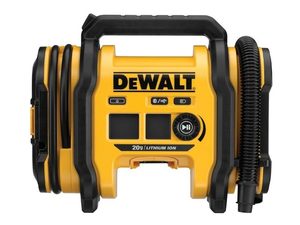 | DEWALT DCC020IB 20V MAX Corded/Cordless Inflator | Check Price |
Second Best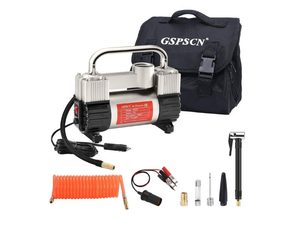 | GSPSCN Heavy Duty Double Cylinder Tire Inflator | Check Price |
Third Choice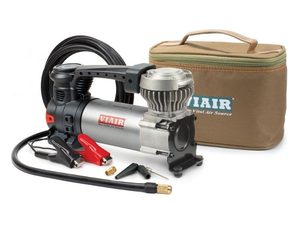 | VIAIR 88P Portable Tire Inflator Compressor | Check Price |
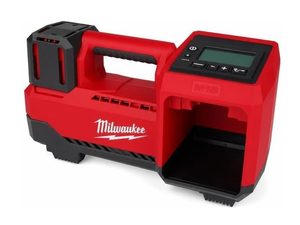 | Milwaukee M18 2848-20 Tire Inflator | Check Price |
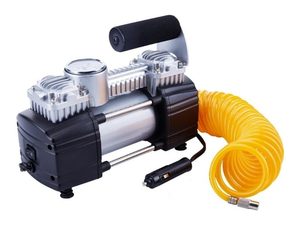 | TIREWELL TW2003 Heavy Duty Tire Inflator | Check Price |
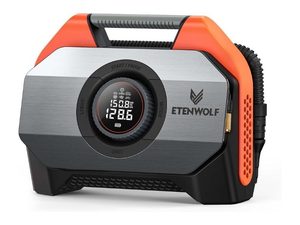 | ETENWOLF Vortex S6 Heavy Duty Cordless Tire Inflator | Check Price |
 | VIAIR Tire Inflator Portable Offroad Air Compressor | Check Price |
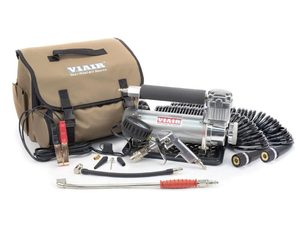 | VIAIR Automatic Portable Tire Inflator Kit | Check Price |
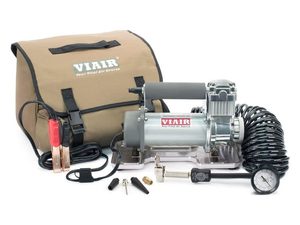 | VIAIR Portable Compressor Kit. Tire Pump, Truck/SUV Tire Inflator | Check Price |
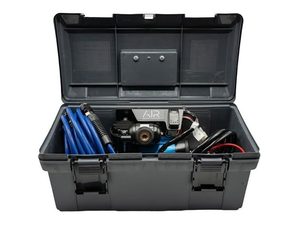 | ARB CKMP12 Portable High Output Air Compressor | Check Price |
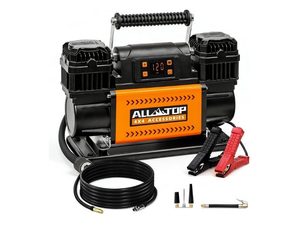 | ALL-TOP 12.35 CFM Dual Cylinder Inflator Air Compressor | Check Price |
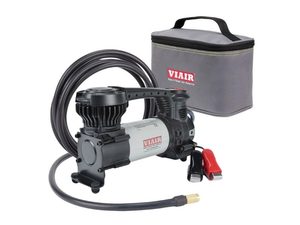 | VIAIR Digital EVC88P Portable Compressor | Check Price |
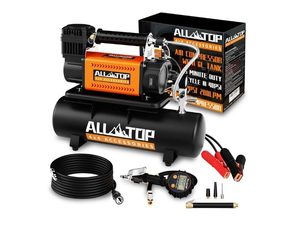 | ALL-TOP ALL-TOP Air Compressor with 6L Tank Kit,12V Portable Inflator | Check Price |
| ALL-TOP ALL-TOP Air Compressor 12V Portable Inflator | ||
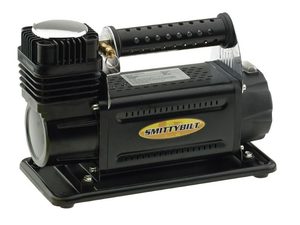 | Smittybilt 2780 2.54 CFM Air Compressor | Check Price |
Best Portable Tire Inflator for Trucks Reviews
1. DEWALT DCC020IB 20V MAX Corded/Cordless Inflator – Best Overall for Everyday Pickup Trucks
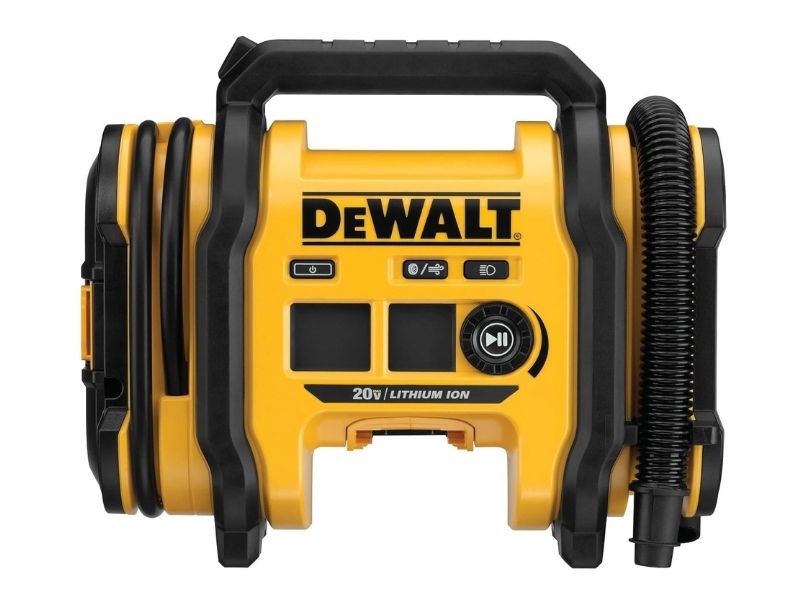
Key Specifications:
- 20V MAX battery power
- 12V DC power
- optional 110V AC power
- digital gauge
- automatic shutoff
- high-pressure mode
- high-volume inflation/deflation
- LED light
The DEWALT DCC020IB earns the first position because it offers an unusually useful combination of portability, pressure automation, multiple power options, and everyday truck usability.
For most pickup owners, tire maintenance does not involve inflating completely empty 37-inch tires every weekend. The more common situation is discovering that one tire has fallen from 36 PSI to 30 PSI, correcting seasonal pressure changes, topping up a trailer tire, or dealing with a slow leak before reaching a tire shop.
The DEWALT is extremely convenient for these situations.
With a compatible 20V MAX battery installed, you can carry the inflator directly to whichever wheel needs attention. There is no need to open the hood, connect alligator clips, or route a long electrical cord around the truck.
Set the desired PSI on the digital interface, start the high-pressure mode, and the inflator automatically stops when the target is reached.
That feature is particularly useful when maintaining several tires because you do not need to watch an analog gauge continuously.
Another major advantage is power-source flexibility.
A compatible battery gives you cordless operation, but DEWALT also provides 12V DC capability. That makes the inflator considerably more useful as emergency equipment because a discharged tool battery does not automatically make the compressor useless.
An optional AC adapter adds another option for garage use.
The high-volume hose is also valuable for truck owners who camp. It can inflate mattresses and other large low-pressure equipment, and the same system supports deflation.
The limitation is sustained airflow.
The DEWALT is an excellent light-truck tire inflator, but it is not the compressor I would choose for routinely bringing four 35- or 37-inch off-road tires from trail pressure back to highway pressure.
A dedicated direct-battery high-CFM compressor will complete that type of job faster.
What I Like: The combination of cordless operation, 12V backup power, automatic shutoff, digital pressure setting, LED lighting, and high-volume functionality makes this one of the most versatile inflators for a daily-driven pickup.
What I Do Not Like: The battery and charger are typically separate purchases, and sustained inflation of very large aired-down tires is not its strongest use case.
Verdict: The DEWALT DCC020IB is my best overall recommendation for an F-150, Silverado 1500, Ram 1500, Tacoma, Ranger, Colorado, Frontier, Tundra, or similar daily-driven pickup where portability and easy pressure maintenance are priorities.
2. GSPSCN Heavy Duty Double Cylinder Tire Inflator – Best Budget Heavy-Duty Truck Inflator
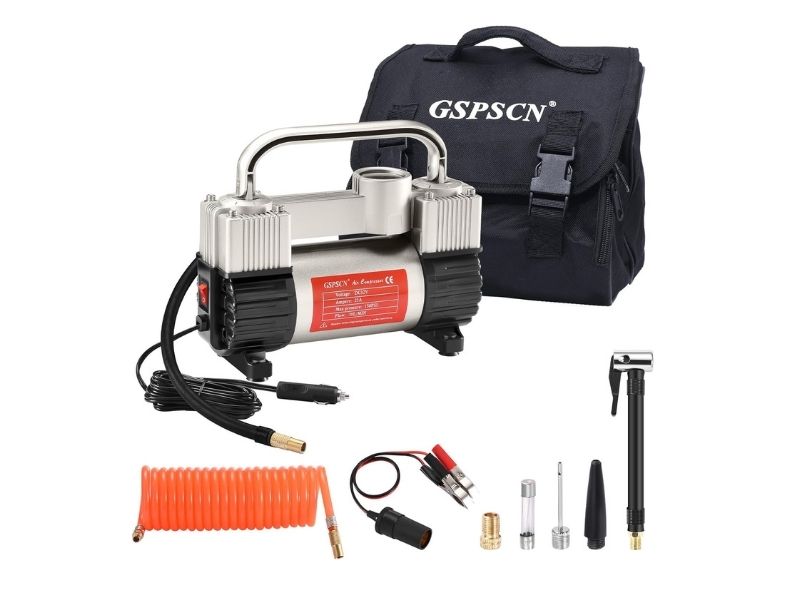
Key Specifications: 12V power, dual-cylinder compressor, approximately 70 L/min rated airflow, up to 150 PSI, battery-clamp capability, metal construction, extension hose, vibration-damping feet.
The GSPSCN takes a very different approach from the DEWALT.
Instead of emphasizing cordless convenience and digital controls, it focuses on moving a useful amount of air through a relatively inexpensive dual-cylinder compressor.
That makes it particularly interesting for truck owners.
Two-cylinder construction can provide substantially better airflow than many tiny single-cylinder pumps. Published figures for this model put output around 70 L/min, which is much more appropriate for larger pickup, SUV, camper, and RV tires than the low-volume output of many basic emergency inflators.
Direct battery power is another advantage.
Heavy-duty compressors can draw considerably more current than a standard accessory socket is designed to provide. Using battery clamps allows the compressor to access a more appropriate electrical connection for demanding inflation work.
The tradeoff is convenience.
You have to open the hood, identify the battery terminals, connect the clamps correctly, position the compressor, and manage the hose.
For an occasional 3 PSI top-off, a cordless inflator is easier.
When you have a large tire that needs a meaningful amount of air, however, the additional setup can be worth it.
I also like the physical layout.
The metal body and rubber feet give it a more substantial feel than lightweight plastic pumps. Rubber isolation helps prevent the compressor from vibrating across the pavement while running.
Hose reach is another strong point for trucks. A long pickup or SUV needs significantly more combined cable and hose length than a small sedan.
The main weakness is pressure control.
This is a more traditional manual compressor setup rather than a sophisticated automatic digital system. I would keep a separate accurate tire gauge in the truck and use that gauge for final verification.
What I Like: Strong airflow for the price, dual-cylinder construction, metal-heavy build, direct battery capability, long reach, and suitability for larger vehicle tires.
What I Do Not Like: It lacks the polished automatic pressure control of premium cordless inflators, and the compressor can become hot during extended operation.
Verdict: If you want a budget portable tire inflator for truck tires and care more about useful airflow than digital convenience, the GSPSCN is one of the strongest choices.
3. VIAIR 88P Portable Tire Inflator Compressor – Best Proven for Up to 33-Inch Tires
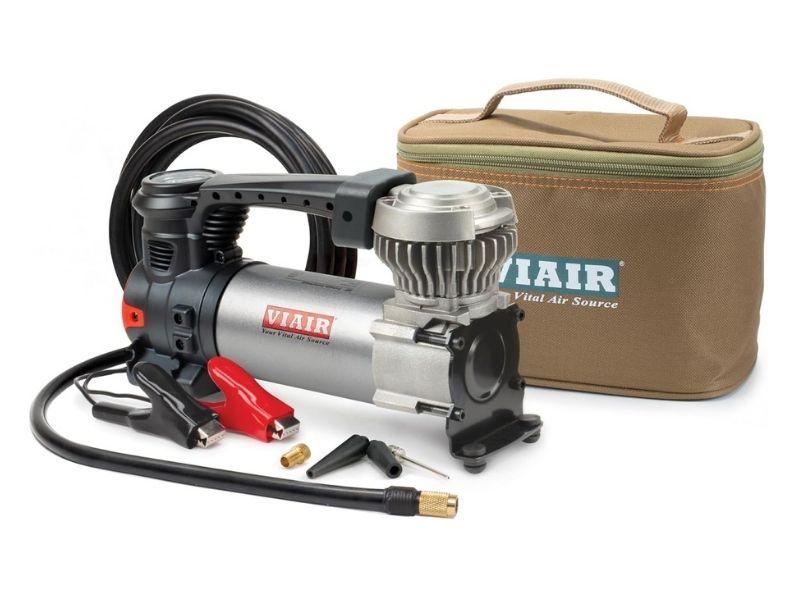
Key Specifications: 12V direct-battery operation, 120 PSI maximum working pressure, approximately 1.47 CFM free airflow, 20A maximum draw, 16-foot air hose, 10-foot power cord, intended for tires up to about 33 inches.
The VIAIR 88P has remained popular because it does the basic truck-inflator job without unnecessary complexity.
There is no large internal battery, smartphone connection, elaborate menu, or oversized display.
Connect it directly to the vehicle battery, attach the hose to the tire, switch it on, and inflate.
For a stock pickup, Jeep, SUV, or mildly modified 4×4 running tires up to approximately 33 inches, that simplicity is attractive.
Direct battery clamps also allow VIAIR to avoid the electrical restrictions associated with many 12V accessory sockets.
The 20-amp maximum draw is already higher than what some interior sockets safely support, so direct battery connection makes sense.
The hose and power-cable combination gives the compressor useful reach around a truck.
That matters because the battery may be under the hood while the tire needing air is at the opposite rear corner.
Independent testing has also shown that the 88P performs well on truck tires relative to many smaller portable inflators.
What I particularly appreciate is the manufacturer’s clear tire-size positioning.
A specification such as “up to 33-inch tires” tells a pickup owner far more than a giant maximum-PSI number.
The 88P is not a high-output competition compressor, however.
If you are regularly taking four 35- or 37-inch mud-terrain tires from 15 PSI to highway pressure, there are significantly faster options.
The 88P is best understood as a compact, proven compressor for stock and moderately sized truck tires.
What I Like: Straightforward operation, direct battery power, useful hose length, compact construction, and clear 33-inch tire suitability.
What I Do Not Like: The traditional configuration lacks automatic shutoff, and its airflow is modest compared with larger 5–12 CFM off-road compressors.
Verdict: For a stock or lightly modified truck with tires up to about 33 inches, the VIAIR 88P remains one of the most sensible portable compressors you can carry.
4. Milwaukee M18 2848-20 Tire Inflator – Best Cordless Inflator for Light-Truck Tires
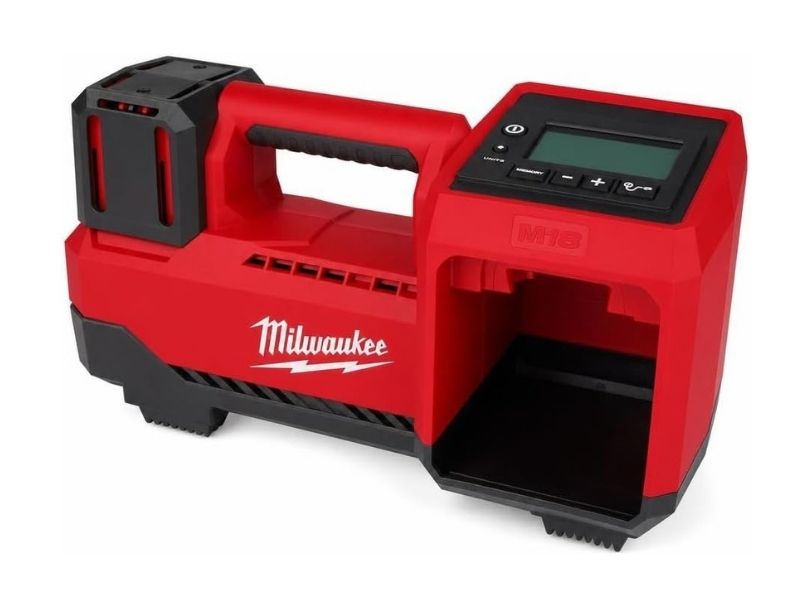
Key Specifications: M18 battery platform, 150 PSI maximum, optimized for passenger and light-truck tires, under-one-minute 33-inch light-truck top-off claim, TrueFill pressure checking, auto shutoff, four PSI memory positions, 36-inch hose.
The Milwaukee M18 is one of the few cordless inflators that I would seriously consider for regular light-truck use.
Milwaukee does not simply advertise an enormous maximum pressure. The company specifically states that the inflator is optimized for passenger, light-truck, and other medium-duty tires and can top off a 33-inch light-truck tire in under one minute under its stated conditions.
That is a far more useful benchmark for pickup owners.
The TrueFill system is another important feature.
Instead of relying entirely on a pressure reading while air is actively moving through the hose, the inflator periodically allows pressure to stabilize, checks it, and continues filling until the desired target is reached.
Automatic shutoff then stops the compressor.
For routine maintenance, this creates an extremely easy workflow.
Attach the hose, choose your preferred pressure, start the inflator, and allow it to manage the process.
The four memory slots can also be useful if you maintain multiple vehicles or frequently switch between truck and trailer pressures.
Another advantage is the removable battery platform.
If you already own Milwaukee M18 tools, the inflator integrates naturally with batteries you may already keep charged.
You can also carry a larger-capacity pack when you expect more demanding inflation work.
There is still a limit.
Even a powerful cordless inflator is not the same thing as a 7- or 10-CFM dedicated off-road compressor.
If your truck has four large tires intentionally aired down into the teens, sustained direct-battery airflow becomes much more important.
What I Like: Excellent cordless convenience, fast light-truck top-offs, automatic pressure control, PSI memory settings, sturdy brass chuck, and compatibility with a widely used tool battery platform.
What I Do Not Like: The tool can become expensive if you need to purchase batteries and a charger separately, and it is not designed to replace a high-CFM trail compressor.
Verdict: For a truck owner who wants cordless speed and excellent pressure automation, the Milwaukee M18 2848-20 is one of the best options in this entire guide.
5. TIREWELL TW2003 Heavy Duty Tire Inflator – Best Value for Long-Hose Truck Inflation
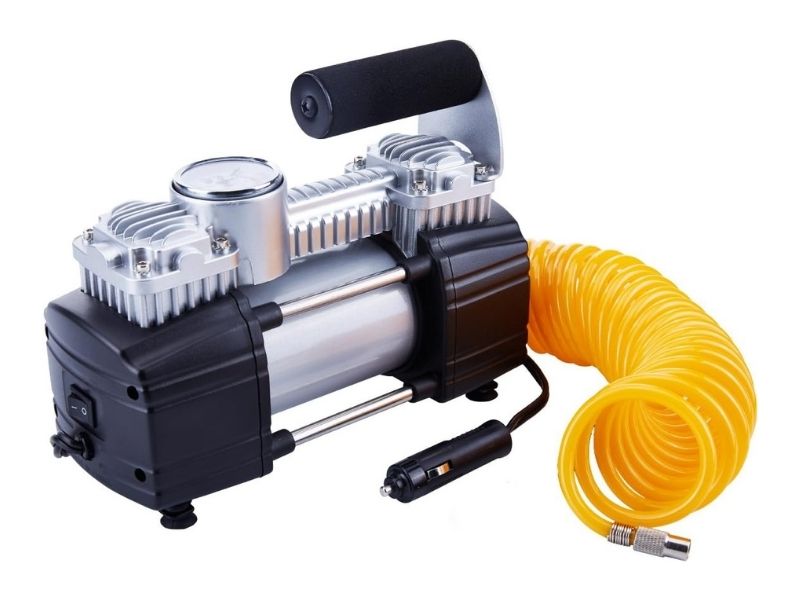
Key Specifications: 12V operation, dual-cylinder design, approximately 2.12 CFM rated airflow, up to 150 PSI, 5-meter extension hose, battery-clamp capability, multiple inflation adapters.
The TIREWELL TW2003 is designed around exactly the type of use that causes small inflators to struggle.
Its dual-cylinder architecture, long extension hose, 150 PSI advertised maximum, and truck/SUV/RV positioning give it considerably more large-vehicle relevance than the average compact pump.
The approximately five-meter air hose is one of its strongest practical advantages.
Truck owners frequently underestimate how annoying a short compressor hose can be.
If the machine is connected to the battery under the hood, you need enough combined electrical and pneumatic reach to get to the farthest rear wheel.
A long hose also becomes useful around camper vans and trailers.
The dual-cylinder construction helps with air delivery.
Although published airflow figures are nowhere near the largest high-CFM compressors in this guide, the TW2003 is still a meaningful step above small emergency pumps.
It makes particular sense for standard pickups and SUVs where portability remains important.
One area where expectations should remain realistic is sustained high-pressure inflation.
A compressor being rated to 150 PSI does not mean it delivers maximum airflow at 100 PSI.
Output falls as back pressure rises, and heat becomes increasingly important.
Owners of heavy-duty trucks and RVs regularly working around 80–120 PSI may therefore prefer a compressor such as the VIAIR 450P-RV, which is designed specifically around sustained high-pressure operation.
What I Like: Long hose reach, dual cylinders, truck-friendly design, direct battery capability, and useful performance without excessive bulk.
What I Do Not Like: Pressure-gauge precision is not its strongest feature, and high-pressure users may find a continuous-duty premium compressor more appropriate.
Verdict: The TIREWELL TW2003 is a strong middle-ground choice for pickup, SUV, van, and moderate RV applications where you want more output than a mini inflator without carrying a very large compressor.
6. ETENWOLF Vortex S6 Heavy Duty Cordless Tire Inflator – Best Self-Contained Cordless Truck Inflator
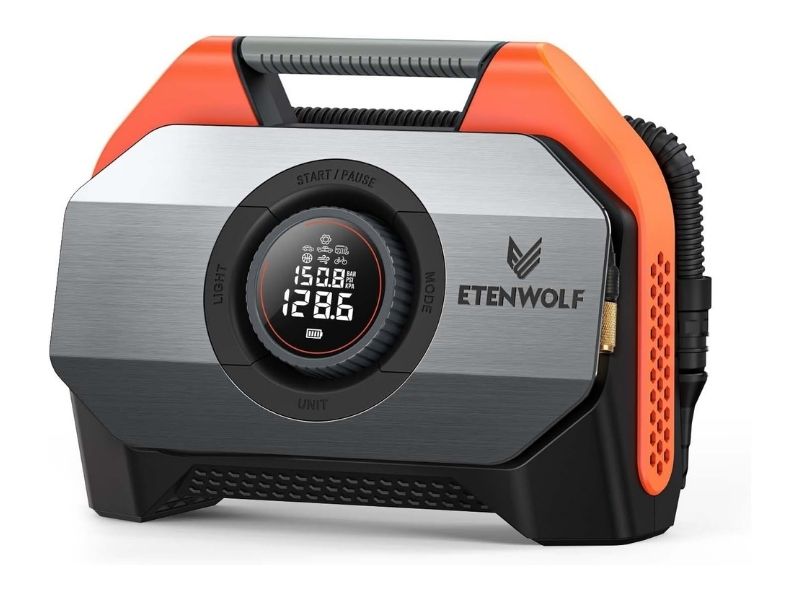
Key Specifications: dual cylinders, approximately 42 L/min airflow, 160 PSI maximum, 19,200mAh internal battery, active cooling, automatic shutoff, pressure presets, USB-C fast charging, LED lighting.
The ETENWOLF Vortex S6 tries to solve the biggest problem associated with cordless tire inflators: limited stored energy.
Instead of using a very small internal battery designed primarily for bicycles and car-tire top-offs, the S6 incorporates a large 19,200mAh battery and active cooling system.
ETENWOLF specifically positions it for pickups, SUVs, and heavier vehicles.
Its dual cylinders provide approximately 42 L/min of rated airflow.
That still does not place it in the same raw-output class as 7- to 12-CFM direct-battery compressors, but it is significantly more truck-oriented than most handheld cordless pumps.
The most appealing aspect is convenience.
You can take the compressor from the truck, place it beside the tire, connect the hose, choose the desired pressure, and start inflating.
There are no battery clamps, cables, or accessory sockets to manage.
Automatic shutoff makes routine tire maintenance similarly easy.
The large internal battery can also function as emergency stored energy for USB-powered devices, and USB-C fast charging is much more convenient than proprietary charging systems.
The built-in light adds genuine roadside usefulness.
The tradeoff is battery responsibility.
A cordless compressor is only as useful as its state of charge.
If you plan to keep the S6 in the truck as emergency equipment, check its battery periodically rather than assuming it will remain fully charged indefinitely.
Extremely hot vehicle interiors can also be hard on lithium batteries over time.
What I Like: Cordless operation, unusually large battery capacity, active cooling, automatic pressure control, strong lighting, and real pickup/SUV relevance.
What I Do Not Like: It is heavier than small cordless inflators and still cannot match the sustained airflow of the largest direct-battery compressors.
Verdict: The ETENWOLF Vortex S6 is one of the most convincing choices for someone specifically looking for a cordless portable tire inflator for a truck.
7. VIAIR Tire Inflator Portable Offroad Air Compressor for Truck & SUV – Best for Off-Road
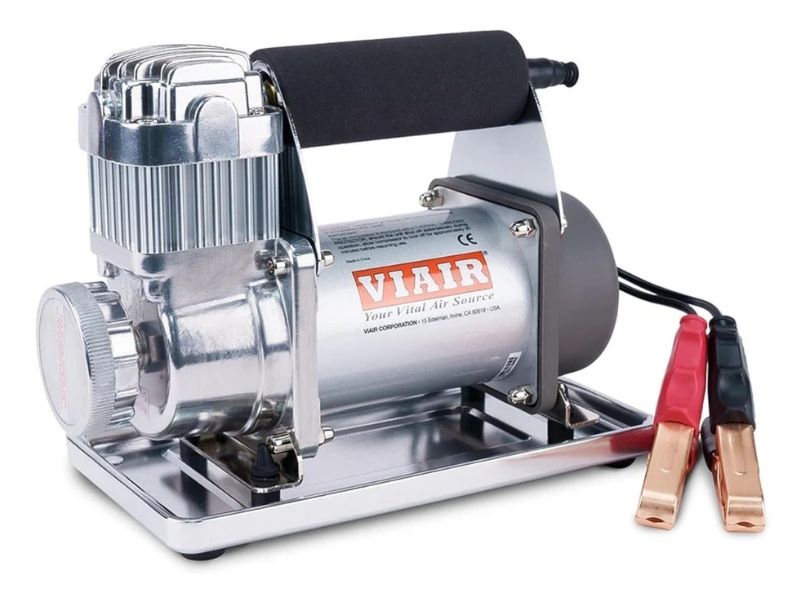
Key Specifications: 12V direct-battery power, approximately 2.3 CFM airflow, 150 PSI maximum, 30A maximum draw, 25-foot hose, thermal overload protection, compact metal construction.
The VIAIR 300P provides an interesting balance between the compact 88P and the more specialized 400-series compressors.
Its rated airflow of around 2.3 CFM gives it significantly more capability than many small truck inflators, while the physical package remains compact enough for permanent vehicle storage.
A 25-foot hose is excellent for pickup use.
The compressor can remain near the vehicle battery while you work around the truck without repeatedly moving the main unit.
That becomes even more valuable with crew-cab or long-bed trucks.
The 30-amp electrical demand explains why direct battery clamps are used.
At this power level, connecting through a small interior accessory socket would not be appropriate on many vehicles.
Thermal overload protection adds another layer of security during longer inflation sessions.
The 300P is particularly attractive for truck owners who want a traditional premium compressor but do not necessarily need the continuous high-pressure capability of the 450P-RV.
It is also a logical option for off-roaders running moderately large tires who care about compact storage.
As with every VIAIR model, the exact compressor should be matched to tire size and inflation pattern.
A driver airing up four very large 37-inch tires every weekend will benefit from substantially more CFM.
For 31- to 33-inch tires and moderate off-road use, however, the 300P provides a strong combination of output and portability.
What I Like: Compact but serious construction, approximately 2.3 CFM airflow, 25-foot hose, direct battery connection, thermal protection, and a strong fit for truck storage.
What I Do Not Like: It costs more than budget compressors delivering similar or greater advertised free-air flow, and it lacks cordless convenience.
Verdict: The VIAIR 300P is an excellent premium choice for truck and SUV owners who want more compressor than the 88P without carrying a much larger high-output system.
8. VIAIR Automatic Portable Tire Inflator Kit – Best for High-Pressure Truck, Dually & RV Tires
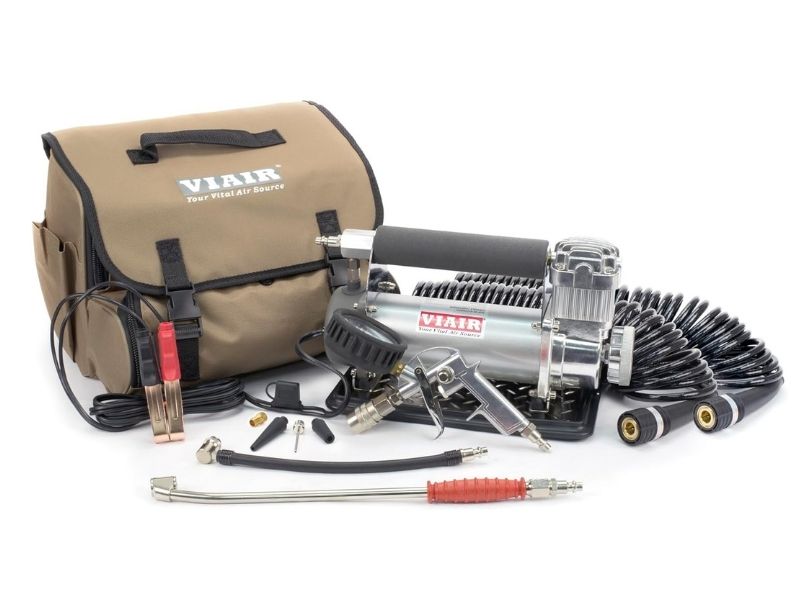
Key Specifications: 12V battery power, 1.80 CFM at 0 PSI, 150 PSI maximum working pressure, 100% duty cycle at 100 PSI, 23A maximum draw, up to 60 feet of hose reach, automatic compressor function, extended-reach dually chuck.
The VIAIR 450P-RV is not about winning a free-air CFM competition.
Its strength is sustained high-pressure work.
That distinction is crucial for heavy-duty pickup, towing, dually, trailer, and motorhome owners.
Many inexpensive compressors advertise a 150 PSI maximum but become slow or thermally limited well before reaching the upper end of their pressure range.
The 450P-RV is engineered around a 100% duty cycle at 100 PSI under the manufacturer’s specified conditions.
That makes it far better suited to repetitive high-pressure inflation.
The hose package is equally important.
Up to approximately 60 feet of total hose reach allows the compressor to stay near a suitable power source while reaching tires on long pickups, large trailers, and motorhomes.
Extended-reach chucks are particularly useful for dual rear wheels.
The automatic operation is another meaningful benefit.
Traditional compressors often force you to walk back to the unit every time you want to start or stop airflow.
The 450P-RV can respond to the inflation gun, simplifying pressure checks and moving between tires.
Airflow at zero pressure is only around 1.8 CFM, so a high-output 7–12 CFM compressor may refill large low-pressure off-road tires faster.
That is not what the 450P-RV is optimized to do.
Its specialty is extended, controlled operation at the higher pressures found in LT, towing, and RV applications.
What I Like: Outstanding duty cycle, high-pressure suitability, extremely long hose reach, dually-friendly accessories, automatic operation, and durable truck/RV-oriented design.
What I Do Not Like: Premium pricing and lower free-air flow than dedicated fast off-road compressors.
Verdict: For a heavy-duty pickup running high-pressure LT tires, a dually, fifth-wheel setup, or RV, the VIAIR 450P-RV is one of the most appropriate portable compressors available.
9. VIAIR Portable Compressor Kit. Tire Pump, Truck/SUV Tire Inflator, For Up to 35 Inch Tires
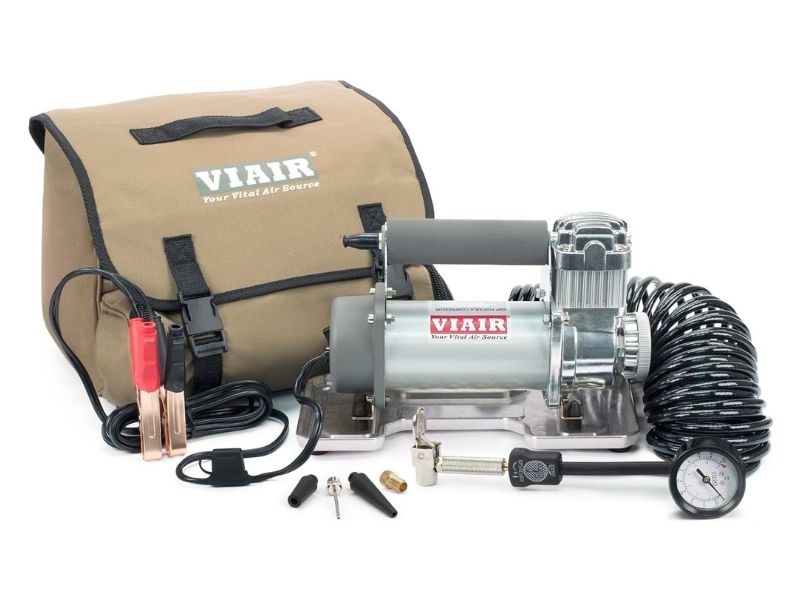
Key Specifications: approximately 2.30 CFM at 0 PSI, 150 PSI maximum working pressure, 33% duty cycle at 100 PSI, 30A maximum draw on 12V version, 25-foot air hose, direct battery power, thermal protection.
The VIAIR 400P is one of the easiest premium recommendations for a modified truck or 4×4 running tires up to approximately 35 inches.
Compared with the 450P-RV, the 400P puts more emphasis on airflow and air-up speed while accepting a lower duty cycle at high pressure.
That tradeoff makes sense for many off-road drivers.
When a 35-inch tire is aired down into the teens, you usually care more about moving a large quantity of air into the tire quickly than maintaining 100 PSI continuously for an extended period.
The approximately 2.3 CFM free-air rating gives the 400P a useful balance between performance and portable size.
The 25-foot air hose makes moving around a truck easy, and the direct battery power supply avoids accessory-socket limitations.
Thermal overload protection provides important protection when the compressor is worked hard.
The I-beam-style base also gives the unit good stability on rough surfaces.
The main issue is the 33% duty cycle at 100 PSI.
For high-pressure RV or commercial-style tire use, the 450P-RV is a better match.
For a Jeep, Tacoma, Bronco, Wrangler, 4Runner, or pickup on 35-inch tires, the 400P is more naturally aligned with the job.
What I Like: Clear 35-inch-tire positioning, good airflow, excellent hose length, rugged construction, and a strong reputation for off-road use.
What I Do Not Like: Premium price and less high-pressure runtime than the 450P-RV.
Verdict: If you are looking for a portable tire inflator for 35-inch truck tires, the VIAIR 400P belongs near the top of your shortlist.
10. ARB CKMP12 Portable High Output Air Compressor – Best Premium Overlanding Compressor
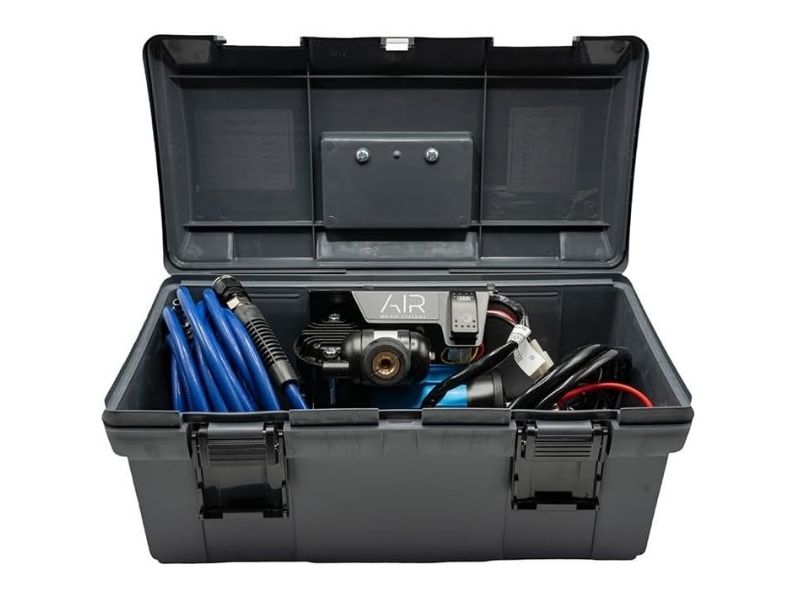
Key Specifications: 12V vehicle power, approximately 2.65 CFM airflow, 19-foot hose, heavy-duty portable case, thermal protection, over-pressure protection, serviceable design.
The ARB CKMP12 appeals to a different type of buyer.
Its specifications do not necessarily overwhelm every budget competitor on paper. Instead, the attraction is durable engineering, serviceability, protection systems, and a product ecosystem built around off-road use.
For overlanders and remote-travel drivers, those qualities matter.
A compressor may sit in a dusty cargo compartment for months before being asked to perform when the nearest paved road is hours away.
Construction quality and field reliability become more important in that environment than having the highest possible zero-pressure CFM number.
ARB’s portable case is particularly useful.
It protects the compressor from loose recovery equipment, dust, and cargo movement while keeping the hose and accessories organized.
The approximately 19-foot hose gives reasonable reach around common off-road vehicles.
Thermal and pressure protection are also important when the compressor is being worked hard.
Another attraction is long-term serviceability.
A premium compressor that can be maintained and repaired may ultimately make more sense for an enthusiast than repeatedly replacing inexpensive units.
The obvious disadvantage is price.
You can buy compressors with substantially higher advertised airflow for less money.
The CKMP12 therefore makes the most sense when your buying priorities are durability, brand support, rebuildability, and integration with other off-road air equipment.
What I Like: Strong engineering, rugged case, field-oriented construction, protection systems, good airflow, and serviceability.
What I Do Not Like: Price-to-CFM value is not as aggressive as many budget competitors.
Verdict: The ARB CKMP12 is an excellent premium pick for overlanding and remote off-road travel where durability and serviceability matter more than chasing the highest airflow specification.
11. ALL-TOP 12.35 CFM Dual Cylinder Inflator Air Compressor – Best for Maximum Air-Up Speed
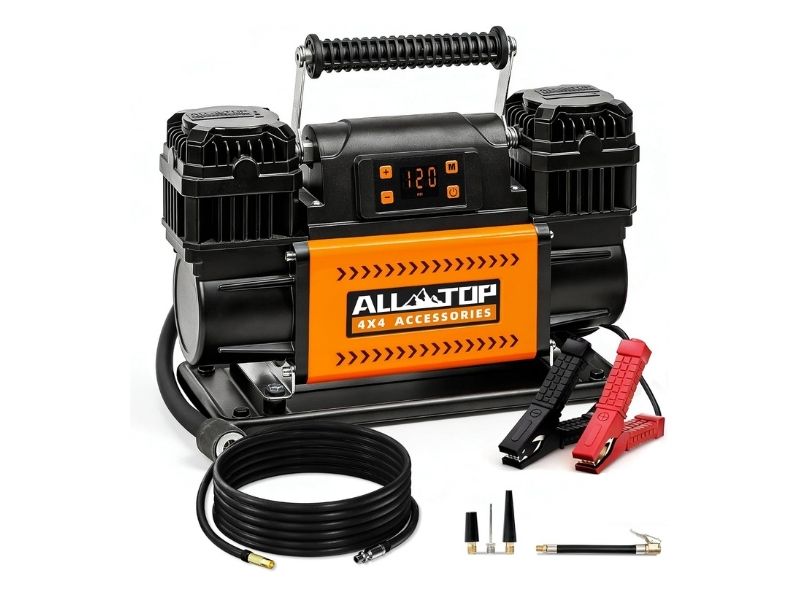
Key Specifications: dual cylinders, approximately 12.35 CFM/350 L/min maximum airflow, up to 150 PSI, 12V vehicle power, digital preset version available, automatic shutoff on specified configuration, heavy-duty portable construction.
The ALL-TOP 12.35 CFM compressor is built around one simple priority: moving a lot of air.
A rated output of approximately 350 L/min places it in a completely different performance class from typical portable tire inflators.
That makes it particularly attractive for off-road trucks running large tires.
Consider a set of 37-inch mud-terrain tires that have been aired down to 15 PSI.
A small 1.5-CFM compressor may eventually return them to road pressure, but completing four tires can take a frustrating amount of time.
A high-output dual-cylinder compressor reduces that waiting.
This type of airflow becomes even more useful when paired with a two- or four-tire hose system.
A single valve stem can become a flow restriction when using very powerful compressors. Sending air to multiple tires simultaneously allows the compressor to use more of its potential capacity while also helping equalize pressure.
The digital configuration adds convenience by allowing a target pressure to be selected.
The downside is size and weight.
This is not an inflator you casually place in the glove compartment.
It is recovery equipment that deserves dedicated space in the truck.
Electrical demand is another important factor. High-output compressors should be connected using the manufacturer’s specified heavy-duty battery connection rather than improvised accessory-socket wiring.
What I Like: Exceptional airflow, dual cylinders, strong suitability for large off-road tires, digital pressure-control availability, and compatibility with multi-tire air systems.
What I Do Not Like: Large physical size, meaningful weight, high electrical demand, and unnecessary capability for basic daily-driver top-offs.
Verdict: For 35-, 37-, or larger off-road truck tires where air-up speed is a top priority, the ALL-TOP 12.35 CFM is one of the most compelling products in this guide.
12. VIAIR Digital EVC88P Portable Compressor – Best Digital VIAIR for Everyday Truck Use
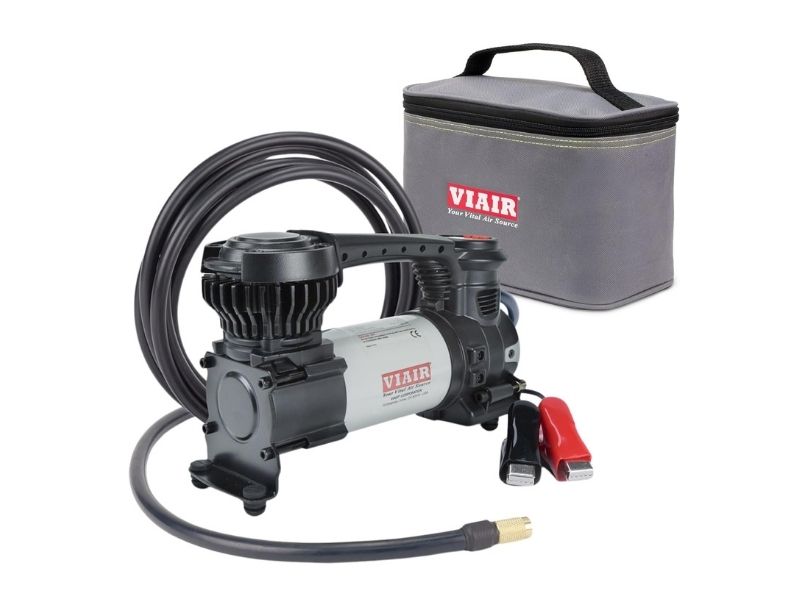
Key Specifications: 12V operation, 120 PSI maximum, approximately 1.47 CFM airflow, digital pressure control, preset automatic shutoff, 16-foot air hose, 10-foot power cable, compact carry-friendly design.
The Digital EVC88P modernizes the basic VIAIR 88P formula.
The traditional 88P is appealing because it is simple, compact, and well suited to stock or moderately sized truck tires.
The digital version adds one of the most useful convenience features available on a portable inflator: preset automatic shutoff.
Instead of watching an analog needle and manually switching the compressor off, you can choose a target pressure.
That is particularly useful for routine pickup maintenance.
If all four tires need to be brought to the same cold pressure, a preset system reduces the amount of attention required at each wheel.
The 16-foot hose and 10-foot power lead provide useful reach around a pickup or SUV.
The compact body also makes this model easier to store than large off-road compressors.
Airflow remains in the medium-duty range.
This is not a replacement for the 400P or a 5–12 CFM off-road machine if you frequently air down oversized tires.
Instead, it is an excellent modern everyday compressor for stock pickups, SUVs, and moderate 4×4 use.
What I Like: VIAIR-style compact construction combined with digital pressure control and automatic shutoff.
What I Do Not Like: Lower airflow than dedicated trail compressors and less value for drivers who already own a standard 88P.
Verdict: The VIAIR Digital EVC88P is ideal for a truck owner who likes the traditional compact compressor format but wants easier automatic pressure management.
13. ALL-TOP ALL-TOP Air Compressor with 6L Tank Kit,12V Portable Inflator
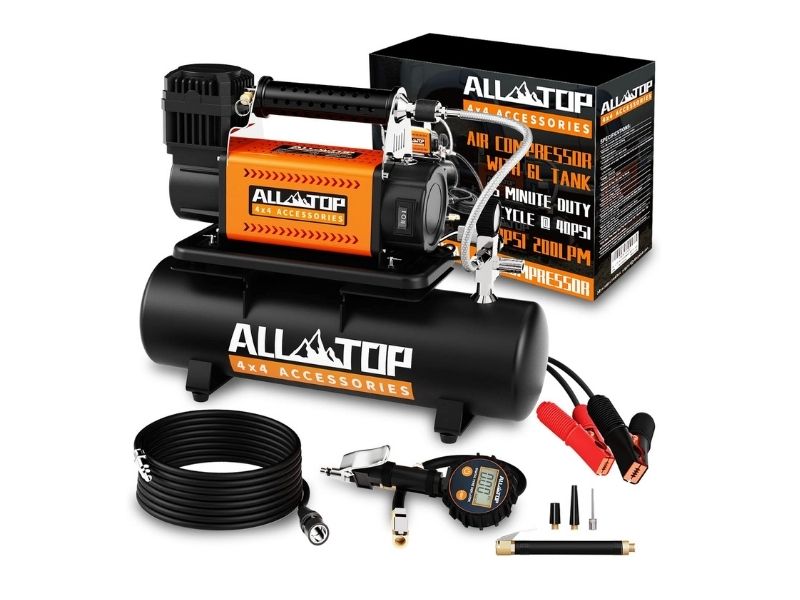
Key Specifications: approximately 7.06 CFM rated airflow, integrated 6-liter air tank, up to 150 PSI, 12V operation, approximately 26-foot hose, digital inflation gauge, portable truck/off-road design.
The final product takes a different approach from every other compressor in the comparison.
Instead of supplying compressed air only as the motor produces it, the ALL-TOP combines a high-output portable compressor with a small six-liter storage tank.
That tank changes what the system can do.
Stored compressed air can provide a brief burst of higher flow, which is useful for tasks beyond ordinary tire inflation.
It can support certain pneumatic accessories, help blow dust or sand from equipment, and provide a more traditional compressed-air experience than a tankless inflator.
For truck owners who camp, overland, work in remote locations, or routinely use compressed air for multiple tasks, that versatility is attractive.
The approximate 7.06 CFM compressor output is already far beyond normal passenger-car inflators.
It therefore has genuine large-tire capability even before considering the tank.
The 26-foot hose gives useful reach around pickups and off-road vehicles.
The tank adds significant bulk, however.
This system takes considerably more cargo room than a VIAIR 88P or cordless inflator.
For a stock pickup whose only requirement is adding 5 PSI to tires twice a year, that storage cost makes little sense.
For an overland truck that already carries tools, recovery gear, and other equipment, it can be much easier to justify.
What I Like: High airflow, integrated air storage, long hose, multiple compressed-air uses, and excellent versatility for trucks used as mobile work or adventure platforms.
What I Do Not Like: Large storage footprint and more weight than a normal portable tire inflator.
Verdict: The ALL-TOP 7.06 CFM compressor-and-tank kit is a specialized but highly versatile option for truck owners who want portable compressed air for more than simply topping off tires.
14. Smittybilt 2780 2.54 CFM Air Compressor – Best Compact Trail Compressor
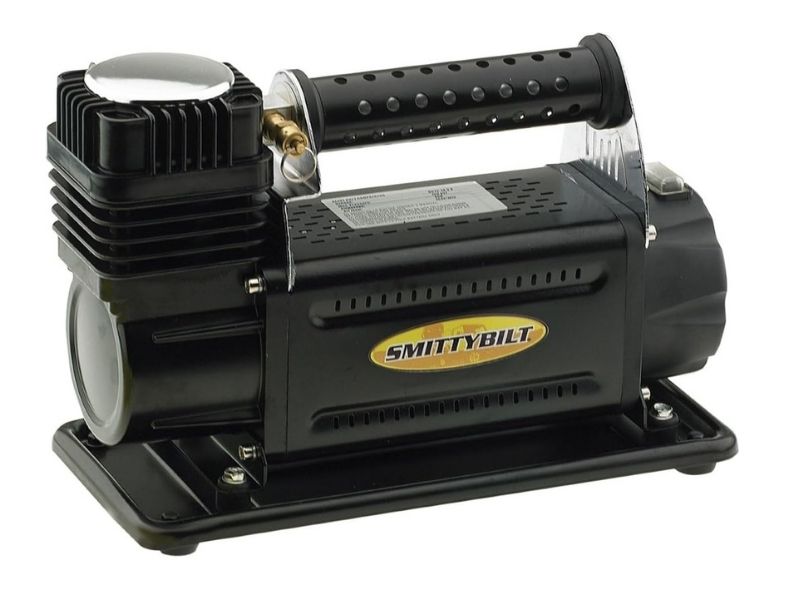
Key Specifications: 12V battery power, approximately 2.54 CFM maximum airflow, up to 150 PSI, quick-release coil hose, thermal cutoff protection, brass inflator connection, carry bag.
The Smittybilt 2780 is essentially the more compact sibling to the higher-output 2781.
That makes it particularly useful for midsize pickups, Jeeps, and overland vehicles where storage space matters but you still want a genuine direct-battery compressor.
Around 2.54 CFM is respectable for a portable single-compressor setup.
It is more than enough for routine pressure maintenance and can handle moderate off-road air-up work without taking up as much cargo space as a large dual-cylinder system.
The coil hose provides useful reach around a truck.
The thermal cutoff is also important because compact compressors generate substantial heat when they run continuously.
If temperatures become excessive, protection helps reduce the risk of motor damage.
The 2780 makes most sense with stock to moderate tire sizes.
Smittybilt’s own compressor guidance places the higher-output 2781 as the stronger choice for 35- and 37-inch tires.
That makes the 2780 better suited to smaller rigs and drivers who air down less aggressively.
Its straightforward mechanical design is another advantage for field use.
There are fewer electronic features to navigate, and everything can remain together in the supplied storage bag.
What I Like: Compact construction, respectable airflow, direct battery power, useful coil hose, thermal protection, and good off-road practicality.
What I Do Not Like: The 2781 offers substantially more airflow if you have larger tires, and the included gauge should still be independently verified.
Verdict: The Smittybilt 2780 is a strong option for a Tacoma, Ranger, Colorado, Frontier, Jeep, or similar vehicle where cargo space matters more than maximum air-up speed.
15. Smittybilt 2781 5.6 CFM Air Compressor – Best Value for Frequent Off-Road Airing
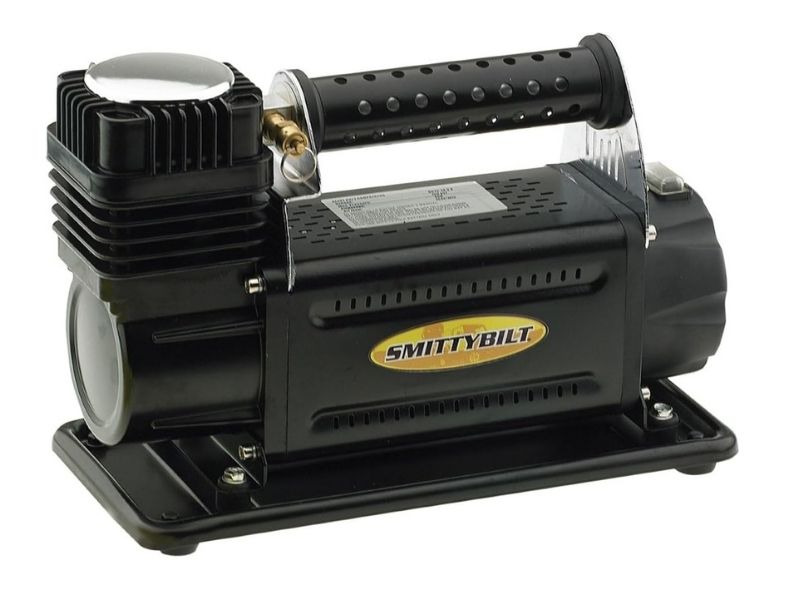
Key Specifications: 12V direct-battery power, 5.6 CFM maximum airflow, 150 PSI maximum output, 24-foot quick-release coil hose, 10-foot power cable, heavy-duty battery clips, carry bag.
The Smittybilt 2781 is where this guide moves from general truck tire maintenance into serious off-road air-up territory.
A rated maximum output of around 5.6 CFM is a major jump from the airflow of many ordinary portable inflators.
That difference becomes important when four large tires have been intentionally aired down.
Smittybilt specifically identifies the 2781 as a strong option for 35-inch and even 37-inch tires, with published guidance positioning it as a trail workhorse.
This is exactly the use case where a tiny digital pump stops being convenient.
Airing a 35-inch tire from roughly 15 PSI into the 30s requires substantially more air than correcting a commuter car tire by 4 PSI.
Multiply the job by four tires and inflation speed becomes a meaningful part of the trail routine.
The 24-foot coil hose is another excellent feature.
With the compressor near the front of the truck and connected to the battery, there is enough pneumatic reach for large vehicles without continually moving the compressor.
The 10-foot electrical cable adds additional flexibility.
Construction is appropriately rugged for trail use, and the carry bag keeps the compressor and hose together.
A common issue worth knowing is fitting compatibility.
Some owners prefer to modify or adapt the air fittings when integrating the compressor into multi-tire hose systems.
I would also verify final tire pressure using a separate quality digital gauge rather than treating any portable compressor gauge as a laboratory instrument.
What I Like: Excellent airflow for the price, suitability for larger off-road tires, long hose, direct-battery operation, and a simple mechanical design.
What I Do Not Like: Fittings may be inconvenient if you want to integrate third-party pneumatic accessories, and pressure monitoring is less refined than on digital automatic inflators.
Verdict: For an off-road truck, Jeep, or 4×4 running 33-, 35-, or 37-inch tires, the Smittybilt 2781 offers one of the strongest combinations of airflow and price.
Portable Tire Inflator for Trucks Comparison Table
| Product | Power Source | Max Pressure | Approx. Airflow | Best Application | Auto Shutoff | Main Advantage |
| DEWALT DCC020IB | 20V / 12V / optional AC | High-pressure mode | Moderate | Daily pickup top-offs | Yes | Multiple power options |
| GSPSCN Double Cylinder | 12V battery | 150 PSI | ~70 L/min | Pickup/SUV/RV | No | Strong budget airflow |
| VIAIR 88P | 12V battery | 120 PSI | ~1.47 CFM | Tires up to ~33 in. | No | Compact proven design |
| Milwaukee M18 2848-20 | M18 battery | 150 PSI | Light-truck optimized | Pickup/light truck | Yes | Fast cordless top-offs |
| TIREWELL TW2003 | 12V | 150 PSI | ~2.12 CFM | Pickup/SUV/van | No | Long hose |
| Smittybilt 2781 | 12V battery | 150 PSI | ~5.6 CFM | 35–37 in. off-road tires | Manual | Strong trail airflow |
| ETENWOLF Vortex S6 | Rechargeable | 160 PSI | ~42 L/min | Pickup/SUV | Yes | Cordless heavy-duty use |
| VIAIR 300P | 12V battery | 150 PSI | ~2.3 CFM | Truck/4×4 | No | Compact premium performance |
| VIAIR 450P-RV | 12V battery | 150 PSI | ~1.8 CFM | High-pressure LT/RV/dually | Automatic operation | 100% duty cycle at 100 PSI |
| VIAIR 400P | 12V battery | 150 PSI | ~2.3 CFM | Up to ~35 in. tires | Manual | Premium 35-in. solution |
| Smittybilt 2780 | 12V battery | 150 PSI | ~2.54 CFM | Midsize truck/Jeep | Manual | Compact trail use |
| ARB CKMP12 | 12V battery | Heavy-duty range | ~2.65 CFM | Overlanding | Pressure-controlled system | Build quality |
| ALL-TOP Dual Cylinder | 12V battery | 150 PSI | ~12.35 CFM | Large off-road tires | Configuration-dependent | Maximum airflow |
| VIAIR Digital EVC88P | 12V | 120 PSI | ~1.47 CFM | Daily truck maintenance | Yes | Digital convenience |
| ALL-TOP 7.06 CFM + 6L Tank | 12V | 150 PSI | ~7.06 CFM | Truck/work/overland | Gauge-controlled | Built-in air storage |
Which Portable Tire Inflator Is Best for Your Truck?
The DEWALT DCC020IB is the most practical all-around recommendation for a stock daily-driven pickup because cordless operation and automatic pressure control make ordinary tire maintenance extremely easy.
The Milwaukee M18 is even more appealing if you already own M18 batteries and want faster light-truck top-offs.
For buyers who want maximum capability per dollar from a conventional compressor, the GSPSCN dual-cylinder model offers much stronger airflow than most small emergency pumps.
The VIAIR 88P is a particularly safe choice for tires up to approximately 33 inches.
Drivers with 35-inch tires should look toward the VIAIR 400P, Smittybilt 2781, or a high-CFM ALL-TOP compressor.
For 37-inch tires and frequent off-road air-up sessions, high-output models such as the Smittybilt 2781 and ALL-TOP 12.35 CFM become substantially more attractive.
Heavy-duty pickup, dually, fifth-wheel, and RV owners should pay more attention to high-pressure duty cycle than raw free-air CFM. The VIAIR 450P-RV is particularly strong in that role.
What Makes a Good Portable Tire Inflator for Trucks?
A good truck inflator needs to solve several problems simultaneously.
It must provide enough pressure for the tire, move enough air to finish the job in a reasonable time, run long enough without overheating, reach every tire on a large vehicle, and draw power through an electrical connection capable of supporting the compressor.
Portability still matters.
A compressor that performs brilliantly but occupies half the back seat is not particularly portable.
The objective is therefore not buying the most powerful compressor possible. It is finding the smallest practical compressor that can comfortably handle your truck’s tires and normal usage.
Airflow Is More Important Than Maximum PSI
This is one of the most important buying lessons.
Maximum PSI tells you the highest pressure a compressor is designed to reach under specified conditions.
It does not tell you how quickly it moves air.
Most pickup tires operate far below 150 PSI.
Even many heavy-duty LT tires remain below 100 PSI in normal vehicle applications.
For a truck owner, airflow is usually much more important.
Airflow is commonly expressed as:
- CFM — cubic feet per minute
- L/min — liters per minute
Higher airflow generally means faster inflation, particularly when starting at low pressure.
However, there is another complication.
Manufacturers often advertise airflow at zero pressure.
A compressor may move 10 CFM with no resistance but significantly less when pushing into a tire already at 35, 50, or 80 PSI.
When available, airflow specifications measured at working pressure are particularly valuable.
How Much CFM Does a Truck Tire Inflator Need?
There is no universal requirement, but some practical ranges help.
For ordinary pickup top-offs, around 1–2 CFM can be perfectly usable.
You are only adding a relatively small amount of air when bringing a tire from 31 PSI to 36 PSI.
For occasional off-road use with roughly 31- to 33-inch tires, 2–4 CFM provides a better experience.
For regular 35-inch-tire air-up sessions, 4–7 CFM is much more attractive.
For 37-inch and larger tires, or for drivers who hate waiting at the end of a trail, 7–12+ CFM becomes highly desirable.
Multi-tire systems can make very high-output compressors even more useful.
Why Truck Tire Size Changes Everything
A truck tire’s diameter and width determine how much internal air volume the compressor must fill.
A typical passenger-car tire may be around 25–28 inches tall.
A pickup may use a 31- or 32-inch tire.
Modified trucks commonly move to:
- 33 inches
- 35 inches
- 37 inches
- 40 inches
A 37×12.50 tire contains dramatically more air than an ordinary sedan tire.
That means a pump that feels fast on a compact car can feel painfully slow on a lifted truck.
This is why tire-size recommendations are often more useful than maximum PSI claims.
Best Inflator for Stock Pickup Tires
Stock half-ton pickups usually do not require enormous compressors.
Models such as the:
- DEWALT DCC020IB
- Milwaukee M18
- VIAIR 88P
- ETENWOLF Vortex S6
- VIAIR Digital EVC88P
are particularly convenient.
These models emphasize manageable size, easier setup, and normal pressure maintenance.
That is often exactly what an everyday truck owner needs.
Best Inflator for 33-Inch Tires
For 33-inch tires, the VIAIR 88P is an obvious starting point because it is specifically associated with that tire-size class.
The VIAIR 300P provides additional output.
The Smittybilt 2780 is another practical trail-friendly option.
A cordless Milwaukee or ETENWOLF can also work well when the tires are not being repeatedly inflated from extremely low pressures.
Best Inflator for 35-Inch Tires
At 35 inches, airflow should receive substantially more attention.
Strong choices include:
- VIAIR 400P
- Smittybilt 2781
- ALL-TOP high-output compressor
- ARB CKMP12 for premium overland use
The VIAIR 400P is particularly easy to recommend because the product line is explicitly targeted at larger truck and off-road tires.
If inflation speed is your main concern, the higher-CFM Smittybilt or ALL-TOP models are more attractive.
Best Inflator for 37-Inch Truck Tires
Once tire diameter reaches 37 inches, a tiny cordless pump is no longer what I would choose as the primary compressor for frequent air-down/air-up cycles.
High-airflow machines become much more valuable.
The Smittybilt 2781 is designed with 35- and 37-inch applications in mind.
The ALL-TOP 12.35 CFM dual-cylinder model takes output considerably further.
For an enthusiast who airs down every weekend, spending more on airflow saves time on every trail run.
Best Inflator for Heavy-Duty Pickup Tires
Heavy-duty trucks create a different challenge.
A Ford Super Duty, Ram HD, Silverado HD, or Sierra HD may use LT tires that operate at substantially higher pressures than a half-ton pickup.
In these vehicles, you need to consider:
- High-pressure airflow
- Maximum working pressure
- Duty cycle
- Hose temperature
- Long inflation sessions
- Electrical current demand
The VIAIR 450P-RV stands out because it is designed around sustained high-pressure operation rather than simply maximum free-air output.
What Is Compressor Duty Cycle?
Duty cycle tells you how long a compressor can run within a specified period before requiring cooling.
It is one of the most misunderstood specifications in portable air compressors.
A 100% duty-cycle rating means the compressor can run continuously under the specific pressure and temperature conditions used for that rating.
A 33% duty cycle means substantially more rest may be required.
However, percentages cannot be compared blindly.
One manufacturer may rate duty cycle at 100 PSI while another uses 40 PSI.
Always check the conditions attached to the number.
Duty cycle matters most when you are:
- Inflating several large tires
- Working at high pressure
- Filling RV tires
- Airing up after off-roading
- Maintaining fleet vehicles
- Inflating truck and trailer tires together
For a 4 PSI top-off, duty cycle is usually much less important.
Why Portable Truck Compressors Get So Hot
Compressing air generates heat.
The compressor motor, cylinder, head, hose fittings, and connectors can all become extremely hot during extended inflation.
Higher pressure generally increases the workload.
Large tires also force the compressor to run longer.
That is why quality truck inflators often include:
- Thermal protection
- Metal cooling surfaces
- Heat shields
- Cooling fans
- Automatic thermal cutoff
- Heavy-duty wiring
Never assume exposed metal parts are safe to touch immediately after use.
Allow the compressor to cool before placing it back into a storage bag.
12V Accessory Plug vs. Direct Battery Clamps
Small inflators often plug into a 12V accessory outlet.
This is convenient, but the electrical circuit may only be capable of approximately 10–15 amps depending on the vehicle.
Heavy-duty compressors can require:
- 20 amps
- 30 amps
- 40 amps
- 60 amps
- or considerably more
That is why powerful truck compressors frequently use direct battery clamps.
Connecting directly to the battery allows the manufacturer to use appropriately sized cables and fuses for the compressor’s electrical demand.
Never plug a heavy-duty compressor into an accessory socket unless the manufacturer specifically designed it for that connection.
Cordless vs. 12V Truck Tire Inflator
Cordless inflators are ideal for convenience.
Take the unit to the tire, attach the hose, select the desired pressure, and start.
There are no power cables running through doors or around the truck.
This is why the Milwaukee M18, DEWALT, and ETENWOLF are excellent daily-use products.
However, battery capacity is finite.
A large truck tire can require substantial energy, especially when starting from low pressure.
Direct 12V compressors draw energy continuously from the vehicle electrical system and therefore make more sense for high-airflow or long-duration inflation.
For serious off-road use, I generally prefer a direct-battery compressor.
For ordinary tire maintenance, cordless operation is extremely convenient.
Battery-Powered Inflator Storage
A cordless inflator requires additional attention when used as emergency equipment.
Lithium batteries slowly lose charge during storage.
Extreme heat can also accelerate battery aging.
A pickup parked outdoors in summer can reach very high interior temperatures.
If a rechargeable inflator lives permanently in the truck, periodically:
- Check the battery charge
- Inspect the battery for swelling or damage
- Recharge as recommended
- Keep it away from direct sunlight
- Follow manufacturer storage-temperature guidance
A corded 12V compressor avoids the stored-battery problem.
Hose Length Matters More on a Truck
A compact sedan may allow a short compressor hose to reach every wheel easily.
A crew-cab long-bed pickup is different.
If the compressor is connected to the starter battery under the hood, the hose must reach all the way to the opposite rear tire.
Long hose systems are particularly useful for:
- Full-size pickups
- Long-bed trucks
- Dual-rear-wheel trucks
- Truck campers
- Trailers
- Fifth wheels
- Motorhomes
The VIAIR 450P-RV is particularly strong in this area because its hose system is specifically designed around long vehicles.
Do You Need Automatic Shutoff?
Automatic shutoff is extremely convenient for normal truck maintenance.
You choose a target PSI and the inflator stops when it reaches that setting.
This feature is common on:
- DEWALT DCC020IB
- Milwaukee M18
- ETENWOLF Vortex S6
- VIAIR Digital EVC88P
- Some ALL-TOP digital configurations
Traditional off-road compressors often do not use this system.
Instead, the driver controls inflation with an air gun or hose manifold.
That manual approach is not necessarily worse.
For trail use, simplicity and high airflow can matter more than automated electronics.
Analog vs. Digital Tire Pressure Gauge
Digital displays are easier for most casual users.
They show a clear numerical reading and may allow pressure presets.
Analog gauges are simpler and often work without additional electronics.
Neither should automatically be considered perfectly accurate.
For that reason, I recommend carrying a separate quality tire gauge.
After inflation:
- Stop the compressor.
- Allow pressure to stabilize.
- Disconnect the inflation hose.
- Measure with the independent gauge.
- Adjust pressure if necessary.
That independent check takes only seconds.
What PSI Should Truck Tires Be Inflated To?
Use the pressure specified for the vehicle, tire, load, and application.
For a factory-configured truck, the driver’s door-jamb placard is normally the first reference.
The owner’s manual may provide additional information.
Do not automatically inflate to the maximum pressure printed on the tire sidewall.
That number is not necessarily the correct everyday operating pressure for your truck.
Modified trucks require additional consideration.
If you have changed:
- Tire size
- Load range
- Wheel dimensions
- Vehicle weight
- Payload
- Suspension
- Towing configuration
consult appropriate tire-load data or a qualified professional.
Why Cold Tire Pressure Matters
Tire pressure changes with temperature.
Pressure usually drops when temperatures fall and increases as tires heat during driving.
That is why recommended vehicle pressures are typically discussed as cold tire pressure.
For consistent readings, check tires before driving or after the vehicle has been parked long enough to cool.
Do not automatically release pressure from a hot tire simply because its reading is higher than the cold specification.
Once it cools, it may become underinflated.
Why Off-Road Drivers Air Down Tires
Off-roaders reduce tire pressure for several reasons.
Lower pressure allows the tire to deform more easily around obstacles and can increase the size of the contact patch.
Airing down can improve:
- Ride comfort
- Sand traction
- Rock crawling traction
- Performance on washboard roads
- Tire conformity around obstacles
But lower pressure is generally unsuitable for high-speed highway driving.
Before returning to pavement, the tires need to be reinflated appropriately.
This is exactly why portable compressors are so important for off-road vehicles.
Single-Tire vs. Four-Tire Inflation Systems
Most portable compressors inflate one tire at a time.
A four-tire inflation system connects all four tires to a central manifold.
This provides several advantages.
All tires can be aired down together.
They can also equalize to approximately the same pressure.
During inflation, a high-output compressor can distribute air across several valve stems at once.
That final point is important.
A single Schrader valve can become a flow restriction when connected to a 10–12 CFM compressor.
Multiple open valve stems allow a high-output compressor to use more of its available airflow.
Four-tire systems make the most sense with large off-road tires and high-CFM compressors.
Can a Portable Inflator Fill a Completely Flat Truck Tire?
Yes, in some circumstances.
If the tire is undamaged, properly seated on the wheel, and simply lost pressure, an appropriately sized compressor can reinflate it.
However, a completely flat tire may have:
- A nail puncture
- Sidewall damage
- Valve failure
- Bead leak
- Wheel damage
- Internal structural damage
A compressor only adds air.
It does not repair any of those problems.
If air escapes as quickly as the compressor supplies it, inflation will not solve the issue.
Can an Inflator Repair a Nail Puncture?
No.
A tire inflator is not a puncture repair device.
It may temporarily restore pressure to a tire with a slow leak, giving you enough mobility to reach a safe repair location.
But the underlying puncture still exists.
Truck owners who travel remotely may also carry a suitable tire plug kit and understand its proper use.
Any damaged tire should ultimately be inspected to determine whether it is safely repairable.
Can a Portable Compressor Seat a Tire Bead?
Sometimes, but this should not be assumed.
A tire bead often requires a rapid burst of airflow to move outward and seal against the wheel.
High-CFM compressors have a better chance than small inflators, especially if paired with an air tank.
However, some bead-seating situations require specialized equipment.
Improper tire-seating procedures can be dangerous.
If you do not have the correct equipment or experience, professional service is the safer option.
Do You Need an Air Tank?
Not for ordinary tire inflation.
Tankless compressors work perfectly well for topping up and reinflating tires.
An air tank becomes useful when you want stored compressed air for short high-flow demands.
Examples include:
- Blowing debris from equipment
- Certain pneumatic tools
- Air horns
- Air suspension
- Bead-seating assistance
- Workshop-style air accessories
A tank adds bulk and weight.
For most truck owners, a tankless compressor is easier to store.
For a work or overland truck, a tank can add useful flexibility.
What Else Should Be in a Truck Tire Emergency Kit?
A compressor is only one part of a useful roadside kit.
Consider carrying:
- Tire-pressure gauge
- Tire plug kit
- Valve-core tool
- Spare valve cores
- Work gloves
- Flashlight or headlamp
- Reflective warning equipment
- Wheel chocks
- Properly rated jack
- Correct lug wrench
- Full-size spare when practical
Off-road travelers may also add:
- Automatic tire deflators
- Four-tire hose system
- Spare compressor fuse
- Hose repair parts
- Recovery boards
- Tow/recovery equipment
The farther you travel from assistance, the more important redundancy becomes.
Common Mistakes When Buying a Truck Tire Inflator
Buying Based Only on Maximum PSI
A 150 PSI rating does not tell you how fast the compressor will inflate a 35-inch tire.
Airflow is usually more important.
Ignoring Tire Diameter
A compressor that is excellent for 30-inch tires may be frustrating with 37-inch tires.
Match compressor size to tire volume.
Ignoring Duty Cycle
A fast compressor that overheats after two tires can be inconvenient during a four-tire air-up.
Check duty-cycle conditions.
Using the Wrong Electrical Connection
Never run a high-current compressor through an accessory socket unless that configuration is specifically approved.
Choosing Cordless for Constant Off-Road Airing
Cordless is extremely convenient, but direct-battery power is generally better for repeated large-tire inflation.
Forgetting Hose Length
Measure the distance between the compressor’s power point and the farthest tire on your truck.
Trusting the Built-In Gauge Completely
Use an independent quality pressure gauge for final verification.
Buying More Compressor Than You Need
A 12-CFM dual-cylinder compressor is impressive, but it is unnecessary if your only job is adding 3 PSI to factory tires occasionally.
Frequently Asked Questions
What is the best portable tire inflator for trucks?
The DEWALT DCC020IB is my best overall choice for a typical daily-driven pickup because it combines cordless convenience, 12V backup power, digital pressure control, automatic shutoff, and manageable storage size.
For regular off-road use with larger tires, I would choose a higher-airflow compressor such as the Smittybilt 2781, VIAIR 400P, or ALL-TOP 12.35 CFM.
What is the best heavy-duty tire inflator for pickup trucks?
For value, the GSPSCN Heavy Duty Double Cylinder compressor is a strong option.
For premium use, VIAIR and ARB provide more specialized truck/off-road products.
For maximum airflow, the ALL-TOP dual-cylinder compressor is considerably more powerful than normal portable inflators.
What is the best cordless tire inflator for a truck?
The Milwaukee M18 2848-20 is one of my favorite cordless choices for light-truck tires.
The DEWALT DCC020IB is more versatile because it supports multiple power sources.
The ETENWOLF Vortex S6 is an excellent self-contained alternative for buyers who do not want to depend on a separate tool battery ecosystem.
Is 150 PSI enough for truck tires?
Yes, for most pickup and light-truck applications.
Maximum pressure is usually not the limiting factor.
Airflow and duty cycle are more important for large tires.
Always verify the required tire pressure for your specific vehicle.
How much CFM is good for truck tires?
For ordinary factory-size pickup top-offs, around 1–2 CFM can work well.
For regular off-road use, 4–7 CFM is much more comfortable.
For 35- to 40-inch tires where speed matters, 7–12+ CFM is highly attractive.
What is the best inflator for an F-150?
For a stock F-150, the DEWALT DCC020IB, Milwaukee M18, VIAIR 88P, or ETENWOLF Vortex S6 are all sensible choices.
For an F-150 running 35-inch off-road tires, I would move toward the VIAIR 400P, Smittybilt 2781, or a higher-output ALL-TOP compressor.
What is the best inflator for a Silverado 1500 or Sierra 1500?
The same principles apply.
Stock-size tires can be maintained easily with DEWALT, Milwaukee, VIAIR 88P, or similar medium-duty inflators.
Modified trucks with larger tires benefit substantially from higher CFM.
What is the best tire inflator for a Tacoma?
For factory or moderately sized Tacoma tires, the VIAIR 88P is particularly attractive.
A DEWALT or Milwaukee cordless inflator is easier for everyday maintenance.
A modified Tacoma with 35-inch tires should use a more powerful off-road compressor.
What is the best tire inflator for 33-inch tires?
The VIAIR 88P is one of the clearest recommendations because it is specifically designed around tires in this size range.
The VIAIR 300P or Smittybilt 2780 provide additional capability.
What is the best tire inflator for 35-inch tires?
The VIAIR 400P is one of my preferred premium options.
The Smittybilt 2781 provides substantially higher rated airflow and is particularly attractive for frequent trail use.
What is the best tire inflator for 37-inch tires?
For 37-inch tires, prioritize high airflow.
The Smittybilt 2781 and ALL-TOP 12.35 CFM are much better suited than small handheld inflators.
A multi-tire hose system can also significantly improve the convenience of repeated air-ups.
Is a dual-cylinder tire inflator better?
Not automatically, but dual-cylinder designs can deliver significantly higher airflow.
This is valuable for large tires.
Construction quality, motor performance, heat control, fittings, duty cycle, and electrical design still matter.
Is cordless better than 12V for truck tires?
Cordless is better for convenience.
Direct 12V battery power is usually better for sustained heavy-duty inflation.
Choose based on how often you air up large tires from low pressure.
Can I use a regular car inflator on a pickup?
A good car inflator can top off many factory pickup tires.
The problem appears when the tire is large, significantly underinflated, or requires high pressure.
A compressor appropriate for the truck will finish faster and operate with less thermal stress.
Can a mini inflator fill a truck tire?
Technically, many can.
That does not mean they are a good choice.
Small compressors may take a very long time and overheat during extended operation.
For emergency top-offs, a mini inflator may be adequate.
For regular truck use, buy something designed for larger tires.
Should the truck engine be running while using a compressor?
Follow the compressor and vehicle instructions.
Many high-output 12V compressors are intended to operate while the engine is running so the charging system supports the electrical load.
Never run a vehicle inside a closed garage or other enclosed area.
Can an inflator drain the truck battery?
Yes.
Heavy-duty compressors can draw significant current.
Extended operation with the engine off can discharge the starter battery.
This is another reason to follow the manufacturer’s operating procedure.
How long should a truck tire inflator take?
It depends on:
- Tire volume
- Starting PSI
- Target PSI
- Compressor airflow
- Operating voltage
- Ambient temperature
- Hose restriction
Adding 5 PSI to a stock pickup tire may take less than a minute with a strong inflator.
Taking a 37-inch tire from 15 PSI to 35 PSI can require several minutes even with powerful equipment.
Are expensive truck tire inflators worth it?
They can be.
Premium compressors often provide:
- Better thermal protection
- More durable motors
- Better seals
- Stronger wiring
- Higher-quality hoses
- Better replacement-part availability
- More consistent high-pressure performance
For occasional home top-offs, premium equipment may not be necessary.
For remote travel or frequent off-road use, reliability can justify the extra cost.
Is VIAIR good for truck tires?
Yes.
VIAIR produces several compressor sizes intended for different vehicle and tire applications.
The important part is choosing the correct model.
The 88P is appropriate for smaller truck applications, the 400P addresses larger off-road tires, and the 450P-RV focuses on sustained high-pressure use.
Is the Milwaukee M18 inflator good for truck tires?
Yes, particularly light-truck tires and normal pressure top-offs.
Milwaukee specifically optimizes it for passenger, light-truck, and medium-duty tires.
For repeated inflation of large off-road tires from very low pressure, a high-CFM direct-battery compressor remains preferable.
Is DEWALT or Milwaukee better for truck tire inflation?
Milwaukee has a strong advantage in fast cordless light-truck inflation.
DEWALT offers greater power-source flexibility and high-volume inflation/deflation capability.
If you already own batteries from one platform, that ecosystem can be the deciding factor.
What tire inflator should I use for an RV or dually truck?
A compressor designed for sustained high-pressure work is preferable.
The VIAIR 450P-RV is particularly well suited because of its high-pressure capability, 100% duty cycle at 100 PSI, long hose system, and extended-reach chucks.
What is the best inflator for off-roading?
For moderate tire sizes, the VIAIR 88P or 300P can work well.
For 35-inch tires, the VIAIR 400P or Smittybilt 2781 is more attractive.
For maximum air-up speed with very large tires, a high-CFM dual-cylinder compressor such as the ALL-TOP 12.35 CFM is especially useful.
Do I need a four-tire inflation system?
No, but it is convenient for frequent off-road use.
A four-tire system allows several tires to equalize and can make better use of extremely high-output compressors.
For occasional roadside inflation, a normal single-hose compressor is simpler.
Can a portable tire inflator run air tools?
Most portable tire inflators cannot effectively operate conventional pneumatic tools because they lack sufficient sustained airflow and stored air.
A compressor paired with an air tank, such as the ALL-TOP 6-liter system, can handle more pneumatic applications, but tool requirements must still be checked carefully.
Should I carry a spare tire even if I have an inflator?
Yes, when practical.
A compressor cannot solve every tire failure.
A blowout, major sidewall cut, badly damaged bead, or bent wheel may prevent the tire from holding air at all.
An inflator complements a spare tire; it does not completely replace one.
Final Thoughts
The best portable tire inflator for trucks depends much more on tire size and usage than on the biggest PSI number advertised.
For a normal daily-driven pickup, the DEWALT DCC020IB provides the most balanced package. It is compact, cordless when used with a compatible battery, supports 12V backup power, provides automatic pressure shutoff, and handles the type of tire maintenance most pickup owners actually perform.
The GSPSCN Heavy Duty Double Cylinder Tire Inflator is the stronger value choice when airflow matters more than cordless operation.
The VIAIR 88P remains an excellent choice for stock and moderately modified pickups running tires up to approximately 33 inches.
If cordless performance is the priority, the Milwaukee M18 2848-20 is particularly impressive for light-truck top-offs, while the ETENWOLF Vortex S6 provides a strong self-contained rechargeable alternative.
Once tire size reaches 35 inches or more, airflow deserves much more attention. The VIAIR 400P, Smittybilt 2781, and high-output ALL-TOP compressors are much better suited to frequent off-road air-down and air-up routines.
Heavy-duty pickup, dually, towing, and RV owners have a different priority. High-pressure performance and duty cycle matter more than free-air speed, which is why the VIAIR 450P-RV is such a strong specialist choice.
The key is to match the compressor to the truck instead of simply buying the model with the biggest specification on the box.
For occasional pressure correction, prioritize portability and automatic shutoff.
For 33- to 35-inch tires, prioritize stronger airflow and direct battery power.
For 37-inch and larger tires, prioritize high CFM, heat management, and duty cycle.
For high-pressure LT, dually, or RV tires, prioritize sustained high-pressure output and hose reach.
Choose that way, and a portable tire inflator becomes one of the most useful tools you can keep in a pickup—whether the truck spends its life commuting, towing, working, camping, exploring remote trails, or carrying you hundreds of miles from the nearest tire shop.