A car that spends days or weeks parked can slowly lose battery charge even when nothing appears to be wrong. Security systems, keyless-entry modules, computers, telematics, clocks, and other parasitic electrical loads continue drawing small amounts of current, while normal battery self-discharge adds to the problem.
Seasonal cars, weekend vehicles, collector cars, second vehicles, and cars stored through winter are particularly vulnerable. The best trickle charger for car battery maintenance prevents that slow discharge without forcing you to regularly start the engine or disconnect the battery.
Modern battery maintenance is also different from old-fashioned continuous trickle charging. I generally prefer an automatic smart charger or battery maintainer that monitors voltage, changes charging stages, and moves into float or maintenance mode after the battery reaches an appropriate state of charge. Choosing the right model depends on battery chemistry, battery capacity, charging speed, temperature compensation, low-voltage recovery, connection style, and whether you primarily need maintenance or also want to recharge significantly discharged batteries.
My first recommendation is the NOCO GENIUS1 1A 6V/12V Smart Battery Charger. It is compact but considerably more sophisticated than a basic trickle charger, supporting common lead-acid battery types plus compatible lithium batteries. Temperature compensation, automatic maintenance, low-voltage charging, Force Mode, safety protections, and integrated eyelet-compatible clamps make it especially useful for a car that spends long periods parked.
For buyers who mainly want straightforward long-term maintenance, I also like the Battery Tender Junior 12V 750mA Battery Charger and Maintainer. Its relatively low output means it is not intended to rapidly recharge a large depleted automotive battery, but that same gentle approach makes it well suited to keeping an already healthy 12V lead-acid battery maintained during storage.
If you want maintenance capability plus considerably faster recovery from a partially discharged battery, the MOTOPOWER MP00205A 12V 800mA Automatic Battery Charger and Maintainer is another highly practical option. It combines automatic operation with maintenance and desulfation functions in an inexpensive, compact package designed for common 12V lead-acid batteries.
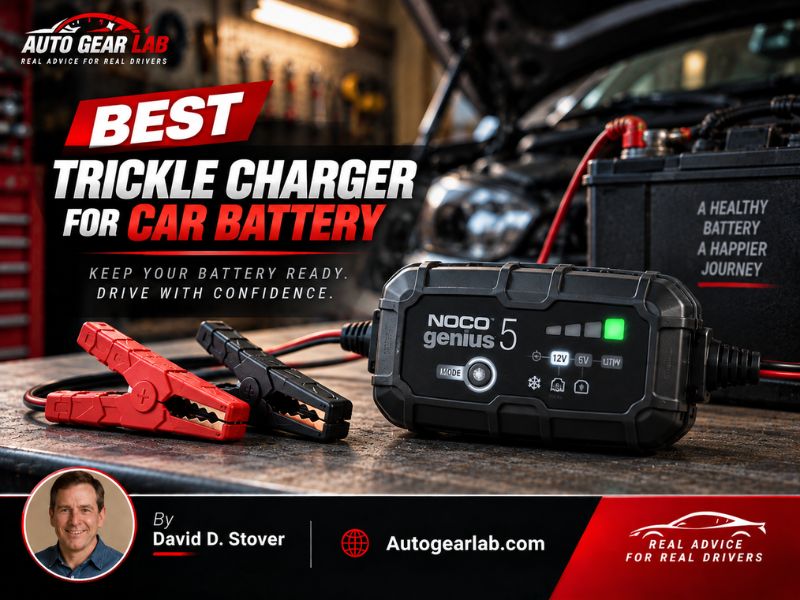
Best Trickle Charger for Car Battery
| Image | Product Name | Check Price |
|---|---|---|
Best Choice | NOCO GENIUS1 1A 6V/12V Smart Battery Charger – Best Overall | Check Price |
Second Best | Battery Tender Junior 12V 750mA Battery Charger and Maintainer | Check Price |
Third Choice | MOTOPOWER 12V 800mA Automatic Battery Maintainer | |
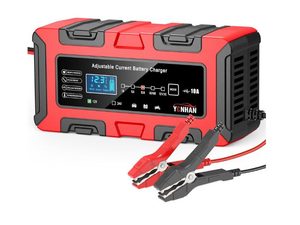 | YONHAN 10A 12V/24V Smart Battery Charger | Check Price |
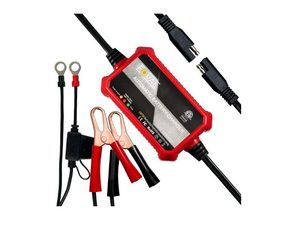 | FOVAL Automatic Trickle Battery Charger 12V 1000mA | Check Price |
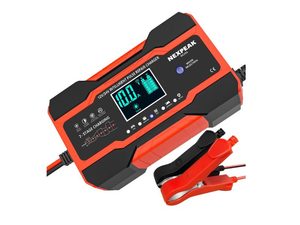 | NEXPEAK NC201 10A 12V/24V Smart Battery Charger | Check Price |
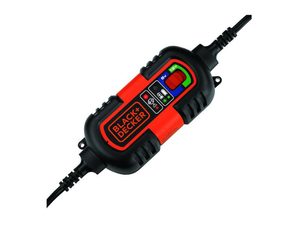 | BLACK+DECKER 6V/12V Automatic Battery Maintainer | Check Price |
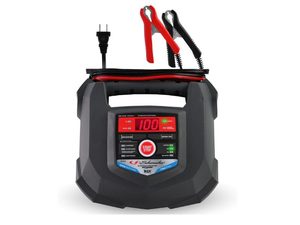 | Schumacher 15A 6V/12V Battery Charger and Maintainer | Check Price |
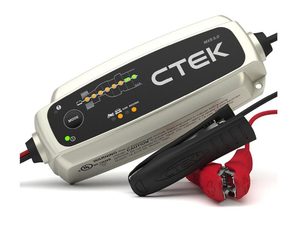 | CTEK MXS 5.0 12V Battery Charger and Maintainer | Check Price |
1. NOCO GENIUS1 1A 6V/12V Smart Battery Charger – Best Overall
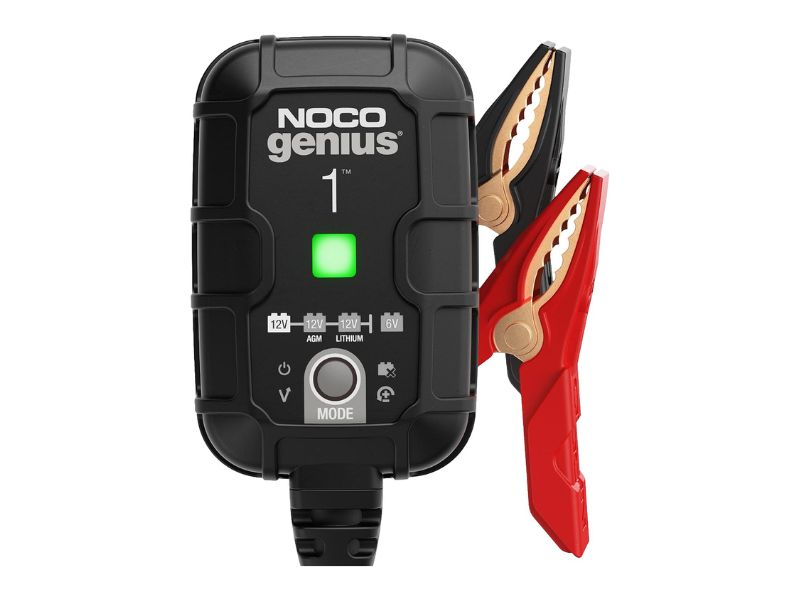
Key Features: 1A charging output, 6V and 12V operation, lead-acid and compatible lithium support, AGM mode, automatic maintenance, temperature compensation, low-voltage charging, Force Mode, spark protection, reverse-polarity protection, integrated clamps and eyelet connection capability.
The NOCO GENIUS1 is my first choice because it handles the job of a traditional trickle charger while adding substantially more intelligence. It is intended to charge, maintain, and condition batteries, making it suitable not only for a stored vehicle with a healthy battery but also for batteries that need some controlled charging before entering maintenance mode.
One of its most useful features is automatic temperature compensation. Charging voltage that works well in mild weather is not necessarily ideal in a very hot garage or during a freezing winter. The GENIUS1 monitors ambient temperature and alters its charging behavior accordingly, helping reduce undercharging in cold conditions and excessive charging voltage in heat.
The charger works with 6V and 12V lead-acid batteries including flooded, AGM, gel, EFB, calcium, and maintenance-free designs. It also includes a dedicated mode for compatible 12V lithium batteries with an appropriate battery management system. That broad chemistry support makes it useful if your garage contains more than one type of vehicle.
Another important distinction is low-voltage recovery. The automatic system can recognize batteries at very low voltage, while Force Mode provides a manual option for severely depleted batteries that fall below normal automatic-detection thresholds. Force Mode requires more care because the charger is being manually instructed to operate when normal detection cannot confirm battery condition.
At only 1 amp, this is still a slow charger for a large depleted automotive battery. If a 70Ah car battery has lost half its capacity, a 1A unit could require well over a day to restore that energy after charging losses are considered. That is not a defect; it reflects the intended role of a compact maintainer.
What I Like: I particularly like the combination of sophisticated charge control, small dimensions, temperature compensation, multiple battery chemistries, low-voltage capability, and excellent electrical protections. It can remain useful even if you later change from a conventional flooded battery to AGM or a compatible lithium setup.
What I Do Not Like: A 1A maximum charging rate is slow when a full-size automotive battery is significantly discharged. The simple LED interface also provides less detailed information than chargers with numerical LCD voltage and current displays.
Verdict: The NOCO GENIUS1 is the best trickle charger for car battery maintenance for most drivers because it provides the gentle long-term maintenance you want while offering enough smart charging technology to handle far more situations than a conventional unregulated trickle charger.
2. Battery Tender Junior 12V 750mA Battery Charger and Maintainer – Best for Long-Term Storage
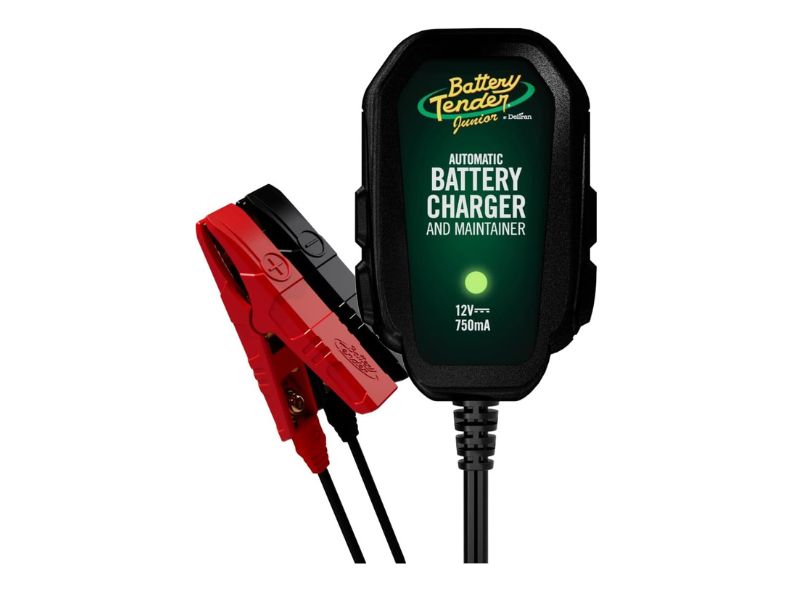
Key Features: 12V operation, 750mA output, four-stage automatic charging, float maintenance, spark protection, reverse-polarity protection, LED status indication, alligator clips, ring terminals, long connection reach, and five-year limited warranty.
The Battery Tender Junior has been a familiar choice for stored vehicles for years because its purpose is extremely clear: maintain a healthy 12V lead-acid battery without complicated controls.
Its automatic charging process moves through initialization, bulk charging, absorption, and float maintenance. Once the battery is charged, the unit reduces its output rather than continuously pushing the same charging current into the battery.
That distinction matters. A crude fixed-output trickle charger can continue applying current whether the battery needs it or not. A proper maintainer monitors battery condition and changes its behavior after charging is complete.
At 750mA, the Battery Tender Junior is intentionally gentle. I view it primarily as a maintenance charger, particularly for a car, motorcycle, lawn tractor, ATV, or other vehicle that remains stored. It is less attractive if your main goal is regularly restoring a heavily depleted 60Ah or 80Ah automotive battery because charging will take a long time.
The included ring-terminal connection is ideal for a seasonal car. Instead of opening the hood and attaching clamps every time, the ring-terminal harness can be permanently attached to appropriate battery terminals and routed to a convenient accessible location. You then plug the charger into the quick connector whenever the car goes back into storage.
This configuration works particularly well for collector cars, convertibles stored through winter, weekend sports cars, and vehicles with a persistent small electrical draw.
What I Like: The straightforward controls, automatic float mode, quick-connect harness, long cord reach, mature design, and emphasis on long-term battery maintenance are the main strengths. It is one of the easiest options for a driver who simply wants to connect the charger and leave a vehicle parked.
What I Do Not Like: The 750mA rate is not appropriate if rapid charging is important. It is also primarily a 12V lead-acid maintainer rather than the multi-voltage, multi-chemistry tool provided by some newer smart chargers.
Verdict: Choose the Battery Tender Junior when storage maintenance is the main job. It is especially appropriate when the battery normally starts the car correctly but tends to discharge after the vehicle sits unused for several weeks.
3. MOTOPOWER 12V 800mA Automatic Battery Maintainer – Best Budget Maintainer
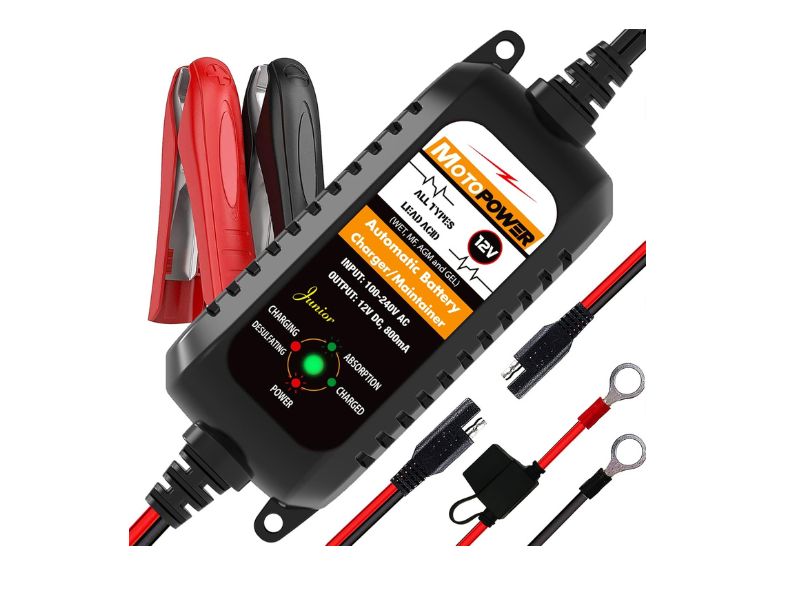
Key Features: 12V 800mA output, automatic charging and maintenance, desulfation functionality, compatibility with common lead-acid battery types, energy-saving standby operation, spark-resistant connection design, reverse-polarity protection, short-circuit protection, and compact construction.
The MOTOPOWER MP00205A is a good example of why a simple low-current maintainer remains useful even though high-powered smart chargers are widely available.
It supplies up to 800mA, making its natural role long-term maintenance rather than fast recovery. Connect it to a reasonably healthy battery before storing the vehicle and it can monitor and maintain the battery without the aggressive charging behavior of a conventional manual charger.
The MP00205A is designed around common 12V lead-acid batteries, including flooded, AGM, gel, and sealed maintenance-free designs. That covers most conventional car batteries as long as you confirm the exact chemistry before connecting any charger.
Automatic desulfation is another useful feature, although expectations should remain realistic. Mild sulfation can sometimes be reduced through appropriate charging behavior, but no electronic charger can reliably make a physically damaged, shorted, severely deteriorated, or heavily sulfated battery new again.
I also appreciate the simplicity. There is no elaborate control panel that needs to be configured each time. For a vehicle owner whose priority is connecting a maintainer during storage, simplicity can be preferable to a long menu of charging modes.
At less than one amp, however, charging time becomes substantial if the battery has already gone flat. The charger may eventually restore an otherwise healthy discharged battery, but that can take many hours or days depending on capacity and starting state of charge.
What I Like: Compact size, simple automatic operation, useful safety features, low-maintenance design, and compatibility with common 12V automotive battery types make the MOTOPOWER especially appealing for seasonal vehicles.
What I Do Not Like: The 800mA charge rate is extremely slow for a deeply discharged full-size car battery. There is also less diagnostic information than you get from an LCD-equipped 10A charger.
Verdict: The MOTOPOWER MP00205A is my preferred budget-focused maintenance charger for drivers who want an inexpensive device to keep a normally healthy 12V lead-acid battery topped up during storage.
4. YONHAN 10A 12V/24V Smart Battery Charger – Best Fast-Charging Value
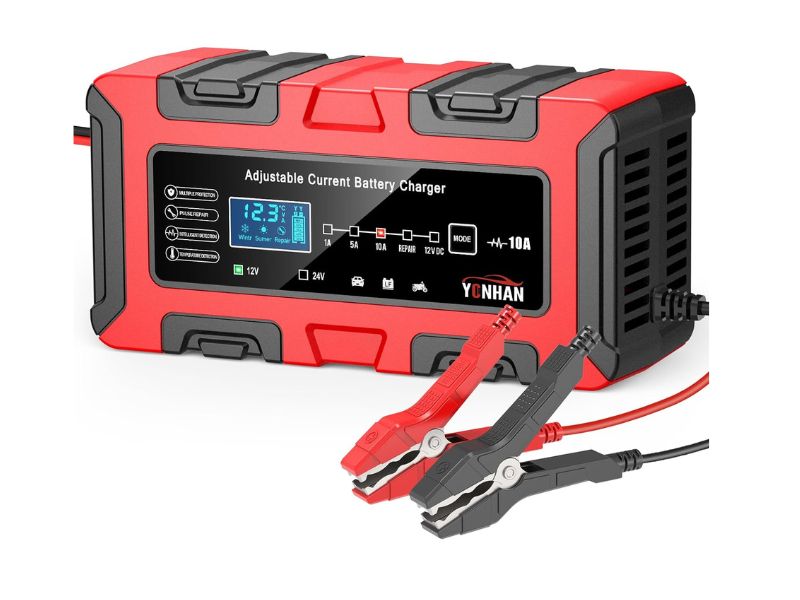
Key Features: Up to 10A charging for 12V applications, 12V/24V compatibility, automatic charging control, maintenance capability, digital display, battery repair mode, temperature-aware charging, multiple battery modes, cooling system, and electrical safety protections.
The YONHAN 10A charger is fundamentally different from a 750mA or 1A maintainer. Its 10A maximum output makes it far more practical when the car battery is already significantly discharged.
Imagine a typical automotive battery rated around 60Ah that has fallen to roughly half charge. Restoring approximately 30Ah with a 1A charger can require well over 30 hours after normal charging losses are included. A 10A smart charger can perform the bulk phase dramatically faster before automatically reducing current as the battery approaches full charge.
That versatility is why I like the YONHAN for households where the charger will serve several purposes. It can maintain a stored battery, but it can also provide meaningful recovery when someone leaves a light on or a vehicle sits long enough to become heavily discharged.
The digital display is useful because it provides more feedback than a basic red/green LED. Being able to see charging status, voltage, current, or other operating information makes troubleshooting easier, particularly when you are trying to understand whether the battery is accepting a charge normally.
Temperature compensation is another useful feature for year-round operation. Battery charging requirements shift with temperature, so an automatic system that adjusts its charging behavior can be particularly valuable in climates with large seasonal swings.
Its additional complexity is the tradeoff. Users need to confirm battery voltage, battery type, and the correct charging mode rather than assuming one setting works for everything.
What I Like: The combination of high charging current, maintenance capability, display information, multiple voltage support, and repair functionality gives this model excellent versatility for home garages.
What I Do Not Like: It is less of a minimalist connect-and-forget device than the Battery Tender Junior. The higher current and multiple modes also mean selecting the correct battery setting is more important.
Verdict: The YONHAN 10A is the better choice when you want one affordable device for both normal maintenance and relatively fast recharging of common automotive batteries.
5. FOVAL Automatic Trickle Battery Charger 12V 1000mA – Best Simple 1A Pick
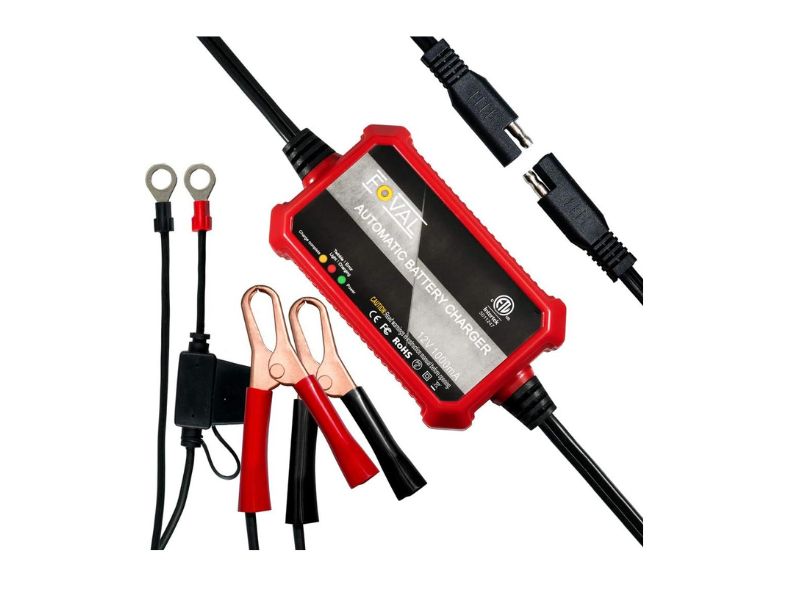
Key Features: 12V 1A output, automatic maintenance charging, multi-stage charging behavior, compact housing, clamp and ring-terminal connection options, reverse-polarity protection, short-circuit protection, and compatibility with common 12V lead-acid batteries.
The FOVAL 1A charger is another straightforward option for owners who want to maintain a car battery without buying a larger garage charger.
One amp is enough to offset normal self-discharge and many small parasitic loads when maintaining a stored vehicle. It can also charge a partially discharged battery, although the process is slow compared with a 5A, 10A, or 15A charger.
The important advantage over an old unregulated trickle charger is automatic charge management. After the battery reaches the appropriate level, the charger changes into maintenance behavior instead of continuously treating the battery like it is still empty.
FOVAL includes both temporary clamps and a more permanent connection option. For long-term vehicle storage, I prefer permanently installed ring terminals when they can be fitted safely. A quick connector makes it much easier to maintain the battery consistently because connecting the charger becomes a seconds-long task.
The compact housing is also useful when garage space is limited. This is not a large bench charger that needs shelf space or a dedicated cart.
Its limitations largely follow from the low-current design. If your vehicle regularly develops a deeply discharged battery, the FOVAL can mask the symptom without fixing the underlying cause. Repeated severe discharge can indicate an aging battery, abnormal parasitic draw, charging-system problem, or simply a vehicle being left unused for too long.
What I Like: It offers the qualities I want from a simple maintainer: automatic operation, low current, useful connection accessories, compact storage, and compatibility with common lead-acid automotive batteries.
What I Do Not Like: Charging a large depleted battery is slow, and the charger does not provide the detailed status information found on larger LCD models.
Verdict: The FOVAL 1A charger is a practical set-and-maintain choice for an occasional-use vehicle that already has a fundamentally healthy battery.
6. NEXPEAK NC201 10A 12V/24V Smart Battery Charger – Best with Detailed LCD
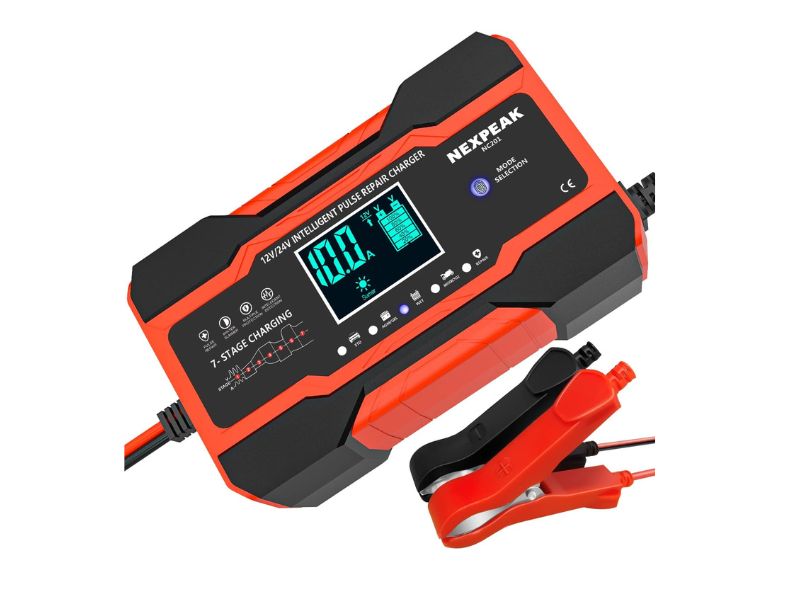
Key Features: 10A charging at 12V, 5A charging at 24V, seven-stage automatic charging, float maintenance, LCD display, temperature compensation, repair mode, cooling fan, reverse-polarity protection, overvoltage protection, overcurrent protection, short-circuit protection, and compatibility with several lead-acid battery types.
The NEXPEAK NC201 is aimed at buyers who want to see what the charger is doing rather than relying on one or two indicator lights.
Its LCD can provide information such as battery voltage, charging current, estimated state of charge, operating temperature, and selected mode. That information does not replace a professional battery tester, but it makes day-to-day charging considerably easier to understand.
The charger provides up to 10A for a 12V battery and 5A for a 24V battery, giving it significantly more recovery capability than a traditional low-current maintainer.
Its seven-stage process moves through different charging conditions before finishing with maintenance or float charging. This allows the same unit to provide meaningful bulk charging when required and then reduce its output once the battery no longer needs full current.
Temperature compensation automatically modifies the charging strategy in hot and cold conditions. This is particularly useful for a charger kept in an unconditioned garage where summer and winter temperatures can differ dramatically.
Repair mode is included for certain tired lead-acid batteries. I view this as a potentially useful attempt at improving mild sulfation or stratification, not a substitute for replacing a battery with physical damage, a shorted cell, severe plate deterioration, or consistently poor load-test results.
What I Like: The LCD display, fast 12V charging, 24V support, temperature compensation, multiple lead-acid modes, and automatic float stage make it a flexible garage tool.
What I Do Not Like: The greater number of modes gives users more opportunity to select an inappropriate setting. Repair mode also needs to be treated as a specialized function rather than something to use routinely on every battery.
Verdict: Choose the NEXPEAK NC201 if detailed charging information and faster recovery matter as much as long-term maintenance.
7. BLACK+DECKER 6V/12V Automatic Battery Maintainer – Best Connection Versatility
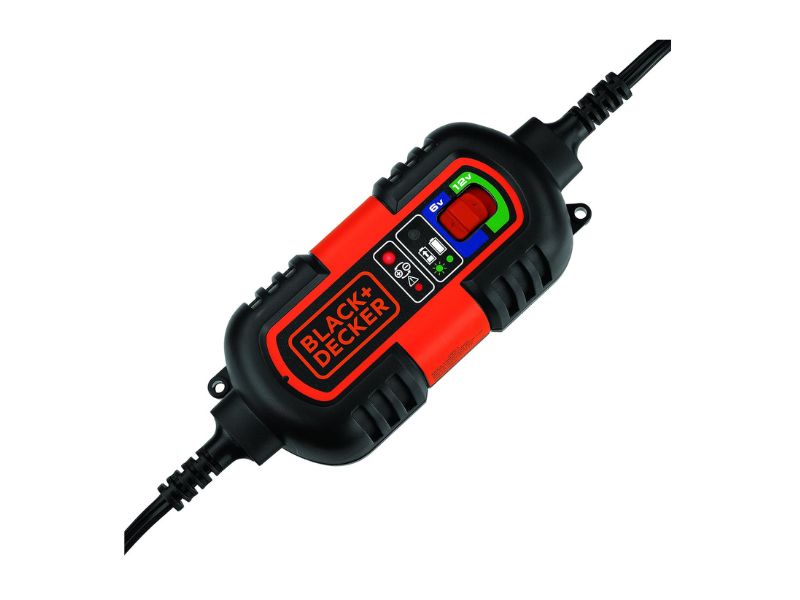
Key Features: 6V and 12V operation, low-current automatic maintenance charging, AGM/GEL/WET compatibility, float monitoring, battery clamps, ring terminals, DC accessory-plug connection, reverse-polarity protection, short-circuit protection, and automatic charge control.
The BLACK+DECKER BM3B stands out because of the different ways it can be connected to a vehicle.
Along with traditional battery clamps and ring terminals, the design includes a 12V accessory-socket connection option for vehicles whose electrical system keeps that outlet connected appropriately while the vehicle is off.
That can make maintenance very convenient because you may not need to open the hood every time you connect the charger. However, not every vehicle leaves its accessory socket electrically connected with the ignition off. Some sockets are switched, and others may require ignition accessory mode—which can activate vehicle electronics and defeat the purpose. Check your owner’s manual before relying on this connection method.
For conventional charging, the BM3B supports common 6V and 12V flooded, AGM, and gel batteries and automatically moves into float monitoring when charging is complete.
It is therefore well suited to a second car, motorcycle, lawn equipment, generator battery, or other lead-acid battery that spends extended periods unused.
The design is intentionally simple. There is no large screen or detailed charging data, and the output is better suited to maintenance than rapid restoration of a discharged full-size car battery.
What I Like: The multiple connector choices give the BM3B more installation flexibility than many entry-level maintainers. Automatic float monitoring and straightforward 6V/12V selection also keep operation simple.
What I Do Not Like: The accessory-socket approach will not work correctly on every vehicle. It is also a maintenance-focused charger, so owners needing fast recovery should choose a higher-output model.
Verdict: The BLACK+DECKER BM3B is particularly useful when flexible connection methods are important, including permanent ring terminals or a compatible always-live vehicle accessory socket.
8. Schumacher 15A 6V/12V Battery Charger and Maintainer – Best for Fast Battery Recovery
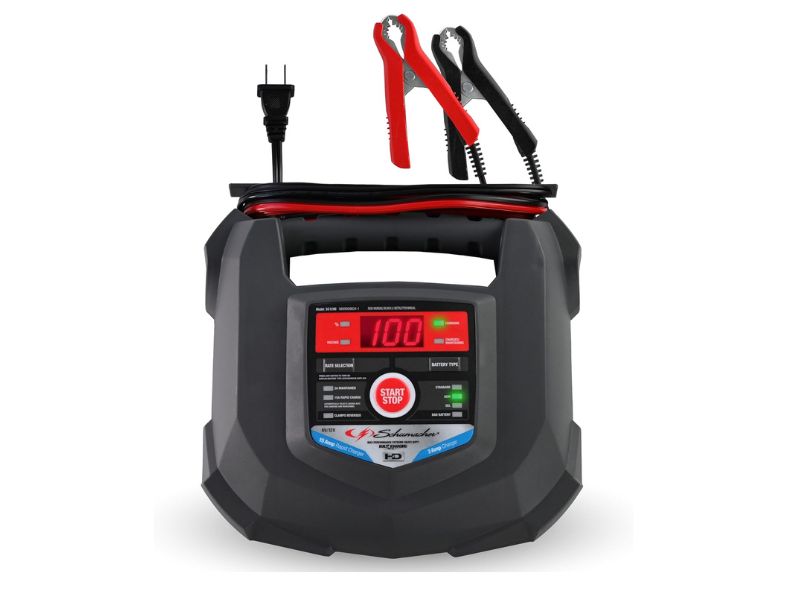
Key Features: 15A rapid charging, 3A maintenance charging, 6V/12V automatic voltage detection, standard/AGM/gel/deep-cycle compatibility, microprocessor control, digital display, automatic charge-rate selection, reverse-hookup protection, and desulfation functionality.
The Schumacher SC1280 makes the most sense when charging speed matters substantially more than compact size.
Its 15A maximum charging rate can restore energy to a normal automotive battery far more quickly than a 750mA or 1A maintainer. Once the battery approaches full charge, its automatic electronics reduce charging appropriately and provide maintenance capability.
This is particularly useful for a household with multiple vehicles. One day you may be maintaining a rarely driven sports car; the next you may need to recover a discharged SUV battery. A higher-output unit can handle both jobs without waiting multiple days for bulk charging.
The SC1280 supports common 6V and 12V standard, AGM, gel, and deep-cycle lead-acid batteries. Automatic voltage detection and microprocessor control reduce setup complexity.
Its digital display is another benefit. A numerical indication of charging information is useful when diagnosing why a vehicle is struggling to start or determining whether the battery has progressed through the charging cycle.
The disadvantage is that this is more charger than many storage-only users need. If your battery begins storage already fully charged and you simply want to offset self-discharge for four months, a small 750mA or 1A maintainer uses less space and performs the essential job.
What I Like: High charging output, automatic maintenance, broad lead-acid compatibility, useful display information, and faster recovery make it much more versatile than a dedicated low-current maintainer.
What I Do Not Like: It is bulkier and more complicated than a simple storage tender. Owners should also verify correct operation before leaving any unfamiliar charger connected to a valuable battery for prolonged periods.
Verdict: The Schumacher SC1280 is my choice for drivers who regularly encounter low batteries and need significantly faster charging before transitioning into maintenance mode.
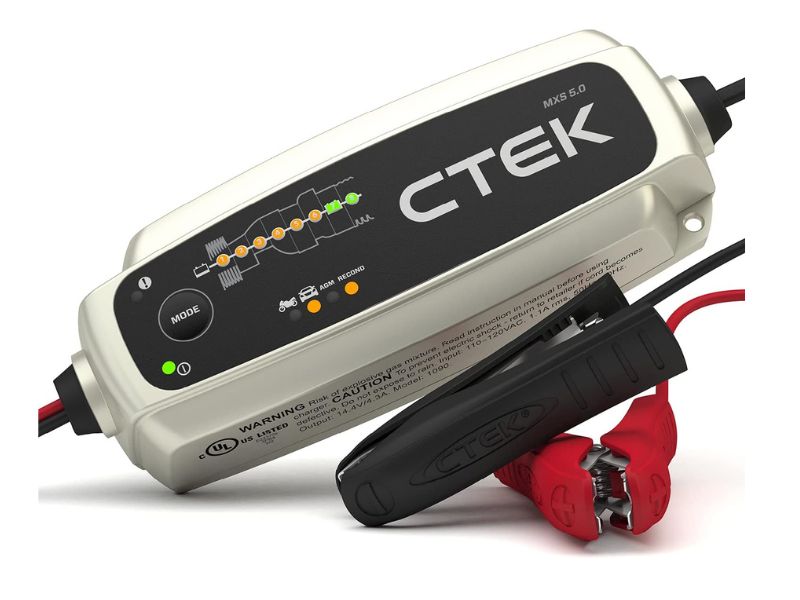
9. CTEK MXS 5.0 12V Battery Charger and Maintainer – Best Premium Lead-Acid Maintainer
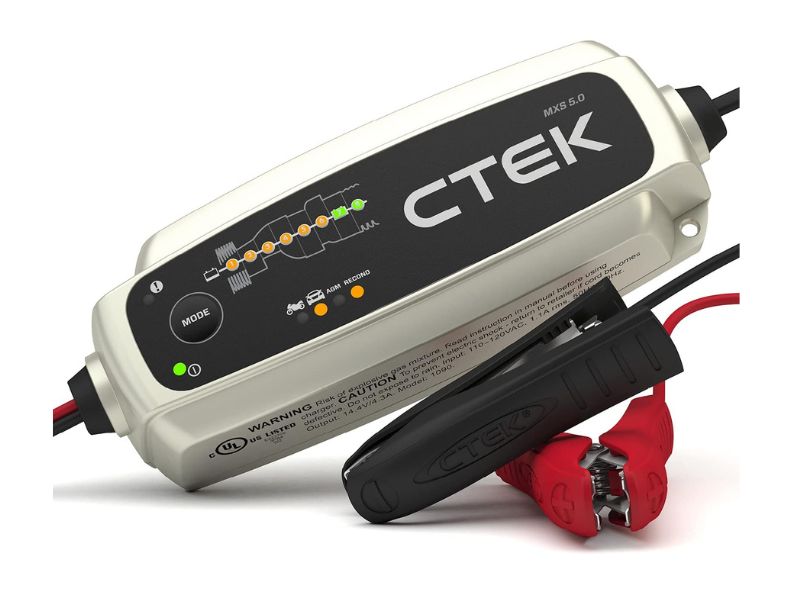
Key Features: North American output up to 4.3A, 12V lead-acid charging, eight-stage automatic charging, AGM program, Recond mode, built-in temperature compensation, float/pulse maintenance, IP65 enclosure protection, spark-resistant operation, reverse-polarity protection, and five-year warranty.
The CTEK MXS 5.0 is one of the more refined choices for owners of collector cars, performance vehicles, European cars, and other vehicles that may spend extended periods parked.
The North American version provides up to 4.3A output, which creates a useful middle ground. It charges noticeably faster than a 1A maintainer without becoming as bulky or aggressive as a 15A garage charger.
CTEK’s eight-stage charging strategy evaluates and charges the battery before moving into long-term float/pulse maintenance. The goal is not simply reaching a target voltage but maintaining the battery appropriately over an extended connection period.
Its built-in temperature compensation is especially useful for seasonal storage. Cold batteries need different charging behavior than hot batteries, and a properly compensated charger helps account for those changes automatically.
The MXS 5.0 also includes an AGM mode and a Recond option for certain deeply discharged lead-acid batteries. Its sealed IP65 housing gives it better protection against dust and splashing than many ordinary indoor chargers, although electrical charging equipment should still be used in accordance with its environmental and safety instructions.
This model is specifically focused on lead-acid technology. If you need lithium charging, select a model designed for your battery chemistry rather than assuming every premium smart charger supports it.
What I Like: Excellent long-term maintenance behavior, temperature compensation, high-quality connection system, useful AGM program, midrange charging speed, and protected enclosure make this an impressive specialist tool.
What I Do Not Like: It offers less value if you only need an inexpensive maintainer for an ordinary daily driver. It also does not have the broad chemistry support of something like the NOCO GENIUS1.
Verdict: The CTEK MXS 5.0 is my premium choice for serious long-term care of 12V lead-acid vehicle batteries, particularly AGM-equipped and seasonal vehicles.
10. TowerTop 2/10/25A 12V Smart Battery Charger – Best Multi-Rate Garage Charger
Key Features: Selectable 2A, 10A, 25A and automatic charging modes, 12V operation, eight-stage charging, float maintenance, battery reconditioning, winter mode, digital display, automatic charge control, engine-start assistance, and multiple electrical protection systems.
The TowerTop TP108MB is the most garage-oriented charger in this comparison.
Rather than committing you to one charging rate, it allows 2A, 10A, 25A, or automatic operation. The 2A setting is useful for slower battery care, while 10A and 25A provide much faster bulk charging when a car battery is genuinely low.
Its eight-stage process includes desulfation, soft start, bulk charging, absorption, analysis, reconditioning, float, and maintenance behavior. This makes the unit considerably more capable than the simple trickle chargers many drivers remember from decades ago.
A winter mode modifies charging for colder conditions, while the digital display provides information about charging progress. It also includes an engine-start assistance function, although it should not be confused with a cordless lithium jump starter; the charger still depends on an AC power source.
The main issue is size and complexity. This is not the device I would purchase solely to maintain a single weekend car. There are smaller, quieter, and simpler solutions for that job.
It becomes more compelling if you maintain several batteries, work on vehicles yourself, or want one garage charger to cover both slow maintenance and relatively fast recovery.
What I Like: Multiple charging rates, fast 25A capability, 2A lower-current option, maintenance mode, winter setting, display, and reconditioning functions create excellent versatility.
What I Do Not Like: It is larger than dedicated maintainers, and its additional controls are unnecessary for someone who only wants set-and-forget storage charging.
Verdict: The TowerTop TP108MB is best for a home garage where one charger needs to perform several different battery-care jobs rather than remaining permanently attached to one car.
Best Trickle Charger for Car Battery Comparison
| Product | Maximum Output | Voltage | Battery Compatibility | Maintenance Mode | Temp. Compensation | Repair/Desulfation | Display | Best Use |
| NOCO GENIUS1 | 1A | 6V/12V | Lead-acid + compatible lithium | Yes | Yes | Yes | LEDs | Best overall |
| Battery Tender Junior | 0.75A | 12V | Flooded, AGM, GEL | Yes | No dedicated sensor | Maintenance focused | LEDs | Long-term storage |
| MOTOPOWER MP00205A | 0.8A | 12V | Common lead-acid types | Yes | Basic automatic control | Yes | LEDs | Budget maintenance |
| YONHAN 10A | Up to 10A | 12V/24V | Multiple automotive battery types | Yes | Yes | Yes | LCD | Fast-value charging |
| FOVAL Automatic Charger | 1A | 12V | Common lead-acid types | Yes | Automatic control | Maintenance/conditioning | LEDs | Simple 1A use |
| NEXPEAK NC201 | 10A 12V / 5A 24V | 12V/24V | Lead-acid AGM, GEL, WET, EFB | Yes | Yes | Yes | LCD | Detailed monitoring |
| BLACK+DECKER BM3B | Low current | 6V/12V | AGM, GEL, WET | Yes | Automatic control | No dedicated manual repair | LEDs | Flexible connections |
| Schumacher SC1280 | 15A / 3A maintain | 6V/12V | Standard, AGM, GEL, deep-cycle | Yes | Automatic control | Yes | Digital | Fast recovery |
| CTEK MXS 5.0 | 4.3A NA version | 12V | WET, MF, AGM, EFB, GEL | Yes | Yes | Yes | LEDs | Premium lead-acid care |
| TowerTop TP108MB | 25A | 12V | AGM, GEL, STD, deep-cycle | Yes | Winter mode | Yes | LCD | Multi-rate garage use |
The NOCO GENIUS1 remains my primary recommendation because it fits the actual intent behind this keyword especially well: maintaining an automotive battery safely for long periods. It is small enough for permanent garage duty but much smarter than an old fixed-output trickle charger.
Battery Tender Junior and MOTOPOWER MP00205A are particularly compelling for straightforward seasonal maintenance. YONHAN, NEXPEAK, Schumacher, and TowerTop provide significantly faster charging if you regularly deal with batteries that are already discharged.
What Is a Trickle Charger for a Car Battery?
A traditional trickle charger continuously supplies a small amount of electrical current to a battery.
The basic concept is simple. A stored lead-acid battery naturally loses charge. The vehicle may also draw a small amount of electricity while parked. A low-current charger replaces that lost energy.
The problem is that old fixed-output trickle chargers may continue supplying current even when the battery is already full. Extended overcharging can contribute to electrolyte loss, heating, plate deterioration, and reduced battery life.
That is why most products I recommend today are technically better described as smart battery chargers or battery maintainers.
A smart maintainer monitors battery voltage and charging conditions. Once the battery is charged, it reduces or interrupts the charging current and then supplies energy only when necessary.
For long-term vehicle storage, that is usually preferable to an old-fashioned uncontrolled trickle charger.
Trickle Charger vs. Battery Maintainer
People frequently use these terms interchangeably, but there is an important distinction.
A basic trickle charger supplies a small current continuously.
An automatic battery maintainer monitors the battery and adjusts its output according to battery condition.
Imagine filling a water tank.
A conventional trickle charger is like leaving a faucet running slowly all the time.
A smart maintainer is more like an automatic valve that fills the tank when necessary and reduces or stops the flow when the tank is full.
For modern car-battery storage, I generally choose the second approach.
This is why products such as NOCO GENIUS1, Battery Tender Junior, CTEK MXS 5.0, and similar automatic units are preferable for vehicles that may remain connected for weeks or months.
Trickle Charger vs. Regular Car Battery Charger
The main difference is charging current and intended use.
A low-current maintainer might provide 0.75A or 1A.
A general automotive charger may provide 5A, 10A, 15A, or more.
Higher current makes sense when a battery is already substantially discharged.
Low current makes sense when the battery is nearly full and you simply need to offset storage losses.
Modern smart chargers blur the distinction because one unit can provide relatively high current during bulk charging and then automatically reduce current during the maintenance stage.
That combination is particularly useful if you own only one charger.
What Amp Trickle Charger Do I Need for a Car Battery?
For long-term maintenance of a healthy normal car battery, approximately 0.75A to 2A is usually plenty when the charger is designed for automatic maintenance.
You are not trying to continuously force that much current into the battery. You simply need enough available current to compensate for self-discharge and ordinary parasitic electrical loads.
Higher amperage becomes useful when charging a depleted battery.
A useful simplified relationship is:
Approximate charging time = amp-hours that need replacing ÷ charger current
Real charging takes longer because efficiency decreases, current tapers near full charge, temperature affects charging, and the battery itself consumes energy during the chemical process.
Consider a 60Ah battery at approximately 50% state of charge.
Roughly 30Ah needs replacing.
At 1A, the theoretical minimum is around 30 hours.
At 5A, approximately six hours of ideal bulk charging would replace 30Ah.
At 10A, the theoretical bulk portion becomes closer to three hours.
Actual times will be longer.
This illustrates why a 1A charger is excellent for maintenance but frustrating if you regularly allow the battery to become deeply discharged.
Is a 1-Amp Trickle Charger Enough for a Car Battery?
Yes, for maintenance it generally is.
A 1A charger can easily provide more current than the normal self-discharge of a healthy stored automotive battery.
The important question is not whether one amp can maintain the battery. The important question is how discharged the battery is before you connect the charger.
If your car battery is already close to full charge, a 1A maintainer makes excellent sense.
If the battery is at 40% charge and you need the car tomorrow morning, choose a higher-output charger.
This is why the NOCO GENIUS1 is my best overall maintenance choice while products such as the Schumacher SC1280 are better for rapid recovery.
Is 10 Amps Too Much for Trickle Charging?
Ten amps is not a trickle rate, but a smart 10A charger can still provide safe maintenance if it automatically reduces output after charging.
The important distinction is automatic control.
A modern 10A charger does not necessarily deliver 10 amps continuously.
During the bulk phase, it may supply substantial current.
As battery voltage rises and charging progresses, current is reduced.
Once charging is complete, the unit can enter float or maintenance mode.
That is fundamentally different from attaching a manual 10A charger indefinitely.
What Battery Types Are Used in Cars?
Understanding battery chemistry is essential because the correct charging voltage and algorithm depend on the battery type.
Flooded Lead-Acid Battery
Traditional flooded batteries contain liquid electrolyte and remain widely used.
Many automatic chargers label this mode as:
12V, Standard, WET, Flooded, or STD.
AGM Battery
Absorbent Glass Mat batteries hold electrolyte in fiberglass mats rather than loose liquid.
AGM batteries are common in premium cars, vehicles with substantial electrical loads, and many start-stop systems.
AGM charging voltage can differ from standard flooded charging, so use the charger’s AGM mode when required by the battery manufacturer.
EFB Battery
Enhanced Flooded Batteries are more durable versions of conventional flooded technology.
They are frequently used in start-stop vehicles that do not require full AGM construction.
Some chargers specifically identify EFB compatibility while others handle EFB under an appropriate lead-acid program.
GEL Battery
Gel-cell batteries use a gelled electrolyte.
They require appropriate charge-voltage control and should not automatically be treated exactly like AGM batteries.
Lithium Battery
Some modern vehicles, specialty cars, powersports equipment, and aftermarket installations use lithium iron phosphate batteries.
Do not charge lithium using a lead-acid-only charger unless the battery and charger manufacturers explicitly state compatibility.
The NOCO GENIUS1 includes a dedicated compatible lithium charging mode, while several other models in this article are specifically lead-acid focused.
How to Identify Your Car Battery Type
Look directly at the battery label.
Common markings include:
AGM, EFB, GEL, Flooded, WET, MF, SLA, VRLA, or LiFePO4.
If the label is unclear, check the vehicle owner’s manual, battery manufacturer’s part number, or replacement specifications.
Do not determine battery chemistry based only on physical appearance.
Two batteries that look nearly identical can require different charging profiles.
Why AGM Cars Need the Correct Charger Mode
AGM batteries tolerate cycling better than many ordinary flooded starting batteries, which makes them useful in vehicles equipped with:
automatic start-stop systems, high electrical loads, regenerative charging strategies, and sophisticated battery-management systems.
However, AGM charging requirements differ.
A charger with an appropriate AGM program can apply the correct charging voltage profile without treating the battery like a basic flooded design.
The NOCO GENIUS1 and CTEK MXS 5.0 are especially appealing for AGM maintenance because both provide dedicated battery-specific charging behavior.
What Is Float Charging?
Float charging keeps a fully charged lead-acid battery at an appropriate maintenance voltage without continuously bulk-charging it.
Once the battery is full, the charger’s job changes.
Instead of rapidly adding energy, it compensates for small ongoing losses.
This is the mode that makes an automatic maintainer appropriate for long-term storage.
If vehicle electronics draw a small amount of energy and battery voltage declines, the maintainer can respond and restore that loss.
What Is Pulse Maintenance?
Some smart maintainers use a pulse maintenance strategy.
Rather than holding one continuous float condition forever, the charger monitors battery voltage and periodically adds energy when necessary.
Different manufacturers use different algorithms, so “pulse,” “float,” and “maintenance” are not always implemented identically.
What matters to the vehicle owner is that the charger actively monitors the battery rather than applying uncontrolled charging current indefinitely.
What Is Battery Desulfation?
Lead-acid batteries naturally form lead sulfate during discharge.
Under normal operation, much of this is reversed during charging.
Problems develop when a battery remains undercharged or discharged for a prolonged period. Lead sulfate can become harder and more difficult to reverse, reducing the active plate area and usable capacity.
Some chargers use pulse charging, elevated controlled voltage, or specialized charging stages intended to reduce recoverable sulfation.
This can sometimes improve a neglected battery.
It cannot repair every battery.
A charger cannot reliably correct:
a shorted cell, fractured internal connection, severe plate shedding, physical swelling, electrolyte leakage, major corrosion damage, or a battery that has simply reached the end of its useful service life.
Treat repair mode as a battery-care tool, not magic regeneration.
Can a Trickle Charger Restore a Dead Battery?
Sometimes, but it depends on why the battery is dead.
A healthy battery that simply discharged while sitting may respond very well to slow charging.
A sulfated battery may recover some usable capacity.
A battery whose voltage falls below a smart charger’s detection threshold may require a dedicated low-voltage or force-start charging function.
A battery with internal mechanical or chemical failure may never recover.
This is why repeated no-start situations deserve proper diagnosis rather than endless charging.
What Is Force Mode on a Battery Charger?
Some smart chargers refuse to operate if battery voltage is extremely low because they cannot confirm that a valid battery is connected.
A Force Mode or manual override instructs the charger to begin output despite that low voltage.
This feature can help recover an extremely discharged battery.
It also deserves additional caution because some automatic detection protections may be reduced during manual activation.
Verify battery voltage, chemistry, polarity, and physical condition before using an override function.
Temperature Compensation Matters More Than Many Buyers Realize
Battery chemistry changes with temperature.
Cold conditions generally require different charging voltage than hot conditions.
A charger that ignores temperature can potentially leave a cold battery undercharged or apply unnecessarily high voltage in hot conditions.
This matters for U.S. drivers because storage environments vary dramatically.
A detached garage in Minnesota can spend weeks below freezing.
A garage in Arizona, Nevada, or inland Southern California can become extremely hot during summer.
A charger with automatic temperature compensation, such as the NOCO GENIUS1 or CTEK MXS 5.0, adapts better to these changing environments.
Best Trickle Charger for Winter Car Storage
For winter storage, I prioritize:
automatic maintenance, temperature compensation, correct AGM support when applicable, secure permanent connections, and a charger designed for unattended long-duration operation.
The NOCO GENIUS1 is my favorite all-around winter-storage option.
The Battery Tender Junior is an excellent alternative for a standard 12V lead-acid battery that begins storage fully charged.
The CTEK MXS 5.0 is particularly appealing for premium AGM-equipped or collector vehicles.
Before storing the car, fully charge the battery rather than asking a tiny maintainer to recover a severely discharged battery after storage begins.
Best Charger for a Car That Is Rarely Driven
A rarely driven car presents a slightly different problem than a vehicle placed into formal seasonal storage.
Modern cars can consume power while parked because of:
security systems, proximity keys, cellular connectivity, infotainment memory, telematics, control modules, and keyless-entry receivers.
A short drive every few weeks may not replace all the energy consumed during starting and storage.
For this situation, a 1A to 5A smart maintainer works extremely well.
You can connect it whenever the car is parked at home rather than waiting until the battery becomes weak.
Can I Leave a Smart Trickle Charger Connected All Winter?
A charger specifically designed for long-term automatic maintenance can generally remain connected according to its manufacturer’s instructions.
That is one of the major benefits of a smart maintainer.
However, several conditions must be satisfied.
The charger must be compatible with the battery.
The battery must not be physically damaged.
Connections must be correct and secure.
The charger must be used in an environment permitted by its instructions.
Electrical cords should remain protected from damage.
Ventilation and battery-manufacturer safety requirements still apply.
Never assume that an old manual charger is safe for indefinite connection simply because its output is low.
Should I Disconnect the Car Battery Before Using a Maintainer?
Usually not when using an appropriate modern charger, but always follow the vehicle and charger instructions.
Many smart maintainers are specifically designed to charge a battery while it remains installed in the vehicle.
That said, some repair or reconditioning modes can use unusual charging voltages that manufacturers may not recommend while sensitive vehicle electronics remain connected.
The correct procedure varies by charger.
Normal maintenance mode and high-voltage repair mode should not automatically be treated as the same operation.
Ring Terminals vs. Battery Clamps
For occasional charging, clamps are convenient.
For long-term storage, I generally prefer ring terminals with a quick disconnect.
Ring terminals can remain permanently attached to the battery connection points.
The connector can then be positioned somewhere accessible but protected.
When you park the vehicle, simply plug the maintainer into the quick connector.
This reduces the chance that charging will be skipped because accessing the battery is inconvenient.
Clamps remain useful when one charger needs to service several different vehicles.
Can I Connect a Charger Through the 12V Accessory Socket?
Only if the vehicle’s socket remains electrically connected to the battery with the ignition off and the charger specifically supports that method.
Some cars disconnect the accessory socket when the ignition is turned off.
Others leave it permanently live.
Some require accessory mode, which may wake vehicle electronics and create additional electrical load.
Check the vehicle manual before relying on this method.
The BLACK+DECKER BM3B includes this connection style as an option, but vehicle compatibility determines whether it is practical.
How to Connect a Trickle Charger to a Car Battery
First identify the battery type and confirm that the charger is set for the correct voltage and chemistry.
Turn off the ignition and vehicle accessories.
Inspect the battery for physical damage, leakage, swelling, severe corrosion, or unusual odor before connecting anything.
Follow the vehicle manufacturer’s specified charging or jump points. Many modern vehicles provide remote positive and ground terminals even when the battery itself is located under a seat or in the trunk.
With the charger disconnected from AC power, attach the appropriate DC connections according to the charger and vehicle instructions.
Confirm polarity.
Then connect AC power and select the required charging mode.
Check the charger indicators to confirm normal operation.
When disconnecting, follow the manufacturer’s specified sequence rather than simply pulling clamps from an energized system.
Can I Close the Hood While a Battery Maintainer Is Connected?
This depends on cable routing.
Never pinch a charger cable between sharp body panels, hinges, or hood latches.
A permanent quick-connect lead can often be routed through a safe opening, but it must remain:
away from exhaust heat, belts, pulleys, radiator fans, steering components, sharp metal edges, and moving suspension components.
Do not create a wiring arrangement that damages insulation every time the hood closes.
How Long Does It Take to Charge a Car Battery?
Charging time depends on battery capacity, state of charge, charger output, temperature, battery condition, and charging algorithm.
For a simplified example, consider a 60Ah battery that needs approximately 30Ah replaced:
| Charger Output | Idealized Time to Replace 30Ah | Practical Expectation |
| 0.75A | 40 hours | Often 45+ hours |
| 1A | 30 hours | Often 35+ hours |
| 2A | 15 hours | Roughly overnight or longer |
| 5A | 6 hours | Several hours plus absorption |
| 10A | 3 hours | Several hours total |
| 15A | 2 hours | Bulk charging is fast; finishing takes longer |
| 25A | 1.2 hours | High-speed bulk phase; automatic taper still required |
These are not guaranteed charge times.
Smart chargers reduce current as the battery approaches full charge, and a degraded battery may behave very differently from a healthy one.
Why Does My Car Battery Keep Going Dead?
A maintainer can prevent storage discharge, but it does not necessarily fix the underlying cause.
Common possibilities include a battery that has reached the end of its service life, abnormal parasitic electrical drain, corroded battery connections, loose terminals, alternator problems, short-trip driving, extreme temperatures, or simply leaving the vehicle unused for extended periods.
If a battery becomes discharged after only one or two days, investigate the vehicle rather than assuming a stronger charger is the answer.
Parasitic Draw and Battery Maintainers
Every modern car has some normal key-off electrical consumption.
Modules may remain awake briefly after shutdown before the vehicle enters sleep mode.
A modest long-term draw is expected.
An abnormal parasitic draw can discharge the battery much more rapidly.
A maintainer can supply enough current to mask that drain while the vehicle is plugged in, but the problem returns once the charger is disconnected.
If the battery repeatedly goes flat unusually quickly, perform or arrange a proper parasitic-current diagnosis.
Signs Your Car Battery May Need Replacement
Charging technology cannot overcome every aging battery.
A battery deserves further testing when it:
regularly loses charge unusually quickly, cranks the engine slowly after receiving a full charge, repeatedly fails a proper conductance or load test, develops visible swelling, leaks electrolyte, has a damaged case, produces an abnormal odor, or contains a failed cell.
A maintainer is intended to preserve a serviceable battery—not postpone replacement of an unsafe battery.
Car Battery Voltage Explained
A conventional 12V lead-acid battery does not measure exactly 12.0 volts when healthy and fully charged.
Open-circuit voltage varies with chemistry, temperature, surface charge, and resting time.
A rested conventional lead-acid battery around the upper 12-volt range is generally much healthier than one sitting close to 12.0V.
However, voltage alone does not reveal the entire battery condition.
A battery may show normal open-circuit voltage yet collapse dramatically when the starter demands hundreds of amps.
That is why battery testing considers more than resting voltage.
Does a Trickle Charger Improve Battery Life?
Proper maintenance can help prevent avoidable battery deterioration caused by prolonged undercharge.
Lead-acid batteries dislike remaining partially discharged for long periods.
A smart maintainer keeps a stored battery close to an appropriate state of charge, reducing conditions that promote sulfation.
However, a charger cannot prevent every type of battery aging.
Temperature, vibration, internal corrosion, manufacturing quality, cycling history, electrolyte loss, and vehicle charging behavior also affect service life.
Think of a maintainer as preventive care rather than a guarantee of a specific number of years.
Will a Trickle Charger Overcharge a Battery?
An old uncontrolled trickle charger potentially can.
A properly functioning automatic battery maintainer is specifically designed to reduce or stop active charging when appropriate.
That is why I strongly prefer smart maintainers for long-term connection.
Still, correct charger mode and battery chemistry remain important.
A charger designed for flooded lead-acid batteries should not automatically be used on lithium batteries.
Likewise, a damaged or malfunctioning charger should never remain connected simply because it is labeled “automatic.”
Can a Trickle Charger Damage Car Electronics?
A quality charger used correctly in an approved normal charging mode is designed to work with automotive electrical systems.
Problems become more plausible when users select an incorrect mode, reverse connections, use damaged equipment, employ high-voltage reconditioning modes while the battery remains connected against instructions, or use an incompatible charger.
Always follow both the charger manual and vehicle owner’s manual.
Modern vehicles with battery-monitoring sensors may also specify particular grounding points so that battery-management electronics can correctly track charging current.
Using a Maintainer on a Start-Stop Vehicle
Start-stop vehicles often use AGM or EFB batteries because conventional starter batteries may not tolerate the repeated cycling involved.
Identify which battery technology your car uses.
Then choose a charger that explicitly supports it.
Do not replace an AGM battery with an ordinary flooded battery merely because the physical dimensions match, and do not charge it using an inappropriate program.
For an AGM-equipped stored car, the NOCO GENIUS1 and CTEK MXS 5.0 are two especially strong choices.
Using a Trickle Charger in Cold Weather
Cold weather reduces available battery performance at the same time that a cold engine generally requires more effort to crank.
This is one reason weak batteries often reveal themselves on the first extremely cold morning.
A maintainer helps by ensuring the battery begins that morning fully charged.
Temperature-compensated chargers provide an additional advantage because they can modify charging voltage to suit low ambient temperature.
Cold-climate owners should also remember that an extremely discharged lead-acid battery is more susceptible to freezing than a fully charged one.
Using a Battery Maintainer in Hot Weather
Heat accelerates battery aging and changes charging requirements.
A charger that continuously applies excessive voltage in a hot garage can create unnecessary stress.
This is another reason automatic temperature compensation deserves attention.
Drivers in very hot U.S. climates may benefit as much from temperature-aware charging as drivers dealing with severe winter.
Keep the charger itself ventilated and within its specified operating-temperature range.
Battery Charger Safety
A lead-acid battery stores considerable electrical energy and contains corrosive electrolyte.
Charging can also involve gases, especially if a battery is overcharged or damaged.
Use chargers in accordance with their safety instructions.
Avoid flames, smoking, sparks, damaged cables, and improvised connections around batteries.
Wear appropriate eye protection when working near conventional lead-acid batteries.
Do not charge a visibly frozen, leaking, swollen, cracked, or otherwise damaged battery.
Keep metal tools from bridging battery terminals.
And never assume reverse-polarity protection makes careless connection acceptable.
Common Trickle Charger Mistakes
One frequent mistake is purchasing the smallest charger available and expecting it to rapidly restore a completely flat car battery. A 750mA maintainer and a 15A charger perform very different jobs even though both eventually enter a maintenance stage.
Another mistake is choosing the wrong battery chemistry. AGM, flooded lead-acid, gel, EFB, and lithium batteries should be charged using the program appropriate for their construction.
Users also sometimes activate repair mode unnecessarily. Reconditioning is not a normal everyday charging stage that should automatically be applied to a healthy battery.
Poor cable routing is another issue. Permanent connection leads should be protected from engine heat, sharp edges, and moving parts.
Finally, a maintainer should not be used to hide a serious electrical fault. If a normal daily-driven car continually develops a dead battery, find the reason.
Who Should Buy a Trickle Charger?
A smart maintainer is especially useful if you own a vehicle that sits unused for extended periods.
Common examples include collector cars, convertibles stored during winter, weekend sports cars, RV tow vehicles, second family cars, seasonal work vehicles, motorcycles, lawn equipment, boats, classic trucks, and emergency vehicles that must remain ready despite infrequent use.
It is also useful for modern cars with substantial standby electronics when the owner’s driving pattern consists mainly of infrequent short trips.
Who Does Not Need a Trickle Charger?
A healthy daily-driven vehicle that regularly receives long enough trips for the alternator to restore starting energy may not require external maintenance charging.
Likewise, a car battery that goes dead overnight probably has a more serious issue than normal storage discharge.
A trickle charger is preventive equipment, not a universal cure for starting-system problems.
Frequently Asked Questions
What is the best trickle charger for car battery maintenance?
The NOCO GENIUS1 is my best overall choice for most car owners.
Its 1A output is appropriate for long-term maintenance, while automatic temperature compensation, 6V/12V capability, AGM support, compatible lithium mode, low-voltage charging, Force Mode, and comprehensive electrical protections give it considerably more versatility than a conventional trickle charger.
What is the best trickle charger for a car stored all winter?
The NOCO GENIUS1 and Battery Tender Junior are both excellent storage-focused choices.
I prefer the GENIUS1 when temperature compensation, AGM support, or multiple battery chemistries matter. The Battery Tender Junior is exceptionally simple when maintaining a conventional 12V lead-acid battery that begins storage in good condition.
What amp trickle charger is best for a car battery?
Around 0.75A to 2A is generally sufficient for maintenance of a healthy stored automotive battery.
Higher output is useful if you also want to recharge a discharged battery quickly. A 5A, 10A, or 15A smart charger can provide fast bulk charging and then automatically reduce its output for maintenance.
Is a 1A battery charger enough for a car?
Yes for maintenance, but it is slow for recharging a heavily discharged full-size battery.
A one-amp charger can easily offset normal storage losses. If a 60Ah battery needs 30Ah restored, however, charging can take well over 30 hours after normal losses and final absorption charging are considered.
Can I leave a 1A trickle charger connected all the time?
Only if it is specifically designed for automatic long-term maintenance.
Do not assume every low-current charger is safe for indefinite use. A smart maintainer monitors battery condition and reduces charging when appropriate. Follow the manufacturer’s instructions for continuous connection.
Is Battery Tender Junior enough for a car battery?
It is particularly good for maintaining an already charged car battery during storage.
Its 750mA output is intentionally low, so charging a significantly depleted large automotive battery will take a long time. For storage maintenance, however, high current is generally unnecessary.
Is NOCO GENIUS1 good for car batteries?
Yes, especially for battery maintenance and slow controlled charging.
It supports common 6V and 12V lead-acid batteries, AGM, and compatible lithium batteries while providing automatic maintenance and temperature compensation. Its 1A rate is maintenance oriented rather than fast charging oriented.
Is a battery maintainer better than a trickle charger?
For long-term vehicle storage, an automatic maintainer is usually the better choice.
A traditional trickle charger may continuously supply current. A smart maintainer monitors battery condition and adjusts or suspends active charging once the battery is full, reducing the risk of unnecessary overcharging.
Can I use a trickle charger on an AGM battery?
Yes, provided the charger has an appropriate AGM charging mode or explicitly states AGM compatibility.
AGM batteries can require different charge-voltage behavior from standard flooded batteries. Select the correct battery type rather than assuming every 12V setting is identical.
Can I use a trickle charger on an EFB battery?
Yes when the charger manufacturer identifies the charging program as compatible with EFB batteries.
EFB technology is common in certain start-stop vehicles. Chargers such as the NOCO GENIUS1 and CTEK MXS 5.0 include broad modern lead-acid compatibility.
Can I trickle-charge a lithium car battery?
Only with a charger specifically designed for the lithium battery chemistry in your vehicle.
Never connect a lead-acid-only maintainer to a lithium battery unless both battery and charger manufacturers explicitly approve that combination. Lithium batteries typically incorporate different charging requirements and protection electronics.
Will a trickle charger recharge a completely dead battery?
It may, but recovery depends on charger capability and battery condition.
Some smart chargers cannot automatically detect extremely low voltage. Models with Force Mode or similar low-voltage recovery functions can address some of these situations. A battery with an internal failure will still require replacement.
How long can a car sit before the battery dies?
There is no universal time because battery condition, temperature, and vehicle parasitic draw vary substantially.
A healthy battery in one car might remain usable for weeks, while another vehicle with heavier standby electronics or an aging battery could struggle considerably sooner. Long-term storage is where a maintainer becomes most useful.
Does starting a stored car for ten minutes replace a battery maintainer?
Usually not as effectively as proper charging.
Starting the engine consumes substantial battery energy. A short idle period may not restore everything that was removed during starting, particularly in cold weather with accessories operating. Driving long enough to allow proper charging is more useful, but a maintainer is more controlled for long-term storage.
Can I charge the car battery without removing it?
Most modern automatic maintainers are designed to work with an installed battery when used according to vehicle and charger instructions.
Follow the manufacturer’s specified connection points. Some modern cars use dedicated under-hood charging terminals even when the battery itself is located elsewhere.
Do I connect red or black first?
Follow the exact procedure supplied by your vehicle and charger manufacturers.
Typically the positive connection is made to the designated positive terminal and the negative connection is made to the specified negative or chassis-ground point. Vehicles can differ, so the owner’s manual takes priority over a generic connection sequence.
Does a trickle charger fix sulfation?
It may improve mild recoverable sulfation when the charger includes an appropriate desulfation program, but it cannot repair every degraded battery.
Severe sulfation, physical plate damage, shorted cells, internal corrosion, or major capacity loss may be irreversible. A repair function should never be treated as a guaranteed alternative to battery replacement.
Can a battery charger tell me if my car battery is bad?
Some smart chargers can identify obvious charging faults, but a charger is not a complete battery diagnostic tool.
A proper battery assessment may include resting voltage, conductance testing, cold-cranking capability, load testing, charging-system checks, and inspection for parasitic drain.
Why does my battery show full but the car still will not start?
A battery can show normal voltage while lacking enough current-delivery capability to crank the engine.
Internal deterioration can allow the battery to reach normal-looking open-circuit voltage but collapse under starter load. Poor terminals, starter problems, wiring faults, immobilizer issues, and other mechanical or electrical problems can produce similar symptoms.
Should I charge my battery before putting the car into storage?
Yes, beginning storage with a fully charged healthy battery is preferable.
A maintainer is designed to preserve charge, not spend the first several days slowly recovering a heavily depleted battery. Fully charge the battery first, verify its condition, and then connect the maintenance system.
What is the best premium trickle charger for a car?
The CTEK MXS 5.0 is my premium lead-acid recommendation.
Its eight-stage charging, temperature compensation, AGM program, reconditioning option, protected enclosure, and float/pulse maintenance system make it particularly attractive for collector, performance, and seasonally stored vehicles.
What is the best fast charger that also works as a maintainer?
The Schumacher SC1280 is my preferred high-output option in this comparison.
Its 15A rapid charging capability is much better suited to recovering discharged automotive batteries than a 1A maintainer, while automatic control allows it to transition into a lower-current maintenance function afterward.
Is a solar trickle charger better for outdoor storage?
Solar charging can be useful when AC power is unavailable, but it introduces additional variables.
Solar-panel output changes with weather, panel orientation, shading, controller quality, and available sunlight. For a vehicle stored in a garage with reliable electrical power, I generally prefer a quality AC-powered smart maintainer because its charging conditions are more predictable.
Final Buying Advice
The best trickle charger for car battery maintenance is not necessarily the charger with the highest amperage. For a vehicle that already has a healthy battery and simply spends long periods parked, a compact 0.75A to 2A automatic maintainer can be exactly what you need.
My primary recommendation is the NOCO GENIUS1 1A 6V/12V Smart Battery Charger. It combines low-current maintenance with temperature compensation, broad battery compatibility, low-voltage charging, automatic conditioning, multiple safety systems, and a compact form factor. That combination makes it useful for everything from a weekend sports car to a second family vehicle or collector car.
The Battery Tender Junior is the better minimalist choice when you simply want a dependable 12V lead-acid battery maintainer for long-term storage. Its 750mA output is slow for recovery but well matched to ongoing maintenance.
The MOTOPOWER MP00205A offers similar low-current maintenance at a particularly accessible level, while the FOVAL Automatic Trickle Charger is another straightforward 1A option.
If the battery frequently needs actual charging rather than simple maintenance, step up to the YONHAN 10A, NEXPEAK NC201, or Schumacher SC1280. Their higher current means you will spend far less time waiting for a substantially discharged automotive battery to recover.
The BLACK+DECKER BM3B makes sense when flexible connection options matter. The CTEK MXS 5.0 is my premium recommendation for serious long-term lead-acid battery care, particularly on AGM-equipped or seasonally stored vehicles. The TowerTop TP108MB is the most versatile garage-style choice when you want selectable low and high charging rates from one machine.
For most U.S. drivers who simply want to prevent a rarely driven car from greeting them with a dead battery, I would start with the NOCO GENIUS1. Connect it correctly, select the battery mode recommended for your vehicle, and allow the automatic maintenance system to handle the slow electrical losses that occur while the car is parked.