Yes, you can attempt to clean a MAF (Mass Air Flow) sensor without a dedicated MAF cleaner, but in most cases, it’s not recommended. The sensing element inside a MAF sensor is extremely delicate, and using the wrong cleaning method or product can permanently damage it. What may seem like a convenient alternative could end up costing more than simply purchasing the correct cleaner.
Many vehicle owners ask this question because they don’t have MAF cleaner available or want to use products they already have at home, such as isopropyl alcohol, electrical contact cleaner, or compressed air. While some of these alternatives may appear to work, not all are safe for every type of MAF sensor.
In this guide, you’ll learn whether it’s safe to clean a MAF sensor without a dedicated cleaner, which alternatives people commonly use, the risks involved, and what you should do if you don’t have the proper cleaning product.
Why MAF Sensor Cleaner Is Recommended
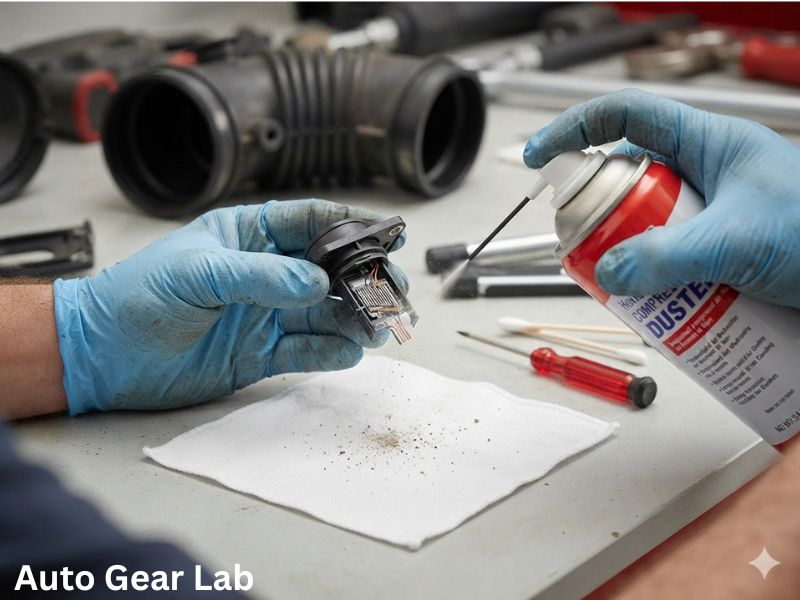
A dedicated MAF sensor cleaner is specifically formulated to clean the sensor without damaging its sensitive components. Unlike general-purpose automotive cleaners, it’s designed to remove contaminants while leaving no residue behind.
There are several reasons why manufacturers and professional technicians recommend using a MAF cleaner instead of other products.
Safe for Delicate Sensing Elements
Modern MAF sensors use either a hot-wire or hot-film sensing element. These components are extremely fragile and can be damaged by aggressive solvents or physical contact.
A dedicated MAF cleaner is formulated to clean these sensitive parts without affecting their protective coatings or calibration.
Residue-Free Formula
One of the biggest advantages of a MAF cleaner is that it evaporates completely without leaving behind any residue.
Even a thin film left by the wrong cleaner can interfere with airflow measurement and cause inaccurate sensor readings.
Fast Evaporation
MAF cleaners dry quickly, allowing the sensor to be reinstalled after a short air-drying period.
Because they evaporate rapidly, there’s less chance of moisture remaining inside the electrical connector or on the sensing element.
Designed Specifically for Airflow Sensors
Unlike brake cleaner, throttle body cleaner, or carburetor cleaner, MAF cleaner is engineered specifically for electronic airflow sensors.
Its chemical composition balances effective cleaning with protection for delicate electronic components, making it the safest choice for routine maintenance.
Can You Clean a MAF Sensor Without Cleaner?
Technically, yes—it’s possible to clean a MAF sensor without using a dedicated MAF cleaner. However, whether you should is a different question.
The biggest concern isn’t simply removing dirt; it’s doing so without damaging the sensing element or leaving behind residue. Many alternative products can dissolve contaminants, but they may also strip protective coatings, attack plastic components, or leave deposits that affect the sensor’s ability to measure airflow accurately.
For that reason, cleaning a MAF sensor without the proper cleaner should generally be considered a last resort, not a standard maintenance practice.
If your vehicle is experiencing symptoms such as rough idle, poor acceleration, or reduced fuel economy, it’s usually better to wait until you can obtain a dedicated MAF cleaner than to risk damaging an otherwise functional sensor with an unsuitable product.
Common Alternatives People Consider
When a dedicated MAF sensor cleaner isn’t available, many vehicle owners look for substitutes they already have in the garage. While some products may seem similar, not all are safe for a MAF sensor.
Here’s a look at the most common alternatives and whether they’re recommended.
Isopropyl Alcohol
High-purity isopropyl alcohol (90% or higher) is often suggested as a substitute because it evaporates quickly and leaves little residue.
While it may be safer than many other household cleaners, it’s not specifically designed for MAF sensors. Different sensor manufacturers use different protective coatings, and there’s no guarantee that isopropyl alcohol is compatible with all of them.
If a dedicated MAF cleaner is available, it remains the safer choice.
Read More: Can You Use Throttle Body Cleaner on a MAF Sensor?
Electrical Contact Cleaner
Some electrical contact cleaners evaporate quickly and leave no residue, leading many people to believe they’re safe for MAF sensors.
However, not all contact cleaners have the same chemical formula. Some contain additives or solvents that may damage the sensor or its protective coating.
Unless the product manufacturer explicitly states that it’s safe for MAF sensors, it’s best not to use it.
Compressed Air
Using compressed air may seem like a quick way to remove dust, but it can easily damage the delicate sensing wire or hot-film element.
The high air pressure can bend or break the sensing element, turning a simple cleaning job into an expensive repair.
For this reason, compressed air should never be used directly on a MAF sensor.
Soap and Water
Soap and water are not suitable for cleaning a MAF sensor.
Water can remain trapped inside the sensor housing or electrical connector, while soap often leaves behind residue that interferes with airflow measurement.
Because MAF sensors contain sensitive electronic components, washing them with water is not recommended.
Household Cleaners
Products such as glass cleaner, degreaser, WD-40, rubbing compounds, or other household cleaning solutions should never be used on a MAF sensor.
These products may:
- Leave behind residue
- Damage protective coatings
- Harm plastic components
- Affect sensor calibration
Using the wrong cleaner can permanently reduce the sensor’s accuracy or cause complete failure.
Risks of Cleaning Without a Dedicated Cleaner
Using an alternative cleaner may seem like a way to save time or money, but the risks often outweigh the benefits.
Potential problems include:
- Damage to the sensing wire or hot-film element
- Chemical residue that affects airflow readings
- Incorrect air-fuel mixture due to inaccurate sensor data
- Reduced sensor lifespan
- Check Engine Light and diagnostic trouble codes
- Unnecessary sensor replacement if damage occurs
Since a replacement MAF sensor can be significantly more expensive than a can of MAF cleaner, using the proper product is usually the most economical decision.
What Should You Do If You Don’t Have MAF Cleaner?
If you don’t have a dedicated MAF cleaner, the safest approach is simply to wait until you can purchase one.
In the meantime, you can:
- Inspect the MAF sensor for visible contamination or damage.
- Check the air filter and replace it if it’s excessively dirty.
- Inspect the intake tubing for cracks or loose clamps.
- Verify that the electrical connector is clean and securely attached.
Avoid experimenting with random solvents or household products. A few days of waiting is far less expensive than replacing a damaged MAF sensor.
Frequently Asked Questions
Can isopropyl alcohol clean a MAF sensor?
High-purity isopropyl alcohol may remove some contaminants, but it isn’t specifically formulated for MAF sensors. A dedicated MAF cleaner is the safer and recommended option.
Can I use electrical contact cleaner?
Only if the manufacturer specifically states that the product is safe for MAF sensors. Otherwise, avoid using it.
Can I use compressed air?
No. Compressed air can damage the delicate sensing element and should never be sprayed directly onto a MAF sensor.
What happens if I use the wrong cleaner?
The wrong cleaner may leave residue, damage the sensing element, strip protective coatings, or cause inaccurate airflow readings. In severe cases, it can permanently ruin the sensor.
Is it better to wait than use another cleaner?
Yes. Waiting until you have a proper MAF sensor cleaner is usually the safest and most cost-effective choice.
Conclusion
So, can you clean a MAF sensor without cleaner? Technically, yes—but it’s generally not worth the risk. While some alternatives may appear to work, they aren’t specifically formulated for the delicate components inside a MAF sensor and can potentially cause permanent damage.
A dedicated MAF sensor cleaner is designed to remove dirt, oil, and debris safely while evaporating without leaving residue. Considering the cost of replacing a damaged MAF sensor, using the correct cleaner is the smarter long-term decision.
If you don’t have MAF cleaner available, it’s better to inspect the sensor and wait until you can obtain the proper product rather than experimenting with unsuitable alternatives. Following the correct cleaning method helps protect the sensor and ensures accurate airflow readings for reliable engine performance.