Yes, cleaning a MAF (Mass Air Flow) sensor can work, but only if contamination is causing the problem. Over time, dust, dirt, oil vapor, and other airborne particles can accumulate on the sensor’s delicate sensing element. This buildup can cause inaccurate airflow readings, leading to rough idle, poor acceleration, reduced fuel economy, and other drivability issues.
In many cases, cleaning the sensor with a dedicated MAF sensor cleaner removes these contaminants and restores normal operation. However, cleaning isn’t a cure for every MAF-related problem. If the sensor has an internal electrical fault, physical damage, or wiring issues, cleaning won’t fix it.
In this guide, you’ll learn when cleaning a MAF sensor is effective, the signs that it will help, situations where it won’t make a difference, and how to decide whether cleaning or replacement is the right solution.
Read Full Guide About : How to Clean a MAF Sensor
Why Cleaning a MAF Sensor Can Work
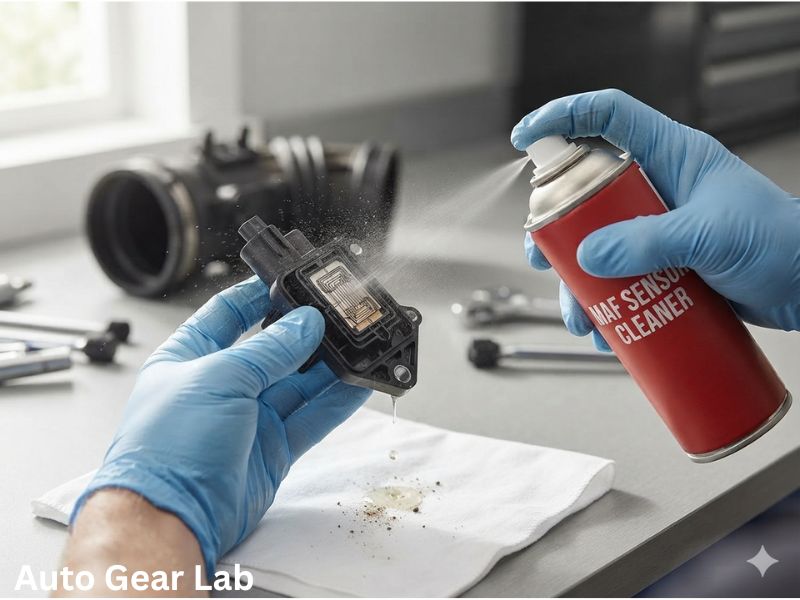
To understand why cleaning is often effective, it’s helpful to know how a MAF sensor operates.
The MAF sensor measures the amount of air entering the engine and sends this information to the engine control unit (ECU). The ECU then calculates the proper amount of fuel needed to maintain the ideal air-fuel mixture.
Because the sensing element is directly exposed to incoming air, it’s constantly subjected to contaminants such as:
- Dust from the intake air
- Dirt that passes through an aging air filter
- Oil residue from crankcase ventilation
- Excess oil from reusable oiled air filters
- Fine airborne particles
As these contaminants build up, they form a thin coating on the sensing wire or sensing film. Even a small amount of buildup can reduce the sensor’s ability to measure airflow accurately.
When the ECU receives incorrect airflow data, it adjusts fuel delivery based on faulty information. This can result in:
- Rough or unstable idle
- Hesitation during acceleration
- Reduced engine performance
- Increased fuel consumption
- Check Engine Light with MAF-related trouble codes
Cleaning removes this contamination, allowing the sensing element to measure airflow more accurately again. If dirt is the only issue, engine performance often improves immediately after the sensor is cleaned.
It’s important to remember that cleaning restores accuracy, not repair. It removes contamination but cannot fix worn electronic components or internal sensor failures.
Signs Cleaning Is Likely to Work
Not every MAF sensor needs to be replaced when problems appear. In many situations, the symptoms point to contamination rather than permanent failure.
Cleaning is most likely to help if you notice the following signs:
The Sensor Is Visibly Dirty
If you remove the sensor and find dust, oil residue, or grime on the sensing element, contamination is the most likely cause of inaccurate readings.
The Engine Has a Rough or Unstable Idle
A dirty MAF sensor may provide inconsistent airflow information, causing the ECU to constantly adjust fuel delivery. This often results in an uneven or fluctuating idle.
Fuel Economy Has Gradually Decreased
If your vehicle has slowly started consuming more fuel without any other obvious issues, contaminated airflow readings may be causing the ECU to inject more fuel than necessary.
Acceleration Feels Sluggish
Delayed throttle response or hesitation during acceleration is another common symptom of a dirty MAF sensor. Cleaning can often restore smoother power delivery if contamination is affecting the sensor.
You Recently Installed an Oiled Air Filter
Reusable performance air filters that use oil can sometimes leave a fine oil mist inside the intake system. Excess oil may settle on the MAF sensor and interfere with its operation.
The Sensor Shows No Physical Damage
If the sensing wire is intact, the housing isn’t cracked, and the electrical connector is in good condition, there’s a good chance that cleaning is worth trying before replacing the sensor.
When Cleaning Won’t Work
Although cleaning is often effective, it isn’t a solution for every MAF sensor problem. If the sensor has failed internally or suffered physical damage, cleaning won’t restore its performance.
Cleaning is unlikely to help in the following situations:
Internal Electrical Failure
The sensing electronics inside the MAF sensor can fail over time due to heat, age, or manufacturing defects. Even if the sensor looks perfectly clean, it may still send incorrect airflow data to the ECU.
Broken Sensing Wire or Film
The sensing element is extremely delicate. If it’s bent, broken, or burned, the sensor cannot measure airflow accurately and must be replaced.
Cracked Housing
A damaged housing can allow unmetered air to enter the intake system or expose the sensing element to excessive contamination. Physical damage cannot be repaired by cleaning.
Corroded or Damaged Electrical Connector
Loose terminals, corrosion, or damaged wiring can interrupt communication between the sensor and the ECU. In this case, the wiring or connector—not the sensor itself—needs to be repaired.
Fault Codes Return After Cleaning
If you clean the sensor, clear the diagnostic trouble codes, and the same MAF-related codes return after a short drive, the problem is likely something more serious than contamination.
What Improvements Should You Expect After Cleaning?
If contamination was the cause of the problem, you may notice improvements almost immediately after cleaning the MAF sensor.
Common improvements include:
- Smoother, more stable idle
- Faster throttle response
- Better acceleration
- Improved fuel economy over the next few drives
- Reduced hesitation or engine stumbling
- More consistent engine performance
Keep in mind that the amount of improvement depends on how dirty the sensor was before cleaning. A lightly contaminated sensor may show only minor changes, while a heavily contaminated one can produce a noticeable improvement.
How Long Does It Take to Notice Results?
Many drivers notice smoother engine operation immediately after starting the vehicle. However, some vehicles require a short drive before the ECU fully adapts to the cleaned sensor.
A test drive of 10–20 minutes under normal driving conditions is usually enough to evaluate the results.
If you cleared diagnostic trouble codes, monitor the vehicle over the next few drive cycles to ensure the Check Engine Light doesn’t return.
Does Cleaning Always Fix a Check Engine Light?
Not always.
If the Check Engine Light was triggered solely by inaccurate airflow readings caused by contamination, cleaning the MAF sensor may solve the problem. However, the stored fault code usually needs to be cleared with an OBD2 scanner, or the ECU may require several drive cycles before the light turns off automatically.
If the warning light returns after cleaning, the cause could be:
- A failed MAF sensor
- Intake air leaks
- Wiring or connector problems
- Fuel system issues
- Another engine management fault
Cleaning should be viewed as part of the diagnostic process—not a guaranteed fix for every warning light.
Should You Clean or Replace the MAF Sensor First?
In most cases, cleaning should always come before replacement.
Cleaning is inexpensive, takes only a few minutes, and often restores proper operation when contamination is the root cause. Replacing the sensor without first attempting to clean it can result in unnecessary expense.
Consider replacing the MAF sensor only if:
- Cleaning produces no improvement
- The sensing element is physically damaged
- Electrical testing confirms sensor failure
- Live OBD2 data remains abnormal after cleaning
- The same fault codes continue to return
A systematic diagnosis helps ensure you’re replacing the correct component instead of guessing.
Frequently Asked Questions
Can a dirty MAF sensor cause rough idle?
Yes. A contaminated MAF sensor can report incorrect airflow, causing the ECU to adjust fuel delivery improperly, which may result in a rough or unstable idle.
Can cleaning improve fuel economy?
Yes. If contamination is causing inaccurate airflow measurements, cleaning the sensor can help restore the correct air-fuel mixture and improve fuel efficiency.
How many times can you clean a MAF sensor?
There is no fixed limit. You can clean a MAF sensor whenever it becomes contaminated, provided it isn’t physically damaged and the proper MAF sensor cleaner is used.
Is cleaning better than replacing?
If contamination is the only issue, cleaning is the better first option because it’s quick, inexpensive, and often effective. Replacement is necessary only when the sensor has failed or sustained damage.
Can cleaning damage a MAF sensor?
Not if it’s done correctly. Damage usually occurs when the sensing element is touched, scrubbed, or cleaned with products that aren’t designed for MAF sensors.
Conclusion
So, does cleaning a MAF sensor work? In many cases, yes. If dirt, dust, or oil buildup is affecting the sensing element, proper cleaning can restore accurate airflow readings and improve idle quality, throttle response, and fuel economy.
However, cleaning isn’t a universal solution. It won’t repair electrical failures, broken sensing elements, or damaged connectors. That’s why it’s important to inspect the sensor, monitor engine performance after cleaning, and perform additional diagnosis if symptoms persist.
If you’re planning to clean your MAF sensor, make sure to follow the correct procedure and use a dedicated MAF sensor cleaner. A few minutes of proper maintenance may save you from replacing a sensor that still has plenty of life left.
You have not enough Humanizer words left. Upgrade your Surfer plan.