A mass air flow (MAF) sensor plays an important role in your vehicle’s engine performance by measuring the amount of air entering the engine. The engine control module (ECM) uses this information to adjust fuel delivery and maintain the correct air-fuel mixture.
But like any other electronic component, a MAF sensor can eventually become inaccurate or fail completely. The challenge is knowing when you should replace a MAF sensor and when another issue is causing similar symptoms.
Unlike oil filters, spark plugs, or timing belts, MAF sensors do not have a fixed replacement schedule. You don’t replace them simply because your vehicle reaches a certain mileage. Instead, replacement is usually necessary when the sensor fails testing, produces incorrect readings, or causes noticeable engine performance problems.
Common signs that may indicate a failing MAF sensor include:
- Check Engine Light
- Rough idle
- Poor acceleration
- Reduced fuel economy
- Engine hesitation
- Incorrect fuel mixture
- Failed diagnostic tests
However, these symptoms can also be caused by other problems, such as intake leaks, dirty air filters, vacuum leaks, or wiring issues. Replacing the MAF sensor without proper diagnosis may not solve the problem.
In this guide, you’ll learn when a MAF sensor actually needs replacement, how to identify the warning signs, how to confirm the sensor is faulty, and when cleaning or repairing another component may be the better solution.
Does a MAF Sensor Have a Replacement Interval?
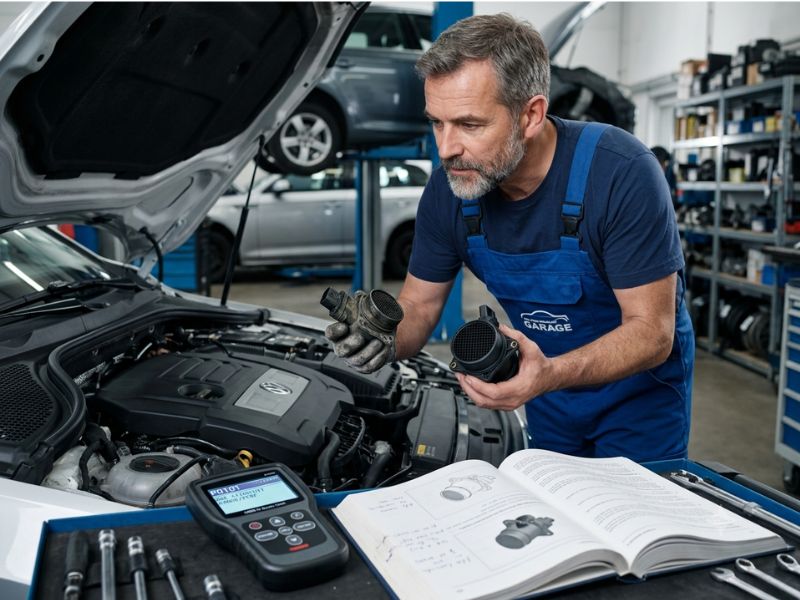
No, most manufacturers do not provide a specific replacement interval for a MAF sensor. Unlike regular maintenance parts, a MAF sensor is designed to operate for many years and is replaced only when it no longer works correctly.
A typical MAF sensor can last anywhere from 70,000 to 150,000 miles, and some original sensors may continue functioning for the entire life of the vehicle. However, lifespan depends on several factors, including driving conditions, air filter maintenance, sensor quality, and exposure to contamination.
Replace Based on Condition, Not Mileage
Many vehicle owners assume that a MAF sensor should be replaced after reaching a certain mileage, but this is usually unnecessary.
A 120,000-mile vehicle may still have a perfectly working MAF sensor, while a lower-mileage vehicle may need replacement due to:
- Dirt contamination
- Oil buildup from aftermarket air filters
- Electrical failures
- Physical damage
- Poor intake system conditions
The correct approach is to diagnose the sensor based on symptoms and test results rather than replacing it based only on age or mileage.
Why Some MAF Sensors Last Longer Than Others
Several factors influence how long a MAF sensor continues working properly.
A sensor may last longer when:
- The air filter is replaced regularly.
- The intake system remains properly sealed.
- The vehicle is driven in clean environments.
- A quality OEM sensor is used.
- The sensor is handled carefully during repairs.
On the other hand, sensors may fail earlier when exposed to:
- Dust and debris
- Excessive oil from performance air filters
- Moisture contamination
- Incorrect cleaning methods
- Damaged electrical connections
Don’t Replace a MAF Sensor Without Testing
Because MAF sensor problems can look similar to other engine issues, replacement should not be the first step.
Before replacing the sensor, check:
- Diagnostic trouble codes (DTCs)
- Electrical connections
- Intake hoses and vacuum leaks
- Air filter condition
- Sensor readings with a scan tool
Proper diagnosis helps ensure you replace the actual faulty component instead of spending money on unnecessary repairs.
A MAF sensor should be replaced when there is strong evidence that the sensor itself is causing the engine performance problem, not simply because the vehicle has reached a certain mileage.
Signs You Should Replace a MAF Sensor
A failing MAF sensor can affect the engine’s ability to maintain the correct air-fuel mixture. Because the ECM depends on accurate airflow measurements, a faulty sensor can create noticeable drivability problems.
However, not every engine issue means the MAF sensor needs replacement. The symptoms below are strong indicators that the sensor may be failing and should be tested before installing a new one.
1. Persistent Check Engine Light
One of the most common signs that you may need to replace a MAF sensor is a Check Engine Light that remains on.
When the ECM detects abnormal airflow readings or a problem with the MAF sensor circuit, it stores a diagnostic trouble code (DTC).
Common MAF-related trouble codes include:
- MAF circuit malfunction
- MAF sensor range or performance issues
- Airflow signal problems
If the Check Engine Light appears after clearing codes or replacing other related components, the MAF sensor may be the source of the problem.
However, a warning light alone does not automatically mean the sensor is bad. Other issues can trigger similar codes, including:
- Intake air leaks
- Damaged wiring
- Loose electrical connectors
- Dirty air filters
Before replacing the sensor, always confirm the cause through proper diagnosis.
2. Rough Idle or Engine Stalling
A failing MAF sensor can cause unstable engine operation, especially at idle.
When the sensor provides incorrect airflow data, the ECM may deliver the wrong amount of fuel. This can create an improper air-fuel mixture and make the engine struggle to maintain a steady idle.
Common symptoms include:
- Engine shaking while stopped
- Fluctuating RPM
- Rough running
- Stalling shortly after starting
- Uneven engine operation
If cleaning the MAF sensor does not improve the issue and testing confirms inaccurate readings, replacement may be necessary.
Keep in mind that rough idle can also be caused by:
- Vacuum leaks
- Dirty throttle body
- Faulty spark plugs
- Fuel system problems
A complete inspection helps avoid replacing a sensor that is still working correctly.
3. Poor Acceleration and Loss of Engine Power
A faulty MAF sensor can reduce engine performance by providing incorrect airflow information to the ECM.
When the ECM does not know the exact amount of air entering the engine, it may adjust fuel delivery incorrectly. This can result in noticeable power loss during driving.
Signs may include:
- Slow acceleration
- Delayed throttle response
- Hesitation when pressing the accelerator
- Lack of power during uphill driving
- Engine hesitation during overtaking
A properly functioning MAF sensor allows the ECM to calculate the correct fuel amount and maintain smooth acceleration.
If acceleration problems continue after checking for intake leaks and cleaning the sensor, replacement may be the next step.
4. Reduced Fuel Economy
A failing MAF sensor can cause the engine to run with an incorrect air-fuel mixture, which may increase fuel consumption.
If the sensor reports incorrect airflow readings, the ECM may add more fuel than necessary, causing the engine to run rich.
Signs of poor fuel efficiency include:
- More frequent trips to the gas station
- Lower miles per gallon (MPG)
- Strong fuel smell from the exhaust
- Black smoke in severe cases
Before replacing the MAF sensor, check other possible causes of reduced fuel economy, such as:
- Underinflated tires
- Dirty air filter
- Faulty oxygen sensor
- Fuel injector problems
- Poor driving habits
If testing confirms that the MAF sensor readings are incorrect, replacement can help restore proper fuel control.
5. Failed MAF Sensor Test
Testing the MAF sensor is one of the most reliable ways to determine whether replacement is necessary.
A sensor should be replaced when diagnostic testing shows that it cannot provide accurate airflow information.
Testing methods may include:
OBD-II Scanner Testing
A scan tool can display live MAF sensor data while the engine is running.
A technician can check:
- Airflow readings at idle
- Changes during acceleration
- Sensor response
- Stored fault codes
Abnormal readings may indicate a failing sensor.
Visual Inspection
A physical inspection can reveal problems such as:
- Damaged sensing element
- Heavy contamination
- Cracked housing
- Corroded connector pins
Electrical Testing
Depending on the vehicle, a multimeter may be used to check:
- Power supply
- Ground signal
- Sensor output
If the sensor fails testing or does not respond correctly, replacement is usually the recommended solution.
6. Cleaning Does Not Fix the Problem
Sometimes a MAF sensor does not need replacement. If contamination is causing inaccurate readings, cleaning may restore normal operation.
However, replacement is necessary when:
- Cleaning does not improve performance.
- The same trouble codes return.
- The sensor has internal damage.
- Testing shows incorrect readings.
- The sensing element is physically damaged.
A dirty sensor and a failed sensor can create similar symptoms, so diagnosis is important.
Replacing a MAF sensor that only needs cleaning wastes money, while repeatedly cleaning a failed sensor will not solve the problem.
The key is identifying whether the issue is contamination or actual sensor failure.
How to Confirm a MAF Sensor Needs Replacement
Before installing a new MAF sensor, it is important to confirm that the sensor is actually faulty. Many engine problems can create symptoms similar to a failing MAF sensor, and replacing the part without proper diagnosis may not solve the issue.
A proper diagnosis involves checking trouble codes, inspecting the sensor and intake system, and testing sensor performance.
Check Diagnostic Trouble Codes (DTCs)
The first step in diagnosing a possible MAF sensor problem is scanning the vehicle for diagnostic trouble codes.
An OBD-II scanner can help identify whether the ECM has detected an issue related to the MAF sensor.
Common MAF-related codes include:
- P0100: MAF sensor circuit malfunction
- P0101: MAF sensor range or performance problem
- P0102: MAF sensor circuit low input
- P0103: MAF sensor circuit high input
- P0104: MAF sensor circuit intermittent problem
These codes can indicate a problem with the sensor, but they do not always mean the MAF sensor itself needs replacement.
Why Codes Alone Are Not Enough
A MAF-related trouble code can also be caused by:
- Loose electrical connections
- Damaged wiring
- Intake air leaks
- Dirty air filters
- Vacuum leaks
- Incorrect sensor installation
Always perform additional checks before replacing the sensor.
Inspect the MAF Sensor
A visual inspection can reveal obvious problems that may affect sensor performance.
Before replacing the sensor, check for:
Dirt or Contamination
Look for dirt, dust, or oil buildup on the sensing element.
Contamination can affect airflow readings and may sometimes be fixed with proper cleaning.
Physical Damage
Inspect the sensor housing and internal components for:
- Cracks
- Broken parts
- Damage from incorrect handling
A physically damaged MAF sensor usually requires replacement.
Electrical Connector Condition
Check the electrical connector for:
- Loose connection
- Corrosion
- Damaged pins
- Broken wires
A poor electrical connection can make a good sensor appear faulty.
Test the MAF Sensor Performance
Testing the MAF sensor provides more accurate information than relying only on symptoms or trouble codes.
Use an OBD-II Scanner for Live Data
Many advanced scan tools can display real-time MAF sensor readings.
You can monitor:
- Airflow rate
- Engine RPM
- Throttle position
- Fuel trim values
A properly working sensor should respond smoothly as engine speed and airflow increase.
If the readings are inconsistent or unrealistic, the sensor may be failing.
Compare Readings With Manufacturer Specifications
Every vehicle has specific MAF sensor operating ranges.
A reading outside the expected range may indicate:
- A faulty sensor
- An intake problem
- Incorrect airflow measurement
Always compare test results with manufacturer specifications when available.
Check Fuel Trim Values
Fuel trim data can also help identify MAF-related issues.
Abnormal fuel trim values may indicate that the ECM is compensating for incorrect airflow information.
However, fuel trim problems can also be caused by other issues, so further diagnosis may be required.
Situations Where You Should NOT Replace the MAF Sensor
Not every MAF-related problem requires a new sensor. In many cases, another issue is causing the symptoms.
Replacing the MAF sensor without fixing the actual problem can lead to unnecessary costs and continued engine problems.
Dirty Air Filter
A clogged air filter can restrict airflow and affect engine performance.
Before replacing the MAF sensor, inspect the air filter.
A dirty filter can cause:
- Poor acceleration
- Reduced fuel economy
- Engine performance issues
Replacing the air filter may solve the problem without replacing the sensor.
Intake Air Leak
An air leak after the MAF sensor can allow unmeasured air to enter the engine.
Because the ECM only knows about the air measured by the MAF sensor, additional air can create incorrect fuel calculations.
Check for:
- Cracked intake hoses
- Loose clamps
- Damaged seals
- Disconnected vacuum lines
Fixing an intake leak may restore normal operation without replacing the sensor.
Loose Electrical Connector
A loose or damaged connector can interrupt communication between the MAF sensor and ECM.
Before replacing the sensor, inspect:
- Connector locking tab
- Wiring condition
- Terminal connections
- Signs of corrosion
A simple connector repair may solve the issue.
Vacuum Leak
Vacuum leaks can create symptoms that look similar to a bad MAF sensor.
Common signs include:
- Rough idle
- High idle speed
- Lean fuel mixture
- Poor acceleration
Repairing the vacuum leak may eliminate the problem.
Wiring Problems
Damaged wiring can prevent the MAF sensor from sending accurate information.
Inspect the wiring harness for:
- Broken wires
- Damaged insulation
- Corrosion
- Poor connections
If the wiring is faulty, replacing the sensor alone will not fix the problem.
Other Engine Issues
Several other components can create symptoms similar to a failing MAF sensor, including:
- Dirty throttle body
- Faulty oxygen sensor
- Fuel injector problems
- Ignition system issues
- Restricted exhaust system
A complete diagnosis helps ensure the correct repair is performed.
Replacing a MAF sensor should be based on confirmed failure, not just symptoms. Proper testing saves time, prevents unnecessary expenses, and helps restore accurate engine performance.
Can You Drive With a Bad MAF Sensor?
Yes, you can usually drive a vehicle with a bad MAF sensor for a short distance, but it is not recommended to continue driving for an extended period. A faulty MAF sensor can affect how the engine calculates fuel delivery, which may lead to poor performance, reduced fuel economy, and potential damage to other engine components.
The severity of the problem depends on how the sensor has failed and how inaccurate the airflow readings are.
Short-Term Driving With a Bad MAF Sensor
If the vehicle is still running and the symptoms are mild, you may be able to drive it temporarily to:
- Get home
- Visit a repair shop
- Perform further diagnosis
However, you should avoid unnecessary driving until the problem is fixed.
A faulty MAF sensor can make the engine run too rich or too lean, which affects overall engine operation.
Potential Problems From Driving Too Long
Continuing to drive with a failing MAF sensor can create several issues.
Poor Engine Performance
A bad MAF sensor can cause:
- Slow acceleration
- Reduced power
- Engine hesitation
- Rough running
The ECM may receive incorrect airflow information and adjust fuel delivery incorrectly.
Reduced Fuel Economy
When the MAF sensor provides inaccurate readings, the engine may burn more fuel than necessary.
This can result in:
- Lower miles per gallon
- Increased fuel costs
- Poor combustion efficiency
Increased Emissions
A faulty MAF sensor can cause an incorrect air-fuel mixture, which may increase harmful exhaust emissions.
An engine running too rich may produce:
- Excess fuel in the exhaust
- Higher emissions
- Carbon buildup
Possible Catalytic Converter Damage
One of the biggest concerns with driving for a long time with a bad MAF sensor is potential damage to the catalytic converter.
If the engine runs too rich, unburned fuel can enter the exhaust system and overheat the catalytic converter.
A damaged catalytic converter can be an expensive repair.
When You Should Stop Driving
Avoid driving the vehicle and diagnose the problem quickly if you experience:
- Severe loss of power
- Engine stalling frequently
- Strong fuel smell
- Black smoke from exhaust
- Flashing Check Engine Light
- Engine misfires
A flashing Check Engine Light usually indicates a serious misfire condition that can damage the catalytic converter.
Should You Replace or Clean the MAF Sensor Before Driving?
If contamination is suspected, cleaning the MAF sensor may restore normal operation.
However, replacement is needed if:
- The sensor has failed testing.
- Cleaning does not improve symptoms.
- The sensor is physically damaged.
- The same fault codes return.
Avoid replacing the sensor without confirming the cause, as other problems can create similar symptoms.
Should You Replace or Clean a MAF Sensor?
When a MAF sensor starts causing problems, the first question many vehicle owners ask is whether they should clean it or replace it.
The correct choice depends on the condition of the sensor and the reason it is malfunctioning.
When Cleaning a MAF Sensor Is Enough
Cleaning may solve the problem when the sensor is dirty but still functioning properly.
Common situations where cleaning helps include:
- Dust buildup on the sensing element
- Light oil contamination
- Reduced performance caused by dirt
A contaminated sensor may produce inaccurate airflow readings, but the internal electronics may still be working correctly.
After proper cleaning, symptoms may improve, including:
- Smoother idle
- Better throttle response
- Improved acceleration
When You Should Replace the MAF Sensor
Replacement is necessary when the sensor itself has failed.
Common reasons for replacement include:
- Internal electrical failure
- Damaged sensing element
- Incorrect airflow readings after cleaning
- Repeated MAF-related trouble codes
- Physical damage to the sensor
A failed sensor cannot be repaired through cleaning.
Cleaning vs Replacement: Which Is Better?
Cleaning is usually the cheaper option, but it only works when contamination is the problem.
Replacement is the better solution when:
- The sensor has failed testing.
- Problems continue after cleaning.
- The sensor is damaged.
- The vehicle has persistent MAF-related codes.
Before replacing the sensor, always inspect related components such as:
- Intake hoses
- Air filter
- Wiring
- Electrical connector
Avoid Replacing a MAF Sensor Without Diagnosis
A new MAF sensor will not fix problems caused by:
- Vacuum leaks
- Intake leaks
- Wiring issues
- Dirty throttle body
- Fuel system problems
Proper diagnosis ensures that you replace the correct component.
Choosing Between Cleaning and Replacement
Use this simple approach:
Clean the MAF sensor if:
- The sensor is dirty.
- There is no physical damage.
- Testing shows it is still functioning.
- Symptoms are mild.
Replace the MAF sensor if:
- Testing confirms failure.
- Cleaning does not help.
- Fault codes return.
- The sensor is damaged.
Making the correct choice can save money and prevent repeated repairs. A properly diagnosed MAF sensor issue is much easier to fix than replacing parts based only on symptoms.
How Often Should You Replace a MAF Sensor?
A MAF sensor does not have a specific replacement schedule like engine oil, air filters, or spark plugs. Most manufacturers do not recommend replacing it at a certain mileage because its lifespan depends on several factors, including driving conditions, maintenance habits, and sensor quality.
In general, you should replace a MAF sensor only when it fails, provides inaccurate readings, or causes confirmed engine performance problems.
There Is No Fixed Replacement Interval
Many vehicle owners wonder if they should replace the MAF sensor after reaching a certain mileage, such as 100,000 miles. However, mileage alone is not a reliable reason to replace it.
A MAF sensor may continue working properly for:
- 70,000 miles
- 100,000 miles
- 150,000 miles or more
Some original MAF sensors can last the entire life of the vehicle if they are properly maintained.
Replacing a working MAF sensor as preventive maintenance is usually unnecessary and can create additional costs without providing any benefit.
Replace Based on Symptoms and Diagnosis
The right time to replace a MAF sensor is when testing confirms that the sensor is no longer operating correctly.
Replacement may be necessary if you experience:
- Persistent Check Engine Light
- MAF-related trouble codes
- Poor acceleration
- Rough idle
- Reduced fuel economy
- Engine hesitation
- Incorrect airflow readings
However, these symptoms can also be caused by other problems, so diagnosis should always come before replacement.
Factors That Determine Replacement Frequency
Several factors influence how often a MAF sensor needs to be replaced.
Driving Environment
Vehicles driven in harsh conditions may require sensor replacement sooner.
Examples include:
- Dusty roads
- Off-road driving
- Heavy pollution areas
- Construction zones
More airborne contaminants increase the chance of sensor contamination.
Air Filter Maintenance
A clean air filter helps protect the MAF sensor from dirt and debris.
Neglecting air filter replacement can allow contaminants to reach the sensor, reducing accuracy and lifespan.
Sensor Quality
The quality of the MAF sensor also affects replacement frequency.
OEM sensors typically provide:
- Better accuracy
- Improved durability
- Longer service life
Cheap aftermarket sensors may fail earlier or provide incorrect readings.
Intake System Condition
A properly sealed intake system helps the MAF sensor work correctly.
Problems such as:
- Cracked intake tubes
- Loose clamps
- Damaged seals
- Vacuum leaks
can affect airflow readings and create symptoms similar to a bad sensor.
Choosing the Right Replacement MAF Sensor
When replacement is necessary, choosing the correct MAF sensor is extremely important. A poor-quality or incorrect sensor can create new problems even if the installation is done correctly.
The MAF sensor must match the vehicle’s engine specifications and communicate properly with the ECM.
Verify the Correct Part Number
Before purchasing a replacement MAF sensor, confirm:
- Vehicle year
- Make and model
- Engine size
- Original part number
- Connector type
Two vehicles may look similar but require different sensors with different calibration settings.
Installing the wrong sensor can cause:
- Check Engine Light
- Poor engine performance
- Incorrect fuel mixture
- Failed emissions tests
OEM vs Aftermarket MAF Sensors
One of the biggest decisions when replacing a MAF sensor is choosing between OEM and aftermarket options.
OEM MAF Sensors
Original equipment manufacturer sensors are designed specifically for your vehicle.
Advantages include:
- Correct calibration
- Reliable performance
- Better compatibility
- Longer lifespan
OEM sensors are usually more expensive but often provide better long-term reliability.
Aftermarket MAF Sensors
Aftermarket sensors can be a cheaper alternative, but quality varies significantly between manufacturers.
Some high-quality aftermarket sensors perform well, while low-cost options may cause:
- Incorrect readings
- Repeated trouble codes
- Shorter lifespan
- Poor engine performance
Choosing the cheapest option may result in paying for another replacement later.
Avoid Low-Quality Replacement Sensors
A common mistake is buying a very cheap MAF sensor without checking the manufacturer.
Low-quality sensors may have:
- Poor calibration
- Inconsistent readings
- Lower-quality internal components
The sensor may physically fit but still fail to provide accurate airflow measurements.
A reliable replacement should match the original sensor specifications.
Consider Professional Diagnosis Before Buying
Before spending money on a new MAF sensor, confirm that the sensor is actually the problem.
A professional or experienced DIY diagnosis may include:
- Reading trouble codes
- Checking live sensor data
- Inspecting wiring
- Testing airflow readings
- Checking intake leaks
This prevents replacing a good sensor when another issue is causing the symptoms.
A MAF sensor replacement should be viewed as a repair decision, not a routine maintenance task. Choosing the correct sensor and confirming the diagnosis first can help restore proper engine performance and avoid unnecessary expenses.
You have not enough Humanizer words left. Upgrade your Surfer plan.
Frequently Asked Questions
How do I know if my MAF sensor needs replacing?
You may need to replace your MAF sensor if you notice symptoms such as:
- Check Engine Light staying on
- Rough idle
- Poor acceleration
- Engine hesitation
- Reduced fuel economy
- Loss of engine power
However, these symptoms can also be caused by other problems, including intake leaks, wiring issues, or fuel system problems.
The best way to confirm a MAF sensor failure is to:
- Scan for diagnostic trouble codes
- Check the sensor’s live data readings
- Inspect the intake system
- Test the sensor before replacement
Replacing the sensor without proper diagnosis may not solve the issue.
How many miles before replacing a MAF sensor?
There is no specific mileage when a MAF sensor must be replaced.
Many sensors last between 70,000 and 150,000 miles, but some can continue working beyond this range. The actual lifespan depends on:
- Maintenance habits
- Driving conditions
- Air filter quality
- Sensor quality
- Exposure to contamination
A MAF sensor should be replaced based on condition and performance, not mileage alone.
Can a MAF sensor go bad without a code?
Yes, a MAF sensor can become inaccurate without immediately triggering a Check Engine Light.
In some cases, the sensor may still send information to the ECM, but the readings may be incorrect.
Possible symptoms include:
- Poor fuel economy
- Sluggish acceleration
- Rough idle
- Engine hesitation
- Reduced performance
If you notice these symptoms, testing the MAF sensor can help identify whether it is working correctly.
Should I replace my MAF sensor after cleaning it?
No, you do not need to replace a MAF sensor after cleaning it if the cleaning restores normal operation.
Cleaning may be enough when:
- The sensor is contaminated with dirt or dust.
- The sensing element is not damaged.
- Performance improves after cleaning.
Replacement is necessary only if:
- Problems continue after cleaning.
- Testing shows the sensor is faulty.
- The sensor has internal damage.
How much does MAF sensor replacement cost?
The cost of replacing a MAF sensor varies depending on the vehicle, sensor brand, and labor rates.
Typical costs include:
- MAF sensor part cost
- Installation labor
- Diagnostic fees (if needed)
Some vehicles have easily accessible sensors that can be replaced in minutes, while others require more labor.
DIY replacement can reduce costs if you have the correct tools and follow proper installation steps.
Can a bad MAF sensor damage the engine?
A bad MAF sensor usually does not directly damage the engine immediately, but driving with one for a long time can create problems.
A faulty sensor may cause the engine to run:
- Too rich (too much fuel)
- Too lean (too little fuel)
Long-term issues may include:
- Poor fuel economy
- Increased emissions
- Carbon buildup
- Potential catalytic converter damage
Diagnosing and repairing a faulty MAF sensor early helps prevent additional problems.
Can I drive with a failing MAF sensor?
You may be able to drive a short distance with a failing MAF sensor, but it is not recommended to continue driving for a long period.
A failing sensor can cause:
- Poor engine performance
- Reduced fuel efficiency
- Stalling
- Increased emissions
If the vehicle has severe symptoms, such as a flashing Check Engine Light, heavy misfires, or major power loss, it should be diagnosed as soon as possible.
Conclusion
A MAF sensor should be replaced when testing confirms that it is faulty or when cleaning and other repairs fail to restore proper operation. There is no fixed replacement interval because sensor lifespan depends on vehicle conditions, maintenance, and exposure to contamination.
Before replacing a MAF sensor, always check for other possible causes such as intake leaks, wiring problems, dirty air filters, or vacuum leaks. Many issues that appear to be a failing MAF sensor are caused by related components.
By replacing the sensor only when necessary and choosing a high-quality replacement part, you can restore accurate airflow measurements, improve engine performance, and avoid unnecessary repair costs.