A mass air flow (MAF) sensor is an important engine component that measures the amount of air entering the engine. When this sensor fails, replacing it can help restore proper fuel delivery, engine performance, and fuel efficiency.
So, how much does a MAF sensor cost? The answer depends on several factors, including your vehicle model, sensor brand, whether you choose an OEM or aftermarket part, and whether you replace it yourself or hire a mechanic.
On average, a replacement MAF sensor can cost between $50 and $400 for the part alone. With professional installation, the total replacement cost may range from around $150 to $600 or more, depending on labor rates and vehicle complexity.
Some vehicles use affordable and easily accessible MAF sensors that can be replaced in a few minutes, while others require more expensive sensors or additional diagnostic work before replacement.
In this guide, you’ll learn the average cost of a MAF sensor, factors that affect pricing, parts vs labor expenses, DIY replacement costs, and how to choose the right sensor without wasting money.
Average Cost of a MAF Sensor
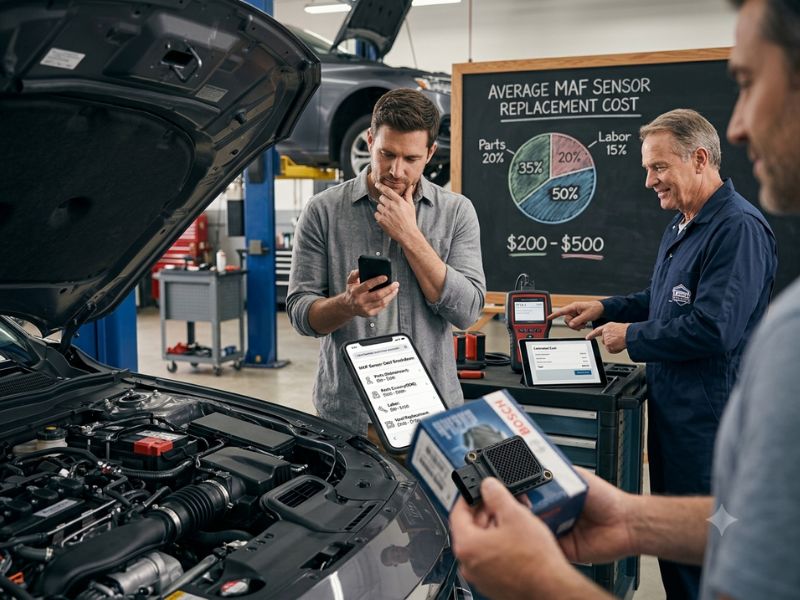
The cost of a MAF sensor varies widely depending on the vehicle and the quality of the replacement part.
Generally, most replacement MAF sensors fall into these price ranges:
- Budget aftermarket sensors: $50–$150
- Mid-range aftermarket sensors: $150–$250
- OEM or premium sensors: $250–$400+
The exact price depends on factors such as vehicle manufacturer, engine type, sensor design, and availability.
Why MAF Sensor Prices Vary
Not all MAF sensors are the same. Even though they perform the same basic function, different vehicles require sensors with specific calibration settings and electrical specifications.
A MAF sensor for a common economy vehicle may be relatively inexpensive, while sensors for luxury vehicles, performance vehicles, or less common models may cost significantly more.
Other factors that affect price include:
- Sensor brand
- Manufacturing quality
- Vehicle compatibility
- OEM specifications
- Market availability
Choosing the cheapest option is not always the best decision because a low-quality sensor may provide inaccurate readings or fail sooner.
MAF Sensor Replacement Cost (Parts + Labor)
When calculating the total cost of replacing a MAF sensor, you need to consider both the sensor price and installation labor.
The average total replacement cost is usually:
$150–$600+
This includes:
- Replacement MAF sensor
- Labor charges
- Diagnostic fees (if required)
DIY Replacement Cost
If you replace the MAF sensor yourself, you only pay for the part.
A DIY replacement may cost:
- $50–$400 for the sensor
- No labor charges
Most MAF sensors are located in the air intake system and are relatively easy to access. In many vehicles, replacement only requires removing a few screws or clips and reconnecting the electrical connector.
A basic replacement may take around:
- 10–30 minutes for experienced DIYers
However, always confirm the correct procedure for your specific vehicle before starting the repair.
Professional Replacement Cost
A mechanic will charge for:
- Diagnostic inspection
- Labor time
- Installation
- Additional repairs if other problems are found
Labor costs vary depending on location and repair shop rates.
Some vehicles have easily accessible MAF sensors, meaning labor costs remain low. Others may require additional steps, increasing the total price.
Factors That Affect MAF Sensor Cost
Several factors determine how much you will actually pay for a MAF sensor replacement.
1. Vehicle Make and Model
The biggest factor affecting MAF sensor cost is your vehicle.
Different vehicles use different sensor designs, and prices can vary significantly.
Factors include:
- Engine type
- Sensor location
- Manufacturer specifications
- Part availability
For example, a common vehicle with many available replacement parts may have a lower-cost MAF sensor, while a luxury or performance vehicle may require a more expensive component.
Always search using your exact:
- Vehicle year
- Make
- Model
- Engine size
to find the correct replacement sensor.
2. OEM vs Aftermarket Sensor
The type of replacement sensor you choose has a major impact on cost.
OEM MAF Sensor
OEM (Original Equipment Manufacturer) sensors are made according to the vehicle manufacturer’s specifications.
Advantages:
- Exact fit
- Proper calibration
- Better reliability
- Long service life
The downside is that OEM sensors are usually more expensive.
Aftermarket MAF Sensor
Aftermarket sensors are produced by third-party manufacturers and are often cheaper.
Advantages:
- Lower cost
- More options available
- Suitable for many vehicles
However, quality varies between brands. A very cheap aftermarket sensor may cause:
- Incorrect airflow readings
- Check Engine Light problems
- Poor engine performance
- Early failure
Choosing a reputable aftermarket brand can provide a good balance between cost and reliability.
Can You Replace a MAF Sensor Yourself?
Yes, in many vehicles, you can replace a MAF sensor yourself if you have basic tools and some mechanical experience. A MAF sensor replacement is considered one of the easier DIY automotive repairs because the sensor is usually located in the air intake system and does not require complicated engine work.
For many vehicles, the process involves:
- Disconnecting the electrical connector
- Removing mounting screws or clips
- Removing the old sensor
- Installing the new sensor
- Reconnecting the wiring
The entire process may take around 10–30 minutes, depending on the vehicle design.
Tools Needed for DIY Replacement
Most MAF sensor replacements require only basic tools, such as:
- Screwdriver
- Socket set
- Torx bits (on some vehicles)
- Safety gloves
Always check your vehicle repair manual before starting to confirm the required tools and procedure.
When DIY Replacement Makes Sense
Replacing the MAF sensor yourself can be a good option if:
- The sensor is easy to access.
- You have basic repair experience.
- You can identify the correct replacement part.
- There are no additional engine problems.
Doing the repair yourself can save the labor cost, which may reduce the total replacement expense.
When Professional Help Is Better
A mechanic may be the better choice if:
- You are unsure whether the MAF sensor is actually faulty.
- The vehicle has multiple engine problems.
- Wiring issues are suspected.
- The sensor replacement requires additional diagnosis.
Many symptoms of a bad MAF sensor can also come from intake leaks, vacuum leaks, or other engine components. Professional diagnosis can prevent replacing a part that is not the real cause.
How to Save Money on MAF Sensor Replacement
Replacing a MAF sensor does not always have to be expensive. With the right approach, you can reduce costs while still getting a reliable repair.
Diagnose Before Replacing
One of the biggest mistakes is replacing the MAF sensor without confirming that it has failed.
Before purchasing a new sensor:
- Scan for trouble codes
- Check live MAF readings
- Inspect the intake system
- Check the wiring and connector
A dirty sensor, loose connection, or intake leak can create symptoms similar to a failed MAF sensor.
Proper diagnosis helps avoid unnecessary expenses.
Compare Different Sensor Brands
MAF sensor prices can vary significantly between brands.
Before buying, compare:
- Sensor quality
- Customer reviews
- Warranty coverage
- Compatibility
- Manufacturer reputation
Avoid choosing a sensor only because it is the cheapest option. A low-quality sensor may fail quickly and require another replacement.
Consider OEM or High-Quality Aftermarket Options
While OEM sensors are usually more expensive, they often provide better reliability and compatibility.
A quality aftermarket sensor can also be a good choice if it matches your vehicle specifications.
The goal is to find a sensor that provides:
- Correct airflow readings
- Proper ECM communication
- Long-term reliability
Check Warranty Coverage
Before purchasing a MAF sensor, check whether it includes a warranty.
A good warranty can protect you if:
- The sensor fails early
- The part arrives defective
- Performance problems continue
Warranty coverage is especially important when buying aftermarket sensors.
Frequently Asked Questions
How much does a MAF sensor cost?
A MAF sensor typically costs between $50 and $400 depending on the vehicle, brand, and sensor quality.
OEM sensors usually cost more than aftermarket options, but they often provide better reliability and compatibility.
How much is labor to replace a MAF sensor?
Labor costs vary depending on the repair shop and vehicle design.
Since many MAF sensors are easy to access, labor is often relatively low. In many cases, replacement can be completed within 30 minutes.
However, diagnosis fees or additional repairs may increase the total cost.
Is it cheaper to clean or replace a MAF sensor?
Cleaning a MAF sensor is usually much cheaper than replacement, but it only works if contamination is the problem.
Cleaning may help when:
- The sensor is dirty.
- The sensing element is contaminated.
- There is no internal damage.
Replacement is necessary when the sensor has failed or continues providing incorrect readings after cleaning.
Can I drive with a bad MAF sensor?
You may be able to drive for a short time with a bad MAF sensor, but it is not recommended to continue driving for long periods.
A faulty sensor can cause:
- Poor fuel economy
- Reduced engine performance
- Rough running
- Increased emissions
In severe cases, it may contribute to catalytic converter damage.
Are cheap MAF sensors worth buying?
Cheap MAF sensors can be tempting because they reduce upfront costs, but they may not always provide reliable performance.
Low-quality sensors may cause:
- Incorrect airflow readings
- Check Engine Light issues
- Shorter lifespan
- Repeated replacement costs
Choosing a reliable OEM or reputable aftermarket sensor is usually a better long-term investment.
Conclusion
The cost of a MAF sensor depends on several factors, including your vehicle model, sensor quality, and installation method. In general, the part itself may cost around $50–$400, while professional replacement can increase the total cost to approximately $150–$600 or more.
Before replacing a MAF sensor, always confirm that it is actually the cause of the problem. Issues such as dirty air filters, intake leaks, wiring problems, or vacuum leaks can create similar symptoms.
For many vehicles, replacing a MAF sensor is a simple DIY repair that can save labor costs. However, choosing the correct replacement part and avoiding low-quality sensors are important for long-term reliability.
A properly diagnosed and correctly installed MAF sensor can help restore accurate airflow measurements, improve engine performance, and maintain better fuel efficiency.
You have not enough Humanizer words left. Upgrade your Surfer plan.