
Choosing the best 50 amp ev charger means balancing charging speed with your home’s electrical capacity, your vehicle’s limits, and whether you want a portable plug-in unit or a permanently installed station. A charger’s maximum output matters, but the right fit also depends on cable reach, connector compatibility, controls, and installation requirements.
My first choice is ENERGYGENIE Level 2 Fast EV Charger 50A. Its 25-foot cable and J1772 connector suit a range of North American EVs, while the LCD helps you monitor charging information.
My second choice is NEMA 14-50 Plug 25FT Cable SAE J1772 Compatible Smart LCD. My alternative is NEMA 14-50 Plug 25FT Cable SAE J1772 Compatible Smart LCD, which ranks second for its useful display and flexible current settings. The delay timer and 25-foot cable make it a practical option for drivers who want portable charging and straightforward session monitoring.
My third choice is 240V Hardwired J1772 Wifi Bluetooth 25ft Smart Home Charging. It ranks third as a permanently installed option with app control, adjustable output, and a NEMA 4X enclosure for indoor or outdoor use.
Below, I compare five 50-amp-capable Level 2 chargers, explain what separates plug-in and hardwired models, and cover the electrical, compatibility, setup, and ownership details worth checking before you buy.
5 Best 50 Amp Ev Charger Comparison
I selected these options for their relevance to 50-amp Level 2 charging, the practical details available about installation, controls, and compatibility, and the range of brands and charger styles represented. Customer-feedback information was not supplied, so the comparison relies on stated product specifications rather than ratings or hands-on use.
| # | Image | Product | Price on Amazon |
|---|---|---|---|
| 1 |  |
ENERGYGENIE Level 2 Fast EV Charger 50A | Price on Amazon |
| 2 |  |
NEMA 14-50 Plug 25FT Cable SAE J1772 Compatible Smart LCD | Price on Amazon |
| 3 | 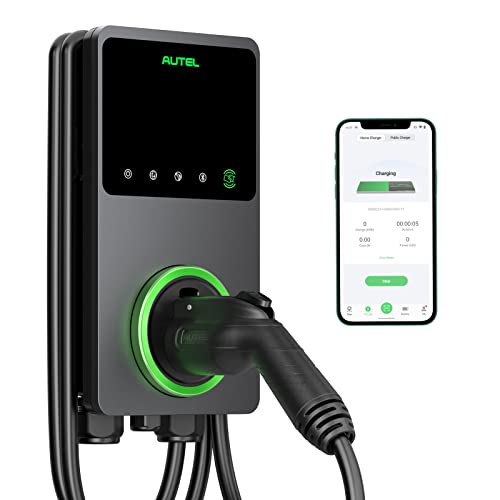 |
240V Hardwired J1772 Wifi Bluetooth 25ft Smart Home Charging | Price on Amazon |
| 4 |  |
J1772 Smart Hardwired 50A | Price on Amazon |
| 5 |  |
J1772 Hardwired Level 2 Charger 25ft Cable Up to 46 | Price on Amazon |
ENERGYGENIE Level 2 Fast EV Charger 50A
The ENERGYGENIE is a portable Level 2 EVSE with a NEMA 14-50 plug and a 25-foot J1772 cable. That format can be convenient if you already have a suitable 240-volt outlet and want to take the charger with you for travel or move it between locations. The included wall mount and storage bag also give owners options for keeping it organized at home or packing it away.
Its adjustable current settings—16A, 24A, 32A, 40A, and 50A—can help match charging output to a vehicle or a verified electrical setup. The important caveat is that an adjustable setting does not make every outlet or circuit suitable for 50A charging. Confirm the circuit’s capacity and the manufacturer’s permitted settings before use; for a typical 50A branch circuit, continuous EV charging is commonly limited to 40A.
The LCD displays voltage, current, power, and charging status, while the timer offers 0-, 2-, 4-, 6-, or 8-hour delays. Those controls may be useful for checking a session at a glance or shifting charging to a lower-cost period when your utility has off-peak rates. The J1772 connector fits many North American EVs and plug-in hybrids; Tesla drivers need a compatible adapter, which is not included.
Pros
- Portable NEMA 14-50 plug-in design with a 25-foot cable.
- Five current settings, an LCD, and a delay timer.
- ETL and FCC certification stated in the supplied product details.
Cons
- Requires a suitable 240-volt outlet and circuit.
- Tesla adapter is not included.
- Confirm the safe current setting for the specific installation.
My Opinion
This is a flexible choice for drivers who value portability, but its 50A setting should not be treated as a default. Verify the circuit and use the lower setting required by the electrical setup.
NEMA 14-50 Plug 25FT Cable SAE J1772 Compatible Smart LCD
TopAutoGear pairs a NEMA 14-50 plug with a 25-foot cable, giving it the same basic plug-in convenience that appeals to drivers who do not want a permanently mounted hardwired unit. Its listed current choices are 16A, 24A, 32A, 40A, and 50A. Before using any of them, check the vehicle’s charging limit and have the outlet and circuit confirmed as appropriate for continuous EV charging.
The 3.5-inch LCD is a useful distinction. The supplied details say it can show voltage, current, power, energy use, cost, and error codes. Seeing more than a simple charging light may help an owner notice whether a session is active or identify an error message, although the data shown does not replace electrical troubleshooting or the vehicle’s own charging information.
A delay timer can help schedule charging for off-peak hours if your utility offers a time-of-use plan. The charger is described as compatible with J1772 vehicles and plug-in hybrids; Tesla owners need an adapter. A 25-foot cable can make it easier to reach a driveway parking spot, but cable length does not justify stretching it tightly, routing it where it may be driven over, or using an unsuitable extension cord.
Pros
- Portable NEMA 14-50 format and 25-foot cable.
- LCD provides several session details, including error codes.
- Adjustable current and a delay timer are stated.
Cons
- Requires a properly installed, suitable 240-volt outlet.
- Tesla adapter is required but not included.
- Supplied details do not state a certification or warranty.
My Opinion
TopAutoGear is a reasonable alternative when a detailed screen and portable setup are priorities. I would compare its installation requirements and support information carefully, since the supplied data does not identify a certification or warranty.
240V Hardwired J1772 Wifi Bluetooth 25ft Smart Home Charging
This Autel charger is a hardwired station rather than a plug-in portable EVSE. It is intended for a permanent 240-volt installation, so buyers should plan for an electrician and a suitable circuit instead of expecting to connect it to an existing NEMA 14-50 outlet. In return, the fixed installation can provide a tidy home setup without a plug hanging from the wall.
The unit is listed for up to 50A and 12kW, with adjustable current from 6A to 50A. That adjustment can help tailor output to the vehicle or the electrical capacity available, but a qualified installer must determine the correct circuit and configure the charger accordingly. Your car’s onboard AC charger can also limit how much power it accepts, so a 50A station does not guarantee that every EV will charge at its maximum output.
Wi-Fi and Bluetooth connect the charger to the Autel Charge App, which can be used to start or stop charging, schedule sessions, and monitor charging activity. These controls may suit owners who want to manage charging from a phone, though app-based functions depend on connectivity and may not be necessary for drivers who prefer simple charging at the unit.
A 25-foot J1772 cable offers useful reach for many garages and driveways. NEMA 4X protection and CSA certification are stated, and the enclosure is intended for indoor or outdoor use. J1772 vehicles are supported; Tesla owners need an appropriate adapter.
Pros
- Hardwired installation with adjustable 6A–50A output.
- App control over Wi-Fi and Bluetooth.
- NEMA 4X protection and CSA certification are stated.
Cons
- Requires permanent installation by a qualified electrician.
- App features rely on compatible connectivity.
- Tesla adapter is not included in the supplied details.
My Opinion
This Autel is a good fit for buyers seeking a connected, permanent home station and outdoor-rated protection. It is less suitable for renters or anyone who needs a plug-in charger they can readily move.
J1772 Smart Hardwired 50A
ChargePoint HomeFlex is a hardwired home charger with a J1772 connector and a 23-foot cable. It is aimed at drivers who want a permanent charging point with app-connected controls. Wi-Fi is needed for some functions and for certain troubleshooting steps, so consider your home network and how much you value phone access before choosing it.
The supplied listing identifies adjustable output from 16A to 50A and says the charger can add up to 37 miles per hour, depending on the vehicle. That range estimate is not a guarantee: actual miles added vary with the car, charging conditions, and the amount of power it can accept. Its hardwired installation should be handled by an electrician, who can confirm the appropriate circuit and configure the charger for the home’s electrical capacity.
The J1772 connector works with non-Tesla EVs, while Tesla drivers need an adapter. ChargePoint describes the charger as UL-certified, suitable for indoor or outdoor installation, and equipped with a cold-resistant cable. Its app offers charging controls and session information, and the company’s broader charging network may be useful when planning public charging away from home. Network access is separate from the core job of charging at home, however, so it should not be the deciding factor for everyone.
Pros
- Adjustable 16A–50A output and a 23-foot cable.
- App control and Wi-Fi connectivity.
- UL certification and indoor/outdoor use are stated.
Cons
- Hardwired installation requires an electrician.
- Some functions and troubleshooting depend on Wi-Fi.
- Tesla adapter is required for Tesla vehicles.
My Opinion
HomeFlex is a compelling option for drivers who want a well-known network brand and app-connected home charging. The hardwired requirement and Wi-Fi dependence make it a less flexible choice than the plug-in models.
J1772 Hardwired Level 2 Charger 25ft Cable Up to 46
The Autel MaxiCharger AC Home is a hardwired J1772 station with an adjustable 16A–50A range and a 25-foot cable. It is intended for a fixed home installation, not as a portable charger to move between outlets. An electrician can assess the home’s circuit capacity, select a suitable configuration, and confirm whether the charger’s intended location works with the cable reach.
Autel lists app control through Wi-Fi and Bluetooth, plus Ethernet connectivity and over-the-air firmware updates. Scheduling may help owners take advantage of off-peak electricity rates, while app access can make it easier to manage charging when away from the garage. Connected features are a benefit for people who will use them, but they add little for drivers who want a basic station and do not plan to manage sessions by phone.
The product details state CSA certification, NEMA Type 4 protection, and NEMA 4X rating. The enclosure is described as suitable for indoor or outdoor use and resistant to dust and water exposure. Autel also lists overcurrent, overvoltage, and overtemperature protection. The cable is described as flexible in cold weather, with a stated operating capability down to -40°C; local installation conditions and the unit’s full documentation should still guide placement and use.
As with the other J1772 units here, Tesla drivers need a compatible adapter. The listing mentions federal rebate eligibility, but incentives can depend on current rules, location, and individual circumstances. Verify eligibility with the relevant program rather than assuming a purchase will qualify.
Pros
- Hardwired charging with adjustable 16A–50A output.
- Wi-Fi, Bluetooth, Ethernet, and app controls are listed.
- CSA certification and NEMA 4X protection are stated.
Cons
- Permanent installation requires an electrician.
- Tesla adapter is not included in the supplied details.
- Rebate eligibility should be checked for the buyer’s situation.
My Opinion
This MaxiCharger suits owners who want a connected, permanent station with a long cable and a weather-resistant enclosure. Confirm the intended circuit, installation location, and any incentive rules before purchase.
How I Selected These Best 50 Amp EV Chargers
I compared the five products based on how directly their stated specifications address 50-amp-capable home charging, how clearly they explain installation and controls, and whether their format suits different households. The selection includes portable NEMA 14-50 models for compatible outlets and hardwired stations for permanent installations, along with J1772 connectors, adjustable output, cable lengths, and connectivity options.
Product claims such as charging speed and miles added per hour are best treated as estimates, not promises. The car’s onboard charger, battery, temperature, electrical supply, and charging settings all affect real-world results. I did not have customer ratings or customer-feedback details to compare, so I have not used a star score or claimed personal testing.
A charger’s maximum amp rating is only one part of the decision. The home circuit and the vehicle both need to support the planned charging rate.
I also weighed practical trade-offs. Plug-in chargers can be easier to move but depend on a suitable outlet; hardwired chargers need professional installation but can create a neater, permanent setup. Certification and enclosure details are included where they were supplied, not assumed for products whose data did not specify them.
How to Choose the Best 50 Amp EV Charger
Start by checking the vehicle, then the electrical supply, and only after that compare screens, apps, cable length, and brand features. This order helps prevent paying for output your car cannot use or buying a charger your home cannot safely support.
- Check the vehicle: Confirm its connector and maximum AC charging rate in the owner’s manual.
- Confirm the circuit: Ask an electrician what current the existing or planned circuit can safely support.
- Choose plug-in or hardwired: Match the installation to your outlet, home, and portability needs.
- Measure cable reach: Check the distance from the planned charger position to the vehicle’s charge port.
- Compare useful controls: Decide whether a timer, app, or detailed display will actually help your routine.
Understand amperage, circuit capacity, and charging speed
A 50A rating describes the charger’s maximum available current, not a promise that every charging session will run at 50A. Electrical circuits supplying continuous loads generally need additional capacity; a common planning rule is that continuous charging is limited to 80% of the circuit rating. That means a 50A circuit commonly supports up to 40A of continuous EV charging, while 50A charging generally calls for a larger appropriately configured circuit. Local codes and equipment instructions matter, so confirm the exact setup with an electrician.
Power also depends on voltage: at 240 volts, 40A is about 9.6kW, while 50A is about 12kW. The vehicle may accept less than the EVSE can supply. If the car’s onboard AC charger tops out below the station’s capacity, a higher-rated station may still be useful for a future vehicle, but it will not make the current car charge faster than its own limit.
Decide between a portable plug-in EVSE and a hardwired station
A NEMA 14-50 model can be a convenient fit if a correctly installed, compatible outlet is already available. It may also suit a household that wants to pack the unit for occasional travel. However, plug type alone does not confirm that an outlet is correctly wired, in good condition, or rated for the charger’s chosen setting. Have a qualified person verify the circuit, outlet, and permitted current before relying on it for regular charging.
Hardwired units are better suited to a permanent charging spot and avoid an exposed plug-and-receptacle connection at the charger. They usually require an electrician and may be harder to relocate. Consider the installation cost and whether you own the property before treating hardwired as the default choice.
Check connector compatibility and the vehicle’s charging limit
The five products listed use J1772 connectors, a common standard for non-Tesla EVs and plug-in hybrids in North America. Tesla drivers typically need a compatible adapter, and the supplied details say the relevant adapters are not included. Confirm that any adapter is suitable for the car and charging equipment rather than assuming a connector will fit every situation.
Also distinguish AC home charging from DC fast charging. These Level 2 stations supply AC power, which the vehicle converts for its battery. A 50A home charger is not a DC fast charger, and the car’s onboard AC equipment ultimately sets a ceiling on charging speed.
Choose the cable length and installation location together
Most options in this comparison have a 25-foot cable; ChargePoint HomeFlex has a 23-foot cable. Measure from the proposed mounting point to the vehicle’s charge port with the car parked where it will normally charge. Account for the cable’s natural bend and the port’s position, but do not plan to stretch the cable taut or route it across a walkway where people can trip.
Outdoor installations need equipment rated for the location and installed according to its instructions. A weather-resistant enclosure does not remove the need for proper mounting, correct wiring, and protection from vehicle impact. If the charger will be near a driveway, consider how it can be positioned out of the way while remaining accessible.
Decide which smart features are worth paying attention to
A timer or charging schedule can help shift charging to off-peak hours when your utility’s rate plan makes that worthwhile. Check whether the charger, vehicle, or both can set schedules; using overlapping schedules can sometimes delay charging unexpectedly. An LCD is useful for quick local status, while an app may be better for remote control and session tracking.
Connected functions depend on the product’s supported network and app, and may require Wi-Fi or Bluetooth. If your charging spot has poor Wi-Fi, ask whether basic charging works without an internet connection and whether setup can be completed over Bluetooth. The supplied ChargePoint details specifically note that some functions and troubleshooting require Wi-Fi.
Preparing Your Home for a 50A EV Charger
Before ordering a charger, identify the likely installation location and have an electrician assess the home’s electrical service, panel capacity, circuit requirements, and cable route. A 50A-capable station may require a circuit that supports its full output, while a lower setting may be appropriate for a smaller circuit if the product supports it and the setup is approved.
Ask for the circuit rating, expected charging current, any required protective devices, and whether permits or inspection apply locally. If you rent or live in a managed building, get permission before arranging electrical work. Save the installation documents and note the charger setting so future owners or service providers know how the unit is configured.
Setting Up a Plug-in or Hardwired Charger
For plug-in models, use only a compatible, properly installed outlet. Do not assume that a dryer outlet, adapter, or extension cord is suitable because the plug appears to fit. Follow the charger instructions and have an electrician verify the receptacle and circuit, especially if the outlet is old, loose, discolored, or warm during use.
For hardwired models, leave installation and circuit configuration to a qualified electrician. Mount the charger where the cable reaches the parked vehicle without being pinched, driven over, or exposed to unnecessary impact. Once installed, check the manufacturer’s instructions for pairing the app, setting a schedule, and choosing a current limit approved for the circuit.
Using a 50A EV Charger Efficiently
Set a charging schedule that fits both your driving needs and your utility plan. If your electricity rate changes by time of day, compare the off-peak window with the vehicle’s departure time and the charger’s scheduling options. A delay timer is not an automatic bill discount; savings depend on the rate plan and when you actually charge.
For daily use, avoid charging at a higher current simply because the setting is available. A lower rate may be sufficient for overnight replenishment and can keep the setup within the limits established for the circuit. Follow the vehicle maker’s battery-care guidance rather than relying on a charger’s general claims about battery health.
Maintaining the Cable, Connector, and Charger
Inspect the cable and connector periodically for cuts, cracking, bent contacts, discoloration, or other visible damage. Keep the connector off the ground when it is not in use, using the supplied holder or a suitable storage arrangement. Do not continue charging if the plug, receptacle, or cable appears damaged or becomes unusually hot; stop using it and seek qualified help.
Keep the charger’s enclosure and ventilation areas clear according to its instructions. Outdoor-rated equipment still needs sensible care: avoid pressure-washing the unit, submerging it, or using cleaning products not approved by the manufacturer. For seasonal storage of a portable charger, use its bag if supplied and keep the cable loosely coiled rather than sharply bent.
Common Mistakes to Avoid with a 50A EV Charger
Many problems begin with assuming the maximum number on a charger is automatically safe or useful in every home. Check the charger manual, vehicle limits, circuit, and installation details before selecting a setting.
- Using 50A on any 50A outlet: A receptacle’s rating does not by itself confirm the safe continuous charging current or installation condition.
- Assuming every EV can use the full output: The vehicle’s onboard AC charger may be the limiting factor.
- Skipping an electrical assessment: Have the circuit and installation requirements verified before purchasing or operating a high-current charger.
- Buying a cable that barely reaches: Measure the route with the car parked and leave enough slack for safe handling.
- Expecting an adapter to be included: Tesla owners should confirm adapter compatibility and availability before charging.
- Counting on an unverified incentive: Check current program rules and eligibility before factoring a rebate into the purchase decision.
FAQS About Best 50 Amp Ev Charger
Will a 50A EV charger work with any electric car?
No. The car needs a compatible connector or adapter and must support AC Level 2 charging. Its onboard charger may accept less power than the EVSE can supply, so the vehicle’s manual is the best source for its maximum AC charging rate.
Can I use a 50A charger on a 50A circuit?
Do not assume that you can use the charger’s 50A setting on a 50A circuit. EV charging is a continuous load, and a common rule limits continuous current to 80% of a circuit’s rating. Have an electrician confirm the circuit, installation, and allowable charger setting under applicable requirements.
Is a plug-in 50A charger better than a hardwired charger?
Neither is best for every household. A plug-in unit offers portability when a suitable outlet is available, while a hardwired station suits a permanent installation. Electrical requirements, property ownership, outlet condition, and the cost of installation should guide the choice.
Does a 50A charger add 50 miles of range per hour?
Not necessarily. Miles added depend on the vehicle’s efficiency, the actual charging power, and the car’s onboard charging limit. Treat range-per-hour figures as estimates rather than guaranteed results.
Do Tesla vehicles need an adapter for these J1772 chargers?
Yes, Tesla drivers generally need a compatible J1772 charging adapter. The product details for these chargers do not say that an adapter is included, so confirm what you need before purchase.
Can these chargers be installed outdoors?
Some products in this comparison state indoor/outdoor ratings, including NEMA 4X protection on the Autel models. Check the individual charger’s certification, installation instructions, and location requirements. Outdoor suitability still depends on correct installation and mounting.
Final Thoughts
The best 50 amp ev charger is the one that matches your car and home circuit, not simply the one with the highest listed output. For a portable plug-in setup, ENERGYGENIE is my first choice, with TopAutoGear as an alternative; for a connected hardwired station, the Autel 50A Level 2 charger earns my third-place recommendation. Have the electrical setup verified before choosing a current setting or starting regular charging.