
No, car floor mats aren’t truly universal. Some mats use a flexible shape that fits many vehicles, but safe fit depends on the floor shape, seat track, retention clips, and pedal clearance.
Have you ever slid a mat into place, only to find a corner folded under the seat? Does the driver’s mat creep toward the brake pedal after a few trips? Those little annoyances can become safety problems fast.
I once trimmed a bargain mat in a hurry because the rear edge kept bunching up. The cut looked fine until it curled near the accelerator, and I had to replace the whole set. That’s a common mistake, not a dumb one.
I wrote this guide for anyone standing in an auto parts aisle or scrolling through mats online, wondering if “universal fit” means “fits my car.” You’ll get a clear way to judge fit before spending money.
A good match keeps the carpet clean, stays flat, and leaves your feet working normally. A poor match can trap the accelerator, block a clutch pedal, interfere with seat movement, or slide under the pedals.
This takes about 9 minutes, and you’ll learn how to:
- Tell the difference between universal, semi-custom, and custom-fit mats.
- Measure your vehicle’s floor area before ordering.
- Check retention clips, pedal clearance, and seat-track space.
- Pick rubber, carpet, or all-weather mats for your driving conditions.
- Fix common fit problems without creating a new safety risk.
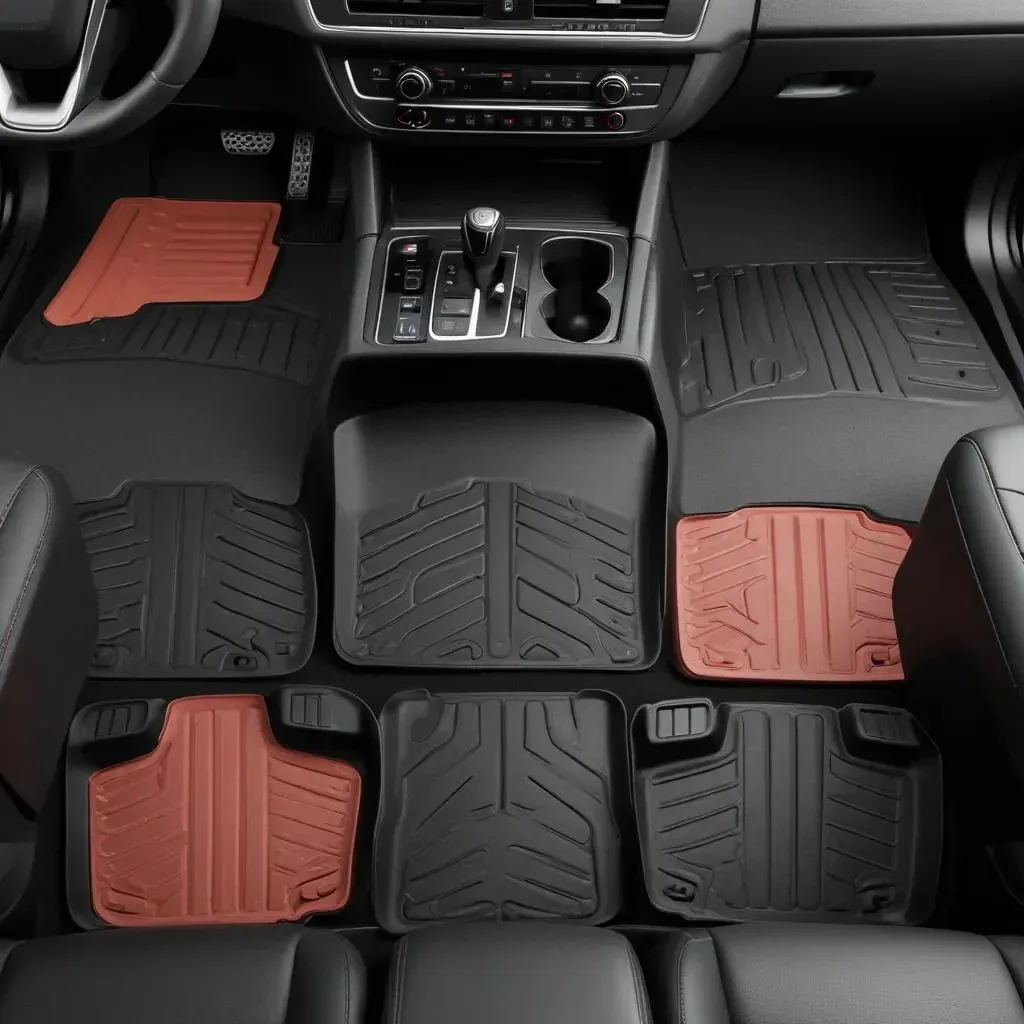
Are Car Floor Mats Universal? the Complete Fit Answer
Car floor mats are not universal because vehicle floors vary in shape, size, seat position, and retention hardware. Universal mats can work in some cars when the shape is close and the driver’s mat stays flat, locked in place, and clear of every pedal.
A universal mat is made to cover many vehicles instead of matching one exact floor mold. Manufacturers usually leave extra material around the edges, and some designs include trim lines so you can adjust the outline.
That broad fit comes with limits. A mat that sits nicely in a compact sedan may leave gaps in a pickup, bunch around the transmission tunnel, or stop short of the footrest in a large SUV.
The driver’s position matters most. Your left foot may push against the mat near the dead pedal, the fixed footrest beside the clutch or brake area, while your right foot needs a clean path between the accelerator and brake.
Use this quick check before buying:
- Park on level ground, switch off the vehicle, and move the driver’s seat through its normal range.
- Measure the old mat’s longest length and widest point, then measure the carpeted floor if the old mat is missing.
- Check for factory retention clips, hooks, buttons, or posts that hold the driver’s mat down.
- Compare the new mat’s shape with the floor, including the raised transmission tunnel and side walls.
- Place the mat flat and push it fully forward, then confirm that no edge reaches a pedal.
- Press each pedal several times and slide the seat forward and back before driving.
Do you need an exact molded mat for every vehicle? No, but the driver’s mat deserves the closest fit you can afford, especially in a manual-transmission car where foot movement is busy.
A universal mat may work well in a second-row seat because rear footwells often have more open space and fewer pedals. The front driver’s area is less forgiving because a small shift can affect pedal travel.
| Mat type | Fit accuracy | Best use | Main drawback |
|---|---|---|---|
| Universal | Low to medium | Budget replacement and open rear floors | More trimming and movement risk |
| Semi-custom | Medium to high | Common vehicle shapes and daily use | May leave small edge gaps |
| Custom-fit | High | Driver’s area and exact carpet coverage | Higher price and less flexibility |
| One-piece rear liner | Medium to high | Rear bench areas and family vehicles | Can crowd seat rails or door trim |
The phrase all-weather floor mat usually describes the material and raised edges, not a guarantee of universal fit. A thick rubber mat can still be the wrong shape, and a thin carpet mat can still fit correctly.
For a commuter sedan, a semi-custom mat with the correct retention holes often gives the best balance. In my view, a cheap universal mat is fine for a rear passenger floor, but I wouldn’t gamble on a loose driver’s mat.
Pro Tip: Put your old mat on top of the candidate mat before trimming. If the new piece is already smaller than the old one at any point, it won’t cover the same area.
How to Check Floor Mat Compatibility Before Buying
The best way to check compatibility is to match the vehicle’s year, make, model, body style, floor layout, and retention system. Product listings often group several vehicles together, so read the fit notes instead of relying on the word “universal.”
Start with the vehicle information. A 2020 sedan and a 2020 hatchback from the same brand may have different rear floors, seat rails, or cargo-area shapes.
Write down these details:
- Model year
- Make and model
- Sedan, coupe, hatchback, wagon, SUV, van, or truck body style
- Manual or automatic transmission
- Front-wheel drive, rear-wheel drive, or four-wheel drive when the listing asks
- Driver-side location, especially for imported vehicles
- Number of rows and whether the vehicle has a center hump
Then inspect the floor itself. Look for a raised transmission tunnel, seat mounting tracks, wiring covers, door trim, and factory anchors. These features decide whether a flat rectangular mat will stay put.
The driver’s mat should fit behind the pedals without climbing the firewall or curling toward the center console. The passenger mat can tolerate a little more extra space, though a large loose edge can still fold under a passenger’s shoes.
What floor mats fit my car when the listing gives several choices? Match the vehicle details first, then compare product photos with your existing mats and confirm the retention holes.
The factory retention system deserves special attention. Many vehicles have one or two clips that connect to holes in the mat, while others use a rotating fastener or a molded hook.
Never cut a hole just because the mat seems close. The hole must line up with the factory anchor, and the surrounding material must stay strong enough to resist tearing.
Before you trim any universal mat, follow these safety steps:
- Remove the mat from the vehicle and place it on a flat surface.
- Use the original mat as a template, with the driver’s pedal side facing the same direction.
- Mark the cut line with a washable marker.
- Leave enough material around any retention hole to prevent splitting.
- Round sharp corners because square cuts tend to curl.
- Reinstall the mat and test pedal movement before driving.
A mat that slides forward can catch the accelerator, while one that folds backward can stop a pedal from returning normally. If the mat cannot stay flat after trimming, replace it instead of forcing the fit.
I once accepted a mat listing that said it fit several nearby models, even though the floor shape looked almost identical. The anchor was off by less than an inch, which was enough to let the driver’s mat twist under my heel every time I turned into a parking space.
That small mismatch taught me a useful lesson: close shape is not the same as secure fit. A retention clip is worth more than a glossy product photo.
For a closer comparison of purchase choices, budget universal mat picks can help you weigh flexible fit, trim needs, and price without treating every universal design as equal.
Custom-Fit Vs. Universal Floor Mats
The difference between custom-fit and universal floor mats is the balance between coverage and flexibility. Custom-fit mats match a specific vehicle floor, while universal mats cover more vehicles but may need trimming and can leave gaps.
Custom-fit mats usually have molded contours around the transmission tunnel and raised sides near the door. Universal mats are flatter, which makes them easier to move between vehicles but less stable on shaped floors.
I’d choose custom-fit mats when the vehicle carries children, muddy shoes, snow, or frequent passengers. Higher side walls catch more water and grit, so the carpet gets less abuse.
I’d choose universal carpet mats for a temporary replacement, a low-use passenger seat, or an older vehicle where exact molded options are hard to find. Just don’t confuse a temporary solution with a safe driver’s mat.
Materials, Sizes, Trimming, and Daily Maintenance
Material affects grip, water control, comfort, and cleaning, but material alone does not fix a poor shape. Rubber and thermoplastic mats handle wet conditions well, while carpet mats feel softer and often blend better with the interior.
Rubber mats are flexible, easy to rinse, and useful in rain, snow, and muddy areas. Some rubber can curl in cold weather, so let a cold mat warm indoors before judging its final shape.
Thermoplastic elastomer, often called TPE, is a molded material that feels less rubbery and usually holds a shaped profile well. TPE mats often have raised channels that trap water and road salt.
Carpet mats are quieter and more comfortable under your shoes. Nylon usually handles wear better than thin loop carpet, while a rubberized backing helps limit sliding but cannot replace the factory anchor.
A mat’s heel pad is the reinforced area under the driver’s heel. That patch matters because repeated rubbing can wear through carpet, especially if you rest your heel in one spot during long commutes.
A practical material match looks like this:
- Snowy or rainy climate: raised-edge rubber or TPE.
- Dry climate with a clean interior: carpet or low-profile rubber.
- Work trucks and outdoor jobs: deep-channel rubber with a firm backing.
- Family vehicle: washable mats with broad rear coverage.
- Show-focused interior: fitted carpet mats with a strong anchor system.
Trim only from the outside edge, never from the pedal side unless the manufacturer marks a cut line. Removing too much material can expose carpet or let the mat move toward the pedals.
Clean mats outside the vehicle. Shake or vacuum loose grit first, wash rubber mats with mild soap, and let every mat dry fully before putting it back.
Wet carpet mats can hold moisture against the vehicle carpet, which may create a musty smell and stain the floor. A damp mat also feels heavier and may slide more easily.
Never stack a new mat on top of an old one. The extra thickness can raise your feet, change pedal feel, and let the top mat move.
Important Tip: Check the driver’s mat after the first short drive and again after a week. Look for curled edges, shiny rubbed spots, shifted anchors, or fresh marks near the pedals.
What Size Should A Universal Car Mat Be?
A universal mat should cover the main foot area without touching the pedals, seat tracks, door sill, or center console. The correct size depends on the vehicle floor, so a single “universal” dimension cannot fit every cabin safely.
Measure the old mat at its widest and longest points. Then measure the floor from the firewall to the seat base and from the door side to the center tunnel.
Leave room for movement around the seat rails. A mat that fits when the seat is fully back may jam against the rail when the seat moves forward.
The rear floor needs its own check. A rear mat may cover a center hump, but a broad one-piece liner can interfere with rear seat brackets or stop the doors from closing cleanly.
If a mat touches the door trim, the trim can push the mat inward during entry. That pressure creates a fold, and the fold can travel toward the driver’s feet.
Common Fit Problems And Practical Fixes
A sliding mat usually points to missing anchors, a slick backing, the wrong shape, or a loose edge. Cleaning the carpet and mat backing may help, but adhesive strips shouldn’t replace a factory retention system near the pedals.
A curled corner often comes from tight packaging, cold storage, or a cut that removes too much support. Warm the mat according to the maker’s instructions and lay it flat under light, even pressure.
A mat that blocks the seat track needs a different shape, not more force. Forcing the seat over the mat can damage the mat, the track trim, or the seat movement.
Use this symptom-and-fix guide:
| Problem | Likely cause | Safer fix |
|---|---|---|
| Mat slides forward | Missing anchor or slick backing | Use the correct clip-compatible mat |
| Front edge curls | Wrong trim or cold material | Flatten, reshape, or replace |
| Mat bunches near pedals | Too long or wrong contour | Stop using the mat and choose a shorter fit |
| Carpet stays wet | Low side walls or poor drying | Use raised-edge mats and dry them fully |
| Seat catches the mat | Excess material near rails | Trim only marked areas or replace |
| Anchor tears out | Hole too close to edge | Replace the mat rather than enlarging the hole |
Stop using a driver’s mat immediately if pedal movement feels different, the mat shifts during a foot test, or any edge reaches a pedal. A floor mat is not worth a risky workaround.
When Universal Mats Make Sense and When to Skip Them
Universal mats make sense when the floor is open, the mat stays flat, and the driver’s area has a reliable retention point. They make less sense when the vehicle has a deeply shaped floor, unusual seat rails, or heavy exposure to water and dirt.
Universal mats can be a practical choice for:
- A passenger-side replacement.
- A rear row with a simple, flat floor.
- A temporary mat while an exact replacement is ordered.
- An older vehicle with limited parts support.
- A second vehicle where the same mat can be trimmed carefully.
Skip a universal mat when the product has no clear dimensions, no retention option, or a backing that slides across your carpet. A low price stops being a bargain after the mat needs repeated adjustment.
A custom-fit liner costs more because the mold matches the vehicle. That added coverage can save cleaning time and protect carpet near the door sill, firewall, and center tunnel.
The best answer to “are car floor mats universal” is a qualified no: universal mats are broadly shaped, not universally safe. Fit matters more than the label printed on the package.
Key Takeaways:
- Universal mats can fit many vehicles, but no single shape fits every floor safely.
- The driver’s mat must stay flat, anchored, and clear of all pedals.
- Match the year, model, body style, floor shape, and retention clips before buying.
- Custom-fit mats cost more but usually give better coverage and less movement.
FAQs About Are Car Floor Mats Universal
Can I use any floor mat in my car?
No, you can’t safely use any floor mat in your car. The mat must fit the floor shape, avoid the pedals and seat tracks, and connect to the factory retention points when available. A passenger mat may tolerate small gaps, but the driver’s mat needs a secure, flat fit.
Are universal car mats safe?
Universal car mats can be safe when the driver’s mat is trimmed correctly, stays flat, and cannot slide toward the pedals. Safety depends on the installed fit, not the word “universal.” Remove any mat that folds, shifts, blocks pedal travel, or interferes with seat movement.
Do universal floor mats need trimming?
Many universal floor mats need trimming because manufacturers leave extra material for different vehicles. Trim only along marked guides or by using the original mat as a template. Remove the mat from the vehicle before cutting, and test every pedal after reinstalling it.
Is it better to buy custom-fit car mats?
Custom-fit car mats are usually better for exact coverage, raised edges, and stable placement. Universal mats can cost less and work well in open passenger areas. Drivers who deal with snow, mud, or frequent spills often gain more from molded custom coverage.
Can I put floor mats on top of each other?
No, stacking floor mats is not a safe setup in the driver’s area. The upper mat can slide, increase thickness near the pedals, or stop a pedal from returning freely. Remove the old mat before installing a replacement, and keep only one driver’s mat in place.
How do I know what floor mats fit my car?
Check the vehicle year, make, model, body style, transmission, and floor layout, then compare the mat dimensions and retention points. A guide to checking floor mat compatibility can help you match those details before ordering. Product photos alone aren’t enough.
Are rubber mats better than carpet mats?
Rubber mats are better for water, snow, mud, and quick cleaning, while carpet mats feel softer and may suit a dry, tidy interior. Neither material is automatically safer. The driver’s mat still needs the correct shape, firm placement, and clear pedal movement.
Choose Fit Before Material
Universal car floor mats can save money, but only when the shape and retention system work with your vehicle. A mat that looks close in the package may still bunch beside the accelerator or leave wet carpet exposed.
My practical choice is simple: use a custom-fit or properly matched semi-custom mat for the driver’s floor, then consider universal mats for easier passenger areas. Before you buy, measure the old mat, check the anchors, and test every pedal after installation.
That small inspection takes a few minutes and can spare you a sliding mat, soaked carpet, or a stressful moment in traffic. Fit first, material second, price third.