
TPE floor mats usually win for wet-weather protection, easy cleaning, and a neat custom fit, while rubber mats remain a strong pick for lower cost, heavy abuse, and simple durability. The better choice depends on your climate, vehicle, cargo habits, and how much you care about odor, weight, and appearance.
Do muddy boots leave brown stains around the pedals? Does melted snow turn your car floor into a shallow swimming pool, or do stiff mats slide around when you climb in?
I once bought a thick rubber mat set for a vehicle that spent every day around wet gravel and sawdust. The mats lasted, but their raised edges curled in cold weather and trapped grit underneath, which left a nasty line across the carpet. That’s a common mistake, not a dumb one.
I wrote this guide for drivers who want a clean answer before spending money on replacement mats. You’ll get the practical differences between TPE, rubber, fit, traction, cleaning, and long-term value without having to sort through a pile of vague product claims.
Choose well, and you’ll protect factory carpet from salt, coffee, sand, and muddy water while keeping the pedals clear. Choose poorly, and you may deal with sliding mats, trapped moisture, lingering odor, or a driver-side mat that never sits quite right.
This takes about 9 minutes to read, and you’ll learn how to:
- Pick TPE or rubber based on your weather and driving routine.
- Judge fit, heel support, retention clips, and raised edges.
- Clean and store each material without damaging the mat.
- Avoid safety problems caused by movement or poor coverage.
- Compare cost, comfort, odor, and service life before buying.
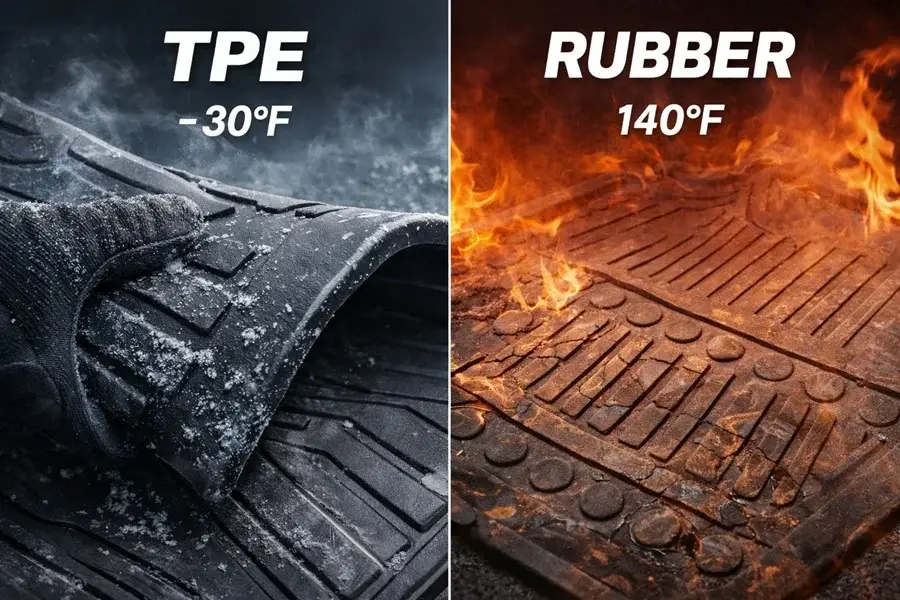
TPE vs Rubber Floor Mats: Which Material Should You Choose?
TPE is usually the best all-around choice for daily drivers who want a precise fit, low odor, strong water control, and easy care. Rubber makes more sense for rough work use, a tight budget, or a vehicle that gets loaded with sharp grit, oily gear, and heavy messes.
Thermoplastic elastomer, shortened to TPE, is a flexible plastic blend that feels rubbery but can be molded into detailed shapes. TPE floor mats are often lighter, less smelly, and more tailored than old-style rubber mats.
Traditional rubber floor mats are made from natural or synthetic rubber compounds. Rubber feels dense and springy, handles abuse well, and often costs less, though the material may have a stronger smell and less precise edge shape.
| Feature | TPE Floor Mats | Rubber Floor Mats |
|---|---|---|
| Fit | Often molded for a close vehicle-specific fit | Ranges from custom-fit to universal |
| Water control | High, with tall channels and raised edges | High when the edges are tall and intact |
| Cold-weather flexibility | Usually stays flexible across normal winter use | Can stiffen or curl in cold conditions |
| Odor | Usually mild after airing out | Can have a stronger rubber smell |
| Cleaning | Hose, rinse, and wipe dry | Hose and scrub, though deep grooves can hold grit |
| Grip | Good when the underside matches factory anchors | Good, but some universal mats can shift |
| Weight | Generally lighter | Often heavier and thicker |
| Price | Commonly higher for custom-fit sets | Often lower, especially for universal styles |
| Best use | Daily driving, snow, rain, family vehicles | Work vehicles, muddy use, heavy abuse |
Fit matters more than material alone. A premium mat that covers the wrong area is still a poor mat, much like a raincoat with sleeves that stop at your elbows.
Before buying, check these points:
- Confirm the exact year, make, model, trim, and row position.
- Match the mat to the driver-side retention hooks or clips.
- Check that the heel pad and pedal area stay fully clear.
- Look for raised borders that meet the door sill and center hump.
- Confirm that the rear mats cover the floor under the front seats.
- Test the mat in place before trimming or adding accessories.
The retention system is the factory clip, hook, or fastener that stops a mat from sliding forward. A good retention system matters most on the driver side because movement near the accelerator or brake can create a serious hazard.
Need the simplest decision? Pick TPE for a newer family car, frequent snow, or a tidy molded look. Pick rubber for a work truck, a low-cost second vehicle, or a vehicle that regularly carries wet tools and rough cargo.
How TPE and Rubber Mats Handle Daily Abuse
TPE usually gives a cleaner, more refined daily-driving experience, while rubber tolerates rough treatment with less fuss. Both materials can protect carpet well when the mat has full coverage, tall containment walls, and secure mounting.
TPE mats often have laser-measured contours, meaning the shape follows the floor instead of lying like a flat sheet. That close fit reduces exposed carpet along the door edge, transmission tunnel, and seat rails.
Rubber mats can be just as protective when they’re vehicle-specific. A well-shaped rubber set may outlast a cheaper TPE set if the rubber is thicker and the design has better anchor points.
The weak spot usually isn’t the material. It’s poor design, thin edges, weak clips, or a universal shape that leaves gaps. A driver-side mat that bunches under your heel deserves replacement, even if the rest still looks new.
What happens when winter slush fills the channels? TPE tends to flex enough for you to lift the mat without spilling the mess, while stiff rubber can fold suddenly and dump dirty water onto the carpet.
Grip and Driver-Side Safety
A secure underside and factory anchor are more important than a sticky-looking top surface. Mats can slide because the carpet hooks are missing, the underside is smooth, the mat is the wrong size, or debris prevents full contact.
Before placing a new mat, remove the old one and clear pebbles, sand, and packed dirt from the carpet. Press the replacement mat flat, attach every factory fastener, and move the seat through its full range to confirm the mat doesn’t bunch.
Important Tip: Never stack a TPE or rubber mat on top of another floor mat. The extra layer can change pedal clearance and create movement under the driver’s feet.
The top surface needs useful traction, too. Deep channels should hold water without turning into slippery troughs, and the heel area should give your shoe a stable place to pivot.
I once inspected a vehicle where the mat looked perfect from the passenger seat, yet the driver-side corner had folded behind the brake pedal. The owner had left the original carpet mat underneath, and the two layers slowly walked forward; removing the extra layer fixed the problem immediately.
Water, Salt, Sand, and Heat
TPE and rubber both resist water, but neither material can protect carpet if liquid runs over the side. Raised edges work like a shallow tray, and the tray needs enough height for your climate and habits.
Snow belt drivers should favor mats with tall sidewalls and a deep center basin. A small amount of melted snow can spread quickly under the accelerator area, especially after several short trips.
Sand and road grit need a different design. Smaller channels catch fine particles, while wide grooves let coarse gravel slide around until you lift the mat.
Heat can affect shape, especially when a mat is left folded in a hot trunk or pressed against a sharp object. Let a curled mat relax flat before installing it, and don’t force a cold, stiff mat into a tight corner.
Drivers comparing types of car floor mats will notice that carpet, vinyl, TPE, and rubber each trade comfort, coverage, price, and cleaning effort in different ways. TPE and rubber are the strongest choices for liquid control, but carpet can feel nicer in dry climates.
Odor and Cabin Comfort
TPE generally has less noticeable odor than fresh rubber, though both materials can smell after manufacturing or long storage. Airing mats outdoors in shade for a day or two often helps, provided the product instructions allow it.
Strong sunlight can heat dark mats and increase odor for a short time. Avoid harsh solvents, petroleum cleaners, and strong degreasers unless the maker specifically approves them, because those products can dry the surface or leave it slick.
TPE also tends to feel less bulky underfoot. Rubber has a dense, solid feel that some drivers like, but the extra weight can make removal awkward when the mat is full of dirty water.
I’d choose TPE for a quiet commuter car where appearance and cabin comfort matter. I’d choose rubber for a vehicle that gets dirty every single day and comes home looking like it worked a double shift.
Pro Tip: Place wet mats upright against a wall after washing so both sides can dry. Leaving moisture trapped between the mat and carpet is a fast way to create stale smells.
Buying, Cleaning, and Replacing Floor Mats
The best floor mat purchase starts with correct fit and ends with a simple cleaning routine. Material comes second to coverage, anchor compatibility, sidewall height, and a driver-side shape that stays put.
What to Check Before Buying
Read the fitment details carefully, then compare the product photos with your floor. A listing that says “fits many vehicles” may use a universal outline, while a molded set should name the exact vehicle application.
Look for:
- Vehicle-specific front and rear shapes.
- Factory-compatible retention holes or clips.
- Raised borders around the door and center console.
- A textured heel pad on the driver side.
- Drainage channels that don’t point liquid toward the carpet.
- Trim lines that let you make a clean adjustment, if needed.
- A warranty that covers cracking, splitting, or early shape loss.
The heel pad is the reinforced area under your right foot. It reduces wear from repeated pivoting, which can grind through a thin mat long before the rest looks worn.
A high price doesn’t guarantee better protection. I’d rather buy a moderately priced custom-fit mat with good anchors than a thick universal mat that creeps toward the pedals.
Drivers comparing best all-weather car mats should focus on weather containment, edge height, and retention instead of judging products by tread pattern alone. A dramatic-looking channel design means little if the sidewall leaves a gap beside the door.
How To Clean TPE And Rubber Mats
Clean mats when dirt begins filling the channels or salt leaves a white film. Waiting until the grooves are packed makes scrubbing harder and sends more grit into the carpet.
- Remove each mat from the vehicle without flipping wet debris onto the floor.
- Shake loose dirt outside, away from the vehicle.
- Rinse with a garden hose using moderate water pressure.
- Scrub with mild soap and a soft or medium nylon brush.
- Rinse until no cleaner remains in the grooves.
- Wipe both sides and let the mat dry fully.
- Reinstall it only after checking the anchors and pedal clearance.
Safety Tip: Keep the driver-side mat away from the pedals while washing and reinstalling it. Never drive with a damp mat folded, curled, loose, or partly tucked under another mat.
A pressure washer can damage thin edges, force grit into the surface, or splash dirty water into places you can’t easily clean. A regular hose and brush are plenty for most household use.
Avoid oily tire shine or silicone dressing on floor mats. Those products may make the surface look glossy, but they can reduce shoe grip and leave a slippery film.
When Floor Mats Need Replacement
Replace a mat when the driver-side anchor fails, the edge curls into the pedal area, the heel pad wears through, or cracks let water reach the carpet. A mat doesn’t need to look terrible before it becomes a bad safety choice.
| Problem | Likely Cause | Best Action |
|---|---|---|
| Mat slides forward | Missing clip, wrong fit, debris underneath | Clean the carpet and replace or secure the mat |
| Water reaches carpet | Low border, gap, overfilled channels | Use a higher-wall vehicle-specific mat |
| Strong odor remains | Material smell, trapped moisture, harsh cleaner | Air out, wash gently, and dry fully |
| Edges curl | Cold storage, heat, poor molding, age | Lay flat, then replace if the curl returns |
| Surface feels slippery | Oil-based dressing or residue | Wash with mild soap and stop using dressing |
| Grooves stay dirty | Fine sand packed into channels | Brush after rinsing instead of wiping only |
| Heel area wears thin | Repeated foot movement | Replace before carpet becomes exposed |
A cracked universal mat can still work on the passenger side for a short time, but I wouldn’t gamble with a damaged driver-side mat. The cost of replacement is small compared with the distraction and pedal interference a loose mat can cause.
Cost, Value, And Long-Term Use
TPE mats often cost more upfront, but their fit and easy cleaning can make the extra cost worthwhile. Rubber mats can deliver excellent value when the shape matches the vehicle and the material doesn’t curl or split.
Price changes with the number of rows covered, molding detail, brand warranty, and whether the set includes a cargo liner. A basic universal rubber mat usually costs less than a full custom-fit TPE set.
Your driving pattern should decide the value question. A family SUV in a snowy state may save time with a deep TPE set that lifts cleanly, while a landscaping truck may get better value from thick rubber that can take abuse without a lot of fuss.
When comparing best rubber car mats, check edge shape, retention hardware, and cleaning reviews rather than thickness alone. Extra material won’t help if the driver-side mat shifts or the rear mat leaves a large strip of carpet uncovered.
TPE Vs Rubber For Different Vehicles
TPE is my first pick for:
- Sedans and crossovers used for commuting.
- Vehicles that carry children, pets, or groceries.
- Areas with snow, rain, or frequent muddy shoes.
- Drivers who want a molded, tidy appearance.
- Anyone who dislikes a strong rubber smell.
Rubber is my first pick for:
- Work trucks and utility vehicles.
- Hunting, fishing, farming, and outdoor use.
- Vehicles carrying wet boots, tools, or dirty equipment.
- Drivers who want a lower-cost replacement.
- Situations where weight and ruggedness matter more than a tailored look.
A cargo liner can add useful protection behind the rear seats, but it shouldn’t replace properly fitted passenger mats. Cargo spills usually need a taller basin and a different surface texture than the footwell.
A Simple Decision Test
Ask yourself three practical questions: Do you regularly carry standing water, do you care about a close molded fit, and will you remove the mats often for cleaning?
Choose TPE when you answer yes to fit, low odor, and easy everyday care. Choose rubber when your main concern is rough abuse, low purchase cost, or a work vehicle that gets dirty before breakfast.
- TPE is usually better for custom fit, quiet comfort, low odor, and wet-weather cleanup.
- Rubber is often better for heavy abuse, work vehicles, and lower upfront cost.
- Driver-side retention and pedal clearance matter more than material thickness.
- Never stack mats, use oily dressing, or reinstall a wet mat.
FAQs About TPE vs Rubber Floor Mats
Are TPE floor mats better than rubber floor mats?
TPE floor mats are usually better for daily driving because they offer a close fit, low odor, flexible cold-weather performance, and easy cleaning. Rubber floor mats remain a strong choice for work vehicles, rough outdoor use, and buyers who want a lower starting price.
Do TPE mats crack in cold weather?
Quality TPE mats generally stay flexible through normal winter conditions, though extreme cold can make any plastic-based material stiffer. Store TPE mats flat, avoid folding them when frozen, and replace a mat if cracks appear near the driver-side anchor or pedal area.
Do rubber floor mats smell more than TPE mats?
Rubber floor mats often have a stronger new-material odor than TPE floor mats. Airing rubber outdoors in shade, washing it with mild soap, and allowing full drying can reduce the smell, but a persistent harsh odor may point to poor material quality.
Can TPE and rubber floor mats go in the washing machine?
No, TPE and rubber floor mats generally shouldn’t go in a washing machine. A hose, mild soap, and a nylon brush clean the channels without stressing the mat, trim, or washing machine components.
Are heavier rubber mats safer?
No, heavier rubber mats aren’t automatically safer. Safety depends on correct fit, factory retention, pedal clearance, and a stable underside, so a lighter TPE mat with proper anchors can be safer than a heavy universal rubber mat.
How long do TPE and rubber floor mats last?
TPE and rubber floor mats can last for years when the fit is correct and the mats are cleaned without harsh chemicals. Service life depends on sunlight, foot traffic, grit, temperature changes, and how often the driver-side heel area gets used.
The Practical Pick for Your Vehicle
TPE is the smarter choice for most personal vehicles because it combines tidy coverage, easy cleaning, good wet-weather protection, and a more comfortable cabin feel. Rubber still earns its place in trucks, utility vehicles, and any car that regularly carries mess that would make a carpet mat cry for help.
Start with the exact vehicle fit, confirm the retention clips, and check the driver-side pedal area before thinking about color or tread. That one careful check prevents the most frustrating problems, and it gives you a floor mat that protects the carpet without becoming a problem of its own.