
You can remove salt stains from car floor mats with a dry vacuum, warm water, white vinegar, and gentle scrubbing. The safest method loosens dried salt without soaking the mat backing, then dries the mat fully before it goes back in the car.
Are white rings spreading across your carpet mats after every snowy drive? Do your rubber mats look cloudy even after a quick hose rinse?
I once rushed through a winter cleanup and scrubbed a wet carpet mat before vacuuming the loose salt. The stain turned into a gray paste, and I spent the rest of the afternoon rinsing grit from the fibers, which was a fine way to lose a Saturday. This is a common mistake, not a dumb one.
I wrote this guide for anyone who wants clean mats without fancy gear, harsh chemicals, or a musty car interior. The same steps work for most fabric, carpet, and rubber mats, with a few changes based on the material.
If you get the order right, you can remove the chalky marks, stop salty grit from rubbing into the carpet, and avoid the sour smell that comes from trapped moisture. If you skip drying, the stain may return, and damp padding can start smelling like a forgotten gym bag.
This takes about 9 minutes to read, plus drying time. You’ll learn how to:
- Match the cleaning method to fabric, rubber, or all-weather mats.
- Mix a gentle salt-stain cleaner without damaging fibers.
- Lift deep white marks without spreading them across the mat.
- Dry the mat properly and prevent new winter buildup.
- Fix common problems such as lingering odor, gray film, and stiff carpet.
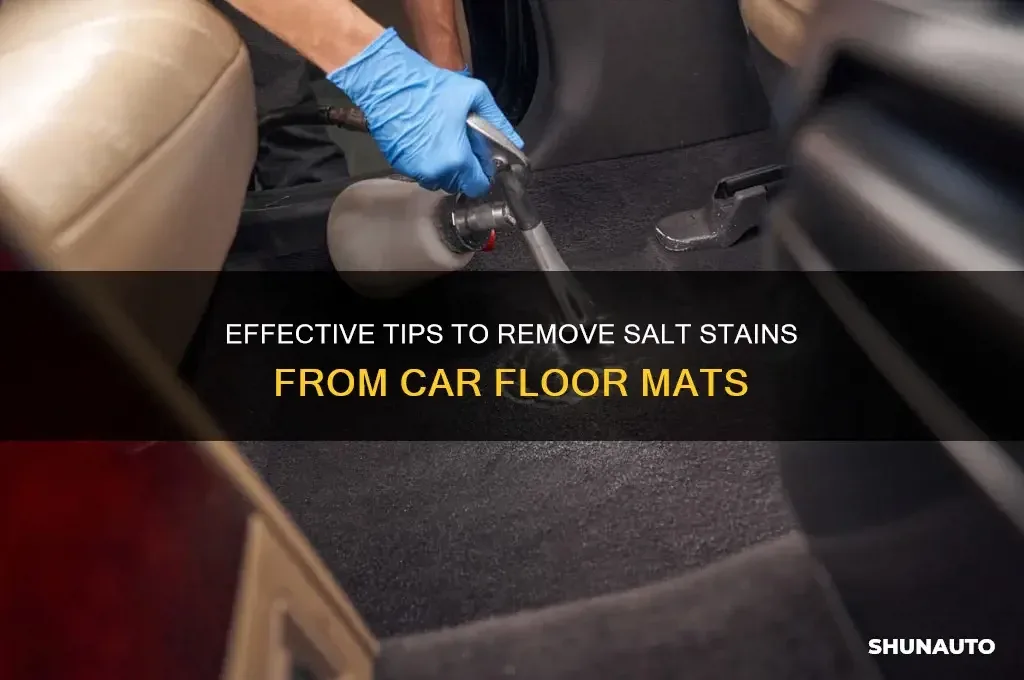
How to Remove Salt Stains from Car Floor Mats
The complete method is simple: remove the mats, vacuum away dry salt, blot with a mild vinegar solution, rinse lightly, and dry the mats upright. A small fabric mat with a few white rings may take 10 to 15 minutes of hands-on work, while a heavily coated set may need a second pass after drying.
Before cleaning, check the mat material and read the care label if one is attached. Carpet mats need gentle moisture control, while rubber mats can handle more water but still need a thorough rinse because leftover vinegar or salt can leave a slippery film.
Gather the right supplies
You don’t need a garage full of products. Set out:
- A vacuum with a crevice tool or upholstery attachment
- Two clean microfiber cloths
- A soft nylon brush or old toothbrush
- White vinegar
- Warm water
- A spray bottle or small bowl
- Mild dish soap for rubber mats
- A garden hose or clean bucket for rinsing
- A dry towel or fan
White vinegar helps dissolve mineral residue from road salt. Vinegar isn’t magic, and it won’t replace physical cleaning, but its mild acidity works well against the white crust left by salty slush.
Before using vinegar on a colored or delicate mat, test a hidden corner. Dab a little solution on the edge, wait several minutes, and check for color transfer or fading.
Follow the cleaning order
-
Remove the mats from the vehicle. Take them outside or place them on a washable surface. Leaving mats inside makes it easy to push salt into the carpet beneath them.
-
Let wet mats become only slightly damp. Don’t grind a dripping mat with a vacuum. Shake off loose slush and let surface water drain first.
-
Vacuum all loose salt and grit. Use slow passes in several directions, especially along seams, raised edges, and the driver’s heel area.
-
Mix the cleaning solution. Combine equal parts warm water and white vinegar in a spray bottle. For a mild 16-ounce batch, use 8 ounces of each.
-
Mist the stained area lightly. The mat should feel damp, not soaked. Give the solution about 2 to 5 minutes to soften the crust.
-
Blot and brush gently. Work from the outside of the stain toward the center. A soft brush can loosen residue in carpet loops, while a microfiber cloth lifts the dissolved salt.
-
Rinse with clean water. Use a small amount for carpet mats and a fuller rinse for rubber mats. The goal is to remove cleaner and salt, not flood the backing.
-
Press out moisture. Fold a towel over the wet area and press down. Don’t twist carpet mats, because twisting can distort the backing.
-
Dry completely. Stand the mat on its edge in moving air. Turn it once or twice so both sides dry before installation.
Need a broader stain routine beyond winter salt? remove other mat stains covers the same no-spread principle for grease, mud, drinks, and tracked-in grime.
A two-inch white ring on a carpet mat often disappears after one treatment. Thick crust around a rubber mat’s grooves may need two short cleaning rounds rather than one long, aggressive scrub.
Pro Tip: Vacuum the mat twice, once before the solution and once after it dries. The second pass catches loosened grit that can otherwise work back into the fibers.
Cleaning Fabric, Carpet, Rubber, and All-Weather Mats
The best salt-stain method depends on the mat surface, backing, and drainage design. Carpet mats need controlled moisture, while rubber and molded all-weather mats can usually take a stronger rinse.
Fabric and carpet floor mats
Fabric mats trap salt below the visible surface, especially where your heel rests and where snow melts near the pedals. Start with dry removal because water turns loose crystals into a paste that spreads quickly.
Use the diluted vinegar solution in small sections. Press with a cloth, lift the cloth, and check the stain instead of rubbing nonstop. A blotting motion pulls dissolved residue upward, while hard circular scrubbing can drive it deeper.
If a stain remains after drying, repeat the light mist and blotting process. Don’t jump straight to bleach, strong carpet cleaner, or a stiff household brush. Those products can fade dye, roughen fibers, or leave a sticky residue that attracts more dirt.
For a lingering smell, add one drop of mild dish soap to a cup of warm water, dab the area, then rinse with a clean damp cloth. Dish soap is useful in a tiny amount, but too much creates a foamy layer that takes ages to remove.
Rubber and all-weather mats
Rubber mats and thermoplastic elastomer mats, often called TPE mats, have a nonwoven surface that sheds water more easily than carpet. You can rinse these mats with a hose, then use warm water and a small amount of mild dish soap on stubborn grime.
Brush into the grooves with a soft nylon brush, paying attention to the raised ribs that hold salty slush. Rinse until the water runs clear, then wipe the surface with a towel.
Avoid petroleum-based cleaners, tire shine, and oily interior products on the foot-contact surface. A glossy mat can become slick, especially under wet boots, and that’s a poor trade for a little shine.
A quick material comparison
| Mat type | Best cleaner | Water amount | Main risk | Drying approach |
|---|---|---|---|---|
| Carpet or fabric | Diluted white vinegar and water | Light mist | Saturated backing | Stand upright with airflow |
| Rubber | Warm water and mild dish soap | Moderate rinse | Slippery residue | Wipe grooves and air-dry |
| TPE all-weather | Water and mild soap | Full rinse if needed | Cleaner trapped in channels | Drain vertically, then towel dry |
| Carpet with rubber backing | Light vinegar solution | Very limited | Backing separation | Dry flat or upright per label |
Would a winter-specific cleaning routine help if salt keeps returning after every storm? winter mat cleaning steps adds moisture control, slush removal, and in-car prevention ideas that fit cold-weather use.
I once treated a deeply crusted rubber mat with a strong household degreaser because the white film looked stubborn. The mat came clean, but the surface felt slick under my boots until I washed it several more times, and that taught me to use the mildest cleaner that can do the job.
Important Tip: Never reinstall a damp carpet mat over the vehicle’s carpet. Trapped moisture can create a musty smell and may keep the floor underneath wet for days.
Common Salt-Stain Problems and Fixes
Most failed cleanups come from too much water, too much force, or skipping the dry-vacuum step. The fix usually involves less product and more patience.
White stains return after cleaning
Salt returns when residue remains below the surface or in the mat backing. Repeat the light treatment after the mat dries, then rinse with clean water and press out as much moisture as possible.
If white marks appear on the vehicle carpet too, clean that area separately. A mat can be spotless while salt remains underneath, ready to migrate back through damp fibers.
The mat smells sour or musty
A musty odor usually points to trapped moisture, dirty backing, or salt mixed with organic grime. Wash the mat again with a small amount of mild soap, rinse thoroughly, and place it where air can move across both sides.
A fan works better than high heat. Don’t place a rubber-backed mat directly against a hot heater or use a high-temperature dryer, since heat can curl or weaken the backing.
The carpet mat feels stiff
Stiffness often comes from dried cleaner or salt left in the pile. Lightly dampen the mat with clean water, press with a towel, and brush the fibers gently after the mat is almost dry.
Skip fabric softener. It can leave a coating that makes the mat feel soft at first but holds oily road grime later.
Gray or brown streaks appear
Gray streaks may come from dirt suspended in the cleaning liquid. Change to a clean cloth as soon as the first cloth looks dirty, and work in small sections rather than dragging the same grime across the full mat.
A cleaning pass means one controlled round from misting through blotting. Two careful passes usually beat one soaking session.
The backing starts to peel
Peeling or bubbling means the mat has been over-wet, twisted, exposed to heat, or simply worn out. Stop aggressive cleaning and let the mat dry fully.
If the backing moves under your foot or the mat no longer lies flat, replace it. A loose driver’s mat can slide toward the pedals, which creates a safety problem that stain removal can’t fix.
Could a new set reduce the mess before it reaches the carpet? winter car floor mats compares carpet, rubber, and all-weather designs for snow, slush, and road salt.
How to Prevent Salt Stains After Cleaning
The easiest salt stain to remove is the one that never dries into the mat. Shake off snow before getting in, empty puddled water from mat channels, and clean winter buildup before it becomes a thick crust.
Keep a small towel or absorbent cloth in the car for wet boots and slushy edges. It sounds almost too simple, but removing the wettest part of the mess early gives salt less time to soak into carpet fibers.
Use these habits during the cold season:
- Tap snow from boots before stepping inside.
- Empty rubber mat channels when they collect meltwater.
- Vacuum loose grit every week during heavy winter use.
- Wash carpet mats before stains become dark gray.
- Check the carpet underneath after a wet storm.
- Keep mats flat and secured with the factory clips.
A mat retention clip holds the driver’s mat in its intended position. Make sure the clip engages after cleaning, and never stack a second mat on top of the original one.
How often should you clean winter mats?
Clean rubber or TPE mats whenever the grooves hold visible slush or salt. Carpet mats usually need a deeper cleaning every few weeks during active winter weather, with a quick vacuum between full cleanings.
The schedule depends on how much snow, road salt, sand, and moisture enter the car. A short commute on treated roads can load mats with salt faster than a longer drive on clean, dry pavement.
When should you replace a floor mat?
Replace a mat when the backing curls, the driver’s heel area wears through, the retention holes tear, or the mat slides during braking. A stained mat can often be saved, but a damaged mat can interfere with the pedals.
I’d choose a properly fitted rubber or TPE set for a car that sees frequent snow and salted roads. Carpet feels nicer under clean shoes, but molded channels make winter water much easier to control.
Pro Tip: Clean winter mats before storing them at the end of the season. Salt left in a dry mat can pull moisture from humid air and leave a fresh ring months later.
Key Takeaways:
- Vacuum dry salt before adding any liquid.
- Use equal parts warm water and white vinegar for light carpet stains.
- Rinse cleaner away, then dry mats fully before putting them back.
- Choose a soft brush and light pressure instead of aggressive scrubbing.
- Replace mats that slide, curl, or lose their retention points.
FAQs About How to Remove Salt Stains from Car Floor Mats
Can I use baking soda on salt stains in car floor mats?
Yes, baking soda can help with odor, but baking soda doesn’t dissolve salt stains as well as diluted white vinegar. Sprinkle a small amount on a fully dry carpet mat, let it sit for several hours, vacuum thoroughly, then use the damp blotting method for visible white residue.
Will vinegar damage rubber car floor mats?
No, diluted white vinegar generally won’t harm sound rubber mats during a short cleaning session, but full-strength vinegar can dry some surfaces or leave odor behind. Rinse rubber mats with clean water after treatment, and avoid vinegar on mats with a care label that forbids acidic cleaners.
Can I wash carpet car mats in a washing machine?
Sometimes, but the care label decides. Removable fabric mats without stiff rubber backing may tolerate a gentle cold cycle, while rubber-backed mats can crack, peel, or lose their shape in a washer and dryer. Air-dry approved mats completely before reinstalling them.
Why do salt stains keep coming back on my floor mats?
Salt stains return when dissolved residue remains inside carpet fibers, backing, or the vehicle carpet beneath the mat. A second light cleaning after the first full drying cycle often removes the leftover minerals, while checking wet carpet underneath stops new salt from wicking upward.
Is road salt dangerous for car floor mats?
Road salt can dry fibers, leave abrasive grit, and contribute to corrosion if salty water reaches metal fasteners or vehicle flooring. Cleaning the mats and checking the carpet below after heavy slush protects the interior better than letting saltwater sit for weeks.
Can I use a pressure washer on car floor mats?
A pressure washer is usually too aggressive for carpet mats and can force water into the backing. A gentle hose stream works better for rubber or TPE mats, provided you rinse away cleaner and let the mats drain fully before they return to the car.
Clean Mats, Dry Floors, Better Winter Drives
Salt stains don’t call for a harsh chemical attack. Dry removal first, light moisture second, careful blotting third, and complete drying will handle most winter buildup without roughening the mat or soaking the car’s carpet.
My clear recommendation is to clean fabric mats with diluted vinegar and rubber mats with mild soap, then keep a towel and vacuum routine going through the snowy months. Start with the driver’s mat today, check the backing and retention clips, and let every mat dry fully before the next trip.