
The easiest way to keep car floor mats clean is to remove dirt before it gets ground in, shake out loose debris often, and treat spills right away. Rubber mats need a quick rinse and wipe, while carpet mats need vacuuming, blotting, and enough drying time.
Do muddy shoes turn the driver’s mat into a crumbly little swamp? Are salt rings, coffee drips, pet hair, or sand making the cabin look dirty again two days after washing?
I once skipped a quick shake after a wet trail walk, then drove home with gritty mud packed into the carpet fibers. The next cleaning took far longer than it should have, and I ended up with a damp mat smell that hung around like an unwanted passenger. That’s a common mistake, not a dumb one.
I wrote this guide for anyone who wants a cleaner car without hauling out buckets and brushes every weekend. You’ll get a simple routine that works for carpet floor mats, rubber floor mats, and all-weather liners.
Get the habit right, and you’ll spend less time scrubbing, protect the mat backing, and keep dirt from spreading under the pedals. Skip small messes, and grit can wear carpet fibers, moisture can feed odors, and sticky spills can turn into stubborn stains.
This takes about 9 minutes to read, then you can put the routine to work:
- Keep everyday dust, sand, and crumbs under control.
- Match the cleaning method to carpet or rubber mats.
- Remove coffee, grease, salt, and muddy stains without making them worse.
- Dry mats properly so mildew and musty odors don’t move in.
- Know when a mat needs replacing instead of another round of scrubbing.
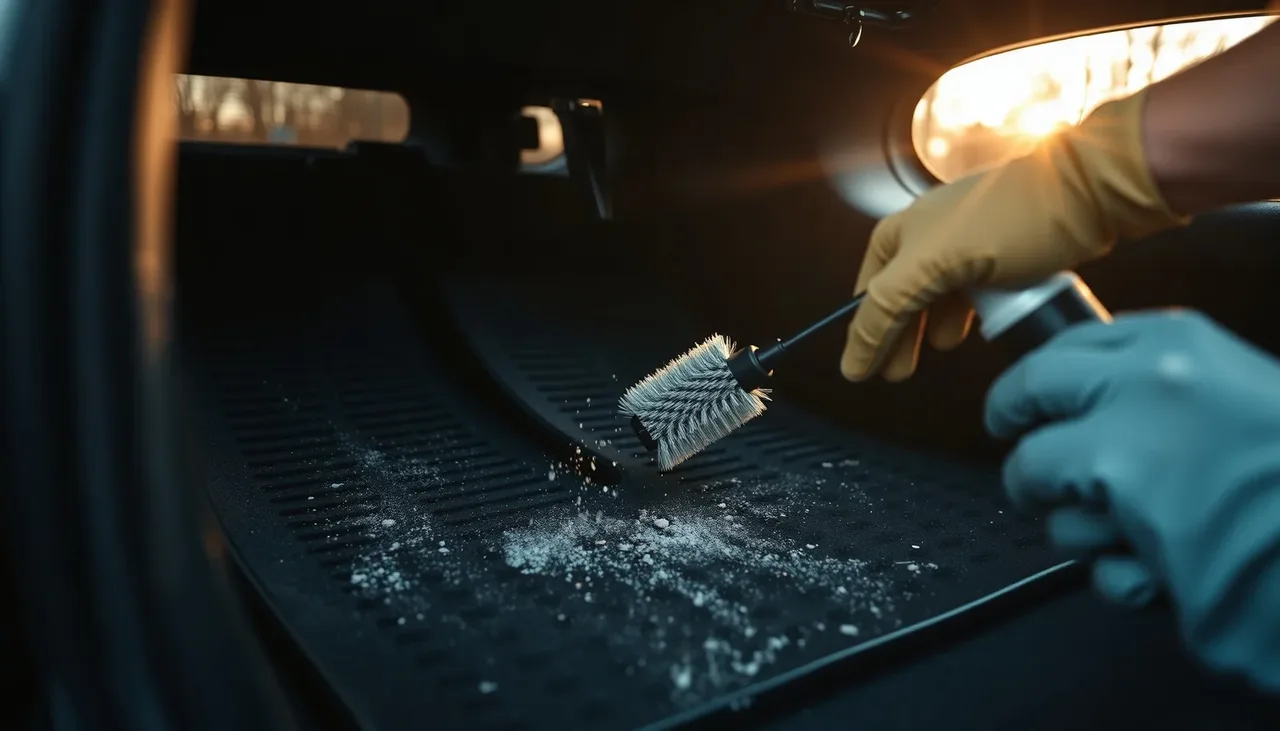
How to Keep Car Floor Mats Clean Every Day
How to keep car floor mats clean comes down to a short routine: remove loose dirt, vacuum the surface, blot spills, and dry any dampness before the next drive. A few minutes every few days works better than waiting for a thick layer of grit to become part of the mat.
Start with the driver’s mat because it takes the most foot traffic and collects debris near the pedals. Shake the mat outside, vacuum both sides, and wipe the surrounding floor before putting the mat back.
Use this order:
- Remove the mats from the car. Dirt falls into the cabin if you clean mats in place, and moisture can hide beneath the mat.
- Shake or tap the mats outdoors. A gentle knock loosens sand, gravel, leaves, and dried mud.
- Vacuum both surfaces. Run the crevice tool along the edges, grooves, and raised lettering.
- Treat fresh spills immediately. Blot liquid with a clean towel instead of rubbing it deeper.
- Wipe rubber mats. Use a damp microfiber cloth for light dirt and a soft brush for grooves.
- Dry everything fully. Air-dry mats away from direct heat before returning them to the vehicle.
A light weekly reset keeps the job small. A busy family car may need this routine every few days, while a car used mostly for highway driving can often go a week between quick cleanups.
Carpet Mats And Rubber Mats Need Different Care
Carpet mats hold fine dust and liquid, while rubber mats shed dirt more easily but trap grime in their channels. Treating both materials the same way can leave carpet soggy or rubber coated with a slippery film.
| Mat type | Quick cleaning method | Best stain approach | Main mistake to avoid |
|---|---|---|---|
| Carpet | Shake, vacuum, and blot | Mild cleaner with a soft brush | Soaking the backing |
| Rubber | Shake, rinse, and wipe | Soap solution with a medium brush | Leaving oily residue |
| All-weather liner | Remove, rinse, and scrub grooves | Mild soap and water | Putting it back while wet |
| Fabric-backed mat | Vacuum and spot-clean | Low-moisture treatment | Saturating the underside |
A low-moisture cleaning method means using enough liquid to lift dirt without flooding the fibers or backing. That matters because the top can feel dry while the underside stays damp against the vehicle floor.
Do you need to clean every mat each time? No, clean the driver’s mat first when time is tight, then handle the passenger and rear mats during the next quick session.
A small handheld vacuum helps with crumbs and pet hair, but a household vacuum with a crevice attachment usually pulls more grit from carpet. I’d pick suction over flashy attachments because sand hides deep in the pile, especially near the heel pad.
Pro Tip: Keep a small towel and a stiff-bristled brush in the garage or trunk. A fresh spill is much easier to handle before heat, foot traffic, and time turn it into a stubborn mark.
A Simple Weekly Reset
Set the mats on a clean surface and inspect the underside before cleaning the top. Pebbles and damp soil stuck below can scratch the floor or leave a dirty outline on the carpet.
For carpet mats, vacuum slowly in two directions. One pass follows the fibers, and the second pass crosses them, lifting grit that a fast single pass leaves behind.
For rubber mats, brush the grooves toward the edge instead of pushing dirt deeper into the channels. Rinse only when the mat has sticky grime, road salt, or mud that a towel can’t lift.
People who want a longer-term plan can also review ways to protect car mats because keeping dirt and moisture out is easier than cleaning the same damage again and again.
Deep Cleaning Car Floor Mats Without Damage
Deep cleaning requires the right product, light pressure, and complete drying, with separate methods for carpet, rubber, and all-weather mats. A clean-looking surface isn’t enough if detergent or water remains trapped underneath.
Before using water or cleaner, read the care tag if the mat has one. Remove the mats from the vehicle, and never scrub them over the cabin floor because runoff can soak the carpet beneath the pedals.
Carpet Floor Mat Method
- Vacuum first. Water turns loose dirt into paste, so dry removal comes before wet cleaning.
- Test the cleaner. Apply a small amount to a hidden corner and wait for color change or fabric damage.
- Blot stains. Press a towel into the spot, lift it, and repeat with a clean section.
- Brush gently. Use short strokes with a soft or medium upholstery brush.
- Remove cleaner residue. Wipe with a lightly damp cloth rather than flooding the mat.
- Dry flat or hanging. Give the mat airflow on both sides before reinstalling it.
Use a mild fabric-safe cleaner for ordinary dirt. Strong degreasers can fade carpet, weaken the backing, or leave a sticky layer that attracts fresh dust.
Coffee and soda stains respond best to quick blotting followed by a small amount of diluted cleaner. Grease needs a product made for oily soil, but use very little because over-wetting spreads the stain into a larger ring.
Salt stains often leave a pale, crusty edge after winter driving. A damp cloth followed by gentle brushing usually removes surface salt, while repeated heavy soaking can drive moisture into the backing.
Rubber And All-Weather Mat Method
Rubber mats can handle more water than carpet mats, but they still need a proper rinse and dry. Start with a hose or bucket of clean water, then use mild soap and a brush to work through the channels.
Rinse until the water runs clear and no slick soap layer remains. Dry the mat standing on its edge or laid in a breezy spot, then wipe it before placing it back.
All-weather liners have raised walls that catch water, slush, and mud. Pay attention to corners and drain areas because hidden grit stays there after a quick wipe.
A product marketed as the best all weather car floor mats may offer deeper channels and easier cleanup, but even a good liner needs regular emptying. A neglected liner can hold wet dirt against the vehicle floor for days.
Choosing A Cleaner
The best car floor mat cleaner depends on the material and the mess. Carpet needs a low-foam fabric cleaner, while rubber usually needs mild soap that rinses away without leaving a slippery finish.
Skip household products that contain strong bleach, harsh solvents, or heavy fragrance unless the mat manufacturer specifically allows them. A clean scent can hide moisture for a while, but it doesn’t fix damp backing.
| Mess | First move | Suitable treatment | What not to do |
|---|---|---|---|
| Dry sand | Shake and vacuum | No liquid needed | Wet the mat first |
| Coffee | Blot immediately | Mild fabric cleaner | Rub in circles |
| Grease | Lift excess with a towel | Small amount of degreaser | Flood the carpet |
| Road salt | Brush off crust | Damp cloth and mild cleaner | Use heavy pressure |
| Mud | Let it dry first | Vacuum, then spot-clean | Scrub wet mud |
| Pet hair | Lift with rubber glove or brush | Vacuum after loosening | Push hair deeper |
I prefer a plain cleaner that leaves little residue over a heavily scented spray. Residue acts like flypaper for dust, so the mat can look dirty again faster.
I once rushed a rubber mat cleanup before a long drive and put it back while the grooves were still wet. Fine dust stuck in every channel, and the mat looked worse by the time I reached the next stop. The fix was simple, but drying the mat fully would have saved the extra work.
Important Tip: Never reinstall a wet mat over the vehicle’s carpet. Moisture trapped underneath can create a musty odor, stain the floor, and add slipperiness near the pedals.
Drying And Odor Control
Good airflow does most of the work. Hang mats over a railing, place them on a clean rack, or lean them so air reaches the top and bottom.
Avoid placing rubber mats against a hot heater, radiator, or exhaust surface. Excess heat can warp some materials, curl edges, or damage a fabric backing.
If a mat still smells after cleaning, find the moisture source before adding fragrance. Check the underside, the vehicle carpet, door seals, spilled drinks, and wet shoes that keep bringing water back in.
Baking soda can help with a dry odor on some carpet mats, but vacuum it out fully and keep powder away from the pedal area. Never mix cleaning chemicals, especially products containing bleach with acidic cleaners.
Fixes for Stains, Wear, and Daily Messes
Most floor mat problems improve when the mess is matched to the right first step instead of attacked with more water or harder scrubbing. The goal is to lift the soil while keeping the mat’s fibers, backing, and shape intact.
Mud, Sand, And Gravel
Let wet mud dry before brushing or vacuuming. Wet mud smears into carpet, while dried mud breaks into pieces that a vacuum can lift.
Use a soft brush around the heel pad and stitched edges. Turn the mat over and tap it gently, then vacuum the floor underneath before replacing it.
Sand may need several slow vacuum passes. Hold the nozzle close to the carpet without crushing the fibers, and use a crevice tool around raised borders.
Grease And Food
Lift solid food with a dull plastic edge before applying cleaner. Avoid knives because a small slip can cut carpet fibers or scratch rubber.
Blot oily marks with a dry towel first. Apply a small amount of grease-cutting cleaner to the towel rather than pouring it directly onto the mat.
Rinse or wipe away residue after the stain lifts. Leftover cleaner can make the spot look darker and collect dust faster than the surrounding material.
Pet Hair And Lint
Rubber gloves, a slightly damp rubber brush, or a pet-hair tool can gather hair from carpet fibers. Vacuum after the hair forms small clumps.
Don’t soak pet hair to remove it. Wet hair mats together and becomes harder to pull free.
For regular pet travel, a washable cargo liner and a towel under the animal’s paws can reduce hair, drool, and tracked mud before those messes reach the floor mats.
When To Replace A Mat
Cleaning can’t fix a mat with curled edges, torn backing, missing sections, or a damaged heel pad. A loose driver’s mat can slide toward the pedals, which creates a safety concern.
Replace a mat if it no longer sits flat in the factory clips or if the surface has become thin where your heel rests. Use the correct shape and retention points for the vehicle rather than a loose universal mat.
A fresh mat also makes sense when stains have soaked into the backing and odor returns after full drying. Scrubbing forever can cost more time than replacing a worn piece.
Keeping Mats Cleaner Longer
These habits reduce the amount of dirt that reaches the mat:
- Knock mud from shoes before getting inside.
- Keep a towel in the car during rainy or snowy months.
- Remove leaves and gravel after outdoor trips.
- Use the vehicle’s retention clips on the driver’s mat.
- Empty all-weather liners before water reaches the raised edge.
- Avoid eating messy food over carpet mats.
- Clean spills before parking the car in hot sun.
Which habit makes the biggest difference? Removing grit before driving does, because sharp sand and gravel act like tiny pieces of sandpaper under your shoes.
Pro Tip: Put a folded towel on top of a wet mat during a short trip only when the mat can’t be removed right away. Take the mat out and dry both pieces as soon as you park.
- Vacuum carpet mats before adding any moisture.
- Rinse rubber mats fully and dry the grooves.
- Blot spills instead of rubbing them outward.
- Replace mats that curl, tear, or slide near the pedals.
FAQs About How to Keep Car Floor Mats Clean
How often should car floor mats be cleaned?
Clean car floor mats lightly every few days if the vehicle sees heavy traffic, pets, children, mud, or snow. A full wash can wait until the mats have visible staining or sticky grime. Drivers in dry, clean conditions may need only a weekly shake, vacuum, and edge wipe.
Can I wash carpet car mats in a washing machine?
Most carpet car mats shouldn’t go in a washing machine unless the care label specifically allows machine washing. Agitation can damage the backing, and excess water can leave the mat misshapen. Hand cleaning with a small amount of cleaner gives better control over moisture and drying.
Can I use dish soap on rubber car mats?
Yes, a small amount of mild dish soap can clean rubber car mats when diluted in water and rinsed away fully. Too much soap leaves a slick film that attracts dirt and may make the mat slippery. Use a brush for grooves, then rinse until no suds remain.
How do I stop car floor mats from smelling?
Dry car floor mats completely and find the moisture source before using deodorizer. Check the underside, vehicle carpet, door areas, and wet shoes. Odor that returns after cleaning often points to trapped moisture beneath the mat or a spill in the carpet underneath.
How do I clean salt stains from car floor mats?
Brush loose salt from the mat after it dries, then wipe the stain with a damp cloth and mild cleaner suited to the mat material. Blot carpet mats instead of soaking them. Rinse rubber mats thoroughly because salt can remain in grooves and leave a powdery residue.
Are rubber floor mats easier to keep clean than carpet mats?
Yes, rubber floor mats are usually easier to rinse and dry after mud, rain, and snow. Carpet mats can feel softer and look more finished, but carpet fibers hold sand, liquid, and odor longer. The best choice depends on climate, pets, work conditions, and how often you clean.
A Cleaner Car Starts with Small Habits
Keeping car floor mats clean doesn’t require a closet full of products or a Saturday lost to scrubbing. Shake out loose dirt, vacuum before wet cleaning, blot spills quickly, and give every mat enough airflow to dry fully.
I’d focus on the driver’s mat first, use the gentlest cleaner that fits the material, and replace any mat that curls or moves near the pedals. Start with a five-minute shake and vacuum on your next trip home, then rinse or spot-clean only what truly needs it. That small routine keeps the cabin fresher, protects the floor underneath, and makes the next deep wash far less of a chore.