
A tonneau cover that fits the wrong F-150 bed can leave gaps, fail to latch, or turn installation into a frustrating afternoon of shifting clamps. A cover that sheds most rain but leaks around the edges can still leave tools and groceries damp. Getting the bed length and cover style right matters before you spend money or load anything you need to keep dry.
Start by measuring the bed and confirming the truck’s year, cab, and bed style, since F-150 covers are not automatically interchangeable. Then decide how often you need the entire bed open: a roll-up cover clears a different amount of space than a folding cover, and soft vinyl handles differently from hard panels. Weather protection also depends on a well-matched fit and correctly placed seals, so “waterproof” should not be read as a promise that every truck bed stays bone-dry in every storm.
This guide will help you sort out:
- How to confirm the right bed size and configuration.
- What folding, rolling, soft, and hard covers change in daily use.
- How to install and care for a cover without making avoidable mistakes.
- What to check before trusting the cover with cargo that cannot get wet.
Quick Picks
-
Best For Simple Soft-Cover Setup

MOSTPLUS 5.5FT Quad Fold Soft Truck Bed
The quad-fold vinyl top uses clamp-on, no-drill installation, making it a practical fit for owners who want straightforward bed coverage.
-
Best For Hard-Cover Flexibility
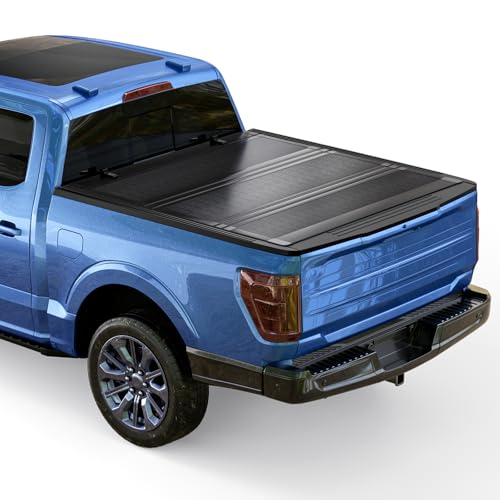
Tono King Low Profile Flip Up Truck
Aluminum slats fold toward the cab for full bed access, suiting drivers who switch between covered cargo and larger loads.
Top 5 Waterproof Tonneau Cover F150S at a Glance
The MOSTPLUS soft quad-fold cover is a sensible first look if you want a no-drill setup for a 5.5-foot Styleside bed. Tono King and the XTWEEX hard tri-fold cover suit different hard-panel preferences, while the roll-up cover is the only choice here listed for a 6.5-foot bed.
| Product image | Product name | Check product |
|---|---|---|
| 1 |
MOSTPLUS 5.5FT Quad Fold Soft Truck Bed | Check Price |
| 2 |
Tono King Low Profile Flip Up Truck | Check Price |
3 |
Hard Quad Fold Tonneau Cover W/LED Light | Check Price |
4 |
Soft Roll Up Tonneau Cover for 2015-2026 | Check Price |
5 |
XTWEEX Hard Tri-Fold F150 Tonneau Cover for | Check Price |
5 Best Waterproof Tonneau Cover F150S: Detailed Reviews
When I chose the best waterproof tonneau cover f150 options, I focused first on exact fit, because a mismatch can leave exposed gaps or prevent the cover from closing. I also paid attention to cover style and bed access, so you can choose between rolling, folding, and lifting panels without guessing how each affects hauling. Finally, I considered installation and weather-sealing details, since a cover that is awkward to secure or poorly seated can cause trouble after the first rain.
The choices here range from a soft vinyl quad-fold cover to hard aluminum and reinforced-polymer panels, with both 5.5-foot and 6.5-foot bed fits represented. That range matters more than a generic claim of toughness: the right pick depends on your exact truck configuration, how often you need open-bed space, and whether you prefer a soft or hard top. Read each fitment note carefully before deciding, especially if your truck has a special trim or bed setup.
1. MOSTPLUS 5.5FT Quad Fold Soft Truck Bed
The quad-fold vinyl top uses clamp-on, no-drill installation, making it a practical fit for owners who want straightforward bed coverage.
- Size5.5 FT
- Number Of Items1
- WeightNot listed; check details
- DimensionsNot listed; check details
The MOSTPLUS quad-fold cover is a soft vinyl bed cover for an F-150 with a 5.5-foot Styleside bed, suited to owners who want a basic cover that folds into sections. Its fitment details include F-150 model years 2015 through 2026, but the bed style and length are specific, so check both before ordering.
The cover uses double-sided tear-resistant vinyl, which means vinyl material is used on both sides rather than as a single exposed layer. In daily use, the cover gives you a flexible top that can be folded back when you need access, while the listed UV resistance helps the surface withstand sun exposure. That combination is useful if you want to cover ordinary cargo without installing a rigid panel system.
Four horizontal crossbars support the cover across the bed. A crossbar is a bar that spans the cover, giving it support between the side rails; these bars are intended to help reduce air lifting while driving. The cover also has three powder-coated aluminum frames and a US-patent clamp design, while the installation description says no drilling is required.
The limitation is that a soft vinyl top is not the same as a hard panel, and the 5.5-foot Styleside fit leaves out other bed configurations.
Pros:
- Four-fold design gives you access in sections.
- Vinyl top offers a flexible cover surface.
- Four crossbars help support the cover while driving.
- No-drill installation avoids permanent bed changes.
- Soap-and-water washing gives you a simple cleaning option.
Cons:
- Fits only the listed 5.5-foot Styleside bed configuration.
- Soft vinyl does not provide a hard-panel surface.
- Water resistance still depends on correct fit and seal placement.
Buy it if: you have a 5.5-foot Styleside F-150 bed and want a no-drill soft cover with folding access.
Skip it if: you need a hard top or a cover for another bed length, because this 5.5-foot fit is specific and a different cover type would suit you better. For another fit, consider Tono or Hard.
I’d consider the MOSTPLUS cover when uncomplicated, flexible coverage matters more than a rigid top. The included crossbars and clamp-based installation make the setup sound approachable for a beginner, and the listed cleaning method is refreshingly simple. Before ordering, confirm that your truck is a Styleside with the specified 5.5-foot bed rather than relying on model year alone.
This is the pick for an owner who wants a soft folding cover and has the exact listed fit.
2. Tono King Low Profile Flip Up Truck
Aluminum slats fold toward the cab for full bed access, suiting drivers who switch between covered cargo and larger loads.
- ColorBlack
- Size5′ 5″ Bed (66″)
- Number Of Items1
- WeightNot listed; check details
The Tono King cover is a hard folding cover for the listed 66-inch F-150 bed, for drivers who want a firm top but still need to open the bed for bulky cargo. Its fitment covers 2015 through 2026 F-150 models and the F-150 Lightning, according to the product details, but the exact bed length and truck configuration still need checking.
The cover uses aluminum slats, narrow rigid sections that join to form a folding surface. The slats have a matte, double-layer black powder-coated finish, which is a protective coating intended to help resist scratches and UV damage. In practical terms, the hard surface may suit owners who prefer panels over fabric, while the coating gives the exterior a finished layer for everyday weather exposure.
The fold-up design can be closed, folded, or flipped toward the cab to provide full bed access, without covering the third brake light as described. That flexibility can be useful when a covered load becomes a long or awkward one and you need to use more of the bed. The no-drill clamp attachment avoids modifying the truck, though a hard slatted cover is still a different sort of lift and fold than a soft roll-up.
The listing also mentions a 400-pound weight capacity, but do not treat that figure as permission to carry people or to ignore the installation and load instructions.
Pros:
- Aluminum slats create a hard folding cover surface.
- Folds toward the cab for full bed access.
- Clamp-on installation does not require drilling.
- Matte black coating is listed as UV- and scratch-resistant.
- Listed for F-150 and F-150 Lightning configurations.
Cons:
- The specified 66-inch bed fit needs careful confirmation.
- Hard slats fold differently from a roll-up cover.
- The stated 400-pound capacity needs careful interpretation and proper loading.
Buy it if: you want a hard folding cover that can open toward the cab when a larger load needs the bed.
Skip it if: your truck bed is not the stated 66 inches, because a fit mismatch can interfere with closure and a bed-specific cover would suit you better. Mostplus and Hard are worth a closer look instead.
To me, the Tono King’s main draw is the combination of a hard surface and a way to fold it clear of the bed. That makes it a practical option for someone who alternates between covered storage and hauling larger items. I’d double-check the exact bed measurement and the instructions for using the stated load capacity before buying.
Choose it if those checks line up and you want flexible access without a soft tarp-style top.
3. Hard Quad Fold Tonneau Cover W/LED Light
The catalog lists Exact Fit for 2015-2026 Ford F-150 5.5FT Styleside Bed- Compatible with Ford F-150 2015, 2016, 2017, 2018, 201. Compare fit and care needs before choosing.
- Size5.5FT (67″)
- Number Of Items1
- FinishHeavy-Duty 14mm Aluminum with 4 Anti-Lift Crossbars- Constructed from thick 14mm aircraft-grade aluminum with
- WeightNot listed; check details
This hard quad-fold cover is for a 5.5-foot, 67-inch Styleside F-150 bed, and it suits drivers who want a hard folding top with a built-in light. The listed fit covers 2015 through 2026 F-150 model years, but the stated Styleside and bed-length limits still apply.
The cover is made from 14 mm aluminum, a rigid metal construction that forms the main cover panels. A powder-coated finish adds a surface layer, while four reinforced crossbars support the cover across the bed. Those crossbars are intended to help reduce air lifting at highway speeds, which matters if you want the panels supported while driving rather than left to flap or shift.
A built-in LED light strip is designed to illuminate the bed for loading and unloading after dark. That feature saves you from relying only on a phone flashlight when you are looking for cargo, though you should check the instructions for how the light is powered and operated. Perimeter seals and drainage channels are meant to help manage water, and the cover is described as UV-resistant.
As with other tonneau covers, the seals must line up with your truck for weather protection to work as intended; a hard folding top is also less easily rolled out of the way than a roll-up cover.
Pros:
- Built-in LED strip helps light the bed at night.
- Four crossbars support the hard folding panels.
- Clamp-on installation is listed as no-drill.
- Perimeter seals and drainage channels help manage water.
- Aluminum panels provide a rigid cover surface.
Cons:
- Fits only the specified 5.5-foot Styleside bed.
- The cover folds in sections rather than rolling away.
- Light operation and power details should be checked before purchase.
Buy it if: you have the specified 5.5-foot Styleside bed and want a hard folding cover with bed lighting.
Skip it if: you prefer a soft cover that rolls toward the cab, because the hard quad-fold panels occupy a different kind of bed space when open. If those trade-offs rule it out, Mostplus or Tono may suit you better.
I like the built-in light as a useful detail rather than a reason on its own to choose a cover. The aluminum construction, crossbars, and water-management features make the design a reasonable fit for someone who wants a hard folding top. I’d check the light’s operating details and confirm the Styleside measurement before spending money.
Pick this cover if you value nighttime access and are comfortable with folding panels.
4. Soft Roll Up Tonneau Cover for 2015-2026
The catalog lists Fitment: Compatible with 2015-2026 F-150 6.5 ft Bed / 6-1/2′ Box. Typically fits F-150 Super Cab (3/4 Size Rea. Compare fit and care needs before choosing.
- ColorRoll Up
- Size15-26 | F150 6.5FT
- Number Of Items1
- Superior MaterialThe Tonneau Cover is crafted from a double-layer PVC material. It features high-quality vinyl that is waterproof, d
This soft roll-up tonneau cover is listed for 2015 through 2026 F-150 trucks with a 6.5-foot bed, including a stated fit for some Super Cab configurations. It is the option here for a longer bed and suits an owner who wants a flexible top that can roll out of the way.
The cover uses double-layer PVC vinyl, a flexible plastic-based cover material with two layers. The listed features include water, dust, and UV resistance, while side rails, a seal strip, and stainless steel clamps attach the cover along the bed. In everyday use, the roll-up design lets you pull the cover back rather than stacking several hard panels; that can make loading a long item simpler, provided the item and cover arrangement follow the installation instructions.
A release at the end lets you push or pull the lock and roll the cover up or down. That simple motion is helpful if you regularly switch between covered cargo and an open bed, although the soft top is not a hard barrier. The fit is limited to the 6.5-foot bed description, so do not choose it just because your F-150 year appears in the range.
Water and dust protection also depend on getting the rails and seals seated correctly, and “waterproof” should not replace sensible protection for items that cannot get wet.
Pros:
- Roll-up design opens the bed without folding hard panels.
- Double-layer PVC vinyl forms a flexible cover top.
- Side rails and a seal strip support bed-edge coverage.
- Stainless steel clamps secure the listed installation.
- No-drill setup avoids permanent bed modifications.
Cons:**
- Listed for a 6.5-foot bed, not the shorter fit options.
- Soft cover does not create a rigid hard-panel top.
- Correct sealing and alignment remain important for water control.
Buy it if: your F-150 has the stated 6.5-foot bed and you want flexible roll-up access.
Skip it if: you need the 5.5-foot Styleside fit or a rigid cover surface, because the size and soft construction do not match those needs.
I’d put this roll-up cover on the table when a longer bed and fast access are the priorities. The flexible top and end release give you a straightforward way to uncover the cargo area, without having to lift individual hard panels. Check whether your cab and bed configuration match the fit notes, and read how the rails and seals should sit before installation.
It suits a 6.5-foot-bed owner who wants a soft cover that rolls open.
5. XTWEEX Hard Tri-Fold F150 Tonneau Cover for
The catalog lists VEHICLE FITMENT: Compatible with select 2015-2026 Ford F-150 models with a 5.5 ft bed, including applicable F-. Compare fit and care needs before choosing.
- ColorHard Tri Fold | Matte Black
- Size15-26 F150 | 5.5FT
- Number Of Items1
- WeightNot listed; check details
The XTWEEX hard tri-fold cover is listed for select 2015 through 2026 F-150 models with a 5.5-foot bed, including some Lightning and Raptor configurations. It is aimed at owners who want hard folding panels and a stated static weight capacity, while fitment still depends on the exact truck configuration.
The outer surface uses fiberglass reinforced polymer, often shortened to FRP, a plastic material reinforced with fibers for added structure. Beneath it is a PP honeycomb core, a lightweight internal pattern that supports the panel; the listed construction is intended to balance lower weight with a firm surface. The cover is described as supporting up to 500 pounds of evenly distributed static weight, which means the load is spread across the cover while stationary.
That is not a driving load rating, and the figure should not be treated as permission to stand on or overload the cover.
The sealed-edge design helps keep rain, snow, and dust out, while the hard folding panels cover cargo with the tailgate closed. Installation uses clamps at compatible factory mounting points and does not require drilling, though the included instructions still matter for correct positioning. The main trade-off is access: a tri-fold stacks panels differently from a roll-up and can leave some cover over the bed when opened.
Verify that your model year, bed length, and configuration appear in the fit notes before purchase.
Pros:
- FRP exterior and PP honeycomb core form hard panels.
- Sealed edges help limit rain, snow, and dust entry.
- No-drill clamps attach at compatible factory mounting points.
- Matte black finish gives the cover a dark exterior.
- Listed static capacity is up to 500 pounds evenly distributed.
Cons:
- Fits only select 5.5-foot-bed F-150 configurations.
- Tri-fold panels stack rather than rolling clear of the bed.
- Static weight capacity does not describe a moving load.
Buy it if: you want hard folding panels for a compatible 5.5-foot bed and value a sealed-edge design.
Skip it if: you regularly need the whole bed completely uncovered, because folded panels can remain over part of the bed and a roll-up style may suit you better.
The XTWEEX cover makes sense if a hard top and a defined weight figure are high on your list. The FRP and honeycomb construction is a clear distinction from the soft vinyl choices, and clamp installation avoids drilling when the factory mounting points match. I’d read the full fitment details and load instructions closely, particularly the difference between static and moving loads.
Choose it if your truck matches and you want hard panels that fold in three sections.
How to Choose the Best Waterproof Tonneau Cover F150
The best waterproof tonneau cover f150 choice starts with exact fit, then comes down to how you use the bed and what kind of cover you can live with. Decide those two things before comparing finishes or extra features.
Match the bed length and style
Measure the inside length of the bed along the floor, from the front wall to the inside edge of the closed tailgate. Use the truck maker’s stated bed size as a cross-check, since a tape measure can vary depending on where you place it. The products here include fit notes for 5.5-foot, roughly 66- to 67-inch beds, and one 6.5-foot bed, so those sizes are not interchangeable.
Check whether the truck has a Styleside bed, which has the familiar separate outer bed sides, and whether it has any special configuration named in the cover’s fit list. Also confirm model year, cab, trim, and any factory accessories that could affect the rails or mounting points. Do not assume that two F-150s with the same year fit the same cover if their bed lengths differ.
Choose a cover style that suits your loads
A roll-up cover pulls back toward the cab, while a folding cover bends into sections and stacks or flips upward. Roll-up styles can be appealing when you often need long, open bed access; folding styles can make it easier to open part of the bed without rolling a full top. Hard folding panels and soft folding vinyl also feel different in handling and construction.
Think about your ordinary cargo, not the one unusual trip you might make once a year. If you carry long lumber, a large appliance, or other tall items, check how far the cover opens and whether the folded cover stays over the bed. For groceries, tools, or smaller bags, a cover that opens in sections may be convenient enough.
Soft vinyl or hard panels?
Soft covers use flexible material such as vinyl or PVC, and they can fold or roll for access. Hard covers use rigid sections made from materials such as aluminum or reinforced polymer. The type affects how the cover handles, how it opens, and whether the top feels flexible or firm; neither type alone guarantees that cargo is secure or dry.
If you choose a soft cover, look closely at the attachment and support details, such as rails, clamps, crossbars, and seals. For a hard cover, confirm how the panels fold and how much of the bed remains covered when open. Consider where you will put the folded panels and whether you can comfortably lift or manage them.
Understand what “waterproof” means in practice
A tonneau cover’s seals and fit help keep rain and road spray from entering the bed, but the word “waterproof” should not be read as a guarantee against every leak. Water can find a path at the tailgate, bed corners, rails, or gaps caused by an incorrect fit. Some covers also use drainage channels to direct water, so follow their installation instructions rather than blocking or altering those paths.
For belongings that must remain completely dry, add a second layer of protection inside the truck bed. Use sealed containers or waterproof bags for important tools, electronics, and clothing, especially on long trips or in heavy weather. That is not a knock on a cover; it is a sensible backup when rain exposure would cause a costly problem.
Check installation, access, and upkeep
No-drill installation means the listed setup does not require drilling holes, but it still takes careful placement and clamp tightening. Read the instructions and check whether a second person is recommended for lifting or positioning a large cover. A rushed installation can leave rails crooked or seals pinched, which can affect closure and weather protection.
Also consider how often you will open the bed and how much cleaning you are willing to do. A cover that needs simple soap-and-water cleaning may suit an owner who wants basic care, while every cover still needs occasional checks for loose clamps, dirt, and worn seals. Look for clear instructions on operation, cleaning, load limits, and support before placing an order.
Read capacity claims carefully
A capacity number needs context: find out whether it refers to evenly distributed static weight, a supported load, or another use. Static weight applies when the truck is parked, and it does not automatically mean the cover can carry that amount while the truck is moving. Never use a cover as a seat, step, or cargo rack unless the instructions specifically allow that use.
For a cover that lists a capacity, follow the manufacturer’s loading directions and keep weight evenly spread as stated. If the instructions do not explain where or how a load may be placed, do not guess. The safer choice is to keep cargo inside the bed and let the cover do its intended job of covering it.
How to Use a Waterproof Tonneau Cover F-150 for the Best Results
A cover works best when it is fully latched, properly aligned, and used within its instructions. Make a quick habit of checking the edges and tailgate before driving, especially after loading cargo or opening the cover.
- Confirm the fit before installation. Match the cover’s bed length and configuration to your truck, not just its model year. If you have a 5.5-foot bed, do not assume a cover listed at 66 inches and one listed at 67 inches are automatically interchangeable.
- Read the setup and operation instructions. Identify the front and rear of the cover, the clamp positions, and the correct closing method before lifting anything. A little prep prevents the classic beginner error of mounting a rail backward and discovering it after tightening every clamp.
- Keep cargo below the cover’s closing path. Bags, straps, and boxes can get caught between the cover and the bed rail. Rearrange the load before closing so the panels or vinyl can sit flat and the latches can engage.
- Close and latch the cover as directed. Check that each latch or clamp reaches its intended position. A cover that looks closed from the curb may still have an unsecured section at the cab or tailgate.
- Check the seal line. Look along the bed sides and tailgate for folded seals, trapped debris, or obvious gaps. Do not stuff extra material into a gap unless the instructions recommend it, since that can interfere with proper closure or drainage.
- Secure cargo separately. Use appropriate tie-downs and keep loose objects from shifting when you drive. A cover hides cargo from view, but it does not restrain the contents of the bed.
- Use a second layer for sensitive items. Keep electronics, paper, or anything that cannot get wet inside a sealed container. A cover helps shield cargo from weather, while a sealed container gives you a useful backup.
- Open the cover fully enough for your load. Follow the cover’s folding or rolling directions and secure it in the approved open position before driving. Do not leave loose panels or an unsecured rolled cover exposed to wind.
A tonneau cover should not be treated as a substitute for checking the truck bed after heavy rain or a car wash. Once you know how your cover closes and where its seals sit, an occasional quick inspection will help you notice a change before wet cargo becomes a surprise.
How to Make Your Waterproof Tonneau Cover F-150 Last Longer
Regular light care is easier than waiting until dirt, water, or a loose clamp becomes a problem. Follow the maker’s directions first, since cleaning products and adjustment steps can differ between vinyl and hard-panel covers.
After dusty or muddy use, remove loose debris with water and a soft cloth or brush that will not scratch the surface. For the MOSTPLUS cover, the care directions specifically describe washing with soap and water; use only cleaning methods approved for whichever cover you own. Avoid harsh cleaners unless the instructions say they are safe for the cover material and finish.
Check the seals and rails every few weeks during regular use, and after an especially rough trip or a major storm. Look for dirt that could keep a seal from sitting flat, a rail that has shifted, or a clamp that seems loose. Do not overtighten hardware by guesswork; follow the adjustment instructions so you do not damage a clamp or bed rail.
In winter, clear packed snow and ice before operating the cover. Do not force a frozen latch or fold a stiff soft cover, since cold conditions can make materials less flexible. Use the maker’s directions for dealing with ice, and keep drainage channels clear if the cover has them.
When the cover is open, secure it in the way the instructions describe. Avoid leaving folded sections loose in the wind or placing cargo against a panel in a way that strains hinges or the cover frame. If you remove the cover for a larger haul, store it clean and dry where its panels, rails, and seals will not be bent or crushed.
At least once a season, do a more complete check: clean the cover, inspect the seals, and make sure the clamps and latches still work as intended. If something no longer closes smoothly, stop and check the alignment before forcing it. A simple adjustment can be easier than replacing a damaged latch or continuing to drive with a loose cover.
Common Mistakes to Avoid When Buying and Using a Waterproof Tonneau Cover F-150
Small mistakes usually begin with a rushed fit check or an assumption about what a cover can do. Use the checks below to avoid buying the wrong size or relying on the cover for a job it was not designed to handle.
- Choosing by model year alone: The same F-150 year can have different bed lengths and configurations. Confirm the bed measurement, truck configuration, and cover’s exact fit notes before ordering.
- Mixing up a 5.5-foot and 6.5-foot bed: A cover made for the longer box will not become a close fit on the shorter box. Measure the bed and match the stated size rather than relying on a quick visual estimate.
- Treating “waterproof” as a promise of a dry bed in every condition: Seals, tailgate gaps, and installation all affect water entry. Check the fit after installation and keep sensitive belongings in a sealed container.
- Tightening clamps before aligning the rails: A crooked rail can make the cover difficult to latch or leave uneven gaps. Position both sides carefully and follow the sequence in the instructions before final tightening.
- Leaving straps or cargo under a closing edge: Anything caught at the seal can stop the cover from sitting flat. Move the load clear of the edges, then check that each section closes normally.
- Assuming soft and hard covers offer the same access: Roll-up, soft quad-fold, hard quad-fold, and tri-fold designs open differently. Check how the cover behaves when partly open and fully open against the loads you carry most.
- Misreading a static load rating: A stationary weight figure does not tell you that the same load can be carried while driving. Follow the exact instructions, keep cargo off the cover unless allowed, and never treat a number without context as a safe working limit.
- Ignoring winter buildup and dirt: Debris can interfere with seals and latches, while ice can make parts difficult to move. Clear the cover gently and avoid forcing it when frozen.
How to Set Up a Waterproof Tonneau Cover F-150
Most covers in this group are described as no-drill or clamp-on, but setup is not the same as simply dropping the cover into place. Set aside enough time to measure, align, and check the latches, and ask for help if the cover is awkward to lift safely.
- Check your truck and the package contents. Compare the bed length and configuration with the instructions, then lay out the rails, clamps, cover, seals, and hardware. Stop if a key part or instruction is missing rather than guessing where it belongs.
- Clean the bed rails. Remove dirt and loose material where the rails or seals will sit. A clean contact surface makes it easier to align parts and spot a gap during installation.
- Identify the front and rear. Find the cab end and tailgate end in the instructions before positioning the cover. Some sections can look similar at first glance, so use the labeled directions rather than trial and error.
- Place the rails and check alignment. Set the rails where the instructions indicate, then check that they sit evenly along both sides. Do not fully tighten clamps while the rails are still shifting or out of line.
- Position the cover with help if needed. Large panels can be awkward to handle alone. Keep the cover supported as you place it so it does not scrape the truck or pinch a seal.
- Attach the clamps in the stated order. Use the included clamps and factory mounting points as directed. No-drill installation does not mean that any clamp position or tightening order will work.
- Test the opening and closing action. Fold or roll the cover through its normal range, then close and latch it. If a section binds or the tailgate edge does not sit as expected, check alignment before forcing the latch.
- Inspect the seals and do a careful water check. Look for pinched edges and visible gaps, then follow the maker’s recommended method for checking the seal. Make adjustments only as described in the instructions, and do not block drainage paths.
Before the first highway trip, verify that every clamp and latch is secured and that any folded-open section is held as directed. Keep the installation instructions in the truck or save them somewhere you can find them; that is much easier than trying to remember which clamp needed the extra adjustment months later.
Common Questions About Waterproof Tonneau Covers F-150
Will a tonneau cover keep an F-150 bed completely dry?
No cover should be assumed to keep a truck bed completely dry in every situation. Seals and correct fit help reduce water entry, but the tailgate, rails, and installation can leave paths for rain or road spray. For items that must stay dry, use a sealed container inside the bed and check the cover after heavy weather.
How do I know which tonneau cover size fits my F-150?
Match the cover to your exact bed length and truck configuration, then confirm the fitment details for the model year and bed style. Measure the inside bed length and compare it with the size stated for the cover. Do not choose based only on the F-150 name, since different bed lengths need different covers.
Is a hard or soft tonneau cover better?
Neither type is automatically better for every owner. Soft vinyl covers are flexible and can roll or fold, while hard covers use rigid panels that fold or flip in different ways. Choose based on the access you need, the surface you prefer, and the specific fit and care instructions rather than assuming that one material guarantees better weather protection.
Can I drive with a tonneau cover folded or rolled open?
Only drive with the cover open if its instructions explain how to secure it in that position. Loose panels or an unsecured roll can be affected by wind and may create a road hazard. Before moving, check the latches, support points, and any straps or restraints specified by the cover maker.
How much weight can a tonneau cover hold?
The safe amount depends on the cover and how its instructions define the rating. A stated static capacity applies to a stationary cover and does not automatically describe a load during driving. Keep cargo off the top unless the cover instructions permit it, and never use a tonneau cover as a seat or step by assumption.
How often should I clean and inspect a tonneau cover?
Clean the cover when dirt or road film builds up, using methods approved for its material. Check clamps, latches, seals, and drainage areas every few weeks during regular use and after heavy weather or rough trips. A seasonal full inspection is a useful minimum, but frequent use or harsh conditions call for more regular checks.
Before You Order, Measure the Bed
The best next step is to measure your F-150’s bed, confirm its style and configuration, and compare those details with the cover’s exact fit notes. Then choose the opening style that matches the cargo you haul most, and keep a sealed container handy for anything that cannot get wet.