
A tonneau cover that misses your Lightning’s bed size can leave gaps, sit crooked, or turn installation into a frustrating afternoon of loosening clamps and starting over. Pick a cover that blocks access when you need cargo protected, but makes the bed awkward to reach, and you’ll be folding panels or rolling fabric more often than you want.
Bed length is the first thing to confirm, and the numbers in these options are not all the same. Then decide whether soft fabric that folds or rolls out of the way suits your cargo better than hard panels, which make a more rigid barrier but can take up space when folded.
Before you choose, here’s what this guide will help you sort out:
- How to check Lightning fitment, bed length, and bedliner details before ordering.
- What soft folding, soft roll-up, and hard folding covers change in daily use.
- How to install, adjust, and care for a cover without creating avoidable headaches.
- Which trade-offs matter most if you carry bulky gear or want a more rigid cover.
Quick Picks
-
Best For Soft Fold-Back Access

Tyger Auto T3 Soft Tri-fold Truck Bed
Marine-grade vinyl and folding crossbars cover the bed while letting you fold the cover away for cargo access.
-
Best For Hard Cover Security
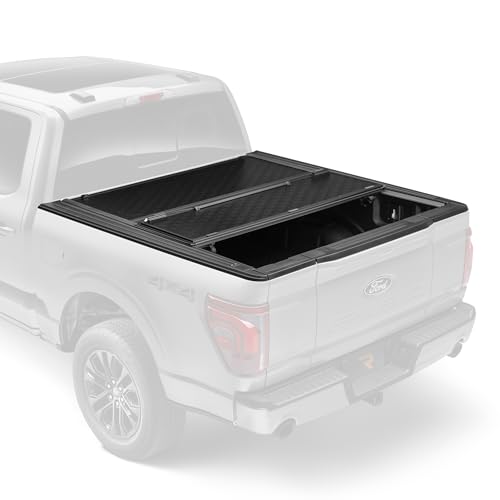
Gator EFX Hard Tri-Fold Tonneau Cover for
Hard folding panels and adjustable cargo keepers help secure and organize gear for owners who want a rigid cover.
Top 5 Tonneau Covers for F150 Lightning at a Glance
Start with Tyger Auto if you want a soft cover that folds back, or Gator if you prefer hard folding panels and built-in cargo keepers. Tono King and Rough Country also use hard folding designs, while the soft roll-up option prioritizes quick access; bed-size confirmation is the most important difference across this group.
| Product image | Product name | Check product |
|---|---|---|
| 1 |
Tyger Auto T3 Soft Tri-fold Truck Bed | Check Price |
| 2 |
Gator EFX Hard Tri-Fold Tonneau Cover for | Check Price |
3 |
Tono King Tri-Fold Truck Bed Covers Fits | Check Price |
4 |
Soft Roll-up 5.5ft Truck Bed Tonneau Cover | Check Price |
5 |
Rough Country Hard Tri-Fold Truck Bed Tonneau | Check Price |
5 Best Tonneau Covers for F150 Lightning: Detailed Reviews
When I weighed the best tonneau cover for f150 lightning choices, I looked first at bed fit, cover style, how much of the bed stays open during access, and what the cover is made of. Those details can spare you a frustrating install, make regular loading easier, and help you choose a cover that fits the way you actually use the truck.
The choices range from soft vinyl and PVC fabric to rigid folding panels, with different bed measurements and installation notes to check. Reading the differences side by side helps you see whether quick access, a harder outer surface, or a particular mounting requirement matters most in your driveway.
1. Tyger Auto T3 Soft Tri-fold Truck Bed
Marine-grade vinyl and folding crossbars cover the bed while letting you fold the cover away for cargo access.
- Bed size5.5ft Bed
- Cover styleT3 Soft Tri-Fold
- ColorT3 Soft Tri-Fold
- Size5.5ft Bed
The Tyger Auto T3 is a soft folding tonneau cover for Lightning owners who want covered cargo and the option to fold the cover back for bed access. Its listed fit includes 2022–2025 F-150 Lightning models with a 5.5-foot, 67-inch bed, so check the model year and exact bed before ordering.
The cover uses marine-grade vinyl, a heavy-duty fabric made for marine use, over aircraft-grade aluminum frames. The vinyl forms the main covering surface, while the frame supports it across the bed, giving you a soft cover that is not simply a loose tarp.
Pre-assembled horizontal crossbars support the cover and fold up with it. That means you do not have to remove the bars separately when you need access, though a tri-fold cover still occupies part of the bed when folded.
Installation is described as no-drill, and the kit includes clamps and mounting hardware. There is an important bedliner catch: an over-the-bedrail bedliner needs small holes cut for the clamps, while an under-the-bedrail liner does not need that modification. Check your liner before you start, because that detail could change your mind about the install.
Pros:
- Marine-grade vinyl gives the cover a fabric surface over a frame.
- Pre-assembled crossbars support the cover across the bed.
- Folding design opens the bed without removing the full cover.
- No-drill mounting avoids drilling into the truck bed.
- Stainless steel clamps are included for installation.
- Five-year US warranty is listed by Tyger Auto.
Cons:
- The stated fit is limited to a 5.5-foot, 67-inch bed.
- Over-the-bedrail liners require small clamp-clearance holes.
- A soft cover is not a rigid hard-panel barrier.
- Folded panels still take up some bed space.
Buy it if: you want a soft cover that folds back, because the crossbars fold with it and leave the bed accessible.
Skip it if: you will not cut an over-the-rail bedliner, because the clamp installation calls for small holes and a cover with compatible mounting may suit you better. For another fit, consider Gator or Tono.
I’d put the Tyger Auto T3 near the top for someone who wants a straightforward folding layout without handling a rigid panel assembly. The combination of a supported vinyl cover and included clamps makes the basic setup easy to understand. Before buying, double-check your Lightning’s year, bed length, and liner position, since the bedliner instruction is easy to miss.
Pick the Tyger Auto T3 if those details match and you prefer soft fold-back access.
2. Gator EFX Hard Tri-Fold Tonneau Cover for
Hard folding panels and adjustable cargo keepers help secure and organize gear for owners who want a rigid cover.
- Bed size5′ 7″ Bed
- Color5′ 7″ Bed
- Size5′ 7″ Bed
- Number Of Items1
The Gator EFX is a hard folding cover for Lightning owners who want rigid panels and a way to keep loose cargo from sliding around. Its fit description says 2021–2026 F-150 models, including Lightning, with a 5-foot-7-inch bed, so verify that measurement against your truck rather than assuming the name alone guarantees fit.
The hard tri-fold panels make this a different kind of cover from soft vinyl or PVC. A rigid surface can provide a more substantial physical barrier over the bed than fabric, but it does not turn an open truck bed into a locked, theft-proof storage compartment; check how the cover latches and what your cargo needs.
Gator lists a single cable pull for operation, along with adjustable GEARHOLD cargo keepers. The cable is intended to release the cover, while the keepers help hold items in place instead of letting groceries or tools slide around. Those details are useful if you often carry smaller gear, but they do not replace securing large loads properly.
The maker describes the installation as no-drill and says it can take less than 30 minutes. That timing depends on fit and setup conditions, so treat it as a guide rather than a promise. The cover is described as flush and low-profile, and its hard panels fold up, but folded panels can limit how much tall cargo fits beneath them.
Pros:
- Hard folding panels provide a rigid cover surface.
- Single cable pull is listed for opening the cover.
- Adjustable cargo keepers help limit gear movement.
- No-drill installation avoids drilling into the bed.
- Low-profile design sits close to the bed rails.
- The cover folds to allow access to cargo.
Cons:
- The stated bed measurement is 5 feet 7 inches.
- Folded hard panels can occupy space above the bed.
- A hard cover does not make unattended cargo theft-proof.
- The installation-time estimate may vary with fit and setup.
Buy it if: you want hard folding panels and adjustable cargo keepers, because they give you a rigid cover surface and help organize loose gear.
Skip it if: your bed does not match the listed 5-foot-7-inch size, because a cover made for a different bed length may not clamp or seal correctly. Tyger and Tono are worth a closer look instead.
What I like about the Gator EFX is that it combines a hard folding cover with a practical cargo-control feature, rather than treating the cover as the only part of the storage problem. The cable pull also gives you a clear operating point to look for when opening the bed. I would verify the exact Lightning bed measurement and the folded-panel clearance before choosing it.
This cover makes the most sense for someone who values a rigid surface and often carries smaller loose items.
3. Tono King Tri-Fold Truck Bed Covers Fits
The catalog lists Compatibility: Compatible with 2015-2026 Ford F150 | F150 Lightning 5′ 5″Bed (66″). Custom-fit solution to inc. Compare fit and care needs before choosing.
- ColorBlack
- Bed size5′ 5″ Bed (66″)
- Size5′ 5″ Bed (66″)
- Number Of Items1
The Tono King is a hard folding cover for Lightning owners who want rigid panels and a stated 400-pound support capacity. The fit information lists F-150 and F-150 Lightning trucks with a 5-foot-5-inch, 66-inch bed, so check that dimension carefully before ordering.
Its panels use FRP, short for fiber-reinforced plastic, along with aluminum and an internal honeycomb structure. The honeycomb construction is a pattern of internal cells that supports the panel; the stated 400-pound capacity is a product claim, not permission to place any load anywhere on the cover. Check the manufacturer’s use instructions before putting weight on it.
The maker describes the cover as resistant to water and temperature extremes, with protection against tearing and sharp objects. These are seller claims, so they should not be read as a guarantee that every seam will stay dry in every storm or that cargo is safe from theft. Keep valuable items secured, and inspect the seals after installation.
Tono King describes installation as no-drill and says cargo racks should be removed before fitting the cover. The folding layout opens the bed for loading, though a hard cover folded back can still limit tall-item clearance. Its aerodynamic profile is also described as reducing wind drag and helping fuel efficiency, but no measured savings are given, so don’t buy it expecting a specific range or efficiency improvement.
Pros:
- FRP and aluminum panels form a hard folding cover.
- Internal honeycomb structure supports the panels.
- A 400-pound capacity is stated by the maker.
- No-drill installation is listed.
- Folding panels provide access to the bed.
- The stated Lightning fit includes a 66-inch bed.
Cons:
- Fit depends on the listed 5-foot-5-inch bed measurement.
- Cargo racks must be removed before installation.
- The 400-pound capacity needs careful interpretation and use.
- No measured fuel-efficiency result is provided.
Buy it if: you want hard folding panels and a stated load capacity, because the FRP, aluminum, and honeycomb construction gives you a rigid cover with a listed support limit.
Skip it if: your Lightning has a cargo rack you need to keep, because the installation instructions say to remove racks and a rack-compatible setup would suit you better. If those trade-offs rule it out, Tyger or Gator may suit you better.
I’d consider the Tono King when its 66-inch fit matches and a hard folding surface is high on your list. The stated support capacity is useful information, but only if you follow the maker’s loading guidance rather than treating the full panel like a general-purpose platform. Check rack clearance and exact bed length before making a decision.
It suits a buyer who wants a rigid cover and does not mind removing incompatible bed accessories.
4. Soft Roll-up 5.5ft Truck Bed Tonneau Cover
The catalog lists 🚗Compatible with: for Ford F-150 2015-2026, for Ford F-150 Lightning 2022-2026, 5.5 ft/ 67.1 in bed. Fits Flee. Compare fit and care needs before choosing.
- Cover style and size5.5′ (66/67.1″) Soft Roll Up
- Color15-24 F150, 22-24 Lightning
- Size5.5′ (66/67.1″) Soft Roll Up
- Number Of Items1
This soft roll-up cover is for Lightning owners who want to open the bed by rolling fabric toward the cab instead of folding several panels. The stated fit covers 2022–2026 Lightning models with a 5.5-foot bed listed as 67.1 inches, and it fits Fleetside or Styleside beds, not Flareside or Stepside beds.
The cover uses a double PVC tarp, meaning two layers of PVC-coated fabric form its main surface. The maker says this helps shield cargo from rain, sun, dirt, and dust, while three support rods add structure underneath. That setup keeps the cover flexible, but fabric is still a different kind of barrier from a rigid hard cover.
The roll-up layout can open much of the bed without lifting a stack of panels. Adjustable tension lets you tighten the fabric for the fit, which matters because a loose cover can flap or sit unevenly. Follow the adjustment instructions instead of pulling hard on one side; even tension is easier to manage and helps the cover lie flat.
Installation is described as no-drill and does not require special tools. The listing includes a manual and a one-year warranty. Before buying, confirm the bed style as well as the length, since an otherwise correct measurement will not solve a Fleetside-versus-Flareside mismatch.
Pros:
- Roll-up layout opens the bed without folding hard panels.
- Double PVC fabric forms the main cover surface.
- Three support rods add structure beneath the cover.
- Adjustable tension helps you set the cover fit.
- No-drill installation and a manual are listed.
- A one-year warranty is stated.
Cons:**
- The stated fit excludes Flareside and Stepside beds.
- Soft fabric is not a rigid hard-panel barrier.
- Tension may need adjustment for a level fit.
- The listed warranty period is one year.
Buy it if: you want a soft cover that rolls away, because the roll-up design lets you uncover the bed without folding panels into a stack.
Skip it if: your truck has a Flareside or Stepside bed, because the stated fit excludes those styles and a cover made for your bed shape would suit you better.
To me, the main appeal here is the simple access pattern: release the cover, roll it up, and reach into the bed. The three support rods and adjustable tension give the fabric some structure without turning it into a hard-panel system. Confirm the exact bed style, not just the approximate length, before buying.
This cover is best for a Lightning owner who values a soft, roll-away surface and has the listed bed configuration.
5. Rough Country Hard Tri-Fold Truck Bed Tonneau
The catalog lists Full Truck Bed Access: Enjoy complete access to your F-150’s truck bed with this flush-mount, tri-fold hard to. Compare fit and care needs before choosing.
- ColorMatte Black
- Bed size5’7 Bed
- Size5’7 Bed
- Number Of Items1
The Rough Country cover is a hard folding option for Lightning owners who want aluminum panels and more than one folded position. Its fit description lists 2022–2027 Lightning models and a 5-foot-7-inch bed, given as 66.7 inches, so verify the truck’s exact bed dimensions and model year before ordering.
The panels are powder-coated aluminum, meaning a protective finish is applied over the metal surface. The maker says the finish resists corrosion, scratches, and wear, while the aluminum construction keeps the panels relatively light for a hard cover. A hard surface may suit cargo you want shielded from casual access, but the cover should not be treated as a lockbox or a guarantee against theft.
The design has an integrated water-drainage system and weather seals. Those parts are meant to direct water away and reduce gaps, which can help protect cargo from ordinary weather exposure; no cover should be assumed completely leakproof without careful installation and inspection. Rough Country also lists auto-latching, nylon safety straps, and the ability to drive with the cover closed, two-thirds open, or fully open.
The cover ships assembled and is described as requiring no drilling or tools for installation. That can simplify the first setup, but you still need to position it squarely and secure it as directed. The 5-foot-7-inch bed size may differ from the 5.5-foot descriptions elsewhere in this group, so measure rather than relying on a general F-150 Lightning label.
Pros:
- Aluminum folding panels provide a hard cover surface.
- Powder coat is listed to resist corrosion and wear.
- Drainage system and weather seals are included.
- Multiple open positions allow different bed access.
- Ships assembled and is listed as no-drill.
- A five-year warranty is stated by Rough Country.
Cons:
- The stated bed size is 5 feet 7 inches, or 66.7 inches.
- Hard panels can limit clearance when folded open.
- Correct placement and latch engagement still matter during setup.
- Weather seals do not guarantee a completely dry bed.
Buy it if: you want hard aluminum panels with several open positions, because the fold-up layout lets you choose between a covered bed and more loading space.
Skip it if: you need an uninterrupted, full-height bed opening while driving, because folded panels occupy space and a roll-away cover may fit that loading routine better.
I’d look at Rough Country when the multi-position design matters as much as the hard-panel surface. The drainage path, seals, and safety straps address practical details that can be overlooked when shopping by appearance alone. Check the 66.7-inch fit and make sure the folded panels leave enough clearance for the things you haul.
Choose this cover if you want an assembled hard-folding option and its bed measurement matches your truck.
How to Choose the Best Tonneau Cover for F150 Lightning
The best tonneau cover for f150 lightning is the one that matches your truck’s exact bed and makes cargo access practical for your routine. A cover that looks right in a photo can still be wrong if its bed measurement, bed style, or clamp arrangement does not match your Lightning.
Confirm the actual bed length
Bed length is the first yes-or-no check. The options here mention 5.5 feet, 5 feet 7 inches, 5 feet 5 inches, 67 inches, and 66.7 inches; those labels are close enough to tempt a guess, but not close enough to treat as interchangeable.
Measure the bed according to the cover maker’s instructions, and compare that result with the fit information for your model year. If the truck’s configuration or measurement is unclear, confirm it using the vehicle details the seller’s fit checker requests before you order. Don’t rely on a generic “fits F-150” phrase when the product gives a specific bed length.
A Ford F-150 cover overview can help explain why fit and body configuration matter across the truck range. The Lightning still needs to match the exact bed-size details for the cover you choose.
Choose soft or hard construction
Soft covers use flexible fabric, such as the marine-grade vinyl in the Tyger Auto T3 or the double PVC tarp in the roll-up option. They can be easier to fold or roll away, but they do not create the same rigid physical barrier as hard panels.
Hard covers use panels, including FRP and aluminum in these choices. A hard-cover comparison for F-150 is useful if a rigid panel surface is your priority. Remember that hard panels can be bulky when folded and still do not make cargo theft-proof.
Match the opening style to your cargo
A tri-fold cover bends back in sections, so you can uncover part of the bed or fold panels toward the cab. A roll-up cover gathers fabric out of the way, which can leave a different kind of opening; neither arrangement guarantees unlimited room for tall cargo.
A folding cover guide for F-150 can help you think through panel storage and access. Before choosing, consider the tallest item you regularly carry and whether you can leave folded panels in place while driving.
Check bedliner, rack, and bed-style details
The Tyger Auto T3 calls out a special case for over-the-bedrail liners: small holes are needed to secure the clamps. Its instructions say an under-the-bedrail liner does not need modification. The Tono King information says cargo racks must be removed before installation, so check accessories before committing to that design.
The soft roll-up cover excludes Flareside and Stepside beds, while its fit description specifies Fleetside or Styleside. This is a useful reminder that a measurement alone may not settle fit. Confirm the body and bed style, liner position, and any rack or rail accessories together.
Think about how much access you need
A cover that opens quickly may be more useful than one with features you rarely use. If you carry shopping bags, tools, or sports gear often, a cable pull or easy roll-up can make routine access simpler; if you haul large objects, consider how much room the folded cover occupies.
A retractable cover comparison can clarify how a cover that slides into a canister differs from the folding and roll-up styles in this roundup. Check the actual design and storage space required before deciding, especially if keeping the full bed opening clear is important.
Weigh weather and cargo protection realistically
A cover can help shield cargo from sun, dust, and precipitation, but installation, seams, seals, and drainage affect how well it handles weather. Sellers may describe a cover as weather-resistant or water-sealed, but that should not be read as a promise that the bed stays completely dry in every condition.
For expensive or sensitive gear, use suitable cargo containers and secure the items separately. A hard panel may provide a more rigid barrier than soft fabric, but no tonneau cover by itself should be treated as a full security system.
How to Use a Tonneau Cover for the Best Results
A tonneau cover works best when it is correctly aligned, latched, and used with cargo arranged to avoid blocking its moving parts. A few small checks before driving can prevent a cover from sitting crooked or a load from shifting against it.
First, read the instructions for the exact cover and truck configuration. Confirm that the clamps, rails, seals, and latches match the setup described, because small differences in bedliner or rail position can change how the hardware fits.
Close the cover evenly rather than forcing one corner down. For a folding cover, make sure each section sits flat and the latches engage; for a roll-up cover, check that the fabric is tensioned evenly and secured at the tailgate.
Place cargo so it does not press upward against the cover or obstruct a latch, cable, strap, or drainage path. Secure heavy or tall items independently, and do not assume the cover’s stated support capacity applies to every panel, loading position, or driving situation.
Before a long drive, walk around the truck and check that the cover is fully latched and the tailgate closes as intended. Look for fabric that has shifted, straps that are loose, or an edge that is not sitting against the bed rail. If something looks off, stop and correct it before driving.
For partial access, use only the open positions allowed by the instructions. Do not drive with a cover partly open unless the maker specifically allows that position and the required safety straps or supports are attached.
After rain, check the bed and cargo to learn where water may enter. If you find moisture, inspect the seams, corner seals, clamps, and drainage channels before assuming the cover is defective; a cover that is out of alignment may need a careful adjustment.
How to Make Your Tonneau Cover Last Longer
Regular, gentle care helps protect fabric, metal finishes, hinges, clamps, and weather seals. The simplest habit is to inspect the cover when you wash the truck and clean it before grit has time to grind against moving parts.
Rinse loose dirt from the cover before wiping it. Grit can act like sandpaper when rubbed across vinyl, PVC, or a powder-coated panel, so avoid scrubbing a dry, dusty surface with a rough brush. Use cleaning products that the cover maker approves for its materials.
Clean the bed rails and the contact areas around the clamps. Leaves, grit, or packed dirt can interfere with a seal or keep a cover from sitting flat. After cleaning, check that the rails are dry and that no debris is caught under a panel or fabric edge.
Inspect seals and drainage paths after storms and whenever you notice water in the bed. Clear leaves and dirt from channels, and check that seals are seated rather than folded over. Do not block a drainage route with cargo or tape unless the instructions specifically call for it.
For a soft cover, look for loose stitching, scuffs, sagging, or a change in tension. For a hard cover, check hinges, latches, straps, panel edges, and the finish. Catching a loose clamp or a latch that no longer engages is easier before a long trip than at the roadside.
Follow the maker’s schedule for checking hardware, and recheck clamps after the first few drives if the instructions recommend it. Do not overtighten a clamp to compensate for poor alignment; too much force can strain the mounting point or make later removal harder.
When the cover is open, secure it as directed before driving. If the cover is removable or folded for longer storage, keep it in a clean, dry place and support it so panels do not bend or fabric does not crease under a heavy object.
Common Mistakes to Avoid When Buying and Using a Tonneau Cover
The most common mistakes start with a rushed fit check or an assumption about what a cover can do. Slow down for these quick checks before ordering and after installation.
- Ordering by truck name alone: F-150 and Lightning fit labels do not replace the listed bed measurement. Match the exact year, bed length, and body style before checkout.
- Treating nearby measurements as identical: 66 inches, 66.7 inches, 67 inches, and 5 feet 7 inches are not permission to guess. Measure the bed using the cover maker’s method and confirm the exact fit.
- Ignoring the bedliner: Some clamps may need clearance through an over-the-rail liner. Check the instructions first so you know whether installation involves a modification you do not want to make.
- Leaving bed accessories out of the fit check: A cargo rack or rail accessory can interfere with mounting. Confirm compatibility or removal requirements before buying, not after opening the box.
- Expecting a soft cover to act like a hard cover: Fabric and rigid panels offer different physical barriers. Pick based on the kind of access and cover surface you want, and secure valuable cargo separately.
- Assuming any cover is fully waterproof: Seals and drainage can reduce water entry, but installation and weather conditions matter. Inspect the bed after rain and protect sensitive cargo in suitable containers.
- Forcing a latch or panel: Resistance can mean the cover is misaligned or cargo is in the way. Stop, check the instructions, and correct the obstruction instead of leaning on the hardware.
- Driving with an unsecured open cover: Folded or rolled sections may need straps or a designated open position. Follow the maker’s driving instructions and secure every required latch or strap.
How to Set Up a Tonneau Cover
A no-drill cover can still take careful positioning and adjustment. Work on a clean, level surface, keep the hardware organized, and follow the instructions for the exact cover rather than relying on a generic installation video or memory.
- Confirm fit before unboxing everything. Match the Lightning year, bed length, and bed style to the cover instructions. The easy-to-miss point is that a five-and-a-half-foot description may not match a nearby measurement exactly.
- Inspect the bed and liner. Clear dirt from the rails and look for a bedliner, rack, or accessory that could change clamp clearance. For the Tyger Auto T3, check whether the liner sits over or under the bed rails before installing.
- Lay out the parts and read the sequence. Identify clamps, rails, seals, straps, and latches before placing the cover. Do not guess which clamp goes where; hardware that looks similar may have a specific position.
- Position the cover squarely. Set it according to the maker’s instructions and make sure it sits evenly from side to side. A cover that starts crooked is harder to correct after all the clamps are tightened.
- Attach the clamps or mounting hardware loosely at first. Keep enough movement to make alignment adjustments. The common stumbling point is tightening one side fully before checking the other side.
- Check tailgate operation and clearances. Open and close the tailgate as instructed, then confirm that the cover edges and latches line up. If the tailgate catches or a corner lifts, adjust the fit before final tightening.
- Secure the hardware and test every section. Tighten to the maker’s directions, then fold or roll the cover through its intended range. Make sure latches, cables, and straps operate without forcing them.
- Recheck after the first few drives. Look for shifted clamps, loose fasteners, or changed tension, following the maker’s guidance. A quick inspection can catch movement before it becomes a bigger fit problem.
Common Questions About Tonneau Covers for F-150 Lightning
What bed size tonneau cover fits an F-150 Lightning?
The right cover depends on the bed measurement for your specific Lightning, so verify the exact year and bed length before ordering. The covers here list measurements including 5.5 feet, 5 feet 7 inches, 5 feet 5 inches, 67 inches, and 66.7 inches. Don’t treat those labels as interchangeable without confirming the cover’s fit instructions.
Is a hard or soft tonneau cover better for a Lightning?
A hard cover is a better fit if you want rigid panels over the bed, while a soft cover can suit you if flexible fold-back or roll-up access matters more. Neither style is automatically right for every owner. Consider the cargo you carry, how much folded space you can give up, and how much physical protection you expect.
Do tonneau covers keep an F-150 Lightning bed completely dry?
No cover should be assumed to keep the bed completely dry in every storm. Seals, seams, drainage, installation, and weather all affect water entry. Check the maker’s description, fit the cover carefully, and inspect the bed after rain.
Use separate weather-resistant containers for cargo that cannot get wet.
Can I install a tonneau cover without drilling?
Several covers in this roundup are described as no-drill installations, but that does not mean every truck needs no adjustment or special consideration. For instance, the Tyger Auto T3 instructions call for small holes in an over-the-bedrail bedliner to secure its clamps. Read the exact instructions and check your liner before starting.
Can I drive with a tonneau cover folded open?
Only drive with a cover open in positions the manufacturer permits. Some designs specify straps or supported open positions, and those instructions matter because an unsecured section can shift while driving. Check that each required latch and strap is engaged, and do not assume that a cover’s ability to fold means it is safe in every partly open position.
How often should I clean and inspect a tonneau cover?
Rinse and clean the cover when it is visibly dirty, and inspect it during routine truck washing. Look at clamps, latches, seals, hinges, straps, fabric tension, and drainage paths. Check sooner after heavy weather or if you see water in the bed, and follow the maker’s instructions for hardware checks and approved cleaners.
Make the Bed Measurement Your First Check
Before you compare fabric, panels, or opening styles, measure your Lightning’s bed and confirm the exact model-year fit in the cover instructions. Then check your bedliner and accessories, and choose the style that leaves enough access for the cargo you actually carry.